SpaceX
SpaceX calls ULA NASA launch contract “vastly” overpriced in official protest

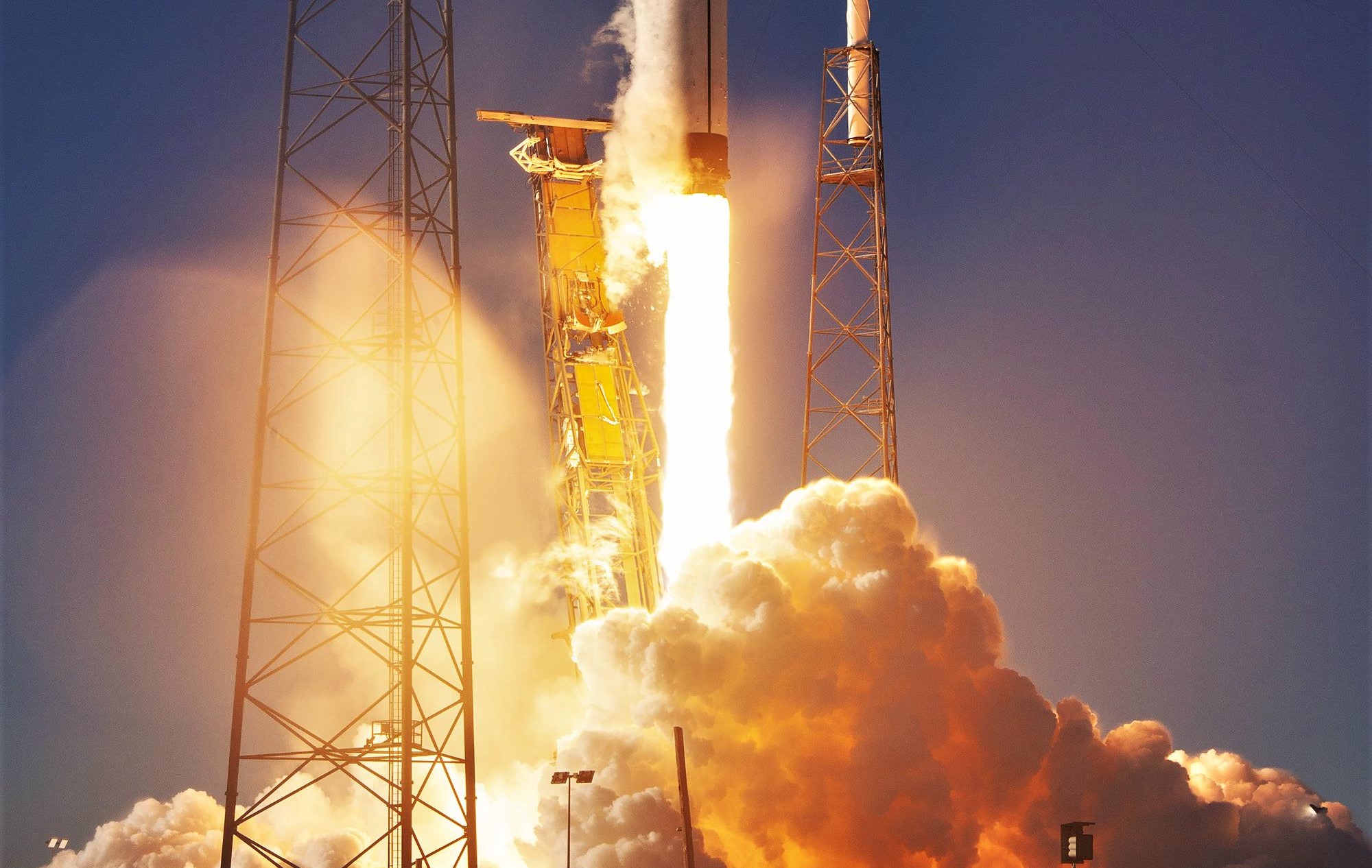
SpaceX has filed an official protest with the US Government Accountability Office (GAO) after NASA awarded competitor United Launch Alliance a launch contract for Lucy, an interplanetary probe meant to explore a belt of unique asteroids clustered around Jupiter’s orbital swath.
Announced on January 31st, SpaceX believes that NASA made a decision counter to the best interests of the agency and US taxpayers by rewarding ULA the Lucy launch contract at a cost of $148M, a price that the company deemed “vastly more [expensive]” than the bid it submitted for the competition.
Updated our story on SpaceX’s GAO protest of a NASA launch contract with comments from both NASA and ULA. https://t.co/qqCsnNatu0
— Jeff Foust (@jeff_foust) February 14, 2019
With performance roughly equivalent to SpaceX’s Falcon 9 Block 5 rocket in a reusable configuration when launching from low Earth orbit (LEO) up to geostationary transfer orbit (GTO), ULA’s Atlas V 401 variant is the simplest version of the rocket family with the lowest relative performance, featuring no solid rocket boosters. According to the company’s “RocketBuilder” tool, Atlas V 401 was listed with a base price of $109M in 2017. SpaceX’s Falcon 9 is listed with a base price of $62M for a mission with booster recovery, while the rocket’s highest-value expendable launch (for a USAF GPS III satellite worth ~$530 million) was awarded at a cost of $83M, with three subsequent GPS III launch contracts later awarded for ~$97M apiece.
Relative to almost any conceivable near-term launch contract on the horizon, SpaceX’s GPS III launch contracts act as a sort of worst-case price tag for Falcon 9, where the customer requires extraordinary mission assurance and the entire rocket has to be expended during the launch. Put in another way, NASA would likely be able to get the reliability, performance, and mission assurance it wants/needs from Falcon 9 for perhaps $50M less than the cost of ULA’s proposed launch, equivalent to cutting more than a third off the price tag. Part of NASA’s Discovery Program, the Lucy spacecraft will be capped at $450M excluding launch costs, meaning that choosing SpaceX over ULA could singlehandedly cut the mission’s total cost by a minimum of 8-10%.
-
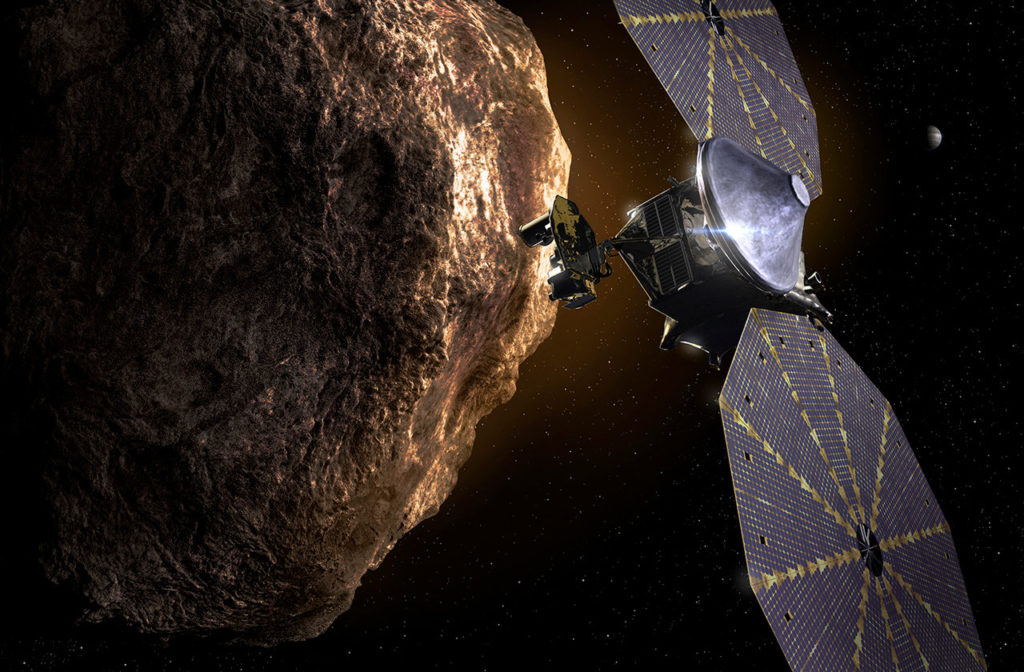
- A mockup of NASA’s proposed Lucy spacecraft. (NASA)
-
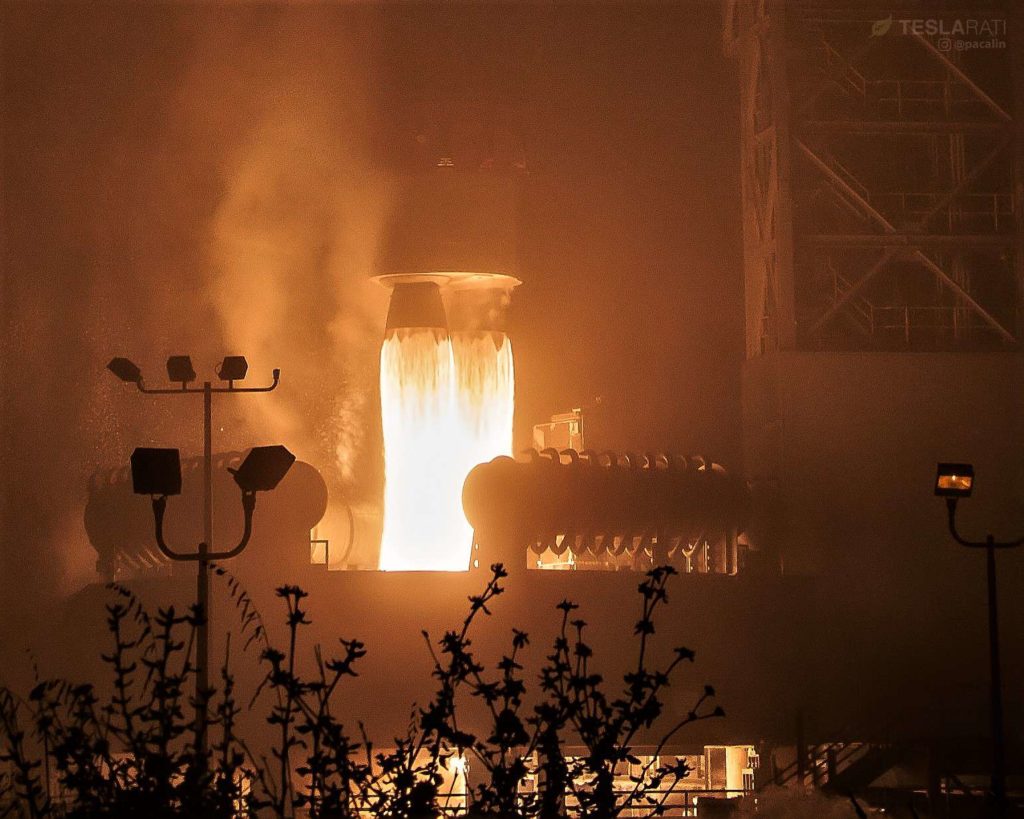
- NASA’s InSight lifts off atop Atlas V 401, March 2018. (Pauline Acalin)
-
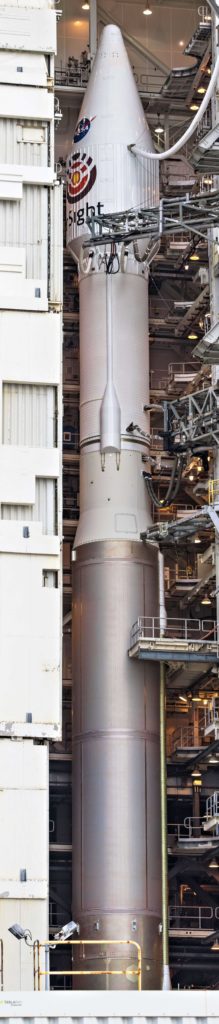
- A panorama of Atlas V 401, March 2018. (Pauline Acalin)
-
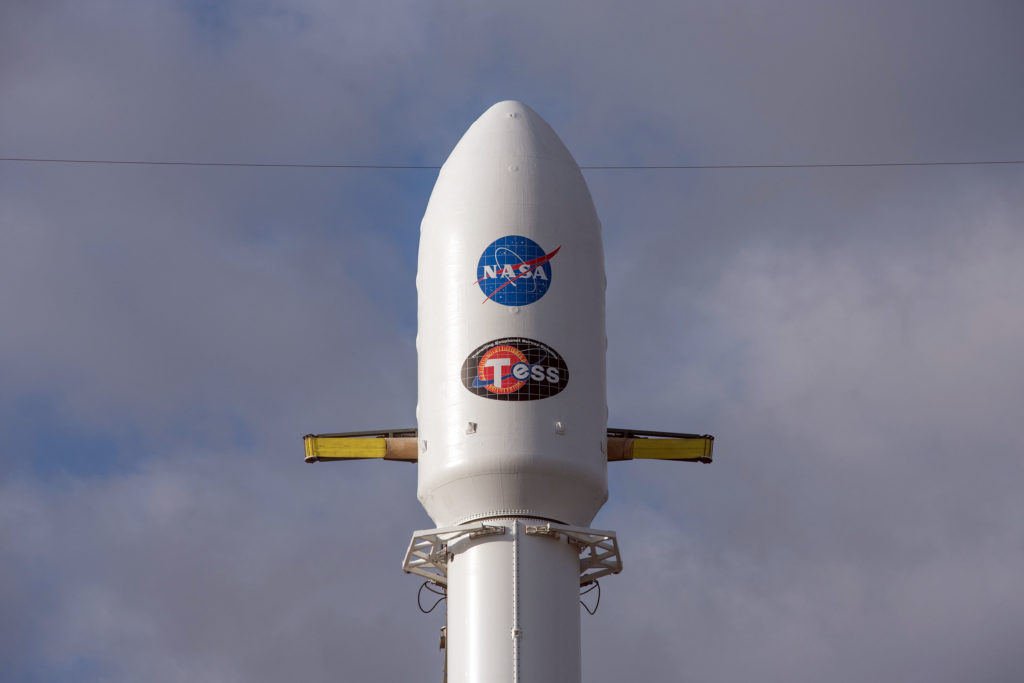
- SpaceX and NASA’s most recent science spacecraft launch, TESS. (SpaceX)
-
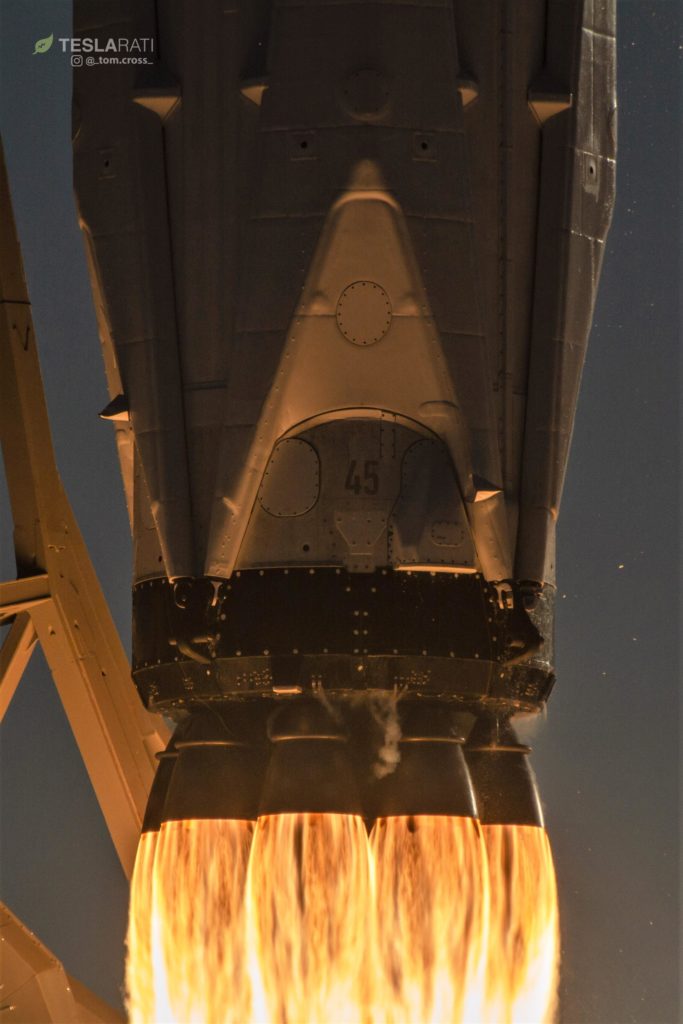
- After launching in April 2018, B1045 landed on OCISLY and is being refurbished for a second launch in just 5 days, on June 29. (Tom Cross)
 -
-
“Since SpaceX has started launching missions for NASA, this is the first time the company has challenged one of the agency’s award decisions. SpaceX offered a solution with extraordinarily high confidence of mission success at a price dramatically lower than the award amount, so we believe the decision to pay vastly more to Boeing and Lockheed for the same mission was therefore not in the best interest of the agency or the American taxpayers.” – SpaceX, February 13th, 2019
The fact remains that the Lucy mission does face a uniquely challenging launch trajectory, offering just a single launch window of roughly three weeks, after which the mission as designed effectively becomes impossible. Missing that window could thus end up costing NASA hundreds of millions of dollars in rework and delays, if not triggering the mission’s outright cancellation. NASA and ULA thus couched the launch contract award and ~50% premium in terms of what ULA argues is Atlas V’s “world-leading schedule certainty”. Excluding ULA’s other rocket, Delta IV, Atlas V does have a respectable track record of staying true to its contracted launch targets. However, SpaceX’s Falcon 9 “schedule certainty” continues to improve as the launch vehicle matures.
Admittedly, while Falcon 9 has gotten far better at reliably launching within 5-10 days of its on-pad static fire test, SpaceX has continued to struggle to launch payloads within a week or two of customer targets. Regardless, October 2021 is more than two and a half years away, giving SpaceX an inordinate amount of time and dozens upon dozens of manifested Falcon 9 launches to reach a level of operational maturity and design stability comparable to Atlas V, a rocket that has changed minimally over the course of 16+ years and 79 launches.
-
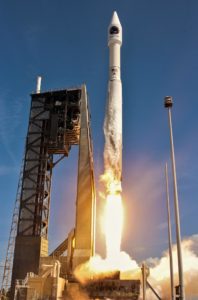
- An Atlas V 401 rocket lifts off in 2017. (ULA)
-
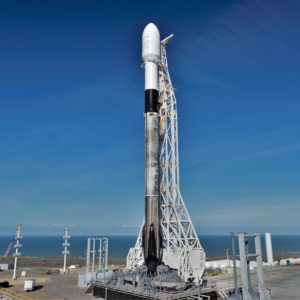
- Falcon 9 B1046 prepares for its third launch and recovery, December 2018. (SpaceX)
-
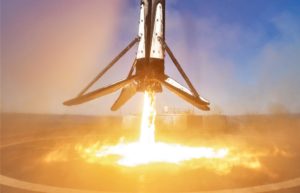
- Falcon 9 B1046 is pictured here landing after its third successful launch in December 2018 – the first SpaceX rocket to cross that reusability milestone. (SpaceX)
In October 2010, NASA awarded ULA a contract valued at $187M to launch its MAVEN Mars orbiter on Atlas V 401. In December 2013, ULA won a $163M contract to launch NASA’s InSight Mars lander on Atlas V 401. In January 2019, ULA was awarded a contract for NASA’s Lucy spacecraft, priced at $148.3M for a 2021 Atlas V 401 launch. Put simply, barring ULA using a dartboard and blindfold to determine launch contract pricing or aggressive reverse-inflation, SpaceX’s very existence already stokes the flames of competition, particularly when launch contracts are directly competed by their parent agencies or companies.
Whether or not SpaceX’s protest is entirely warranted or ends up amounting to anything, it can be guaranteed that the fact that SpaceX was there to compete with ULA at all forced the company to slash anywhere from $20-40M from the price it would have otherwise gladly charged NASA. Another ~$50M saved would certainly not be the worst thing to happen to the US taxpayer, but it’s also not the end of the world.
Check out Teslarati’s newsletters for prompt updates, on-the-ground perspectives, and unique glimpses of SpaceX’s rocket launch and recovery processes!
-


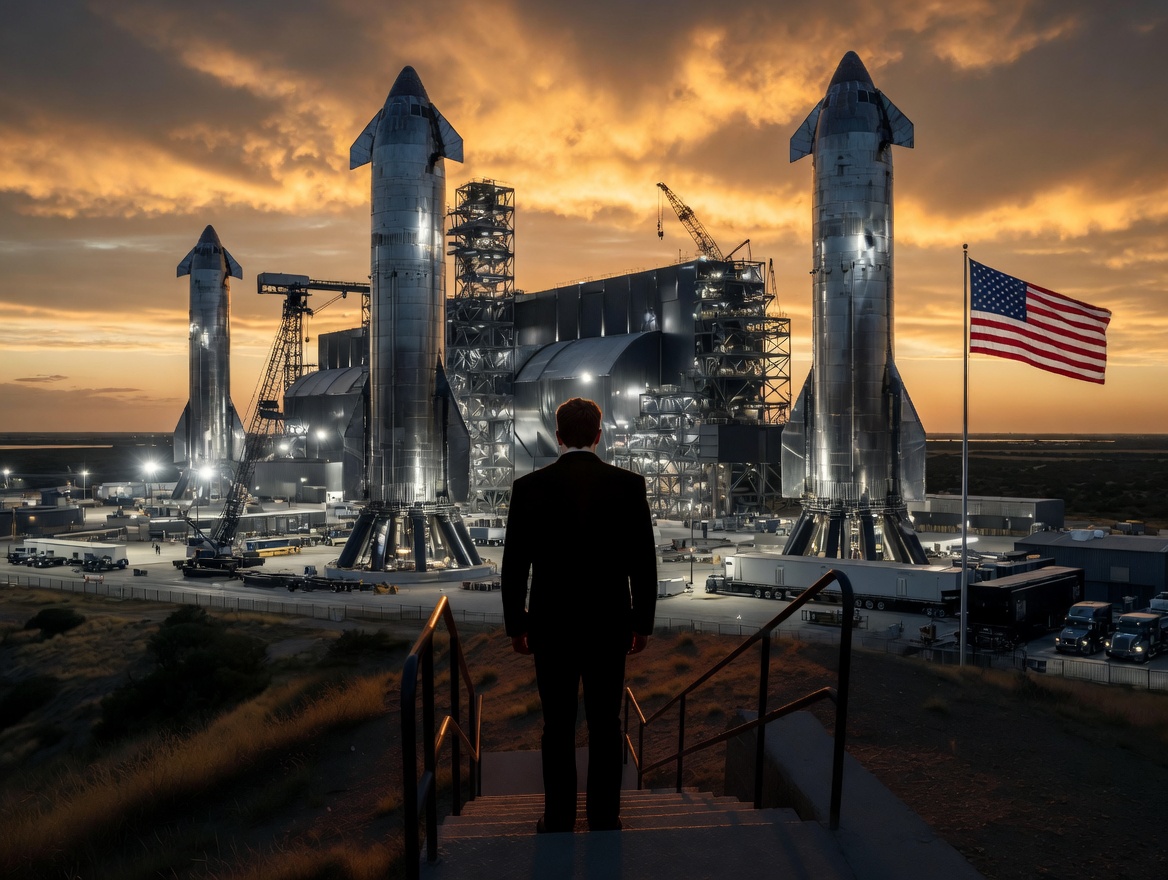
SpaceX stock did the opposite of what most of Wall Street expected this week, when the day designed to be its most dangerous turned into a rally, and the rally kept going.
Thursday marked the first major lockup expiration since SpaceX’s June IPO, making roughly 911.5 million insider held shares eligible to trade for the first time, more than doubling the company’s public float. Analysts and short sellers had spent weeks bracing for a flood of selling, especially after the stock fell 13 percent following its first earnings report as a public company on Tuesday. Instead, shares rose 6.1 percent Thursday to close at $114.92, and by Friday they were trading near $129, up more than another 12 percent on the day.
SpaceX shorts get warned by Musk ally, echoing Tesla’s early struggles
The setup made the outcome notable. Short interest had climbed to roughly 34 percent of the float heading into earnings, among the highest of any large cap stock, with about 95 percent of available shares to borrow already on loan. CEO Elon Musk warned short sellers twice in the weeks before the lockup, writing on X that “the survival probability of firms who maintain a significant short position in SpaceX over time is very low,” then following up on the morning of earnings with “I try to warn them, but they just double down.”
When the newly unlocked shares hit the market and the selloff never showed up, some of that short position appears to have started unwinding. TipRanks reported that options activity shifted toward bullish strategies like put selling and risk reversals following the rally, with roughly $600 million in options premium trading Thursday alone. Retail buyers also stepped in during the earnings dip, according to Vanda Research.
The fundamentals behind the stock have not changed much in a week. SpaceX’s revenue nearly doubled year over year to $7.8 billion, with Starlink subscribers doubling to 12 million and the company’s AI segment growing 247 percent. What spooked investors on Tuesday was the spending side. Capital expenditures jumped to more than $18 billion for the quarter, up from $2.8 billion a year earlier, with AI investment alone rising from $749 million to $15.8 billion. Wall Street remains split on whether that spending is building infrastructure SpaceX needs or outrunning what the business can currently support, a debate Teslarati has tracked since shares first came under pressure.
None of that resolves the bigger question hanging over the stock. Thursday’s release was only the first of nine staggered lockup tranches, with roughly $800 billion worth of additional shares scheduled to become eligible through October, and Musk’s own stake stays locked until next June. If this week is any indication, the market is treating that supply as something it can absorb rather than something to fear, at least for now.
-
Elon Musk
Tesla’s mysterious Robovan makes a sneak peek with Optimus in Terafab video
Elon Musk shared a new Terafab video showing Optimus, Robovans, and a stunningly futuristic campus.


Elon Musk posted a new video of Terafab on X Thursday morning, and the most eye-catching details in it were not the building itself, but two products still awaiting production: Optimus and the Robovan.
The concept render, credited to SpaceX, shows Optimus robots working the grounds of the roughly 2.5-mile-long facility planned for the Gibbons Creek site in Grimes County, while a Robovan glides along an elevated roadway cutting through the building itself, sharing the frame with a Tesla Semi and a Cybercab.
Robovan is the boxy, driverless people and cargo mover Musk unveiled alongside Cybercab at Tesla’s “We, Robot” event in October 2024. He pitched it as a way to move up to 20 passengers at once, or handle freight instead, at a target cost he claimed could fall under a dollar a mile, with no steering wheel or pedals, the same layout as Cybercab. Nearly two years later, Robovan still has no confirmed production timeline and has not shown up in any factory footage, which makes Thursday’s render one of the only recent looks at the vehicle in any form.
Terafab Texas will be the largest and most valuable building on Earth by far.
And it will be stunningly beautiful. pic.twitter.com/4NweOqTL7y
— Elon Musk (@elonmusk) August 6, 2026
Optimus has moved further along. Tesla began converting Fremont’s old Model S and Model X assembly line into a Gen 3 Optimus production line earlier this year, and Musk visited the site on July 1 to mark the changeover. A second, larger Optimus plant is under construction at Giga Texas, targeting volume production in summer 2027 and eventual capacity of 10 million units a year. Tesla AI lead Ashok Elluswamy said this month the robot has “big shoes to fill” in replacing the S and X line, while Musk has repeatedly called Optimus the company’s biggest product of any kind, with a long-term price he has pegged between $20,000 and $30,000.
-
Check out the “Robovan” from @Tesla
📸: @Teslarati pic.twitter.com/D4es2i9NUe
— TESLARATI (@Teslarati) October 11, 2024
“Terafab Texas will be the largest and most valuable building on Earth by far,” Musk wrote alongside the clip. “And it will be stunningly beautiful.”
One quote post summed up the reaction: “Futuristic scene with RoboVan + Cybercab + Tesla Semi + Optimus.”
Beyond the vehicles, the architecture wrapped around them stands out too. The building’s facade is canted at sharp angles, with illuminated horizontal bands running through what appears to be a multi level interior visible from outside. Below the elevated roadway, pedestrians walk along a plaza next to a reflecting pool, and the skyline behind the campus is dotted with angular spires that read more like sculpture than infrastructure, a departure from the strictly utilitarian look of Gigafactory Texas or Starbase.
The timing tracks with what Terafab representative Riley Trennell told Grimes County residents on Wednesday, when he said renderings of the facility would be released “within days.” Musk’s post followed less than 24 hours later, and Texas Governor Greg Abbott’s office sent out its own release Thursday confirming the project. As Teslarati reported this morning, Terafab’s tax abatement agreements with Grimes County are now signed and active, and SpaceX has sent the county its first $10 million payment under that deal. The dollar figure tied to this phase of construction, per Reuters, is $16.8 billion, one of the first hard capital expenditure numbers attached to Terafab since Musk unveiled the joint Tesla-SpaceX-xAI venture in March.Reaction on X ranged from enthusiastic to skeptical. “God Bless Texas! Everything is bigger and better in Texas!” one reply read. Another was more measured: “Terafab in a decade…..”
Whether the finished building matches the render is a separate question from whether Musk wanted people talking about the render itself. Less than a day after posting, the video had already crossed 5.5 million views.
-
Elon Musk
Space finally faced the people living next to its next Terafab mega-project
SpaceX confirmed Terafab’s Grimes County site is locked in, with construction starting within months.
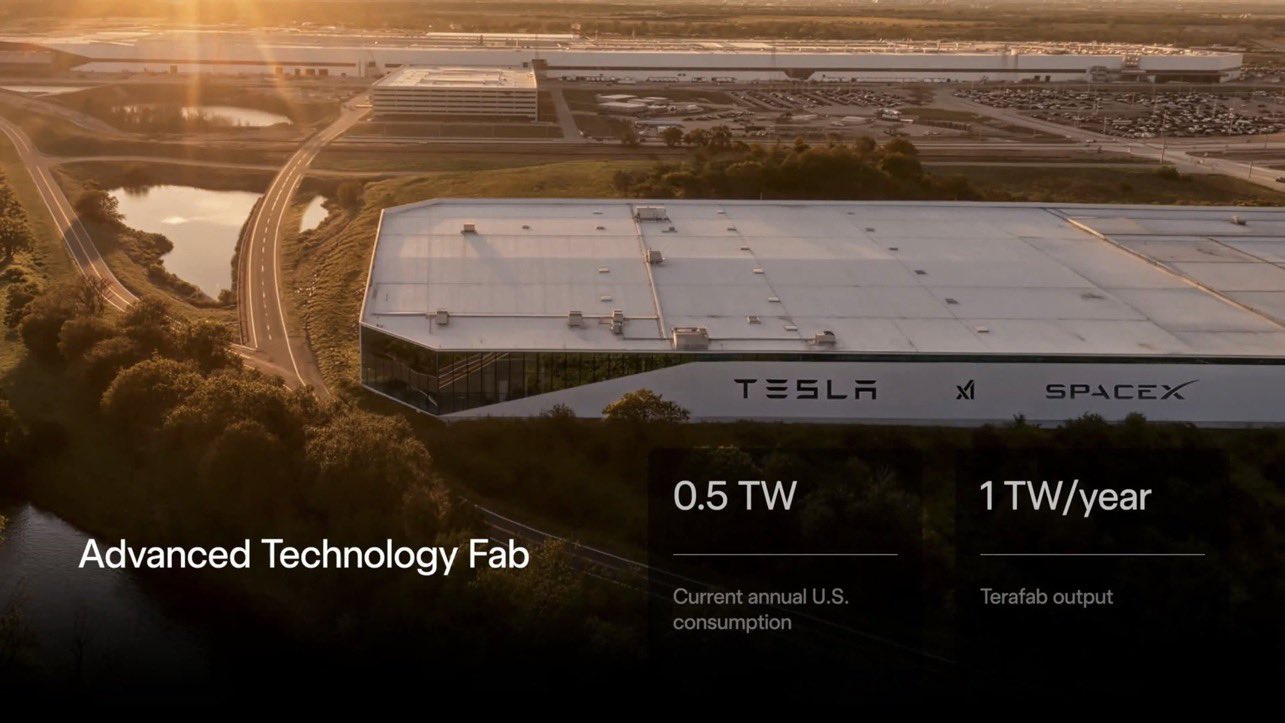
SpaceX and Terafab representatives sat across from Grimes County residents for the first time on Wednesday, telling a packed Commissioners Court room that the $55 billion chip manufacturing project is now a done deal at the Gibbons Creek Reservoir site.
The meeting followed a $10 million check SpaceX sent the county earlier this week, satisfying a payment deadline built into the tax abatement agreement both sides signed in June. Elon Musk shared a post on X confirming the payment, and County Judge Joe Fauth told the San Antonio Express-News his office deposited the check after it beat its deadline.
Wednesday’s session, first reported by KBTX, moved the project from paperwork to construction. Terafab representative Riley Trennell told residents the JETI tax break agreements with Iola ISD and Anderson-Shiro CISD are signed and active, and that civil work and foundation prep are starting almost immediately. Renderings of the facility could be released within days, he said, with construction beginning within months.
The foundations for an exciting future are being built in Texas. Next up: Terafab → https://t.co/jGg52Zhn5I pic.twitter.com/SNfSXNr2tb
— SpaceX (@SpaceX) August 6, 2026
Elon Musk launches TERAFAB: The $25B Tesla-SpaceXAI chip factory that will rewire the AI industry
Musk first announced Terafab in March as a joint venture between Tesla, SpaceX and xAI aimed at producing over a terawatt of AI compute annually, an amount that dwarfs the roughly 20 gigawatts the entire global chip industry produces today. Intel joined as a manufacturing partner in April. Musk has said the project needed its own day in the spotlight rather than being squeezed into an earnings call, and for months the Grimes County site remained unconfirmed even as reporting pointed there.
-
SpaceX attorney Buck Brannon used Wednesday’s meeting to note that the company’s abatement is roughly 78 percent, not the 100 percent some earlier reports suggested. In exchange, SpaceX will pay Grimes County a fixed $20 million a year for 35 years, a total of $710 million, which Brannon said exceeds the $14 million Tesla paid Travis County in 2025.
SpaceX also addressed environmental concerns that have followed the project since Musk’s Terafab partnership with Intel was announced. Representatives said Terafab will not raise electric bills for other ratepayers, will not deplete local water supplies and will not draw down the Navasota River. SpaceX confirmed it owns the Navasota River pumping station, which it plans to use to divert stormwater into the Gibbons Creek Reservoir, and said it will build its own natural gas plants to power the facility rather than pulling from the ERCOT grid.
Grimes County commissioners also approved an addendum letting county employees use ten approved AI chatbots for work, including Grok.

The real reason Elon Musk wants every car connected to space

Inside Tesla’s secretive $10 Billion “Project Crystal Sun” filing


