SpaceX
SpaceX preps for Cargo Dragon, Falcon Heavy launches despite setbacks

Despite suffering the loss of the first Falcon Heavy Block 5 center core and a catastrophic failure of the first flight-proven Crew Dragon spacecraft in nearly the same week, SpaceX’s core operations continue as usual to prepare for multiple launches in the coming months.
The echoes of the past week’s failures and ‘anomalies’ will undoubtedly ring for months to come but SpaceX now finds itself in a unique situation. Despite the imminent start of a major failure investigation, it appears unlikely – at least for the time being – that it will impact the majority of Falcon 9 and Falcon Heavy launches planned for the rest of 2019. Currently on the Q2 2019 manifest are Cargo Dragon’s 17th operational mission (CRS-17), the first operational Starlink launch, Spacecom’s Amos-17 satellite, the Canadian Radarsat Constellation Mission (RCM), and Falcon Heavy’s third launch (STP-2).
Cargo Dragon – CRS-17
Following an April 20th explosion that destroyed Crew Dragon C201, SpaceX’s next launch – Cargo Dragon CRS-17 – has likely just become the most important in the near-term. Although Crew Dragon shares almost nothing directly in common with Cargo Dragon, both spacecraft still do come from the same lineage, relying on the same propellant and Draco maneuvering thrusters, as well as similar plumbing (excluding SuperDraco pods) and many of the same engineers and technicians.
On the other hand, Cargo Dragon has never suffered a catastrophic anomaly on the ground or in flight, although SpaceX has dealt with a fair share of less serious issues throughout the spacecraft’s operational life. Further, following the August 2017 launch of CRS-12, every CRS mission has launched with a flight-proven Cargo Dragon spacecraft. In fact, it’s quite likely that the CRS-12 Cargo Dragon capsule is the same spacecraft that has been refurbished for CRS-17, as it is currently the only flightworthy capsule to have only flown one orbital resupply mission.
It’s unclear which Falcon 9 booster has been assigned to CRS-17. NASA’s agreement with SpaceX for flight-proven boosters has been predicated on keeping those boosters ‘in-family’, so to speak, meaning that NASA will only accept flight-proven boosters if they have only flown NASA missions. The only booster that currently fits that bill is B1051, previously flown during Crew Dragon’s orbital launch debut on March 2nd, but B1051 has reportedly been assigned to SpaceX’s second Vandenberg launch of 2019 at the customer’s request. CRS-17 will thus likely launch on a new Falcon 9 booster (B1056). There is a chance that Crew Dragon’s catastrophic failure has severely contaminated the Landing Zone area with unburnt MMH and NTO, both of which are extraordinarily toxic to humans in even the tiniest of quantities.
Some launch-related questions may be answered in a NASA media briefing planned for 11am EDT, April 22nd. CRS-17 is scheduled to launch no earlier than 4:22 am EDT (08:22 UTC), April 30th.


Starlink, Falcon Heavy, and more
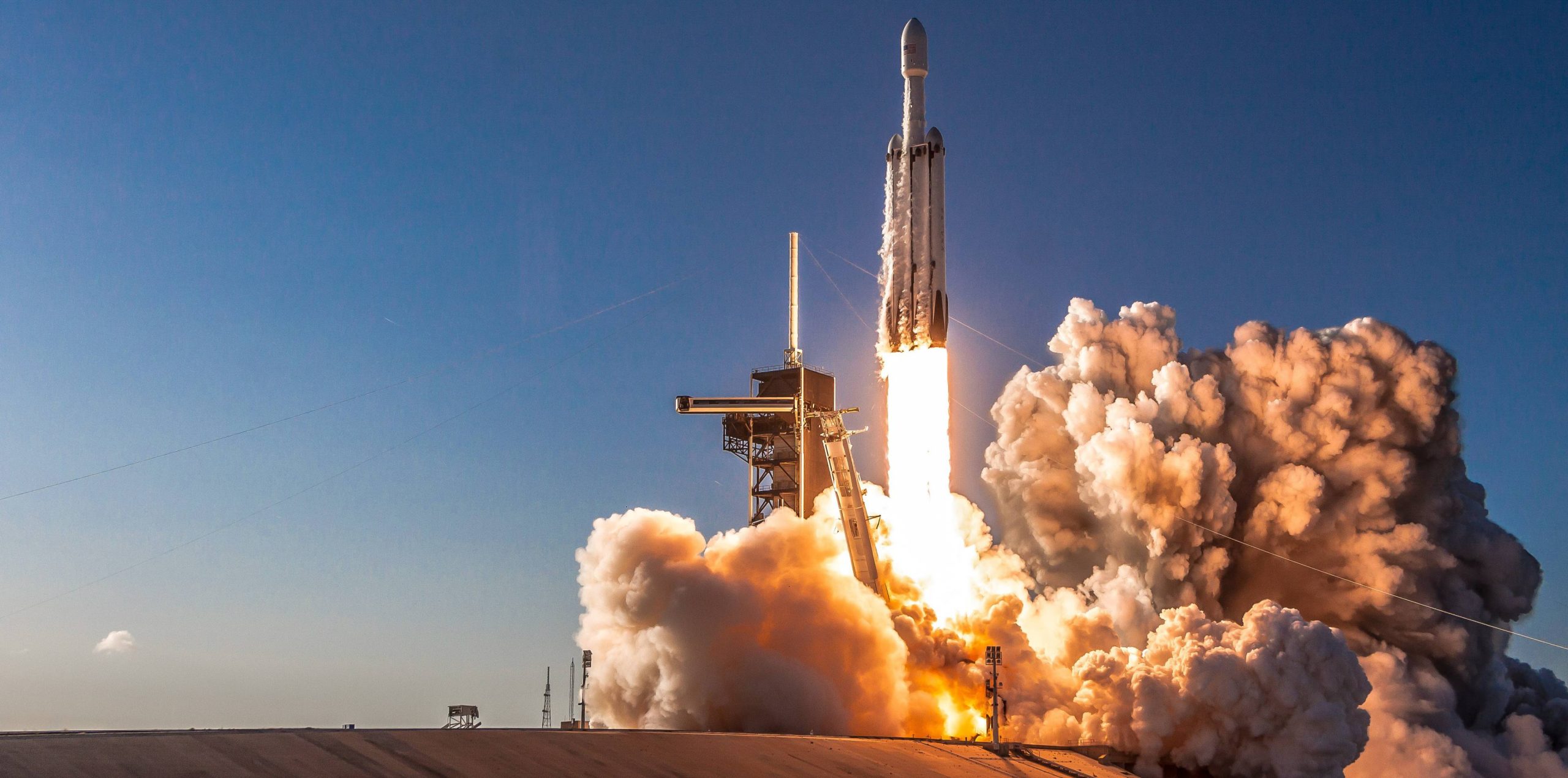
Meanwhile, the Falcon upper/second stage (S2) spotted in the tweet at the top of the article serves as evidence of preparations for launches planned in May/June, as do a duo of first stage boosters spied during their own Cape Canaveral arrivals. All that’s missing to round out a busy week of SpaceX transportation is the appearance of one or several payload fairings, although CEO Elon Musk says that the company will try to reuse Falcon Heavy Flight 2’s fairing on the first Starlink launch.
Said Starlink launch – unofficially labeled Starlink-1 – is currently scheduled for liftoff no earlier than mid-May, likely making it the SpaceX mission that will follow CRS-17. The most likely Falcon 9 S1 candidate is the thrice-flown Block 5 booster B1046, a move that would retire risk otherwise transmitted to customers. SpaceX has now flown two separate Falcon 9 boosters (B1046 and B1048) three times without major issue, meaning that the fourth flight of the same booster (and beyond) will be new territory for reuse at some level.


Beyond Starlink-1, SpaceX has the communications satellite Amos-17 and Radarsat Constellation Mission (RCM), both of which are understood to be targeting launch no earlier than (NET) early June. Finally, Falcon Heavy Flight 3 – carrying the US Air Force’s STP-2 mission – is scheduled to launch NET June 22nd, although some additional delays are probable.
From a business-as-usual perspective, the fact that Crew Dragon C201 failed during intentional testing on the ground means that it will likely be SpaceX’s least commercially disruptive failure yet. This could change for any number of reasons, depending on the conclusions drawn by the joint NASA-SpaceX investigation soon to begin, and it’s far too early to draw far-reaching conclusions. Chances are good that the impact to non-Crew Dragon launches will be minimal but only time will tell as SpaceX begins to quite literally pick up the pieces and start a deep-dive analysis of all data gathered from Saturday’s failure.
Check out Teslarati’s Marketplace! We offer Tesla accessories, including for the Tesla Cybertruck and Tesla Model 3.


Elon Musk
The Starship V3 static fire everyone was waiting for just happened
SpaceX completed a full duration of Starship V3 today clearing the path for Flight 12.

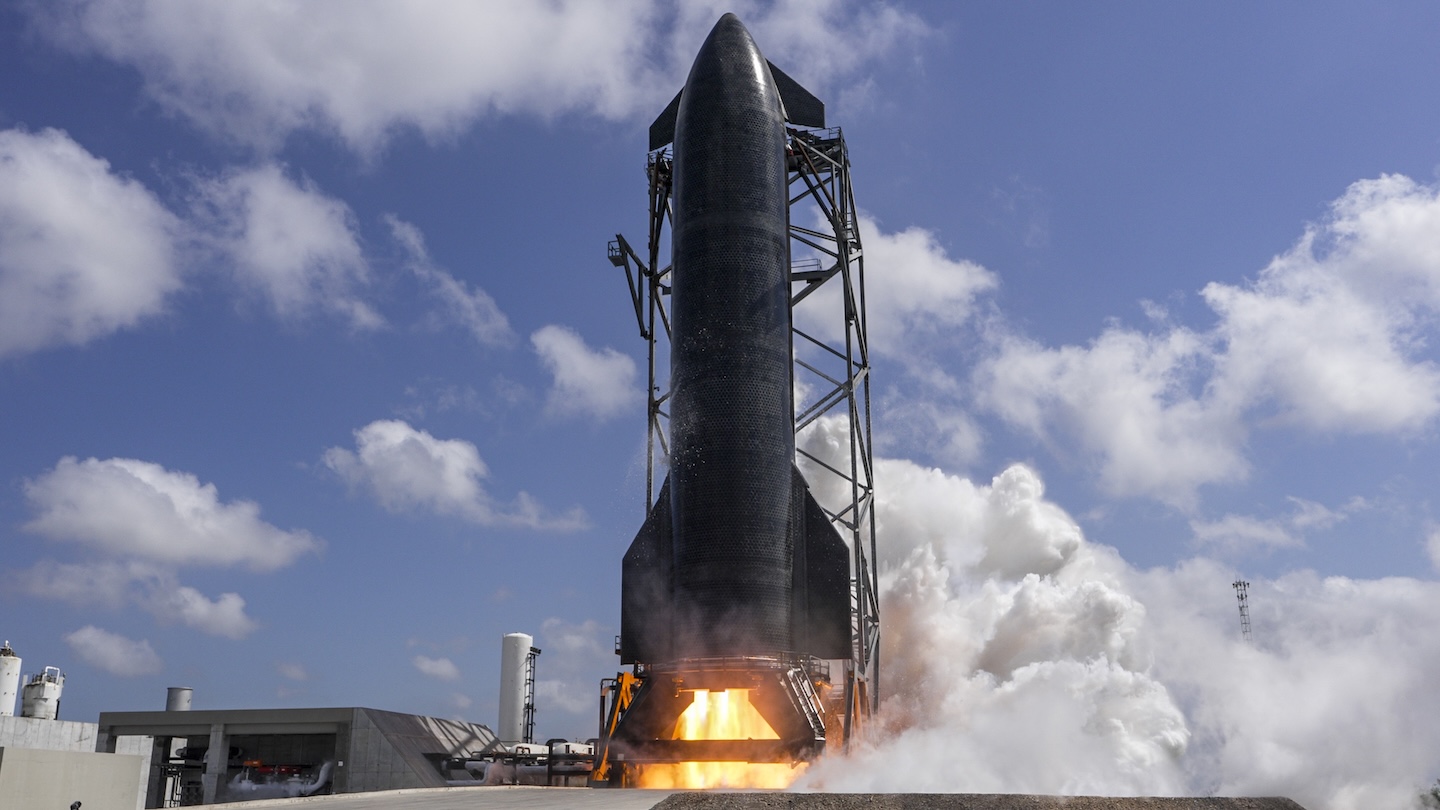
SpaceX is that much closer to launching their next-gen Starship after completing today’s full duration static fire out of Starbase, Texas. This marks a direct signal that Flight 12, the maiden voyage of Starship V3, is imminent. SpaceX confirmed the test on X, posting that the full duration firing was completed ahead of the vehicle’s next flight test.
The road to today started on March 16, when Booster 19 completed a shorter 10-engine static fire, also at the newly constructed Pad 2. That test ended early due to a ground systems issue but confirmed all installed Raptor 3 engines started cleanly. Booster 19 returned to the Mega Bay, received its remaining 23 engines for a full complement of 33, and rolled back out this week for the complete test campaign. Musk confirmed earlier this month that Flight 12 is now 4 to 6 weeks away.
Countdown: America is going back to the Moon and SpaceX holds the key to what comes after
The numbers behind the world’s most powerful rocket are genuinely hard to put in context. Each Raptor 3 engine produces roughly 280 tons of thrust, and with all 33 firing simultaneously from the super heavy booster, this generates approximately 9,240 tons of combined thrust, more than any rocket in history. For context, that’s enough thrust to lift the entire Empire State Building, and then some. V3 stands 408 feet tall and can carry over 100 tons to low Earth orbit in a fully reusable configuration. The V2 generation topped out at around 35 tons.
Historically, a successful full-duration static fire is the last major ground milestone before launch. SpaceX has followed this pattern with every Starship iteration since the program began in 2023. Musk has been direct about the ambition behind all of it. “I am highly confident that the V3 design will achieve full reusability,” he wrote on X earlier this year. Full reusability of both stages is the foundation of SpaceX’s plan to make regular flights to the Moon and Mars economically viable. Today’s test brings that goal one significant step closer.
Starship V3 delivers on two most critical promises of full reusability and in-orbit refueling. The reusability case is straightforward, and one we have seen with Falcon 9 wherein the rocket can fly again within a day rather than building a new one for every mission. It’s the only economic model that makes frequent lunar cargo runs viable. The in-orbit refueling piece is less obvious but equally essential. To reach the Moon with enough payload, Starship requires roughly ten dedicated tanker flights to fuel up a propellant depot in low Earth orbit before it can even begin its journey to the lunar surface. That capability has never been demonstrated at scale, and Flight 12 is the first step toward proving it works. As Teslarati reported, NASA’s Artemis II crew completed a historic lunar flyby earlier this month, the first humans to travel beyond low Earth orbit since 1972, but getting astronauts to actually land and eventually supply a permanent Moon base requires a cargo pipeline that only a fully reusable, refuelable Starship V3 can deliver at the volume and cost NASA’s plans demand.
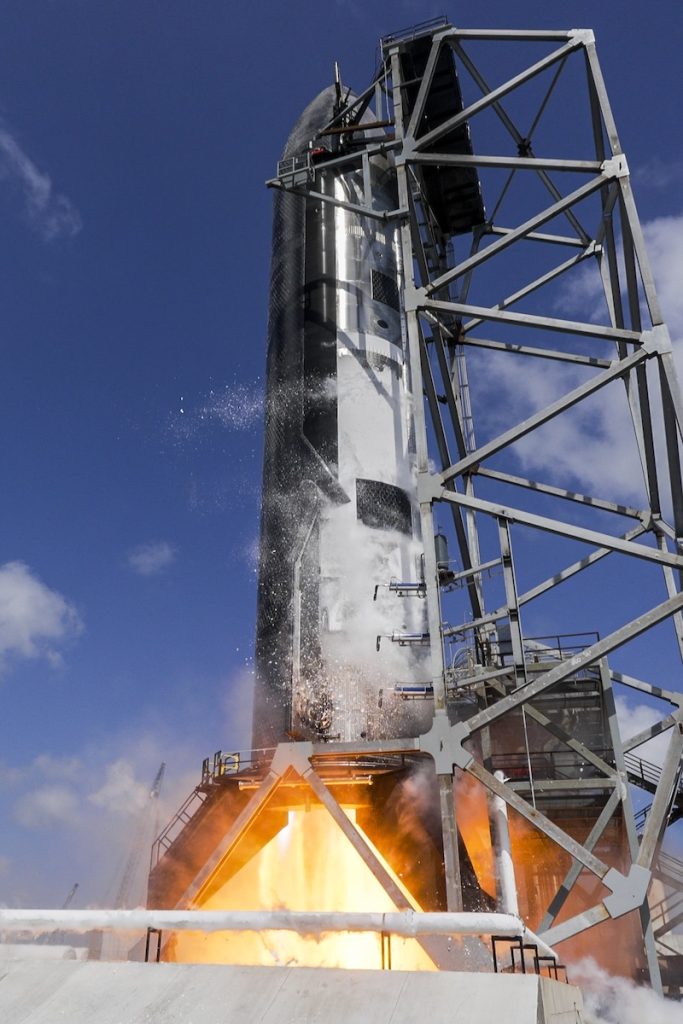
SpaceX Starship full duration static fire on April 14, 2026 from Starbase, Texas (Credit: SpaceX)
Elon Musk
SpaceX is keeping the Space Station alive again this weekend
SpaceX’s Falcon 9 launches Northrop Grumman’s Cygnus NG-24 to the ISS with 11,000 pounds of cargo Saturday.
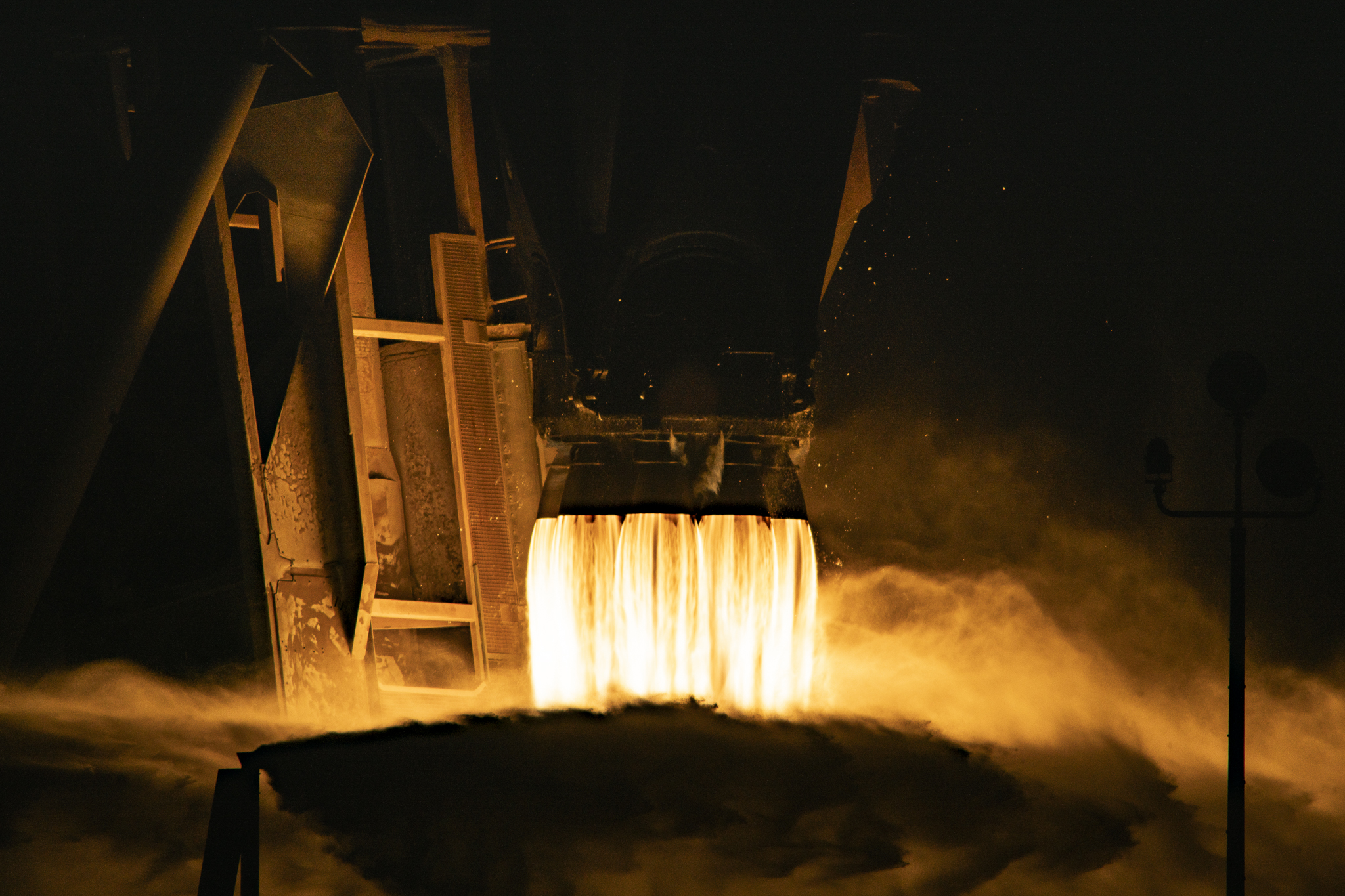
SpaceX is targeting April 11 for the launch of Northrop Grumman’s Cygnus XL cargo spacecraft to the International Space Station, carrying over 11,000 pounds of supplies, science hardware, and equipment for the Expedition 73 crew aboard. Liftoff is set for 7:41 a.m. ET from Space Launch Complex 40 at Cape Canaveral Space Force Station, with a backup window available April 12 at 7:18 a.m. ET.
The mission, officially designated NG-24 under NASA’s Commercial Resupply Services program, names its spacecraft the S.S. Steven R. Nagel in honor of the NASA astronaut who flew four Space Shuttle missions and logged over 723 hours in space before his death in 2014. Unlike SpaceX’s own Dragon capsule, which docks autonomously, Cygnus relies on NASA astronauts to capture it using a robotic arm before it is berthed to the space station’s module for unloading. When the mission wraps up around October, the Cygnus will depart loaded with station trash and burn up on reentry.
Countdown: America is going back to the Moon and SpaceX holds the key to what comes after
This is the second flight of the Cygnus XL configuration, which debuted on NG-23 in September 2025 and offers a roughly 20% increase in cargo capacity over the previous design. Northrop Grumman switched to Falcon 9 launches after its own Antares 230+ rocket was retired in 2023 following supply chain disruptions from the war in Ukraine.
The upcoming cargo includes a new module to advance quantum research, and an investigation studying blood stem cell production in microgravity with potential therapeutic applications on Earth.
The NG-24 mission is one piece of a much larger picture for SpaceX and the U.S. government. As Teslarati reported, SpaceX has become an indispensable launch provider for U.S. national security missions, picking up a $178.5 million Space Force contract in April 2026 to launch missile tracking satellites, while also holding roughly $4 billion in NASA contracts tied to the Artemis lunar program.
At a time when no other American rocket can match the Falcon 9’s combination of reliability, cost, and launch cadence, Saturday’s mission is a straightforward reminder of how much the U.S. government now depends on a single commercial provider to keep its astronauts supplied and its satellites flying.
Elon Musk
Elon Musk’s Terafab project locks up massive new partner
Terafab, first revealed by Musk in March, is a massive joint-venture semiconductor complex planned for the North Campus of Giga Texas in Austin.

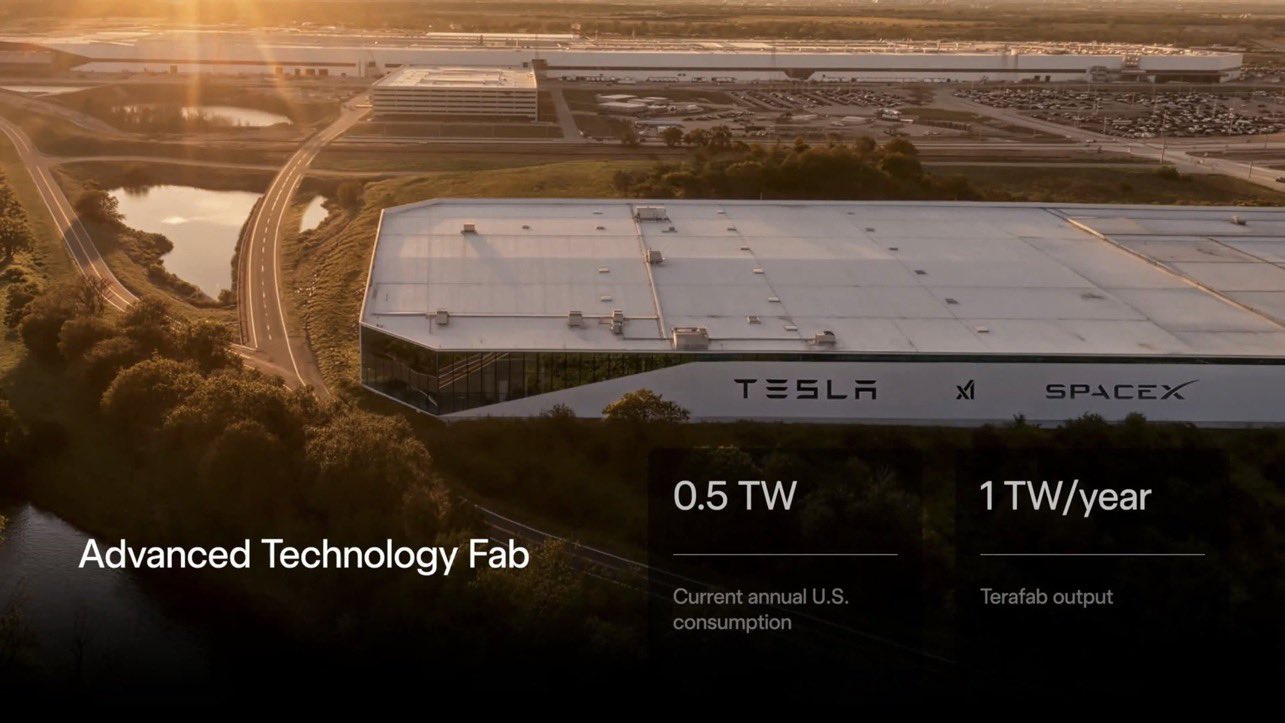
Elon Musk’s Terafab project just locked up a massive new partner, just weeks after the new project was announced by Tesla, SpaceX, and xAI, the three companies that will be direct benefactors from it.
In a landmark announcement on April 7, Intel joined Elon Musk’s Terafab project as a key partner alongside Tesla, SpaceX, and xAI. The collaboration focuses on refactoring silicon fabrication technology to deliver ultra-high-performance chips at unprecedented scale.
Intel CEO Lip-Bu Tan hosted Musk at Intel facilities the prior weekend, underscoring the partnership’s momentum with a public handshake.
Intel is proud to join the Terafab project with @SpaceX, @xAI, and @Tesla to help refactor silicon fab technology.
Our ability to design, fabricate, and package ultra-high-performance chips at scale will help accelerate Terafab’s aim to produce 1 TW/year of compute to power… pic.twitter.com/2vUmXn0YhH
— Intel (@intel) April 7, 2026
Terafab, first revealed by Musk in March, is a massive joint-venture semiconductor complex planned for the North Campus of Giga Texas in Austin. Valued at $20–25 billion, it aims to consolidate the entire chip-making pipeline, design, fabrication, memory production, and advanced packaging in a single location. It should eliminate a majority of Tesla’s dependence on third-party chip fab companies.
The facility will manufacture two primary chip types: energy-efficient edge-inference processors optimized for Tesla’s Full Self-Driving (FSD) systems, Cybercab and Robotaxi, and Optimus humanoid robots, and high-power, radiation-hardened variants for SpaceX satellites and xAI’s orbital data centers.
Elon Musk launches TERAFAB: The $25B Tesla-SpaceXAI chip factory that will rewire the AI industry
The project’s audacious goal is to produce 1 terawatt (TW) of annual compute capacity, roughly 50 times current global AI chip output.
Production is expected to begin modestly and scale rapidly, addressing Musk’s warning that chip supply could soon become the biggest constraint on Tesla, SpaceX, and xAI growth. By vertically integrating manufacturing tailored to their exact needs, Terafab eliminates supply-chain bottlenecks and accelerates iteration for AI training, inference at the edge, and space-based computing.
Intel’s participation is strategically vital. The company will contribute expertise in advanced process technology, high-volume fabrication, and packaging to help Terafab achieve its aggressive targets. For Intel, the deal strengthens its foundry business and positions it as a critical U.S. player in the AI hardware race.
For Musk’s ecosystem, it secures domestic, purpose-built silicon at a time when global capacity meets only a fraction of projected demand for hundreds of millions of robots and orbital AI infrastructure.
This is the latest chapter in Intel-Tesla ties. In November 2025, Musk publicly stated at Tesla’s shareholder meeting that partnering with Intel on AI5 chips was “worth having discussions,” amid concerns about TSMC and Samsung capacity.
Exploratory talks followed, with Intel eyeing custom-AI opportunities. The Terafab integration transforms those conversations into concrete collaboration.
The Intel-Terafab alliance carries broader implications. It bolsters U.S. semiconductor sovereignty, drives innovation in cost- and power-efficient AI silicon, and supports Musk’s vision of exponential progress in autonomy, robotics, and space.
As AI compute demand surges, this partnership could reshape the industry, delivering the silicon backbone for a new era of intelligent machines on Earth and beyond.

Tesla expands Unsupervised Robotaxi service to two new cities

Tesla is pushing Robotaxi features to owner cars with Spring Update


