News
Tesla just tipped its hand on a major Cybercab feature as production hits Plaid Mode
Tesla has delivered a clear signal that its Robotaxi ambitions are shifting into high gear. On April 17, longtime factory observer and drone pilot Joe Tegtmeyer captured drone footage and still images showing approximately 14 freshly built Cybercabs parked in the outbound lot—each one conspicuously lacking a steering wheel.

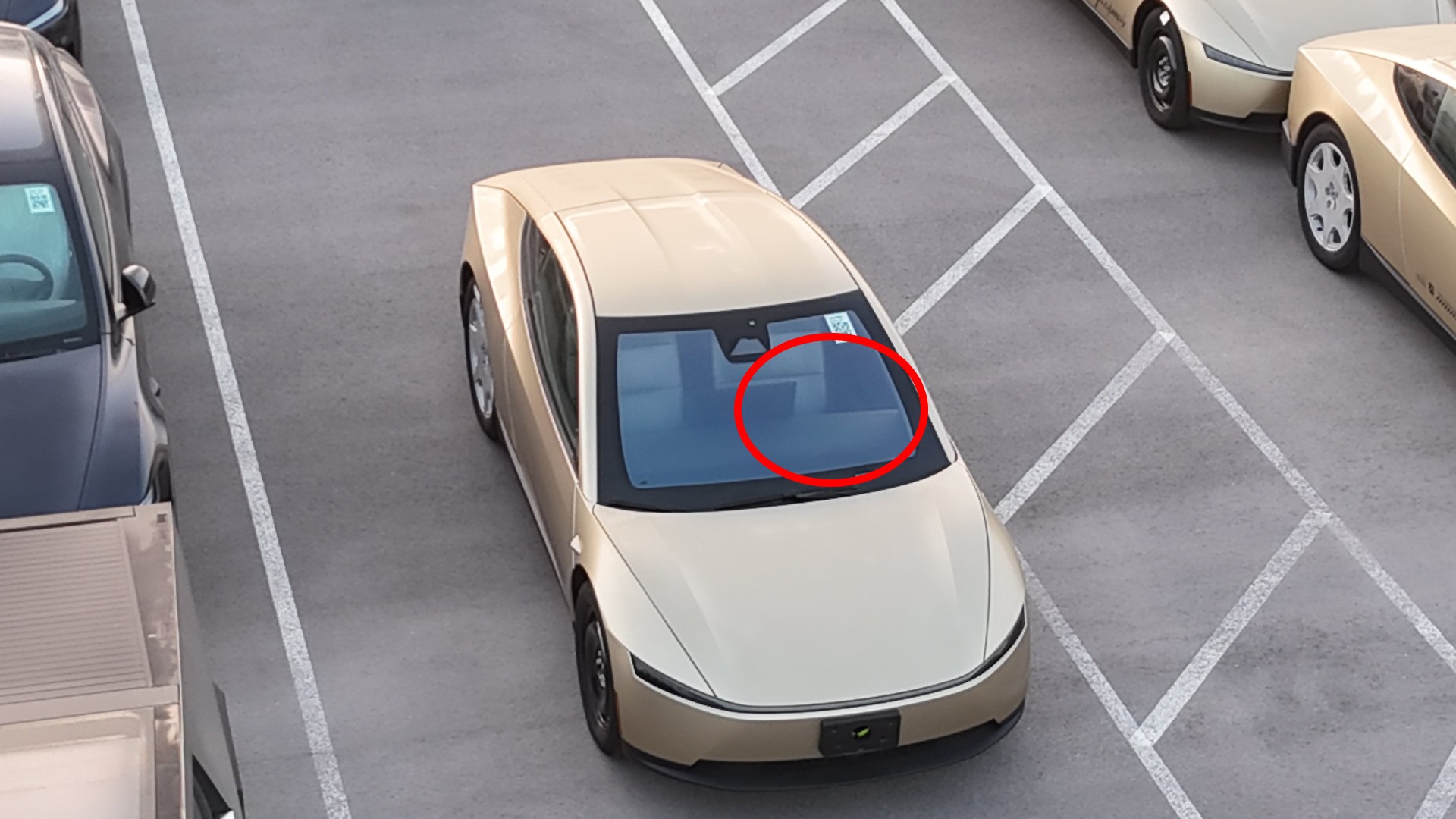
Tesla just tipped its hand on a major Cybercab feature as it is putting production into Plaid Mode, but a clear indication of what the company plans to do with the vehicle is now apparent.
Tesla has delivered a clear signal that its Robotaxi ambitions are shifting into high gear, and it’s doing it with full autonomy in mind.
On April 17, longtime factory observer and drone pilot Joe Tegtmeyer captured drone footage and still images showing approximately 14 newly built Cybercabs parked in the outbound lot, each conspicuously lacking a steering wheel, and potentially pedals.
Tegtmeyer’s post highlighted the significance of this development: The images and video reveal sleek, two-seat Cybercabs in their final production form: no driver controls, no side mirrors, and the minimalist interior first unveiled at Tesla’s “We Robot” event in October 2024.
Something big has changed at Giga Texas with Cybercab production … ~ 14 in the outbound lot WITHOUT STEERING WHEELS!
Earlier this week, the production line has begun what we are all waiting for and I would expect to see many more starting on Monday, 4/20 🤠
A big step… pic.twitter.com/K17ZzBlQ8k
— Joe Tegtmeyer 🚀 🤠🛸😎 (@JoeTegtmeyer) April 17, 2026
These units contrast with earlier test vehicles spotted at the factory’s crash-test area, which carried temporary steering wheels and pedals to meet current federal regulations during data-collection phases.
The outbound-lot vehicles appear complete, with production wheels, tire stickers, and the signature Cybercab styling ready for deployment.
This sighting represents a pivotal transition. Tesla designed the Cybercab from the ground up as a purpose-built robotaxi, engineered for unsupervised Full Self-Driving (FSD) operation. Removing manual controls eliminates cost, complexity, and weight while maximizing interior space and range.
The move also signals that Tesla has cleared initial validation hurdles and is now building vehicles to the exact specification intended for commercial robotaxi service.
Industry watchers note the timing aligns with Tesla’s broader rollout plans. Production of early Cybercabs began in late 2025 and early 2026, primarily for internal testing and regulatory compliance.
Federal Motor Vehicle Safety Standards currently limit vehicles without steering wheels to 2,500 units per year without exemption, a cap that Tesla is navigating through ongoing filings.
Tesla Cybercab spotted next to Model Y shows size comparison
The appearance of steering-wheel-free units in the outbound lot suggests the company is preparing a small initial fleet—likely for Austin pilot operations or further validation—while pushing for regulatory relief to scale output.
The development comes as Tesla ramps its dedicated Cybercab line at Gigafactory Texas. If the Monday surge materializes as predicted, observers expect dozens more units to accumulate rapidly.
With unsupervised FSD advancing and regulatory conversations ongoing, these wheel-less Cybercabs parked under the Texas sun represent more than hardware—they embody Tesla’s bet that autonomous mobility is no longer a prototype dream but an imminent reality.


Elon Musk
Elon Musk’s surprise addition to the X Takeover lineup has fans talking
Elon Musk will join Saturday’s X Takeover at Giga Texas for a live virtual interview.

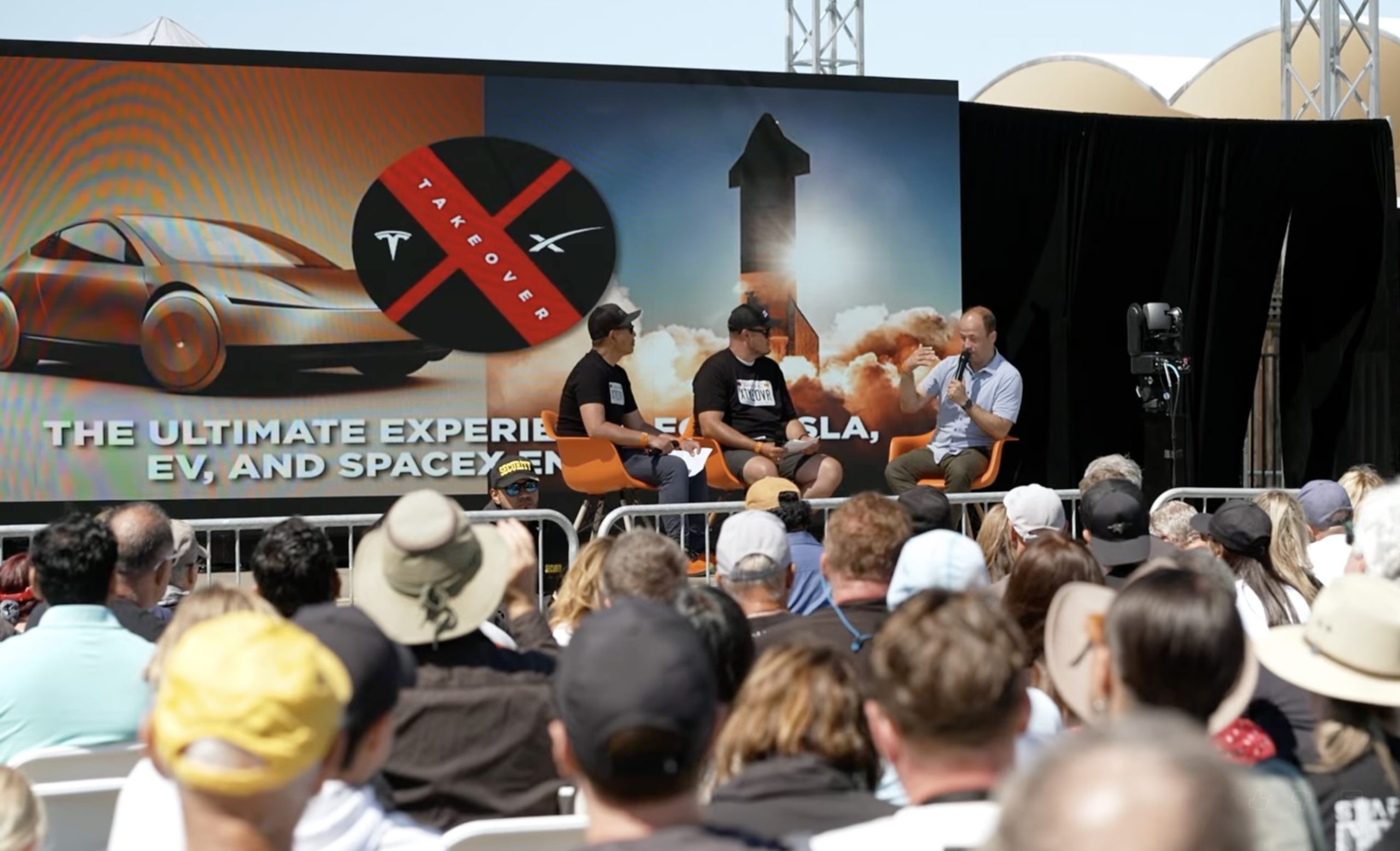
Elon Musk will join X Takeover at Giga Texas on Saturday for a live virtual interview, according to Sawyer Merritt, who shared the news late Thursday. Musk will not be on stage in Austin. The conversation is set to stream for free on the @teslaownersSV account on X.
Organizers had kept expectations in check. In a September update, Tesla Owners Silicon Valley said Musk had appeared at the event twice before but was not promising a third appearance, even as fans hoped he would walk the Giga Texas grounds in person. A virtual spot matches 2024, when Musk gave a surprise interview of about an hour to the crowd in San Luis Obispo, as Teslarati reported at the time.
Wasn’t expecting this 🫡
— Tesla Owners Silicon Valley (@teslaownersSV) October 9, 2026
This year’s edition is a first in several ways. It is the first X Takeover held outside California and the first at a Tesla facility, with tickets selling out in eight days. Tesla provides the venue, but the event is produced independently by Tesla Owners Silicon Valley. The main event runs from 10 a.m. to 6 p.m. CT, followed by a drone and light show at 9 p.m. Maye Musk is the keynote speaker, Franz von Holzhausen is set for a virtual keynote, and Nicki Minaj is the special guest. Joe Tegtmeyer, whose drone footage Teslarati used to track the Optimus factory steel frame at Giga Texas, is also on the speaker list.
Musk’s interview topics have not been revealed, but the backdrop is busy. Tesla doubled its Cybercab fleet in Austin in late September, and last week Musk explained why Robotaxi hours only moved from 10 p.m. to 11 p.m.. Merritt also reported Thursday that Texas DMV records now show 319 registered Cybercabs, up from 169. NHTSA’s deadline for Tesla’s sworn answers on Cybercab certification is October 30, and Tesla reports third quarter earnings on October 21.
Fans who cannot make it to Austin can watch the livestream on X. Musk tends to say more in unscripted settings than he does in prepared remarks, which is the reason this one is worth having open on Saturday.
News
It’s official: SpaceX takes aim at Verizon, AT&T, and T-Mobile
SpaceX is buying 800 MHz spectrum from Grain to turn Starlink Mobile into a carrier.
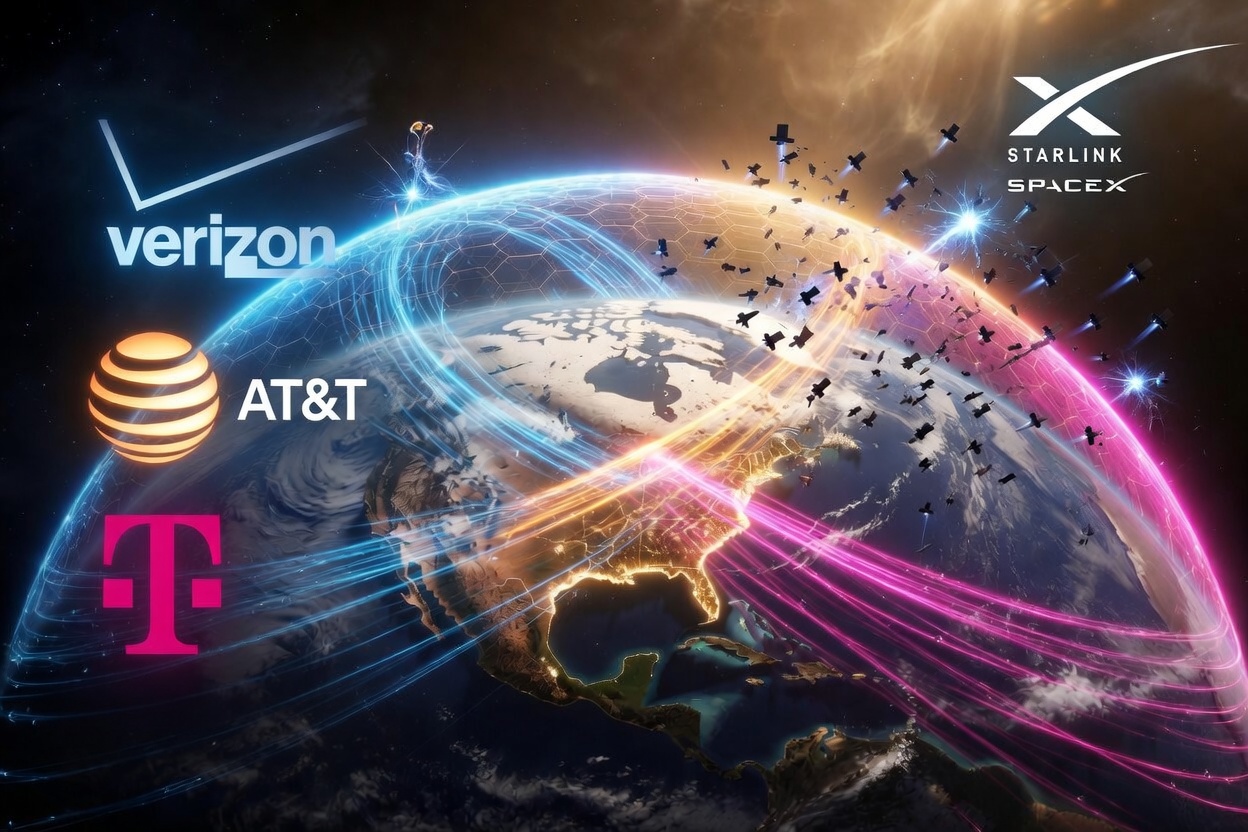
SpaceX has agreed to buy a nationwide block of low band wireless spectrum, a deal the company says will let Starlink Mobile operate as a full US carrier rather than a satellite add-on for someone else’s network.
The company announced the agreement on X on Thursday afternoon, saying it will “pave the way for @Starlink to become a major mobile carrier in the US.” The seller is Grain Management, a private investment firm that confirmed in a statement that SpaceX will acquire 100% of its nationwide 800 MHz portfolio. That covers up to 14 MHz of paired spectrum in the 817 to 824 MHz and 862 to 869 MHz bands. Neither side disclosed a price, and the deal still needs FCC approval.
We announced an agreement to acquire a nationwide low-band spectrum license portfolio that will pave the way for @Starlink to become a major mobile carrier in the US.
With this new spectrum and our Gen2 constellation, Starlink Mobile can ensure Americans have access to high-speed mobile broadband no matter where they are → https://t.co/1Uaf48v5pm
— SpaceX (@SpaceX) October 8, 2026
Grain only recently picked up the licenses itself. It bought the portfolio from T-Mobile in a transaction that closed in August, paying cash plus its own 600 MHz spectrum. Rival AST SpaceMobile had been testing satellites on the same bands before SpaceX stepped in.
SpaceX said its 2 GHz spectrum will handle high bandwidth capacity, while the new 800 MHz layer “ensures Starlink Mobile’s signal penetrates through obstacles, such as walls, and can provide service to customers’ devices even when they are in buildings.” The company added that most existing phones already support the band, so customers would not need new hardware to use it.
That 2 GHz spectrum came from SpaceX’s EchoStar acquisition last year, which gave the company exclusive S band rights in the US and global Mobile Satellite Service licenses. The Grain spectrum is different in an important way: it is tailored for service from ground towers, not satellites. SpaceX said that combination would make Starlink Mobile “the first network operator to deploy both satellite and terrestrial spectrum.”
The announcement also follows a key regulatory win. Earlier this week, the FCC approved SpaceX’s plan to deploy 15,000 second generation Starlink Mobile satellites, which the company has said will carry up to 100 times the data density of the current system, as Teslarati previously reported.
Shares of AT&T, Verizon and T-Mobile fell in extended trading after the announcement. T-Mobile is currently SpaceX’s launch partner for Starlink Mobile in the US, which makes its position the most complicated of the three.
SpaceX has not been subtle about its plans. During the company’s August earnings call, President and COO Gwynne Shotwell said she expected Starlink Mobile to win over customers from the major carriers. “I anticipate us to be able to acquire quite a few of their customers because I think our service will be better,” she said, pointing to dead zone coverage and resilience during disasters. Shotwell also described plans for low cost cellular base stations that could pair with existing Starlink dishes.
SpaceX has targeted 2027 for deployment of its next generation Starlink Mobile satellites, with upgraded service expected by the end of that year. The FCC review of the Grain deal now determines when the terrestrial half of that network can come online.
Elon Musk
Trump presents Elon Musk with National Medal of Science, calls him “modern-day Thomas Edison”
Trump gave Elon Musk the National Medal of Science and compared him to Thomas Edison.
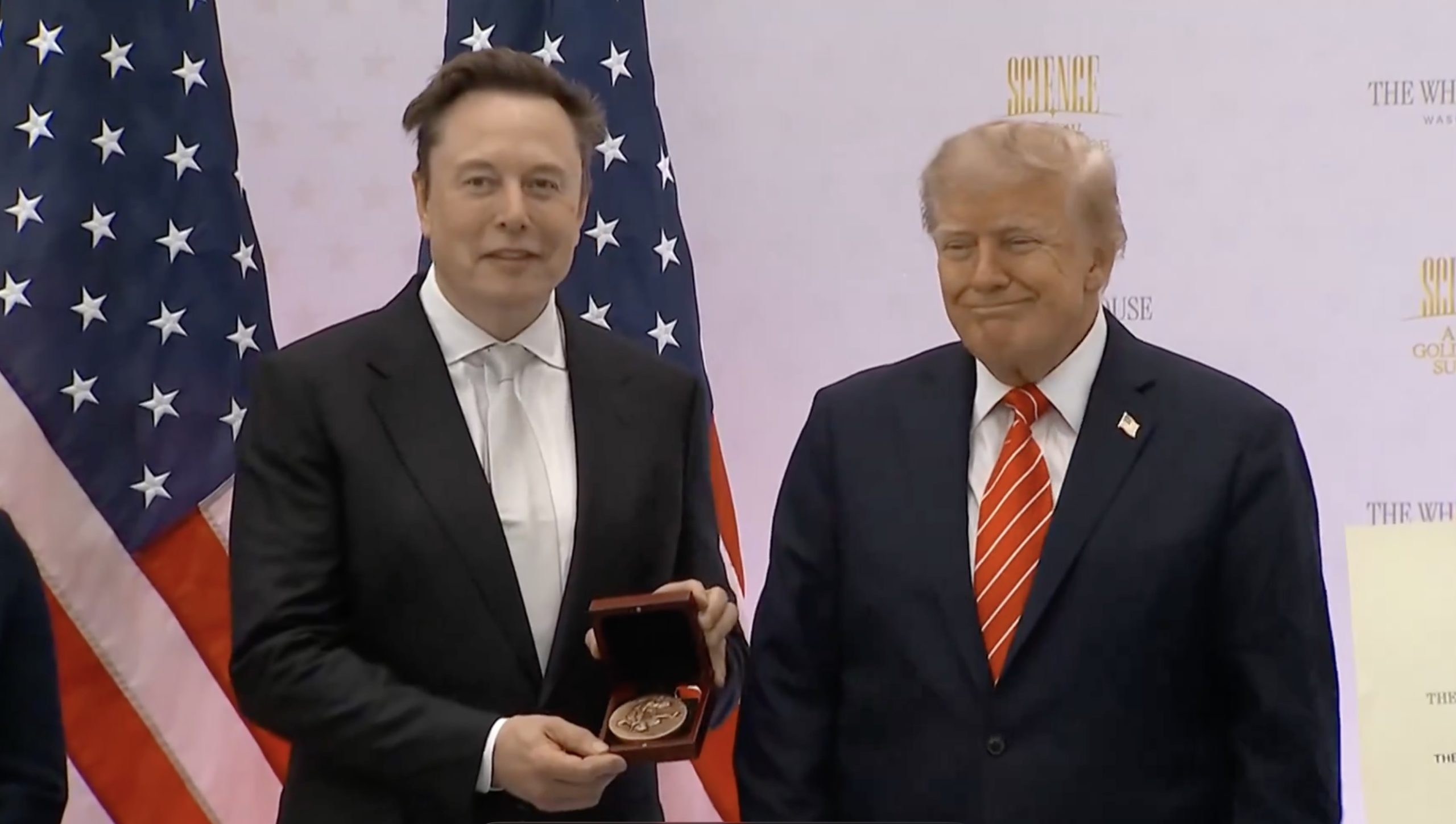
Elon Musk now has the highest honor the U.S. government gives to scientists and engineers. President Donald Trump presented him with the National Medal of Science on Thursday at the White House’s “Science: A New Golden Age” summit, held at the Institute of Peace in Washington, according to the White House.
Trump called Musk a “national treasure” and “our modern-day Thomas Edison.” “Few Americans in history have done more to advance America’s national interest than Elon in one field after another,” the president said. He also described Musk as an “industrial titan, brilliant engineer and one of the greatest technology founders to ever live.”
The official citation credits Musk “for engineering achievements of extraordinary ambition and scale that have pushed the frontiers of space exploration, intelligent systems, communications, and beyond, renewing American technological leadership and opening a new chapter in American manufacturing.” Tesla is not named in it, but “intelligent systems” and “American manufacturing” cover a lot of ground that Tesla and the Terafab chip project occupy.
Google co-founder Sergey Brin, Nvidia CEO Jensen Huang and AMD CEO Lisa Su received the same medal. Microsoft CEO Satya Nadella and Dell Technologies CEO Michael Dell were given the National Medal of Technology and Innovation. It was the first time Trump has handed out either award in his two terms. As Teslarati noted when the list was first reported on Wednesday, the National Science Foundation says 529 people have received the Medal of Science since Congress created it in 1959.
🚨 IT’S OFFICIAL: President Trump just PERSONALLY presented Elon Musk the National Medal of Science for his INCREDIBLE contributions to our nation
I can’t think of ANYONE who deserves this honor more 👏🏻
Congratulations, @elonmusk! https://t.co/GkAaVp9wb9
— Nick Sortor (@nicksortor) October 8, 2026
The ceremony closes a loop that opened in 2025, when Musk left DOGE and criticized the “Big Beautiful Bill,” sparking a public feud. Al Jazeera noted that Musk was the largest contributor to Trump’s 2024 campaign, and CNBC reported that all of the honorees have given financially to Trump or Republican causes in some form. The reconciliation has moved quickly in recent weeks. Musk sat at Trump’s left at the September 29 White House AI lunch, was named to help lead the Pentagon’s Project Meridian study on the future of warfare, and adopted the administration’s “super intelligence” wording when he said SpaceXAI will become SpaceXSI.
For Tesla and SpaceX shareholders, the practical question is what the closer relationship means for federal approvals. Tesla’s Robotaxi and Cybercab expansion depends on national autonomy rules, and SpaceX’s Starship and Starlink plans run through the FAA, FCC and NASA. Thursday’s ceremony did not change any of that directly.

Elon Musk’s surprise addition to the X Takeover lineup has fans talking

It’s official: SpaceX takes aim at Verizon, AT&T, and T-Mobile

Trump presents Elon Musk with National Medal of Science, calls him “modern-day Thomas Edison”

The Pentagon taps Elon Musk to design the battlefield of the future

Tesla Roadster’s new patent preps white-knuckle speeds, keeping it grounded


