SpaceX
Telstra Unveils Starlink-Powered Satellite Text Messaging in Australia

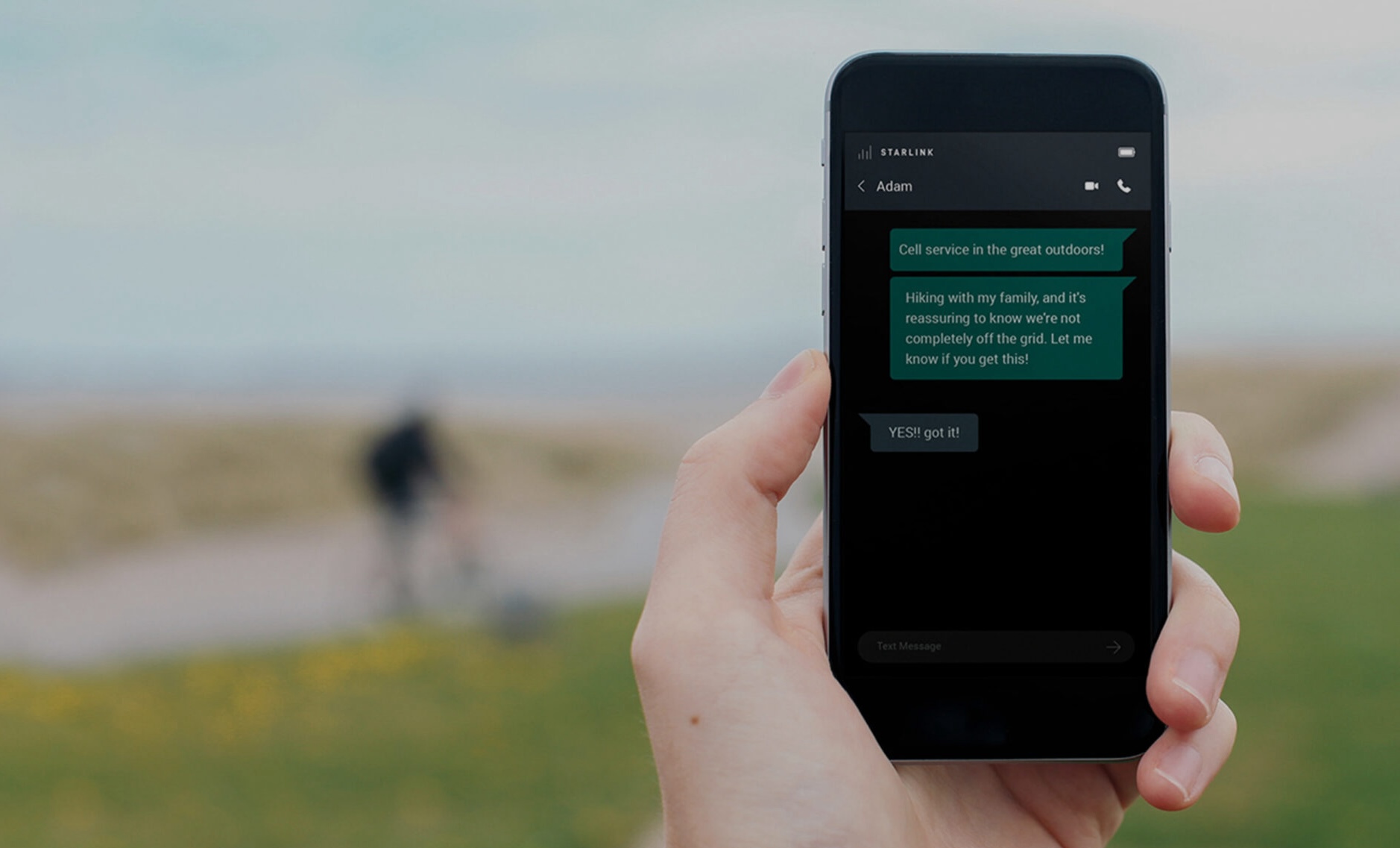
Australian telco Telstra has launched its Starlink-powered satellite text messaging service, a groundbreaking step in enhancing connectivity across the nation. Telstra x Starlink’s direct-to-device (D2D) service enables customers with Samsung Galaxy S25 devices to send and receive text messages in areas without mobile coverage, provided they have a clear view of the sky.
The Telstra Satellite Messaging service rolls out over the coming weeks. The service will allow users on select month-to-month mobile plans to communicate via the Starlink Direct to Cell satellite network. It targets remote locations, ensuring connectivity where traditional mobile networks are unavailable.
“From today, we’re rolling out Telstra Satellite Messaging – Australia’s first satellite to mobile text messaging product, available for consumer and small business customers on Telstra month-to-month mobile plans with a device from the Samsung Galaxy S25 series family,” Telstra announced.
Eligible customers with a Samsung Galaxy S25 and updated with the latest Android software can access Telstra xStarlink’s Satellite Messaging service as part of their core plan. Devices automatically connect to the Starlink network when mobile coverage is absent, requiring only an outdoor location with a direct line of sight to the sky. The launch follows extensive testing by Telstra engineers across Australia’s most remote regions. The Aussie telecom company promises ongoing refinements to ensure reliability.
The initiative reflects Telstra’s commitment to pioneering connectivity solutions. “Being able to send or receive a text message from an outdoor location that is beyond the range of our mobile network is a significant step forward and reinforces our commitment to pioneer new connectivity options for Australians,” the company stated.
The service is set to expand to more devices, with future capabilities expected to include data and voice calls, further bridging connectivity gaps.
Telstra’s collaboration with SpaceX positions Australia at the forefront of satellite-based communication. As the rollout progresses, the service could redefine how Australians stay connected in remote areas, leveraging Starlink’s satellite network to deliver seamless communication. With plans to enhance the service, Telstra’s satellite text messaging marks a milestone in ensuring no corner of the country is left disconnected.


Elon Musk
Tesla Roadster owners to get “Flying Stunt Mode” and looping track access
Musk says Roadster owners can command the unveiling stunts autonomously, with a Texas looping track.

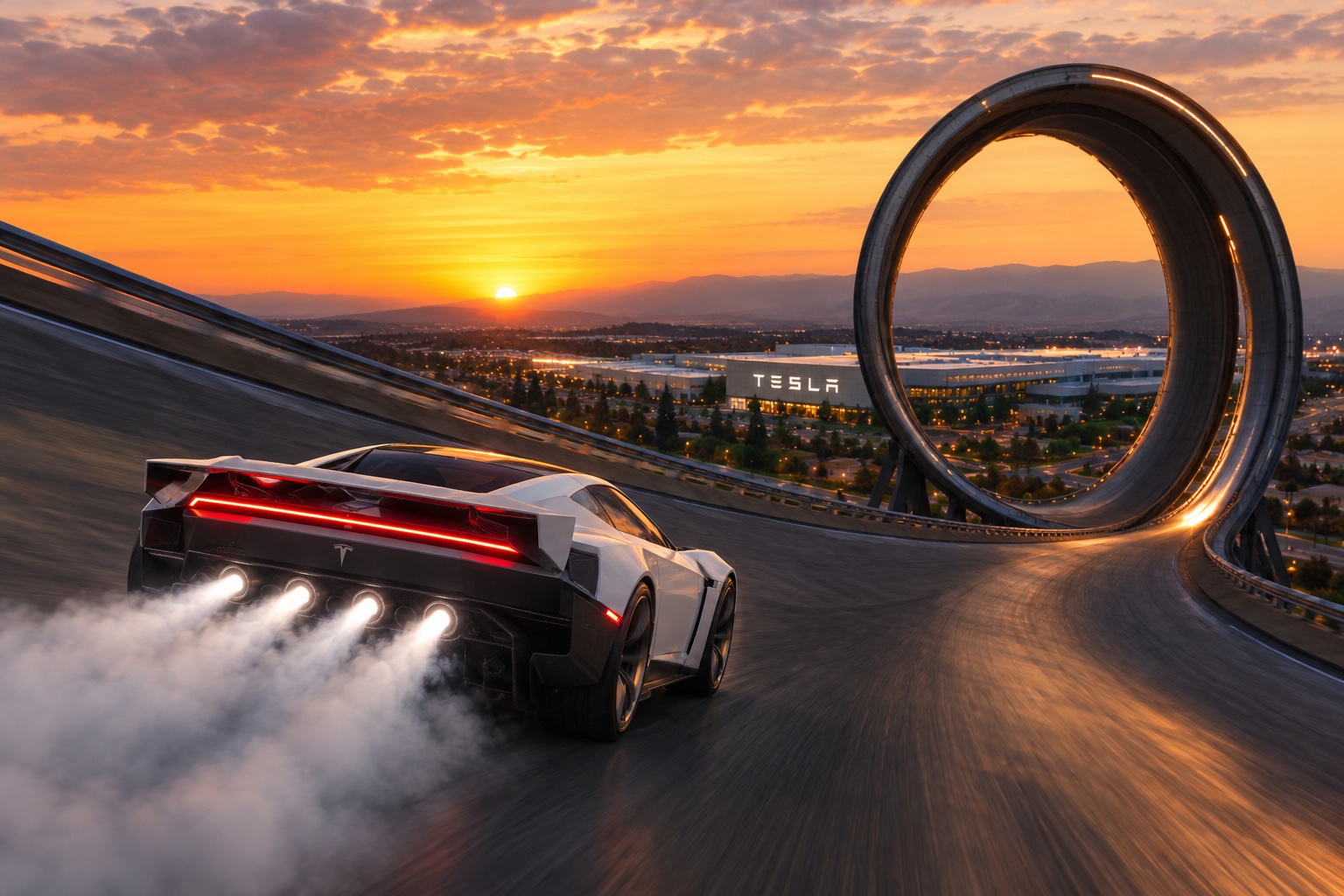
Elon Musk says owners of the new Tesla Roadster will be able to ask the car to perform the stunts Tesla showed at its unveiling, with the car doing the driving itself. Musk made the comment Saturday in a reply on X to tech blogger Robert Scoble, and he added a promise of a looping track at Tesla’s Texas headquarters.
Scoble had argued that the person in the Roadster is not really driving it. In his description, the driver operates a computer that tells another computer what to do, with steering, braking and acceleration all handled by wire. Musk answered, “True. You will be able to ask the Roadster to perform any of the tricks shown autonomously, as it will be sentient. Also, we will have a wild looping track (crazier even than Hot Wheels) at our Texas HQ where you can test out your Roadster.”
@Scobleizer True.
You will be able to ask the Roadster to perform any of the tricks shown autonomously, as it will be sentient.
Also, we will have a wild looping track (crazier even than Hot Wheels) at our Texas HQ where you can test out your Roadster.
— Elon Musk (@elonmusk) October 17, 2026
At the October 15 event outside Waco, the car drove up a curved ramp until it was upside down, flew off on cold gas thrusters, flipped and landed. It also hovered over a Cybercab, Cybertruck, Semi, Model Y and Model 3 while moving. As we noted in our breakdown of the three Roadster configurations, Musk said at the event that the car “literally is just going to puff itself up” to perform the maneuvers whenever an owner wants. Saturday’s reply adds that the car would run them on its own.
Tesla has described some of the hardware that would make that possible. The Roadster uses steer by wire with a yoke, and its cold gas thrusters rely on electric actuators for small adjustments in flight. A fan system under the car creates suction, which Tesla says is strong enough to hold it upside down, a setup we covered in our look at the Roadster’s fan system and thrusters.
Musk did not say when an autonomous stunt feature might arrive, how it would work, or what he means by sentient. He also gave no size, location or opening date for the Texas track. Production is planned for Giga Texas in 2027 or 2028, and Tesla says the car is not approved for public road use. The Rocket version, the one built to fly, is invite only.
The comment follows a week of Musk teasing the event, including his claim that the demo would be a banger, which we covered before the stream. Tesla reports third quarter earnings on October 21, and shareholders can submit and vote on questions through the Say portal until 4 p.m. EDT on October 20, according to our earnings Q&A preview. A question about autonomous Roadster stunts and the Texas track would be a quick way to get specifics from management.
Investor's Corner
Tesla’s flying Roadster just revealed something bigger than the car
Analysts say the Roadster demo puts a Tesla and SpaceX merger back on the table.
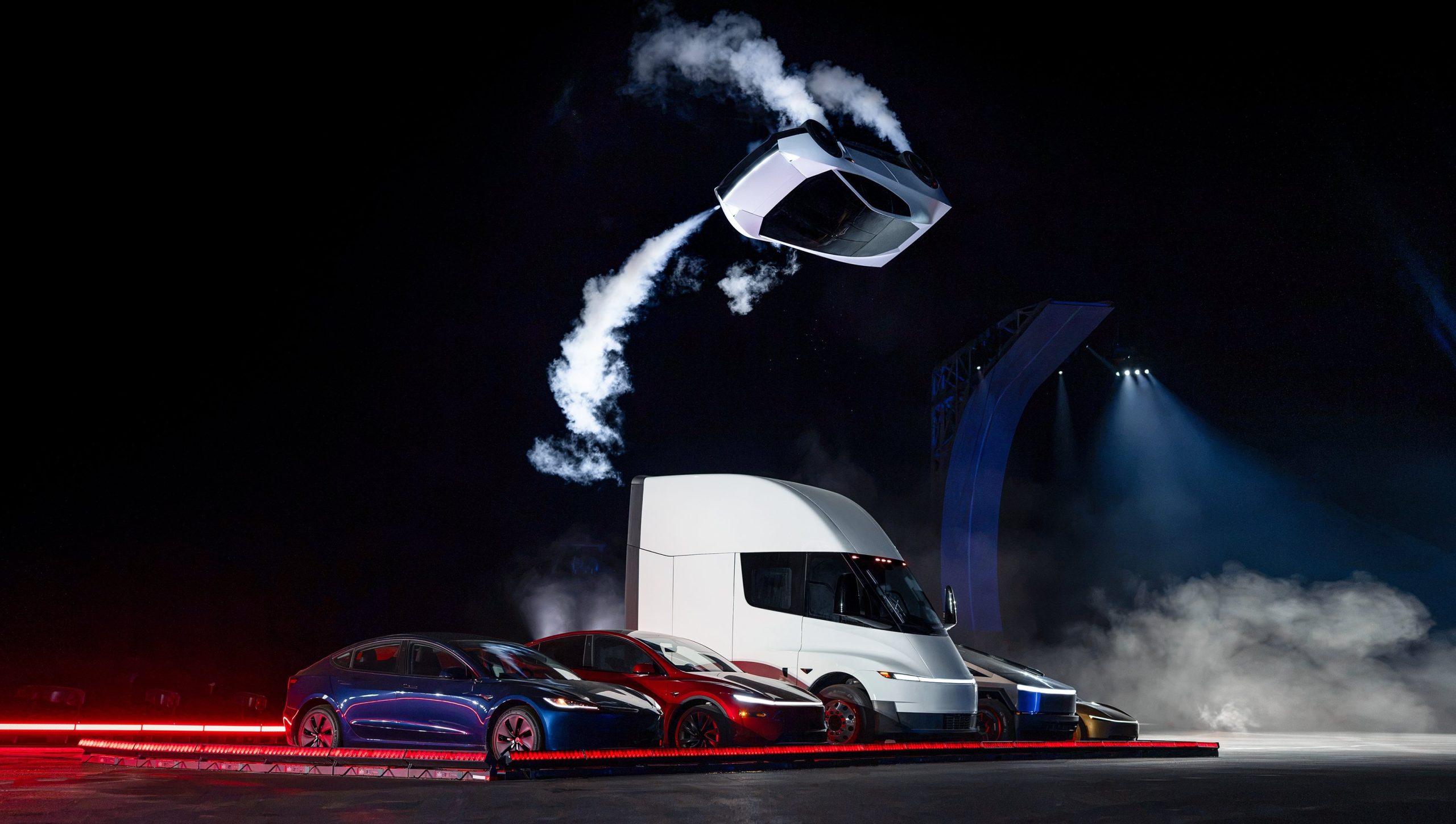
The Roadster unveiling near Waco ended Thursday night, and by Friday morning much of the investor reaction had less to do with the car than with who owns the rocket technology inside it.
Wedbush analyst Dan Ives said the event “puts the Tesla/SpaceX relationship on the table in a tangible way,” pointing to the propulsion, pressure vessel and control hardware sitting on a Tesla product. Gene Munster of Deepwater Asset Management called the demo “a ridiculous display of engineering” with “no commercial value” beyond embarrassing traditional automakers, though he said it showed Musk wants the two companies together.
The more specific forecast came a day earlier from Barclays. Analyst Dan Levy told clients a deal could be announced before Tesla’s annual meeting, which must happen by December 6, and that an announcement in late October or early November could make shareholder approval harder. Barclays expects SpaceX to be the buyer in an all stock deal, with Tesla holders receiving SpaceX shares at a premium, based on market values of roughly $2.1 trillion for SpaceX and $1.5 trillion for Tesla. If nothing lands around the meeting, the bank still sees an announcement within 6 to 12 months.
The Roadster demo just added more weight to merger speculations. Tesla’s demo used cold gas thrusters and pressure tanks of the kind SpaceX uses on Falcon 9, and Musk described the car as a collaboration between Tesla and SpaceX engineers, as we mentioned in our breakdown of the three Roadster configurations.
Musk has not publicly addressed a deal since the event, as far as we have seen. His most direct answer remains the one he gave at the All In Summit, when he said that with so much collaboration, “who can imagine what action one might take” without ruling anything out. Ives has held to a 2027 timeline since his March note, and Musk pushed back on the China piece of the speculation when ARK floated a year end announcement in August.
The next test is Tesla’s third quarter earnings call on October 21. However, we recall in July that Musk told analysts, “we can’t talk about combining companies and that kind of thing on an earnings call,” so a clear answer wouldn’t be expected.
Elon Musk
Elon Musk says Tesla’s Roadster demo could be a bang, quite literally
Musk says tonight’s Roadster demo will be a banger, maybe literally. The clues add up.
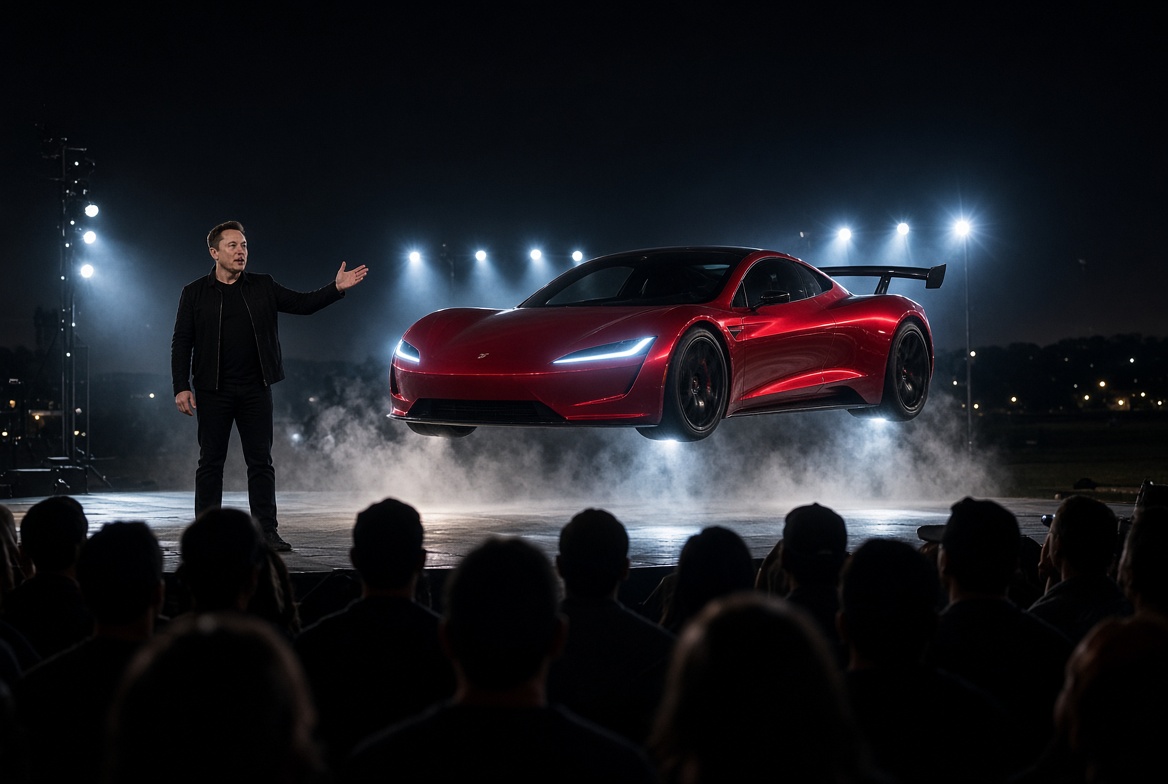
Elon Musk spent Wednesday and Thursday stacking teases on top of Tesla’s Roadster event, and the wording is getting harder to read as routine hype. Tesla streams the unveil tonight at 7:55 p.m. Central on X. Musk has called it “a candidate for greatest product demo of all time,” then added that “this demo will be a BANGER, probably metaphorically, though some chance literally.”
New Roadster is
beyond movies,
beyond imagination,
beyond human,
yet still made
by humans
on Earth— Elon Musk (@elonmusk) October 15, 2026
The “some chance literally” part is the line to watch. The Roadster has been tied to a SpaceX option package since 2018, and as we reported when the date was announced, the system is reportedly codenamed A71 and uses cold gas thrusters fed by a composite overwrapped pressure vessel, the same tank design SpaceX uses on Falcon 9. Musk has said a thruster equipped car could reach 60 mph in about 1.1 seconds. Cold gas thrusters firing at full output are loud, and reports ahead of the event say the car will be unmanned with spectators kept several hundred yards back. A literal bang could simply mean a demonstration that sounds like one, though it is also an admission that something could go wrong on stage.
Then there is “Timing is everything,” which Musk posted a day earlier. Stocktwits noted that 7:55 p.m. is 19:55 on a 24 hour clock, which echoes 1955, the year Marty McFly travels to in Back to the Future. Musk has made that connection before. In 2019 he replied to an animation of a flying DeLorean by saying the new Roadster “will actually do something like this.” Nothing from Tesla confirms the movie reference, but the stream time was chosen by someone, and Tesla has not been shy about this kind of wink.
Also, Tesla said it moved the event because it “can only be held outdoors,” and Musk then wrote that the demo was postponed “due to high winds,” as Teslarati covered at the time. A car running a standing start in front of a crowd shrugs off wind. A car that leaves the ground does not. The venue near SpaceX’s McGregor test site and the FAA airspace closures reported around the original date point the same way, though we also noted the delay could be a plain safety precaution. Musk has also described the new Roadster as “beyond movies, beyond imagination, beyond human, yet still made by humans on Earth.”
The only official figures remain the 2017 ones: 620 miles of range, a top speed above 250 mph, a 1.9 second 0 to 60 time, and prices of $200,000 for the base car and $250,000 for the Founders Series. Production is expected at Giga Texas in 2027 or 2028. Tesla has said the event will cover pricing, specifications and production targets, and its livestream preview has the full rundown. Tesla reports third quarter earnings on October 21, so whatever lands tonight will be fresh going into that call. We will have live coverage as soon as the stream starts.

Tesla Roadster owners to get “Flying Stunt Mode” and looping track access

How to use Grok Bot to block spam calls and texts

Tesla’s flying Roadster just revealed something bigger than the car

SpaceX reveals how its 1 Million AI satellite network will work and prevent space collisions

Elon Musk’s Boring Company lands a new Middle East deal, and Nashville is about to get faster


