Tesla Model 3
Tesla’s active safety features save apparent jaywalker from potential accident

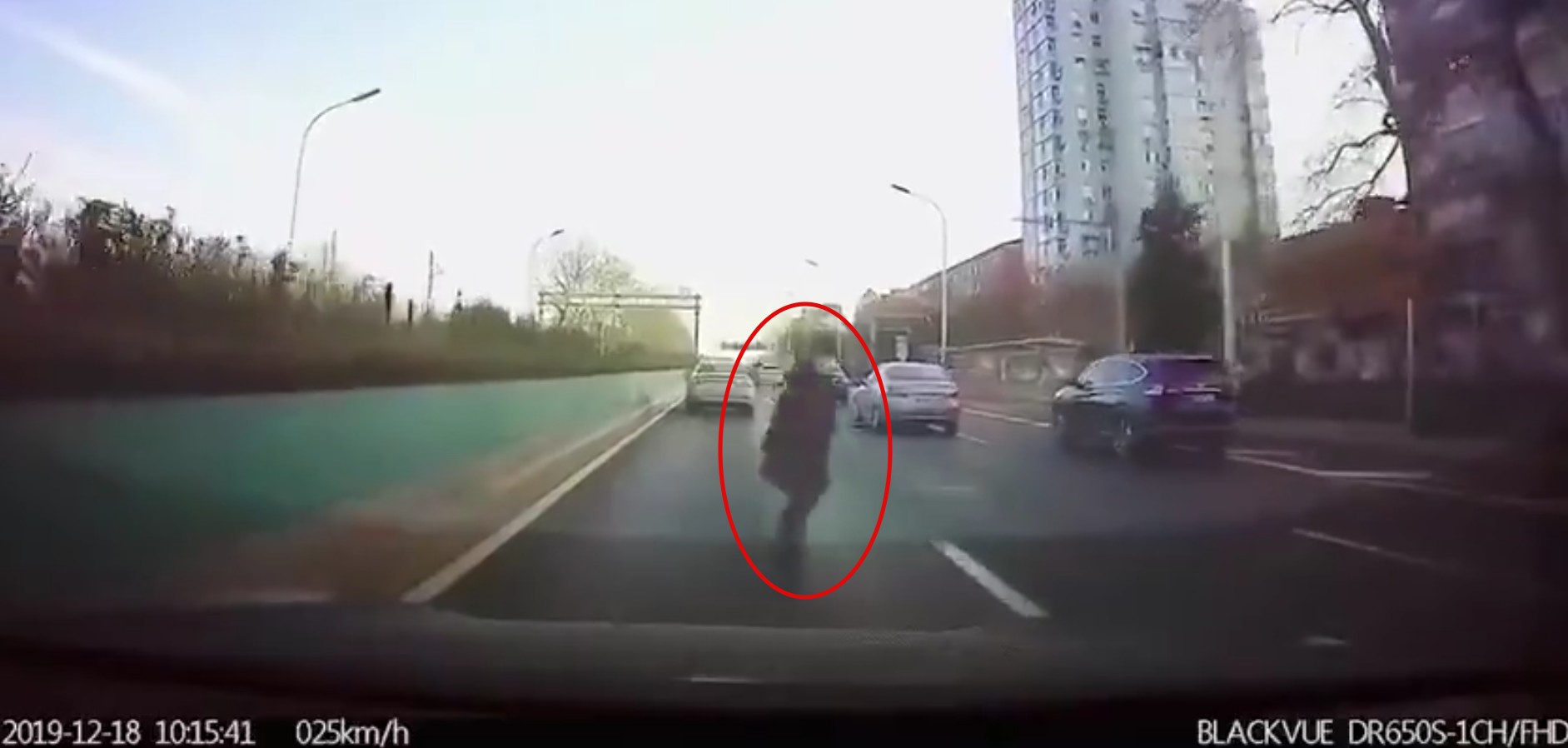
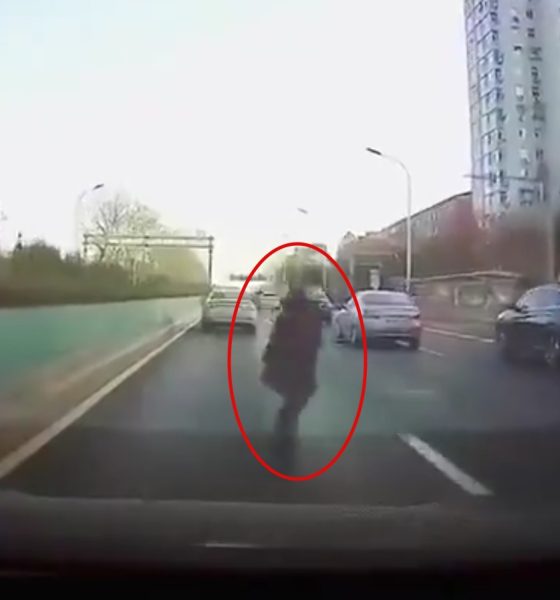
Tesla’s active safety features helped save a woman’s life in Beijing, after the vehicle alerted the driver and abruptly came to a halt when approaching a jaywalker.
@Tesla__Mania recently shared a clip showing a Tesla traveling in a left, before encountering a woman in her attempts to cross a three-lane highway.
In any other circumstance, these conditions could have easily gone south for the pedestrian. Fortunately for her, the Tesla appears to have detected her presence as soon as she stepped into the vehicle’s lane. The all-electric vehicle was still traveling at city driving speeds before the warning chimes went off and vehicle’s Automatic Emergency Braking seemingly kicked in.
This morning in Beijing, @Tesla Automatic Emergency Braking just helped avoid hitting a woman and also saved the Tesla owner a lot of big big trouble. pic.twitter.com/Fxzlg5ezBp— TΞSLA Mania👌🦔 (@Tesla__Mania) December 18, 2019
Unfortunately, China has a reputation for being the country with the highest amount of road accident fatalities in the world. According to a 2016 article from the South China Morning Post, a World Health Organization study found that 700 people are killed a day in traffic-related incidents in the country. This indicates a death-rate of 260,000 people a year from traffic accidents, and 60 percent of these fatalities are pedestrians, bicyclists, or motorcyclists. If the recent incident in Beijing is any indication, it appears that Tesla’s safety features have just prevented a person from being part of this year’s grim statistic.
Tesla rolled out Automatic Emergency Braking way back in 2015 with the version 6.2 Software Update for the Model S, and the feature has since received innumerable refinements through the company’s over-the-air updates. AEB utilizes the forward-looking cameras and radar sensor to determine the distance of an object in front, applying brakes as necessary to avoid or reduce the damage from a collision. Accounts from Tesla owners suggest that objects in the vehicle’s periphery may trigger AEB in some instances as well.
Model 3 totally nails Euro NCAP crash tests 🚘🔋 “#Model3 achieved one of the highest Safety Assist scores we've seen to date … #Tesla has made a virtue of safety in its marketing & it's great to see a car now living up to that promise.” https://t.co/Z7I5loQbeL $TSLA @elonmusk pic.twitter.com/UPH6roQ82C— Tesla New York (@TeslaNY) July 3, 2019
Automatic Emergency Braking has made headlines prior to this incident on numerous occasions. Not only has the feature saved numerous Tesla owners from accidents, but it also contributed to the Model 3 earning a “Superior” rating in Front Crash Prevention from the IIHS and the vehicle’s stellar ratings with the Euro NCAP.
It is widely known that Tesla vehicles are some of the safest cars someone could purchase. Despite numerous awards won by its fleet of vehicles, Tesla is never one to rest on its laurels, striving towards safety and innovation with the same intensity as ever. This recent incident from Beijing shows that Tesla’s ever-ongoing push towards safety is actually making a difference, and at some point, even saving lives.


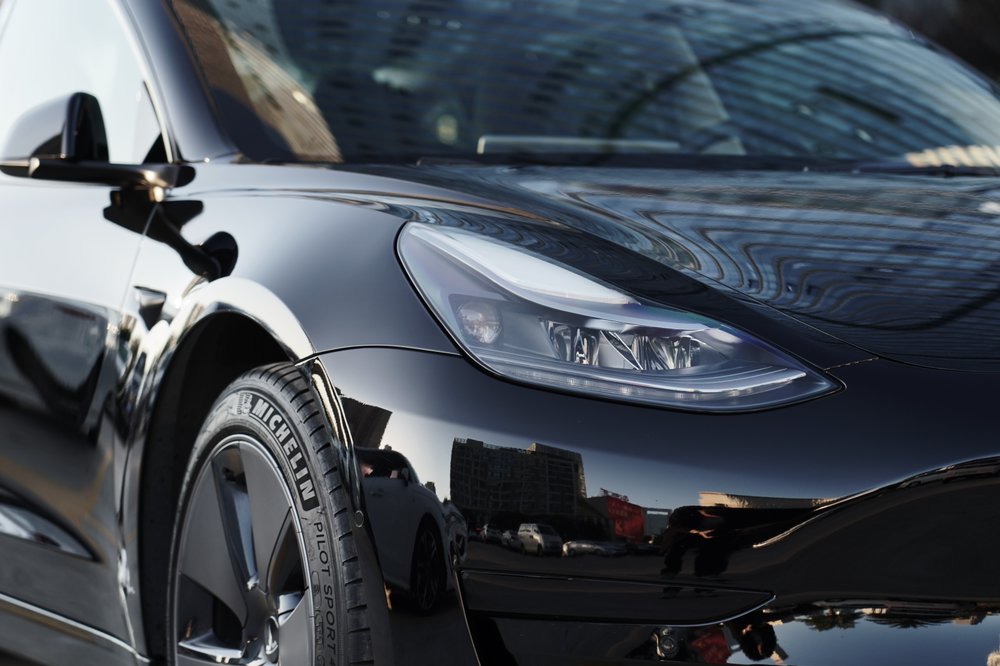
Tesla had a petition protesting a recall to fix a potential issue with 2017-2023 Model Y and Model 3 vehicles’ headlights was denied, as the National Highway Traffic Safety Administration (NHTSA) disagreed with the company’s opinion of things.
The recall covers approximately 19,917 Model Y and Model 3 vehicles built from 2017 to 2023. Tesla initially submitted a noncompliance report for the headlights on these vehicles on March 15, 2024. Tesla then petitioned for an exemption from the fix, which violated FMVSS No. 108 (40 CFR 571.108), arguing that the “noncompliance is inconsequential as it relates to motor vehicle safety.
🚨 Tesla was denied a petition by the NHTSA to avoid a recall of 19,900 2017-2023 Model 3 and Model Y vehicles.
The NHTSA found that the vehicles’ headlights may exceed maximum lighting levels. Tesla argued it was inconsequential and did not require a recall. pic.twitter.com/m8Jmm1teLL
— TESLARATI (@Teslarati) July 16, 2026
The NHTSA disagreed, stating that Tesla’s conclusion that the headlights do not increase any risk was not an opinion it shared. The agency said it disagreed with Tesla’s assumption that glare is not increased to surrounding traffic. This issue could be highlighted even more in certain weather conditions.
Tesla will be required to remedy the issue, the NHTSA ruled:
“In consideration of the foregoing, NHTSA has decided that Tesla has not met its burden of persuasion that the subject FMVSS No. 108 noncompliance is inconsequential to motor vehicle safety. Accordingly, Tesla’s petition is hereby denied, and Tesla is consequently obligated to provide notification of and free remedy for that noncompliance under 49 U.S.C. 30118 and 30120.”
The issue here appears to be the angle of the headlights and the brightness they emit during operation. The NHTSA report states that:
“Tesla’s headlamp supplier, Marelli Automotive Lighting, tested 25 right-hand and 25 left-hand lamps, and for this sample, found the maximum photometric intensity measured in the 10°U to 90°U and 90°L to 90°R zone was between 136.2 cd and 230.1 cd for the right-hand lamps and between 117.5 cd and 160.3 cd for the left-hand lamps. According to Tesla, these tests revealed that the photometric intensity of the right-hand and left-hand headlamp lower beam on the subject vehicles may measure as much as 230.1 cd in the 10°U to 90°U and 90°L to 90°R zone, exceeding the maximum photometric intensity by 105.1 cd. Additionally, Tesla states that a left-hand lamp tested by a Transport Canada recognized laboratory measured a maximum of 171.27 cd in the 10°U to 90°U and 90°L to 90°R zone. Despite these measurements exceeding the allowed photometric maximum of 125 cd, Tesla believes that the subject noncompliance is inconsequential to motor vehicle safety.”
Tesla also argued at some points that the headlights had not been deemed responsible for any complaints, accidents, or injuries related to the noncompliance.
Lifestyle
NTSB findings on fatal Tesla crash tell a very different story
The NTSB confirmed the driver, not Tesla’s FSD, caused the fatal Texas house crash.

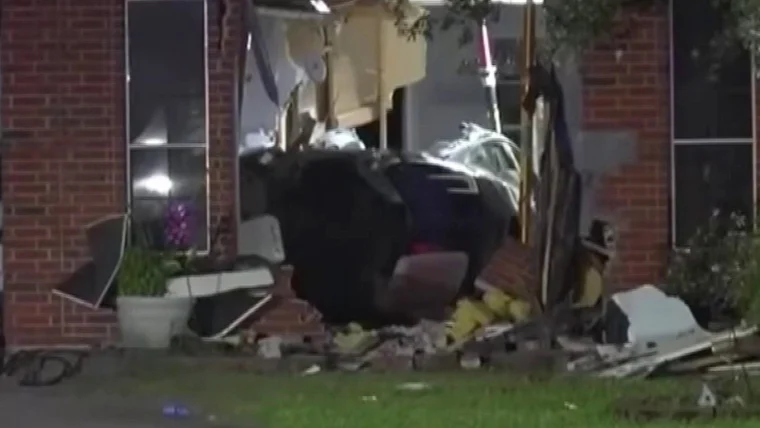
The National Transportation Safety Board released preliminary findings Wednesday confirming that a Tesla driver, not the vehicle’s software, caused a fatal crash in Katy, Texas in June. The driver, 44-year-old Michael Butler, had engaged Full Self-Driving Supervised mode on Rose Hollow Lane, a residential street with a 30 mph speed limit, before manually overriding the system by pressing the accelerator pedal all the way to 100%. Data recovered from the 2025 Tesla Model 3 showed the vehicle was traveling over 70 miles per hour when it struck a home and killed 76-year-old Martha Avila, who was inside. Weather was clear, the road was dry, and it was daylight.
Texas man charged in fatal Tesla crash where he blamed Autopilot
Butler told authorities he had passed out at the wheel. But security camera footage obtained by the NTSB told a different story, and showed the car accelerating through an intersection before leaving the road entirely. Police also found that Butler’s phone had Google searches including the terms “Tesla FSD not aggressive enough 2026” and “Tesla FSD too timid,” raising serious questions about how he was using the system before the crash. Butler has since been charged with manslaughter. The victim’s family has filed a lawsuit against both Butler and Tesla, alleging negligence.
The NTSB findings aligned directly with what Tesla VP of AI Software Ashok Elluswamy had already stated publicly on X in the weeks after the crash, writing that “the driver manually overrode self-driving by pressing the accelerator all the way to 100%.” The data confirmed his account.
Yup. In this case, the driver manually overrode self-driving by pressing the accelerator all the way to 100% of the accel pedal in this residential area. They reached a speed of 73 mph during the crash, and had the accelerator pressed even after the crash.
— Ashok Elluswamy (@aelluswamy) June 22, 2026
Lifestyle
Tesla makes the cut on California’s newest EV Rebate program
California just signed a $270 million EV rebate into law and it starts this summer.
California Governor Gavin Newsom signed SB 168 into law on Monday, July 13, 2026, creating a $270 million EV rebate program that delivers money directly at the dealership rather than as a tax credit applied months later. The program, called MyFirstEV, is funded equally by California’s state budget and participating automakers, with each contributing $135.5 million to make the math work.
The timing is directly tied to the loss of federal support when the $7,500 federal EV tax credit ended, removing the most significant consumer incentive that had driven EV adoption in the U.S. California, which accounts for roughly one-third of all EVs sold nationally, moved to fill that gap with a state-level replacement.
The rebate structure is straightforward. First-time EV buyers can receive $3,500 off any new battery-electric vehicle with an MSRP up to $50,000. Used EVs priced at $25,000 or below qualify for a $1,750 rebate. The credit is applied at the point of sale, which removes the friction of the old federal system where buyers had to wait for tax season to see the benefit. The program goes live later this summer, with the California Air Resources Board expected to release full participation details next month.
California hits Tesla Cybercab and Robotaxi driverless cars with new law
For Tesla buyers, the implications are mixed. The Tesla Model 3 RWD at $42,490 and the Model 3 Long Range at $47,490 both fall under the $50,000 cap and would qualify for the full $3,500 rebate for first-time buyers. The Model Y, which starts at $44,990 after Tesla’s recent price adjustment, also qualifies. The Model X, Model S, and Cybertruck all exceed the cap and receive no benefit. As Teslarati has reported, the program also includes a carve-out exempting California-based automakers like Rivian and Lucid from the price cap entirely, a provision that puts Tesla at a disadvantage since it relocated its headquarters to Texas in 2021.
Other qualifying vehicles include the Chevrolet Equinox EV, Ford Mustang Mach-E, Hyundai Ioniq 5, Kia EV6, and Volkswagen ID.4.

Elon Musk says your Tesla will start to learn your individual preferences

Ron DeSantis calls out media bias in Tesla crash coverage


