
Current US statistics state that about 10,000 people die every year due to drunk driving. That’s roughly one fatality from a drunk driving-related crash every 52 minutes. Even in Norway, where roads are significantly safer, a report from the International Transport Forum in 2019 indicated that 8% of the country’s fatal crashes involved a drunk driver. With these numbers in mind, it is no surprise that companies like Tesla are creating software that allows vehicles to operate safely on the road, even if their human drivers are incapacitated.
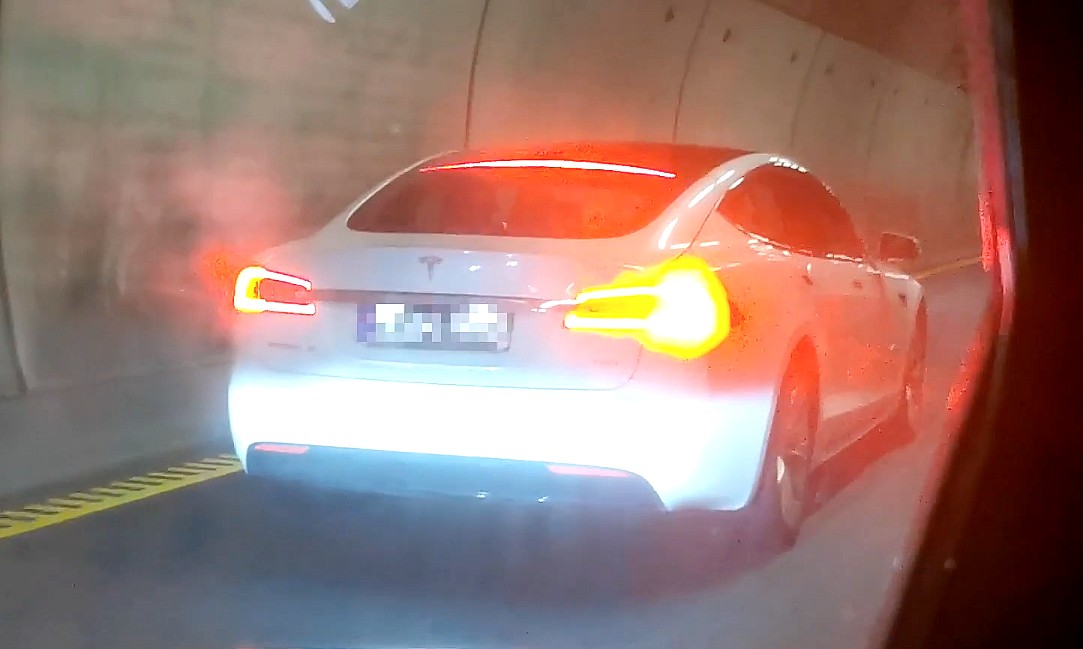
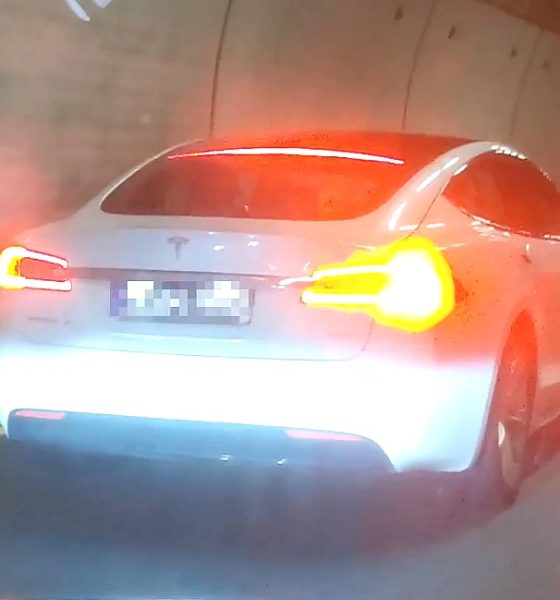
Such an incident happened recently in Norway. As explained by the Eastern Police District on its official Twitter account, a 24-year-old Tesla owner ended up passing out while driving his Model S. Fortunately for the driver, the vehicle’s Autopilot system was activated, which allowed the Model S to stay in its lane without causing trouble to other drivers.
Upon detecting that its driver was unresponsive, the vehicle eventually came to a stop and engaged its hazards. The man was later attended to by emergency services. No one was injured in the incident.
The police noted that the Tesla driver, who was found unconscious in the Model S, was evidently drunk, though he denied that he was driving. Video evidence showing the Tesla owner passed out in the driver’s seat have been shared online, however. The police stated that necessary tests have been taken, and that the Tesla owner’s driver’s license has been temporarily suspended. A case has also been filed against the driver.
Such an incident could have easily been a lot worse. It is very easy for drunk drivers to harm themselves, after all, but what’s even worse is that they could very easily harm other people just as easily. These scenarios would likely not be as prevalent if vehicles are capable of safely stopping on their own once their human drivers are incapacitated.
What’s pretty remarkable was that the Autopilot system in the Model S is likely not even Tesla’s best to date. FSD Beta 9.1, which is currently being tested by a select group of Tesla owners, is far more advanced and capable than the system equipped in the Model S from Norway. Tesla’s Autopilot system attracts a lot of criticism from skeptics, but it should be noted that even its more basic features are already saving lives today. Considering the recent incident with the Model S driver in Norway, it definitely seems like advanced driver-assist systems, such as those being developed by Tesla today, are indeed crucial to making the world’s roads a safer place.
Don’t hesitate to contact us with news tips. Just send a message to tips@teslarati.com to give us a heads up.


Investor's Corner
Tesla unfolded its first European “folding Supercharger”
Tesla’s folding Supercharger just arrived in Europe and it changes how fast charging expands.

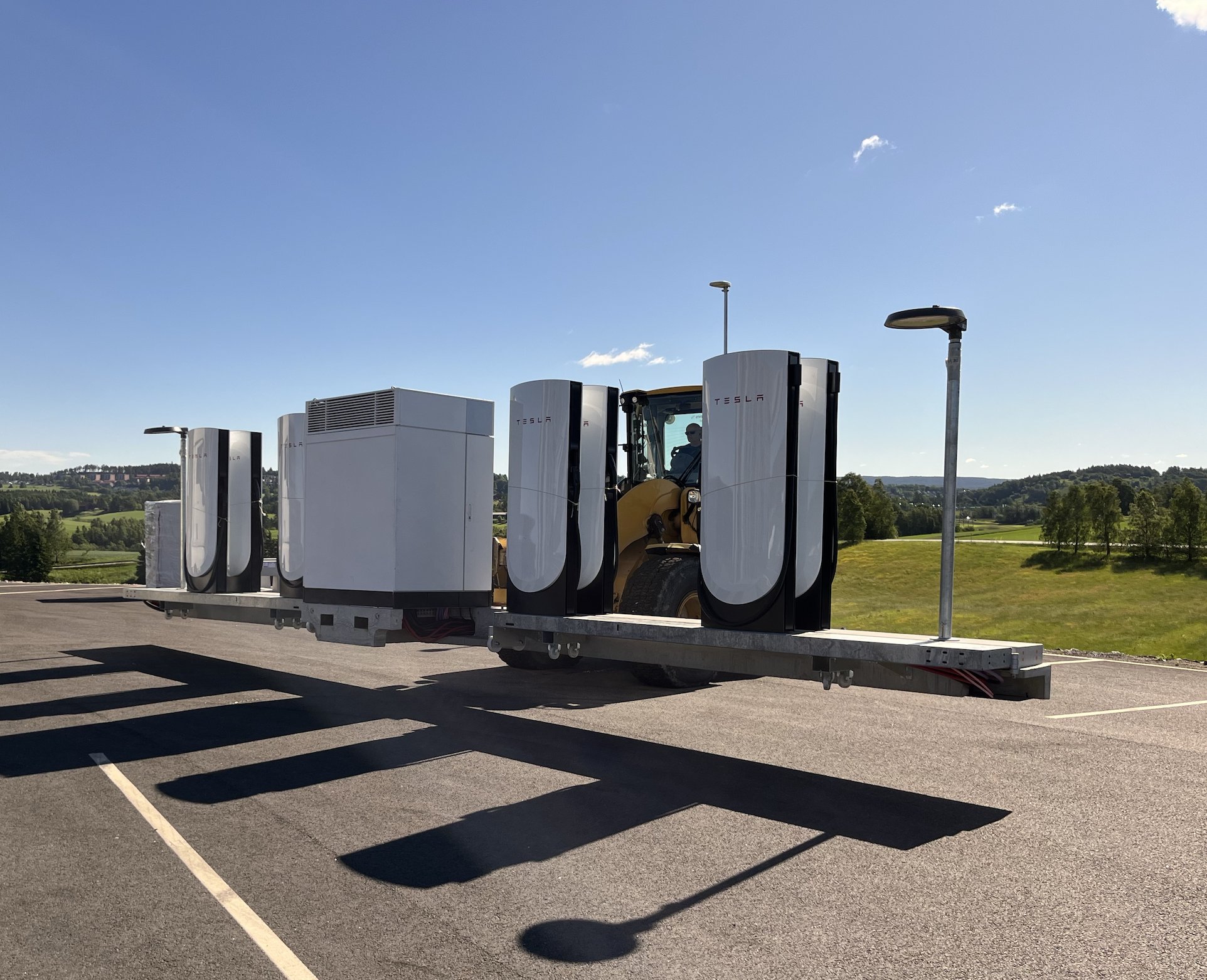
Tesla’s Folding Unit Supercharger has officially landed in Europe, with the company teasing a new installation in its effort for a broader rollout targeting major motorway rest stops across the European continent in Q3 2026. The arrival marks a notable shift in how Tesla is thinking about network expansion, moving from hardware performance alone to engineering the logistics chain itself.
While Tesla did not reveal the exact location for the new folding Supercharger in Europe, the photo shared on X heavily suggests that this maybe somewhere in Norway. Historically, whenever Tesla rolls out an entirely new infrastructure architecture in Europe, whether it was the original Supercharger stalls years ago or these brand-new modular V4 “Folding Units”, Norway is almost always the designated launch pad because of its unmatched EV adoption rate and supportive infrastructure
The Folding Unit, introduced in March 2026, is a factory pre-assembled V4 charging station built on an industrial hinge system mounted to a heavy-duty concrete base. The entire assembly arrives on site ready to unfold and connect. Tesla confirmed the units feature telescopic light poles specifically designed for easy transportation and fast on-site deployment, a detail that signals how carefully the logistics chain has been engineered alongside the hardware itself. The design allows 33% more stalls per delivery truck, cuts installation time roughly in half, and reduces overall deployment costs by more than 20% compared to traditional installations.
Tesla’s newest “Folding V4 Superchargers” are key to its most aggressive expansion yet
Tesla also noted telescopic light poles which provide benefits over traditional Supercharger installations that require fixed-height poles that are awkward to ship, slow to position on site, and often require separate crews and equipment to erect before charging hardware can even be staged. By engineering poles that compress for transit and extend on arrival, Tesla has removed one of the quieter bottlenecks in the physical deployment process. Every hour saved on a light pole installation is an hour redirected toward getting stalls energized. At scale, across dozens of new sites per quarter, those hours add up to a meaningful acceleration in how quickly a location goes from approved permit to serving its first customer.
Each Folding Unit pairs a single V4 power cabinet with eight charging posts. The V4 cabinet delivers up to 500 kW per stall for passenger vehicles and up to 1.2 MW for the Tesla Semi, supporting twice the stalls per cabinet at three times the power density of its predecessor. Longer cables make every new station immediately usable by non-Tesla vehicles, a priority as Tesla continues opening its network to Ford, GM, Rivian, Hyundai, Stellantis, and others.
As Teslarati reported when the Folding Unit was first unveiled, Tesla’s Gigafactory New York produced its final V3 Supercharger cabinet in March 2026 after more than seven years and 15,000 units, completing a full pivot to V4 production. The European arrival of the folding design is the next chapter in that transition.
Faster and cheaper deployment means Tesla can justify building in markets and corridors that were previously too expensive to serve, filling the coverage gaps that have slowed EV adoption outside major urban centers.
First Folding Unit Superchargers in Europe 🇪🇺 https://t.co/KNfYWJukkL pic.twitter.com/YR1udIpH1i
— Tesla Charging (@TeslaCharging) June 10, 2026

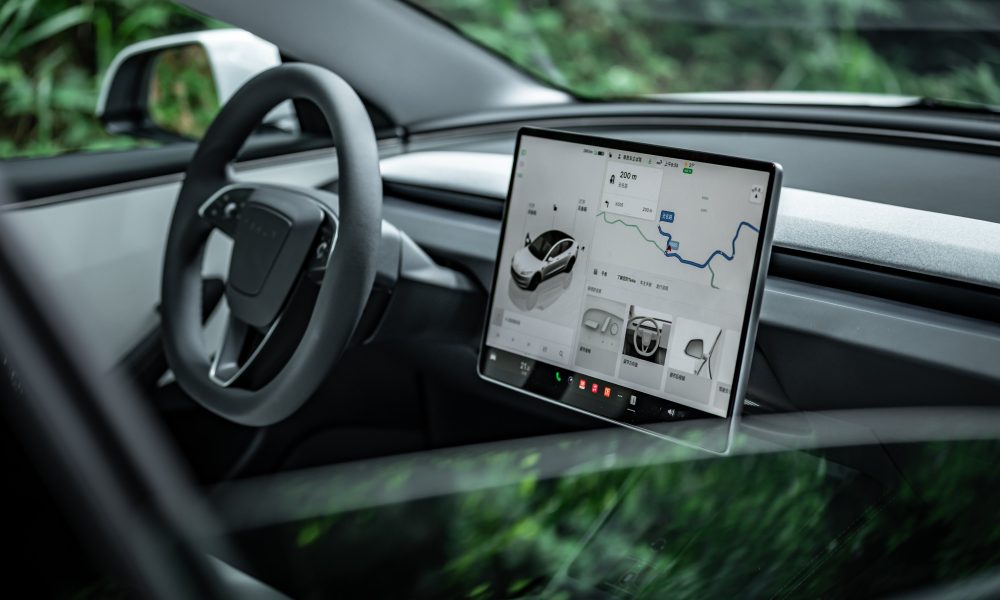
Tesla has stunned by gaining yet another approval for its Full Self-Driving suite in Europe, its second in two days and its fifth overall.
Belgium will be the latest country to allow Tesla owners to utilize FSD on public roads in Europe, joining a quickly growing list that started with the Netherlands, Lithuania, and Estonia.
On Tuesday, Denmark announced its approval of the FSD suite, which has now been followed by Belgium just one day later.
The country’s Minister of Mobility, Annick De Ridder, announced the approval on her X account, stating that she had just signed the approval of Tesla FSD. It now goes to the country’s homologation department for the last step of the approval process.
De @Tesla community houdt hier al geruime tijd de vinger aan de pols over de toelating voor de FSD-technologie op onze Vlaamse en Belgische wegen.
Uit waardering voor jullie niet-aflatende interesse (en aanmoediging 😉), krijgen jullie hierbij de primeur: ik heb net de toelating… pic.twitter.com/Yrps4OHTj8— Annick De Ridder (@AnnickDeRidder) June 10, 2026
The Belgian approval is one of mighty importance because it truly shows how quickly countries in Europe could greenlight the FSD suite consecutively. Approvals are already coming in relatively quickly, which is a great sign.
Perhaps the next big development that could come from FSD approvals in Europe is an approval from a country like England, Italy, France, Spain, or Germany. It would be something to see how FSD would perform in a major European metro, such as London, Barcelona, Madrid, Paris, Rome, or Berlin.
Getting Full Self-Driving in Spain and England will be such huge milestones for Tesla. I am so excited to see how FSD performs in Madrid, Barcelona, and London, specifically.
The ultimate test will always be Mumbai or New Delhi. Excited for India’s eventual approval! https://t.co/paw9Ch1qmL pic.twitter.com/9RdDERVSSJ
— TESLARATI (@Teslarati) June 9, 2026
Full Self-Driving does an excellent job of roaming around major U.S. cities like New York and Los Angeles, but other high-profile international cities of significance would truly mark a line in the sand for Tesla, which can simply enable any vehicle in its customer-owned fleet to run FSD with the correct approvals.
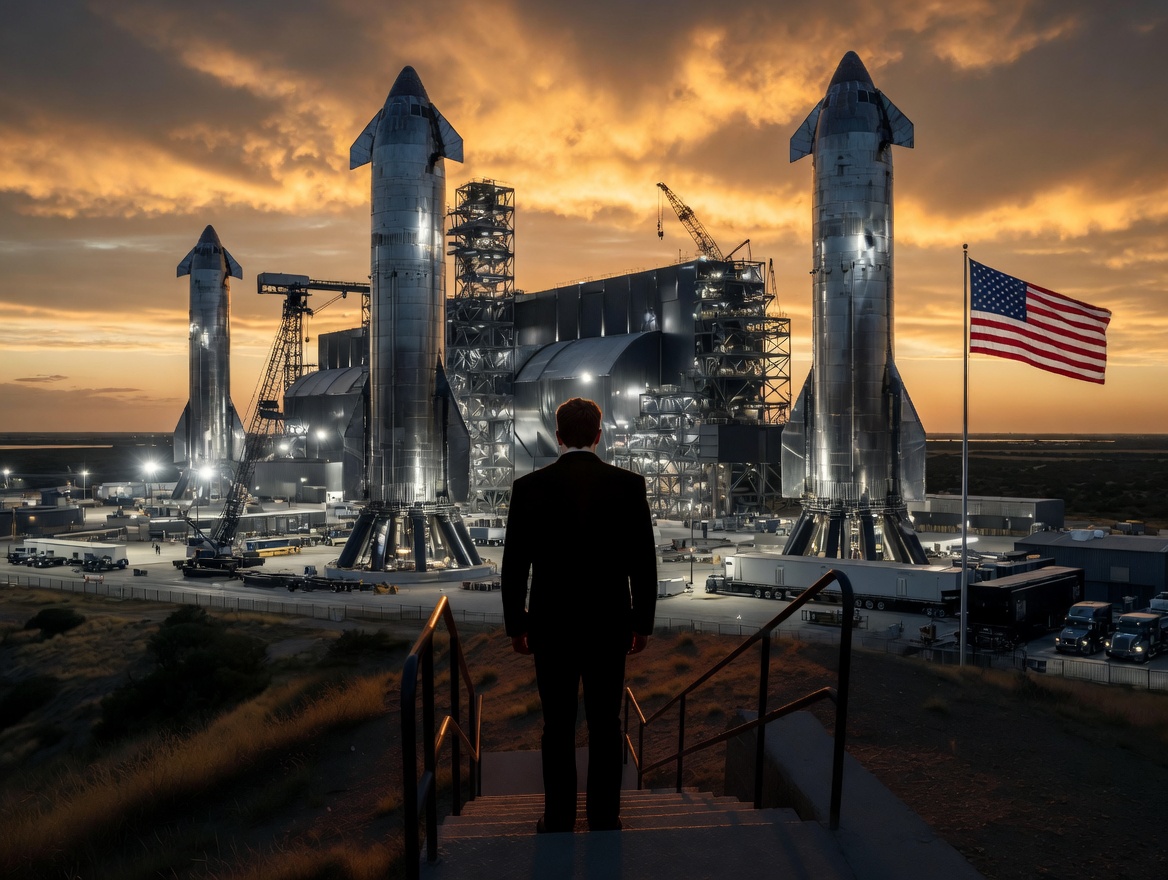
SpaceX CEO Elon Musk recently confronted worries about orbital data centers and launching satellites in mass quantities in space, as some voiced concerns about crowding.
Musk’s SpaceX plans to combat the issue of needing data centers by launching them into space instead of taking up valuable real estate on Earth. It has been a major point of SpaceX’s future, including its looming IPO, which could be the largest ever.
In a recent interview filmed at SpaceX’s Starlink terminal factory in Bastrop, Texas, Elon Musk directly addressed concerns that deploying large numbers of AI satellites for orbital data centers could crowd Earth’s orbit. His message was straightforward and reassuring: space is vast beyond human intuition.
“Space is really big,” Musk said. “It’s not like space is gonna get crowded. Space is enormous. If you actually look at it relative to the Earth, the satellites are so tiny you can’t even see them.” He emphasized that even zooming in makes a satellite appear large, but from a planetary perspective, they are minuscule specks.
Elon on concerns that AI satellites will crowd space:
“Space is really big. It’s not like space is gonna get crowded. Space is enormous. If you actually look at it relative to the earth, the satellites are so tiny you can’t even see them.” https://t.co/Mvr7NpL25Q pic.twitter.com/5Fi629Rii7
— Sawyer Merritt (@SawyerMerritt) June 8, 2026
Musk pointed to SpaceX’s real-world experience operating roughly 10,000 Starlink satellites as evidence that large constellations can be managed safely. “We’ve got a pretty good idea of how to operate just really large constellations and do it safely,” he noted. SpaceX remains the only operator with meaningful experience at this scale, giving the company unique insight into tight orbital packing without compromising safety
The discussion highlighted SpaceX’s plans for “AI1” satellites—essentially orbiting racks of AI compute powered by massive solar arrays and cooled via radiative panels in space’s vacuum.
These satellites leverage proven Starlink V3 technology, making them simpler to design than communications satellites. A first-generation unit targets around 150 kW peak power, with a 70-meter wingspan for solar panels and radiators. Laser links will connect them to each other and the Starlink network, delivering low-latency access (on the order of a few milliseconds from low-Earth orbit).
FCC accepts SpaceX filing for 1 million orbital data center plan
Musk framed orbital data centers as a practical solution to Earth’s constraints on AI growth. Ground-based facilities face power shortages, water demands for cooling, and grid limitations. In space, constant sunlight (no day-night cycle), vacuum radiative cooling, and abundant solar energy offer clear advantages.
Production will ramp up at an expanded “Gigasat” factory in Bastrop, with solar manufacturing already underway and full AI satellite output expected at reasonable volume by the end of 2027. Starship’s rapid, high-volume launch capability, aiming for multiple flights per hour, will make massive deployment feasible.
Critics sometimes raise risks like space debris or Kessler syndrome, but Musk’s response underscores scale: even a million satellites would represent an imperceptible fraction of available orbital volume when viewed against Earth’s size. SpaceX’s automated collision avoidance and deorbiting designs for Starlink further mitigate concerns.
This vision ties into broader ambitions. Musk sees orbital AI compute as a step toward harnessing more of the Sun’s energy, advancing humanity on the Kardashev scale from a Type 0 civilization toward Type 1 and eventually Type 2. By moving power-hungry data centers off-planet, SpaceX aims to unlock orders-of-magnitude more compute while preserving Earth’s resources.
Musk’s comments should ease public anxiety. With proven operational expertise, incremental engineering, and the immensity of space itself, orbital data centers represent not overcrowding, but smart expansion into the final frontier.

Tesla unfolded its first European “folding Supercharger”

Tesla stuns with another FSD approval in Europe, its second in two days


