News
Tesla China exports first batch of electric cars since resuming vehicle production

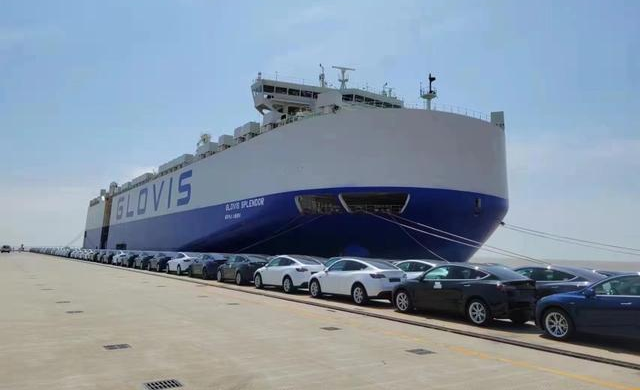
Tesla China’s wholesale figures may have seen a massive drop in April as Giga Shanghai was shut down amidst the country’s anti-Covid measures, but May is shaping up to be completely different. This was highlighted recently when Tesla China exported its first batch of vehicles since Giga Shanghai resumed its vehicle production activities on April 19.
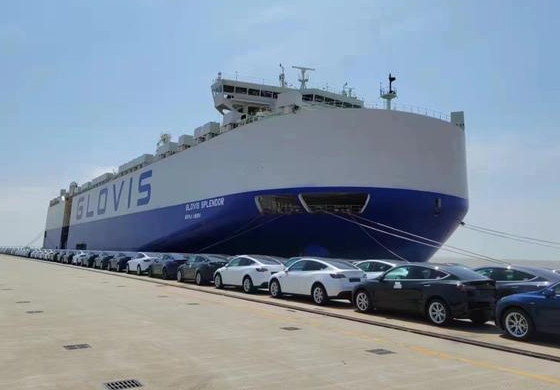
The first batch of exports from Giga Shanghai this month included 4,767 cars that were loaded into the cargo ship Glovis Splendor. Images taken of the shipment revealed that the vehicles were a mix of Model 3 sedans and Model Y crossovers. This suggests that Giga Shanghai’s production lines for both vehicles are ramping at a steady pace.
The vehicles are en route to the Slovenian port of Koper, according to Reuters, citing the government-backed media outlet Shanghai Observer. The Glovis Splendor left port on Wednesday, and reports suggest that another 4,100 electric vehicles from Gigafactory Shanghai will be shipped on Friday.
A customs official informed the Observer that Tesla was in a hurry to start exporting cars to foreign countries again. “Tesla was in a big hurry to load cars freshly off the production lines onto the vessel yesterday afternoon,” the official said.
Tesla China has a lot of catching up to do this second quarter. As per data released by the China Passenger Car Association (CPCA) on Tuesday, the country’s zero-Covid-19 policies and lockdowns caused a 97.7% month-over-month drop in Tesla China’s sales. Tesla China also did not export any vehicles in April.
Gigafactory Shanghai is not yet fully ramped since it reopened its doors on April 19, but the facility is ramping. Tesla still produced 10,757 cars in the remaining days of April, which was quite impressive as there was only one shift of workers in the facility’s vehicle production line at the time. Reports have also suggested that Tesla China is looking to achieve a daily target output of 2,600 vehicles per day starting May 16.
Don’t hesitate to contact us with news tips. Just send a message to simon@teslarati.com to give us a heads up.


News
Tesla broadens most-wanted Model Y to eight new markets
This rollout targets Asia’s booming EV adoption, driven by family buyers seeking practicality without sacrificing performance or luxury. It positions Tesla against rising local competitors offering affordable three-row options.

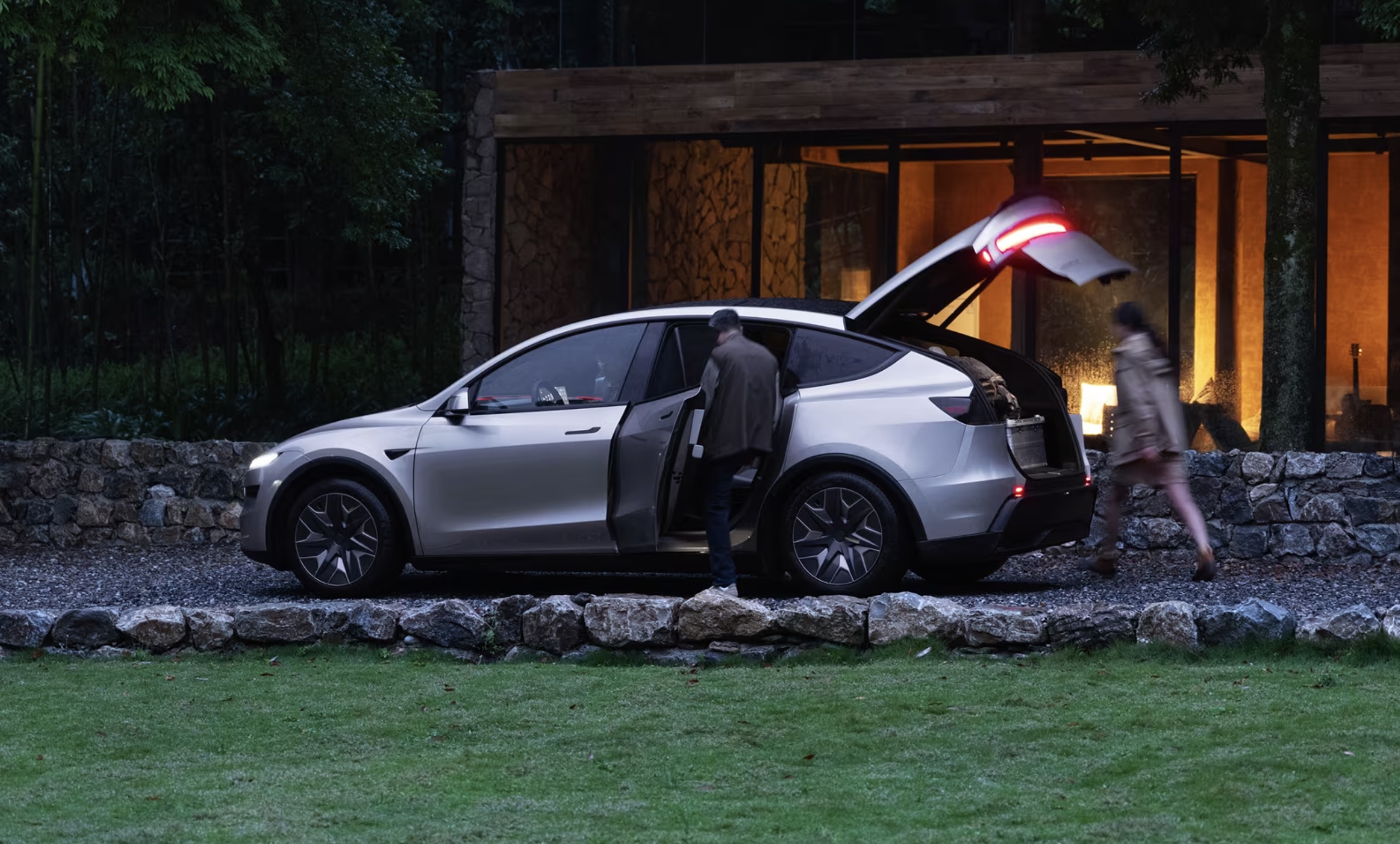
Tesla has broadened the availability of the most-wanted Model Y trim to eight new Asian markets, expanding the footprint of what is one of the most highly requested vehicle configurations in the U.S.
Tesla has officially launched ordering for the Model Y L, its long-wheelbase six-seater electric SUV, across eight key Asian territories: Japan, South Korea, Hong Kong, Macau, Singapore, Thailand, Malaysia, and the Philippines.
The announcement signals a major expansion for the family-oriented variant first introduced in China in August 2025. In Thailand, Malaysia, and the Philippines, the vehicle had already been previewed at several motor shows, so fans in the area were familiar with the Model Y L and its distinct differences to the standard-sized trims.
🚨 Tesla has launched the Model Y L for order in eight new Asian territories:
– Japan
– South Korea
– Hong Kong
– Macau
– Singapore
– Thailand (previously unveiled at the Bangkok International Motor Show)
– Malaysia (previously unveiled)
– Philippines (previously unveiled) pic.twitter.com/PidNwRxuEU— TESLARATI (@Teslarati) April 3, 2026
Local pricing reflects taxes, incentives, and import duties. Malaysia estimates RM260,000 with Q2 2026 deliveries; Singapore lists S$248,999 (including COE); Macau prices at 398,750 patacas. Similar competitive positioning is expected in Japan, South Korea, Hong Kong, Thailand, and the Philippines, where the Model Y L undercuts many traditional three-row SUVs while offering full EV benefits.
This rollout targets Asia’s booming EV adoption, driven by family buyers seeking practicality without sacrificing performance or luxury. It positions Tesla against rising local competitors offering affordable three-row options.
Notably, the Model Y L remains unavailable in the U.S. market, where demand for a stretched Model Y has been high. Although CEO Elon Musk said that something “way cooler than a minivan” is on the way in the U.S., the dimensions of the Model Y L simply fit the needs of many American families.
Elon Musk says Tesla is developing a new vehicle: ‘Way cooler than a minivan’
The Model Y L stands out with its stretched dimensions: 4,976 mm long and a 3,040 mm wheelbase—179 mm and 150 mm longer, respectively, than the standard Model Y. Height increases slightly to 1,668 mm, creating a true three-row, 2+2+2 layout with individual captain’s chairs in the second row for easier third-row access.
Maximum cargo capacity reaches 2,539 liters with seats folded, making it ideal for growing families or those needing versatile space in dense urban environments. But it’s not just a grocery-getter or a kid-hauler: The performance matches Tesla’s reputation.
Dual-motor all-wheel drive delivers 0-100 km/h acceleration in about 5.0 seconds (or 4.5 seconds in some market specs), with a top speed of 201 km/h. The vehicle boasts a WLTP-rated range of up to 681 km, supported by an approximately 88-97 kWh battery pack (market-dependent) and 250 kW DC fast charging.
With deliveries slated for Q2 2026 and strong early interest mirroring China’s rapid pre-orders, the Model Y L could become a bestseller in these dynamic markets. Tesla’s targeted expansion essentially generalizes its commitment to tailoring vehicles to regional needs while advancing sustainable mobility across Asia.
Lifestyle
Tesla hit by Iranian missile debris in Israel
A Tesla in Israel absorbed a direct hit from missile debris, and the glassroof held.

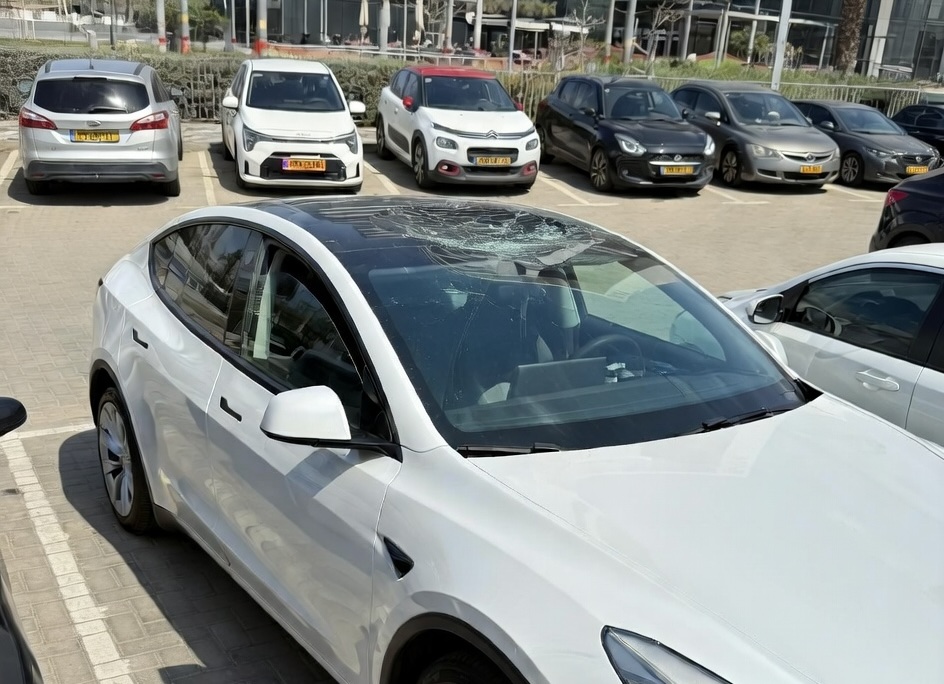
On March 30, 2026, Lara Shusterman was in Netanya, Israel when Iranian ballistic missiles triggered air raid sirens across the city. While she remained in safety, her 2024 Tesla Model Y did not escape untouched. A heavy piece of missile debris struck the car’s massive glass roof, leaving a deep crater but without shattering. In a Facebook post to the Tesla Israel community the following morning, Shusterman described what happened: “The glass did not shatter into dangerous shards. She stopped the damage and pushed the metal part to the ground.” She closed by thanking Elon Musk and the Tesla team for building what she called “security and a sense of trust even in extreme situations.”
Netanya is a coastal city in central Israel, roughly 18 miles north of Tel Aviv and has been among the areas most frequently struck during Iran’s ongoing missile campaign, following coordinated U.S. and Israeli strikes on Iranian military infrastructure. Falling shrapnel from intercepted missiles is a common occurrence.
-
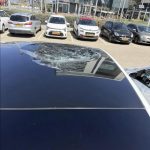
- Tesla Model Y glass roof shattered from a piece of falling Iranian missile debris
-
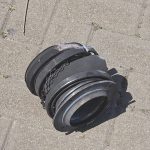
- A piece of Iranian missile debris that struck Lara Shusterman’s Tesla Model Y in Netanya, Israel on March 30, 2026, after being intercepted by Israeli air defenses.
-
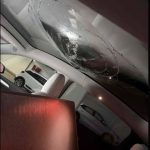
- Tesla Model Y glass roof shattered from a piece of falling Iranian missile debris
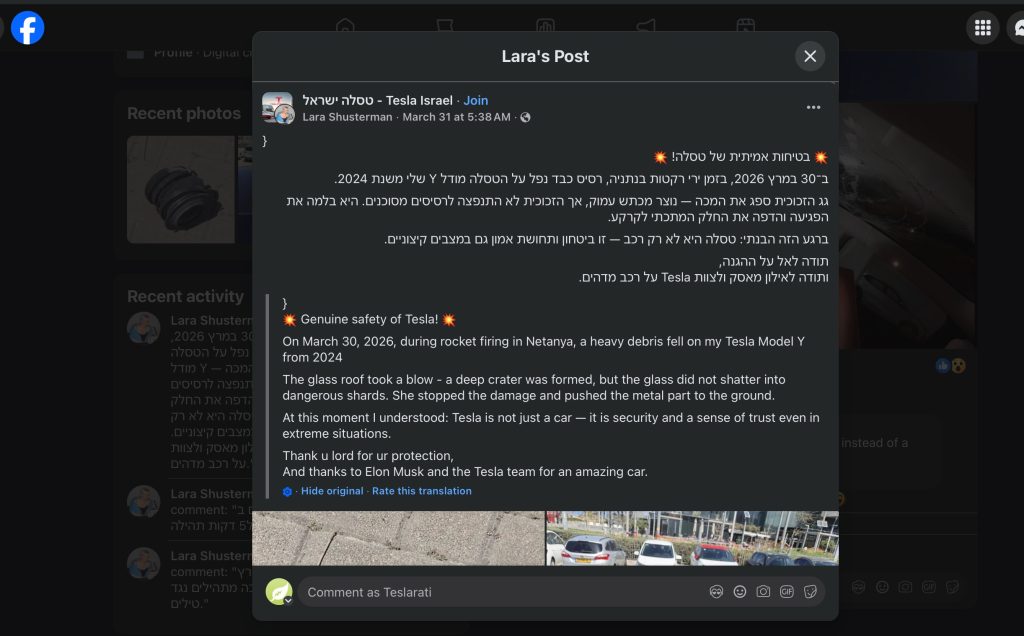
Source: Tesla Israel Facebook Group
The incident is a testament to Tesla’s structural engineering. Tesla’s glass roof is designed to support over four times the vehicle’s own weight. That strength has shown up in real-world accidents too. In 2021, a Model Y in California was struck by a falling tree during a storm, with the glass roof holding firm and the cabin remaining intact. In another widely reported incident, a Tesla Model Y plunged 250 feet off the cliff at Devil’s Slide in California in January 2023, with all four occupants, including two young children, surviving.
Disturbing details about Tesla’s 250-foot cliff drop emerge amid initial investigation
Tesla officially launched sales in Israel in early 2021 and captured over 60 percent of Israel’s EV market in the first year. The brand’s foothold in Israel remains significant. Tens of thousands of Teslas are now on Israeli roads, making incidents like Shusterman’s easy to corroborate. On the same week her Model Y took the hit, the U.S. Space Force awarded SpaceX a $178.5 million contract to launch missile tracking satellites, a separate but fitting reminder of how intertwined the Musk ecosystem has become with the realities of modern conflict.
Elon Musk
Elon Musk calls out $2 trillion SpaceX IPO valuation as ‘BS’
In a swift rebuke on X, Elon Musk dismissed reports claiming SpaceX had confidentially filed for an initial public offering targeting a valuation above $2 trillion, labeling the information as unreliable.
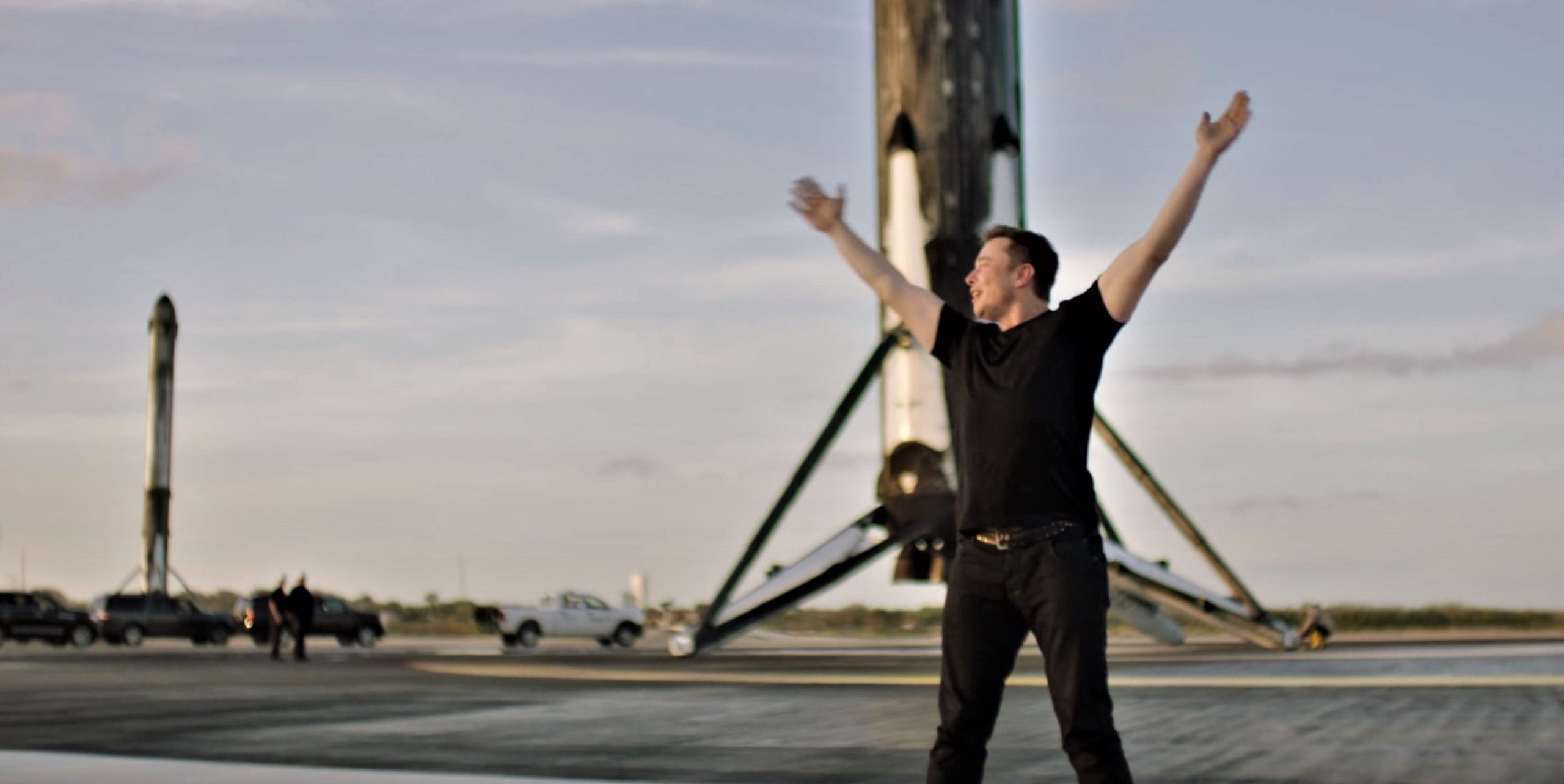
Elon Musk is quick to call out any false information regarding him or his companies on his social media platform, known as X.
A recent report that claimed SpaceX was aiming to go public with an IPO in the coming weeks at a massive valuation of $2 trillion was called out by Musk, who referred to it as “BS.”
In a swift rebuke on X, Elon Musk dismissed reports claiming SpaceX had confidentially filed for an initial public offering targeting a valuation above $2 trillion, labeling the information as unreliable.
The exchange highlights ongoing media speculation about the rocket company’s future and Musk’s frustration with what he views as inaccurate financial reporting. The report came from Bloomberg.
Don’t believe everything you read.
Bloomberg publishes bs.
— Elon Musk (@elonmusk) April 3, 2026
The controversy erupted on April 2, 2026, when influencer Mario Nawfal amplified claims from Bloomberg.
The outlet posted that SpaceX had boosted its IPO target valuation above $2 trillion, describing it as potentially one of the largest public offerings in history. Musk challenged the story.
It echoes past instances where Musk has corrected valuation rumors about his companies, emphasizing that speculation often outpaces reality.
Background context adds nuance.
Earlier reports indicated SpaceX had filed confidential IPO paperwork with the U.S. Securities and Exchange Commission, potentially positioning it for a record-breaking debut that could eclipse Saudi Aramco’s 2019 listing.
Initial estimates pegged a possible valuation north of $1.75 trillion, building on a post-merger figure around $1.25 trillion after SpaceX absorbed xAI. A subsequent Bloomberg update claimed advisers were floating figures above $2 trillion to investors, with the offering potentially raising up to $75 billion.
SpaceX remains a private powerhouse. Its achievements include thousands of Starlink satellites providing global broadband, routine Falcon 9 rocket reusability, and a mission to slash launch costs, along with ambitions for Starship to enable Mars colonization.
The company also benefits from government contracts with NASA and the Department of Defense. A public listing could democratize access for retail investors while subjecting SpaceX to greater scrutiny and quarterly reporting pressures.
Critics of the reports point to the confidential nature of filings, which limits verifiable details. Musk has previously downplayed inflated valuations, once calling an $800 billion figure for SpaceX “too high.”
Supporters argue that hype around mega-IPOs, especially amid the ongoing AI fervor, fuels premature narratives that distract from core technical milestones, such as full Starship reusability and Starlink constellation expansion.
The incident reflects broader tensions in tech finance. Anonymous sourcing in valuation stories can drive market chatter and betting activity, yet it risks misinformation.
Bloomberg defended its reporting through multiple articles citing “people familiar with the matter,” but Musk’s blunt dismissal resonated widely on X, with users piling on to question media reliability.
Whether SpaceX ultimately goes public remains uncertain. Musk has teased an IPO tied to Starlink maturity, but priorities center on engineering breakthroughs over Wall Street timelines. For now, the $2 trillion figure joins a list of rumored milestones that Musk insists should be taken with skepticism.

Tesla broadens most-wanted Model Y to eight new markets

Tesla hit by Iranian missile debris in Israel


