Cybertruck
Tesla clears the air on Cybertruck ‘deactivation’ video that is obviously fake
Tesla has cleared the air on the viral video, stating it is fake.

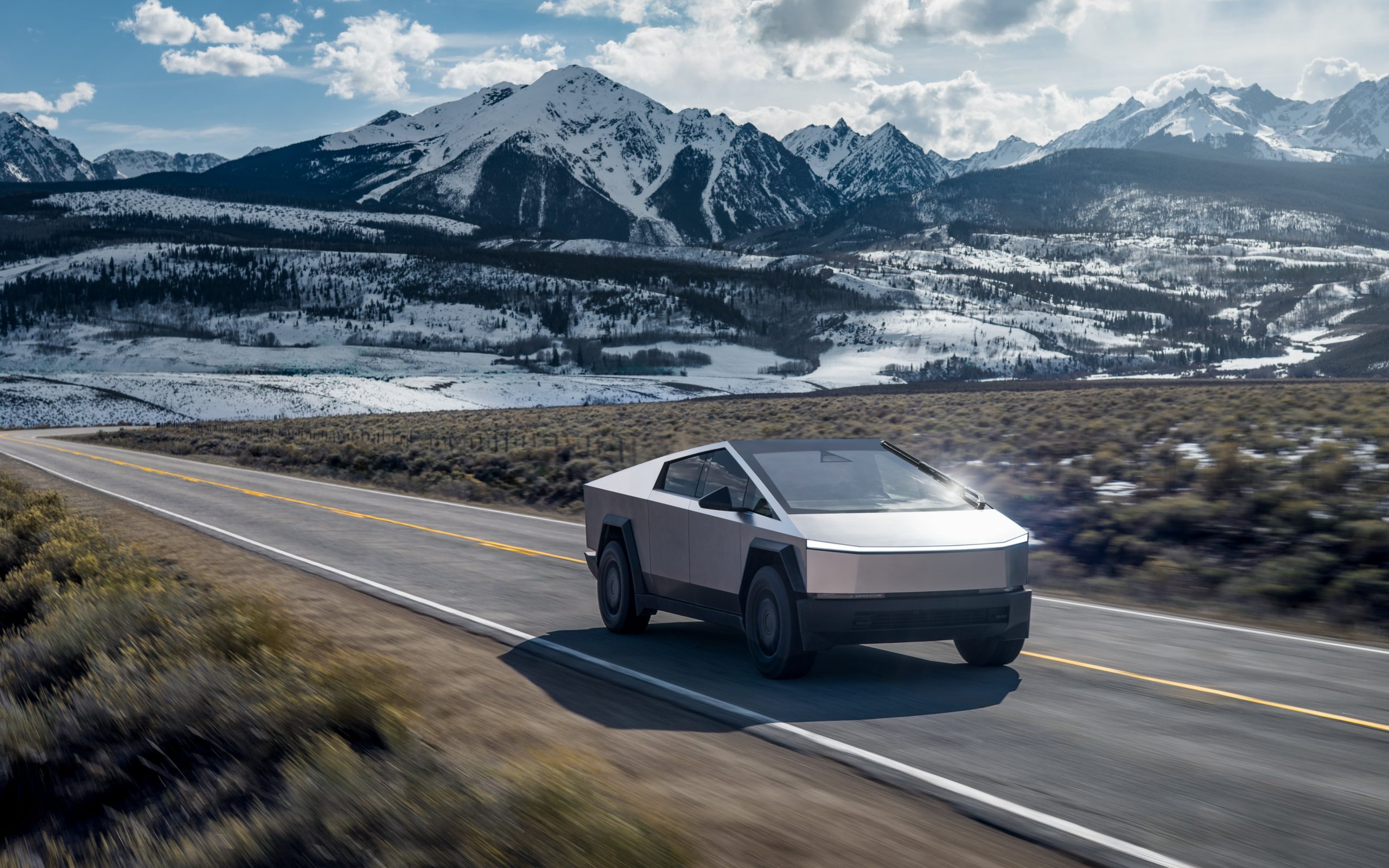
Tesla has cleared the air regarding a video that has been circulating, where the owner claims his Cybertruck was “deactivated” by the company while he was driving.
The video was shared on X and showed a driver pulled over on the side of the road, claiming his Cybertruck had been deactivated by Tesla in the middle of traffic. It is very obviously fake to those who know the company, but these kinds of things have a tendency to pick up steam.
This video is going viral of a Cybertruck “de-activated” in the middle of the road. What’s wild is a lot of people are believing it. People’s hate for Tesla and Elon Musk seems to shadow their critical thinking skills.
It’s likely a YouTube video or something just playing on… pic.twitter.com/HJr00Umjbu
— Jeremy Judkins (@jeremyjudkins_) August 11, 2025
The video shows a screen that says:
“Tesla Cybertruck De-Activated. Critical Issue Detected | Contact Customer Service, Comply with Cease & Desist to Re-Activate. Update Failed, Return to Dealer.”
The same person who posted the video also shared an image of what appears to be a Cease and Desist letter from Tesla, but it is also likely fake:
He also claims Tesla sent him a cease and desist letter because he made a song titled Cybertruck or something like that.
That’s why the error message in the video mentions a cease and desist. 🤣 pic.twitter.com/1zdtGApEfj
— Jeremy Judkins (@jeremyjudkins_) August 11, 2025
The company finally responded to the video on Monday afternoon, stating that the video is, in fact, fake, reiterating that it will not disable vehicles remotely for any reason.
This is fake – that’s not our screen.
Tesla does NOT disable vehicles remotely. https://t.co/QFOLG74AJI
— Tesla (@Tesla) August 11, 2025
It is a shame that these types of things happen, especially as people are prone to believe anything they see on the internet. As there is so much misinformation circulating surrounding Tesla and its CEO Elon Musk, it is no surprise that someone would leverage the situation for their own benefit.
If that Cease and Desist letter is not real, perhaps the next one might be. These types of things can truly cause damage to a company’s reputation, and someone getting an idea that Tesla would remotely deactivate a car could prevent them from buying one.


Cybertruck
Tesla Cybertruck just won a rare and elusive crash safety honor
Only the most outstanding of performances in crash tests can warrant an IIHS Top Safety Pick+ award, as vehicles listed with that ranking must achieve “Good” ratings in the small overlap front, updated side, and updated moderate overlap front tests, along with “Acceptable” or “Good” headlights standard on all trims.
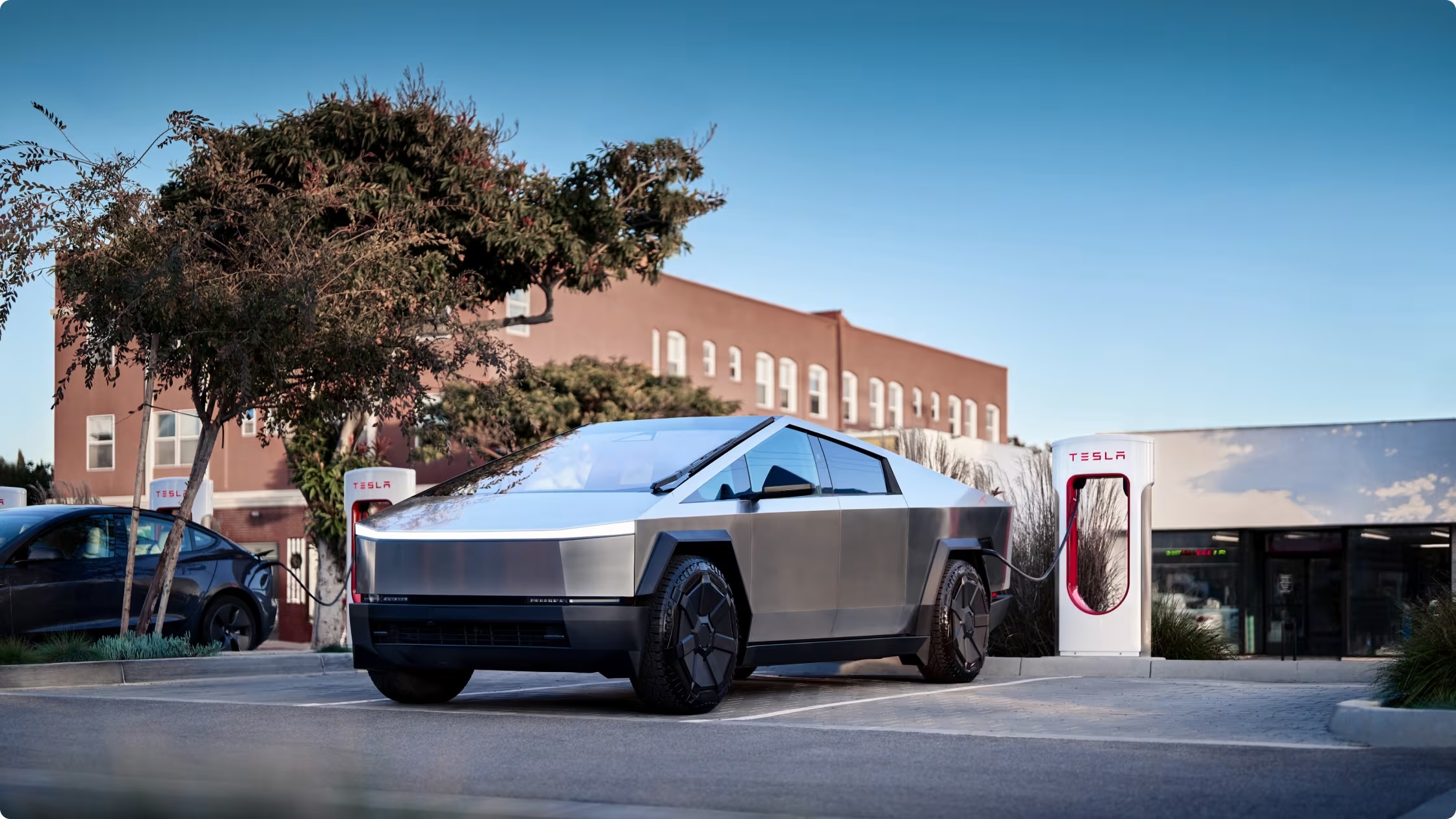
Tesla Cybertruck landed a rare and elusive safety honor from the Insurance Institute for Highway Safety (IIHS). It was the only pickup truck in the U.S. market to do so.
The IIHS rewarded the Cybertruck with the Top Safety Pick+ honors, the highest marks a vehicle can receive from the agency.
Only the most outstanding of performances in crash tests can warrant an IIHS Top Safety Pick+ award, as vehicles listed with that ranking must achieve “Good” ratings in the small overlap front, updated side, and updated moderate overlap front tests, along with “Acceptable” or “Good” headlights standard on all trims.
🚨 Absolutely insane.
Tesla Cybertruck was the ONLY pickup on the market to be awarded a Top Safety Pick+ rating by the IIHS
The safest rating out there belongs to Cybertruck 📐 pic.twitter.com/Y8gLOqaL0d
— TESLARATI (@Teslarati) March 24, 2026
Cybertruck was the only truck to also win an NHTSA Five-Star Safety rating, making it the only pickup available on the market to be recognized with top marks from both agencies.
There are a multitude of options for pickups in the U.S. market, as it is one of the most popular vehicle types for consumers in the country. Pickups are great vehicles for anyone who does any sort of hauling or is just looking for extra space for any variety of reasons.
Pickups are also inherently safer than other body types on the road, mostly because they are larger and heavier, making them more favorable against other vehicle types in the event of a collision. However, Tesla has a significant advantage in safety with its vehicles because it engineers them to not only be safer in collisions, but also easier to repair.
The Cybertruck managed to achieve “Good” ratings, the highest marks available by the IIHS, in all three Crashworthiness categories, as well as “Good” ratings in both Crash Avoidance and Mitigation assessments.
It also received “Good” ratings across all driver and pedestrian crash-test performance metrics, except for one, where it earned an “Acceptable” rating for rear passengers in the Chest category.
The Cybertruck’s outstanding crash test performance has won it this incredible mark as the pickup still tends to be one of the more polarizing vehicle designs on the market.
It is no secret that Tesla has struggled with demand of the Cybertruck due to pricing, but the recent rollout of a trim that was temporarily priced at just $59,990 showed plenty of people want the all-electric pickup.
Cybertruck
Chattanooga Charge: Tesla and EV fans ready for the Southeast’s wildest Tesla party
From Cybertruck Convoys to Kid-Friendly Fun Zones: The Chattanooga Charge Has Something for Everyone

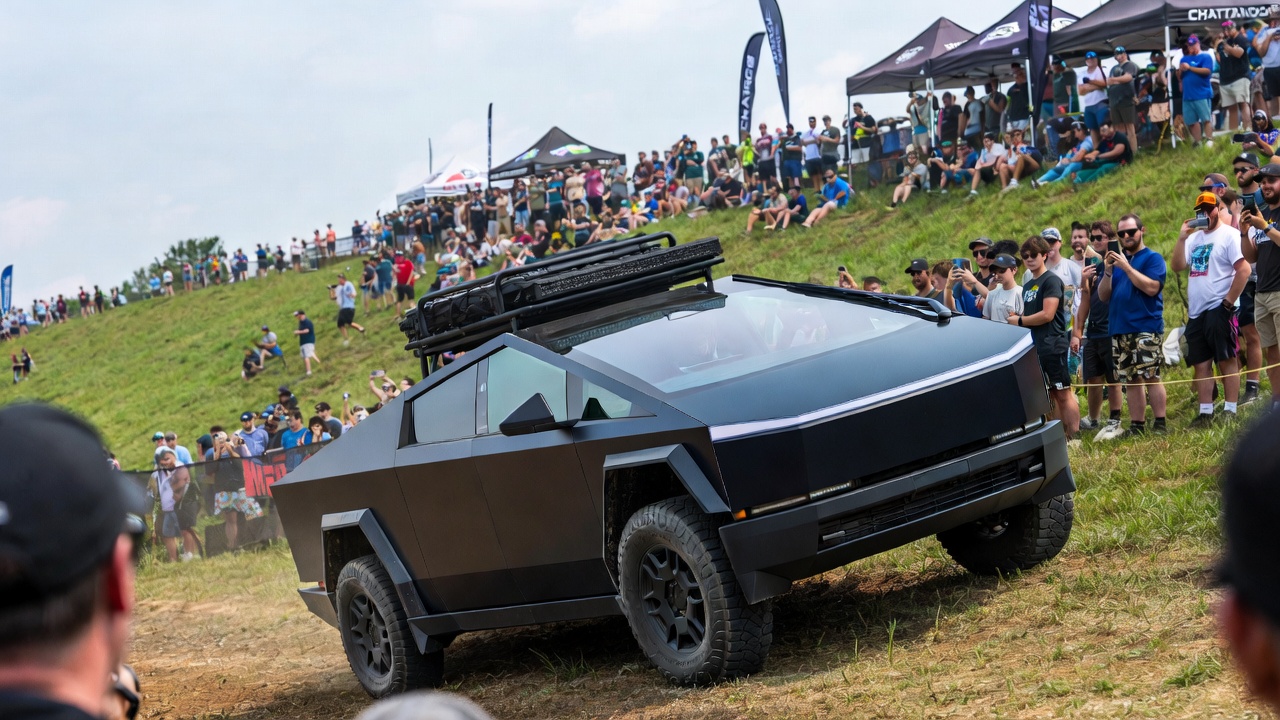
Hundreds of like-minded Tesla and EV enthusiasts are descending on Chattanooga Charge this weekend for the largest Tesla meet in the Southeast. Taking place on March 20–22, 2026 at the stunning Tennessee Riverpark.
If you were there last year, you’ll know that it’s the ultimate experience to see the wildest Teslas in action, see the best in EV tech, and arguably the most fun – finally put a name to the face and connect with those social media buddies IRL! Oh, and that epic night time Tesla light show is a once-in-a-lifetime experience that will transform the Riverpark into something out of a sci-fi film that’s remarkably unforgettable and must be seen in person.
This year’s event takes everything up a notch, with over 100 Cybertrucks expected to be on display, many sporting jaw-dropping modifications and custom wraps that push the boundaries of what these stainless steel beasts can look like.
Whether you’re a diehard Tesla fan, EV supporter, or just EV-mod-curious, the sheer spectacle is worth the drive.
The Chattanooga Charge doesn’t wait until Saturday morning to get started. The weekend technically kicks off Friday, March 20th, and the venue sets the tone immediately. Come share roadtrip stories over drinks at the W-XYZ Rooftop Bar on the top floor of the Aloft Chattanooga Hamilton Place Hotel, with sunset views over the city.
Come morning, nurse your hangover with a some good coffee, and convoy with hundreds of other Tesla and EV drivers through Chattanooga to the event for some morning meet and greets before the speaker panel starts and the food trucks fire up.
Tesla owner clubs travel from across the country to be here, not just to show off their vehicles,, but to connect, share, and celebrate a shared passion for the future of driving.
Sounds like a plan to me. See you there, guys. Don’t miss it. Get your tickets at ChattanoogaCharge.com and join the charge. 🔋⚡
Chattanooga Charge is a premier Tesla and EV gathering inspired by the X Takeover, known as one of the largest Tesla event gatherings. What began as a bold idea from the team at DIY Wraps/TESBROS, hosted in their hometown of Chattanooga, Tennessee, the event quickly became a movement across social media. The first annual Chattanooga Charge united over 16 Tesla clubs from 16 states, proof that the EV community was hungry for something big in the South. Year after year, the event has grown in scale, ambition, and heart.
Cybertruck
Tesla Cybertruck gets long-awaited safety feature
Tesla has announced the rollout of its innovative anti-dooring protection feature to the Cybertruck via the 2026.8 software update.
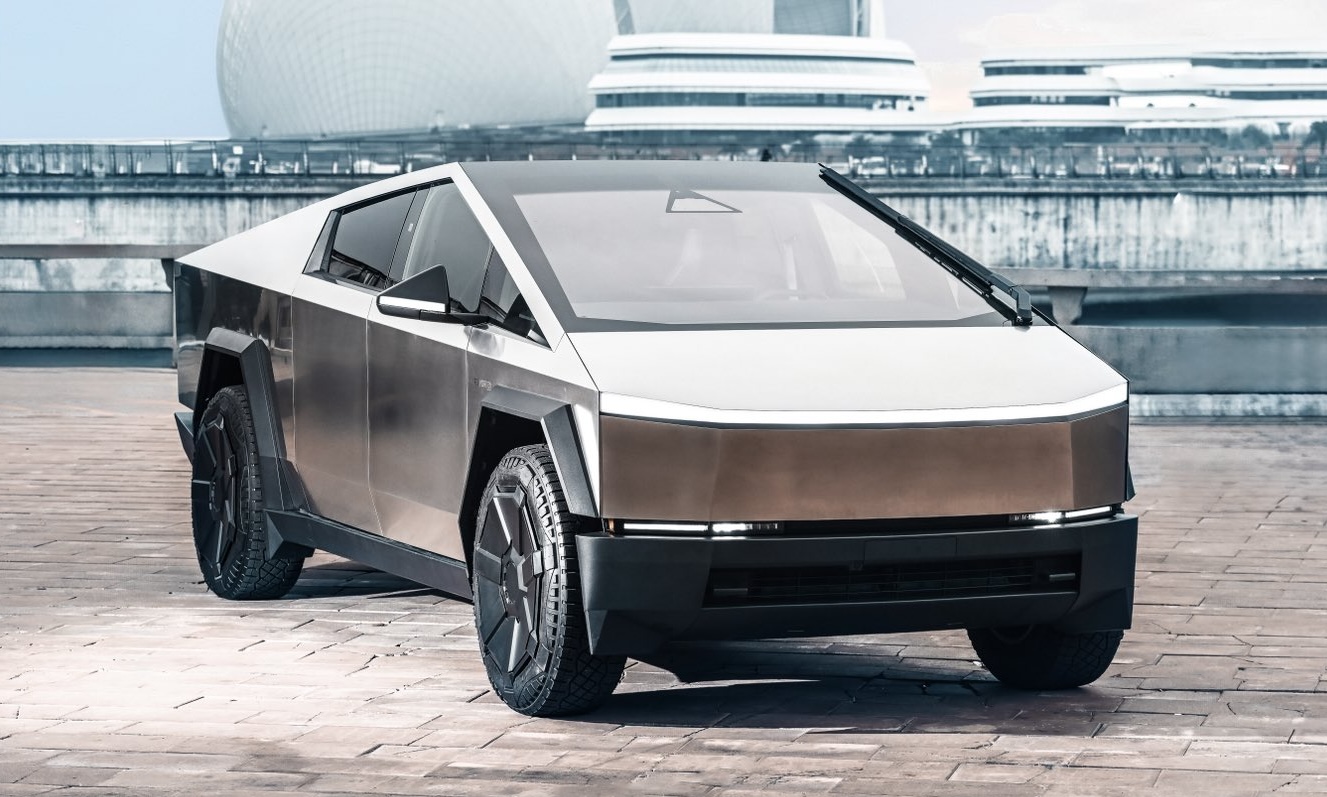
Tesla is rolling out a new and long-awaited feature to the Cybertruck all-electric pickup, and it is a safety addition geared toward pedestrian and cyclist safety, as well as accidents with other vehicles.
Tesla has announced the rollout of its innovative anti-dooring protection feature to the Cybertruck via the 2026.8 software update.
This safety enhancement uses the vehicle’s existing cameras to detect approaching cyclists, pedestrians, or vehicles in the blind spot while parked. Upon attempting to open a door, if a hazard is detected, the system activates: the blind spot indicator light flashes, an audible chime sounds, and the door will not open on the initial button press.
Drivers must wait briefly and press the button again to override, providing crucial seconds to avoid an accident.
Anti-dooring protection now rolling out to @Cybertruck
This feature comes standard on every new Model 3, Model Y & Cybertruck – using cameras to delay door opening if a cyclist, pedestrian or other vehicle is detected approaching in your blind spot
— Tesla North America (@tesla_na) March 17, 2026
The feature, also known as Blind Spot Warning While Parked, comes standard on every new Model 3 and Model Y, and is now extending to the Cybertruck. Leveraging Tesla’s vision-based system without requiring new hardware, it represents a cost-effective software solution that builds on community suggestions dating back to 2018.
This technology addresses the persistent danger of “dooring,” where a driver opens a car door into the path of a passing cyclist or pedestrian.
Tesla implemented this little-known feature to make its cars even safer
Dooring incidents are alarmingly common in urban environments.
According to Chicago data, in 2011 alone, there were 344 reported dooring crashes, accounting for approximately 20 percent of all bicycle crashes in the city, nearly one incident per day.
While numbers have fluctuated (dropping to 11 percent in 2014 before rising again), dooring consistently represents 10-20 percent of bike-related crashes in major cities.
A national analysis of emergency department data estimates over 17,000 dooring-related injuries treated in the U.S. over a decade, with many involving fractures, contusions, and head trauma, particularly affecting upper extremities.
By automatically intervening, Tesla’s system not only protects vulnerable road users but also safeguards its owners from potential liability and enhances overall road safety.
As cities promote cycling for sustainable transport, features like this demonstrate how advanced driver assistance and camera systems can evolve beyond highway driving to everyday urban scenarios.
Enthusiastic responses on social media highlight appreciation for the proactive safety measure, with some calling for broader rollout to older models where hardware permits. Tesla continues to push the boundaries of vehicle safety through over-the-air updates, making its fleet smarter and safer over time.

Elon Musk announces disappointing Tesla Optimus update

Countdown: America is going back to the Moon and SpaceX holds the key to what comes after

Elon Musk debunks latest rumors about SpaceX IPO

Elon Musk says Tesla is developing a new vehicle: ‘Way cooler than a minivan’

Elon Musk launches TERAFAB: The $25B Tesla-SpaceXAI chip factory that will rewire the AI industry


