Featured
Tesla lands on Fortune’s 2026 Most Innovative Companies and the Cybercab is why
Fortune names Tesla one of America’s most innovative companies as Cybercab production officially begins in 2026.

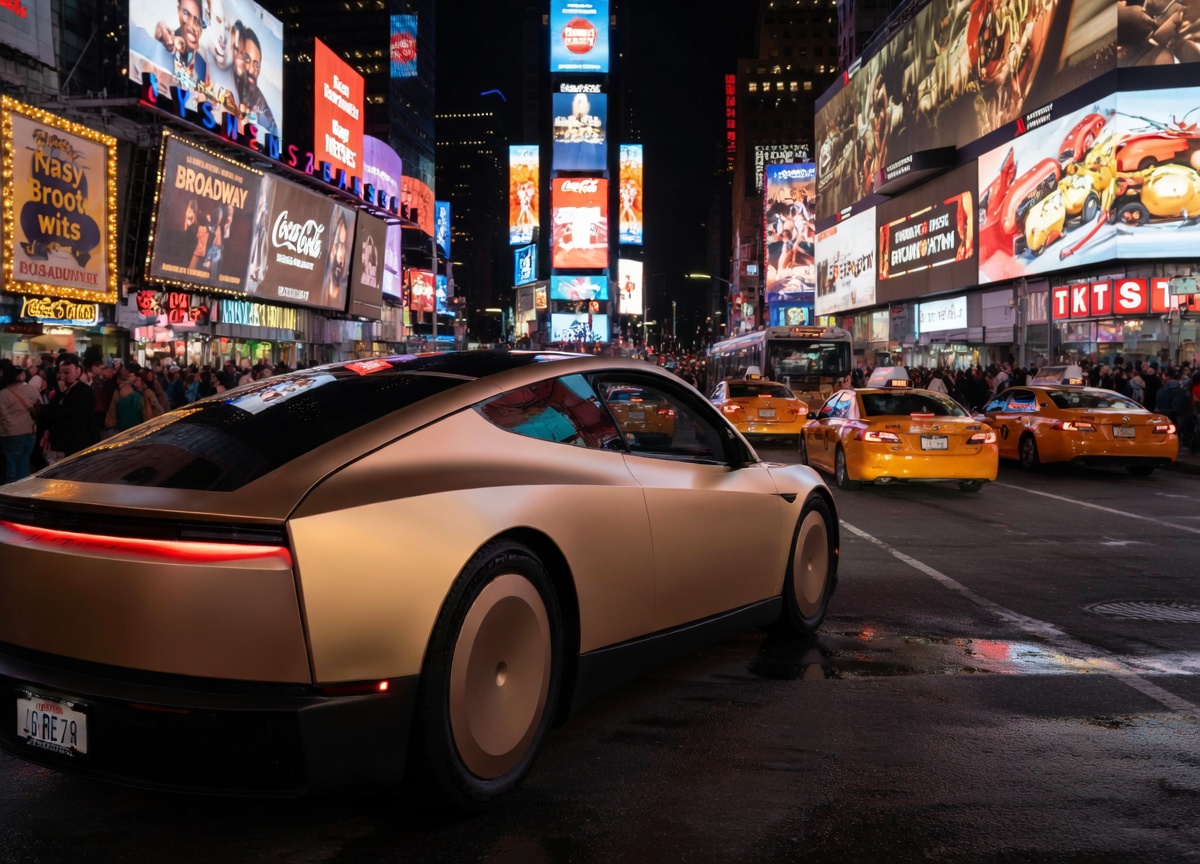
Fortune has named Tesla to its America’s Most Innovative Companies 2026 list, and the timing could not carry more weight. With Cybercab production ramping at Gigafactory Texas and a driverless Robotaxi service expanding to key cities in the US, Tesla’s inclusion is a direct reflection of the future of innovation happening right now.
Fortune’s list, produced annually in partnership with Statista, evaluates 300 companies across three dimensions: product innovation, process innovation, and innovation culture. This year’s cohort of 300 generated over $12.5 trillion in combined revenue, and Tesla’s entry places it alongside Rivian, which made the list for the first time. Tesla edges out Rivian on the strength of a product pipeline that is meaningfully further along. Where Rivian has introduced a self-driving AI model, Tesla has logged over 8 billion miles on its Full Self Driving tech, logged more than 250,000 miles of unsupervised Robotaxi service in Austin, and rolled the first production Cybercab off the line at Gigafactory Texas in February 2026.
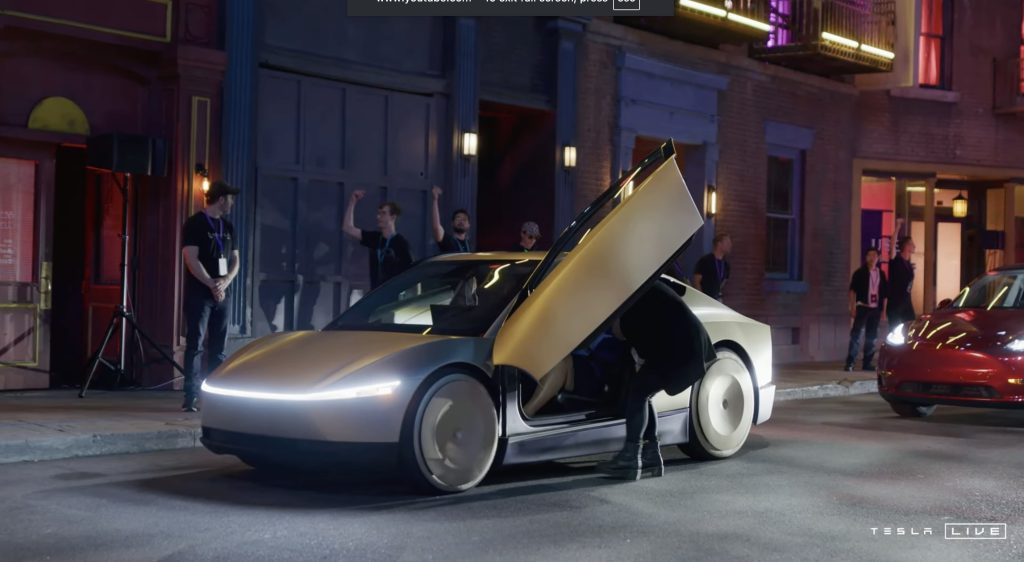
Credit: Tesla
The Cybercab is the product that defines Tesla’s case for innovation. It has no steering wheel, no pedals, and is designed to be produced at a cycle time of one vehicle every ten seconds using a revolutionary unboxed manufacturing process. Elon Musk, speaking at Tesla’s 2025 Annual Shareholder Meeting, described it plainly: “Manufacturing for the Cybercab is closer to a high-volume consumer electronics device than a car manufacturing line.” That ambition is unprecedented in the automotive industry. Musk also acknowledged the ramp will be deliberate: “Almost everything is new, so the early production rate will be agonizingly slow, but eventually end up being insanely fast.”
🎥: Our FULL first ride in the @Tesla Cybercab pic.twitter.com/6gR7OgKRCz
— TESLARATI (@Teslarati) October 11, 2024
Historically, Tesla’s recognition on lists like this has tracked with its product breakthroughs. The company changed the auto industry’s trajectory when it proved electric vehicles could be desirable, then again when it scaled Gigafactory production, and again when FSD began logging real safety data at scale. The Cybercab represents the next inflection point, a purpose-built autonomous vehicle priced below $30,000 that is designed to operate in a networked Robotaxi fleet expanding from Austin to Miami, Dallas, Phoenix, and Las Vegas.
Fortune’s recognition arrives as Tesla is navigating one of its most consequential years. Mass production begins in April 2026. Regulatory approvals are progressing alongside deployment data. Rivals are watching closely.
Here is a look at the top companies on Fortune’s 2026 list, led by Alphabet for the fourth straight year:
- 1. Alphabet — AI leadership across Search, DeepMind, and Waymo; dominant patent portfolio and innovation culture
- 2. Microsoft — Azure AI, Copilot integration across enterprise software, and OpenAI partnership
- 3. Apple — iPhone ecosystem innovation, Apple Silicon, and Vision Pro spatial computing platform
- 4. Abbott — medical device breakthroughs including continuous glucose monitors and cardiac diagnostics
- 5. KLA — semiconductor process control enabling AI chip production at scale; newcomer to the top 5
- 6–20. Additional confirmed inclusions: Tesla, Harness (No. 24), Rivian, Cognizant, PPG, DXC Technology, and Advanced Technology Services, among 98 first-time entrants. The complete ranked list is available at fortune.com (behind a paywall)


Featured
Tesla Roadster: Three configs, one can fly, 0-60 in 0.8 seconds
Tesla’s Roadster comes in Performance, Thrust and Rocket versions, with a claimed 0-60 under 0.59 seconds.
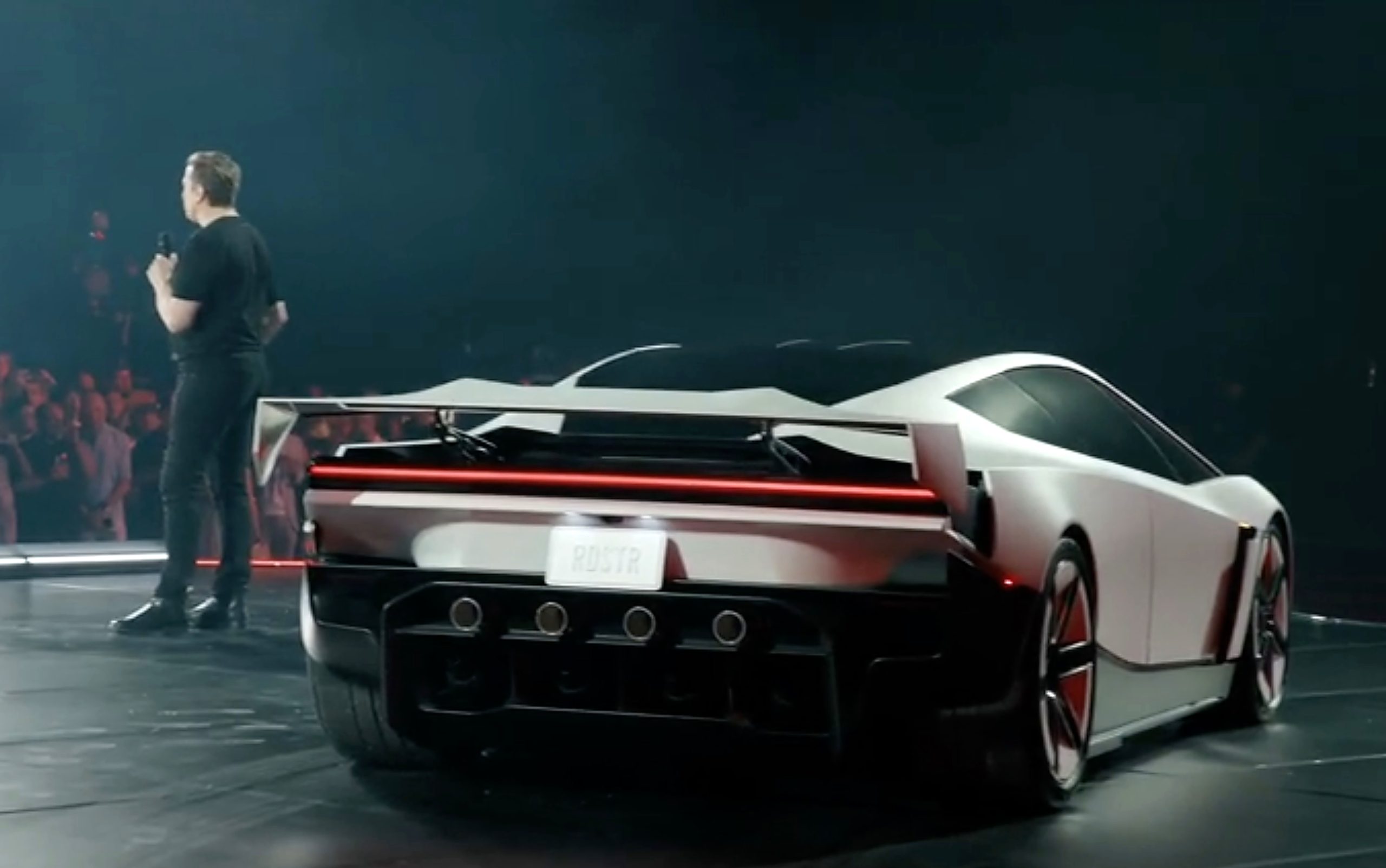
Tesla finally showed the next generation Roadster on Thursday night, and the demo had more in common with a SpaceX test than a track lap. At an event outside Waco, Texas, near SpaceX’s McGregor site, the car used a mix of fans and cold gas thrusters to drive up a curved ramp until it was upside down, then flew off, flipped and landed on the pavement. “Well, it worked,” Elon Musk said. “Flying cars are real.”
The Roadster also hovered itself over a Cybercab, Cybertruck, Tesla Semi, Model Y and Model 3 while moving, and that Tesla showed it going 0 to 60 mph in one second. Musk said “this will be the actual car that’s on the roads” and that it “literally is just going to puff itself up” to perform the maneuvers whenever an owner wants. He called the result a collaboration between Tesla and SpaceX engineers that is “better than any James Bond car,” with Franz von Holzhausen and Lars Moravy on site.
Tesla published new mind-blowing stats for the car that replace the previous targets. The Performance version is road ready and seats two, with active aerodynamics and a multi-mode suction system, and Tesla lists 0 to 60 mph in under 1.6 seconds. The Thrust version is race ready, also seats two, and adds rear-mounted cold gas thrusters for a 0 to 60 time of under 0.9 seconds. The Rocket version is described as air ready, seats one, and uses perimeter-mounted thrusters for forward and upward acceleration plus lateral rotational movement.
| Configuration | Seats | 0 to 60 mph |
|---|---|---|
| Performance | 2 | under 1.6 s |
| Thrust | 2 | under 0.9 s |
| Rocket | 1 | under 0.59 s |
Tesla’s own description: “So…yes, it can fly.” It lists a 0 to 60 time of under 0.59 seconds for Rocket, a top speed of up to more than 230 mph, and range of more than 300 miles. Tesla has not yet given pricing in the information we have seen, but has reopened $50,000 reservations in the newly updated Tesla Roadster configurator. Production is planned for Giga Texas in 2027 or 2028, and Musk has said it would follow the demo by 12 to 18 months.
Every car on the road today is limited by one thing: tire grip
Roadster’s thruster system generates 4–5x the force the tires can.
More force on the same mass means significantly better acceleration – physics does the rest https://t.co/zdPRT2aKwZ
— Tesla (@Tesla) October 16, 2026
Tesla’s Roadster page adds more on how the car works. A multi-mode fan and ground sealing system pulls air from under the car, producing enough suction to hold it upside down even when stationary. Active wings, steer-by-wire with a yoke, and a Track Mode that lowers the car round out the driving setup. The cold gas thrusters use all-electric actuators for micro adjustments to stabilize the car in flight. Tesla says it cut weight with magnesium, titanium and carbon fiber, manual controls and a fixed seat position, and the exterior has hidden headlights, a full-length taillight and Ano White paint inspired by aerospace coatings. Inside are an Ultrawhite interior with gray microsuede, a center touchscreen and two smaller forward displays, and gold tinted glass modeled on spacesuit visors. Availability is tiered: Performance is by reservation, Thrust is a limited release, and Rocket is invite only. Tesla notes the car is not approved for public road use, and that Rocket is not available in all regions.
Tesla Roadster Highlights
- Aero and suction: a multi-mode fan and ground sealing system pulls air from under the car and can hold it upside down even when stationary. There are also active wings and a Track Mode that lowers the car.
- Controls and thrusters: steer-by-wire with a yoke. The cold gas thrusters use all-electric actuators for micro adjustments that stabilize the car in flight.
- Weight: magnesium, titanium and carbon fiber, manual controls and a fixed seat position.
- Design: hidden headlights, a full-length taillight, Ano White paint inspired by aerospace coatings, and gold tinted glass modeled on spacesuit visors.
- Interior: an Ultrawhite interior with gray microsuede, a center touchscreen and two smaller forward displays.
- Availability: Performance is by reservation, Thrust is a limited release, and Rocket is invite only.
- Road use: Tesla notes the car is not approved for public road use, and that Rocket isn’t available in all regions.
Musk has described the Roadster as “the best of the last of the human-driven cars,” and he has been open that it is a halo product. He said he is “not sure it moves the needle massively from a revenue standpoint,” and has warned that anyone whose top priority is safety should not buy it. Tesla reports third quarter earnings on October 21.
Roadster is a true pilot’s car: active aerodynamics, a multi-mode suction system & cold-gas thrusters
Exterior
– Concealed headlights, full-length taillight & flush-mounted surfaces for a minimalist, highly technical form– Super light wheels w/ thin spokes that reinforce structural strength when earthbound
– Ano White paint brings an aerospace-derived finish w/ UV & cryogenic protection, electrostatic dissipation & corrosion resistance
– Gold Glazed tinted glass mimicking the copper coating of spacesuit visors, w/ subtle titanium accents
— Tesla (@Tesla) October 16, 2026
Energy
Taiwan power firm bets big on Tesla Megapacks as AI data center thirst grows
Taiwan’s Apollo Power orders 260 Tesla Megapacks, betting AI data centers will need more electricity.
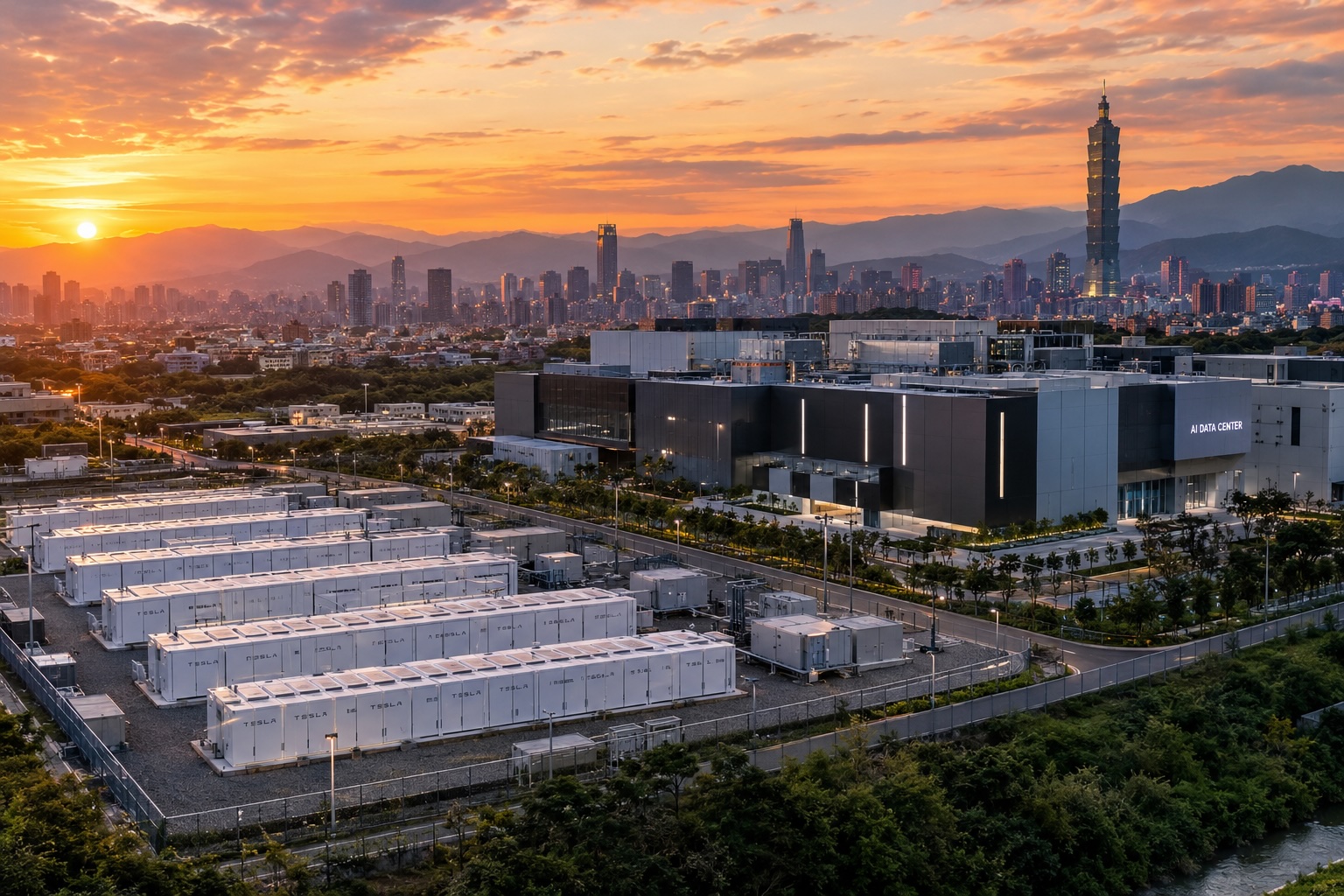
A Taiwanese power company has ordered 260 Tesla Megapack 2XL units, roughly 1GWh of storage, betting that electricity rather than chips will decide how fast AI data centers come online. Apollo Power signed the contract with Tesla’s Taiwan energy arm on October 8, according to the company’s filing with the Taiwan stock exchange.
The filing says the units are meant for behind the meter storage and resilient grid projects, with delivery in batches from the end of 2027 and sites operating in 2028. Apollo and Tesla did not disclose a price, citing a confidentiality agreement. Apollo plans to pay for the equipment through a cash capital increase and bank financing, and it noted the purchase is not revenue and does not mean it holds firm orders from its partners.
Biggo reported that only about 33 units are under signed customer contracts, with roughly 150 more in negotiation. The same report put total project investment near NT$130 billion, but that figure includes installation work, with the equipment itself making up about 40 to 50 percent. In other words, a large share of this order is Apollo reserving supply ahead of demand. Apollo’s chairman told local media global large storage supply is tight, which is why the company locked in the units early, according to Yahoo Taiwan Finance.
Apollo also launched an AI data center and grid resilience alliance with Phison, Gigabyte and Shihlin Electric. The pitch rests on a pilot at Phison’s Zhunan plant, where Apollo and Tesla Energy Taiwan installed grid forming Megapack 2XLs in June. Tesla Energy Taiwan general manager Sun Hsiao-Han said the project went from demo to 1GWh in four months, and that Tesla Energy has deployed more than 50GWh worldwide.
Taiwan’s cabinet has approved amendments that would require large energy users to install their own generation and storage, which gives enterprise storage a regulatory tailwind.
The deal fits a pattern Teslarati has tracked. Tesla’s Megablock targets 1GWh commissioned in 20 business days, a pitch aimed squarely at fast moving data center builds. Megapacks already back xAI’s Colossus in Memphis and a 400MW AI campus in Brazil. Sun Media adds that Megapack 2XL was named among the first products in Nvidia’s DSX Ready qualification for battery storage in AI factories.
Deliveries are more than a year away, so the real test is how much of that 260 unit order turns into signed customer contracts.
Featured
Tesla Cybercab is coming to Asia this month as US service officially begins
Tesla Asia says Cybercab will be on display in Hong Kong, Tokyo, Beijing and Shanghai this month.
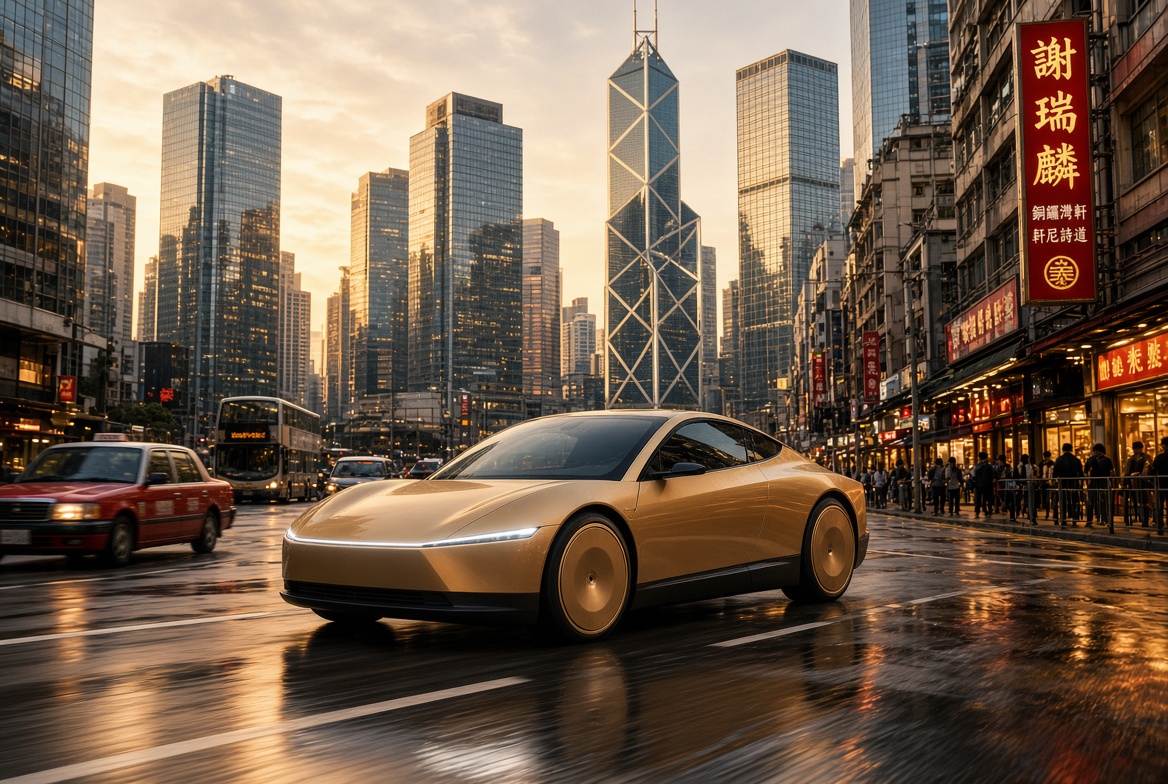
Tesla’s Cybercab is heading to Asia. The official Tesla Asia account posted on X Thursday, inviting Cybercab fans to “Come experience the future of autonomy in Hong Kong, Tokyo, Beijing & Shanghai.” The post went up within hours of Tesla’s own Cybercab milestone in Texas, where the company said Thursday it had begun offering rides in across Austin.
Exact dates and venues for the Asia tour haven’t been released yet, though Tesla Hong Kong replied to the announcement with “Cybercab will be on display in Hong Kong soon,” while Tesla Japan’s response pointed fans to a sign up page for updates. Neither post mentions test rides or a service area, and nothing so far suggests Tesla is launching Robotaxi operations in any of the four cities. Based on how Tesla has run past Cybercab tours, in Europe in late 2024 and at US shopping centers that same December, the Asia stops are almost certainly static displays at Tesla stores or public venues as a means to stimulate buzz for its future driverless ride-hailing service in the big cities.
Cybercab will be on display in Asia this month!
Come experience the future of autonomy in Hong Kong, Tokyo, Beijing & Shanghai. pic.twitter.com/wGmmEastfX— Tesla Asia (@Tesla_Asia) September 4, 2026
The timing lines up with Tesla’s only prior Cybercab appearance in the region, a booth at the China International Import Expo in Shanghai last November, which Teslarati covered at the time. At that event, Tesla’s regional general manager for Shanghai framed the car as evidence of the company’s broader mission, a message Tesla has since formalized in its Master Plan Part IV, which states that “autonomous vehicles have the capacity to dramatically improve the affordability, availability and safety of transportation while reducing pollution, particularly in our increasingly dense global cities.” The same document is where Tesla lays out its “sustainable abundance” framing for Cybercab and Optimus alike, describing the two as the hardware behind an AI driven push to cut the cost of transportation and labor at scale.
Whether Cybercab actually operates as a robotaxi anywhere in Asia remains an open question, considering China has already pushed an autonomous ride-hailing market that’s run on homegrown players like Baidu’s Apollo Go and Pony AI. For now, the four city tour reads as a marketing push timed to Austin’s momentum.

Tesla Roadster owners to get “Flying Stunt Mode” and looping track access

How to use Grok Bot to block spam calls and texts

Tesla’s flying Roadster just revealed something bigger than the car

SpaceX reveals how its 1 Million AI satellite network will work and prevent space collisions

Elon Musk’s Boring Company lands a new Middle East deal, and Nashville is about to get faster


