Elon Musk
Elon Musk’s $10 Trillion robot: Inside Tesla’s push to mass produce Optimus
Tesla’s surging Optimus job listings reveal a company sprinting from prototype to one million robot production.

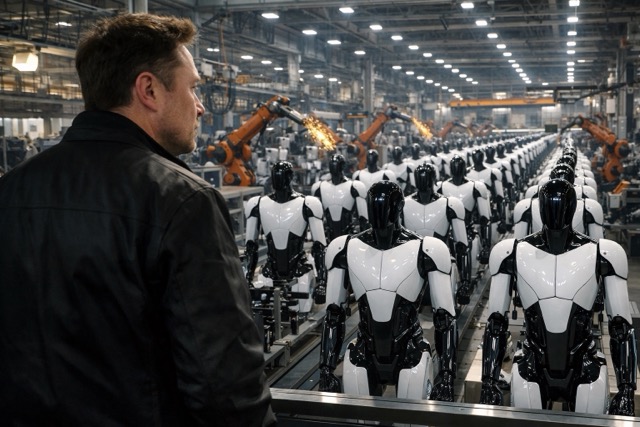
Tesla is accelerating its push to bring the Optimus humanoid robot to high volume production, and its recent job listings tells the story as clearly as any earnings call.
With well over 100 Optimus related job openings now posted across its U.S. facilities, Tesla is signaling a critical pivot for the program, moving it from a captivating tech demo to a serious manufacturing endeavor. Roles span the full spectrum of the product lifecycle, from Robotics Software Engineers and Manufacturing Engineers to Mechanical Integration Engineers and AI Engineers focused on world modeling and video generation. One active listing for a Software Engineer on the Optimus team asks candidates to build scalable and reliable data pipelines for Optimus manufacturing lines and develop automation tools that accelerate analysis and visualization for mass manufacturing.
Tesla is racing toward a one million unit annual production target. The clearest signal yet that Tesla is treating Optimus as its primary business came on January 28, 2026, during the company’s Q4 2025 earnings call. Musk announced that Tesla is ending production of the Model S and Model X, and will repurpose those lines at its Fremont, California factory to build Optimus humanoid robots.
A production intent prototype of Optimus Version 3 is planned to be ready in early 2026, after which Tesla intends to build a one million unit production line with a targeted production start by the end of 2026. To support that ramp, Tesla broke ground on a massive new Optimus manufacturing facility at Gigafactory Texas in late 2025, with ambitions to eventually reach 10 million units per year.
Tesla Giga Texas to feature massive Optimus V4 production line
The business case for scaling this aggressively is rooted in labor economics. Musk has stated that “Optimus has the potential to be the biggest product of all time,” reasoning that if Tesla can produce capable humanoid robots at scale and reasonable cost, every task currently performed by human labor becomes a potential application. In a separate statement, Musk framed Optimus’s long term importance even more bluntly, saying it could surpass Tesla’s vehicle business in scale with the potential to generate $10 trillion in revenue.
The industries Tesla is targeting first are those most burdened by repetitive physical labor. Early applications include manufacturing assembly, material handling and quality inspection, as well as logistics tasks like loading, unloading, sorting, and transporting goods in warehouses and distribution centers. Longer term, Tesla’s vision is for Optimus to penetrate household, medical, and logistics scenarios at the scale of a smartphone rollout.


Elon Musk
Amazon shuts out Elon Musk’s Grok Bot so he may just build his own rival store
Musk promises SpaceX will cover Grok Bot purchase errors, tells users to shop beyond Amazon.
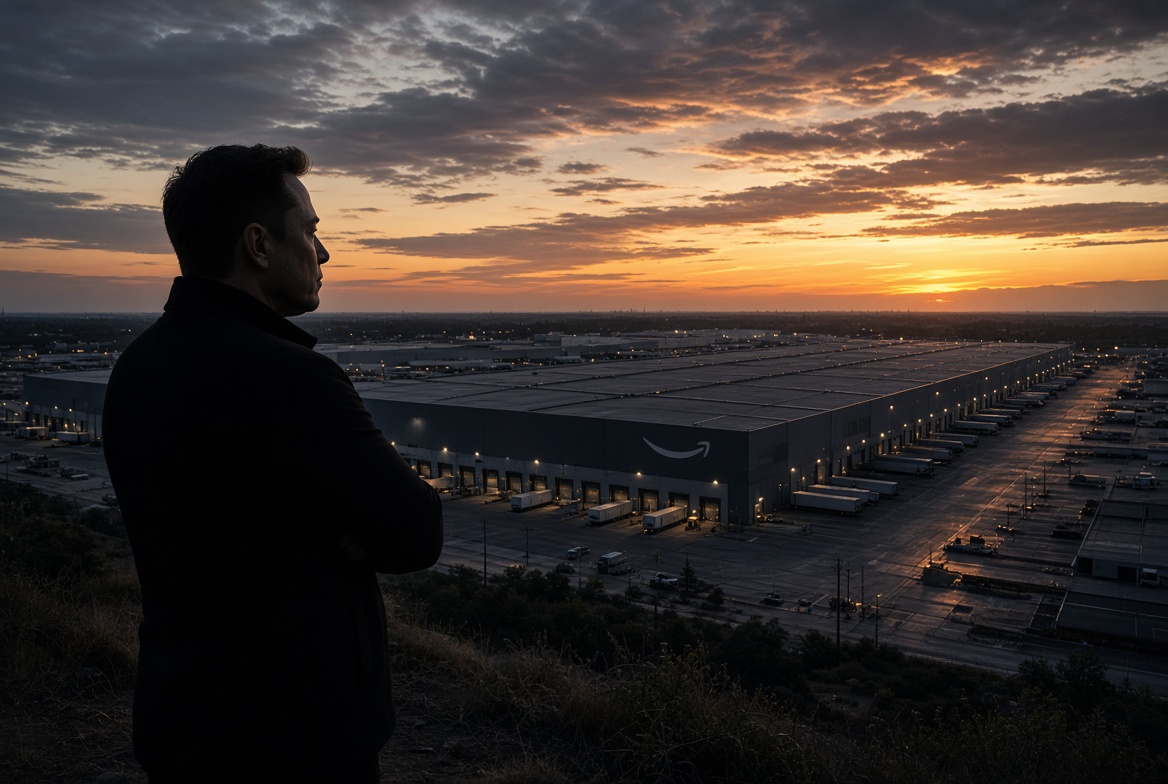
Elon Musk said SpaceX will reimburse users if Grok Bot botches a purchase or leaks their card details. A few hours later he was telling users to take their shopping elsewhere after Amazon shut the agent out.
The first post was a reply to an X user who said Grok Bot booked him a flight after he sent a photo of his credit card. “This works well,” Musk wrote. “If Grok @Bot makes a mistake with a purchase or leaks your card (never happened yet), SpaceX will make you whole,” said Musk.
The second came after another user posted the error his Grok Bot hit on Amazon: “Continued access by an unauthorized AI agent violates Amazon’s Conditions of Use, to which our customers have agreed.” The user said his bots can no longer order from the site. Musk answered, “Just ask Grok @Bot to buy what you want someplace else and get a better deal. There are far more purchasing websites than just Amazon!” He later added, “Maybe we should start a competitor to Amazon,” a possible hint at an X shopping service.
Just ask Grok @Bot to buy what you want someplace else and get a better deal.
There are far more purchasing websites than just Amazon!
— Elon Musk (@elonmusk) October 15, 2026
The Amazon block did not start Thursday. A reply to Musk on October 10 said Amazon was blocking the bot, and Musk responded that Grok would find another way, then showed an order it placed on Lego’s website.
The latest reimbursement promise builds on late August when Musk told a Tesla investor weighing whether to give Grok Bot access to his bank accounts, “If Grok Bot messes up, we will make you whole,” as Teslarati covered when SpaceXAI added its Finance integration. That promise goes further than the company’s consumer terms, which make users responsible for what their agents do and generally cap liability at the greater of fees paid or $100. Neither Thursday post says those terms have changed, so for now it remains a statement on X rather than a published policy.
The two posts matter to Tesla owners because Grok Bot is no longer limited to a phone. Tesla brought it into its vehicles on September 22, and it is now enabled across every Cybercab and the rest of the Model Y Robotaxi fleet, as noted when Teslarati looked at why Grok Bot may be the Cybercab’s real advantage. A rider who asks for groceries or a coffee order is relying on retailers that let the agent in. Amazon has now said it will not, and Musk’s answer is to route around it.
Amazon has not commented publicly on the block in the posts Teslarati reviewed, and it is unclear whether Musk will follow through on a rival store.
So, how many of you do the vast majority of shopping on Amazon and hate that you do? Comment and let us know your thoughts!
Elon Musk
Elon Musk says Tesla’s Roadster demo could be a bang, quite literally
Musk says tonight’s Roadster demo will be a banger, maybe literally. The clues add up.
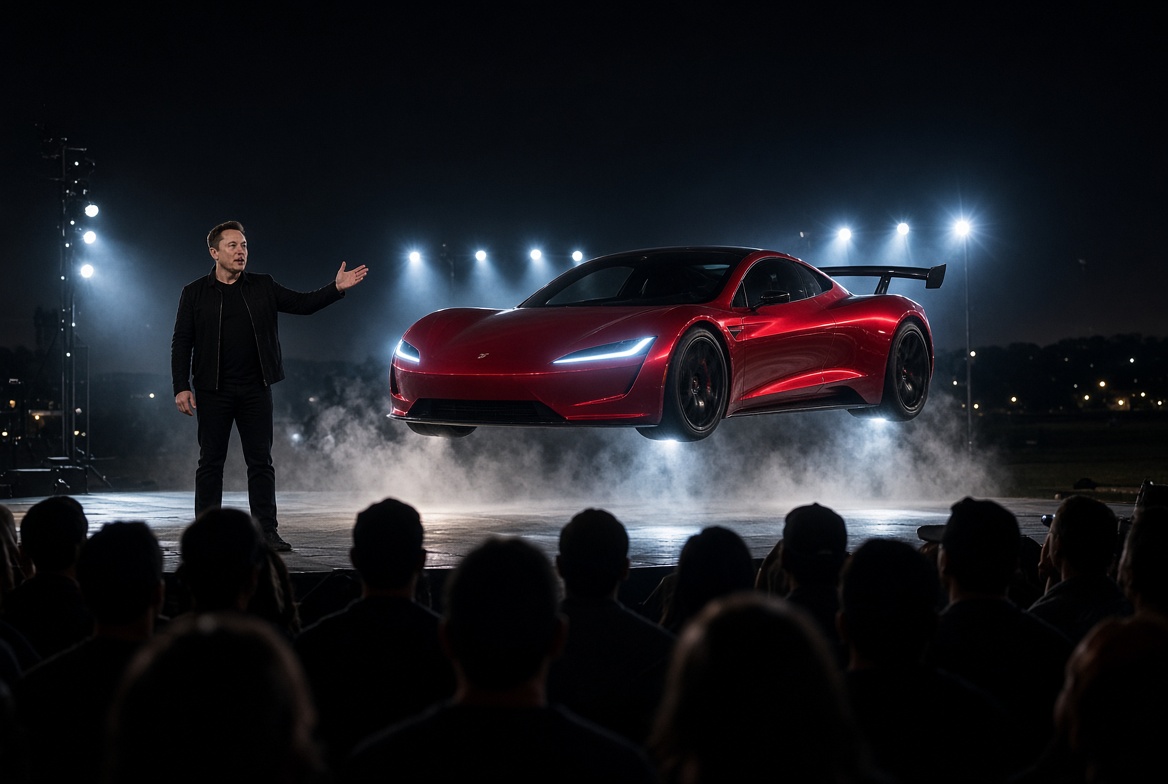
Elon Musk spent Wednesday and Thursday stacking teases on top of Tesla’s Roadster event, and the wording is getting harder to read as routine hype. Tesla streams the unveil tonight at 7:55 p.m. Central on X. Musk has called it “a candidate for greatest product demo of all time,” then added that “this demo will be a BANGER, probably metaphorically, though some chance literally.”
New Roadster is
beyond movies,
beyond imagination,
beyond human,
yet still made
by humans
on Earth— Elon Musk (@elonmusk) October 15, 2026
The “some chance literally” part is the line to watch. The Roadster has been tied to a SpaceX option package since 2018, and as we reported when the date was announced, the system is reportedly codenamed A71 and uses cold gas thrusters fed by a composite overwrapped pressure vessel, the same tank design SpaceX uses on Falcon 9. Musk has said a thruster equipped car could reach 60 mph in about 1.1 seconds. Cold gas thrusters firing at full output are loud, and reports ahead of the event say the car will be unmanned with spectators kept several hundred yards back. A literal bang could simply mean a demonstration that sounds like one, though it is also an admission that something could go wrong on stage.
Then there is “Timing is everything,” which Musk posted a day earlier. Stocktwits noted that 7:55 p.m. is 19:55 on a 24 hour clock, which echoes 1955, the year Marty McFly travels to in Back to the Future. Musk has made that connection before. In 2019 he replied to an animation of a flying DeLorean by saying the new Roadster “will actually do something like this.” Nothing from Tesla confirms the movie reference, but the stream time was chosen by someone, and Tesla has not been shy about this kind of wink.
Also, Tesla said it moved the event because it “can only be held outdoors,” and Musk then wrote that the demo was postponed “due to high winds,” as Teslarati covered at the time. A car running a standing start in front of a crowd shrugs off wind. A car that leaves the ground does not. The venue near SpaceX’s McGregor test site and the FAA airspace closures reported around the original date point the same way, though we also noted the delay could be a plain safety precaution. Musk has also described the new Roadster as “beyond movies, beyond imagination, beyond human, yet still made by humans on Earth.”
The only official figures remain the 2017 ones: 620 miles of range, a top speed above 250 mph, a 1.9 second 0 to 60 time, and prices of $200,000 for the base car and $250,000 for the Founders Series. Production is expected at Giga Texas in 2027 or 2028. Tesla has said the event will cover pricing, specifications and production targets, and its livestream preview has the full rundown. Tesla reports third quarter earnings on October 21, so whatever lands tonight will be fresh going into that call. We will have live coverage as soon as the stream starts.
Elon Musk
Elon Musk breaks his silence on the Starlink impact to Ukraine drones
Musk says the US military and president set Starshield limits, not SpaceX, amid Ukraine complaints.
Elon Musk says the speed limit cutting out Ukraine’s military Starlink terminals is not SpaceX’s decision. In a post on X Wednesday, Musk wrote that “Starshield systems are owned and controlled by the US government. Any limits on speed or usage are decided by the US military and ultimately POTUS.” He added that Starlink is a commercial service limited to civilian or defensive activities and “cannot be used for offensive military action, as doing so would be inappropriate for a commercial company.”
He was replying to Mykhailo Fedorov, Ukraine’s former defense minister, who had thanked Musk for restoring connectivity at speeds up to 160 km/h and said removing the Starshield limit entirely is “now critical for Ukraine’s defense.”
Starshield systems are owned and controlled by the US government. Any limits on speed or usage are decided by the US military and ultimately POTUS.
Starlink is a commercial service owned and controlled by SpaceX. Usage of Starlink is limited to civilian or defensive activities and cannot be used for offensive military action, as doing so would be inappropriate for a commercial company.
— Elon Musk (@elonmusk) October 14, 2026
The complaint started Tuesday night, when Ukrainian officials said military terminals began losing service above roughly 100 mph. Presidential adviser Serhiy Beskrestnov said the defense forces got no warning and several missions were disrupted, as Teslarati reported earlier Wednesday. The 7th Rapid Reaction Corps told Reuters connections dropped for 10 to 20 seconds at speeds well below the limit, which made drones harder to control. Poland’s foreign minister, Radoslaw Sikorski, asked Musk on X whether he is “playing politics with your products again.”
That is why the Starlink and Starshield distinction matters. SpaceX introduced Starshield in 2022 as the government version of Starlink, with an initial focus on Earth observation, communications and hosted payloads. It won a Space Force contract in 2023 with a $70 million ceiling. In December 2024, the Pentagon moved Ukraine’s terminals onto Starshield, covering about 3,000 units across two contracts. Ukraine’s military connections therefore run through a service that Musk now says sits under Washington’s control.
While Musk’s post describes who holds authority, it does not infer that anyone ordered the limit, and neither SpaceX nor the US government has confirmed who set it. Ukrainian officials have pointed to the timing, which follows President Trump’s push for an energy ceasefire and Musk’s Saturday post that “Zelensky has gone too far.” The BBC noted Trump denied threatening to restrict intelligence sharing with Kyiv, and no evidence has been presented that Washington requested the cap.
The episode also revives a promise from 2025. After Poland accused him of threatening Ukraine’s access, Musk said Starlink “will never turn off its terminals” and would not be used as a bargaining chip. Poland has since supplied more than 29,000 terminals to Ukraine. Teslarati also covered Kyiv’s search for Starlink alternatives in 2025, and the latest dispute gives that search new urgency.

Tesla’s flying Roadster just revealed something bigger than the car

How Tesla’s Roadster fan system and thrusters are built to dominate the corners

Tesla Roadster: Three configs, one can fly, 0-60 in 0.8 seconds

SpaceX reveals how its 1 Million AI satellite network will work and prevent space collisions

Elon Musk’s Boring Company lands a new Middle East deal, and Nashville is about to get faster


