News
Five things that are keeping Tesla Full Self-Driving supervised

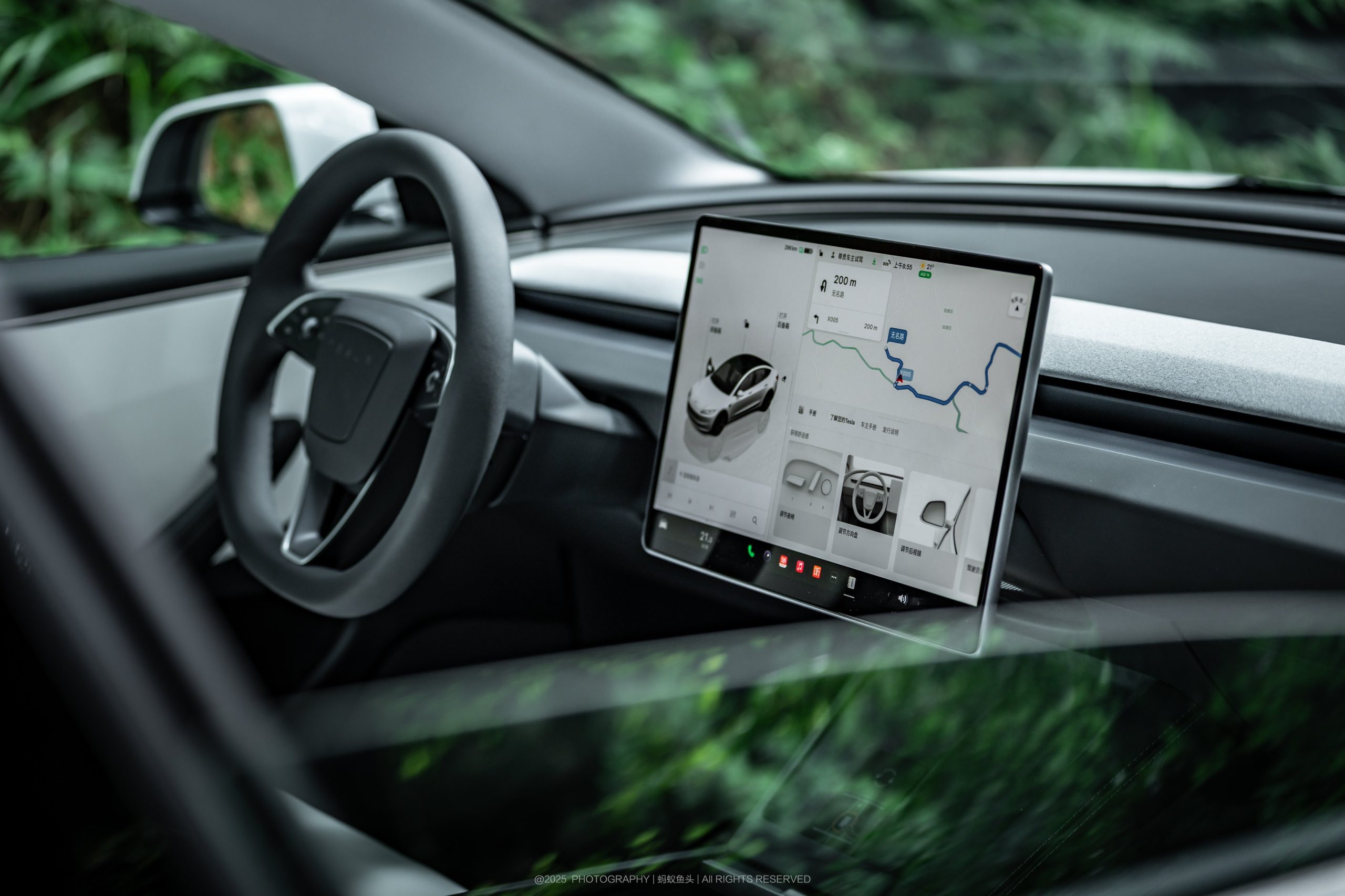
Tesla Full Self-Driving is really good. I have used it for over 10,000 of my 13,000 miles of driving since FSD v14 launched around this time last year, equating to about 76 percent of my miles using the suite. It’s truly the only way I prefer to travel, but admittedly I save some of the more fun drives for myself.
Even with all of the great things it has done for me, including saving me from being involved in an accident, there are still a handful of things that it needs to improve on. These issues recur from update to update, and while there have been some improvements, they still give me reasons to either soft or hard intervene.
A soft intervention means an adjustment that is needed without disengaging the suite, like manually using a turn signal to change lanes while the car still operates on FSD. What I’d consider to be a “hard intervention” is anything that requires me to disengage the suite altogether, like missing a turn or performing a maneuver I’m uncomfortable with. Of course, some hard interventions will be subjective.
Here are the five things I’d like to see Tesla really focus on through the final versions of v14 and hope to see completely improved with v15.
Speed Limit Recognition and Adjustment
There are entirely too many instances of FSD traveling at a speed that is just totally outrageous. While some of these events can occur on Hurry Mode, I’ve even had issues with it on Standard from time to time, and despite wanting more aggressive maneuvers or a slight bit of urgency, I don’t want to worry about getting a ticket while doing it.
The two areas I notice it the most are in school zones and on local roads. When a Speed Limit changes from 45 to 35, FSD does not always slow down in a way that would appease local law enforcement. On Hurry, 52-55 is pretty standard for a rate of travel in a 45 MPH zone. When it changes to 35, FSD shows zero urgency to slow down to an appropriate speed.
School Zones have been a true pain point, and as recently as last week, I had an issue with it:
Threw FSD into Sloth to see how it handled this school zone. You can see well before I enter it, the car is traveling 34 MPH, one MPH under the limit.
Still not slowing down nearly enough.
@Tesla_AI, not 25, not 30…15 MPH in School Zones https://t.co/YQuQ8ydhKh
— TESLARATI (@Teslarati) September 29, 2026
Realistically, most Speed Limit issues are a soft intervention, as I simply scroll into a slower Speed Profile to get the car to slow down. School Zones are a hard intervention, as they require me to completely take over and travel at the posted 15 MPH limit. Even on Sloth, it simply does not get down to a low enough speed.
Parking
Parking is one thing that has really improved over time, but there are still some pretty considerable hoops Tesla needs to jump through to get it to a point where it can be unsupervised.
Parking preferences seem to be where a lot of these issues will be resolved, as most of my complaints come from the fact that the place FSD chooses to park are usually not where I would personally choose to park. This morning, for example, when I arrived at the gym, FSD chose to park next to a vehicle that was parked with its two tires in the spot that FSD picked.
This is a big reason Parking Preferences with Supervised FSD will be so valuable.
If possible, parking a little further away and being distant from people like this is worth it. https://t.co/3Ac71KQiQ3
— TESLARATI (@Teslarati) June 7, 2026
There were three spots in between that car and the nearest car, so FSD could have chosen the spot that would have given a one-spot buffer between the two vehicles. In a parking lot full of empty spots, don’t be that guy who parks next to a car.
Generally, parking performance is vastly improved from where it was a year ago; I rarely am adjusting how it pulls or backs into a spot on v14.3.10, but in earlier versions, I definitely had my problems. It’s gotten really good since, and this version has been the best in terms of parking performance. It’s more about the places FSD choose to park, and not necessarily the parking itself.
There are also no options or map data to allow you to choose a charger at a place like a grocery store if it offers charging. These are things that are a bit more complex, but they will be needed for unsupervised FSD operation.
Navigation
Navigation was always going to be on this list, simply because it is one of the most inconsistent and mind-boggling things about FSD. Even after a year of intervening, sending voice notes, and overriding decisions, FSD still tries to take me out of my neighborhood the wrong way. You cannot turn left out of my neighborhood’s main entrance and exit, only right. Navigation still prompts a left turn out of my neighborhood’s main entrance and exit, instead of going around the neighborhood and exiting where a left turn is legal.
Tesla rolled out Preferred Routes with the Summer Update, and this has resolved some of the issues. I also found my own personal workaround:
🚨See if this cool Tesla Navigation Hack works for you!
I have used it to get out of my neighborhood legally with FSD, thus enabling completely hands-free drives! https://t.co/DlDsCQjxRI
— TESLARATI (@Teslarati) July 16, 2026
Some of the more mind-boggling things that FSD used to do with Navigation have been remedied, but it is still a frequent complaint for me and many other owners. I’d just like to see it adopt those preferred routes more frequently and maybe learn them a little faster.
Certain Highway Behaviors
Highway travel is the most consistent and perhaps FSD’s best use case. There is nothing better than having FSD handle busy highway traffic or just long, monotonous, and boring drives. I love to use it for my trips to the Flight 93 Memorial where I volunteer. When I drove manually, I chose to get a hotel and stay overnight because it’s about a 2.5 hour drive. FSD lets me make the drive, put in a volunteering shift, and drive home, without much fatigue. I have found that this is where FSD is most valuable for me, personally.
However, there are a few things FSD does on the highway that are just weird.
One thing I’ve had issues with as of late is that there will be times when I’m about a mile from my exit, the car is in the left lane and is traveling faster than the traffic in the cruising late. Instead of completing a pass and then getting over with no traffic ahead, the car will sometimes drastically and suddenly slow down, switch to the slow lane, and get behind a vehicle — all with a mile until the exit. On average, I’ll have around one minute from the time I get to my exit if it’s a mile away, because in most cases, I’m traveling somewhere around 60 MPH on the highway.
There is no reason to not complete that last pass, then get into the right lane, and have an unobstructed path to the exit. This is one of the more strange behaviors I’ve seen it do, and it really does feel like a bug. Here’s an example of it from FSD v14.3.7:
🚨 Tesla FSD v14.3.7 did nearly the exact opposite — nearly 2.5 miles before the exit it got over into the slow lane and got behind much slower traffic.
Now, v14.3.8, anecdotally, waited til the last minute to get off the highway https://t.co/Lc9vAKDyQC
— TESLARATI (@Teslarati) August 29, 2026
I ended up overriding the turn signal and using the accelerator to nudge the car to do what I wanted it to do. There was no reason to get in the left lane and add to the congestion in that lane.
Another thing that FSD does frequently is camps in the left lane, especially on Hurry. Cruising in the passing lane is illegal in Pennsylvania, and I know it is not a crime to do that everywhere. However, it is here, and I really wish the car was a little quicker to get over in the left lane when it’s cruising.
Here’s a pretty drastic example I had just a couple weeks back:
Recognizing Drastic Changes in Road Condition
I think anyone who has ever used FSD knows that potholes are a huge issue, but so are large bumps or sudden changes in road condition. At the intersection of Kreutz Creek Rd. and Rt. 462 in Hellam, PA the roads are nearly set up as a ramp, and going over it at a speed of over 35 MPH can send your head into the glass roof, your butt off your seat, and a brace for the sudden thud that is inevitably coming when you finally touch back down again.
You can see here I tried to change Speed Profiles quickly, but I did it a tad too late:
This is that big bounce that I mentioned in the quoted post.
It’s just a tad too drastic to take at the speed FSD wants to go over it. You can see me quickly swipe down into Sloth, but I intervened. https://t.co/81Oc82ZJcZ
— TESLARATI (@Teslarati) August 2, 2026
There are other roads in my area that should not be taken at even the posted Speed Limit because of the damage it could do to your car. Here’s another, where I disengaged FSD altogether:
🚨 I’ve talked in the past about my struggles with FSD when large bumps or sudden changes in sloping are approaching.
Today I tried switching down into Sloth from Standard but I did it a tad too late and I had to take over. You can see this isn’t a bump you take at 35 MPH https://t.co/f4tK13hsz1
— TESLARATI (@Teslarati) September 6, 2026
The recognition of these bumps is so crucial for two main reasons: they can cause injury, and they can cause damage to the car. These are reasons why the suite is supervised and drivers should remain attentive. I could not imagine going over that bump at an excessive speed if I had back issues, or if I were older.
Potholes are rarely recognized and usually require a lead car to avoid them. I had FSD use a lead car to avoid a pretty sizeable manhole cover a few weeks back:
🚨 Interesting observation on FSD v14.3.8 – Make note of the van in front of me as it swerves out of the way of a sewer cover
FSD followed this behavior, but interestingly did not swerve for the next sewer cover
What do we make of this? https://t.co/RO19941AIP
— TESLARATI (@Teslarati) September 2, 2026
Tesla says that there are improvements coming for potholes, so hopefully that means these bumps will also be recognized consistently.


Elon Musk
Elon Musk is already planning a bigger Starship, and the Moon may be why
Elon Musk revealed Starship V4 specs that could reshape how fast SpaceX reaches the Moon.

A day after SpaceX caught a Starship upper stage for the first time, Elon Musk laid out how much bigger the next version will get. “Starship V4 will be ~70m long, which is roughly a 40% length increase and allows >60% more propellant load,” Musk wrote on X Sunday evening. “Engine count will be raised to 9, with 3 more Raptor-Vacuum engines added, and these will be higher thrust V4 engines.”
The current V3 ship that flew on Flight 15 stands about 52 meters tall with six Raptors, three built for sea level and three for vacuum. V4 stretches the ship and doubles its vacuum engines. Musk first said in August 2025 that V4 would add three engines to “a significantly longer ship” and fly in 2027. Sunday’s post is the most specific look at the ship so far.
The payload jump is the headline for the rest of the industry. SpaceX said in its IPO prospectus that V3 is expected to carry about 100 metric tons to orbit, while future generations could reach 200 metric tons, potentially as soon as V4. For comparison, a reusable Falcon 9 carries roughly 17 metric tons to low Earth orbit.
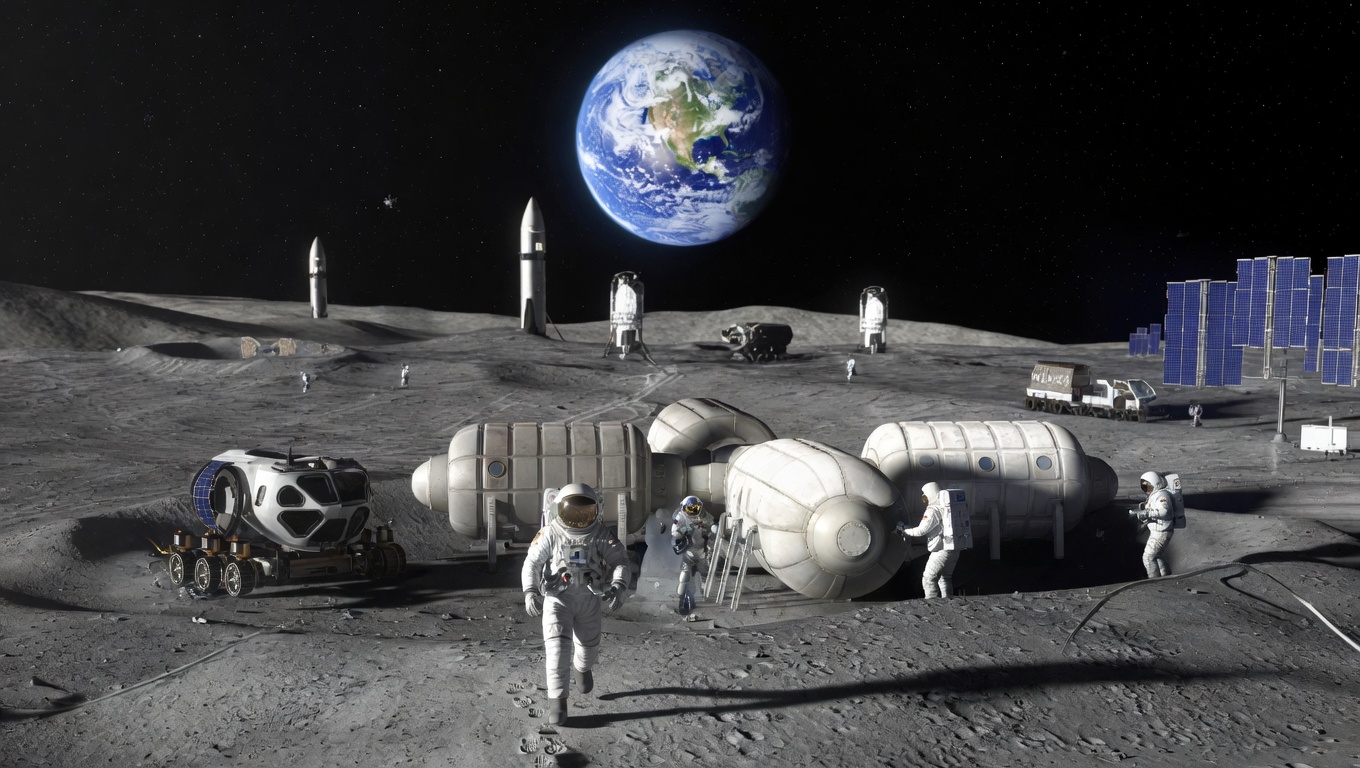
The bigger impact may be on the Moon. Every Starship lunar mission depends on filling a propellant depot in orbit with a string of tanker flights before the lander departs. A NASA safety panel member put that number at around 22 flights last month, while Musk countered that it would be “more like 6 to 8,” as Teslarati reported. Much of that gap comes down to which ship is doing the hauling. Musk has said a V4 tanker could deliver more than 200 tons of propellant per flight, which by his math brings a lunar refill down to five or six launches.
Fewer tankers per landing means more landings per year. SpaceX already advertises cargo flights to the lunar surface starting no earlier than 2028 at $100 million per metric ton, with a Starship lander able to put up to 100 tons on the surface. In February, Musk said SpaceX had shifted its focus to “a self-growing city on the Moon,” which he believes could be done in under 10 years, as Teslarati covered. NASA’s Artemis IV landing is targeted for 2028, and the White House has called for work on a permanent lunar outpost to begin by 2030.
Starship V4 will be ~70m long, which is roughly a 40% length increase and allows >60% more propellant load. Engine count will be raised to 9, with 3 more Raptor-Vacuum engines added, and these will be higher thrust V4 engines. — Elon Musk (@elonmusk) November 16, 2026
None of that works without ships that fly more than once, which is where Ship 42 comes in. Musk spent part of Sunday at the pad inspecting the vehicle caught on Saturday. “I was going over the whole Starship heat shield earlier today. Overall, it looks great. The engines look great too. Ship 42 could probably be reflown with a few weeks of refurbishment,” he wrote. He added that “many small fixes are needed to achieve immediate reusability (like an airplane).”
SpaceX has never reflown a ship. Its two booster reflights each came months apart, so a Ship 42 return to flight within weeks would be a first for the program. Flight 15 already showed the ship can survive a full orbital mission and come home to the tower, as Teslarati reported Saturday.
Elon Musk
MKBHD just ordered the Tesla Cybercab with his hair on the line
MKBHD ordered a Tesla Cybercab, two years after betting his hair Tesla couldn’t sell one.
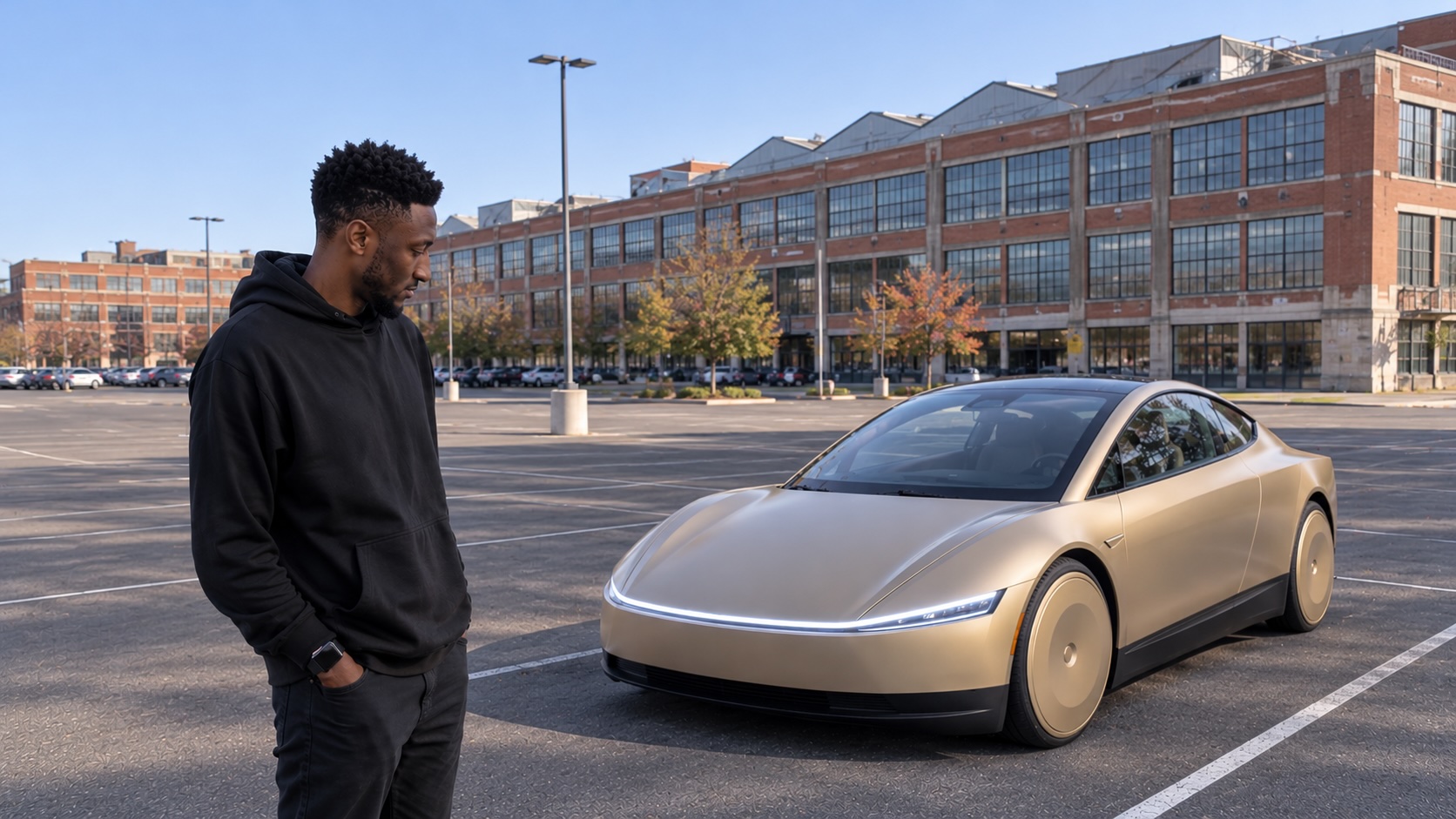
Marques Brownlee spent two years betting his hair that Tesla would never sell a Cybercab to regular buyers for under $30,000 before 2027. On Friday, he posted on X that he had been invited to buy one. “Alright chat I’m in,” the YouTuber known as MKBHD wrote, before sharing a screenshot that read “Your Cybercab Order is Confirmed.”
The bet dates back to Tesla’s We, Robot event in October 2024, when Elon Musk unveiled the two seat Cybercab and said customers would be able to buy one for less than $30,000, with production starting “before 2027.” Days later, in a video titled “The Tesla Robotaxi is Confusing,” Brownlee called the timeline “notorious Elon stuff” and said that if Tesla pulled it off, he would “shave my head on camera because I’m that confident.”
Musk accepted the challenge in February, when the first production Cybercab rolled off the Giga Texas line. Asked on X whether Tesla would sell a Cybercab to a customer for $30,000 or less before 2027, he answered “Yes,” and added “Gonna happen,” as Teslarati reported at the time. Brownlee narrowed the terms in a September video, saying the bet was that a “golden robotaxi with two seats and no driver and no steering wheel and no pedals” would not ship “to regular people like you and me for $30,000 before the end of this year.”
Tesla’s invite only order page now lists the Cybercab at $29,990, ten dollars under that line, with estimated deliveries in December. Buyers put down a $1,000 non-refundable deposit, must take delivery in Austin, Dallas, Fort Worth, Houston or San Antonio, and are limited to one vehicle each. A $299 per month Autonomy Subscription is required for the car to operate.
Brownlee is not conceding. “My hair is safe for several reasons,” he wrote, pointing out that no Cybercabs have been delivered and that orders are invite only rather than publicly available. He also noted that the car is limited to personal use inside Tesla’s existing Robotaxi geofences, calling it “a paperweight if I take this thing home,” though he acknowledged that point was never part of the bet. He then asked Grok to set a timer for 48 days, which lands on December 31.
I’m tryna see something https://t.co/bKxMtfSbxm — Marques Brownlee (@MKBHD) November 14, 2026
Musk responded directly. Replying to Brownlee’s breakdown of the order page, he said the Cybercab “will be available nationwide, as we receive regulatory approval,” and agreed that “the monthly fee is too high”. He said it should match the cost of FSD and connectivity on Tesla’s other models, “more like ~$115/month.” In a separate reply about Brownlee’s hair, Musk wrote, “He’s a chicken.”
Where Brownlee’s car would go is unclear. He lives in New Jersey, far outside any Robotaxi service area, and Tesla’s agreements restrict where owners can operate the vehicle and how they can resell it, as Teslarati detailed.
Elon Musk
SpaceX makes history, catching Starship from orbit for the first time
SpaceX caught Starship’s upper stage with its launch tower for the first time on Saturday.
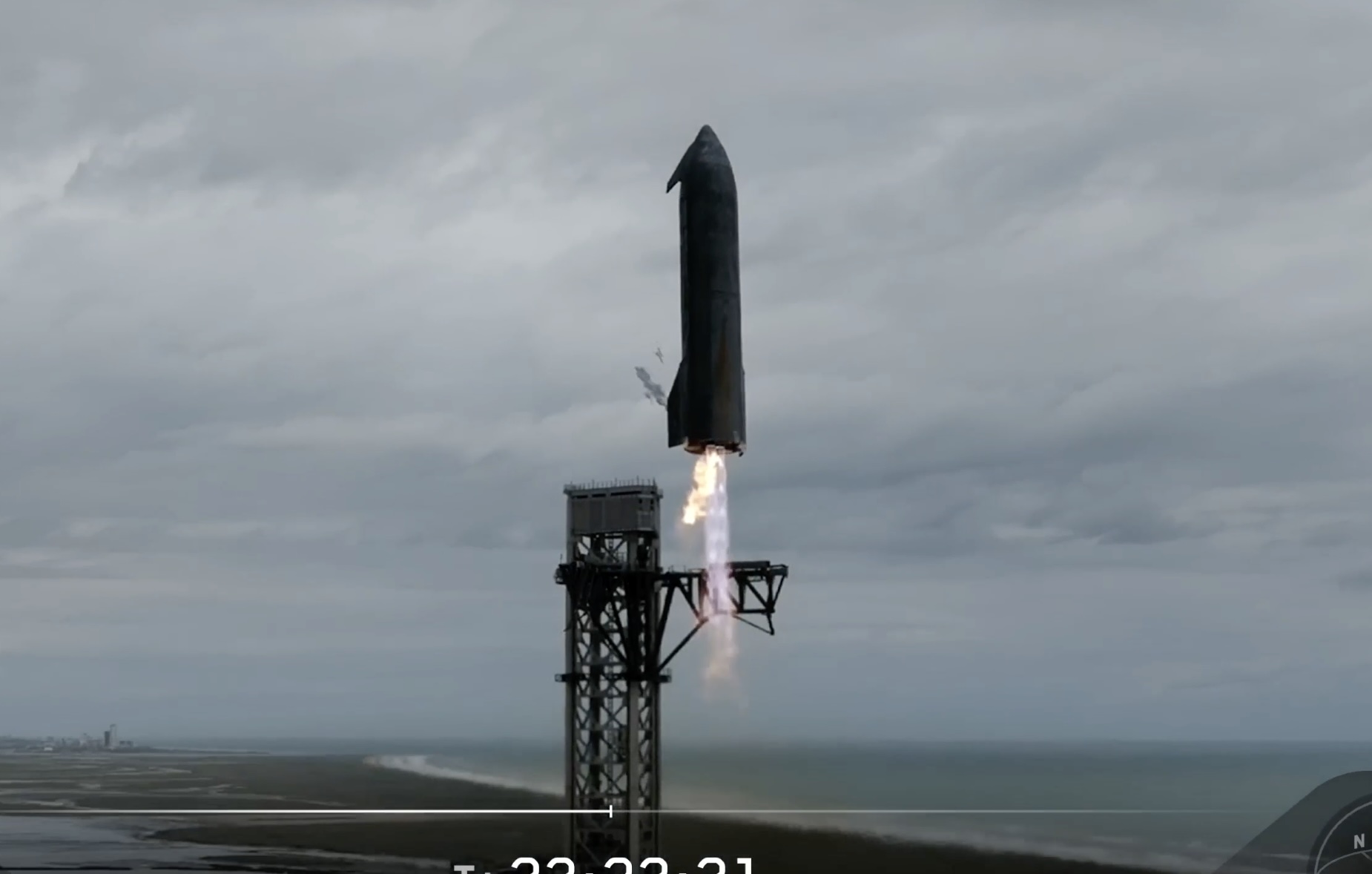
SpaceX caught a Starship upper stage with its launch tower for the first time on Saturday, bringing Ship 42 back to Starbase after roughly 22 and a half hours in orbit on Flight 15. No company has ever returned the upper stage of an orbital rocket to its launch site and caught it.
Ship 42 lifted off Friday evening on top of Booster 22, reached orbit and deployed all 26 of its Starlink V3 satellites. Three of those satellites carried cameras to photograph the ship’s heat shield, and SpaceX said the imagery showed it was in good shape for reentry, allowing controllers to pass on a backup splashdown option overnight. By Saturday morning, SpaceX posted on X that “Pad and tower systems are go for catch.” After about 14 orbits, the ship fired its engines to leave orbit, came back through the atmosphere and was caught by the tower’s chopstick arms.
IT HAPPENED https://t.co/KHITqHUWOf — TESLARATI (@Teslarati) November 14, 2026
The catch salvages a flight that started with a setback. Super Heavy did not make it back to the tower on Friday. “We were initially go for a catch, but in the later stages of the coast, the booster aborted itself for a GNC issue that it detected and that put it into its landing offshore,” SpaceX’s Dan Huot said. The booster hovered over the Gulf of Mexico before its flight termination system triggered and it came down in the water.
Elon Musk said Saturday that the booster ran short on propellant because its engines slightly underperformed. The fix, he wrote, is better engine consistency with Raptor V3.2 and a flight software change to cut the engines “about one second earlier” so enough fuel is left for the return. “This booster loss does not change our timeline to reach high volume, fully reusable Starship flights,” Musk added.
The ship is the harder half of that goal, and the one SpaceX had never recovered. Super Heavy has now been caught three times, most recently in March 2025, while every previous ship ended in the ocean or was lost. Falcon 9 lands its boosters routinely but throws its upper stage away on every launch. Musk described a full Starship recovery on SpaceX’s third quarter earnings call as a “profound technology milestone,” and Saturday’s catch shows the hardest piece of it can work.
That piece matters for nearly everything SpaceX is planning. Reusable ships are what make the economics of launching Starlink V3 satellites at scale work, along with the Starmind orbital compute constellation. NASA’s Artemis lunar lander also depends on refilling Starships in orbit with repeated tanker flights, which requires vehicles that can fly again quickly. Musk has said he expects Starship to reach a weekly launch cadence in the first half of 2027.
Flight 15 also improved on the last Starship mission in September, which reached orbit but ended after about three hours with a Pacific splashdown when some engines shut down. Before this flight, SpaceX had shown an animation of the ship catch during its earnings webcast, and Musk put the odds of pulling it off on the first try at “more likely than not,” as Teslarati reported.

Elon Musk is already planning a bigger Starship, and the Moon may be why

MKBHD just ordered the Tesla Cybercab with his hair on the line


