Elon Musk
Tesla Full Self-Driving gets an offer to be insured for ‘almost free’
“If @elonmusk is game, we’d be happy to explore insuring Tesla FSD miles for (almost) free.”

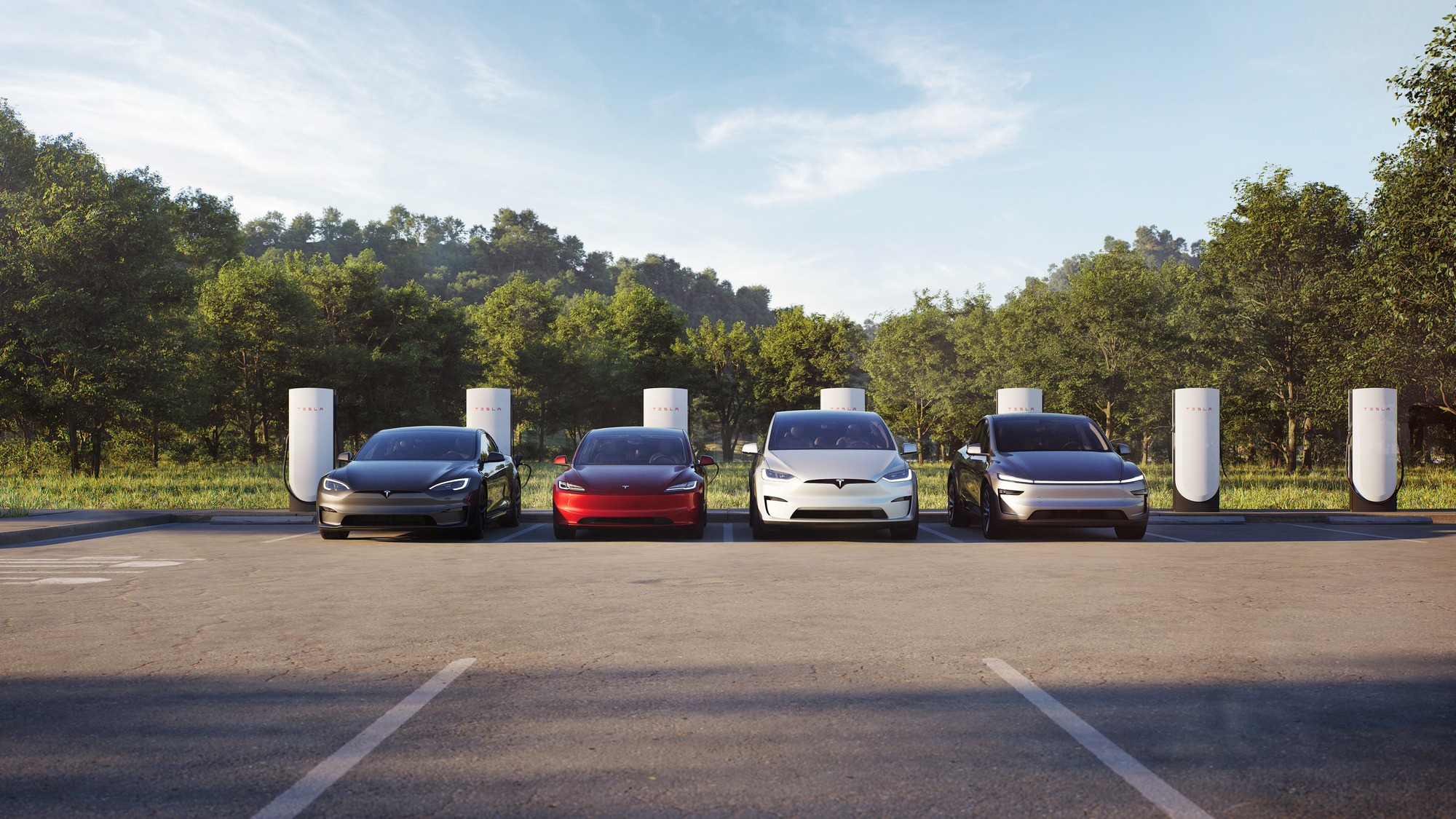
Tesla Full Self-Driving just got an insurance offer from Lemonade Co-founder and President Shai Wininger that might be too good to pass up, as he wants to insure vehicles on FSD for “almost free.”
Traditionally, Tesla vehicles are slightly more expensive to insure with traditional companies because of higher repair costs that stem from their technology and state-of-the-art structural battery design.
However, the development of the Full Self-Driving suite by Tesla has certainly pulled some tech entrepreneurs and others to believe the vehicles should be much cheaper to insure.
While there are certainly people on both sides of the spectrum, a handful of notable tech figures believe the data shows that Teslas operating on FSD are safer than human drivers.
Tesla Q2 2025 vehicle safety report proves FSD makes driving almost 10X safer
One of the tech figures who believes that is Shai Wininger, President and Co-founder of Lemonade, an insurance company that has nearly two million customers.
On X, Wininger recently announced the direct integration with Tesla vehicles that would roll out to Lemonade customers. The integration would “remove the need for a UBI device in our Pay Per Mile product. This makes activating Lemonade Car on Teslas effortless and lets us cut hardware and shipping costs, helping lower prices for Tesla drivers even further.”
He said the Tesla API complemented Lemonade’s platform because it provides “richer and more accurate driving behavior data than traditional UBI devices.”
He then proposed an idea to CEO Elon Musk, stating that Lemonade would “be happy to explore insuring Tesla FSD miles for (almost) free.”
If @elonmusk is game, we’d be happy to explore insuring Tesla FSD miles for (almost) free. https://t.co/VDcKX1JzSi
— Shai Wininger (@shai_wininger) October 17, 2025
It would provide Tesla drivers with stable and accurate insurance, while also incentivizing owners to utilize the Full Self-Driving suite for their miles, making the semi-autonomous driving platform extremely cost-effective to use.
Wininger said it would be available in states where Tesla’s in-house insurance program is not available. Tesla Insurance is available in twelve states, and is looking to expand in Florida, as we reported earlier this week. However, it has not expanded to a new state in about three years.
The thought of Lemonade being able to insure FSD miles for almost nothing is an extremely attractive offer from Wininger, and could potentially be a new outlet to make Teslas even less expensive to own and operate throughout their lifetime.


Elon Musk
Musk company boycott proposal at City Council meeting gets weird and ironic
The City of Davis in California held a weekly city council meeting on Tuesday, where it voted on a proposal to ban Musk-operated companies. It got weird and ironic.
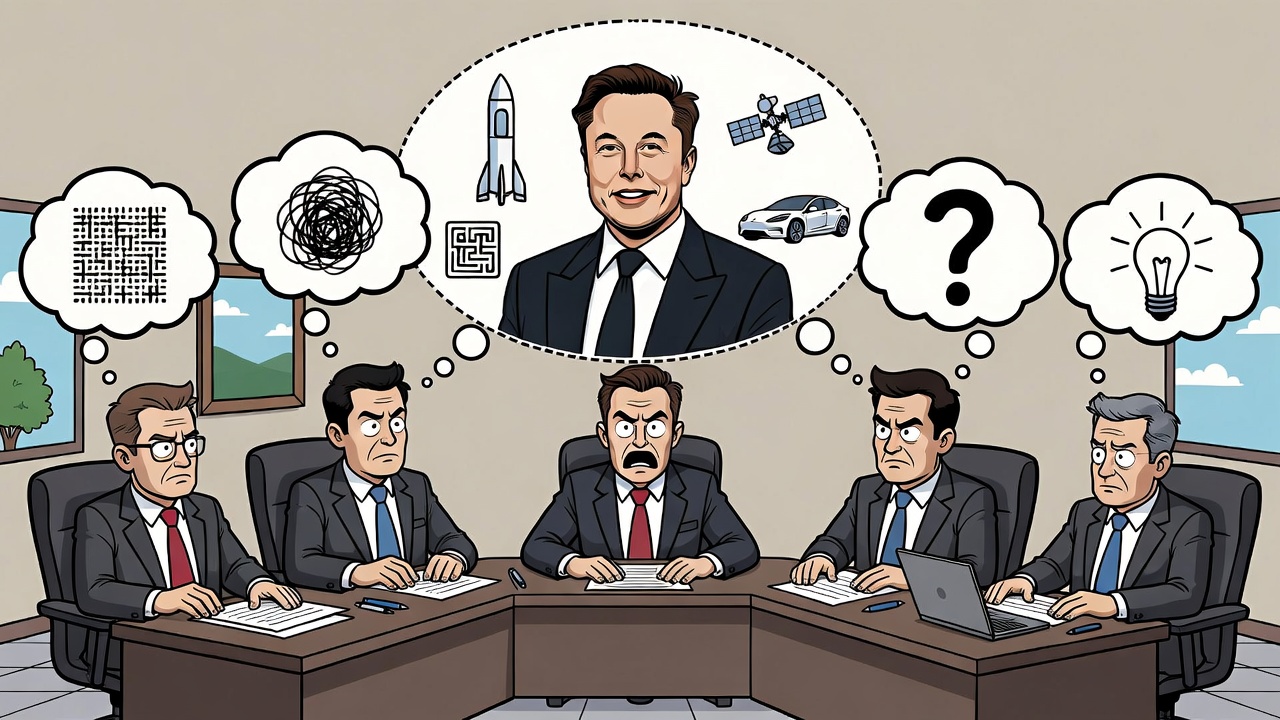
A city council meeting in California that proposed banning the entry of new contracts with companies controlled by Elon Musk got weird and ironic on Tuesday night after councilmembers were forced to admit some of the entities would benefit the community.
The City of Davis in California held a weekly city council meeting on Tuesday, where it voted on a proposal called “Resolution Ending Engagement With Elon Musk-Controlled Companies and To Encourage CalPERS To Divest Stock In These Companies.”
The proposal claimed that Musk ” has used his influence and corporate platforms to promote political ideologies and activities that threaten democratic norms and institutions, including campaign finance activities that raise ethical and legal concerns.”
We reported on it on Tuesday before the meeting:
California city weighs banning Elon Musk companies like Tesla and SpaceX
However, the meeting is now published online, and it truly got strange.
While it was supported by various members of the community, you could truly tell who was completely misinformed about the influence of Musk’s companies, their current status from an economic and competitive standpoint, and how much some of Musk’s companies’ projects benefit the community.
City Council Member Admits Starlink is Helpful
One City Council member was forced to admit that Starlink, the satellite internet project established by Musk’s SpaceX, was beneficial to the community because the emergency response system utilized it for EMS, Fire, and Police communications in the event of a power outage.
After public comments were heard, councilmembers amended some of the language in the proposal to not include Starlink because of its benefits to public safety.
One community member even said, “There should be exceptions to the rule.”
🚨 After the City of Davis, California, held its City Council meeting on Tuesday and voted on a resolution called “Resolution Ending Engagement With Elon Musk-Controlled Companies and To Encourage CalPERS To Divest Stock In These Companies,” it was forced to admit that it needs… pic.twitter.com/hQiCIX3yll
— TESLARATI (@Teslarati) February 19, 2026
Community Members Report Out of Touch Mainstream Media Narratives
Many community members very obviously read big bold headlines about how horribly Tesla is performing in terms of electric vehicles. Many pointed to “labor intimidation” tactics being used at the company’s Fremont Factory, racial discrimination lawsuits, and Musk’s political involvement as clear-cut reasons why Davis should not consider his companies for future contracts.
However, it was interesting to hear some of them speak, very obviously out of touch with reality.
Musk has encouraged unions to propose organizing at the Fremont Factory, stating that many employees would not be on board because they are already treated very well. In 2022, he invited Union leaders to come to Fremont “at their convenience.”
The UAW never took the opportunity.
Some have argued that Tesla prevented pro-union clothing at Fremont, which it did for safety reasons. An appeals court sided with Tesla, stating that the company had a right to enforce work uniforms to ensure employee safety.
Another community member said that Tesla was losing market share in the U.S. due to growing competition from legacy automakers.
“Plus, these existing auto companies have learned a lot from what Tesla has done,” she said. Interestingly, Ford, General Motors, and Stellantis have all pulled back from their EV ambitions significantly. All three took billions in financial hits.
One Resident Crosses a Line
One resident’s time at the podium included this:
Another member of the community did this…a member of the City Council admonished him and it came to a verbal spat https://t.co/zWvKCiCkie pic.twitter.com/1L334qq9av
— TESLARATI (@Teslarati) February 19, 2026
He was admonished by City Council member Bapu Vaitla, who said his actions were offensive. The two sparred verbally for a few seconds before their argument ended.
City Council Vote Result
Ultimately, the City of Davis chose to pass the motion, but they also amended it to exclude Starlink because of its emergency system benefits.
Elon Musk
Elon Musk’s xAI Secures $3B Investment From Saudi AI Firm HUMAIN
The transaction converts HUMAIN’s xAI stake into SpaceX shares, positioning the Saudi-backed firm as a significant minority shareholder in the newly combined entity.

Saudi artificial intelligence firm HUMAIN has confirmed a $3 billion Series E investment in xAI just weeks before the startup’s merger with SpaceX.
The transaction converts HUMAIN’s xAI stake into SpaceX shares, positioning the Saudi-backed firm as a significant minority shareholder in the newly combined entity.
The investment gives HUMAIN exposure to what has been described as one of the largest technology mergers on record, combining xAI’s artificial intelligence capabilities with SpaceX’s scale, infrastructure, and engineering base, as noted in a press release.
“This investment reflects HUMAIN’s conviction in transformational AI and our ability to deploy meaningful capital behind exceptional opportunities where long-term vision, technical excellence, and execution converge, xAI’s trajectory, further strengthened by its acquisition by SpaceX, one of the largest technology mergers on record, represents the kind of high-impact platform we seek to support with significant capital” HUMAIN CEO Tareq Amin stated.
The investment also positions HUMAIN for potential long-term equity upside should SpaceX proceed with a public offering.
The investment expands on an existing partnership announced in November 2025 at the U.S.-Saudi Investment Forum. Under that agreement, HUMAIN and xAI committed to jointly develop more than 500 megawatts of next-generation AI data center and compute infrastructure in Saudi Arabia.
The collaboration also includes deployment of xAI’s Grok models within the kingdom, aligning with Saudi Arabia’s broader strategy to build domestic AI capacity and attract global technology players.
HUMAIN, backed by the Public Investment Fund, is positioning itself as a full-stack AI player spanning advanced data centers, cloud infrastructure, AI models, and applied solutions. The Series E investment deepens its role from development partner to major shareholder in the Musk-led AI and space platform.
Elon Musk
Tesla posts updated FSD safety stats as owners surpass 8 billion miles
Tesla shared the milestone as adoption of the system accelerates across several markets.
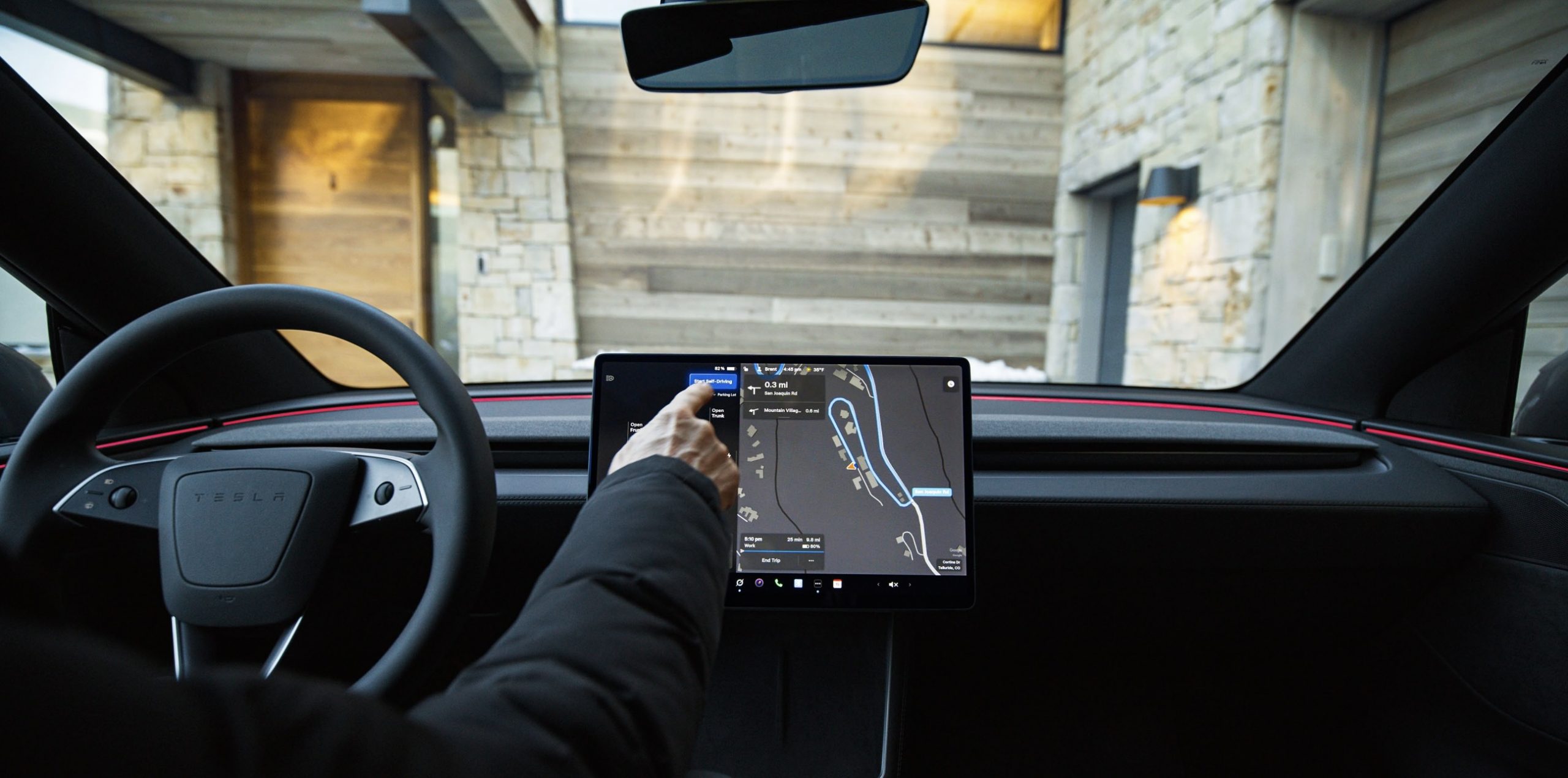
Tesla has posted updated safety stats for Full Self-Driving Supervised. The results were shared by the electric vehicle maker as FSD Supervised users passed more than 8 billion cumulative miles.
Tesla shared the milestone in a post on its official X account.
“Tesla owners have now driven >8 billion miles on FSD Supervised,” the company wrote in its post on X. Tesla also included a graphic showing FSD Supervised’s miles driven before a collision, which far exceeds that of the United States average.
The growth curve of FSD Supervised’s cumulative miles over the past five years has been notable. As noted in data shared by Tesla watcher Sawyer Merritt, annual FSD (Supervised) miles have increased from roughly 6 million in 2021 to 80 million in 2022, 670 million in 2023, 2.25 billion in 2024, and 4.25 billion in 2025. In just the first 50 days of 2026, Tesla owners logged another 1 billion miles.
At the current pace, the fleet is trending towards hitting about 10 billion FSD Supervised miles this year. The increase has been driven by Tesla’s growing vehicle fleet, periodic free trials, and expanding Robotaxi operations, among others.
Tesla also recently updated the safety data for FSD Supervised on its website, covering North America across all road types over the latest 12-month period.
As per Tesla’s figures, vehicles operating with FSD Supervised engaged recorded one major collision every 5,300,676 miles. In comparison, Teslas driven manually with Active Safety systems recorded one major collision every 2,175,763 miles, while Teslas driven manually without Active Safety recorded one major collision every 855,132 miles. The U.S. average during the same period was one major collision every 660,164 miles.
During the measured period, Tesla reported 830 total major collisions with FSD (Supervised) engaged, compared to 16,131 collisions for Teslas driven manually with Active Safety and 250 collisions for Teslas driven manually without Active Safety. Total miles logged exceeded 4.39 billion miles for FSD (Supervised) during the same timeframe.

Tesla launches new Cybertruck trim with more features than ever for a low price

Tesla dominates JD Power EV Satisfaction ranking, grabbing top two spots


