News
Tesla hints at Starlink integration with recent patent
“By employing polymer blends, some examples enable RF transmission from all the modules to satellites and other communication devices both inside and outside the vehicle.”

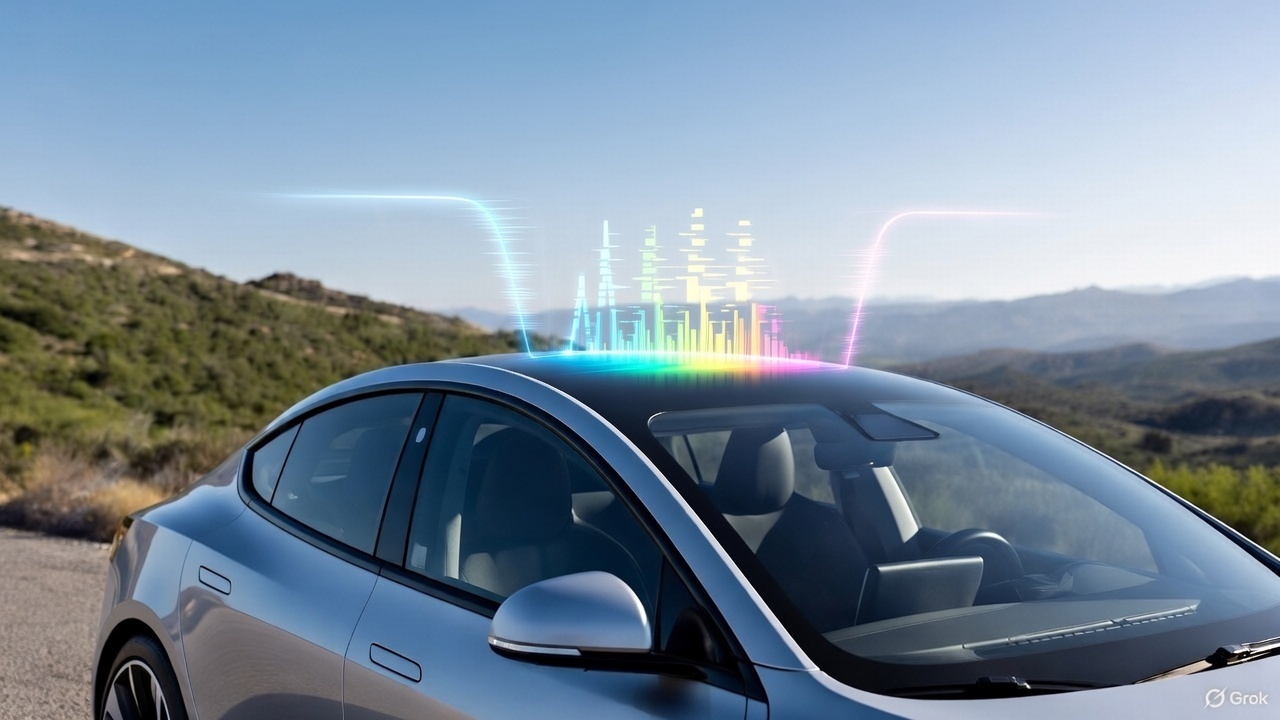
Tesla hinted at a potential Starlink internet terminal integration within its vehicles in a recent patent, which describes a vehicle roof assembly with integrated radio frequency (RF) transparency.
The patent, which is Pub. No U.S. 2025/0368267 describes a new vehicle roof that is made of RF-transparent polymer materials, allowing and “facilitating clear communication with external devices and satellites.”
Tesla believes that a new vehicle roof design, comprised of different materials than the standard metallic or glass elements used in cars today, would allow the company to integrate modern vehicular technologies, “particularly those requiring radio frequency transmission and reception.
Tesla has recently filed a US patent application on integrating RF transparent materials into the roof structure.
“facilitating clear communication with external devices and satellites”
Tesla fleet is getting @Starlink connectivity integration soon. LFG @Tesla @elonmusk… pic.twitter.com/bLa8YtPLd1
— Chansoo Byeon (@Chansoo) December 9, 2025
 -
-
Instead of glass or metallic materials, Tesla says vehicles may benefit from high-strength polymer blends, such as Polycarbonate, Acrylonitrile Butadiene Styrene, or Acrylonitrile Styrene Acrylate.
These materials still provide ideal strength metrics for crashworthiness, stiffness for noise, vibration, and harshness control, and are compliant with head impact regulations.
They would also enable better performance with modern technologies, like internet terminals, which need an uninterrupted signal to satellites for maximum reception. Tesla writes in the patent:
“By employing polymer blends, some examples enable RF transmission from all the modules to satellites and other communication devices both inside and outside the vehicle.”
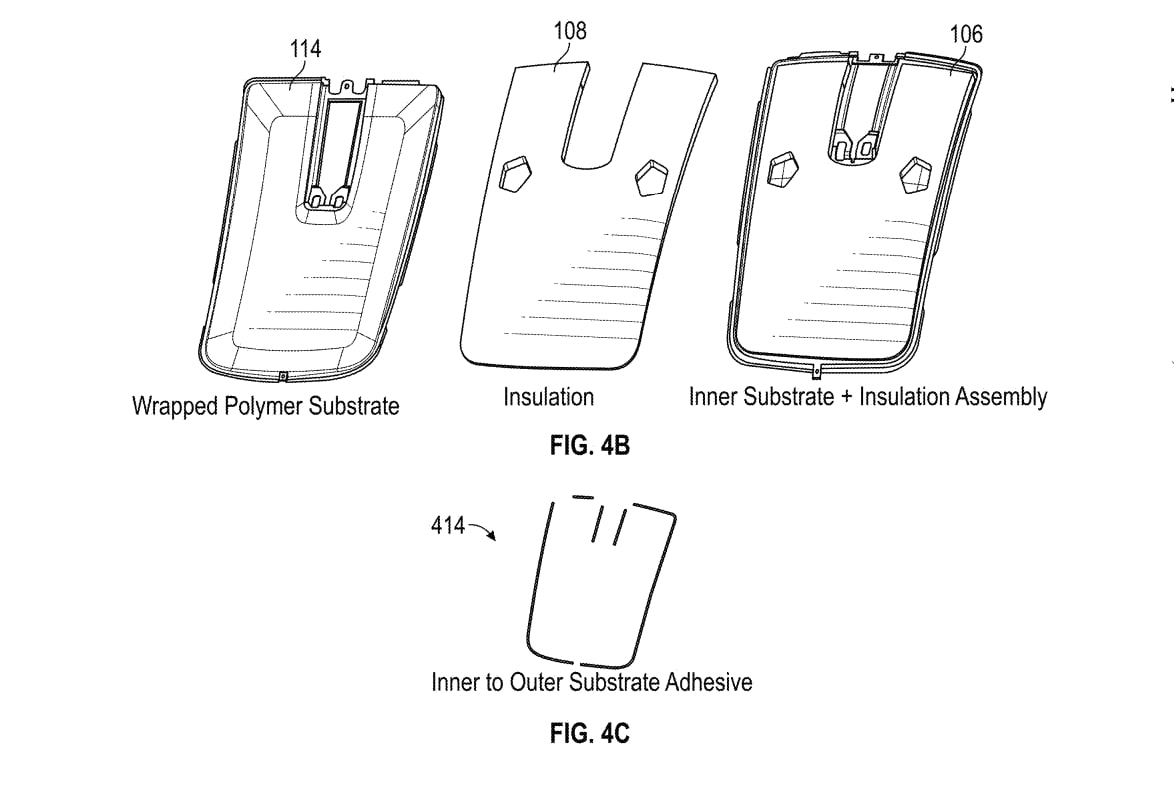
One of the challenges Tesla seems to be aware of with this type of roof design is the fact that it will still have to enable safety and keep that at the forefront of the design. As you can see in the illustration above, Tesla plans to use four layers to increase safety and rigidity, while also combating noise and vibration.
It notes in the patent that disclosed examples still meet the safety requirements outlined in the Federal Motor Vehicle Safety Standards (FMVSS).
Starlink integrated directly into Tesla vehicles would be a considerable advantage for owners. It would come with a handful of distinct advantages.
-
Initially, the inclusion of Starlink would completely eliminate cellular dead zones, something that is an issue, especially in rural areas. Starlink would provide connectivity in these remote regions and would ensure uninterrupted service during road trips and off-grid adventures.
It could also be a critical addition for Robotaxi, as it is crucial to have solid and reliable connectivity for remote monitoring and fleet management.
Starlink’s growing constellation, thanks to SpaceX’s routine and frequent launch schedule, will provide secure, stable, and reliable internet connectivity for Tesla vehicles.
Although many owners have already mounted Starlink Mini dishes under their glass roofs for a similar experience, it may be integrated directly into Teslas in the coming years, either as an upgrade or a standard feature.



Elon Musk
Tesla FSD takes owner on a 20,000+ mile joy ride
Tesla owner David Moss just pushed his intervention free FSD streak past 20,000 miles total.

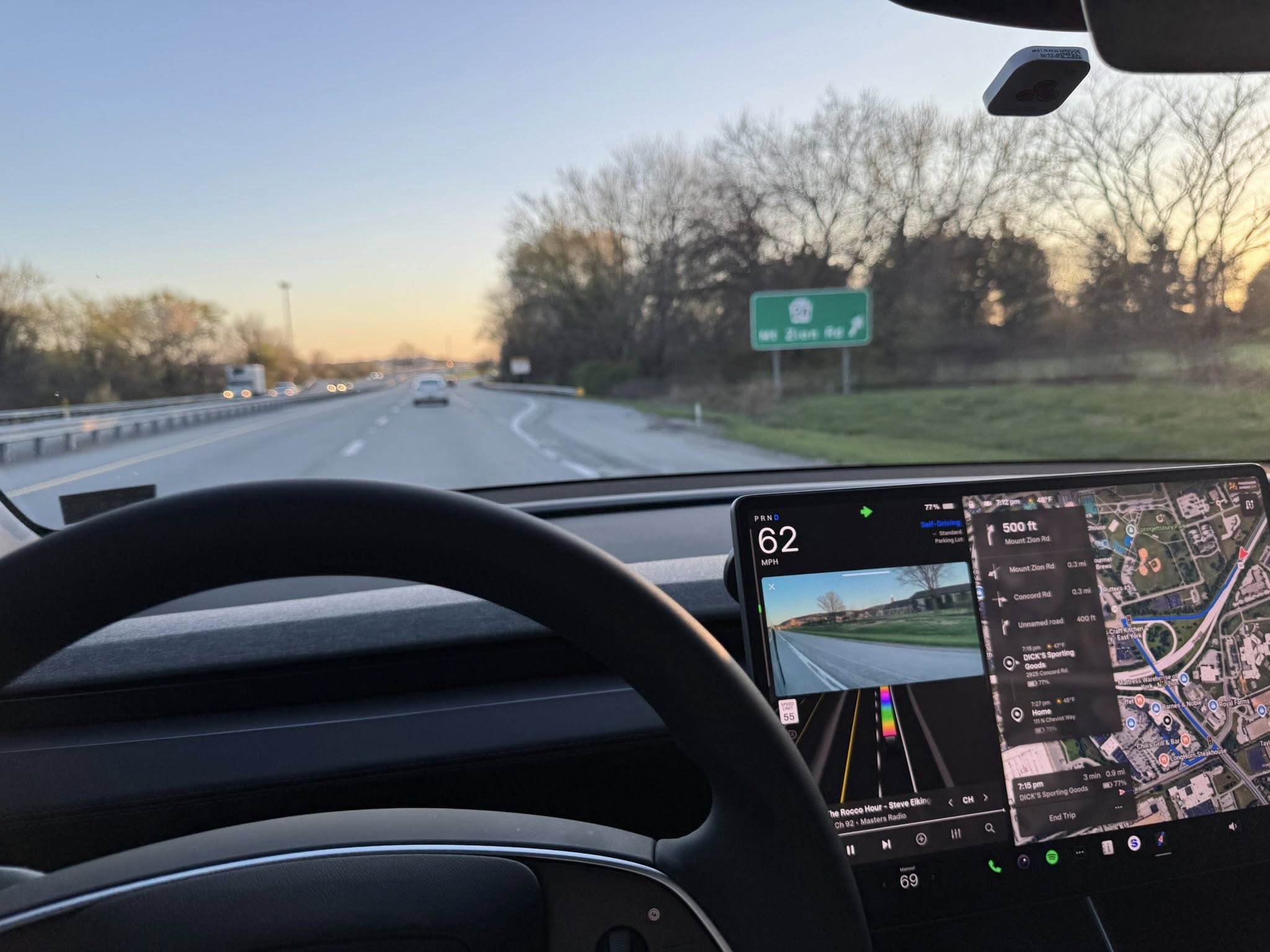
Tesla Model 3 owner David Moss has spent the better part of eight months turning his vehicle into a rolling stress test for Full Self-Driving, and this week he pushed his single, continuous FSD streak past 20,000 miles without a human intervening.
Moss, a Tacoma, Washington resident who sells LiDAR scanning equipment for a living, first drew wide attention in December 2025 when he logged 10,000 consecutive miles on FSD v14.2. Days later he drove from the Tesla Diner in Los Angeles to Myrtle Beach, South Carolina, covering 2,732 miles in two days and 20 hours with zero disengagements, the first verified coast to coast autonomous drive in Tesla’s history. Tesla even featured the trip as an official customer story in March. That original streak eventually reached 12,961 miles across 30 states before ending in rural Wisconsin in January, when snow and single digit temperatures forced Moss to take over.
Tesla FSD successfully completes full coast-to-coast drive with zero interventions
He started over, and this run has gone further. In late May, Moss drove 3,760 miles across Canada with two companions, from Horseshoe Bay in Vancouver to a Tesla showroom in Halifax, again without a single intervention, a trip Tesla AI software VP Ashok Elluswamy publicly congratulated him for on X. In June, he pushed the same unbroken streak south, aiming to link the Canadian border to the Mexican border, and crossed 10,000 miles on Tesla’s newly added in car streak counter along the way, the first driver to do so since Tesla began showing confetti animations for the feature.
20,000 Mile Tesla FSD Screen Streak!
Special thank you to @DevinOlsenn, @scotsrule08, & @OwenSparks for helping co drive during all these fun adventures these last couple of months
Also thank you to @wholemars for always tracking me along the journey verifying it all with his… pic.twitter.com/CZ2yO6Ev0X
— David Moss (@DavidMoss) July 27, 2026
-
It’s worth noting that every mile is logged through the FSD Database, a community run tracker built by Tesla influencer Omar Qazi, well known as @WholeMars on X, that pulls telemetry straight from the car and records disengagements down to a tenth of a mile. That verification is what separates Moss’s numbers from casual claims on social media.
The streak itself is a fairly recent addition to Tesla’s software. FSD v14.2 introduced a Self Driving Stats panel tracking the ratio of autonomous to manual miles, and v14.3.4 added the live streak counter in June, which resets the moment a driver brakes, wrenches the wheel or cancels navigation. Reaching 20,000 miles on that counter means a single Tesla drove itself through countless highways, city grids, construction zones and Supercharger stalls without a single reset.
Moss has said the goal was never to set a record for its own sake, but to show, mile by verified mile, what the software can already do.
Elon Musk told The Economist that artificial intelligence will likely surpass the combined intelligence of every human on Earth within about five years, and that humans may not remain in charge once that happens. In a wide-ranging interview with editor-in-chief Zanny Minton Beddoes, recorded at Giga Texas for the outlet’s Insider series, Musk compared the widening gap between AI and human intelligence to the gap between humans and chimpanzees.
“It’s hard to imagine that the chimpanzee would be in charge,” he said, addressing what happens to human authority once AI moves far beyond us.
Elon Musk reiterates his most optimistic prediction yet with “UHI” forecast
Musk’s timeline stretches out from there. Five years for AI to out-think humanity combined, ten years before humans lose meaningful control, and by 2036, he says, money itself may stop mattering.
Musk notes that if robots and AI produce more goods and services than people could ever consume, currency loses its purpose. He told Beddoes that governments could respond with direct payments, what he called “universal high income,” a term he first used in an X post last August describing a future where “everyone will have the best medical care, food, home, transport and everything else.”
There will be universal high income (not merely basic income).
Everyone will have the best medical care, food, home, transport and everything else.
Sustainable abundance.
-— Elon Musk (@elonmusk) August 24, 2025
He also floated a more surprising prediction that deflation, and not inflation, would become the bigger economic problem, since expanding the supply of goods and services faster than the money supply grows would push prices down rather than up.
None of this is new territory for Musk, who has spent years describing an “age of abundance” built on Optimus and autonomous vehicles. What’s notable is the timing. The interview landed the same week Tesla shares dropped roughly 19 percent following a second quarter earnings report that beat on revenue but missed badly on profit, and as SpaceX stock continues to slide from its post-IPO peak.
Musk’s own net worth has fallen close to $700 billion since mid-June, according to the Bloomberg Billionaires Index, even as he describes a future where personal wealth stops being the point.
Musk did not dodge the risk side of the equation either. He put the odds of AI contributing to human extinction somewhere in the 10 to 20 percent range, then arrived at what he called his “philosophical conclusion” since the technology cannot realistically be stopped and the arguably better response is to keep building it and hope the outcome leans toward abundance rather than catastrophe. “I’ve gone from exhilaration to terror regarding AI,” he told Beddoes, “even intraday.”
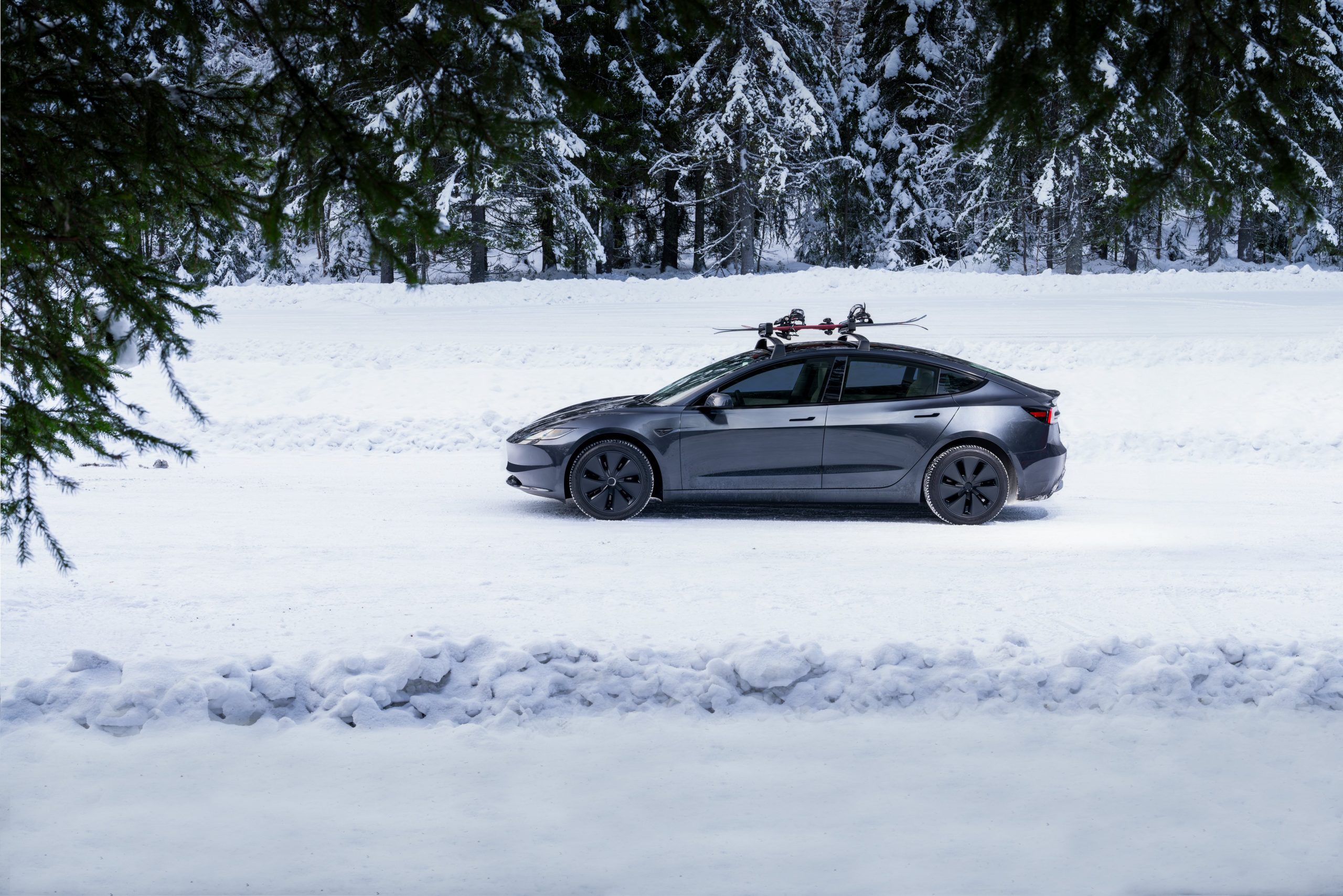
Tesla is adding a new “Traction Control Modes” feature to its cars for better handling in any conditions. These features will roll out to the Model 3 and Model Y, the two vehicles in Tesla’s lineup that typically do not have drive modes for various conditions.
Tesla did include this in the Model S and Model X, as well as the Cybertruck.
The new feature will roll out with the 2026 Summer Update, which Tesla announced last week and subsequently started rolling out to some owners today. The Summer Update is the latest iteration of the usual four seasonal releases the company rolls out throughout the year. These releases typically feature some owner-requested features, as well as improvements to things like the Full Self-Driving suite.
Tesla reveals 2026 Summer Update with crazy fixes to Nav and more
This release is no different. Among the changes are improvements to Navigation, new customization options with wraps and how they can be shared and stored, more functionality with the Tesla smartphone app, and new gamification with self-driving.
However, Tesla announced today that it was adding another feature to the Summer Update. Traction Control Modes will now be available with the release
Tesla describes them:
-
“Choose from three updated Traction Control Modes: Auto for normal driving conditions, Slippery Surface for icy or wet roads, Stuck Assist when stuck in snow, mud, or sand. The mode resets to Auto at the start of each drive. To select, go to Controls > Dynamics > Traction Control Mode.”
Tesla’s 2026 Summer Update also includes new Traction Control Modes
📸: @PatchesHQ https://t.co/N9cD2lGP14 pic.twitter.com/ogLC5ROIgc
— TESLARATI (@Teslarati) July 26, 2026
The use of these modes will help improve a Tesla’s overall performance in less-than-ideal conditions. Typically, these traction control modes monitor wheel speed through sensors and track engine power to adjust responsiveness in various conditions.
These drive modes are not an ultimate solution to all driving conditions; just because there is a “Stuck Assist,” doesn’t mean your Tesla will dig itself out of a foot-and-a-half trench during a blizzard. It is important to remember that some of these scenarios also require some assistance from the driver. For example, driving in sand requires tires to be aired down significantly to increase traction and control.
However, this will be a welcome addition for those who use the Full Self-Driving suite and might not be convinced of its performance in adverse conditions. Some of us prefer to be in control in rain, snow, or ice, which is totally understandable. However, adjusting the Traction Control Mode while utilizing FSD in snow, rain, or ice could increase confidence and overall experience.
-
Tesla’s Summer Update is already rolling out to some owners, so it should be making its way to most of the fleet over the next several weeks. The Spring Update rolled out at a very conservative pace, so if you don’t have it by the end of August, don’t be too upset. It might just be Tesla’s method.

Tesla FSD takes owner on a 20,000+ mile joy ride

Elon Musk explains what happens when AI outsmarts all of us


