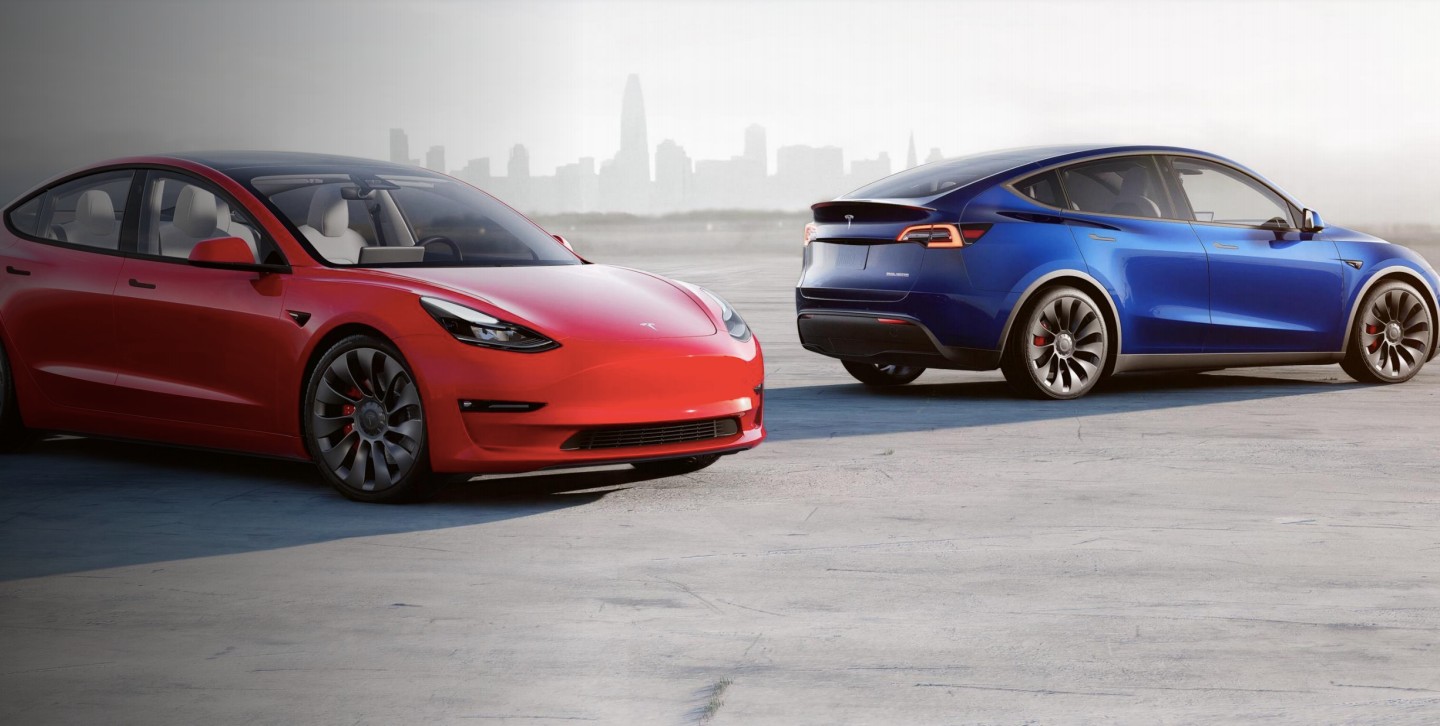

While all eyes are on Tesla’s margins in the lead-up to the company’s first-quarter earnings report for 2023, the electric vehicle maker has implemented a fresh round of price cuts for the Model 3 and Model Y in the United States. The two vehicles are Tesla’s best-selling cars by a wide margin.
With the most recent round of price cuts in place, the Tesla Model 3 RWD, the all-electric sedan’s base variant, now costs less than $40,000 before any incentives. At its starting price of $39,990, the Model 3 RWD is not just the cheapest Tesla for now — it is also probably one of the best vehicles that one could purchase at its price range today.
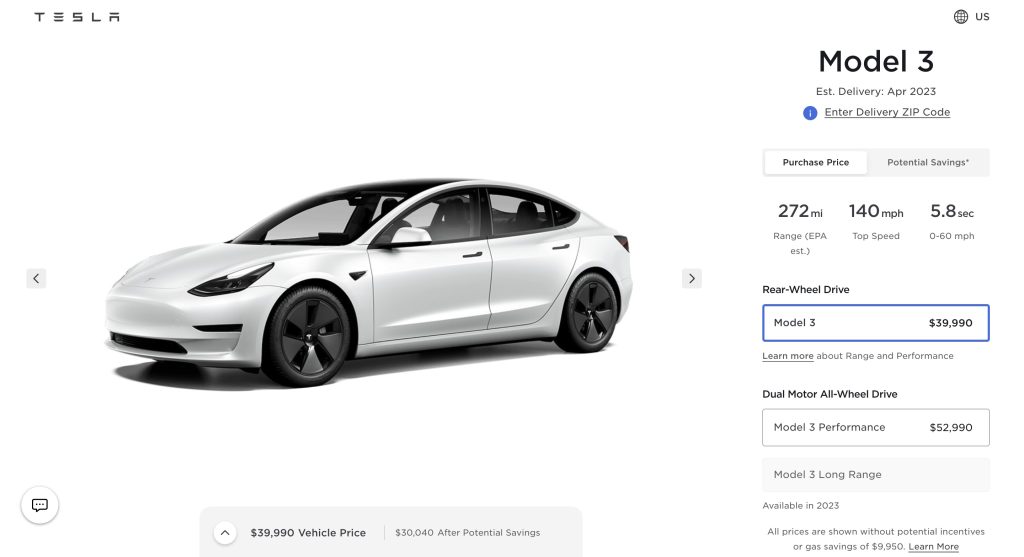
For context, the base Model 3 cost $41,990 before options prior to the recent round of price cuts.
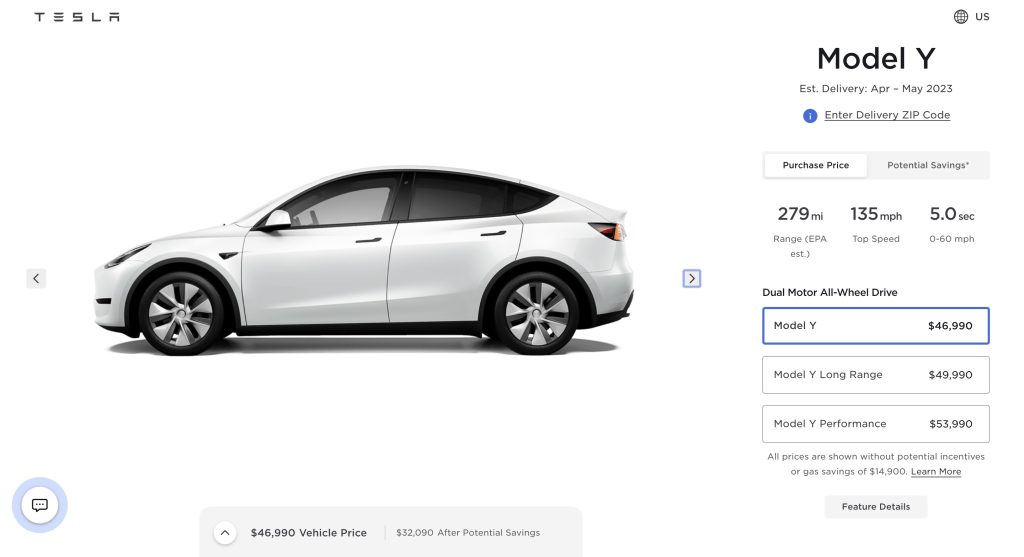
Apart from the Model 3 sedan, its crossover sibling, the Model Y, also saw some price adjustments in the United States. The Model Y AWD, which is widely speculated to be the variant equipped with 4680 battery cells, now starts at $46,990. The Model Y Long Range, on the other hand, now starts at $49,990, and the Model Y Performance starts at $53,990.
Before the recent round of price adjustments, the Model Y AWD was listed with a starting price of $49,990. The Model Y Long Range previously started at $52,990, and the Model Y Performance started at $56,990 before options.
Following the recent round of price cuts, the Model 3 and Model Y have become even more compelling than before. Considering that both vehicles qualify for the Inflation Reduction Act’s (IRA) incentives, it would not be surprising if Tesla sees a wave of orders for the Model 3 and Model Y in the coming weeks and months.
The reasons behind Tesla’s recent price cuts for the Model 3 and Model Y have not been shared by the company. That being said, some EV watchers have speculated that Tesla may be looking to clear out its inventory and supplies for the current version of the Model 3 and Model Y, as upgrades — the much-reported Project Highland and Project Juniper — are expected to be rolled out in the future.
Don’t hesitate to contact us with news tips. Just send a message to simon@teslarati.com to give us a heads up.


Elon Musk
SpaceX to become America’s Military data backbone for missiles, drones, and warfighters
The Space Force just handed SpaceX $2.29 billion to build the military’s space internet backbone.


The U.S. Space Force awarded SpaceX a $2.29 billion contract on May 26, 2026 to build the backbone of its Space Data Network, a satellite-based communications system designed to keep American military forces connected anywhere on Earth in real time. The contract is firm-fixed-price and requires SpaceX to deliver a fully operational prototype by the end of 2027.
In plain terms, the SDN Backbone is the plumbing behind the military’s space-based internet. It functions as a low Earth orbit satellite constellation providing robust, high-capacity, and low-latency data transport for the Joint Force, connecting sensors and weapons systems continuously, globally, and securely. Think of it as a private, hardened version of Starlink built specifically for battlefield communications, one that soldiers, ships, and aircraft can rely on even in contested environments where ground-based networks have been disrupted.
SpaceX is quietly becoming the U.S. Military’s only reliable rocket
The Space Force was direct about why SpaceX was selected. “The SDN Backbone leverages the best of commercial innovation and delivers a strong foundation for the SDN mission set — a huge benefit and enabler for our warfighters,” said USSF Col. Ryan Frazier.
“We aren’t trading speed for scale; we are demanding both. By using rapid prototyping and Other Transaction Authorities, we are ensuring our advanced solutions are integrated and delivered to the warfighter as fast as possible,” added USSF Lt. Col. Fry, SDN Backbone system program manager.
The SDN Backbone will work alongside the Space Development Agency’s Transport Layer, with the two systems forming a unified open architecture to provide critical data transport for current and future Department of War missions.
As Teslarati has reported, this is not SpaceX’s first Space Force contract of 2026. In April, the Space Force awarded SpaceX $178.5 million to launch missile tracking satellites, and SpaceX is already embedded in the Golden Dome missile defense software group. The $2.29 billion SDN Backbone award puts SpaceX at the center of how the American military communicates in space, a position with direct implications for its reported $1.75 trillion IPO valuation as the company heads toward a public offering as early as June 2026.

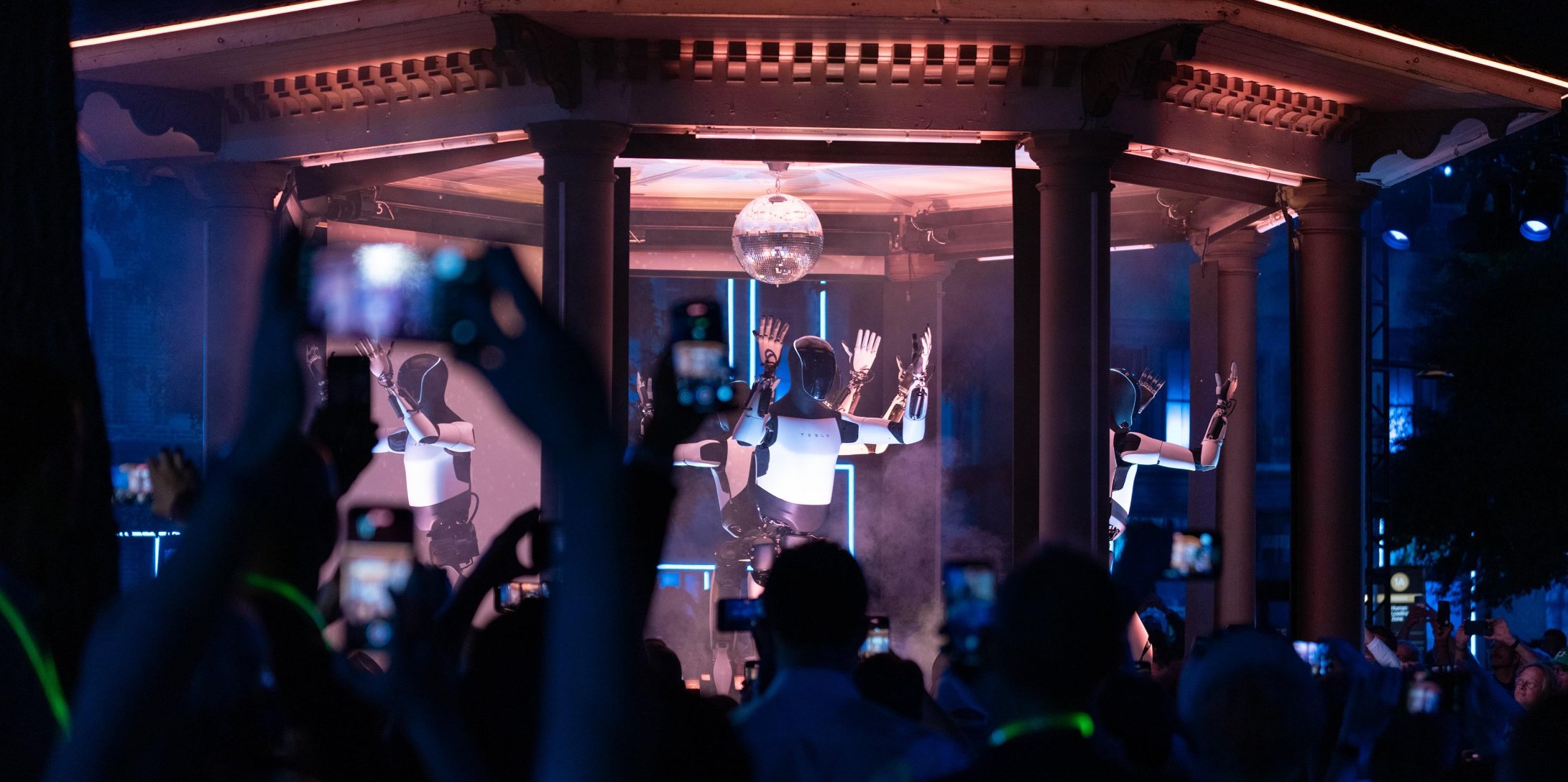
Tesla’s dedicated factory for building up to ten million Optimus units is officially under construction at Gigafactory Texas.
Drone footage released on May 27 by Giga Texas observer Joe Tegtmeyer captures the significant milestone of the first steel structure officially standing at Tesla’s new Optimus factory on the North Campus of the facility.
Phase two of land reclamation is advancing steadily, and the progress will let the new building extend nearly the full length of the main Giga Texas factory, potentially exceeding 4,000 feet, while measuring somewhere between 50 and 70 meters narrower. Extensive foundation work is proceeding as well.
Big news at the new Optimus 10m/y factory construction site today! The 1st steel structure has been erected & as expected the second phase of land reclamation is underway.
This will allow this new factory to grow to nearly the same length as the main Giga Texas factory,… pic.twitter.com/FidRLV6XpU
— Joe Tegtmeyer 🚀 🤠🛸😎 (@JoeTegtmeyer) May 27, 2026
This facility forms a central element of Tesla’s broader North Campus expansion at Giga Texas. The project will add more than 5.2 million square feet of new industrial space. It sits alongside other advanced developments, including a Terafab for next-gen AI chips. The scale reflects Tesla’s commitment to transforming humanoid robotics into a core pillar of the company’s future.
Musk has said that Optimus will be the biggest product in the world on several occasions. He believes it will be Tesla’s biggest valuation contributor.
Tesla prepares to expand Giga Texas with new Optimus production plant
Tesla plans to build about 10 million robots at the site annually once it is completed, which would be about 27,000 units each day.
The Optimus plant at Giga Texas is part of Tesla’s phased strategy for Optimus manufacturing. In an effort to start production of the robot well before the Giga Texas plant is complete, Tesla ended production of the Model S and Model X vehicles, which were built in Fremont, California, to make way for initial Optimus manufacturing efforts.
Production there will start in either July or August of this year, and early units will support internal factory tasks while the team gathers real-world data to refine processes. The Gigafactory Texas facility will house a second-gen production line. It targets high-volume output starting in Summer 2027.
Musk has repeatedly described Optimus as potentially more valuable than Tesla’s entire vehicle business. Current versions are already completing minor tasks around various facilities, while Tesla continues to refine its abilities and add new features.
Tesla’s total investment could reach several billion dollars. Significant challenges lie ahead, including the creation of an entirely new manufacturing ecosystem, the refinement of AI systems for dependable autonomy, and the development of reliable supply chains for actuators, sensors, and other components.
Nevertheless, the visible progress at Giga Texas highlights Tesla’s capacity to translate ambitious concepts into physical reality.
Tesla’s Optimus factory stands as much more than a simple expansion project, as it is quite literally the second phase of what could potentially be the biggest product ever. With construction beginning, 2027 is poised to become a transformative year for Tesla, as it evolves even further from an electric vehicle leader into a pioneer of intelligent, general-purpose machines.
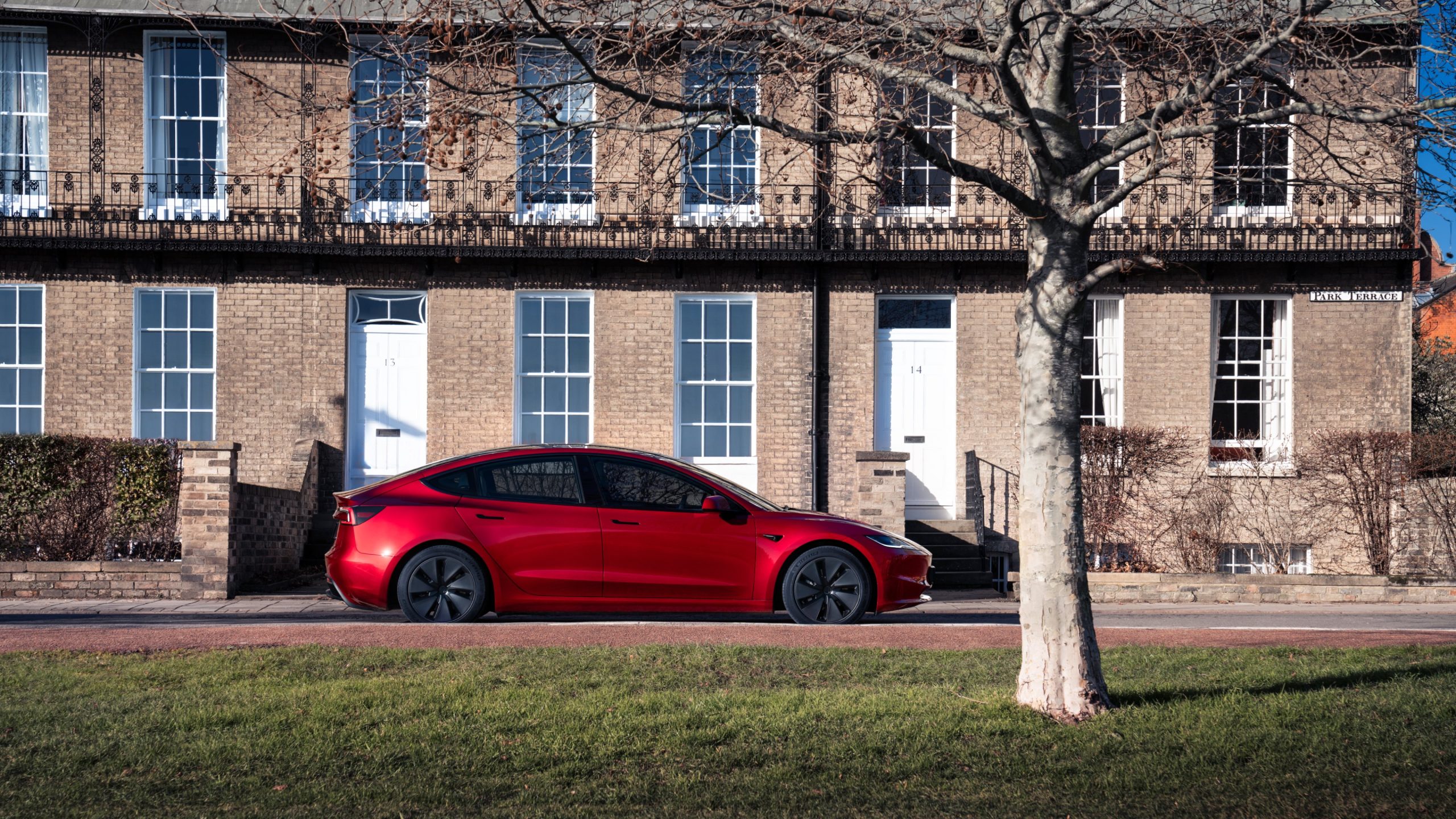
Tesla Vice President of Vehicle Engineering, Lars Moravy, recently revealed the company has thought about introducing a Plaid powertrain on the Model 3, but there could be some challenges involved.
On the Ride the Lightning podcast, Moravy revealed that he thinks about a Plaid Model 3 “all the time,” and it certainly has a place in Tesla’s potential lineup of future vehicles.
Now that the Plaid powertrain is technically defunct due to the newfound absence of the Model S and Model X, Tesla could find a way to reintroduce the lightning-quick trim level to its mass-market vehicles.
But there are going to be some challenges with it. Moravy said that the Model 3 Plaid would likely adopt the carbon-sleeved motors that the Model S Plaid had. However, packaging would be a major challenge, as Moravy said on the podcast, it would be a “tight engineering squeeze.”
It’s important to note that there are no active production plans for the Model 3 Plaid at this point, but it’s also worth noting that with the Model S and Model X Plaid no longer available, Tesla would likely be willing to introduce something that is even more white-knuckle than the Model 3 Performance, which already boasts a 2.9-second 0-60 MPH acceleration rate and a top speed of 163 MPH.
Of course, there is the Roadster, but we don’t know when that will exactly make it to market, and we know that, for sure, it will not be accessible to many.
Tesla unveils juicy new detail on the Roadster and hints at new unveil timeline
Tesla has prided itself in building some of the best cars out there, but they’re also interested in building cars that are simply fun to be in.
A Plaid Model 3 could truly push the limits and could end up being one of the best cars Tesla will ever build, especially if it can shave off at least half of a second from its 0-60 MPH time and increase its top speed slightly.
More than anything, the real changes will be in the ride and aerodynamics. Tesla improving things like the suspension, handling, and downforce will be the true trademarks of its Plaid powertrain; putting it in the Model 3 could be a great move for the company and for customers interested in high-end performance.

SpaceX to become America’s Military data backbone for missiles, drones, and warfighters

Tesla’s dedicated Optimus factory construction officially underway at Giga Texas


