Lifestyle
Tesla assists in Pikes Peak Model 3 race car 48-hr rebuild following crash

During the first day of Pikes Peak’s qualifiers, legendary racecar driver Randy Pobst and his Tesla Model 3 Ascension-R from EV tuning house Unplugged Performance dominated their class. The team was heading towards Sunday’s race at the top of their game, and there was little that could topple the modified Model 3’s momentum. Unless something unexpected and catastrophic took place, of course.
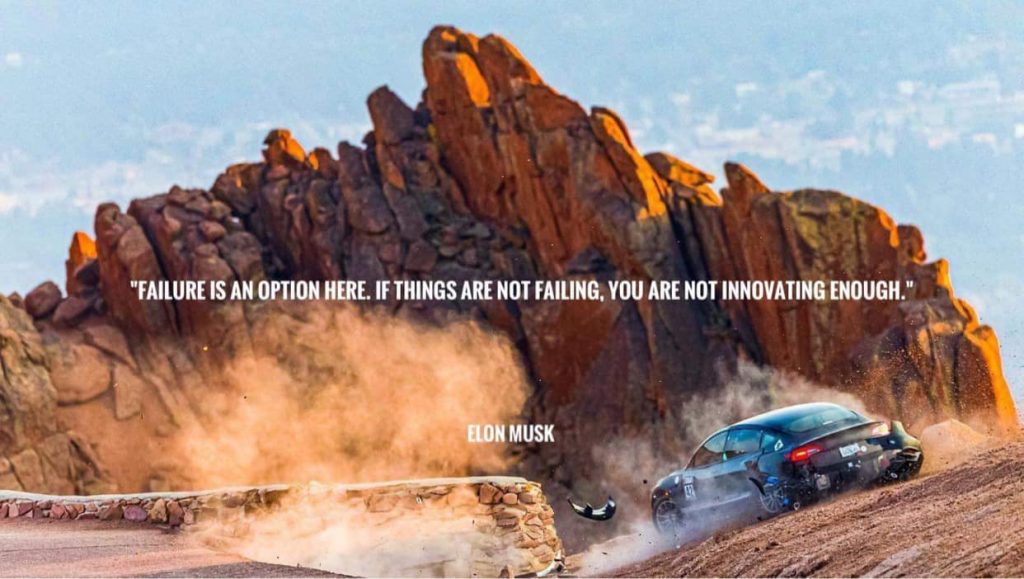
Unfortunately for the Unplugged team and Randy, something unexpected and catastrophic really did happen. During the Model 3’s first run on the second day of qualifiers, the modified Tesla hit a bad bump at speeds that the professional racer was unable to recover from. The Model 3 went off-course, hitting a wall and ending up in the dirt. Fortunately, Randy was uninjured during the accident. An in-car video of the crash even showed the veteran racer seemingly trying to get the car to respond, to no avail.
As noted by Unplugged Performance CEO Ben Schaffer, the damage to the Model 3 was extensive. Pretty much everything that could break in the car broke, from its motors to its suspension to its frame. In the immediate aftermath of the crash, it appeared that the team’s dream of raising the Tesla flag at the summit of Pikes Peak on Sunday has been crushed. After all, the Model 3 Ascension-R, described by Randy as one of the best vehicles he has ever driven up the treacherous mountain, was totaled.
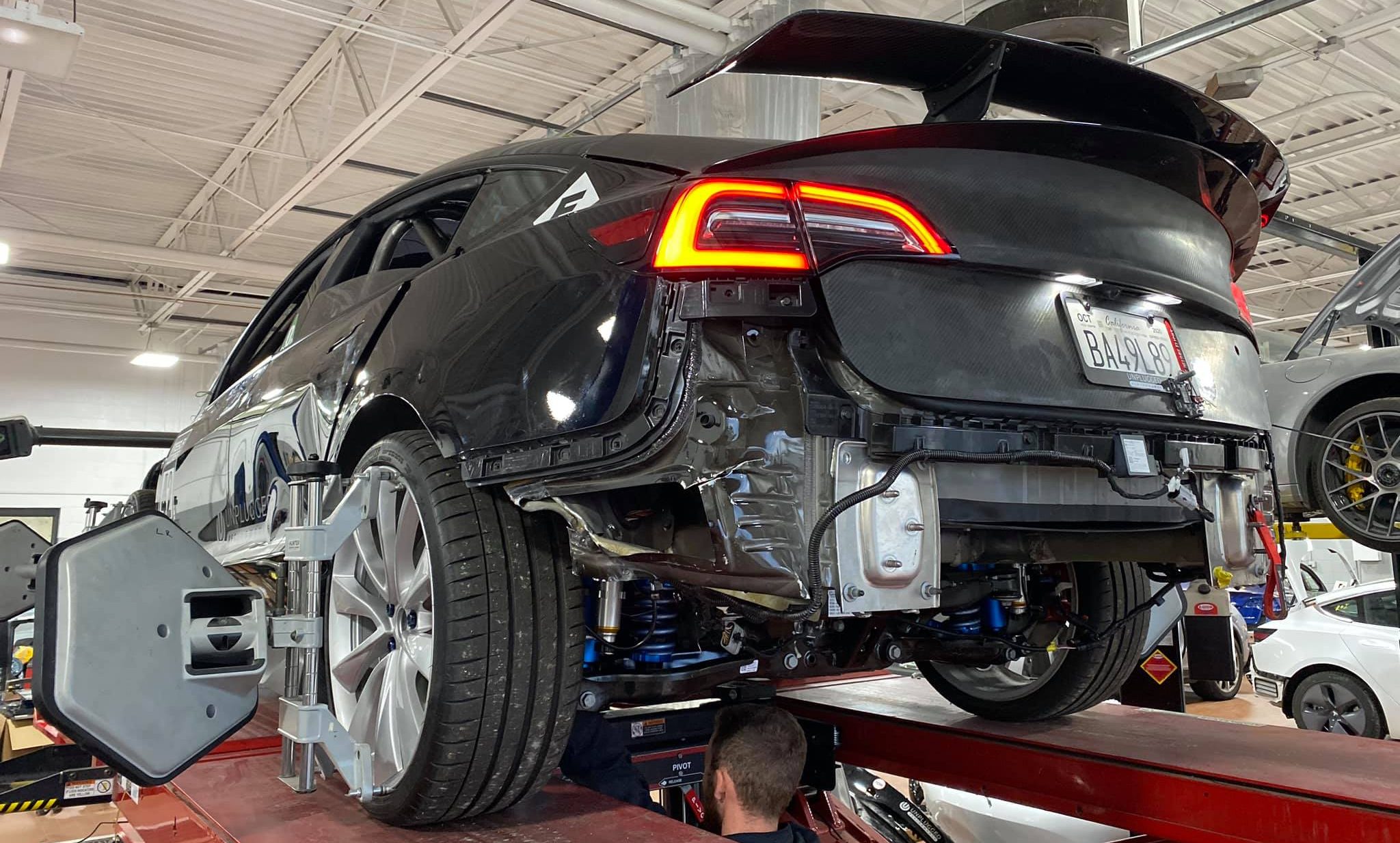
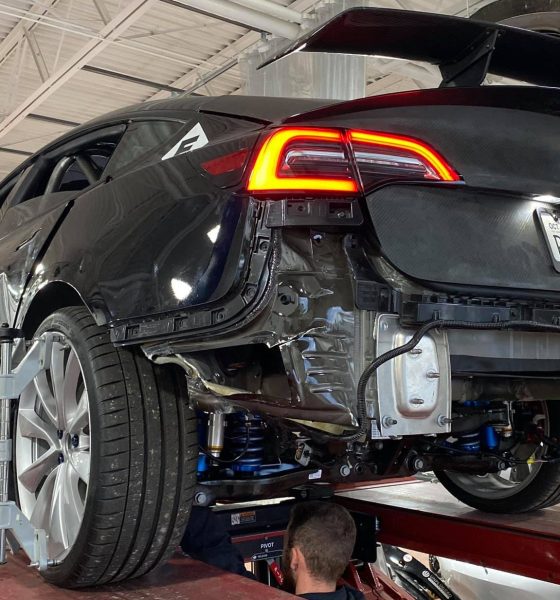
But sometimes, it takes more than a totaled racecar to keep the human spirit down. In what could only be described as a decision that was equal parts impressive and insane, the Unplugged team decided to try and repair the Model 3. The officials of the Pikes Peak Hill Climb required that the team use the same vehicle that was involved in the crash, so the idea of using a fresh Model 3 Performance was quickly scrapped. What followed was an astounding effort that involved numerous Tesla community members, employees of the electric car maker, and EuroCar, an authorized Tesla body shop, all working together to do the seemingly impossible — resurrect a totaled racecar in 48 hours.
With but a couple of days before the actual Pikes Peak Hill Climb on Sunday, the Unplugged team and Tesla community members worked around the clock to revive the damaged Model 3 Ascension-R. The team bought another Model 3 Performance that could be stripped for fresh parts, which was promptly delivered by the head of Tesla Service in Colorado. Parts were ordered and shipped as quickly as possible. Three Tesla engineers even came over to ensure that the whole repair process went smoothly. The team worked tirelessly, transferring parts, repairing damaged sections, and tuning the revived Model 3 racer to make the vehicle worthy of taking on Pikes Peak in time for Sunday’s hill climb event.
“We will never quit. Performance is more than lap times, it is a will to persevere over all obstacles. A totaled car won’t be the ending of this story for Randy or for us. I told Randy we will move mountains and we did. Today we assembled an army of support, we bought a new car, and we are working 24hr shifts to use the new car to move parts over to the race car. Whatever it takes we will overcome. See you at the top with Randy waving the Tesla flag,” the Unplugged CEO noted.
It was a tall order considering the degree of damage on the Tesla Model 3 Ascension-R. But as the team worked tirelessly while being sustained partly by food sent over by other Tesla owners, something remarkable happened. Part by part, the damaged Model 3 started looking like a racecar again. With each repaired section, with each new part fitted onto the damaged vehicle, the Model 3 racer showed signs that perhaps, just perhaps, the dream of participating and thriving in one of motorsports’ most dangerous events in a consumer-grade electric sedan was not dead yet.
It was an inhuman push that needed a near-miraculous set of circumstances to succeed, but the Model 3 Ascension-R was reborn for the Pikes Peak Hill Climb by the start of the weekend. With the racer reborn, Randy and the Unplugged team now have another chance at taking on the extremely challenging, extremely dangerous Pikes Peak course. In a video on his YouTube channel, Randy Pobst has noted that life is “magnified” in racing, as it deals with exhilarating victories, heartbreaking losses, and inspiring comebacks. Pikes Peak has witnessed all of this over the years, and the Tesla community could only hope that on Sunday, Randy could finish the hill climb in impressive fashion and wave the Tesla flag at the top of the course.


Elon Musk
Tesla ditches India after years of broken promises
Tesla has ditched its plans to build a factory in India after years of failed negotiations.

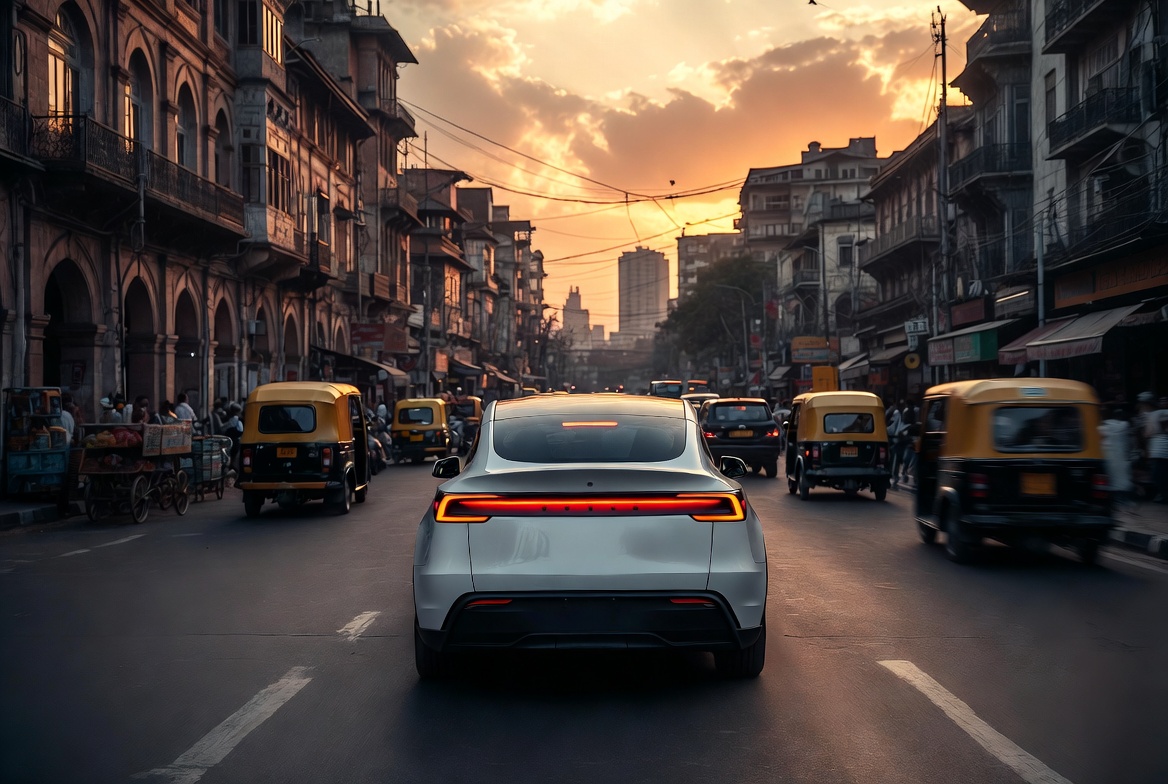
Tesla’s long-running effort to establish a manufacturing presence in India is officially over. India’s Minister of Heavy Industries H.D. Kumaraswamy confirmed on May 19, 2026 that Tesla has informed authorities it will not proceed with a manufacturing facility in the country.
Tesla first signaled serious interest in India around 2021, when it began hiring local staff and lobbying the Indian government for lower import tariffs. The ask was straightforward: reduce duties enough for Tesla to test the market with imported vehicles before committing capital to a local factory. India’s position was equally firm, with an ask of Tesla to commit to manufacturing first, then receive tariff relief. Neither side moved, and the talks quietly collapsed.
Tesla to open first India experience center in Mumbai on July 15
India had offered a policy that would reduce import duties from 110% down to 15% on EVs priced above $35,000, provided companies committed at least $500 million toward local manufacturing investment within three years. Tesla declined to participate. The tariff standoff was only part of the problem. Analysts pointed to significant gaps in India’s local supply chain, inadequate industrial infrastructure, and a mismatch between Tesla’s premium pricing and the purchasing power of India’s automotive market as additional factors that made the investment difficult to justify.
First signs of an unraveling relationship came in April 2024, when Musk abruptly cancelled a planned trip to India where he was set to meet Prime Minister Modi and announce Tesla’s market entry. By July 2024, Fortune reported that Tesla executives had stopped contacting Indian government officials entirely. The government at that point understood Tesla had capital constraints and no plans to invest.
The more fundamental issue is that Tesla’s existing factories are currently operating at approximately 60% capacity, making a commitment to building new manufacturing capacity in a new market difficult to defend to investors. Tesla will continue selling imported Model Y vehicles through its existing showrooms in Mumbai, Delhi, Gurugram, and Bengaluru, but local production is no longer part of the plan.
Elon Musk
Trump’s invite for Elon just reshuffled Tesla’s big Signature Delivery Event
Tesla rescheduled its final Model S farewell to May 20 after Musk joined Trump in China.
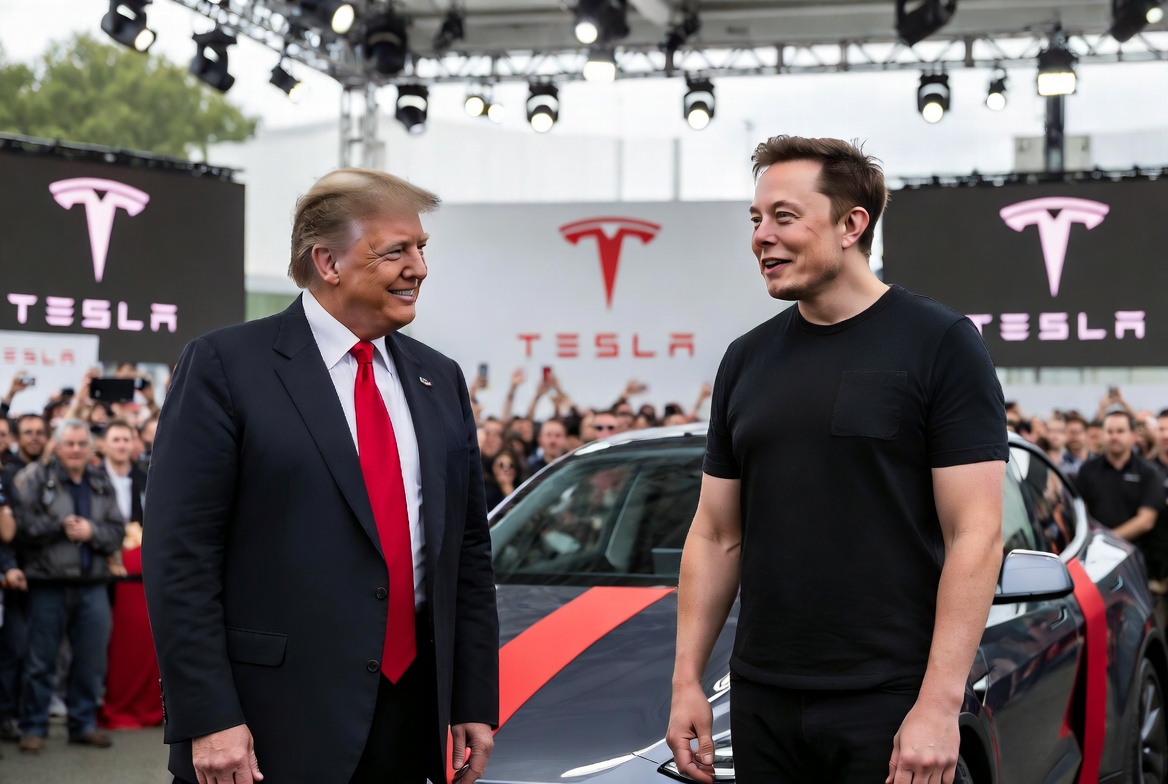
Tesla has rescheduled its Model S and Model X Signature Edition delivery event to Wednesday, May 20, 2026, after abruptly calling off the original May 12 celebration. The event will take place at Tesla’s factory at 45500 Fremont Boulevard in Fremont, California, the same location where the Model S first rolled off the line in 2012. Invitees received a follow-up email asking them to reconfirm attendance and download a new QR code ticket, with Tesla noting that all travel and accommodation expenses remain the buyer’s responsibility.
The reason behind the original cancellation came into focus the same day it was announced. President Trump invited Elon Musk, Apple’s Tim Cook, BlackRock’s Larry Fink, Boeing’s Kelly Ortberg, and executives from Goldman Sachs, Blackstone, Citigroup, and Meta to join his trip to China this week for a summit with President Xi Jinping. The agenda covers trade, artificial intelligence, export controls, Taiwan, and the Iran war, following weeks of escalating friction between Washington and Beijing over AI technology, sanctions, and rare earth exports. Trump wrote on Truth Social, “I am very much looking forward to my trip to China, an amazing Country, with a Leader, President Xi, respected by all.”
Tesla launches 200mph Model S “Gold” Signature in invite-only purchase
The vehicles at the center of all this are the last Model S and Model X units Tesla will ever build. Priced at $159,420 each, the 250 Model S and 100 Model X Signature Edition units come finished in Garnet Red with a one-year no-resale agreement, giving Tesla right of first refusal if the owner decides to sell. As Teslarati reported, the Model S defined Tesla’s early identity as a serious luxury automaker, and the Fremont factory line that built it is now being converted to manufacture Optimus humanoid robots.
Musk’s inclusion in the China delegation drew attention given his very public relationship with Trump, and the invitation signals the two have moved past and past grievances. Trump originally brought Musk on to lead the Department of Government Efficiency following his inauguration, and despite a sharp public dispute in mid-2025, the two have appeared together repeatedly in recent months. A seat on the China trip, the most diplomatically consequential visit of Trump’s current term, puts Musk back at the table on U.S. economic policy at a moment when Tesla’s China revenue remains one of the company’s most important financial pillars.
Lifestyle
Tesla Semi hauls fresh Cybercab batch as Robotaxi era takes hold
A Tesla Semi was filmed hauling Cybercab units out of Giga Texas for the first time.
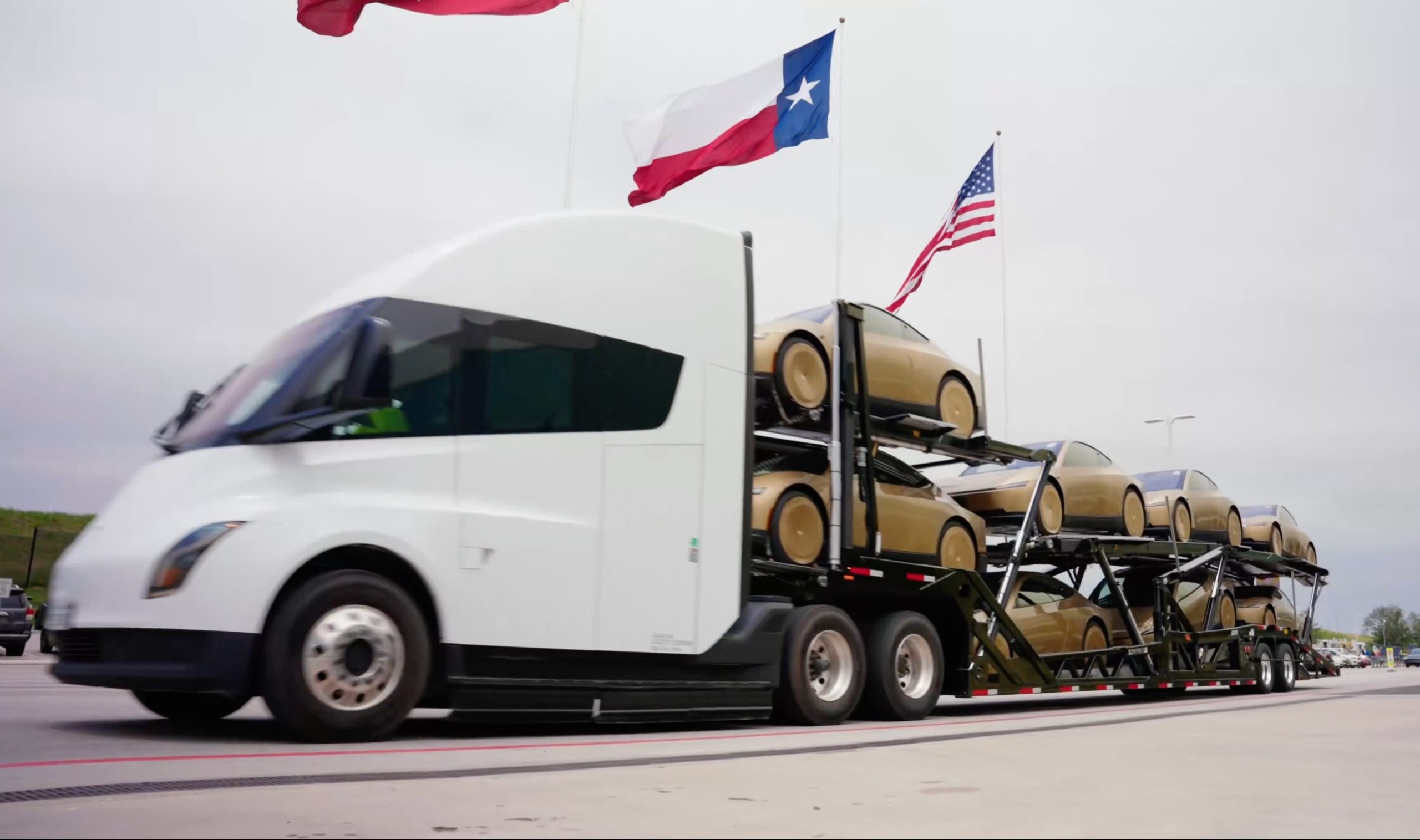
A Tesla Semi loaded with Cybercab units was recently filmed leaving Gigafactory Texas, marking what appears to be the first documented delivery run of Tesla’s autonomous two-seater. The footage shows multiple Cybercabs secured on a flatbed trailer being hauled by a production Tesla Semi, a truck rated for a gross combination weight of 82,000 lbs. The location is consistent with Giga Texas in Austin, where Cybercab production has been ramping since February 2026.
The sighting follows a wave of Cybercab activity at the Austin facility. In late April, drone operator Joe Tegtmeyer spotted approximately 60 Cybercabs parked in two organized groups in the factory’s outbound lot, the largest concentration observed to date. Units being staged in an outbound lot is a standard pre-delivery step, and the Semi footage is the logical next frame in that sequence.
En route with @tesla_semi pic.twitter.com/ZfuOjaeLH1
— Tesla Robotaxi (@robotaxi) May 7, 2026
This is not the first time Tesla has used its own Semi to move Tesla products. When the Semi was unveiled in 2017, Musk noted it would be used for Tesla’s own operations, and over the years Semi prototypes were spotted carrying cargo ranging from concrete weights to Tesla vehicles being delivered to consumers. In 2023, a Semi was photographed transporting a Cybertruck on a trailer ahead of that vehicle’s delivery launch.
The Cybercab itself was first revealed publicly at Tesla’s “We, Robot” event on October 10, 2024, at Warner Bros. Studios in Burbank, where 20 pre-production units gave attendees rides around the studio lot. Musk stated at the event that Tesla intends to produce the Cybercab before 2027. The first production unit rolled off the Giga Texas line on February 17, 2026, with Musk posting on X: “Congratulations to the Tesla team on making the first production Cybercab.”
Tesla’s annual production goal is 2 million Cybercabs per year once multiple factories reach full design capacity, with the company targeting a price under $30,000 per unit. Tesla has confirmed plans to expand its robotaxi service to seven cities in the first half of 2026, including Dallas, Houston, Phoenix, Miami, Orlando, Tampa, and Las Vegas, building on the unsupervised service already running in Austin. Musk has said he expects robotaxis to cover between a quarter and half of the United States by end of year.

Elon Musk called it Epic: The full story of SpaceX’s Starship Flight 12

Zuckerberg’s Meta taps Musk’s Tesla for massive clean energy project


