News
Tesla Model S, Model X specs reveal 250 kW Supercharging rate, suggesting 1,000 mph charging

Tesla has updated the specifications for the Model S and Model X to include a maximum Supercharging rate of 250 kW or a charge rate of 1,000 miles per hour.
The update made to the Model S and Model X website aligns the charging capabilities of its flagship vehicles with that of the Model 3 and Model Y. Although Tesla recently increased the Supercharging rate of Model S and Model X from 200 kW to 225 kW as part of the 2020.24.6 software update, prior to this, Model 3 and Model Y were the only vehicles in the company’s lineup that could take advantage of the higher 250 kW power output from Tesla’s V3 Superchargers.
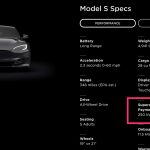
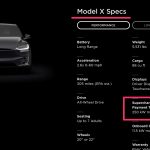
It’s not clear if Tesla’s latest site update implies that newer production Model S sedans and Model X SUVs have improved cell chemistry that can take advantage of the higher Supercharging rate, or if it’s part of a fleetwide software update that increases the threshold of the current battery technology.
Update: Elon Musk has commented on our report, noting that Tesla has increased the wire thickness for Model S and Model X to enable higher current, and thereby increased power capabilities from reduced resistance.
We had to increase some wire thicknesses in S/X to reduce resistive heating. Technically, won’t be quite 1000 mph charging, as X especially is much bigger than 3.
— Elon Musk (@elonmusk) July 13, 2020
According to the release notes from the most recent over-the-air update, Tesla cites improved battery pre-conditioning as the reason for the higher Supercharging rate. “Your car is now able to charge at V3 Superchargers at up to 225 kW peak rates. As usual, when you navigate to a Supercharger, your car will condition its battery during the drive, so it can charge faster.”
With rumblings of a million-mile battery being developed at Tesla’s ‘skunkworks division’ in Fremont and the upcoming Battery Day presentation to be held on September 22, it wouldn’t be far-fetched if the company has already begun to align its battery cell technology among all of its production vehicles. Until now, only the Model 3 and Model Y have utilized Tesla’s more efficient 2170 form factor battery cells, while the Model S sedan and Model X SUV retained the older-generation 18650 cells. The more slender 18650 cells, resembling a household AA battery, was popularized by its mainstream introduction in 2016, nearly four years ago to date, when Tesla and partner Panasonic opened their Gigafactory 1 door to the public, in a showcase of battery cell mass production.


Elon Musk
Tesla Full Self-Driving’s newest behavior is the perfect answer to aggressive cars
According to a recent video, it now appears the suite will automatically pull over if there is a tailgater on your bumper, the most ideal solution for when a driver is riding your bumper.

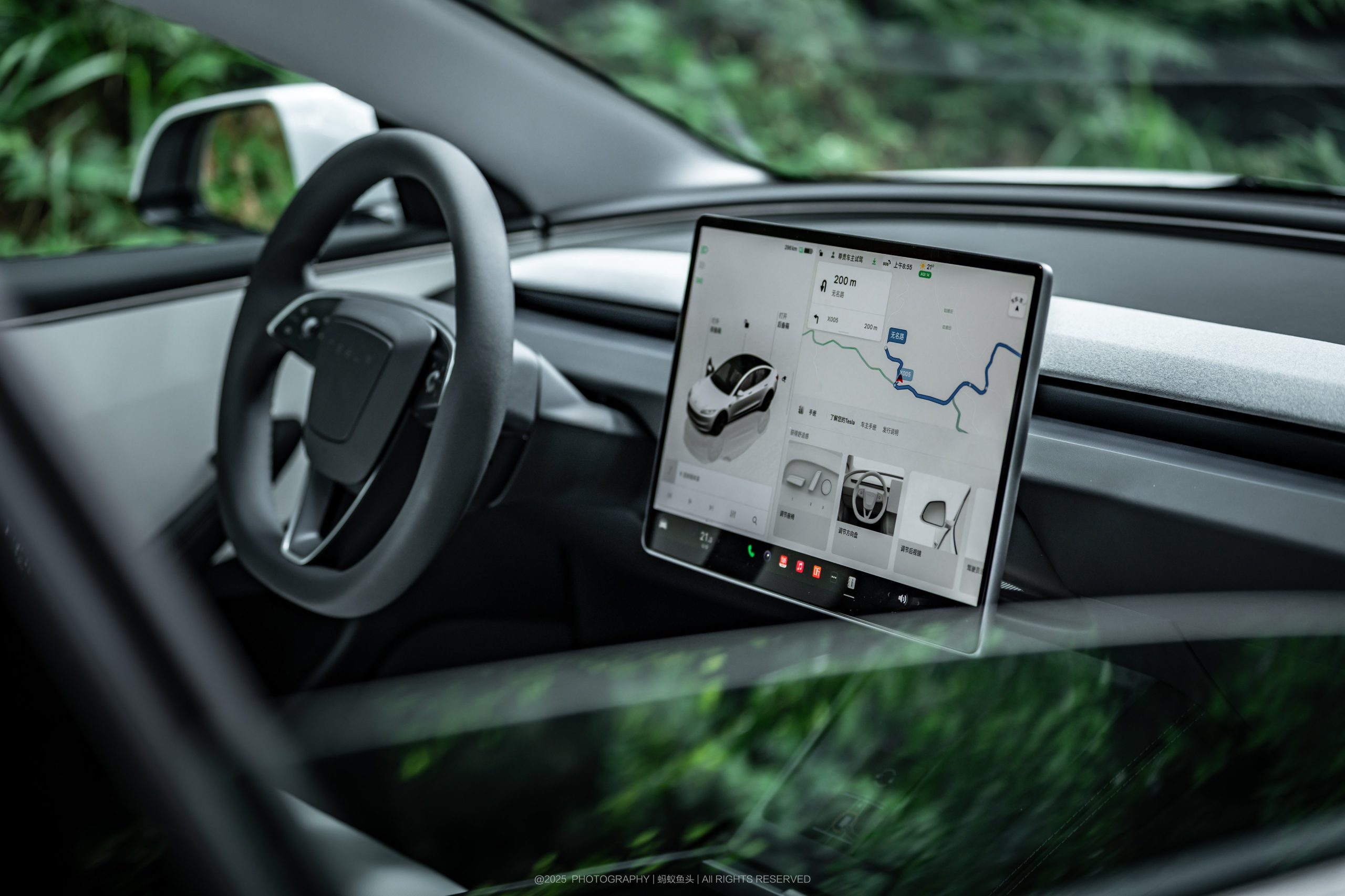
Tesla Full Self-Driving appears to have a new behavior that is the perfect answer to aggressive drivers.
According to a recent video, it now appears the suite will automatically pull over if there is a tailgater on your bumper, the most ideal solution for when a driver is riding your bumper.
With FSD’s constantly-changing Speed Profiles, it seems as if this solution could help eliminate the need to tinker with driving modes from the person in the driver’s seat. This tends to be one of my biggest complaints from FSD at times.
A video posted on X shows a Tesla on Full Self-Driving pulling over to the shoulder on windy, wet roads after another car seemed to be following it quite aggressively. The car looks to have automatically sensed that the vehicle behind it was in a bit of a hurry, so FSD determined that pulling over and letting it by was the best idea:
Tesla appears to be implementing some sort of feature that will now pull over if someone is tailgating you to let the car by
Really cool feature, definitely get a lot of this from those who think they drive race cars
— TESLARATI (@Teslarati) February 26, 2026
We can see from the clip that there was no human intervention to pull over to the side, as the driver’s hands are stationary and never interfere with the turn signal stalk.
This can be used to override some of the decisions FSD makes, and is a great way to get things back on track if the semi-autonomous functionality tries to do something that is either unneeded or not included in the routing on the in-car Nav.
FSD tends to move over for faster traffic on the interstate when there are multiple lanes. On two-lane highways, it will pass slower cars using the left lane. When faster traffic is behind a Tesla on FSD, the vehicle will move back over to the right lane, the correct behavior in a scenario like this.
Perhaps one of my biggest complaints at times with Full Self-Driving, especially from version to version, is how much tinkering Tesla does with Speed Profiles. One minute, they’re suitable for driving on local roads, the next, they’re either too fast or too slow.
When they are too slow, most of us just shift up into a faster setting, but at times, even that’s not enough, see below:
What has happened to Mad Max?
At one point it was going 32 in a 35. Traffic ahead had pulled away considerably https://t.co/bjKvaMVTNX pic.twitter.com/aaZSWmLu5v
— TESLARATI (@Teslarati) January 24, 2026
There are times when it feels like it would be suitable for the car to just pull over and let the vehicle that is traveling behind pass. This, at least up until this point, it appears, was something that required human intervention.
Now, it looks like Tesla is trying to get FSD to a point where it just knows that it should probably get out of the way.
Elon Musk
Tesla Megapack powers $1.1B AI data center project in Brazil
By integrating Tesla’s Megapack systems, the facility will function not only as a major power consumer but also as a grid-supporting asset.

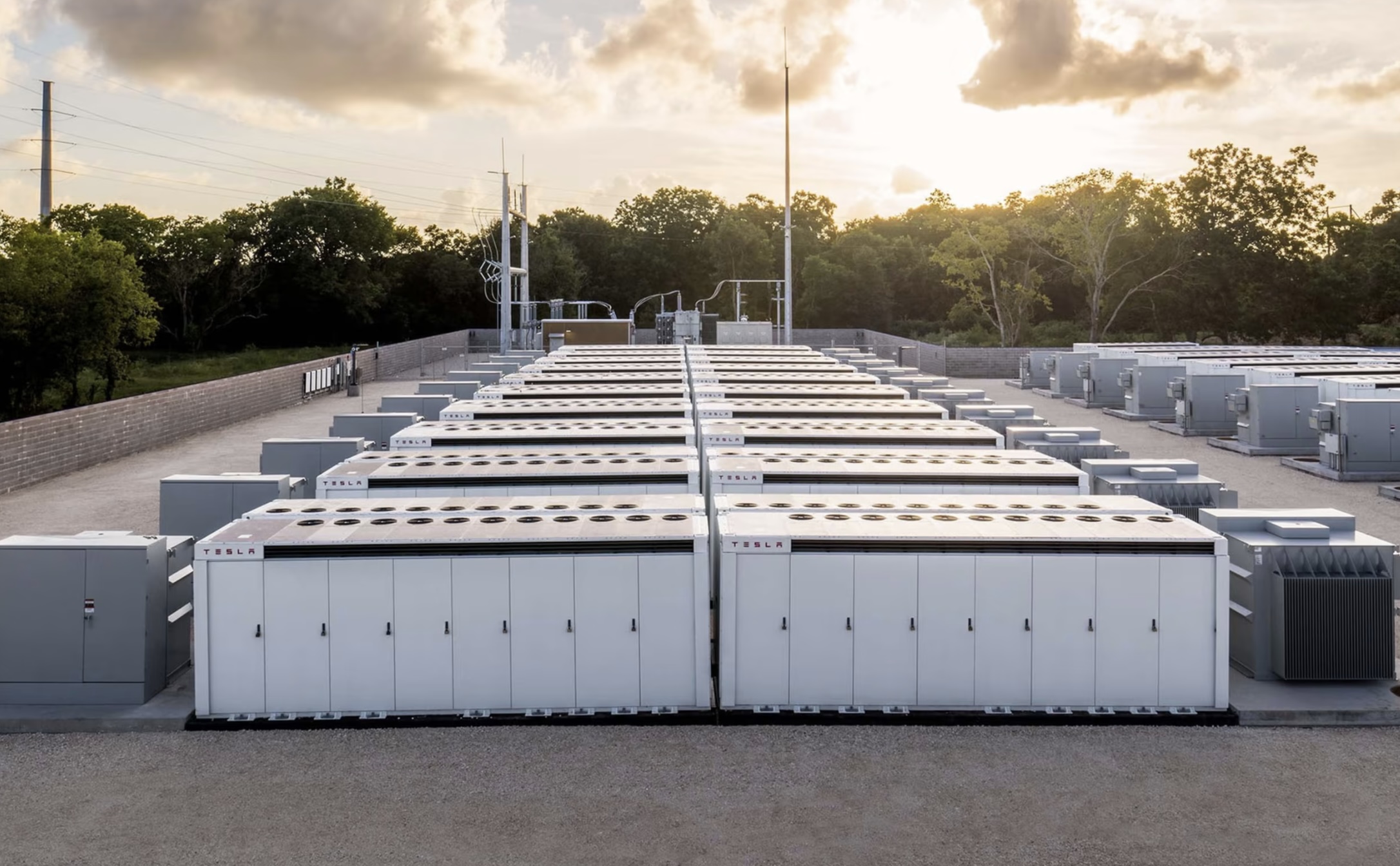
Tesla’s Megapack battery systems will be deployed as part of a 400MW AI data center campus in Uberlândia, Brazil. The initiative is described as one of Latin America’s largest AI infrastructure projects.
The project is being led by RT-One, which confirmed that the facility will integrate Tesla Megapack battery energy storage systems (BESS) as part of a broader industrial alliance that includes Hitachi Energy, Siemens, ABB, HIMOINSA, and Schneider Electric. The project is backed by more than R$6 billion (approximately $1.1 billion) in private capital.
According to RT-One, the data center is designed to operate on 100% renewable energy while also reinforcing regional grid stability.
“Brazil generates abundant energy, particularly from renewable sources such as solar and wind. However, high renewable penetration can create grid stability challenges,” RT-One President Fernando Palamone noted in a post on LinkedIn. “Managing this imbalance is one of the country’s growing infrastructure priorities.”
By integrating Tesla’s Megapack systems, the facility will function not only as a major power consumer but also as a grid-supporting asset.
“The facility will be capable of absorbing excess electricity when supply is high and providing stabilization services when the grid requires additional support. This approach enhances resilience, improves reliability, and contributes to a more efficient use of renewable generation,” Palamone added.
The model mirrors approaches used in energy-intensive regions such as California and Texas, where large battery systems help manage fluctuations tied to renewable energy generation.
The RT-One President recently visited Tesla’s Megafactory in Lathrop, California, where Megapacks are produced, as part of establishing the partnership. He thanked the Tesla team, including Marcel Dall Pai, Nicholas Reale, and Sean Jones, for supporting the collaboration in his LinkedIn post.
Elon Musk
Starlink powers Europe’s first satellite-to-phone service with O2 partnership
The service initially supports text messaging along with apps such as WhatsApp, Facebook Messenger, Google Maps and weather tools.
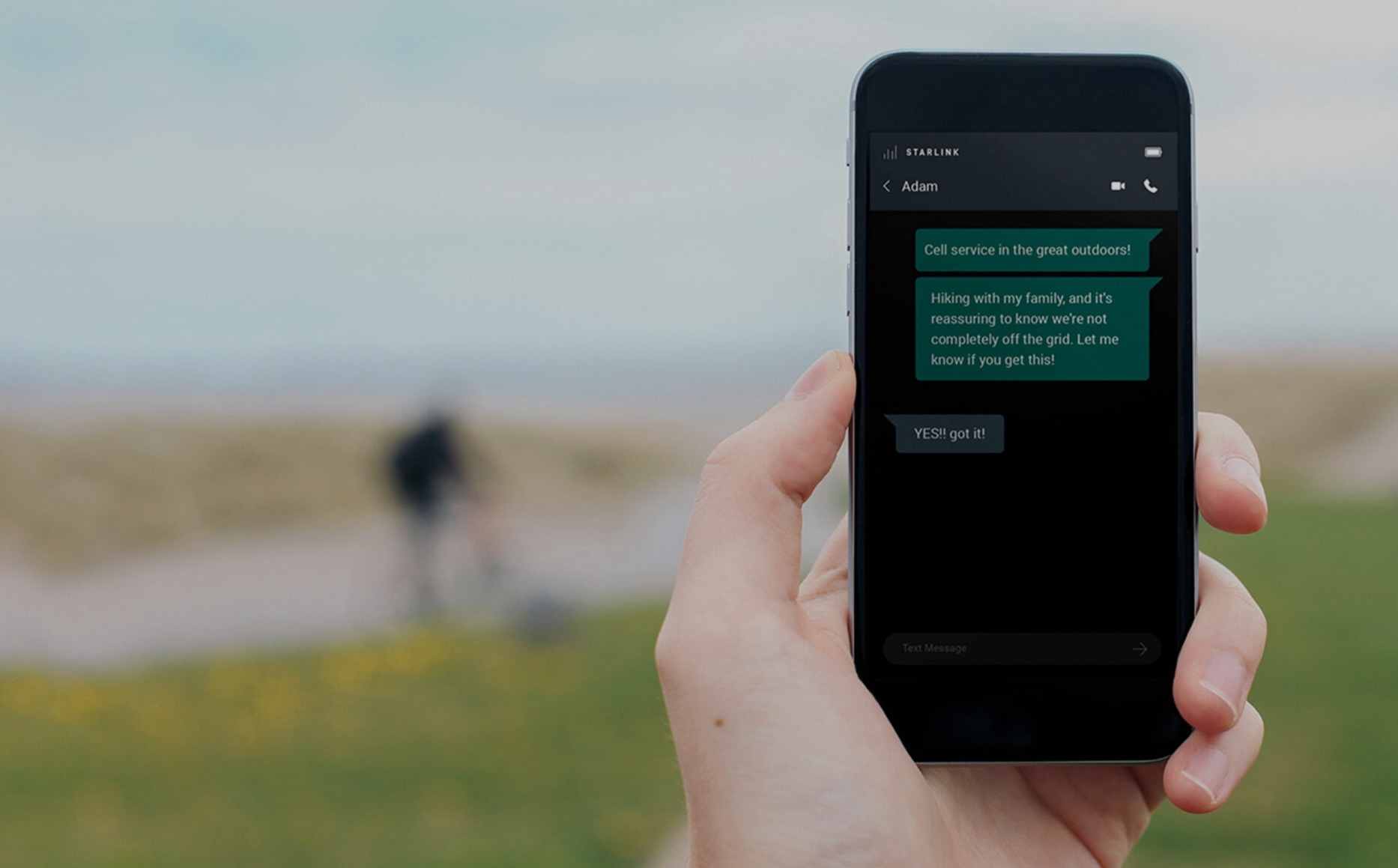
Starlink is now powering Europe’s first commercial satellite-to-smartphone service, as Virgin Media O2 launches a space-based mobile data offering across the UK.
The new O2 Satellite service uses Starlink’s low-Earth orbit network to connect regular smartphones in areas without terrestrial coverage, expanding O2’s reach from 89% to 95% of Britain’s landmass.
Under the rollout, compatible Samsung devices automatically connect to Starlink satellites when users move beyond traditional mobile coverage, according to Reuters.
The service initially supports text messaging along with apps such as WhatsApp, Facebook Messenger, Google Maps and weather tools. O2 is pricing the add-on at £3 per month.
By leveraging Starlink’s satellite infrastructure, O2 can deliver connectivity in remote and rural regions without building additional ground towers. The move represents another step in Starlink’s push beyond fixed broadband and into direct-to-device mobile services.
Virgin Media O2 chief executive Lutz Schuler shared his thoughts about the Starlink partnership. “By launching O2 Satellite, we’ve become the first operator in Europe to launch a space-based mobile data service that, overnight, has brought new mobile coverage to an area around two-thirds the size of Wales for the first time,” he said.
Satellite-based mobile connectivity is gaining traction globally. In the U.S., T-Mobile has launched a similar satellite-to-cell offering. Meanwhile, Vodafone has conducted satellite video call tests through its partnership with AST SpaceMobile last year.
For Starlink, the O2 agreement highlights how its network is increasingly being integrated into national telecom systems, enabling standard smartphones to connect directly to satellites without specialized hardware.

Tesla Full Self-Driving’s newest behavior is the perfect answer to aggressive cars

Tesla Megapack powers $1.1B AI data center project in Brazil


