News
The Tesla Model Y is absolutely dominating China’s premium SUV sector

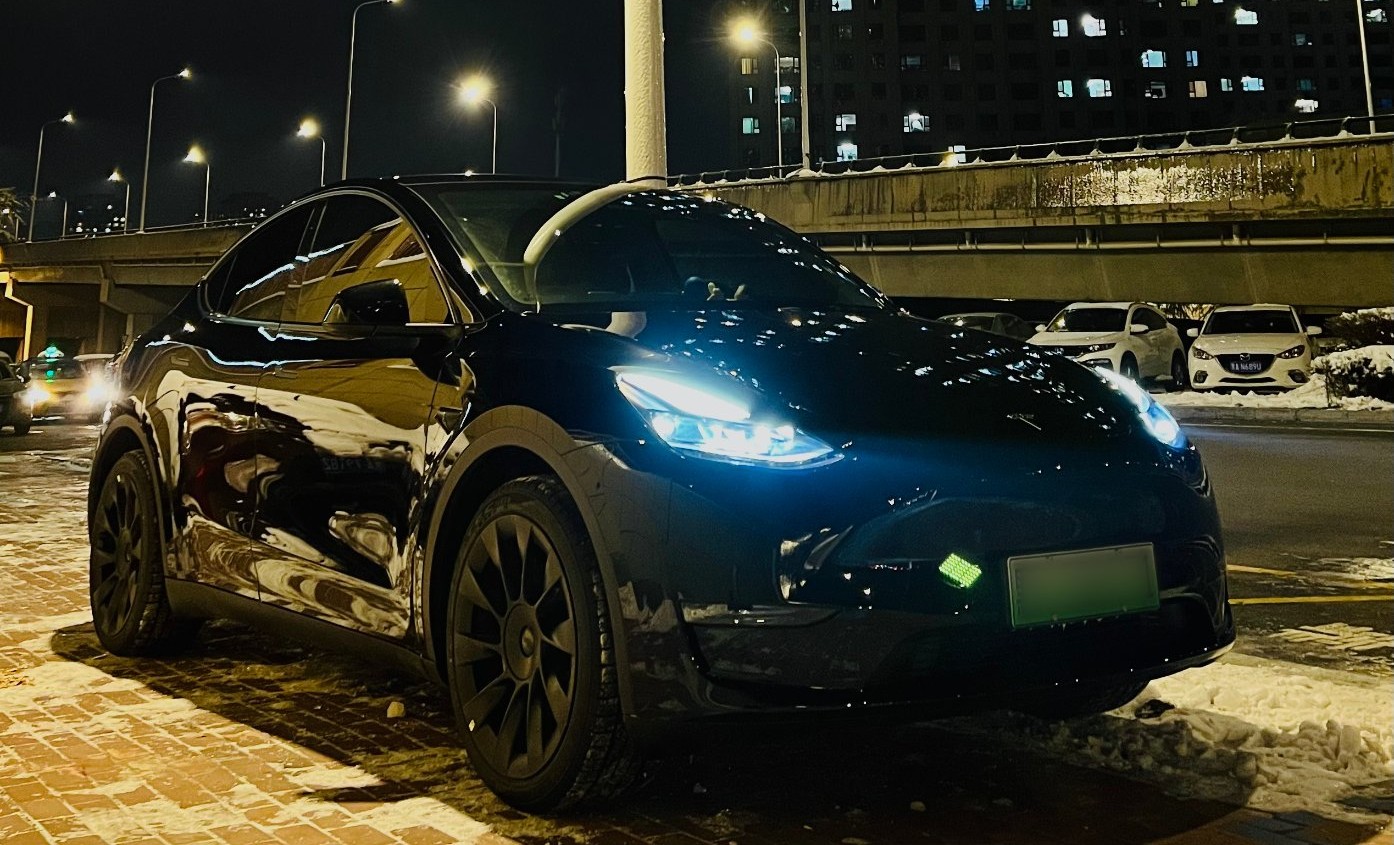
The Tesla Model Y is absolutely dominating China’s high-end SUV market, with the all-electric crossover selling 23,117 units in November. This allowed the Model Y to outsell some of the most popular luxury SUVs that have long been selling well in China, such as the Audi Q5 and the BMW X3.
The Model Y’s gap from its rivals in China’s high-end SUV market is substantial, as the second place, the Lixiang ONE, only sold 13,485 units last month, or just about 58% of the Tesla crossover’s sales. The Mercedes-Benz GLC is in a distant third place with 12,269 units sold in November. Other German SUVs were further down, such as the Audi Q5, which sold 11,411 units last month, and the BMW X3, which sold 10,436.
With its feat in November, the Tesla Model Y has effectively topped the country’s premium high-end SUV rankings two months in a row. The Model Y also saw a 74% month-over-month increase in local vehicle sales, though this is most likely due to the fact that Tesla exported a large amount of the vehicles produced in Giga Shanghai to foreign territories in October.
The Model Y’s strength is especially evident if one were to look at how the vehicle is performing in the country’s general SUV market, which features players that are notably more affordable than the Tesla crossover. In November, the Tesla Model Y was China’s third-best-selling SUV overall with its domestic sales of 23,117, allowing the vehicle to beat the Toyota Rav4, which sold 19,539 units.
While the Model Y’s dominance in China’s luxury SUV segment and its performance in the country’s general SUV market may be surprising for some, the vehicle’s potential has been highlighted by Tesla CEO Elon Musk. During the Q1 2021 earnings call, Musk stated that considering the Model 3’s success, there is a chance that the Model Y could become the best-selling car or truck of any kind in the world, EV or otherwise.
“The BMW 3 Series was for the longest time the best-selling premium sedan, and it has been exceeded by the Tesla Model 3. And this is only three and a half years into production and was just two factories. For Model 3 to be outselling its combustion engine competitors, I think, is quite remarkable… When it comes to Model Y, we think Model Y will be the best-selling car or vehicle of any kind in the world and probably next year. So I’m not 100% certain next year, but I think it’s quite likely. I’d say more likely than not that in 2022, Model Y (would be) the best-selling car or truck of any kind in the world,” Musk said.
The Teslarati team would appreciate hearing from you. If you have any tips, reach out to me at maria@teslarati.com or via Twitter @Writer_01001101.


Elon Musk
Elon Musk has generous TSA offer denied by the White House: here’s why
Musk stepped in on March 21 via a post on X, writing: “I would like to offer to pay the salaries of TSA personnel during this funding impasse that is negatively affecting the lives of so many Americans at airports throughout the country.”

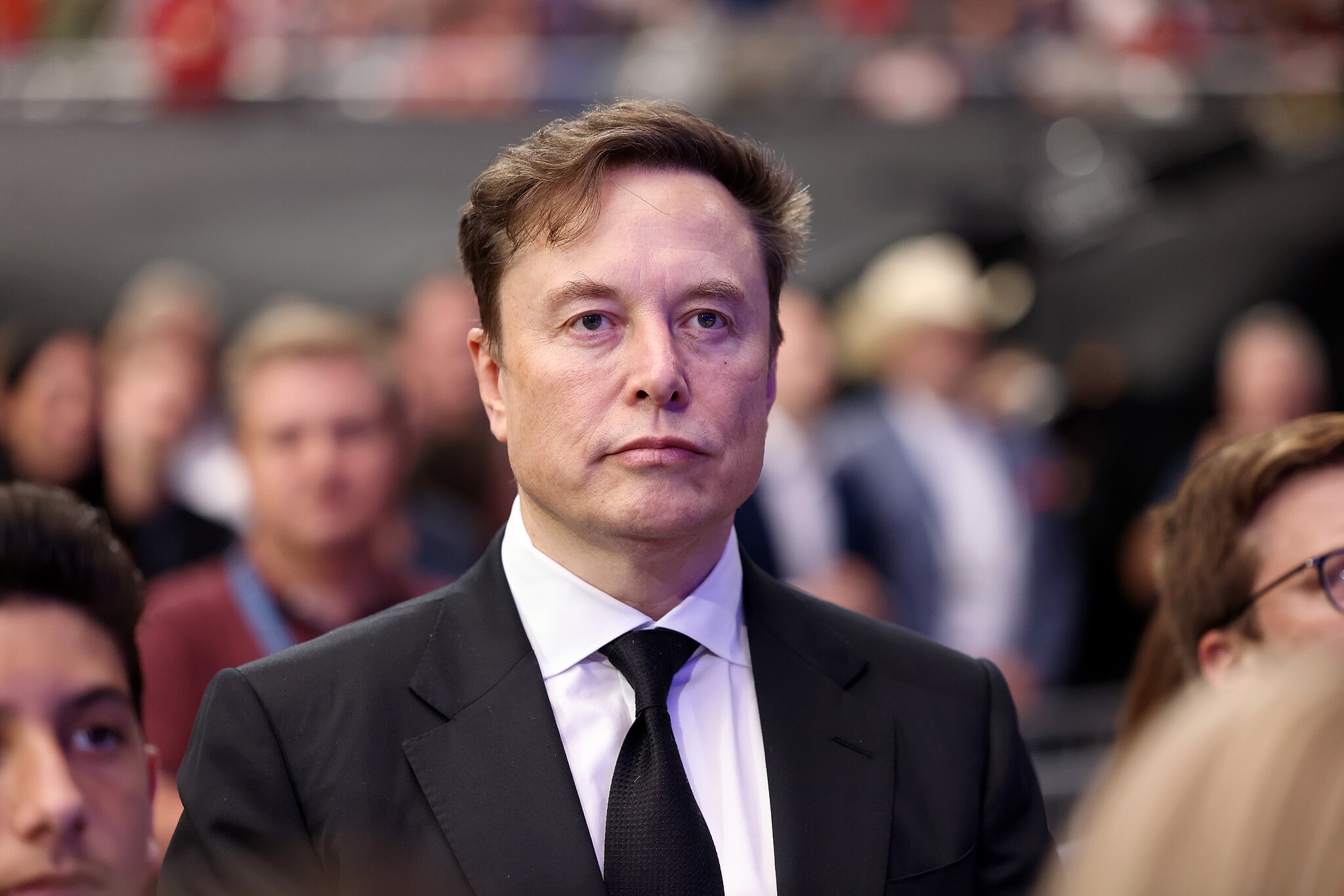
Tesla and SpaceX CEO Elon Musk made a generous offer to pay the salaries of Transportation Security Administration (TSA) employees last week, but the offer was denied by the White House.
In a striking display of private-sector initiative clashing with federal bureaucracy, the White House has turned down an offer from Elon Musk to personally cover the salaries of TSA officers amid an ongoing partial government shutdown. The rejection, reported last Wednesday by multiple outlets, highlights the legal and political hurdles facing unconventional solutions to Washington’s funding gridlock.
The impasse began weeks ago when Congress failed to pass funding for the Department of Homeland Security (DHS), leaving TSA employees, essential workers who screen millions of travelers daily, without paychecks while still required to report for duty.
Frustrated travelers have endured record-long security lines at major airports, with reports of chaos and delays rippling across the country.
Musk stepped in on March 21 via a post on X, writing: “I would like to offer to pay the salaries of TSA personnel during this funding impasse that is negatively affecting the lives of so many Americans at airports throughout the country.”
I would like to offer to pay the salaries of TSA personnel during this funding impasse that is negatively affecting the lives of so many Americans at airports throughout the country
— Elon Musk (@elonmusk) March 21, 2026
But it was not for no reason.
White House spokesperson Abigail Jackson responded on behalf of the Trump administration, expressing appreciation for Musk’s gesture.
However, the legal obstacles, which would be insurmountable, would inhibit Musk from doing so. Jackson said:
“We greatly appreciate Elon’s generous offer. This would pose great legal challenges due to his involvement with federal government contracts.”
Musk’s companies hold significant federal contracts, including NASA launches through SpaceX and potential Defense Department work, raising concerns about conflicts of interest, ethics rules, and anti-bribery statutes that prohibit private payments to government employees. Administration officials also indicated they expect the shutdown to end soon, making external funding unnecessary.
The episode underscores deeper tensions in Washington. Musk, who has advised on government efficiency efforts and maintains a close relationship with President Trump, has frequently criticized wasteful spending and bureaucratic delays.
His offer came as airport security lines ballooned, drawing public frustration toward both parties. TSA officers, many of whom rely on paychecks to cover mortgages and family expenses, have continued working without compensation, a situation that has drawn bipartisan concern but little immediate resolution.
Critics of the rejection argue it prioritizes red tape over practical relief for frontline workers and travelers. Supporters of the White House position counter that allowing private funding sets a dangerous precedent and could undermine congressional authority over the budget.
The White House eventually came to terms with the TSA on Friday and started paying them once again, and lines at airports instantly shrank. The Department of Homeland Security (DHS) said that TSA staf would begin receiving paychecks “as early as” today.
Elon Musk
Tesla FSD mocks BMW human driver: Saves pedestrian from near miss
Tesla FSD anticipated a BMW driver’s lane drift before the human behind the wheel could react.

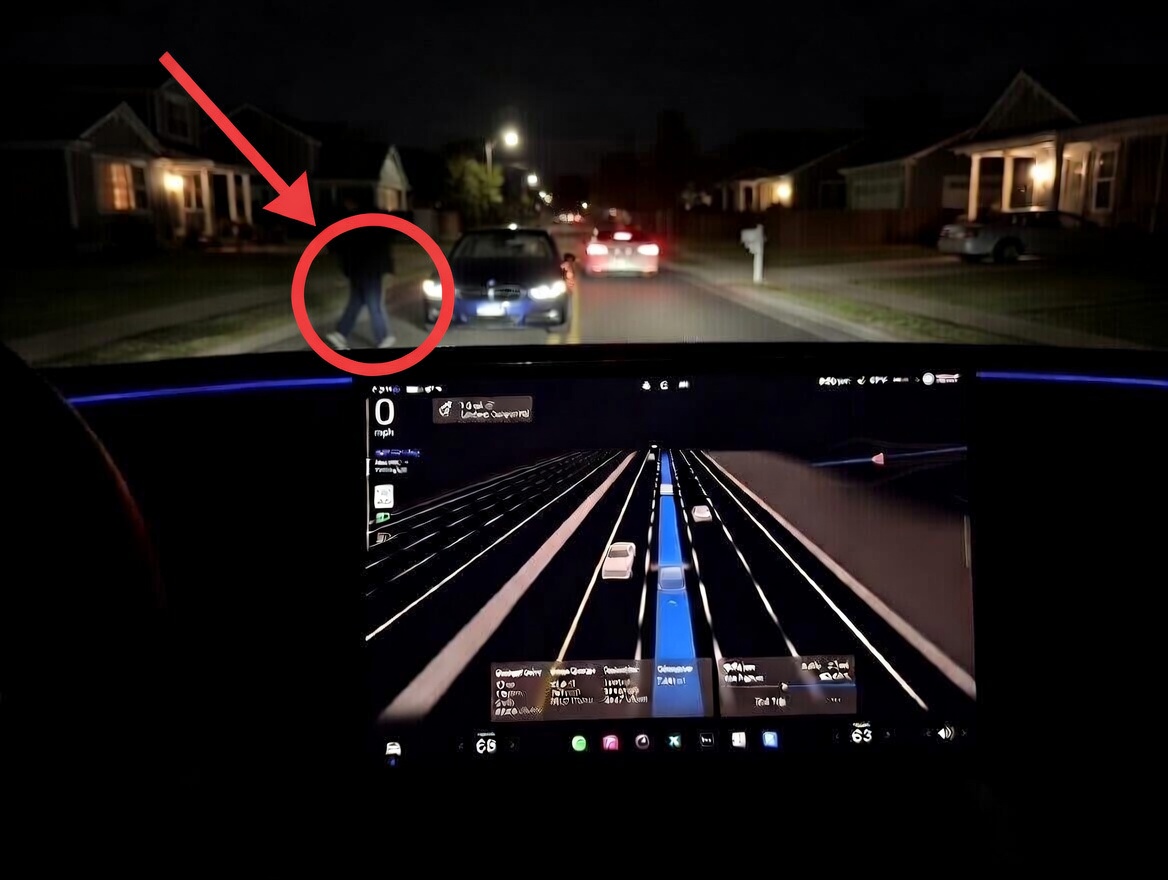
A video posted to r/TeslaFSD this week put a sharp spotlight on Tesla’s Full Self-Driving (FSD) software being able to react to pedestrian intent than an actual human driver behind the wheel. In the Reddit clip, a BMW driver can be seen rolling through a neighborhood street completely unaware of a pedestrian stepping in to cross. At the same time, a Tesla driving on FSD had already begun slowing down before the pedestrian even began their attempt to cross the street The BMW kept moving, prompting the pedestrian to hop back, while the Tesla came to a stop and provide right-of-way for the human to safely cross.
That gap between what the BMW driver saw and what FSD had already processed is the story. Tesla FSD wasn’t reacting to a person in the street, rather it was reading the signals that a person was about to enter it based on the pedestrian’s movement, trajectory, and their trajectory to telegraph intent.
Tesla’s FSD is now built on an end-to-end neural network trained on billions of real-world miles, learning to interpret subtle human behavioral cues the same way an experienced human driver does instinctively. The difference is consistency. A human driver distracted for two seconds misses what FSD does not.
Tesla sues California DMV over Autopilot and FSD advertising ruling
Reddit commenters in the thread were blunt about the BMW driver’s failure, with several pointing out that the pedestrian was visible well before the crossing. One response put it plainly that the car on FSD saw the situation developing before the human in the other car had registered there was a situation at all.
Tesla has published data showing FSD (Supervised) is 54% safer than a human driver, accumulated across billions of miles driven on the system. Elon Musk has said FSD v14 will outperform human drivers by a factor of two to three, and that v15 has “a shot” at a 10x improvement. Pedestrian safety is where the stakes are highest, and where intent prediction closes the gap fastest. At 30 mph, a car covers roughly 44 feet per second. An extra second of awareness from reading a person’s body language rather than waiting for them to step out is often the difference between a near miss and a fatality.
Video and community discussion: r/TeslaFSD on Reddit
FSD saves man from becoming a pancake. BMW driver nearly flattens him.
by
u/Qwertygolol in
TeslaFSD
News
Tesla Robotaxi gets a small but significant change
In the world of Tesla, where billion-dollar battery breakthroughs and autonomy milestones dominate headlines, a quiet design update can still pack a punch.
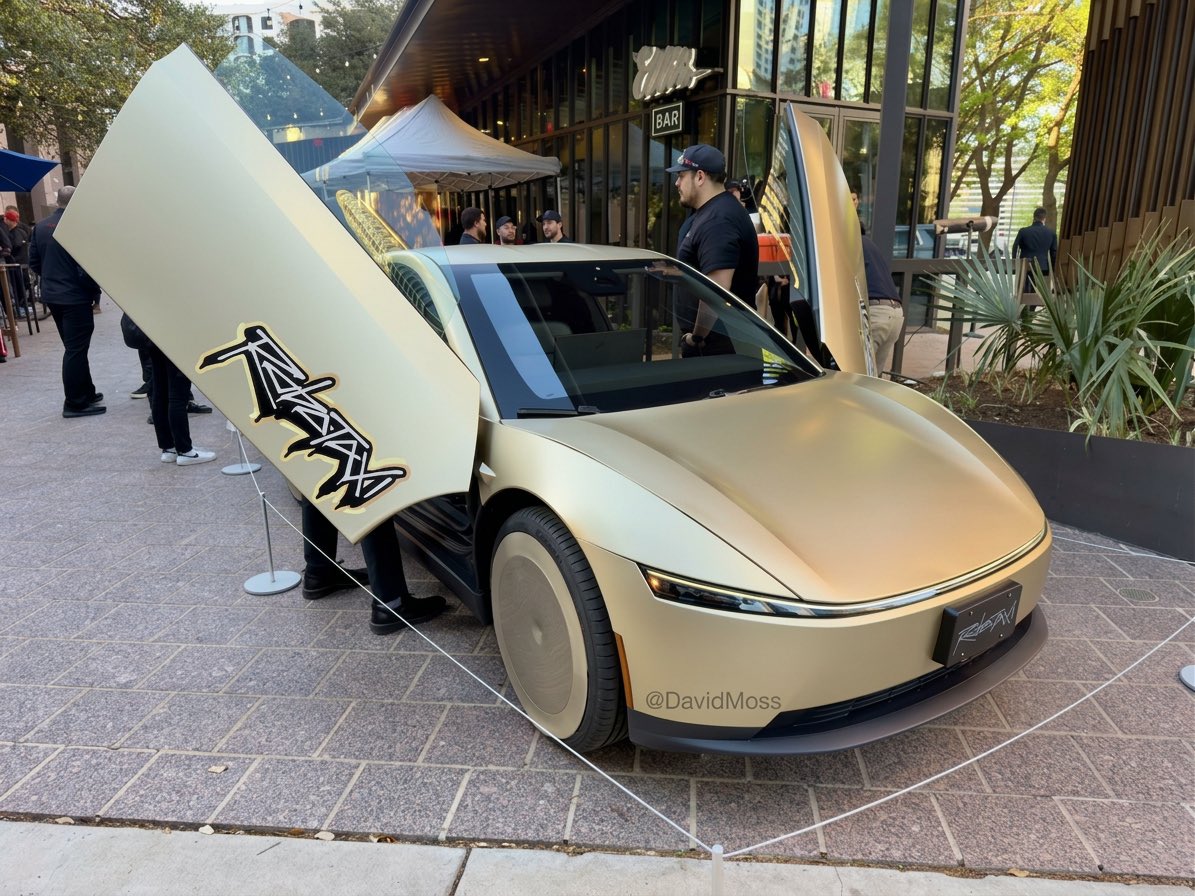
In the world of Tesla, where billion-dollar battery breakthroughs and autonomy milestones dominate headlines, a quiet design update can still pack a punch.
Last week in downtown Austin, sharp-eyed observers spotted a subtle but telling evolution on the Cybercab: a new “ROBOTAXI” logo graphic now graces the vehicle’s doors at Tesla’s Autonomy Popup.
What looks at first glance like a minor stylistic choice is, in fact, a deliberate rebranding move that hints at how the company envisions its robotaxi fleet fitting into everyday life.
The updated lettering is bold, graffiti-inspired, and unapologetically street-smart. Rendered in black with dripping white accents and a glowing yellow outline, the font evokes urban energy and playful irreverence.
Live From Downtown Austin:
Tesla Cybercab with new logo Graphic at their Autonomy Popup pic.twitter.com/MTTb9KDr3b
— David Moss (@DavidMoss) March 13, 2026
Gone is the sleek, minimalist typography that defined earlier Cybercab prototypes. In its place is something more human, almost rebellious.
The new logo pops against the Cybercab’s smooth, metallic body, turning the autonomous pod into a rolling piece of public art rather than just another futuristic taxi.
Designers know that fonts are silent brand ambassadors. They shape perception before a single ride is taken. Tesla’s classic sans-serif aesthetic screams precision engineering and Silicon Valley cool.
The new Robotaxi script leans into accessibility and fun, suggesting the vehicle is approachable, not intimidating. For a product meant to ferry strangers through city streets 24/7, that matters. It signals that the robotaxi isn’t reserved for tech elites; it’s for everyone.
Tesla Cybercab spotted next to Model Y shows size comparison
The timing is no accident. With regulatory approvals for unsupervised autonomy advancing and Tesla preparing to scale Cybercab production, the company is shifting from prototype showcase to fleet deployment.
A fresh logo helps differentiate the vehicles visually in dense urban environments—crucial for rider recognition and brand recall. It also aligns with Elon Musk’s long-standing ethos: make the future feel exciting, not sterile.
Small changes like this often foreshadow a larger strategy. Tesla has always obsessed over details—door handles, screen interfaces, even the curvature of a steering wheel.
Updating the Robotaxi font reflects the same meticulous care now applied to consumer-facing autonomy. It’s not just paint on metal; it’s a statement that the ride of the future should feel personal, memorable, and undeniably cool.
In an industry racing toward self-driving fleets, Tesla’s willingness to evolve even the smallest visual cues shows confidence. A font won’t launch the robotaxi network, but it might just help millions climb aboard with a smile.

Elon Musk has generous TSA offer denied by the White House: here’s why

Tesla FSD mocks BMW human driver: Saves pedestrian from near miss

Tesla Robotaxi gets a small but significant change

Elon Musk says Tesla is developing a new vehicle: ‘Way cooler than a minivan’

Elon Musk launches TERAFAB: The $25B Tesla-SpaceXAI chip factory that will rewire the AI industry


