News
Tesla Model Y L’s impressive specs surface in China’s recent MIIT filing
The Tesla Model Y L is expected to launch later this year.

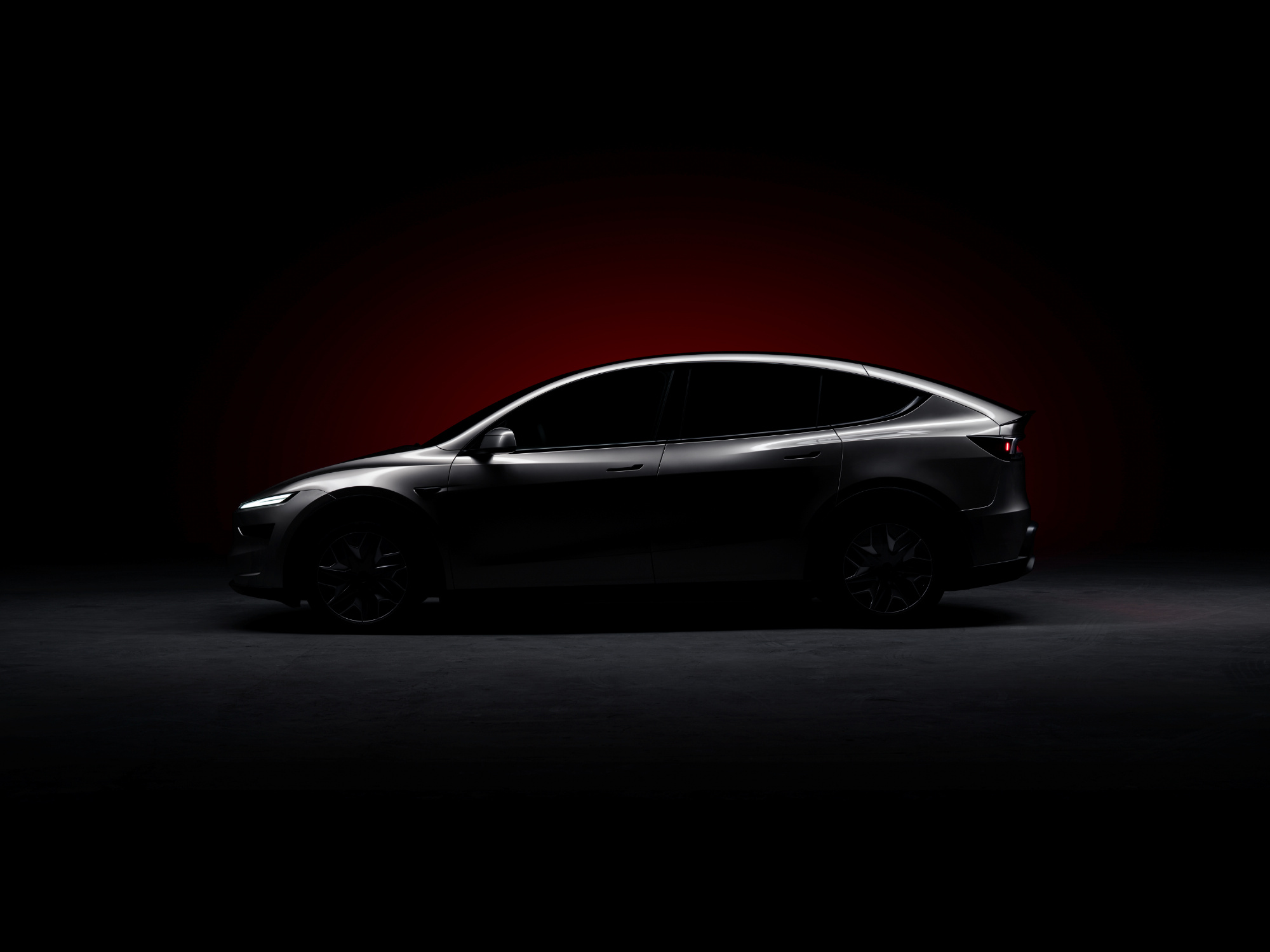
The specs of the upcoming Tesla Model Y L has appeared in new Chinese regulatory filings, revealing key specifications including a six-seat layout and an extended range of up to 751 kilometers. The variant is expected to launch later this year alongside a new long-range Model 3 variant rated at 830 kilometers.
The updates were listed on the China Ministry of Industry and Information Technology’s (MIIT) latest batch of new energy vehicle models that are eligible for vehicle purchase tax exemptions.
Model Y L to debut with larger battery, six-seat layout
Listed under the model code TSL6500BEVBA0, the Model Y L will feature dual motors producing 142 kW at the front and 198 kW at the rear. It will be powered by a 465-kilogram 82.0-kWh lithium-ion battery from LG Energy Solution, with a pack energy density of 176 Wh/kg, as noted in a CNEV Post report. The long-range crossover achieves 751 km on the lenient CLTC cycle, making it Tesla’s highest-range Model Y to date in China despite its curb weight of 2,088 kg.
The “L” designation is believed to refer to the vehicle’s larger size and seating configuration, as the new variant is listed with six seats. It builds on Tesla’s strategy to diversify offerings in the Model Y lineup, which currently includes both RWD and AWD five-seat versions.

Model 3+ breaks record with 830 km CLTC range
Alongside the Model Y L, Tesla China also registered a new rear-wheel-drive Model 3, which was designated with the model code TSL7000BEVBR1. The vehicle boasts either 800 or 830 km of range on the CLTC cycle, depending on its trim. This marks the highest range yet for any Tesla vehicle in China.
The variant will use a 448-kilogram, 78.4-kWh LG-supplied battery with an energy density of 175 Wh/kg and a peak motor output of 225 kW. The vehicle’s curb weight is listed at 1,760 kg. The model was previously identified in filings as “Model 3+,” hinting at a possible tier above the existing long-range variant, which tops out at 753 km CLTC.


News
Tesla Roadster gets new unveiling date once again
Musk announced last year that the unveiling, which initially happened back in 2018, would take place on April Fool’s Day. Initial deliveries at the 2018 event were slotted for 2020, but delays in the project, as well as prioritization of other things, continued to push the Roadster back.

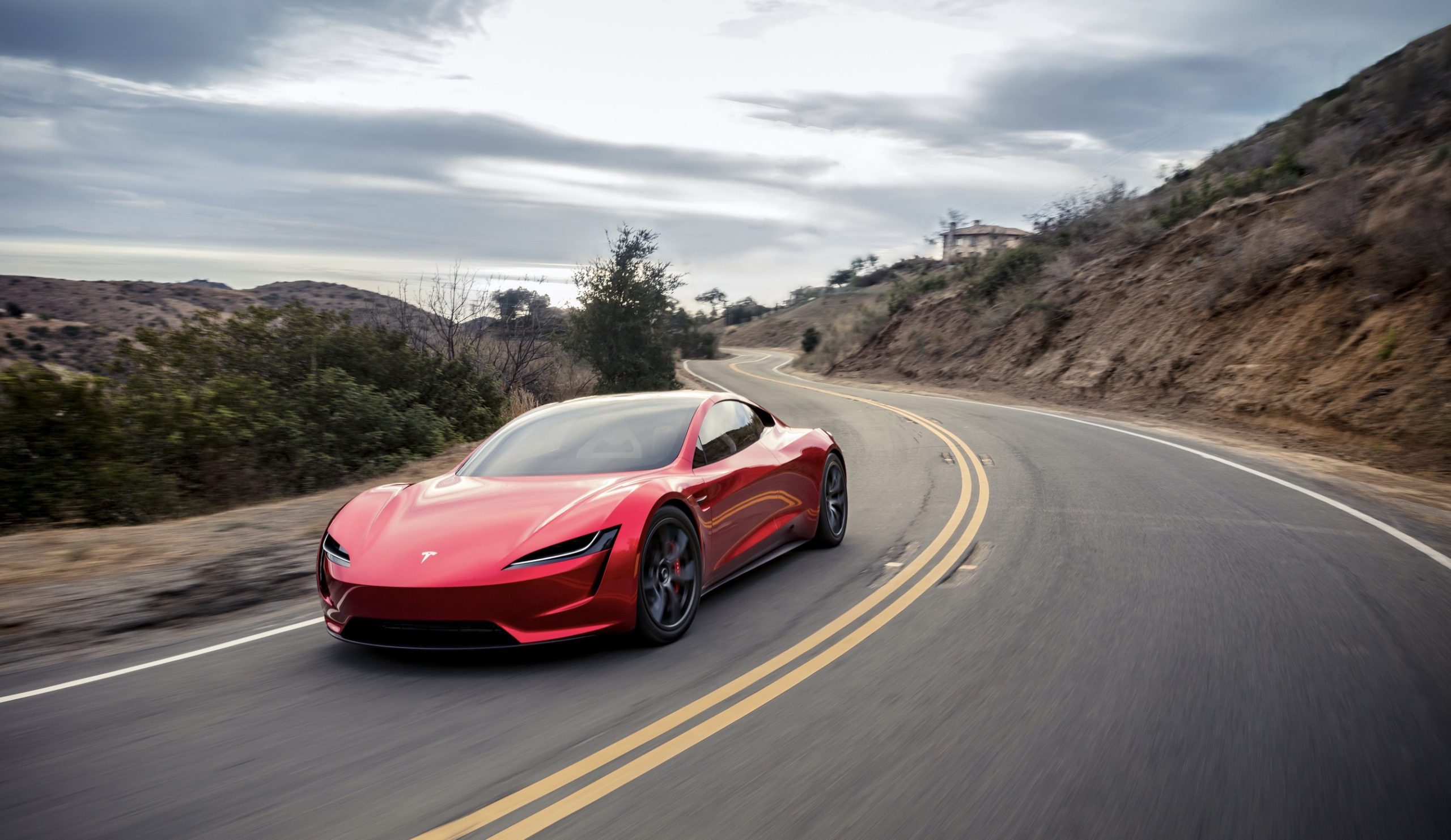
The Tesla Roadster is perhaps the most anticipated vehicle in the company’s history, but those who have been waiting anxiously for it will have to push their timelines back once again.
Tesla CEO Elon Musk has revealed that the company is once again pushing back the unveiling event that was originally planned for April 1. It will now take place “probably in late April.”
True.
New Roadster unveil probably in late April. https://t.co/NShZxpK5cI
— Elon Musk (@elonmusk) March 17, 2026
Musk announced last year that the unveiling, which initially happened back in 2018, would take place on April Fool’s Day. Initial deliveries at the 2018 event were slotted for 2020, but delays in the project, as well as prioritization of other things, continued to push the Roadster back.
There has been so much hype about the Roadster that people are right to be excited about the prospect of its existence.
Musk’s most recent rumblings about the vehicle came last Fall, when he appeared on the Joe Rogan Experience podcast, where he once again hinted the car would be able to hover for a short period.
He said:
“Whether it’s good or bad, it will be unforgettable. My friend Peter Thiel once reflected that the future was supposed to have flying cars, but we don’t have flying cars. I think if Peter wants a flying car, he should be able to buy one…I think it has a shot at being the most memorable product unveiling ever. [It will be unveiled] hopefully before the end of the year. You know, we need to make sure that it works. This is some crazy technology in this car. Let’s just put it this way: if you took all the James Bond cars and combined them, it’s crazier than that.”
Additionally, he said the vehicle would not be something that would prioritize safety. Musk said that “If safety is your number one goal, do not buy the Roadster.” It’s made for speed and excitement, not for grocery-getting.
Elon Musk just said some crazy stuff about the Tesla Roadster
As the April 1 unveiling event that was originally planned was nearing without any communication to fans, media, or anyone who would potentially be in attendance, it seemed to be pretty obvious that Tesla was not ready to pull the trigger on the event quite yet.
There could be some last-minute things to finalize, or it could be something else. One thing is for certain, though: we are not super surprised that things were moved back.
Tesla has definitely been putting some things in motion for the Roadster. A few months back, Tesla started to ramp up hiring for the Roadster, and earlier in March, it submitted a patent application for a new seat design.
Elon Musk
Tesla named by U.S. Gov. in $4.3B battery deal for American-made cells
What began as an open secret in the energy industry was confirmed by the U.S. Department of the Interior on Monday: Tesla is the buyer behind LG Energy Solution’s blockbuster $4.3 billion battery supply agreement.

What began as an open secret in the energy industry is becoming more real after the U.S. Department of the Interior named Tesla as the stakeholder in the LG Energy Solution’s blockbuster $4.3 billion battery supply agreement.
Tesla and LG Energy Solution are expanding their partnership to build a LFP prismatic battery cell manufacturing facility in Lansing, Michigan, launching production in 2027. The announcement, made as part of the Indo-Pacific Energy Security Summit results, ends months of speculation.
“American-made cells will power Tesla’s Megapack 3 energy storage systems produced in Houston, creating a robust domestic battery supply chain.”, notes a press release on the U.S. Department of the Interior website.
Tesla has long utilized China’s Contemporary Amperex Technology Co. (CATL), the world’s largest LFP battery maker, as one of its primary suppliers. That relationship made financial sense for years, considering that Chinese LFP cells were cheap, abundant, and reliable. But with escalated tariffs on Chinese imports and an increasingly growing Tesla Energy business that’s particularly reliant on LFP cells for products including its Megapack battery storage units designed for utilities and large-scale commercial projects.
The announcement of a deepened partnership between LG Energy Solution and Tesla has strategic logic for both parties. For Tesla, it secures a tariff-compliant, domestically produced battery supply for its fast-growing energy division. LGES, now producing LFP batteries in Michigan, becomes the only major supplier currently scaling U.S. production, outpacing rivals like Samsung SDI and SK On. LG Energy Solution’s Lansing plant, formerly known as Ultium Cells 3, was previously operated as a joint venture with General Motors. LGES acquired GM’s stake in May 2025 and now fully owns the site, with a production capacity of 50 GWh per year. LG Energy said the contract includes options to extend the supply period by up to seven years and boost volumes based on further consultations.
For the broader industry, the ripple effects are significant. This deal signals that domestic battery manufacturing can be financially viable and not just aspirational. Utilities, energy developers, and rival automakers will take note as American-made LFP supply becomes a competitive reality rather than a distant promise.
For consumers, the benefits will take time but are real. A more resilient, U.S.-based supply chain means fewer price shocks from trade disputes, more stable Megapack availability for the grid storage projects that reduce electricity costs, and long-term downward pressure on energy storage prices as domestic production scales.
Deliveries are set to begin in 2027 and run through mid-2030, and as grid storage demand accelerates, reliable, US-made battery supply is no longer a future ambition. It is becoming a core requirement of the country’s energy strategy.
News
Tesla plans for largest Australian Supercharger yet
The company has a 20-stall site in the city of Goulburn in New South Wales, which is an ideal location for trips between Sydney and Canberra, two major cities.
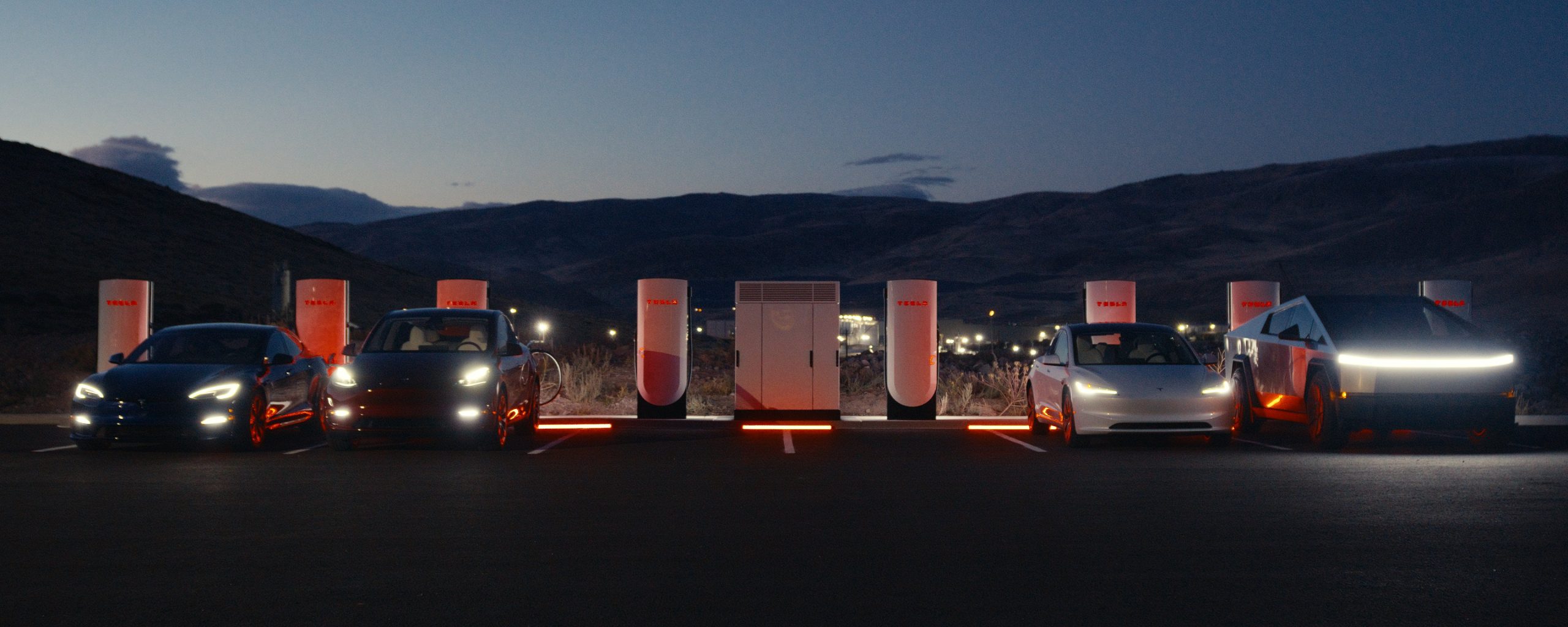
Tesla is planning to build its largest Supercharger in Australia yet, expanding on the infrastructure the company has built for electric vehicles.
The company has a 20-stall site in the city of Goulburn in New South Wales, which is an ideal location for trips between Sydney and Canberra, two major cities.
However, according to The Driven, a new Australian Supercharger is on the way, and it is going to be the biggest in the country, accounting for more than 25 stalls total. They will likely be V4 Superchargers, Tesla’s fastest piles that enable some serious range for cars that will plug in.
@LudicrousFeed Before I forget, one for tonight. Highway service centre near Mackay with 25+ charging stalls!
Website has a couple of video renders too.https://t.co/WkuklxE7tk pic.twitter.com/BxKQ8bDUZ7— ⚡chuqtas (@chuqtas) March 11, 2026
Tesla is operating 148 active Supercharger sites in Australia, with 80 of those being available to non-Tesla EVs as a part of the company’s initiative to make things accessible for all electric vehicle owners.
The expansion of Tesla Superchargers is welcome for all EV owners, especially as there are so many automakers that have access to the network. It is widely reliable and extremely dependable; it is tough to find a Supercharger location that is completely out of service.
The opening of the stalls will be welcome for the Tesla owners of Australia, especially as the Model Y continues to be a major contributor to the company’s prowess in the market.
Tesla’s sales performance in Australia showed a mixed but challenging picture in 2025, with the company delivering 28,856 new vehicles, marking a significant 24.8% decline from 38,347 units in 2024.
This represented the brand’s largest annual drop on record and the second consecutive year of decline, amid intensifying competition from Chinese EV makers like BYD and shifting buyer preferences toward SUVs. The Tesla Model Y remained a standout performer and Australia’s best-selling electric vehicle, with 22,239 deliveries, up 4.6percent year-over-year, accounting for about 77 percent of Tesla’s total sales.
The mid-year launch of the updated “Juniper” Model Y helped sustain momentum in the popular mid-size SUV segment.
In contrast, the Model 3 sedan struggled sharply, plummeting 61.3 percent to just 6,617 units, as consumers favored SUVs and faced growing options in the sedan category.
Despite the overall dip, Tesla held onto leadership in the EV segment, capturing roughly 28 percent of the BEV market. Australia’s EV market grew robustly, surpassing 156,000 sales and reaching 13 percent market share, up 38.7 percent from 2024, highlighting strong broader adoption even as Tesla faced headwinds.
Early 2026 data suggests a rebound, with EV sales nearly doubling year-over-year in February and the Model Y showing strong gains, positioning Tesla for potential recovery amid ongoing competition.

Tesla Roadster gets new unveiling date once again

Tesla named by U.S. Gov. in $4.3B battery deal for American-made cells


