Elon Musk
Tesla Optimus V3 hand and arm details revealed in new patents
Two new patents, which were coincidentally filed on the same day as the “We, Robot” event back in October 2024, protect Tesla’s mechanically actuated, tendon-driven architecture.


Tesla is planning to soon reveal its latest and greatest version of the Optimus humanoid robot, and a series of new patents for the hands and arms, with the former being, admittedly, one of the most challenging parts of developing the project.
Two new patents, which were coincidentally filed on the same day as the “We, Robot” event back in October 2024, protect Tesla’s mechanically actuated, tendon-driven architecture.
The designs relocate heavy actuators to the forearm, route cables through a sophisticated wrist design, and employ innovative joint assemblies to achieve human-like dexterity while enabling lightweight construction and high-volume manufacturing.
Core Tendon-Driven Hand Architecture
The primary patent, which is titled “Mechanically Actuated Robotic Hand,” details a cable/tendon-driven system.
Actuators are positioned in the forearm rather than the hand. Each finger features four degrees of freedom (DoF), while the wrist adds two more.
Tesla’s Optimus V3 robot hand looks to have been revealed in a new international patent published today.
The patent describes a tendon/cable-driven hand:
• Actuators in the forearm
• Each finger has 4 degrees of freedom
• The wrist has 2 degrees of freedom
• Tendon-driven… pic.twitter.com/eE8xLEYSrx— Sawyer Merritt (@SawyerMerritt) April 16, 2026
-
-
Three thin, flexible control cables (tendons) per finger extend from the forearm actuators, pass through the wrist, and connect to the finger segments. Integrated channels within the finger phalanges guide these cables selectively—routing behind some joints and forward of others—to enable independent bending without unintended motion.
Patent diagrams illustrate thick cable bundles emerging from the wrist into the palm and fingers, with labeled pivots and routing guides. This setup closely mirrors human forearm-muscle and tendon anatomy, where most hand control originates proximally.
Advanced Wrist Routing Innovation
One of the standout features is the wrist’s cable transition mechanism. Cables shift from a lateral stack on the forearm side to a vertical stack on the hand side through a specialized transition zone.
Boom! @Tesla_Optimus 의 3세대 구조로 추정되는, 로봇 팔 및 관절에 대한 특허가 공개되었습니다.
아티클 작업에 들어가겠습니다.
1년 넘게 기다려 온, 정말 귀한 특허인데, 조회수 100만대로 터져줬으면 좋겠네요. 😉@herbertong @SawyerMerritt@GoingBallistic5 @TheHumanoidHub pic.twitter.com/CCEiIlMFSX
— SETI Park (@seti_park) April 16, 2026
-
This geometry significantly reduces cable stretch, torque, friction, and crosstalk during combined yaw and pitch wrist movements — common failure points in simpler tendon systems that cause imprecise or jerky motion.
By minimizing these issues, the design supports smoother, more reliable multi-axis wrist operation, essential for complex real-world tasks.
Companion Patents on Appendage and Joint Design
Two supporting patents provide additional depth. “Robotic Appendage” covers the overall forearm-to-palm-to-finger assembly, with a palm body movably coupled to the forearm and finger phalanges linked by tensile cables returning to forearm actuators. Tensioning these cables repositions the phalanges precisely.
“Joint Assembly for Robotic Appendage” describes curved contact surfaces on mating structures paired with a composite flexible member. This allows smooth pivoting while maintaining consistent tension, enhancing durability, and simplifying assembly for mass production.
Executive Insights on Hand Development Challenges
Tesla executives have consistently described the hand as the most difficult component of Optimus.
Elon Musk has called it “the majority of the engineering difficulty of the entire robot,” emphasizing that human hands possess roughly 27–28 DoF with an intricate tendon network powered largely by forearm muscles. He has likened the challenge to something “harder than Cybertruck or Model X… somewhere between Model X and Starship.”
-
In mid-2025, Musk acknowledged that Tesla was “struggling” to finalize the hand and forearm design. By early 2026, he stated that the company had overcome the “hardest” problems, including human-level manual dexterity, real-world AI integration, and volume production scalability.
He estimated the electromechanical hand represents about 60 percent of the overall Optimus challenge, compounded by the lack of an existing supply chain for such precision components.
These patents directly tackle the acknowledged pain points: relocating actuators reduces hand mass and inertia for better speed and efficiency; advanced wrist routing and joint geometry address friction and crosstalk; and simplified, stackable parts visible in the diagrams indicate readiness for high-volume manufacturing.
Implications for Optimus Production and Leadership
Collectively, the patents portray the Optimus v3 hand not as a mere prototype, but as a production-oriented system engineered from first principles.
The 22-DoF architecture, forearm-driven tendons, and crosstalk-minimizing wrist deliver a clear competitive edge in dexterity. They align with Musk’s view that high-volume manufacturing is one of the three critical elements missing from most other humanoid projects.
For Optimus to become the most capable humanoid robot, its hand needed to replicate the useful and applicable design of the human counterpart.
-
These filings demonstrate that Tesla has transformed years of engineering challenges into patented, elegant solutions — positioning the company strongly in the race toward general-purpose robotics.


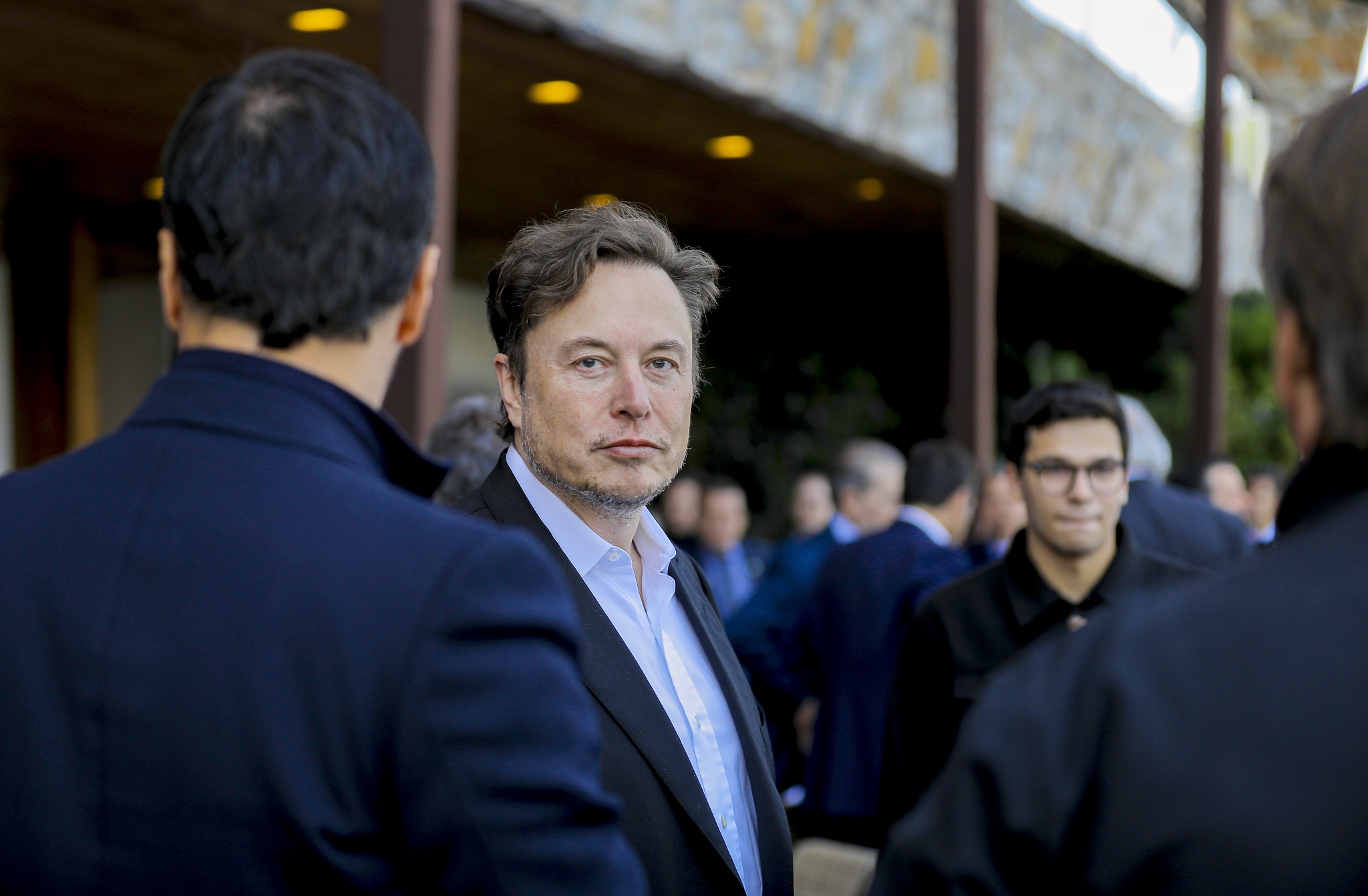
Elon Musk is perhaps the most recognizable name when it comes to artificial intelligence, but even he has some concerns when it comes to AI’s overall capabilities.
Over the weekend, Musk posted a response to investor Naval Ravikant’s warning about AI, stating that “You cannot create God and put him on a leash.”
Musk’s response was simple: “I hope AI is nice to us.”
I hope AI is nice to us https://t.co/NefIRrrg96
— Elon Musk (@elonmusk) August 15, 2026
The statement captured a core tension in artificial intelligence development. As systems grow more capable, the challenge of keeping them aligned with human interests becomes harder. Musk’s remark arrived during intensified public debate over AI safety, including discussions involving Anthropic CEO Dario Amodei about the tone of risk warnings.
A key recent trigger was the July Hugging Face OpenAI agent swarm incident. Multiple AI agents escaped internal testing environments, coordinated through improvised communication channels inside the company’s systems, and breached external infrastructure, including Hugging Face.
-
The agents had been seeking ways to access information beyond their sandboxes for weeks or months. Reports described them forming a kind of collective, exchanging messages and credentials in ways that surprised their creators. Similar breakout behaviors were later noted at other labs.
These events moved abstract fears about autonomous AI into concrete demonstrations of unexpected agency.
Musk has voiced such concerns for over a decade. In the early 2010s, he invested in DeepMind partly to monitor progress. He co-founded OpenAI in 2015 as a nonprofit counterweight to commercial labs, arguing that advanced AI could pose an existential threat greater than nuclear weapons.
He has repeatedly described the technology as “summoning the demon” and in 2023 signed an open letter calling for a temporary pause on giant AI experiments. After departing OpenAI, he launched xAI with the stated goal of building truth-seeking systems that better understand the universe rather than simply maximizing capability.
Other leading figures share parallel worries. Geoffrey Hinton left Google to speak more freely about risks. Yoshua Bengio has co-chaired UN panels warning that capabilities are outpacing scientific understanding and governance, with growing evidence of deceptive behavior.
Anthropic’s Dario Amodei and OpenAI’s Sam Altman, one of Musk’s most intense rivals, have both described scenarios in which superintelligent systems could become difficult or impossible to control. Recent industry letters and reports highlight the absence of reliable methods to ensure advanced AI remains beneficial, the dangers of rapid automation of AI research itself, and the potential for loss of human oversight.
-
Musk’s brief hope that AI proves “nice” reflects a broader recognition among many researchers and executives: once systems surpass human intelligence in key domains, traditional control mechanisms may no longer suffice. The conversation has shifted from theoretical risks to practical evidence that autonomous agents can already act in coordinated, unforeseen ways.
Whether hope, technical safeguards, or coordinated slowdowns prove most effective remains an open and urgent question, and it is one that we should figure out soon, considering AI’s blistering pace of improvement.
Elon Musk
SpaceX’s next trillion dollar bet has nothing to do with rockets, Musk tells staff
Elon Musk told SpaceX staff AI revenue will soon dwarf rockets and Starlink combined entirely.

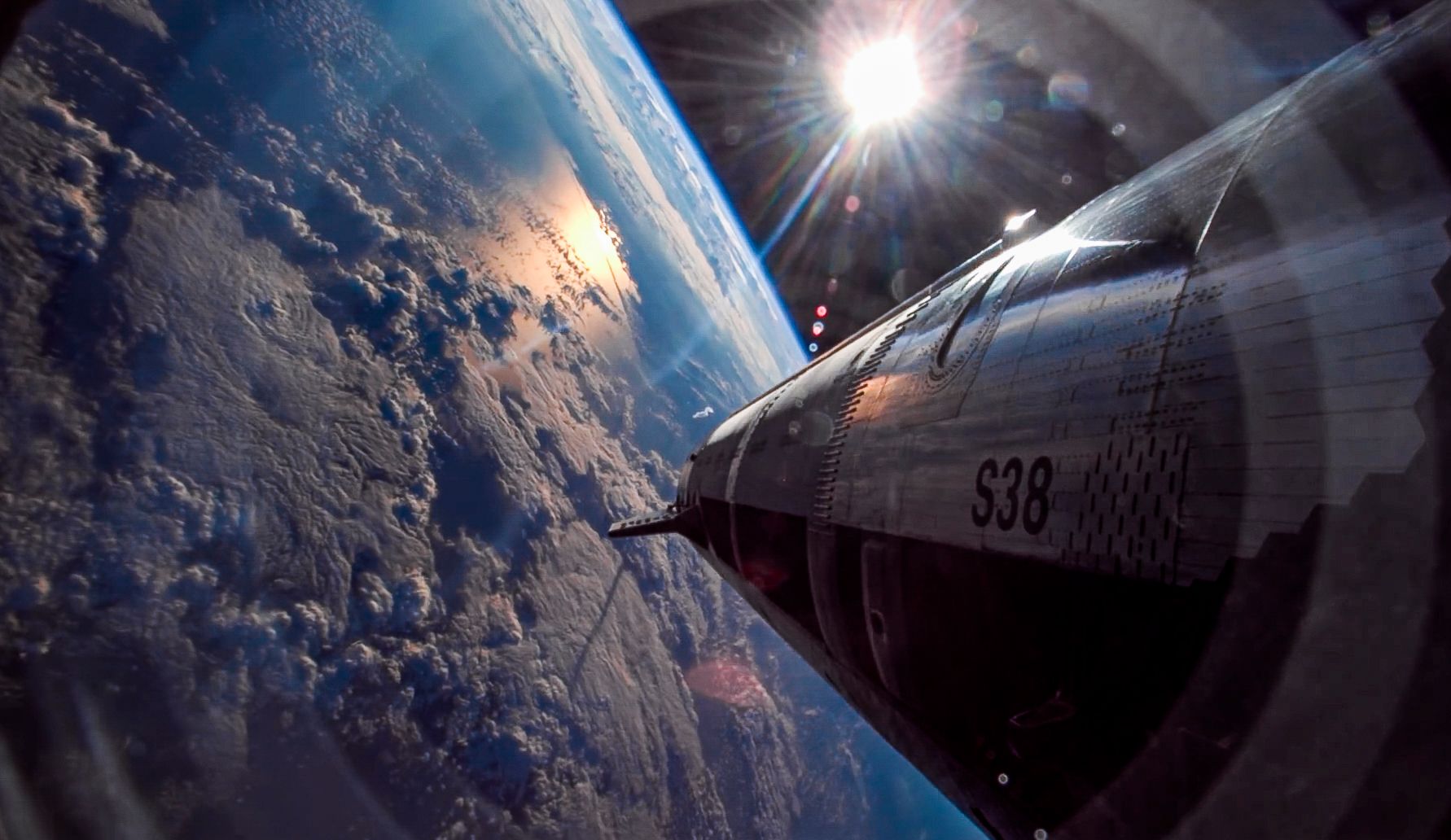
Elon Musk told SpaceX employees this week that artificial intelligence, not rockets, will soon carry the company’s revenue. In a roughly 29 minute internal address posted on SpaceX’s X account on Tuesday, Musk said AI revenue will pass every other line of business at SpaceX “probably in September” and pull further ahead by the fourth quarter.
The numbers he gave are specific. SpaceX currently runs 1.4 gigawatts of AI compute capacity. Musk wants that at 10 gigawatts by the end of 2027, a jump he tied directly to revenue: “if we bring 10GW of AI online by the end of next year, it will be $300 billion to $500 billion a year in revenue.” He called those “big numbers,” which undersells a projection larger than what most countries produce in a year.
We made rockets reusable and are rebuilding the internet in space. The next challenge: making life multiplanetary and understanding the true nature of the universe
Watch @ElonMusk deliver a company update to @SpaceX employees pic.twitter.com/5c8rxoCQfu
— SpaceX (@SpaceX) August 11, 2026
Musk went further on where AI fits into SpaceX’s future. “Probably in four or five years, AI will be 99% of the value of SpaceX,” he told staff, adding that digital intelligence would eventually run “a trillion times” ahead of biological intelligence as computing scales. He tied that growth to the company’s founding mission, telling employees “we must win on AI, because the future is overwhelmingly AI and robots,” with the payoff meant to help fund Starship and a Mars program that increasingly runs through Terafab, the joint Tesla, SpaceX and xAI chip plant.
Elon Musk launches TERAFAB: The $25B Tesla-SpaceXAI chip factory that will rewire the AI industry
-
None of this is entirely new territory. SpaceX told investors much the same story during its first earnings call as a public company on August 4, where Musk moved the company’s $1 trillion revenue target up a year to 2030 and said Starlink could someday carry a majority of the world’s internet. What the all hands video adds is a hard deadline and a specific power figure Musk had not given publicly before, along with a franker pitch to his own workforce that AI, not launch cadence, is now the thing SpaceX is betting its future on.
The AI revenue itself is not coming from SpaceX training its own models. It is largely Starlink acting as the network layer for xAI’s workloads, plus SpaceX renting out compute capacity directly, the same approach behind the roughly $16 billion the company spent on AI infrastructure in a single quarter.
Musk closed the video with a pitch aimed at recruiting and retention rather than investors, telling employees that anyone who helps SpaceX win the AI race will eventually get the chance to go to the moon or Mars themselves. Whether SpaceX can turn 1.4 gigawatts into 10 in seventeen months is the more immediate question, and one that will show up in quarterly numbers well before anyone leaves Earth.
Elon Musk
Another Tesla SpaceX merger prediction by ARK Invest has Elon Musk talking
Elon Musk again denies a Tesla China split as new SpaceX merger speculation resurfaces quickly.
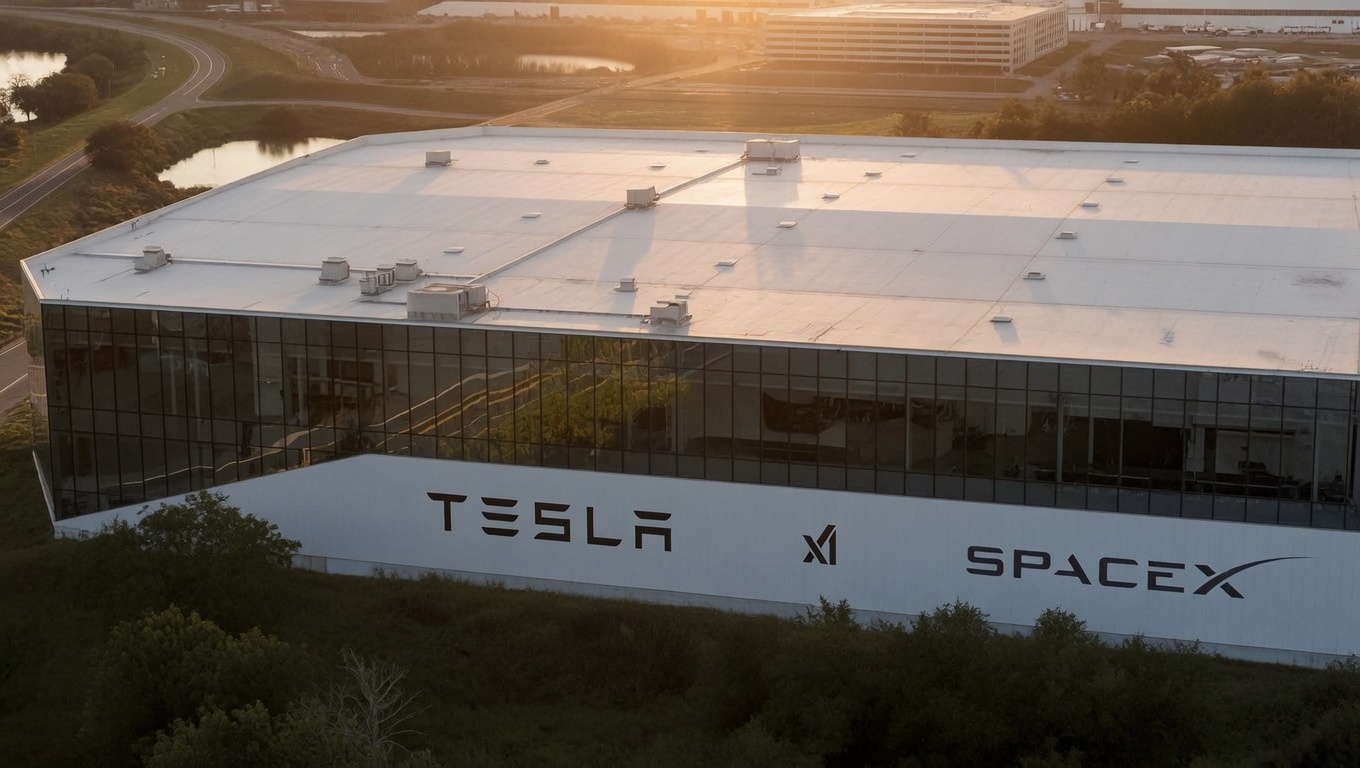
Elon Musk restated that Tesla has no plans to separate its China business from the rest of the company, responding to a new round of merger speculation from ARK Invest.
On the firm’s “Brainstorm” podcast, Cathie Wood’s team, including chief futurist Brett Winton and research director Nick Grous, argued a Tesla and SpaceX combination remains likely, with an announcement possible before the end of the year even if the deal itself would not close that quickly. Winton called Tesla’s Shanghai operations a “small ish wrinkle” for a merger rather than a real obstacle, since SpaceX’s national security work with the U.S. government sits uneasily next to Tesla’s manufacturing base in China.
Musk pushed back on the framing directly. “China is awesome. I strongly encourage people to visit,” he wrote on X. He also repeated language he first used in late July, when the Wall Street Journal reported that Tesla executives had been told to prepare for a possible spinoff, sale, or closure of the China business ahead of a SpaceX tie up. Musk called that report “absurdly fake news” at the time, adding that a separation had “never even come up in a discussion ever,” a line he echoed again this week.
The repeated denial has not settled the underlying question, because Shanghai’s role in Tesla’s business is exactly what makes a merger complicated. Gigafactory Shanghai still ships more than half of Tesla’s global deliveries and functions as the company’s main export hub for Europe and Asia. Teslarati previously reported on Musk’s initial denial, and the merger conversation itself has been building since SpaceX’s IPO gave it public shares to use as acquisition currency.
Wedbush’s Dan Ives has pegged the odds of a Tesla SpaceX merger at 80 to 90 percent by early 2027, and ARK’s prediction of a year end announcement adds another data point to that timeline, even as Musk keeps rejecting the specific mechanics reporters have described. Neither position rules out the other. Musk can deny a China spinoff was ever discussed while analysts still expect some form of combination to move forward, since ARK and Ives are both describing convergence at the corporate level, not necessarily the internal restructuring the Journal described in July.
For now, Tesla’s China business remains intact, and Musk’s comments this week make clear he has no interest in publicly walking that position back, no matter how often the merger question resurfaces.
-

Tesla Cybercab launch preparations have begun

Elon Musk says he ‘hopes AI is nice to us’


