News
Tesla Robotaxi was just spotted in a new state for the first time
The company is still attempting to expand and has explicitly stated that it plans to offer rides in Nevada, Arizona, and Florida in the near future. However, a pair of Robotaxi mules, fitted with LiDAR equipment for ground truth validation, was spotted in a new region for the first time.

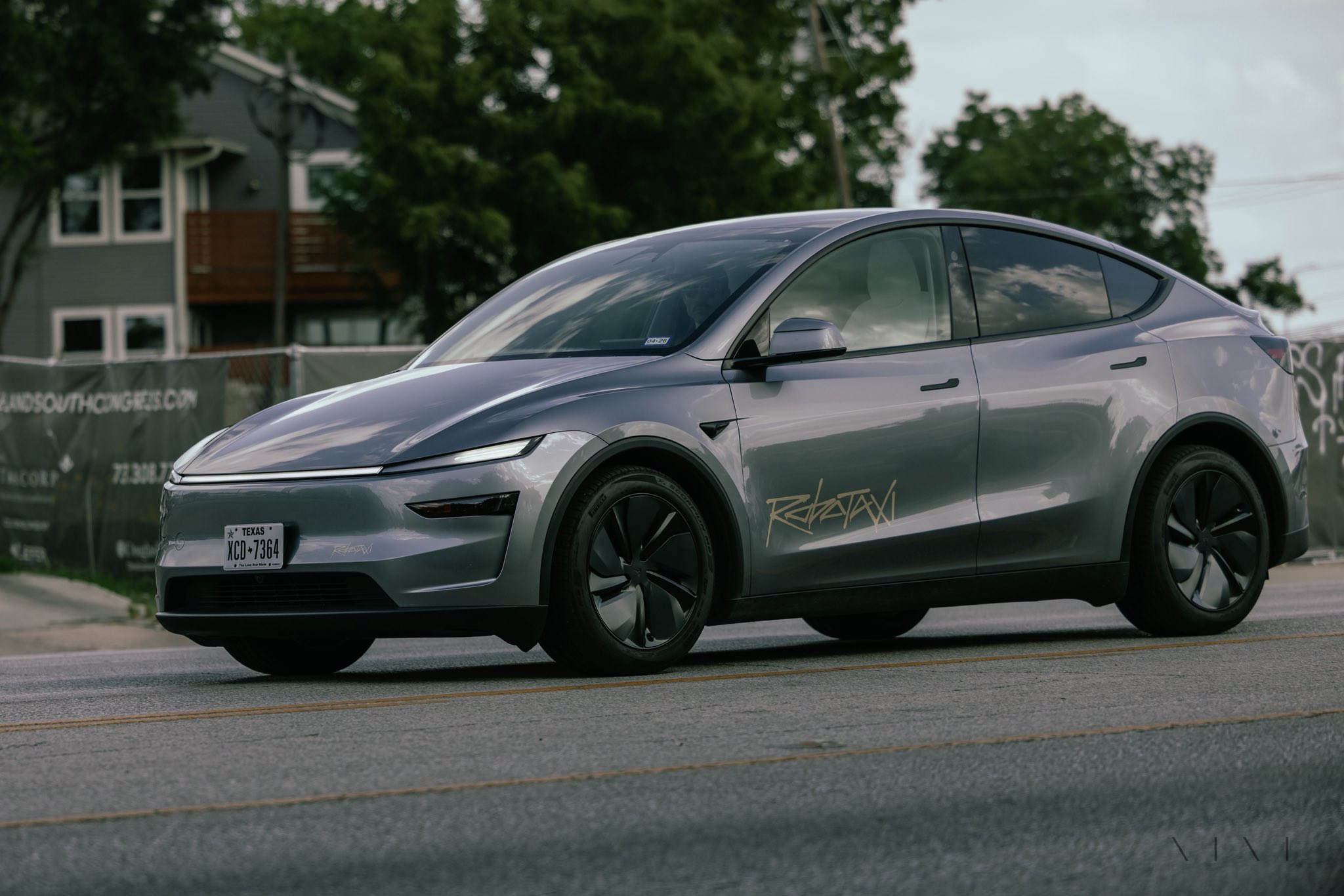
Tesla Robotaxi mules were spotted in a new state for the first time as the company plans to expand the ride-sharing service to new areas of the United States in the coming months.
Tesla is offering Robotaxi rides in Austin already, where nobody is present in the driver’s seat except for on freeway routes. In California, Tesla refers to its platform as a ride-hailing suite, and a “Safety Monitor” is present in the driver’s seat at all times, but the vehicle operates on Full Self-Driving.
The company is still attempting to expand and has explicitly stated that it plans to offer rides in Nevada, Arizona, and Florida in the near future. However, a pair of Robotaxi mules, fitted with LiDAR equipment for ground truth validation, was spotted in a new region for the first time.
Over the weekend, Tesla Robotaxi mules were spotted in Enola, Pennsylvania, just about ten minutes from downtown Harrisburg:
🚨 Enola is about 10 minutes from Harrisburg, the State Capitol
Interesting tidbit of information as Tesla is testing Robotaxi close to PA’s legislators https://t.co/5rDlcYrV8w
— TESLARATI (@Teslarati) November 17, 2025
Enola is situated to the northwest of Harrisburg, Pennsylvania’s State Capitol. Interestingly, you’d expect Tesla to be testing these types of vehicles in other, more populated areas; Philadelphia is about two hours East, and Pittsburgh is about three hours west. State College is about an hour North of Enola.
Looking at the location of where the vehicles were spotted tells an interesting story, as Enola, located right outside of the State Capitol, could be a move to nudge legislators to consider looking at some of the laws that deal with driverless and autonomous vehicle operation.
Pennsylvania’s Act 130 of 2022 and subsequent guidelines permit the testing of driverless vehicles in the Commonwealth, but PennDOT requires a permit from Tesla or any other company that wants to operate a ride-hailing service in PA.
It’s also important to note that the cars could have simply been stopping through, as they were spotted at a Supercharger location along Interstate 81, which spans from Tennessee to New York.
It is not to say the vehicles are testing along the entire route, but likely a segment of it. The fact that they were spotted in Pennsylvania does bode well for Tesla’s expansion efforts moving forward.
@teslarati Tesla Full Self-Driving yields for pedestrians while human drivers do not…the future is here! #tesla #teslafsd #fullselfdriving ♬ 2 Little 2 Late – Levi & Mario


News
Tesla Cybercab production ignites with 60 units spotted at Giga Texas
Designed exclusively for unsupervised Full Self-Driving, the Cybercab promises to deliver safe, affordable, on-demand mobility without human drivers. Early units with temporary controls allow engineers to refine hardware and software in controlled settings before full autonomous fleets hit the roads.
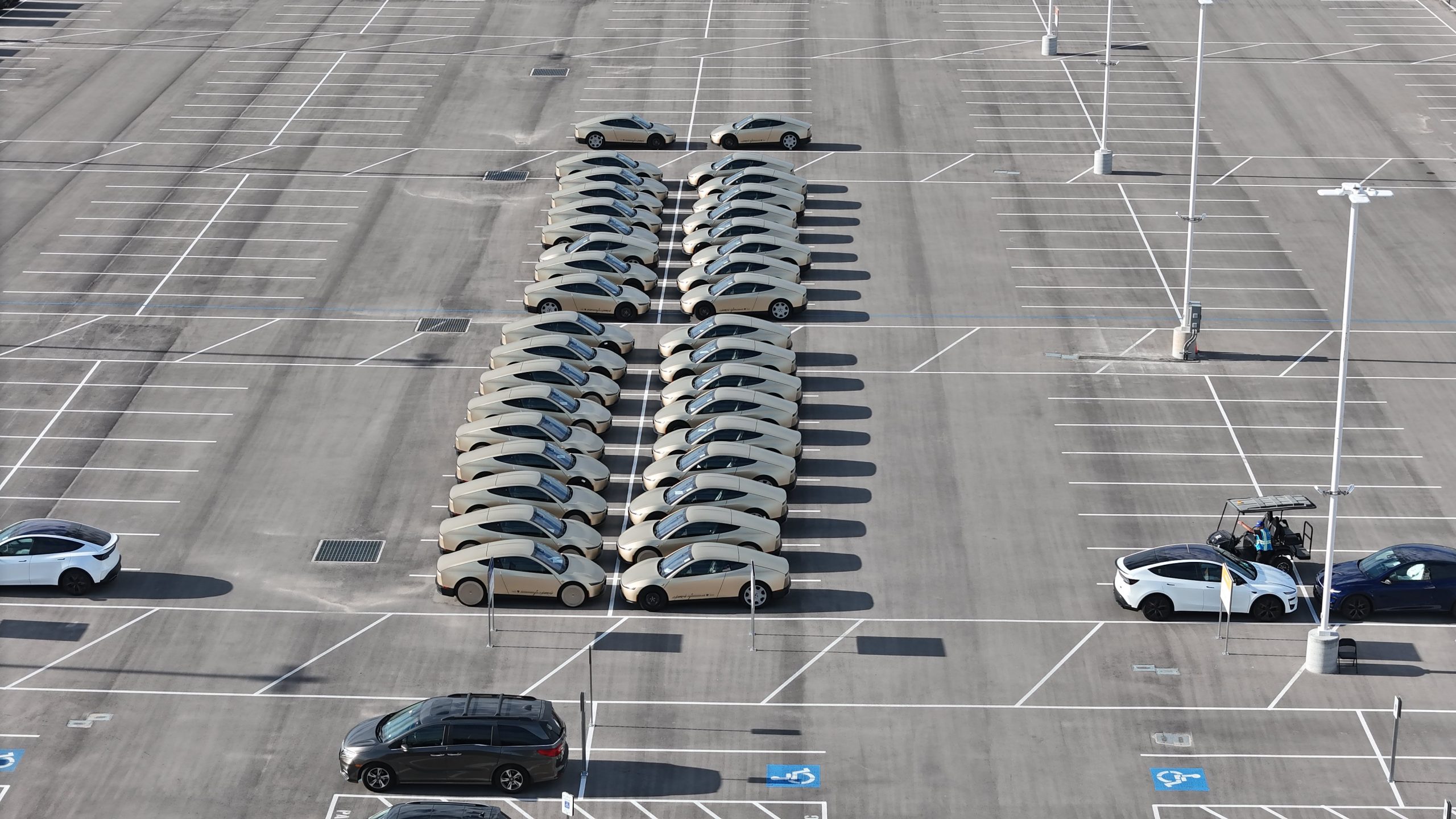
Tesla Cybercab production at Giga Texas seems to have ignited, as 60 units were spotted outside of the production facility on Wednesday, with speculation hinting the all-electric ride-hailing vehicle could be headed to the lineup sooner rather than later.
Interestingly, they were also spotted with steering wheels, which Tesla said the car would be void of.
Giga Texas observer and drone operator Joe Tegtmeyer shared on X a new post that revealed approximately 60 Cybercabs parked in two organized groups in the factory’s outbound lot—the largest concentration observed to date.
Happy 8 April (Wednesday) at Giga Texas, especially for those wanting an update on Cybercabs … I saw about 60 of them in two groups in the outbound lot today … the largest grouping yet!
Also, looks like at least some of these have white seats and most still have clearly… pic.twitter.com/mZbKH96bA7
— Joe Tegtmeyer 🚀 🤠🛸😎 (@JoeTegtmeyer) April 8, 2026
Tegtmeyer noted white seats inside several vehicles and clearly visible steering wheels on most. These are not yet the final steering-wheel-free production versions unveiled in 2024, but early units are likely undergoing validation testing for new features and real-world robotaxi operations across the country.
The timing could not be more symbolic. Tesla has consistently affirmed that mass manufacturing of the Cybercab would begin this month.
CEO Elon Musk has reiterated the April 2026 target multiple times, emphasizing that while initial output will be slow, following the classic S-curve of new-vehicle ramps, the Giga Texas line is being prepared to produce hundreds of units per week.
Tesla CEO Elon Musk outlines expectations for Cybercab production
The first Cybercab already rolled off the line in February, but April marks the official shift to volume production of this purpose-built, pedal- and steering-wheel-free autonomous vehicle.
These 60 Cybercabs signal far more than parked prototypes. They represent tangible proof that Tesla is executing on its ambitious robotaxi roadmap.
Designed exclusively for unsupervised Full Self-Driving, the Cybercab promises to deliver safe, affordable, on-demand mobility without human drivers. Early units with temporary controls allow engineers to refine hardware and software in controlled settings before full autonomous fleets hit the roads.
As production scales, Giga Texas, already home to Cybertruck production, will become the epicenter of Tesla’s autonomous revolution, targeting millions of vehicles annually in the years ahead.
For Tesla and its investors, this sighting underscores manufacturing excellence and timeline discipline. It counters skepticism about the company’s ability to deliver on next-generation vehicles amid a competitive autonomous landscape.
Broader implications are profound: lower transportation costs, reduced emissions, and safer roads as robotaxis proliferate. Musk’s vision of a future where Cybercabs operate 24/7, generating revenue for owners and riders alike, is now visibly underway.
With mass production officially ramping in April, today’s images are not just a snapshot of parked vehicles; they are the first frames of a mobility transformation. Tesla is not only meeting its commitments; it is accelerating toward an era where autonomy reshapes daily life. The Cybercab era has begun.
News
Tesla makes major rebound in European market with 4x in registrations
Tesla delivered a striking performance in Germany’s automotive market in March 2026, with new vehicle registrations more than quadrupling year-over-year, according to official data from the German Federal Motor Transport Authority (KBA).
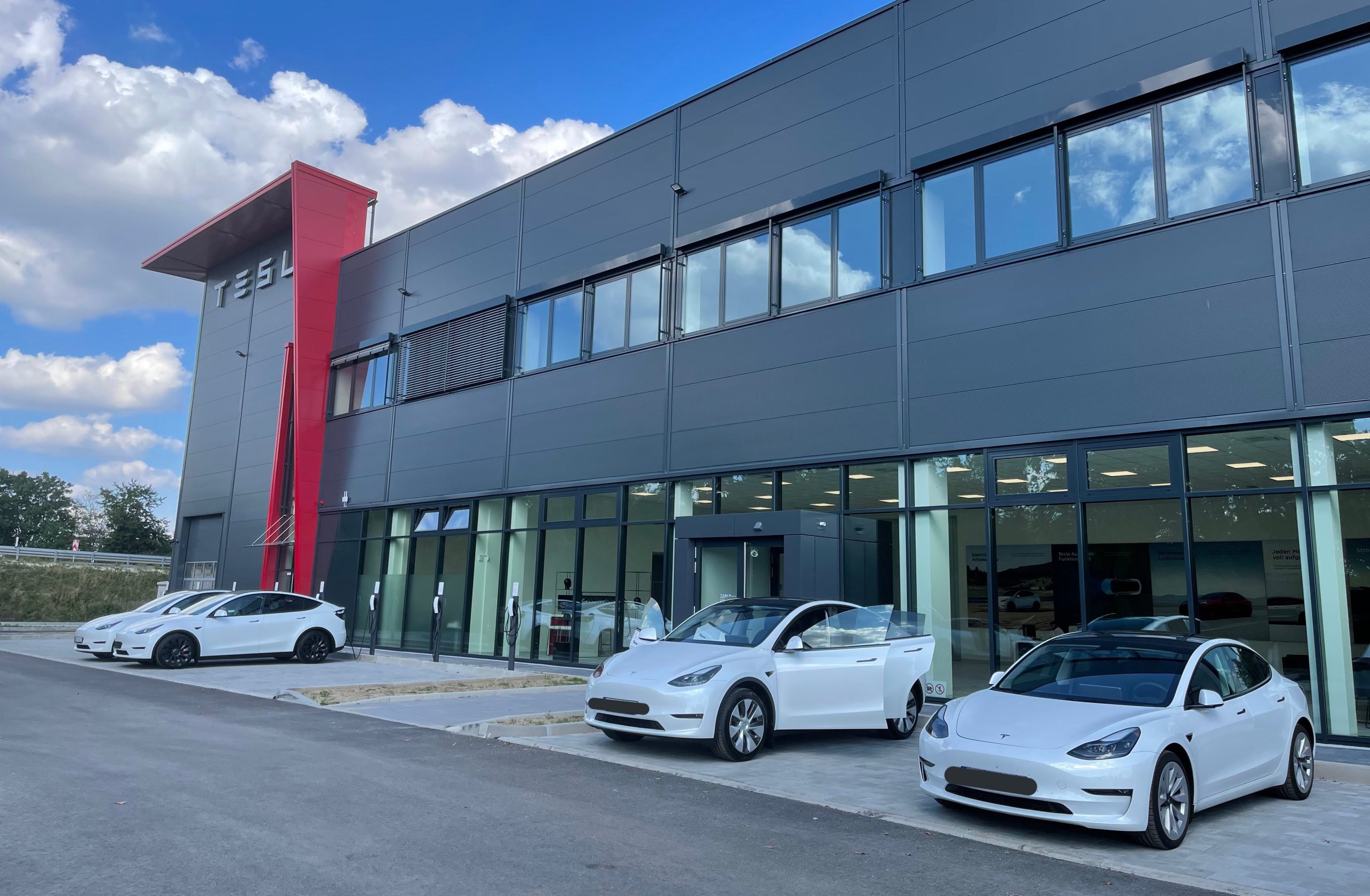
Tesla headlines will have you believe the company is dead to rights in Germany, selling nearly no cars, and stating consumers are more interested in other brands not run by CEO Elon Musk.
However, the latest data from Germany proves this might be a dying narrative.
Tesla delivered a striking performance in Germany’s automotive market in March 2026, with new vehicle registrations more than quadrupling year-over-year, according to official data from the German Federal Motor Transport Authority (KBA).
Newly registered Tesla vehicles jumped 315.1 percent to 9,252 units, marking the company’s strongest March on record in the country and signaling a sharp rebound after earlier challenges in the European market.
A big 4x from Tesla in Germany in March in vehicle registrations
Don’t let anyone tell you Tesla is dead in Europe https://t.co/24hyus1xTF pic.twitter.com/205yPwncRv
— TESLARATI (@Teslarati) April 7, 2026
The March surge accounted for roughly 72 percent of Tesla’s first-quarter total in Germany. Q1 registrations reached 12,829 vehicles, a 160 percent increase from the same period a year earlier. For context, the implied March 2025 figure was approximately 2,229 units—one of the brand’s weaker months in recent years.
These numbers underscore Tesla’s ability to capitalize on renewed demand in Europe’s largest car market, where the company had faced softening sales throughout much of 2025 amid heightened competition and broader economic pressures.
Germany’s overall new passenger car market also expanded in March, with 294,161 registrations—a 16 percent rise from the prior year. Battery-electric vehicles (BEVs) performed even more robustly, climbing 66.2 percent to 70,663 units and representing about 24 percent of all new car registrations.
Tesla’s 9,252 deliveries captured approximately 13.1 percent of the BEV segment for the month and roughly 3.1 percent of the total new car market, highlighting its continued leadership among pure-play electric brands despite growing competition from both domestic German manufacturers and Chinese entrants like BYD, which saw its own registrations surge 327.1 percent to 3,438 units.
The strong showing comes as Germany’s EV incentives and infrastructure investments continue to support adoption. Tesla’s lineup, anchored by the Model Y and Model 3, appears to have resonated with buyers seeking premium electric options.
Industry observers note that the concentrated March registrations, accounting for the bulk of the quarter, may reflect strategic inventory management, competitive pricing adjustments, or pent-up demand following a slower start to 2026.
This performance provides a much-needed bright spot for Tesla in Europe, where the brand had seen market share erosion in prior periods.
Tesla Model Y outsells all EV rivals in Europe in 2025 despite headwinds
With Q1 2026 registrations up significantly, Tesla has demonstrated resilience in a market that registered 699,404 new passenger cars for the quarter, up 5.2 percent overall. As the year progresses, sustained momentum in Germany could bolster Tesla’s European outlook, particularly if broader BEV growth persists amid evolving policy support and technological advancements.
The March 2026 data from the KBA paints a picture of Tesla’s renewed strength in Germany: a fourfold monthly leap, record quarterly gains, and a solid foothold in an expanding EV segment.
Whether this marks the beginning of a sustained recovery or a seasonal peak remains to be seen, but the numbers affirm Tesla’s enduring appeal in one of the world’s most competitive automotive landscapes.
Elon Musk
Elon Musk reveals unfortunate truth of Tesla Full Self-Driving development
In a candid reply to a dramatic video of Tesla’s Full Self-Driving (FSD) system averting disaster, Elon Musk laid bare a harsh reality facing autonomous vehicle technology.
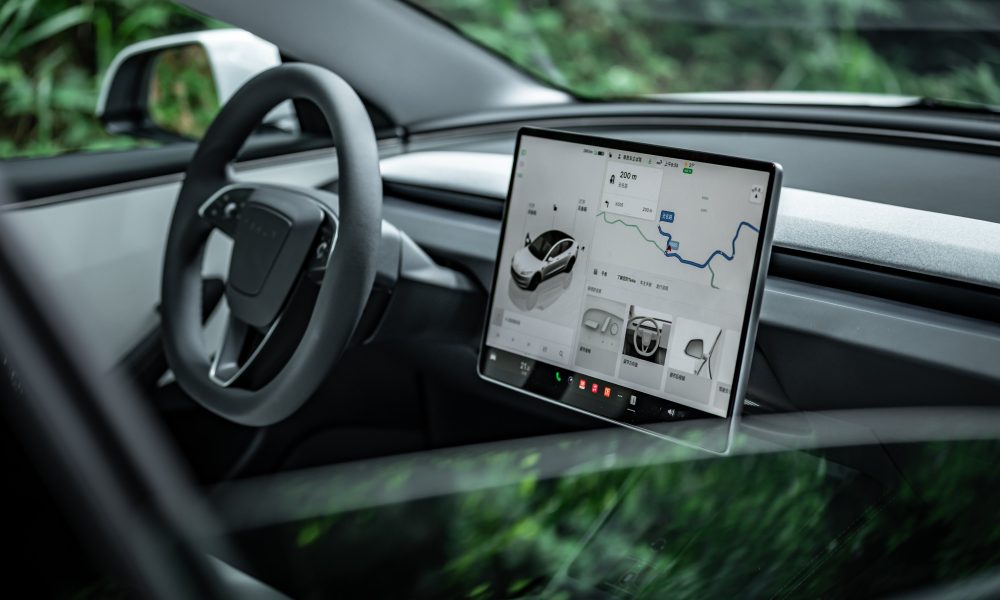
Tesla’s Full Self-Driving suite is one of the most significant technological developments in terms of passenger travel in decades, but it is not all sunshine and rainbows, even with major strides in safety, CEO Elon Musk revealed.
In a candid reply to a dramatic video of Tesla’s Full Self-Driving (FSD) system averting disaster, Elon Musk laid bare a harsh reality facing autonomous vehicle technology.
The clip shows a Model 3 traveling at over 65 mph on a foggy, rain-soaked highway when a pedestrian suddenly steps into traffic.
Full Self-Driving instantly detects the threat and swerves safely, preventing what could have been a fatal collision for both the pedestrian and the driver’s cousin.
Musk’s response was unequivocal:
“Tesla self-driving saves a lot of lives – the statistics are unequivocal. That doesn’t mean it’s perfect, of course.” Even with a projected 10x safety improvement over human drivers, FSD would still prevent roughly 90% of the world’s approximately one million annual auto fatalities. The remaining 10%—roughly 100,000 deaths—would expose Tesla to relentless lawsuits. Meanwhile, the vast majority of lives saved would go unnoticed. “The 90% who are still alive mostly won’t even know that Tesla saved them. Nonetheless, it is the right thing to do.”
This “unfortunate truth,” as Musk implicitly framed it, highlights a fundamental asymmetry in how society perceives safety technology. Human drivers cause the overwhelming majority of crashes through distraction, fatigue, or error.
Tesla self-driving saves a lot of lives – the statistics are unequivocal.
That doesn’t mean it’s perfect, of course.
Even when we improve safety 10X, saving 90% of the million lives lost in auto accidents every year, Tesla will still get sued for the 10% who did die. The 90%… https://t.co/OrNB1mO5eF
— Elon Musk (@elonmusk) April 6, 2026
Yet when FSD errs, the incident becomes headline news and a courtroom target. Prevented tragedies, by contrast, leave no trace.
Survivors simply continue their journeys, unaware of the split-second intervention that kept them alive. The result is a distorted public narrative that amplifies failures while rendering successes invisible.
We have seen this through various headlines throughout the years, including the mainstream media’s obsession with only mentioning the manufacturer’s name in the instance of an accident when it is “Tesla.”
Opinion: Tesla Autopilot NHTSA investigation headlines are out of control
The video’s real-world example underscores FSD’s current capabilities. In near-zero visibility, the system’s cameras and neural network reacted faster than any human could, demonstrating the life-saving potential Musk cites.
Tesla’s latest safety data already shows FSD (Supervised) performing significantly better than the U.S. average, with crashes occurring far less frequently per mile driven.
Still, regulatory scrutiny, liability concerns, and media focus on edge-case failures continue to slow widespread adoption. Musk’s frank admission suggests Tesla is prepared to push forward despite the legal and perceptual headwinds.
As FSD edges closer to unsupervised autonomy, Musk’s post serves as both a progress report and a reality check. The technology is already saving lives today.
The unfortunate truth is that proving it and scaling it responsibly will require society to value statistical lives saved as much as dramatic stories of those lost. In the race toward safer roads, perception may prove as formidable an obstacle as the fog and rain in that viral video.

Tesla Cybercab production ignites with 60 units spotted at Giga Texas

Tesla makes major rebound in European market with 4x in registrations


