News
Tesla Robotaxi gets a small but significant change
In the world of Tesla, where billion-dollar battery breakthroughs and autonomy milestones dominate headlines, a quiet design update can still pack a punch.

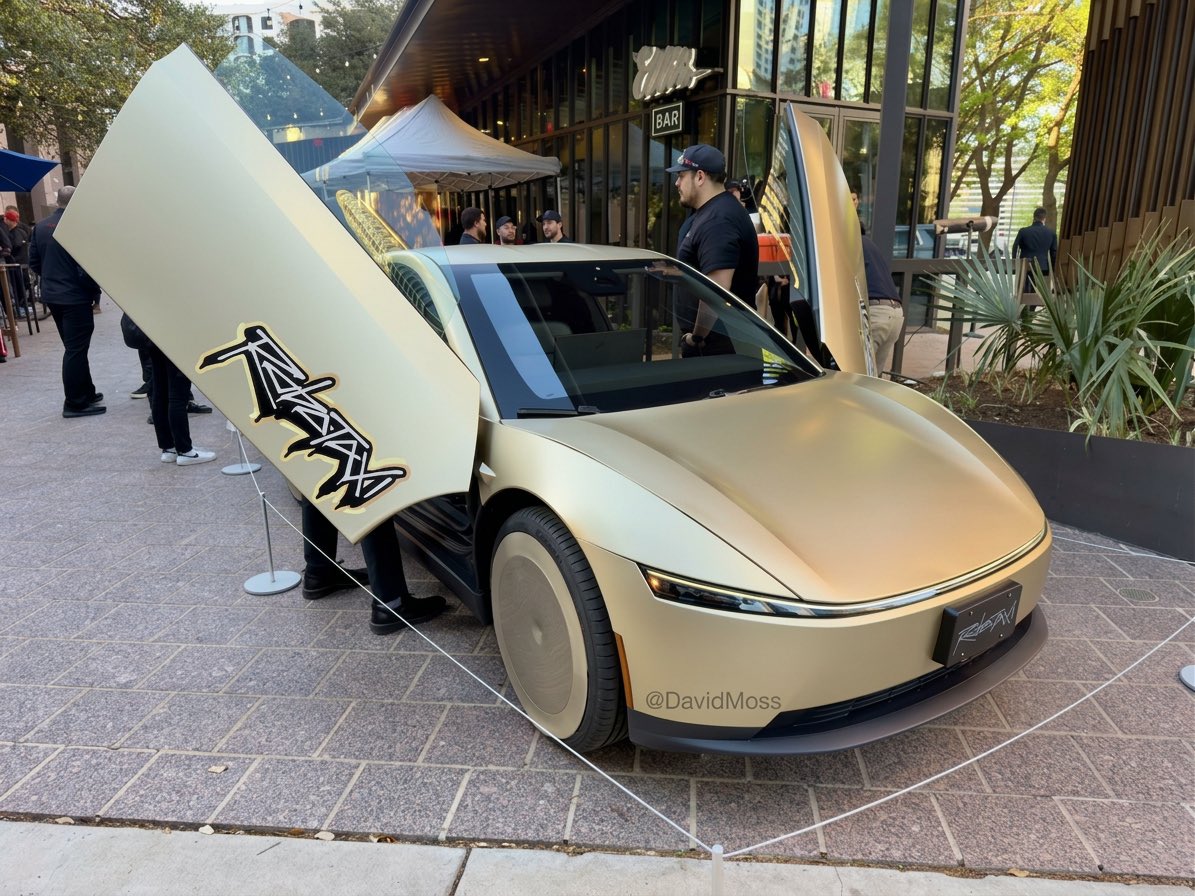
In the world of Tesla, where billion-dollar battery breakthroughs and autonomy milestones dominate headlines, a quiet design update can still pack a punch.
Last week in downtown Austin, sharp-eyed observers spotted a subtle but telling evolution on the Cybercab: a new “ROBOTAXI” logo graphic now graces the vehicle’s doors at Tesla’s Autonomy Popup.
What looks at first glance like a minor stylistic choice is, in fact, a deliberate rebranding move that hints at how the company envisions its robotaxi fleet fitting into everyday life.
The updated lettering is bold, graffiti-inspired, and unapologetically street-smart. Rendered in black with dripping white accents and a glowing yellow outline, the font evokes urban energy and playful irreverence.
Live From Downtown Austin:
Tesla Cybercab with new logo Graphic at their Autonomy Popup pic.twitter.com/MTTb9KDr3b
— David Moss (@DavidMoss) March 13, 2026
 -
-
Gone is the sleek, minimalist typography that defined earlier Cybercab prototypes. In its place is something more human, almost rebellious.
The new logo pops against the Cybercab’s smooth, metallic body, turning the autonomous pod into a rolling piece of public art rather than just another futuristic taxi.
Designers know that fonts are silent brand ambassadors. They shape perception before a single ride is taken. Tesla’s classic sans-serif aesthetic screams precision engineering and Silicon Valley cool.
The new Robotaxi script leans into accessibility and fun, suggesting the vehicle is approachable, not intimidating. For a product meant to ferry strangers through city streets 24/7, that matters. It signals that the robotaxi isn’t reserved for tech elites; it’s for everyone.
Tesla Cybercab spotted next to Model Y shows size comparison
The timing is no accident. With regulatory approvals for unsupervised autonomy advancing and Tesla preparing to scale Cybercab production, the company is shifting from prototype showcase to fleet deployment.
A fresh logo helps differentiate the vehicles visually in dense urban environments—crucial for rider recognition and brand recall. It also aligns with Elon Musk’s long-standing ethos: make the future feel exciting, not sterile.
-
Small changes like this often foreshadow a larger strategy. Tesla has always obsessed over details—door handles, screen interfaces, even the curvature of a steering wheel.
Updating the Robotaxi font reflects the same meticulous care now applied to consumer-facing autonomy. It’s not just paint on metal; it’s a statement that the ride of the future should feel personal, memorable, and undeniably cool.
In an industry racing toward self-driving fleets, Tesla’s willingness to evolve even the smallest visual cues shows confidence. A font won’t launch the robotaxi network, but it might just help millions climb aboard with a smile.


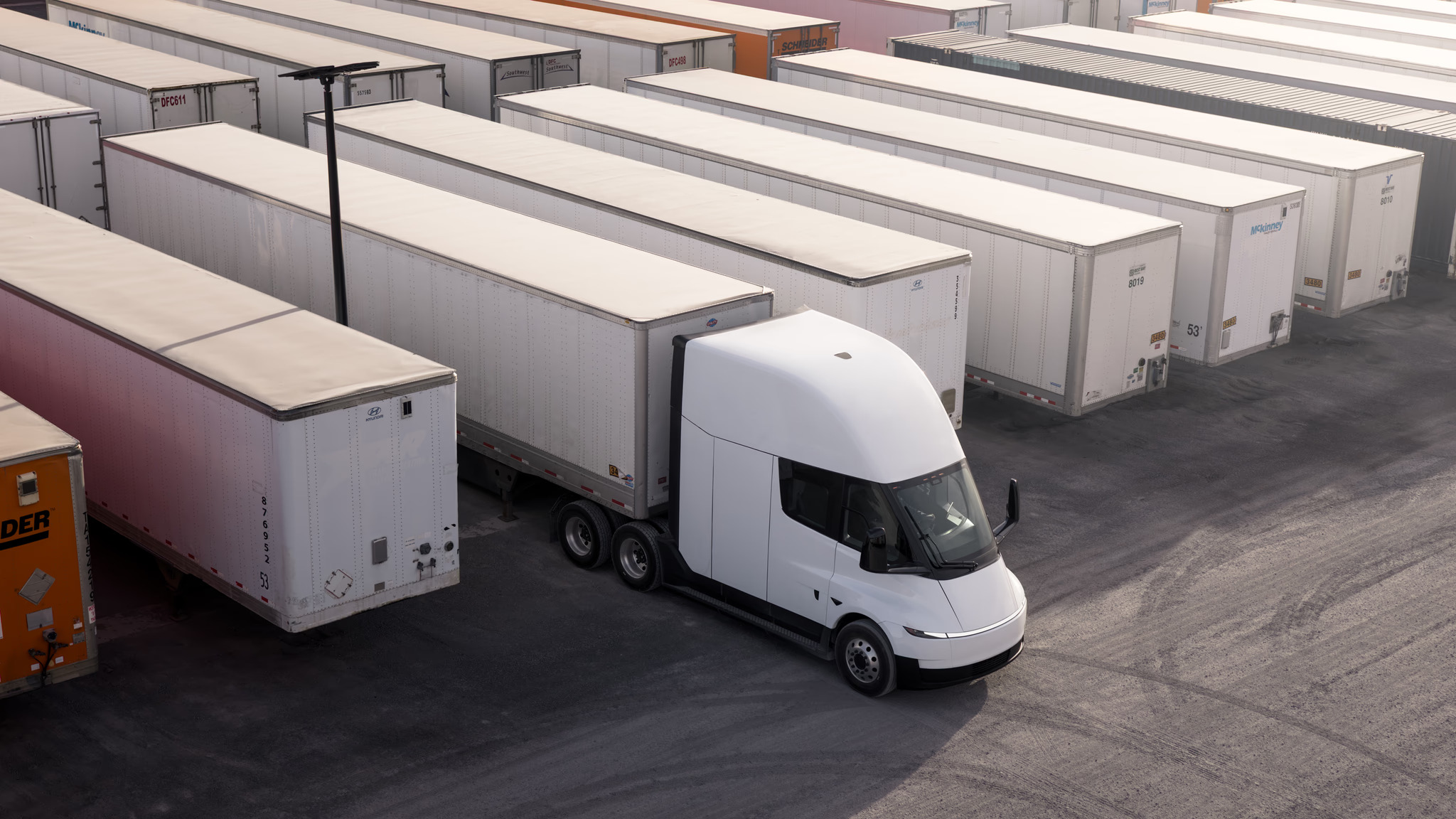
Tesla got its largest order for the all-electric Class 8 Semi yet, a 500-unit order from Einride AB, a Swedish trucking company.
Einride made the announcement this morning following its second-quarter earnings call. The company said it plans to use 500 Tesla Semi units on its fleet intelligence platform, called Saga AI. The deployments will serve large companies like Amazon and will extend Einride’s electric freight network across logistics routes in California, New Jersey, Texas, Illinois, and Georgia.
🚨 Tesla has received a MASSIVE order from Swedish freight company Einride AB, which placed an order for 500 Tesla Semi trucks
Tesla’s biggest order for the Semi yet! pic.twitter.com/PrtLp5yzvh
— TESLARATI (@Teslarati) August 18, 2026
The deployment is being carried out in several phases over the next two years as Tesla ramps production of the Semi at its dedicated production facility in Sparks, Nevada. Einride will receive its first Semi units in September.
Saga AI
Saga AI is Einride’s dedicated fleet intelligence platform. It enables scaled adoption of electric trucks for freight use and allows shippers to integrate electric capacity without the operational burden or capital risks of managing a fleet. This helps integrate cost-efficient logistics and makes budgeting and forecasting much more accurate.
-
Tesla Semi’s Adoption
The Tesla Semi is now gathering large-scale clients past those who have helped the company operate a Pilot Program to gain initial information and feedback from real-world drivers.
Perhaps the biggest and most notable is that of Frito-Lay and PepsiCo., who have worked with Tesla for the past several years to dial in the finer details of the truck, including its efficiency and operation-related components.
Tesla Semi gets strange-but-understandable comparison from Jay Leno
There has been tremendous progress in that time, and it even catalyzed Tesla to make some design changes, which were unveiled earlier this year.
But Einride CEO Roozbeh Charli says his company’s partnership with Tesla will continue to push those things forward:
“This deployment is yet another proof point that we can execute at the scale our customers demand. Working closely with Tesla to bring next-generation Semis into active operations quickly and at scale is a testament to the strength of that partnership, and how quickly this technology is maturing from promise to daily operations.”
-
Additionally, Dan Priestley, the Director of the Semi Program at Tesla, said the partnership is ideal due to Einride’s focus on sustainable transport:
“Einride is at the forefront of sustainable freight, and we are thrilled to deepen our relationship with them through this order of 500 Semis. EV heavy trucks provide lower costs per mile from fuel savings, reduced maintenance, and better uptime over diesel trucks. These savings increase further through operational efficiency when deploying EV trucks at scale, and we are excited that Einride recognizes this and look forward to supporting their deployments.”
Elon Musk
India tells Elon Musk’s X to “Follow the Law” in latest censorship update
Elon Musk says X now exposes government censorship, but India’s secrecy laws complicate that promise.

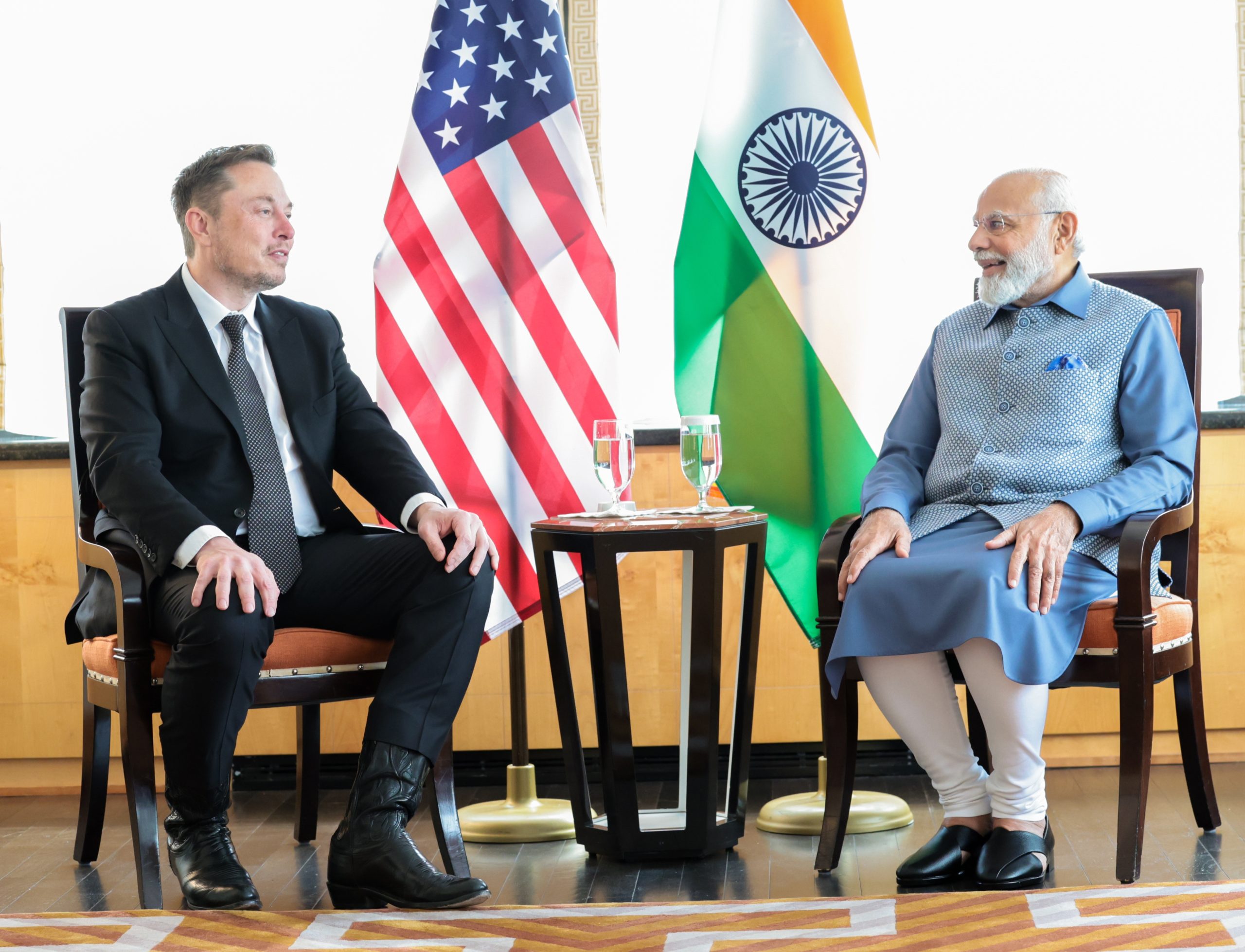
Elon Musk’s promise to make government censorship requests on X “clearly visible” is running into a wall in India, where the law forbids the very disclosure Musk is promising.
On August 15, Musk responded to an update from X’s open-source algorithm team by writing “Any censorship required by governments is now clearly visible.” The claim referred to a change X pushed two days earlier to its public xai-org/x-algorithm repository, which now includes a controversial filter written directly into the code. The filter suppresses posts from 665 accounts flagged by Brazil’s Superior Electoral Court from appearing in the For You feed of any viewer located in Brazil, unless the viewer already follows the account. The election tied to the filter is scheduled for October 4.
India’s government wasn’t as impressed, and responded on Monday that “X will have to follow the law of the land,” in response to Musk’s transparency push covered by the Times of India. The problem is structural rather than political. India issues content blocking orders under Section 69A of its IT Act, and Rule 16 of the accompanying 2009 Blocking Rules requires those orders to stay confidential. Publishing an India equivalent of the Brazil filter, naming specific accounts and citing specific government orders, would itself violate Indian law. Government use of Section 69A has grown from roughly 6,000 orders a year between 2018 and 2023 to about 24,300 in 2025, according to a Tech Times report.
The contrast puts Musk’s transparency pledge in an odd spot. It works largely as advertised in Brazil, where electoral law requires disclosure and X can point to specific account IDs and a specific court order in public code. It cannot work the same way in India, where the law requires the opposite. X users in India will keep seeing content disappear from search and their feeds without any public accounting of why, even as X tells the rest of the world that its censorship compliance is now inspectable.
This isn’t the first time X’s fights with a national government have shaped how the platform operates. Brazil’s Supreme Court ordered X to suspend the accounts of sitting lawmakers and journalists in 2024, a standoff that cost X its Brazilian revenue for months and froze Starlink’s local accounts before the investigation into Musk and X was closed in March with no evidence of wrongdoing found. X also sued California over a state law requiring moderation disclosures, arguing the mandate itself violated the First Amendment.
Whether India’s government pursues anything beyond a public statement remains to be seen. For now, the mismatch between what X can legally publish and what different governments legally allow it to publish is the real story behind Musk’s seven word claim.
-
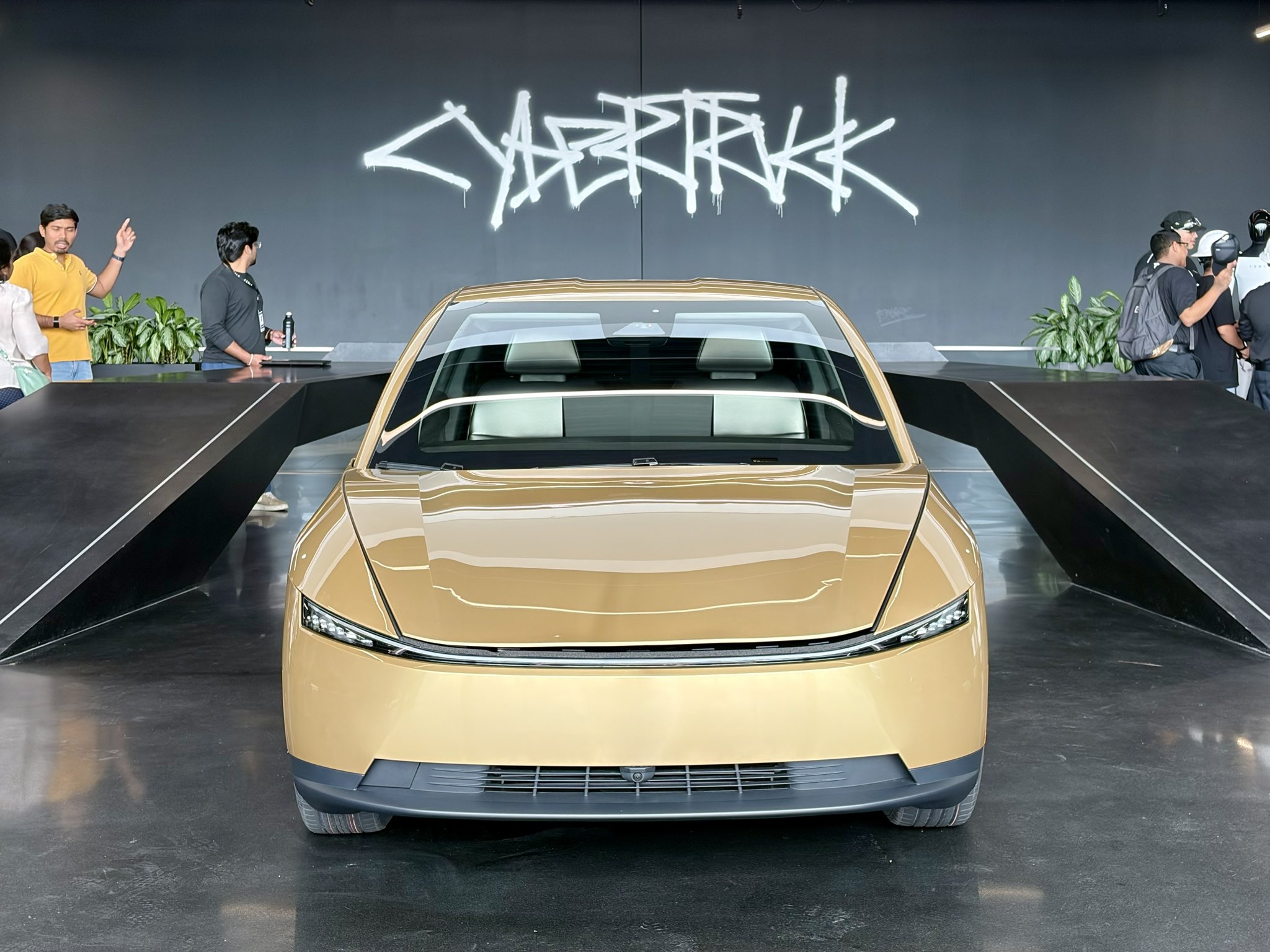
Tesla is preparing to launch the Cybercab in Austin, Texas, later this month, a new report claims. Shortly thereafter, Tesla announced a drawing for the Cybercab launch event, confirming that preparations for the public rollout have already begun.
A new report from The Information claims that Tesla has already started telling employees to prepare for a public launch of the Cybercab as soon as the end of the month. The vehicle will launch publicly to riders in Austin initially.
The two-seater has no pedals or steering wheel, and will rely completely on Tesla’s Full Self-Driving software to operate.
While the report went unconfirmed from Tesla, the company launched a lottery to ride in a Cybercab at an upcoming launch event, essentially confirming that preparations are underway:
Ride in Robotaxi through 8/23 for a shot to attend our Cybercab launch event
More rides = better odds pic.twitter.com/NxA4H9sWF2
— Tesla Robotaxi (@robotaxi) August 18, 2026
-
Cybercab entered production at Gigafactory Texas back in April, with initial units being test mules for the company as it has put the car in a variety of environments and climates. Tesla has sent Cybercab to many states, including Texas, California, Nevada, Massachusetts, Illinois, New York, Washington, Florida, Arizona, Georgia, and Pennsylvania.
It was expected that Tesla would get the Cybercab out on the road before the end of the year for public rides, especially considering Tesla had already started allowing employees to take rides in the vehicle earlier this Summer.
Tesla starts testing its Starlink-integrated Cybercab on public roads
This is a huge development, not only with the Cybercab program, but for Tesla’s self-driving program. Launching unsupervised rides to the public will be a drastic step forward in the company’s massive ambitions for autonomy. It is a long time coming, too. Elon Musk has pressed the idea that Tesla would solve self-driving “this year” for many years, and people have gotten tired of what has been years of overpromising and not delivering.
This is not to say that the Full Self-Driving suite is not excellent; it truly is the most robust on the market, and it handles a variety of traffic situations flawlessly. It definitely has its faults, but generally, it is fantastic.
Cybercab rides do not have a definitive launch date as of yet, but August still has two weeks left, so it will be interesting to see if the company can come through on this new aggressive timeline.
-

Tesla Semi gets its largest order yet

India tells Elon Musk’s X to “Follow the Law” in latest censorship update


