News
Tesla is subtly laying the foundations for an upcoming Model Y invasion in China

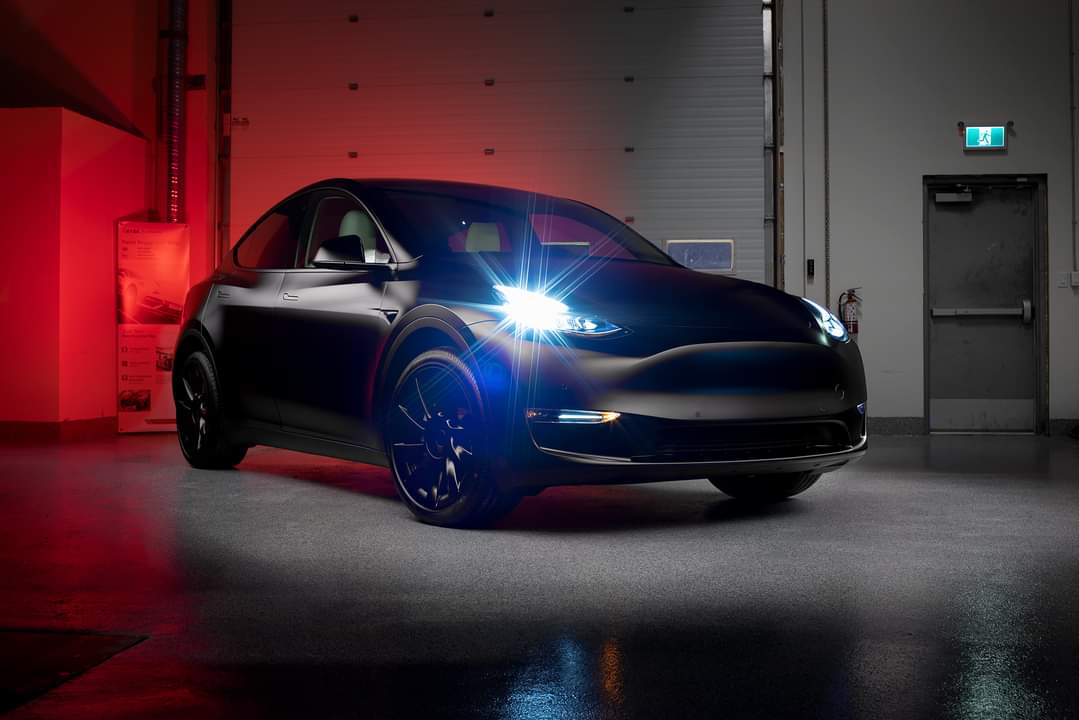
Inasmuch as the Model Y seems to be on track to become Tesla’s best-selling vehicle to date, the attention given to the vehicle, seemingly even by the company itself, has been quite tempered at best. Its unveiling was subtle and not at all like the Cybertruck’s flashy, fiery, dramatic cyberpunk-themed debut, and its first rollout was done quietly, with no grand handover ceremony like the Model S and Model 3.
Tesla’s handling of the Model Y ramp almost gives the impression that the vehicle was something that, while potentially disruptive in its own right, simply completes the company’s initial EV lineup. Yet if the electric car maker’s recent strategies are any indication, it appears that Tesla is preparing the stage for what could very well be nothing short of a Model Y invasion in China next year.
Just recently, for example, reports emerged stating that Tesla is investing RMB 42 million (about $6.4 million) into a new facility that will be tasked with the production of Superchargers, the company’s rapid-charging system. The facility will reportedly be located near Gigafactory Shanghai, and it will be completed sometime next year. Once it’s operating, the factory is expected to produce about 10,000 Superchargers per year, as per documents submitted about the site.
That’s an impressive number of Superchargers, and a good number of them would likely be built specifically for China’s domestic auto market. With a robust Supercharger Network in China, the stigma of EVs being limited in range disappears, and the all-electric crossover could actually become the first choice among car buyers who are fond of long road trips. China, after all, is rolling out a program that heavily incentivizes new energy vehicles, and there are few better ways to promote such an initiative than by supporting long-range EVs like the Model Y.
Tesla’s Gigafactory Shanghai facility is ready for the Made-in-China’s Model Y ramp. The second phase of the factory, where the all-electric crossover would be built, was completed earlier this year, and expectations are high that mass production of the Model Y could begin early next year. Supported by a rapidly-growing Supercharger Network, the Model Y could end up becoming one of China’s perfect family vehicles. And considering that Giga Shanghai’s Phase 2 facility is expected to produce 250,000 Model Y next year, 2021 may very well become the Year of Tesla in China.
Tesla’s Supercharger ramp in China is quite notable, especially considering that the company currently lists just over 20,000 Superchargers worldwide today, despite the company building its Supercharger Network since the days of the early Model S. This means that Tesla China’s Supercharger facility, which is expected to have an output of 10,000 charging stalls per year, has the potential to essentially double the number of Superchargers deployed today in but a couple of years.


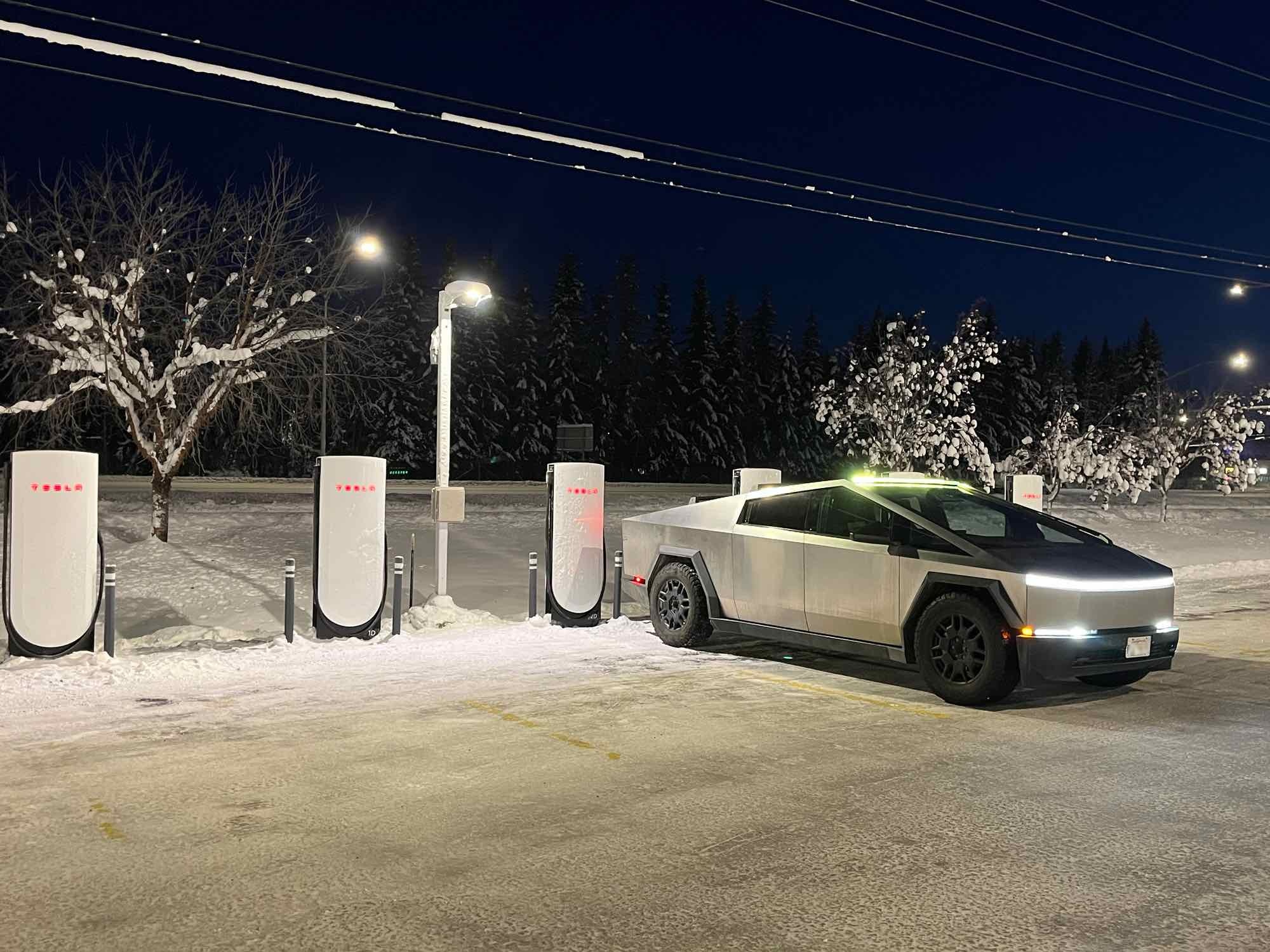
Tesla has opened its northernmost Supercharger in Fairbanks, Alaska, with eight V4 stalls located in one of the most frigid cities in the U.S.
Located just 196 miles from the Arctic Circle, Fairbanks’s average temperature for the week was around -12 degrees Fahrenheit. However, there are plenty of Tesla owners in Alaska who have been waiting for more charging options out in public.
There are only 36 total Supercharger stalls in Alaska, despite being the largest state in the U.S.
Eight Superchargers were added to Fairbanks, which will eventually be a 48-stall station. Tesla announced its activation today:
North America’s northernmost Supercharger Fairbanks, AK (8 stalls) opened to public. https://t.co/M4l04DZ6B5 pic.twitter.com/zyL6bDuA93
— Tesla Charging (@TeslaCharging) December 12, 2025
The base price per kWh is $0.43 at the Fairbanks Supercharger. Thanks to its V4 capabilities, it can charge at speeds up to 325 kW.
Despite being the northernmost Supercharger in North America, it is not even in the Top 5 northernmost Superchargers globally, because Alaska is south of Norway. The northernmost Supercharger is in Honningsvåg, Norway. All of the Top 5 are in the Scandanavian country.
Tesla’s Supercharger expansion in 2025 has been impressive, and although it experienced some early-quarter slowdowns due to V3-to-V4 hardware transitions, it has been the company’s strongest year for deployments.
🚨🚨 Tesla Supercharging had a HUGE year, and they deserve to be recognized.
🍔 Opened Tesla Diner, a drive-in movie theater with awesome, Chef-curated cuisine
🔌 Gave access to Superchargers to several EV makers, including Hyundai, Genesis, Mercedes-Benz, Kia, Lucid, Toyota,… pic.twitter.com/yYT2QEbqoW
— TESLARATI (@Teslarati) December 10, 2025
Through the three quarters of 2025, the company has added 7,753 stations and 73,817 stalls across the world, a 16 percent increase in stations and an 18 percent increase in stalls compared to last year.
Tesla is on track to add over 12,000 stalls for the full year, achieving an average of one new stall every hour, an impressive statistic.
Recently, the company wrapped up construction at its Supercharger Oasis in Lost Hills, California, a 168-stall Supercharger that Tesla Solar Panels completely power. It is the largest Supercharger in the world.
News
Tesla shocks with latest Robotaxi testing move
Why Tesla has chosen to use a couple of Model S units must have a reason; the company is calculated in its engineering and data collection efforts, so this is definitely more than “we just felt like giving our drivers a change of scenery.”

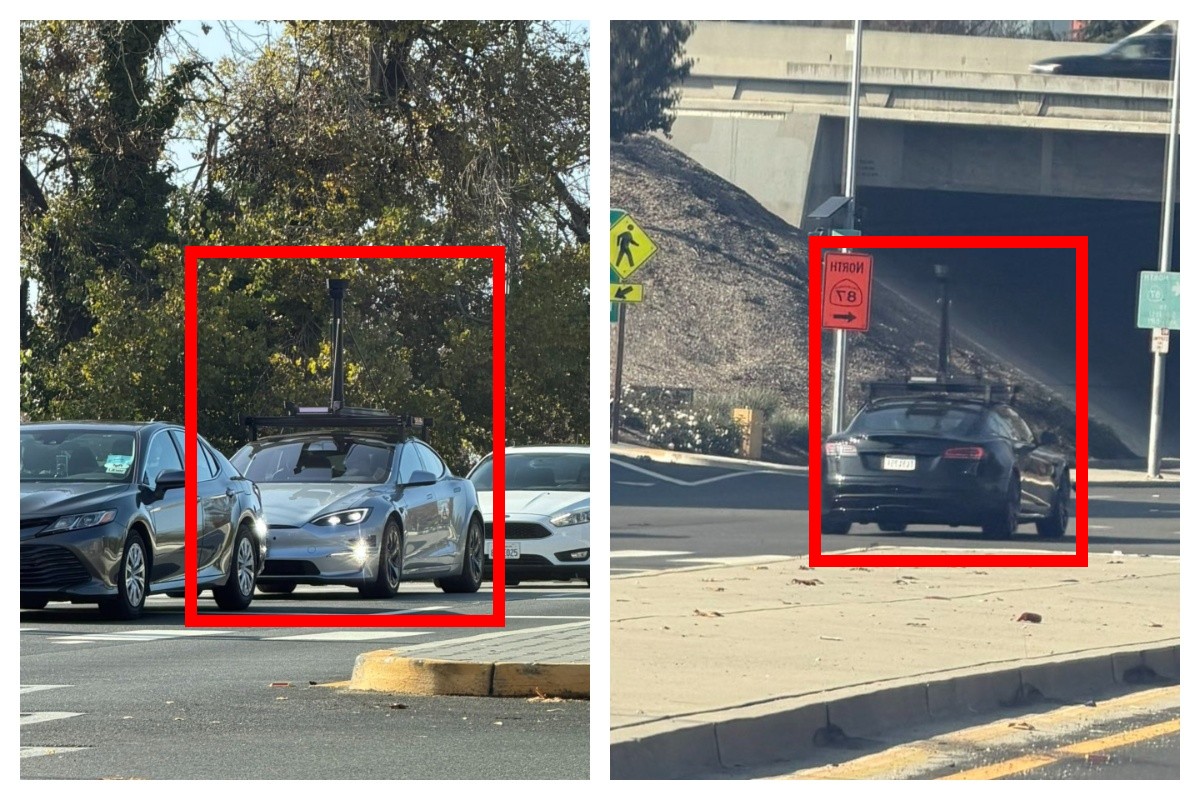
Tesla Model S vehicles were spotted performing validation testing with LiDAR rigs in California today, a pretty big switch-up compared to what we are used to seeing on the roads.
Tesla utilizes the Model Y crossover for its Robotaxi fleet. It is adequately sized, the most popular vehicle in its lineup, and is suitable for a wide variety of applications. It provides enough luxury for a single rider, but enough room for several passengers, if needed.
However, the testing has seemingly expanded to one of Tesla’s premium flagship offerings, as the Model S was spotted with the validation equipment that is seen entirely with Model Y vehicles. We have written several articles on Robotaxi testing mules being spotted across the United States, but this is a first:
🚨 Tesla is using Model S vehicles fitted with LiDAR rigs to validate FSD and Robotaxi, differing from the Model Ys that it uses typically
Those Model Y vehicles have been on the East Coast for some time. These Model S cars were spotted in California https://t.co/CN9Bw5Wma8 pic.twitter.com/UE55hx5mdd
— TESLARATI (@Teslarati) December 11, 2025
Why Tesla has chosen to use a couple of Model S units must have a reason; the company is calculated in its engineering and data collection efforts, so this is definitely more than “we just felt like giving our drivers a change of scenery.”
It seems to hint that Tesla could add a premium, more luxury offering to its Robotaxi platform eventually. Think about it: Uber has Uber Black, Lyft has Lyft Black. These vehicles and services are associated with a more premium cost as they combine luxury models with more catered transportation options.
Tesla could be testing the waters here, and it could be thinking of adding the Model S to its fleet of ride-hailing vehicles.
Reluctant to remove the Model S from its production plans completely despite its low volume contributions to the overall mission of transitioning the world to sustainable energy, the flagship sedan has always meant something. CEO Elon Musk referred to it, along with its sibling Model X, as continuing on production lines due to “sentimental reasons.”
However, its purpose might have been expanded to justify keeping it around, and why not? It is a cozy, premium offering, and it would be great for those who want a little more luxury and are willing to pay a few extra dollars.
Of course, none of this is even close to confirmed. However, it is reasonable to speculate that the Model S could be a potential addition to the Robotaxi fleet. It’s capable of all the same things the Model Y is, but with more luxuriousness, and it could be the perfect addition to the futuristic fleet.
News
Rivian unveils self-driving chip and autonomy plans to compete with Tesla
Rivian, a mainstay in the world of electric vehicle startups, said it plans to roll out an Autonomy+ subscription and one-time purchase program, priced at $49.99 per month and $2,500 up front, respectively, for access to its self-driving suite.
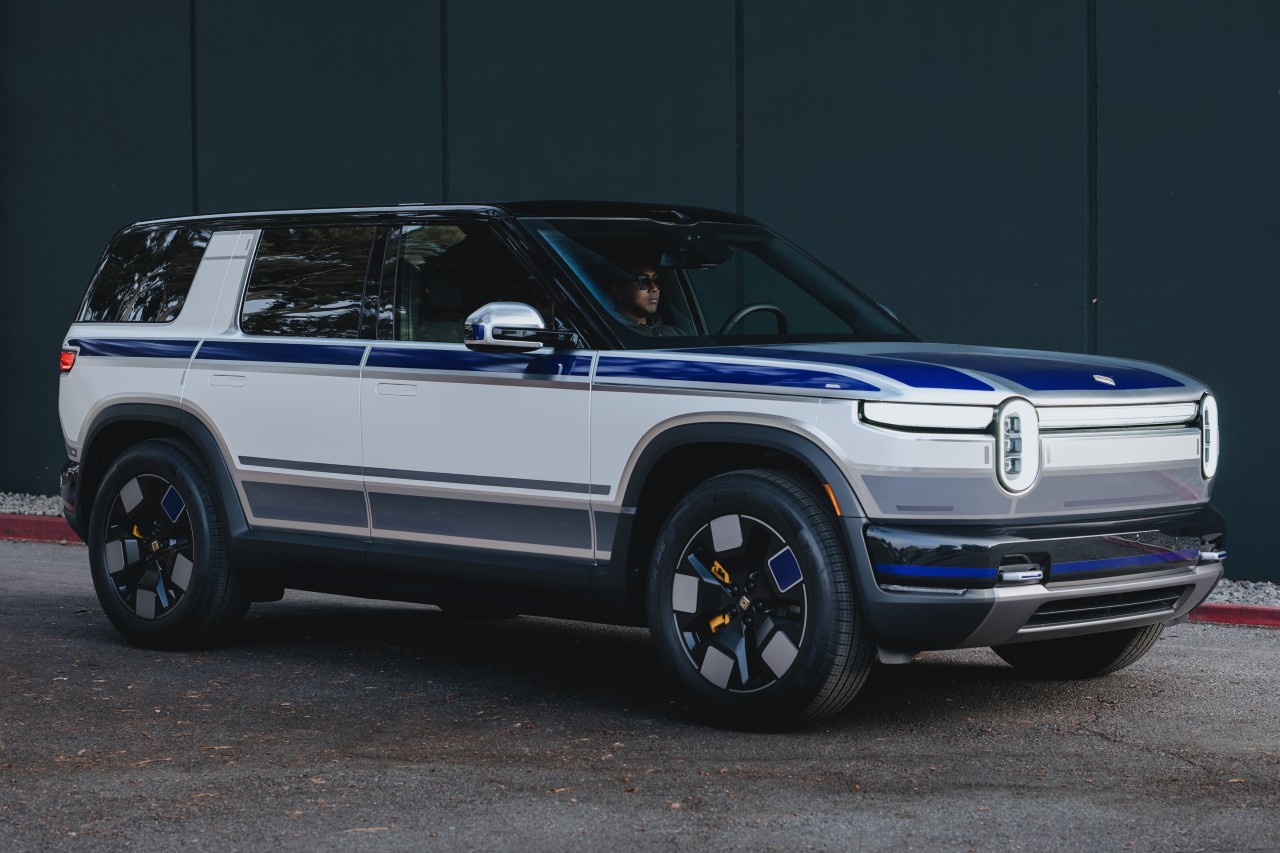
Rivian unveiled its self-driving chip and autonomy plans to compete with Tesla and others at its AI and Autonomy Day on Thursday in Palo Alto, California.
Rivian, a mainstay in the world of electric vehicle startups, said it plans to roll out an Autonomy+ subscription and one-time purchase program, priced at $49.99 per month and $2,500 up front, respectively, for access to its self-driving suite.
CEO RJ Scaringe said it will learn and become more confident and robust as more miles are driven and it gathers more data. This is what Tesla uses through a neural network, as it uses deep learning to improve with every mile traveled.
He said:
“I couldn’t be more excited for the work our teams are driving in autonomy and AI. Our updated hardware platform, which includes our in-house 1600 sparse TOPS inference chip, will enable us to achieve dramatic progress in self-driving to ultimately deliver on our goal of delivering L4. This represents an inflection point for the ownership experience – ultimately being able to give customers their time back when in the car.”
At first, Rivian plans to offer the service to personally-owned vehicles, and not operate as a ride-hailing service. However, ride-sharing is in the plans for the future, he said:
“While our initial focus will be on personally owned vehicles, which today represent a vast majority of the miles to the United States, this also enables us to pursue opportunities in the rideshare space.”
The Hardware
Rivian is not using a vision-only approach as Tesla does, and instead will rely on 11 cameras, five radar sensors, and a single LiDAR that will face forward.
It is also developing a chip in-house, which will be manufactured by TSMC, a supplier of Tesla’s as well. The chip will be known as RAP1 and will be about 50 times as powerful as the chip that is currently in Rivian vehicles. It will also do more than 800 trillion calculations every second.
Meet the Rivian Autonomy Processor.
Fast, smart, scalable and purpose-built for autonomous driving and the world of physical AI. Hitting the open road in 2026. pic.twitter.com/0wYXi5WKy7
— Rivian (@Rivian) December 11, 2025
RAP1 powers the Autonomy Compute Module 3, known as ACM3, which is Rivian’s third-generation autonomy computer.
ACM3 specs include:
- 1600 sparse INT8 TOPS (Trillion Operations Per Second).
- The processing power of 5 billion pixels per second.
- RAP1 features RivLink, a low-latency interconnect technology allowing chips to be connected to multiply processing power, making it inherently extensible.
- RAP1 is enabled by an in-house developed AI compiler and platform software
As far as LiDAR, Rivian plans to use it in forthcoming R2 cars to enable SAE Level 4 automated driving, which would allow people to sit in the back and, according to the agency’s ratings, “will not require you to take over driving.”
More Details
Rivian said it will also roll out advancements to the second-generation R1 vehicles in the near term with the addition of UHF, or Universal Hands-Free, which will be available on over 3.5 million miles of roadway in the U.S. and Canada.
More than any other feature, our owners have asked for more hands-free miles.
With Universal Hands-Free, you can now enjoy hands-free assisted driving on any road with clearly defined lanes. That’s roughly 3.5 million miles in the U.S. and Canada.
Look for it in our next… pic.twitter.com/ZFhwVzvt6b
— Rivian (@Rivian) December 11, 2025
Rivian will now join the competitive ranks with Tesla, Waymo, Zoox, and others, who are all in the race for autonomy.

Tesla’s northernmost Supercharger in North America opens

Tesla shocks with latest Robotaxi testing move


