
Investor's Corner
Tesla stock: Morgan Stanley pumps the brakes and lowers PT ahead of earnings

Analysts at Morgan Stanley pumped the brakes on Tesla stock by lowering its price target ahead of the automaker’s Earnings Call late this week.
Tesla shares are down 15 percent so far this year. Over the past year, shares are up 66 percent, but moving into 2024, some bulls are remaining cautious.
Morgan Stanley is one of them. In a note to investors released on Monday, analysts at the firm noted there are several factors that could spell trouble for global demand, including increased competition, pricing instability, and slowing demand for EVs.
Tesla will report Earnings on Wednesday. The company reached its 1.8 million unit delivery goal in 2023. It also dominated EV deliveries in the United States and Europe and was toward the top of the list in China. It launched the Cybertruck, a new Model 3 design, and has plenty of other catalysts moving into 2024. However, an ever-changing landscape, more competition, and other factors have Morgan Stanley proceeding with increased caution for the year.
In a note from analysts at the firm, they wrote about the potential risks for the stock this year:
“Global EV momentum is stalling. The market is over-supplied vs. demand. We anticipate Tesla’s 2024 outlook to be cautious on volume and profitability…Tough sledding for EVs but we remain OW on AI and robotics optionality.”
Adam Jonas listed several risk factors for the stock in the note, which include price cuts, weakening or expiration of EV incentives, excess capacity in China, residual value risks, and fleets cutting EV concentration.
Price Cuts
Tesla is still working on pricing stability, which improved greatly throughout 2023 but still offered some concern for investors. Less expensive EVs equate to increased adoption, but it also puts pressure on margins and profitability for the company.
Tesla has already cut prices in China and Europe this year, which is concerning from Morgan Stanley’s standpoint:
“Tesla has already announced price cuts in China and Europe that matched or exceeded our prior expectations of price reductions for the full year 2024. The German Tesla price cuts came merely days after Tesla announced production cuts at Giga Berlin related to Red Sea shipping issues. Lower production is usually positive for prices. This suggests the European EV situation is changing quite rapidly.”
Expiration/Weakening of EV Incentives
In the U.S. especially, Tesla is adjusting the narratives that surround some of its vehicles and their eligibility for EV tax credits. Two Model 3 configurations lost the tax credit, and as it is one of the best-selling EVs in Tesla’s lineup, it is not a positive, although the car is still affordable.
Morgan Stanley is also skeptical about the future of the IRA, stating it looks to be “increasingly uncertain.”
Some consumers are in need of these incentives to purchase the vehicle, and even if they are not a necessity, they are a benefit. It could sway many consumers in the direction of other vehicles. It is important to note that Volkswagen, BMW, Audi, and Ford also lost tax credit eligibility on some of their EVs.
Excess Capacity in China
Morgan Stanley said its Chinese team noted sales cannibalization, increased battery capacity and inventory, and the expiration of “certain local stimulus measures” as reasons Tesla may feel the heat.
Residual Value Risks
Price cuts from OEMs have pressured EV residuals, and dealerships are less bullish on electric cars than ever. Jonas writes that residual value volatility “hurts the value proposition for consumers and creates uncertainty around leasing partners who don’t want to hold this risk.” This includes Tesla.
Tesla’s leasing penetration is in the low single digits globally, Morgan Stanley notes.
Fleets Cutting EVs
Hertz made a drastic announcement earlier this month, stating it would backtrack its massive commitment to EVs as it did not properly account for the cost of damages. One-third of its EV fleet is being sold off, and a portion of the proceeds will go back into combustion engine vehicles.
Other companies are doing this as well on a smaller scale. Fleets offer a few advantages, including a large boost to orders for EV makers. Hertz planned to buy 100,000 Teslas, for example.
They also give drivers an opportunity to drive EVs before buying. While this will still be available, it will be less widespread.
Price Target Downgrade
Morgan Stanley moved its price target to $345 from $380.
I’d love to hear from you! If you have any comments, concerns, or questions, please email me at joey@teslarati.com. You can also reach me on Twitter @KlenderJoey, or if you have news tips, you can email us at tips@teslarati.com.



Investor's Corner
Tesla could save $2.5B by replacing 10% of staff with Optimus: Morgan Stanley
Jonas assigned each robot a net present value (NPV) of $200,000.

Tesla’s (NASDAQ:TSLA) near-term outlook may be clouded by political controversies and regulatory headwinds, but Morgan Stanley analyst Adam Jonas sees a glimmer of opportunity for the electric vehicle maker.
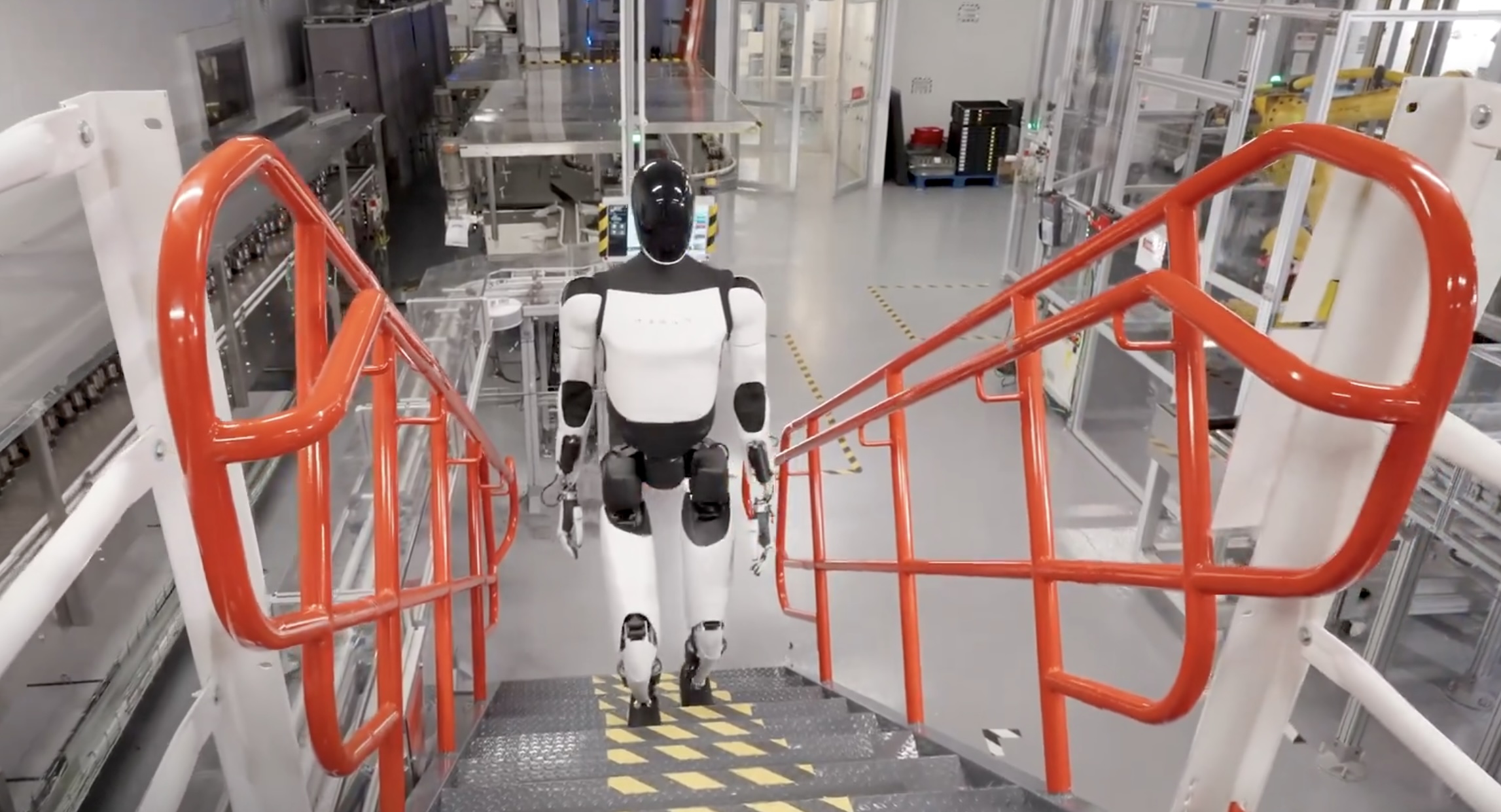
In a new note, the Morgan Stanley analyst estimated that Tesla could save $2.5 billion by replacing just 10% of its workforce with its Optimus robots, assigning each robot a net present value (NPV) of $200,000.
Morgan Stanley highlights Optimus’ savings potential
Jonas highlighted the potential savings on Tesla’s workforce of 125,665 employees in his note, suggesting that the utilization of Optimus robots could significantly reduce labor costs. The analyst’s note arrived shortly after Tesla reported Q2 2025 deliveries of 384,122 vehicles, which came close to Morgan Stanley’s estimate and slightly under the consensus of 385,086.
“Tesla has 125,665 employees worldwide (year-end 2024). On our calculations, a 10% substitution to humanoid at approximately ($200k NPV/humanoid) could be worth approximately $2.5bn,” Jonas wrote, as noted by Street Insider.
Jonas also issued some caution on Tesla Energy, whose battery storage deployments were flat year over year at 9.6 GWh. Morgan Stanley had expected Tesla Energy to post battery storage deployments of 14 GWh in the second quarter.
Musk’s political ambitions
The backdrop to Jonas’ note included Elon Musk’s involvement in U.S. politics. The Tesla CEO recently floated the idea of launching a new political party, following a poll on X that showed support for the idea. Though a widely circulated FEC filing was labeled false by Musk, the CEO does seem intent on establishing a third political party in the United States.
Jonas cautioned that Musk’s political efforts could divert attention and resources from Tesla’s core operations, adding near-term pressure on TSLA stock. “We believe investors should be prepared for further devotion of resources (financial, time/attention) in the direction of Mr. Musk’s political priorities which may add further near-term pressure to TSLA shares,” Jonas stated.
Investor's Corner
Two Tesla bulls share differing insights on Elon Musk, the Board, and politics
Two noted Tesla bulls have shared differing views on the recent activities of CEO Elon Musk and the company’s leadership.
Two noted Tesla (NASDAQ:TSLA) bulls have shared differing views on the recent activities of CEO Elon Musk and the company’s leadership.
While Wedbush analyst Dan Ives called on Tesla’s board to take concrete steps to ensure Musk remains focused on the EV maker, longtime Tesla supporter Cathie Wood of Ark Invest reaffirmed her confidence in the CEO and the company’s leadership.
Ives warns of distraction risk amid crucial growth phase
In a recent note, Ives stated that Tesla is at a critical point in its history, as the company is transitioning from an EV maker towards an entity that is more focused on autonomous driving and robotics. He then noted that the Board of Directors should “act now” and establish formal boundaries around Musk’s political activities, which could be a headwind on TSLA stock.
Ives laid out a three-point plan that he believes could ensure that the electric vehicle maker is led with proper leadership until the end of the decade. First off, the analyst noted that a new “incentive-driven pay package for Musk as CEO that increases his ownership of Tesla up to ~25% voting power” is necessary. He also stated that the Board should establish clear guidelines for how much time Musk must devote to Tesla operations in order to receive his compensation, and a dedicated oversight committee must be formed to monitor the CEO’s political activities.
Ives, however, highlighted that Tesla should move forward with Musk at its helm. “We urge the Board to act now and move the Tesla story forward with Musk as CEO,” he wrote, reiterating its Outperform rating on Tesla stock and $500 per share price target.
Tesla CEO Elon Musk has responded to Ives’ suggestions with a brief comment on X. “Shut up, Dan,” Musk wrote.
Cathie Wood reiterates trust in Musk and Tesla board
Meanwhile, Ark Investment Management founder Cathie Wood expressed little concern over Musk’s latest controversies. In an interview with Bloomberg Television, Wood said, “We do trust the board and the board’s instincts here and we stay out of politics.” She also noted that Ark has navigated Musk-related headlines since it first invested in Tesla.
Wood also pointed to Musk’s recent move to oversee Tesla’s sales operations in the U.S. and Europe as evidence of his renewed focus in the electric vehicle maker. “When he puts his mind on something, he usually gets the job done,” she said. “So I think he’s much less distracted now than he was, let’s say, in the White House 24/7,” she said.
TSLA stock is down roughly 25% year-to-date but has gained about 19% over the past 12 months, as noted in a StocksTwits report.
Investor's Corner
Cantor Fitzgerald maintains Tesla (TSLA) ‘Overweight’ rating amid Q2 2025 deliveries
Cantor Fitzgerald is holding firm on its bullish stance for the electric vehicle maker.
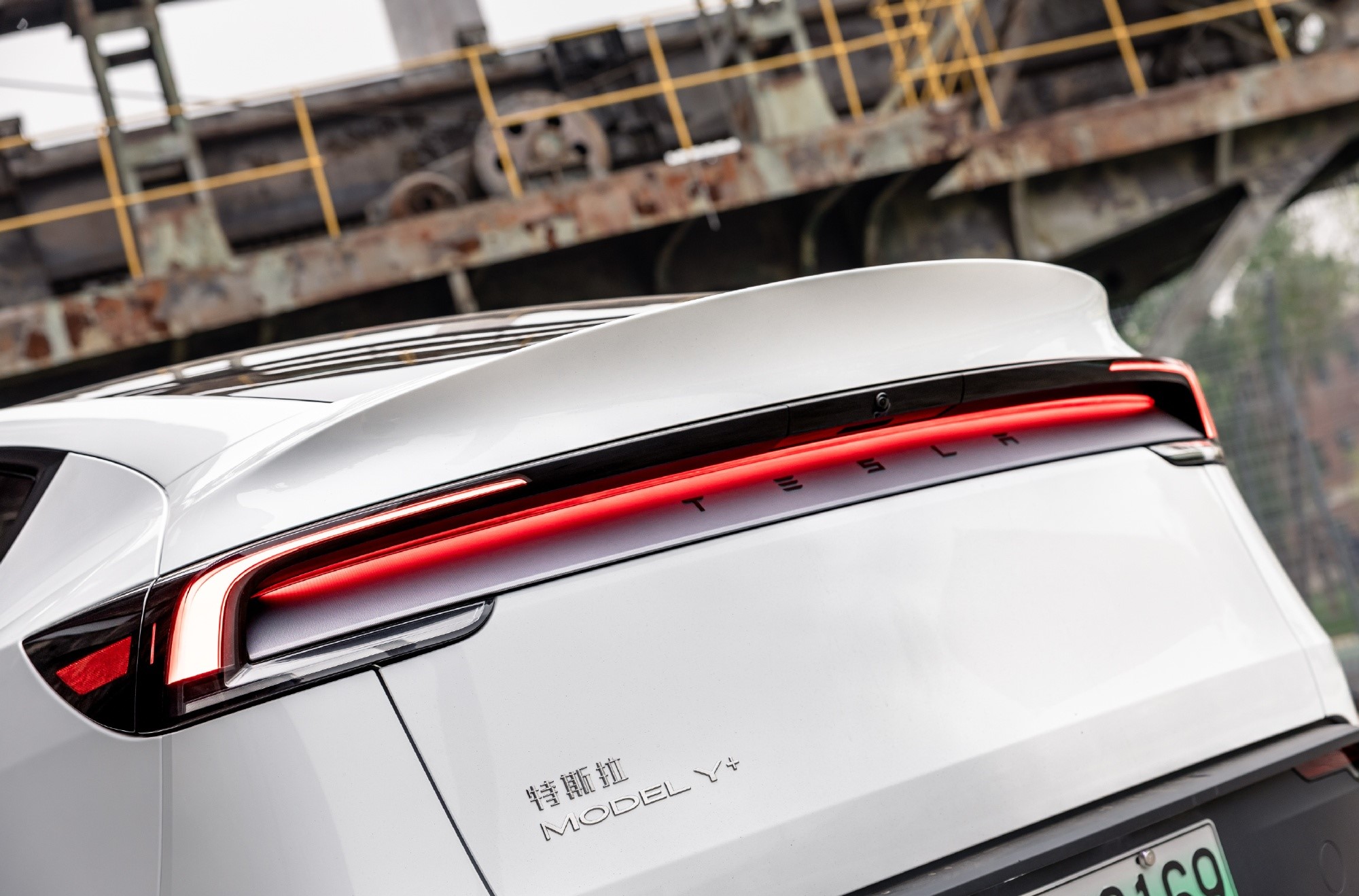
Cantor Fitzgerald is holding firm on its bullish stance for Tesla (NASDAQ: TSLA), reiterating its “Overweight” rating and $355 price target amidst the company’s release of its Q2 2025 vehicle delivery and production report.
Tesla delivered 384,122 vehicles in Q2 2025, falling below last year’s Q2 figure of 443,956 units. Despite softer demand in some countries in Europe and ongoing controversies surrounding CEO Elon Musk, the firm maintained its view that Tesla is a long-term growth story in the EV sector.
Tesla’s Q2 results
Among the 384,122 vehicles that Tesla delivered in the second quarter, 373,728 were Model 3 and Model Y. The remaining 10,394 units were attributed to the Model S, Model X, and Cybertruck. Production was largely flat year-over-year at 410,244 units.
In the energy division, Tesla deployed 9.6 GWh of energy storage in Q2, which was above last year’s 9.4 GWh. Overall, Tesla continues to hold a strong position with $95.7 billion in trailing twelve-month revenue and a 17.7% gross margin, as noted in a report from Investing.com.
Tesla’s stock is still volatile
Tesla’s market cap fell to $941 billion on Monday amid volatility that was likely caused in no small part by CEO Elon Musk’s political posts on X over the weekend. Musk has announced that he is forming the America Party to serve as a third option for voters in the United States, a decision that has earned the ire of U.S. President Donald Trump.
Despite Musk’s controversial nature, some analysts remain bullish on TSLA stock. Apart from Cantor Fitzgerald, Canaccord Genuity also reiterated its “Buy” rating on Tesla shares, with the firm highlighting the company’s positive Q2 vehicle deliveries, which exceeded its expectations by 24,000 units. Cannacord also noted that Tesla remains strong in several markets despite its year-over-year decline in deliveries.

Tesla Supercharger Diner food menu gets a sneak peek as construction closes out

Tesla’s longer Model Y did not scale back requests for this vehicle type from fans

Tesla launches first Virtual Power Plant in UK – get paid to use solar


-
 Elon Musk1 day ago
Waymo responds to Tesla’s Robotaxi expansion in Austin with bold statement
-
 News1 day ago
Tesla exec hints at useful and potentially killer Model Y L feature
-
 Elon Musk2 days ago
Elon Musk reveals SpaceX’s target for Starship’s 10th launch
-
 Elon Musk3 days ago
Tesla ups Robotaxi fare price to another comical figure with service area expansion
-
 News1 day ago
Tesla’s longer Model Y did not scale back requests for this vehicle type from fans
-
 News1 day ago
“Worthy of respect:” Six-seat Model Y L acknowledged by Tesla China’s biggest rivals
-
 News2 days ago
First glimpse of Tesla Model Y with six seats and extended wheelbase
-
 Elon Musk2 days ago
Elon Musk confirms Tesla is already rolling out a new feature for in-car Grok