Investor's Corner
Tesla (TSLA) bull suggests taking profit as shorts get brought down to their knees

Tesla’s (NASDAQ:TSLA) meteoric rise has been a particularly painful ride for the companys’ short-sellers, some of whom have been burned and brought down to their knees. This was despite some of Tesla’s most ardent supporters on Wall Street recommending that investors take profit as the stock approaches $500 per share.
Longtime Tesla bull Ben Kallo of Baird recently downgraded his rating on TSLA stock. While he boosted his TSLA price target from $355 to $525, he has given the electric car maker the equivalent of a “Hold” rating. In a note to clients, Kallo stated that the “risk/reward is more balanced following recent stock appreciation.” He also mentioned that investors’ expectations for the company now seem to be “fairly calibrated.”
With this in mind, Kallo, who has long maintained his “Buy” rating on TSLA stock and who has described himself as “Battle-Worn,” stated that some profit-taking might be in order. “After several years at an outperform rating, which included contentious arguments with (evidently) high-conviction bears, we recommend profit-taking,” he wrote.
After ending 2019 on a powerful note, Tesla stock has continued its meteoric rise. In the first few days of 2020 alone, TSLA shares have gained almost 18%. By Wednesday’s trading, the company’s stock came close to hitting the $500 a share level, further establishing itself as the most valuable carmaker in American history to date.
These recent surges have been particularly painful for the company’s short-sellers. Among those active in social media platforms such as Twitter alone, some prolific shorts have admitted that they are now trimming their position against the electric car maker. One of these is aggressive Tesla short-seller Mark Spiegel, who has been featured multiple times in mainstream media despite his frequent bouts of alarming misogyny and online bullying on social media.
Spiegel’s fund, Stanphyl Capital Management, was battered in 2019, and a good part of it was due to the firm’s short position against Tesla. After releasing a report to his clients where he admitted that his fund had underperformed the market yet again, Spiegel stated that he had trimmed Stanphyl’s TSLA short to just 10% of his fund. Previously, it was at 20%. This was a rare act for the short-seller, who is among the most aggressive against the company and its CEO, Elon Musk.
But amidst TSLA’s recent rise, it appears that the short-seller was brought down to his knees even more. In an update on Twitter, Spiegel stated that he has further slashed Stanphyl’s short against Tesla, reducing it from 10% to just 5% of his fund. With this in mind, it appears that Tesla is starting to become a bit too costly to short, at least for short-sellers like Spiegel. This is despite Tesla still being one of the most-shorted companies in the market.
This is something that the Baird analyst has stated in his recent note. Kallo noted that while it would be a good idea for investors to take profits at this level, shorting TSLA stock is still a very risky strategy. This is especially true since Tesla is now at a place where it is operating much more efficiently than before. “Despite (overly dynamic) short arguments since inception, the company has continued to grow and execute,” he noted.
Disclosure: I have no ownership in shares of TSLA and have no plans to initiate any positions within 72 hours.


Elon Musk
SpaceX’s amended S-1 is sparking a major Tesla merger conversation
A single line in SpaceX’s amended S-1 just sent Tesla stock down 5% in one day.

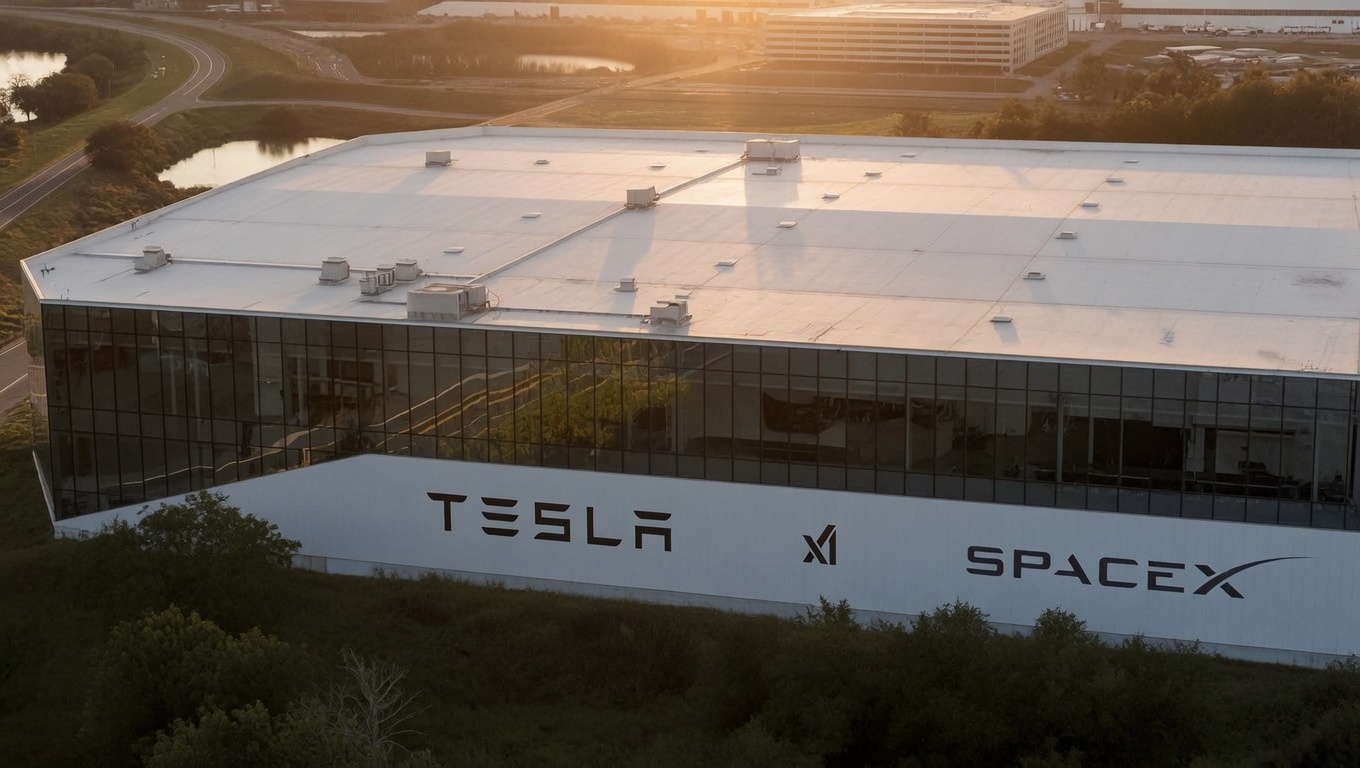
A single line buried in SpaceX’s amended S-1 filing is doing more to move Tesla’s stock price than anything Tesla itself has announced in months. The clause, disclosed as SpaceX prepares for what could be the largest IPO in Wall Street history, states that the company “may issue a significant amount of equity in connection with future transactions.” While this may be seen as boilerplate language in S-1 filings, the historical ties between SpaceX and Tesla, and with Elon Musk reportedly discussing a possible merger with close colleagues, investors are interpreting it as something closer to a signal.
The concern among institutional investors like Gary Black, managing director of The Future Fund, pointed directly to the amended filing on X, saying it “strongly suggests more SPCX equity will be issued,” which could potentially be used to acquire Tesla. He estimated such a deal could be 28% dilutive to Tesla shareholders since SpaceX would likely command a significantly higher valuation multiple. Black added that institutional investors he knows hate the idea of a combination because they prefer pure plays over conglomerates, which he said “nearly always gravitate to the lowest common multiple.”
The Tesla and SpaceX merger everyone is talking about is quietly building
The bull case runs the math differently. Tesla influencer and retail shareholder advocate AleXandra Merz pushed back on what she called a widespread misunderstanding of how merger-of-equals deals actually work. Rather than simply splitting the difference between two market caps, a merger exchange ratio is negotiated based on relative fair market values, meaning the lower valued company typically sees its stock reprice upward toward the deal value.
Under her model, SpaceX enters at a $2.5 trillion valuation and Tesla at $1.6 trillion, producing a combined entity worth $4.1 trillion split evenly between both shareholder groups. That implies Tesla’s side of the deal would be valued at $2.05 trillion, a gain of roughly $450 billion from its current market cap. She cited Dow-DuPont and CBS-Viacom as historical examples of how markets reprice both companies toward the announced exchange ratio after a deal is unveiled.
What does a Merger of Equals mean to Elon’s compensation packages?
Well, it changes everything.
Enjoy https://t.co/uekCldyITw pic.twitter.com/kolq1C9qTu
— AleXandra Merz 🇺🇲 (@TeslaBoomerMama) June 1, 2026
The SpaceX S-1 amendments also revealed just how much financial infrastructure already binds the two companies together. As Teslarati has reported, SpaceX purchased $697 million in Tesla Megapacks, $131 million in Cybertrucks, and the two companies have shared supply chain resources, and semiconductor fabrication plans since well before any merger conversation became public. A retail poll by Tesla influencer Sawyer Merritt is finding that 36% of respondents do not plan to buy SpaceX shares at IPO and 15.3% saying their decision depends on the valuation.
Do you plan on buying @SpaceX stock at its IPO?
— Sawyer Merritt (@SawyerMerritt) June 1, 2026
Whether the merger happens or not, the amended filing is seemingly moving markets and sharpened a debate that is no longer theoretical. SpaceX is weeks away from trading publicly, and Tesla shareholders are now watching every word of every filing for clues about what Musk plans to do next.

Elon Musk has firmly denied recent media reports suggesting that SpaceX has reduced its target valuation for an upcoming initial public offering.
The denial came directly from the SpaceX and Tesla frontman on his social media platform X, where he responded with a single word, “False,” to a post from ZeroHedge that cited Bloomberg sources.
This swift rebuttal underscores Musk’s ongoing effort to manage speculation surrounding one of the most anticipated market debuts in recent history.
False
— Elon Musk (@elonmusk) May 29, 2026
According to the disputed reports, SpaceX had lowered its IPO valuation goal to at least $1.8 trillion from previous ambitions exceeding $2 trillion.
The claims emerged amid growing anticipation for the company’s confidential S-1 filing, which positions it for a potential public listing as early as June.
Some had pointed to strong revenue growth, particularly from the Starlink satellite internet service, which contributed heavily to the firm’s 2025 figures of $18.7 billion. Yet challenges persist in other areas, including substantial investments and losses tied to ambitious projects like Starship development and artificial intelligence initiatives, which plan to make life multiplanetary eventually.
Musk’s response highlights a pattern in which he actively counters what he views as inaccurate portrayals of his companies’ trajectories.
SpaceX, already valued privately at extraordinary levels, stands as a cornerstone of Musk’s empire alongside Tesla and xAI. The entrepreneur has long emphasized the transformative potential of reusable rockets and global broadband access, factors that fuel investor enthusiasm despite operational hurdles.
By rejecting the valuation downgrade narrative, Musk signals confidence in SpaceX’s fundamentals and its readiness for public markets on terms favorable to its long-term vision. People have been waiting a very long time to invest in SpaceX, and the valuation, as well as the introductory share price, is not going to need adjusting.
They’ll have plenty of suitors.
This episode reflects broader dynamics in the technology sector, where rumors often swirl around high-profile entities. Musk’s direct engagement with media narratives serves to maintain transparency and control the narrative around his ventures.
As SpaceX prepares for greater scrutiny in public markets, the founder’s denial reinforces optimism about its prospects. Supporters argue that the company’s innovative edge positions it for enduring success, far beyond short-term valuation debates. With the denial now public, attention turns to forthcoming regulatory filings that could provide clearer insights into SpaceX’s strategy and financial health.
The coming weeks promise to reveal more about how SpaceX will transition into a publicly traded powerhouse.
Elon Musk
The Tesla and SpaceX merger everyone is talking about is quietly building
Tesla and SpaceX may be closer to merging than Wall Street or either company is admitting.
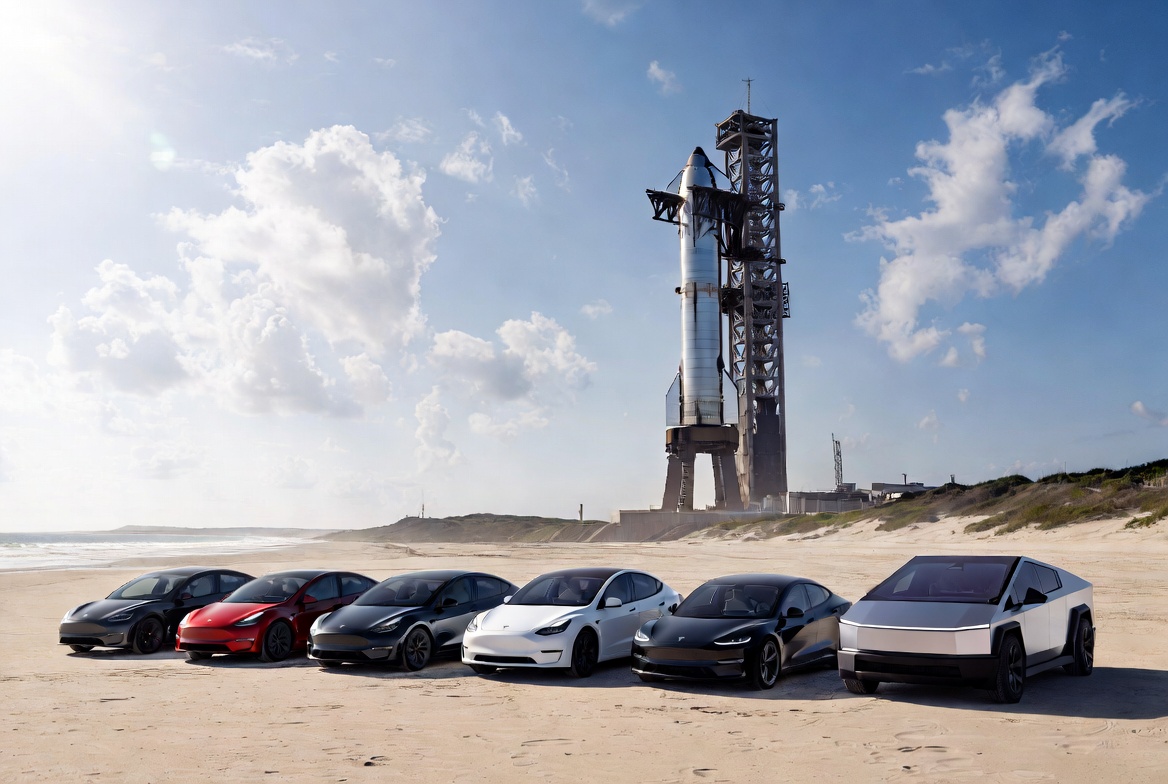
Elon Musk has reportedly discussed merging Tesla and SpaceX with people close to him, according to CNBC, which cited sources familiar with the conversation. Tesla employees have long expected such a transaction and the topic is openly discussed internally, according to internal sources. With SpaceX is days away from kicking off its Wall Street roadshow for what could be the largest IPO in market history, this would be the first time the company will have public market currency to execute a stock-for-stock deal with Tesla.
The financial logic for a merger would make sense. A combined SpaceX and Tesla would create a conglomerate spanning rockets, satellites, electric vehicles, AI infrastructure, and energy storage valued at roughly $3.35 trillion to $3.6 trillion based on SpaceX’s IPO target range and Tesla’s current market capitalization. The two companies are already more intertwined than most people realize. SpaceX bought $697 million worth of Tesla Megapack systems for xAI data centers and $131 million worth of Cybertrucks. Tesla invested $2 billion in xAI, which subsequently merged with SpaceX. Past transactions also include Tesla selling solar equipment and parts to SpaceX, and SpaceX helping with Cybertruck materials.
Will Tesla join the fold? Predicting a triple merger with SpaceX and xAI
Musk himself signaled where this was heading in November 2025 when he posted on X, “My companies are, surprisingly in some ways, trending towards convergence.” Tesla and SpaceX announced a joint semiconductor fabrication facility in Austin called Terafab on the Gigafactory Texas campus, covering two advanced chip factories, with one serving Tesla’s AI needs for vehicles and Optimus robots, the other targeting space-based data centers under SpaceX’s infrastructure vision.
Wedbush analyst Dan Ives places the probability of a merger at 80% to 90% with a target completion in the first half of 2027. The mechanics of a deal became possible the moment SpaceX filed its S-1. Legal experts said a merger likely would not spark antitrust issues but would raise concerns among shareholders in each company, with questions around which company would be the parent, how a stock swap would take place, and who determines the appropriate price. Musk holds about 20% of Tesla’s equity but controls 85.1% of SpaceX’s voting power through a super-voting share class, meaning he would largely be negotiating the terms with himself.
Not everyone is convinced the timing is imminent. Traders on Kalshi place only 33% odds that a merger will happen before May 2027. The more immediate concern for Tesla shareholders is whether the SpaceX IPO pulls capital and Musk’s attention away from Tesla before any merger consolidates the upside for both.
What is clear is that the structural groundwork is already being laid. The Terafab announcement, the xAI merger, the shared supply chain, the cross-company balance sheet transactions, and now the IPO all point in the same direction. Whether the merger follows in 2027 or later, the two companies are already operating more like divisions of a single entity than independent competitors.

Tesla Full Self-Driving attempts 150-mile stress test: the good and the bad

SpaceX’s amended S-1 is sparking a major Tesla merger conversation


