Investor's Corner
Tesla Shorts come out just in time for Summer

Tesla (NASDAQ: TSLA) shorts are coming out, and their vocal stances against the electric automaker are just in time for Summer. Temperatures are rising, so naturally, the shorts are appearing from thin air, just as Tesla’s momentum is building to finish out the second quarter of 2020.
The market will always have those looking to capitalize on a successful company’s downfall. The problem is, Tesla is not experiencing a downfall, nor is it experiencing any issues that really have to do with the automaker’s integrity as a company. Tesla is experiencing some critiques with some problems within the vehicle’s touchscreens, and some subjective opinions regarding build quality, but is that really enough to derail the momentum that the company has compounded over the past 6 months?
In my opinion, no.
However, there are a series of financial analysts who claim that TSLA is going to fall from grace, and its $1,000 stock price, which fluctuates day-to-day, will be a short-lived phenomenon that cannot hold. The analysts claim that Tesla is merely another hot car company with a fun business model and new technology, and that’s what is making it successful. However, these analysts fail to realize that Tesla is much bigger than just a company that builds sustainable cars. It is an entire tech business, focused on vehicles, energy, and sustainability, and the $1,000 stock price it holds is wholly justified.
A name that may be familiar to the TSLA stockholders is Adam Jonas. The Morgan Stanley analyst has been a notorious TSLA critic, who has continued to revise his price targets and ratings for the stock. Jonas’ current stock advice for TSLA is a $650 PT with a “Sell” position.
This is a preview from our weekly newsletter. Each week I go ‘Beyond the News’ and handcraft a special edition that includes my thoughts on the biggest stories, why it matters, and how it could impact the future.
A big thanks to our long-time supporters and new subscribers! Thank you.
While Jonas does recognize Tesla as a “tech” company and not just an automaker, his most recent note to investors indicated that the company holds a series of increased risks because “proven/mature companies” have a lesser degree of execution risk.
It is pretty interesting to hear someone who follows Tesla firmly suggest that the company isn’t proven. The automotive side of Tesla may be young with only twelve years of car sales, but it’s more than proven because everything that Elon Musk has said has become a reality.
It goes all the way back to Tesla’s Master Plan. Make an expensive car, use that money to build a cheaper car, and then use that money to create an even cheaper car.
2008 Roadster > Tesla Model S/X > Tesla Model 3
It is all right there. We could break it down further by talking about Elon Musk’s goal of building world-class automobiles that operate in an environmentally-friendly fashion that aren’t “slow and boring” as he once referred to previous battery-powered machines.
It is more than proven that Tesla is reliable, or mature, even though its a young company. It has repeatedly dug itself out of holes, built upon weaknesses, and risen from the dead in times where it really seemed like things wouldn’t pick back up. For a refresher, watch a documentary called “Revenge of the Electric Car.”
Another analyst is Gordon Johnson, the founder of GLJ Research. In an interview with Benzinga, Johnson talked about his stance on TSLA, which he said, “couldn’t be more bearish.”
Johnson points to Tesla’s lineup of vehicles as the indicator of why he feels the company isn’t an excellent pick for investing.
“Initially it was the S and the X that were going to dominate in the luxury market. That didn’t happen. Then it was going to be the Model 3, which was their mass-market car, which took them to profitability. That didn’t happen. Then it was the Model Y, right? They won’t even tell you what orders are on the Model Y.”
Tesla is coming off of three straight profitable quarters. Q3 and Q4 2019 were both profitable, and Q1 2020 was the first time in company history that the company was profitable in the first three months of the year. The Model Y didn’t begin deliveries until March, so the Model 3, while it did have some non-profitable quarters, led the company to three straight profits over the last three quarters.
As far as the S and X, electric cars were somewhat taboo when both of those vehicles were released. It wasn’t a huge market like it is today, and it was Tesla’s first real attempt at creating an everyday car. While I think Johnson has a point, the S and the X still manage to be a central part of Tesla’s fleet today, constantly receiving updates for performance and battery tech through software upgrades.
But Johnson turned his sights onto the Cybertruck. Claiming the $50 deposit (which is actually $100) is just a ploy to obtain high preorder numbers, he doesn’t even think the car is street legal. This is interesting considering it has traveled on public roads several times, and the IIHS is considering a “no side mirrors” law that would allow the Cybertruck to keep its current design.
Then Johnson mentioned the Semi. “It’s almost like the Tesla Semi,” he said, comparing the commercial vehicle to the Cybertruck. “…Where they were taking preorders for $100,000 three years ago, and they still haven’t made the car.”
The issue with this is, the Semi has always been in the plans. Yes, it wasn’t in production, but it is about to begin its first volume phase in Fremont. The issue was battery production shortages, which evidently no longer seem to be an issue because of Musk’s indication regarding the Semi’s imminent production. It isn’t like Tesla would keep the money from preorders if they scrapped the Semi plans.
Analysts are entitled to their opinions, of course. But there needs to be more education regarding their decisions, in my opinion. There is a lot of proof that Tesla is doing a lot of great things, and it starts with recognizing the mission that the company has set out to achieve. No automaker is perfect, and Tesla never claimed to be. It has had its problems just like any other car company, and it will work through them. Touchscreens fail, batteries need a replacement, tires need patching every now and again. But these issues aren’t exclusive to Tesla, they happen to every manufacturer’s cars at some point or another.
Temperatures are rising, the A/C is cranked up, and the Shorts are out. It’s Summertime, ladies, and gentlemen.
Disclosure: I have no ownership in shares of TSLA and have no plans to initiate any positions within 72 hours.


Investor's Corner
Tesla has a Cybercab problem nobody saw coming
Tesla’s Cybercab line now builds robotaxis faster than Tesla can deploy them, Lars Moravy says.

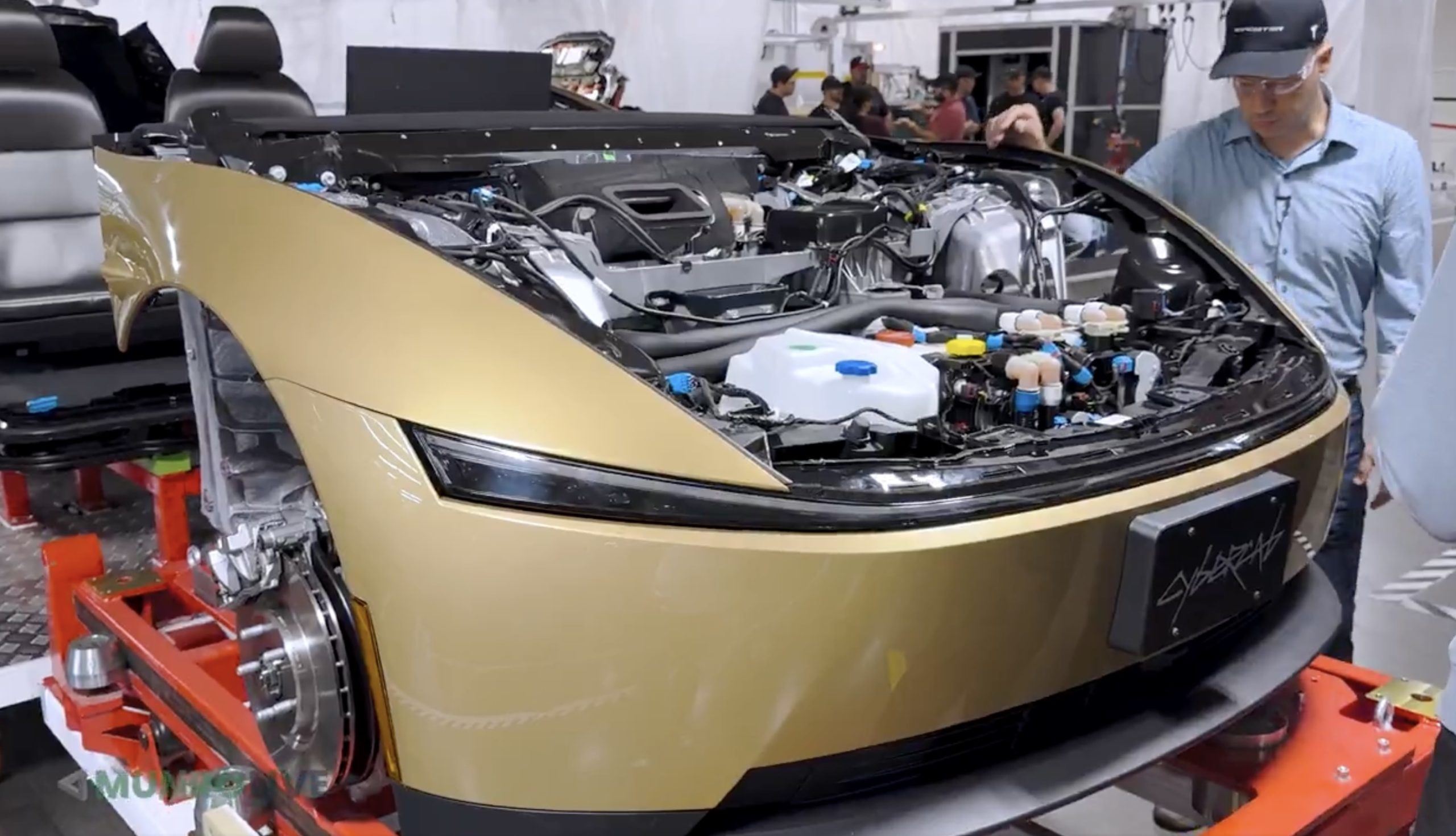
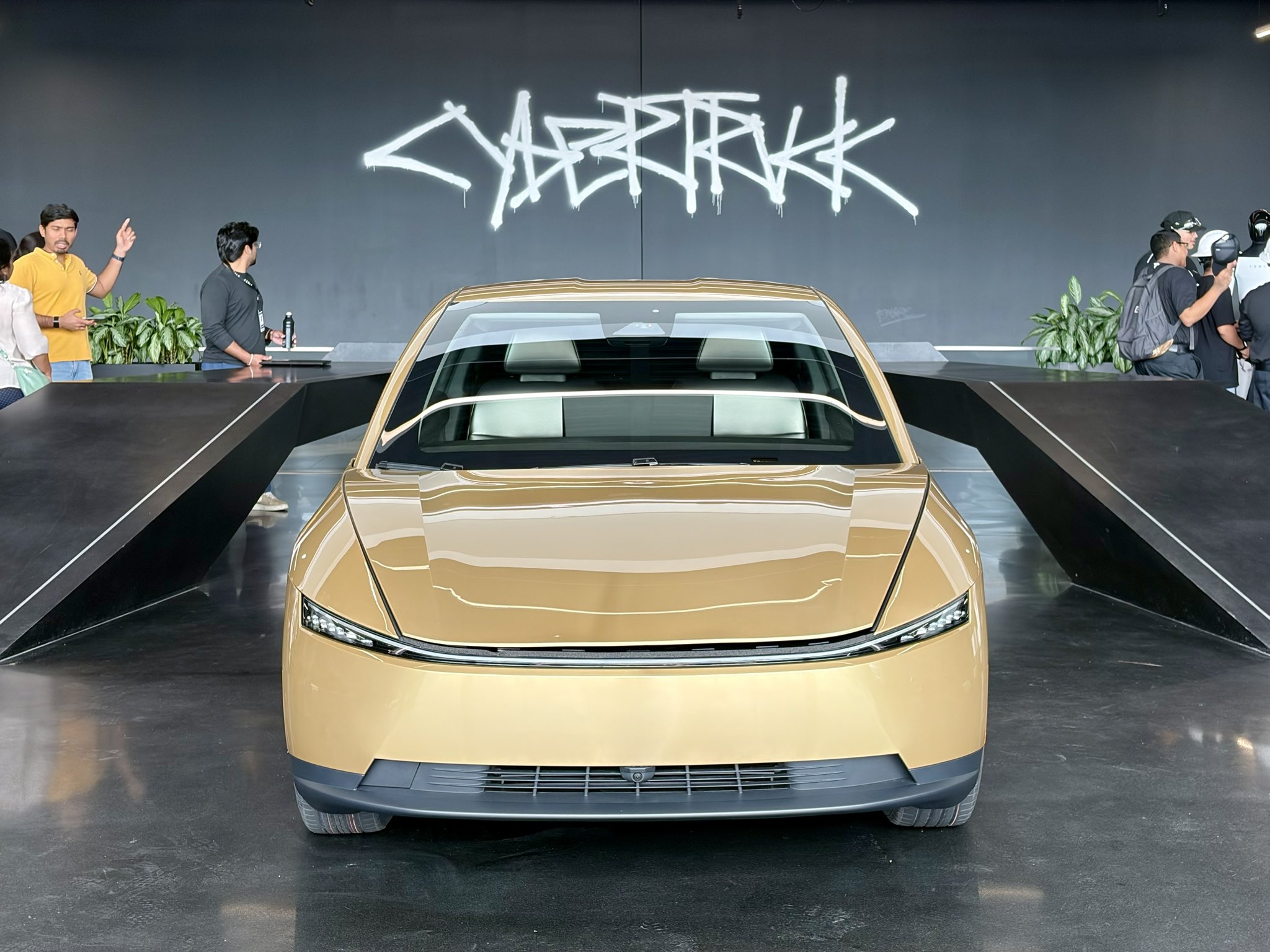
Tesla’s Cybercab line in Texas can now build the two seat robotaxi faster than the company can put it into service, according to Lars Moravy, Tesla’s Vice President of Vehicle Engineering. “We don’t run every day because the line can run so fast. It’s currently outpacing our deployments,” Moravy said in a new Cybercab deep dive from Munro Live. “So, it’s a bit of a race right now. Who’s going to go faster? Right now the manufacturing line’s ahead.”
Tesla’s official Robotaxi account shared a Cybercab analysis video on X on Monday, calling it a “Cybercab engineering deep dive.” Moravy’s comments go further than what he told analysts on the Q3 earnings call last week, when he said the Cybercab line’s listed capacity of more than 125,000 units a year undersells what it can actually run.
The tour shows where that speed comes from. Tesla’s unboxed process splits the Cybercab into front, rear, side and center modules that are built and tested on their own before they meet on a short final line. That final line has just 25 fully automated stations, which Tesla’s team estimated is a fifth to a tenth of what a Model Y needs. The full line is about 78% automated, the framing line is already at 100%, and the layout uses roughly 50% less floor space per vehicle. The stated goal is “100% automation in 10 second cycle time,” or one finished Cybercab every 10 seconds.
Tesla also deleted the paint shop. Only the side modules are coated, and the exterior panels get their color inside the molding machine. Engineers said the car is designed to run at least 500,000 miles, which matters for a vehicle that will spend most of its day carrying riders.
The battery got the same treatment. The Cybercab uses an 88S6P pack of 4680 cells in a steel enclosure, a first for Tesla, with each module potted separately so a single failed module can be swapped instead of the whole pack. Wireless battery management boards replace a wiring harness, and new contactors are fast enough to drop the pyro fuse entirely. Tesla’s battery director graded the pack an A minus, compared with a D for the Model Y structural pack and a B minus for Cybertruck. Up front, the drive unit runs an 11:1 gear ratio versus roughly 9:1 on most Teslas, since the Cybercab does not need a high top speed.
Cybercab engineering deep dive — Robotaxi (@robotaxi) October 26, 2026
The deployment side is now the bottleneck Moravy described. Tesla had more than 50 Cybercabs working the Formula 1 weekend in Austin, and Texas records show 463 Cybercabs registered. Tesla said on its earnings call that Cybercab service will launch in Dallas next month, and Moravy said the company is aiming to get Cybercabs to customers by the end of 2026. Every unit built so far has gone into Tesla’s own fleet since the line moved into volume production in April.
Munro Live also asked when it could get a Cybercab to tear down. Tesla’s answer: “Not yet.”
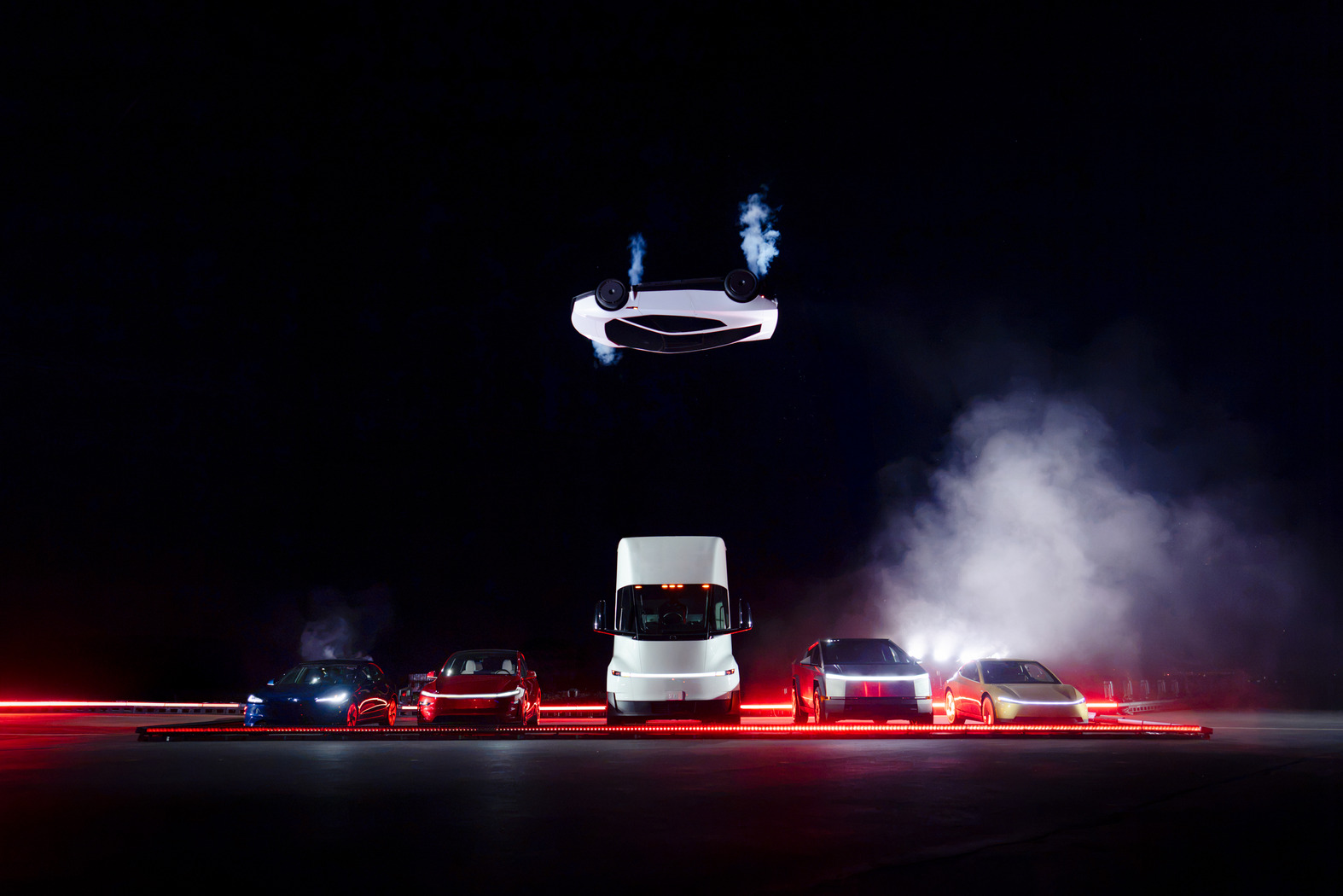
Tesla (NASDAQ: TSLA) reported its earnings for the third quarter of 2026, marking a reasonable performance on the various financial metrics. Tesla still plans to hold a call that will field investor questions at 5:30 p.m. ET, 4:30 p.m. CT.
Here’s where Earnings came in:
- Total Revenues: $28.046 reported vs. $28.34B expected
- Non-GAAP EPS: $0.48 reported vs. $0.45 expected
- Operating Margin: 2.6 % reported vs. 2.5% expected
- Operating Income: $718M reported vs. $721M expected
- Free Cash Flow: $1.531B reported vs. ~-$4.51B expected
Tesla $TSLA Earnings Results:
Revenues: $28.046B
Non-GAAP EPS: $0.48
Operating Margin: 2.6%
Operating Income: $718M
FCF: $1.531B— TESLARATI (@Teslarati) October 21, 2026
Major Takeaways
Full Self-Driving (Supervised)
“FSD (Supervised)⁴ attach rate continued to grow, reaching over 75% of new vehicle deliveries in North America – our most mature market – a nearly twenty percentage point sequential increase. We believe that FSD is driving demand in markets where it is available, and we continue to work with regulators to get it approved in other markets.”
Tesla Semi
“We began volume production of Tesla Semi, our Class 8 heavy-duty truck. The top variant can go 500 miles at full 82,000 lbs gross combination weight while achieving an efficiency of 1.7 kWh/mile. That efficiency allows the Tesla Semi to use a third of the energy used by a comparable diesel truck to haul the same payload. In a transportation market where energy is one of the largest components of total cost per mile, this will provide a meaningful advantage to Tesla Semi operators.”
SI Compute
“We plan to reach 400 MW of SI training compute by the end of the year, supporting the development of both vehicle and humanoid robot autonomy software. Additionally, we continued construction for the Austin Fab, where we plan to start commissioning equipment in 2027.”
Robotaxi
“We began deployment of Cybercab into our Robotaxi fleet in Austin. We reached nearly two million cumulative unsupervised miles for our Robotaxi service as of the end of the quarter. Operating hours in Austin are now 6am to midnight, and we expect to reduce wait times via increased fleet supply and improvement of Robotaxi orchestration algorithms. Grok is available in Cybercab with access to Grok Bot and Connectors, which allows users to manage their inbox, calendars, files, chats and tasks – all hands free via voice command – making Cybercab a mode of transport, a productivity space and, with our entertainment options, a second living room.”
Interested in ordering a Tesla? Use my referral code for three free months of Full Self-Driving (Supervised) here.
Tesla (NASDAQ: TSLA) reports its earnings for Q3 today. Here’s what to expect, as the company will reveal its balance sheet after the market closes on Wednesday.
Tesla already reported deliveries just after Q3 ended, and it demolished Wall Street consensus estimates of roughly 462,000 vehicles. Tesla delivered 486,532 cars in the third quarter, which was a big beat, but was down 2.1 percent from the same quarter last year. Energy storage deployments were 13.7 GWh, up year-over-year.
Tesla showrooms picked clean ahead of Q3 end as demand looks strong
For the quarter, analysts have already compiled their predictions for what Tesla will report this afternoon:
- Total Revenues: $28.34B
- Non-GAAP EPS: $0.43
- Operating Margin: 2.5%
- Operating Income: $721M
- Free Cash Flow: ~-$4.51B
Here are a few things we are looking forward to hearing about on the call:
Automotive Gross Margin and Overall Profitability
This was 16.3 percent in Q2, down from 19.2 percent in Q1, and was impacted by warranty charges and some fading regulatory credits. Consensus implies overall gross margin near 18 percent, but a miss here would potentially reinforce concerns about pricing pressure on its vehicles.
Pay attention to energy storage margins as well, especially since Tesla missed GWh expectations, although it was still a strong quarter.
Robotaxi/Cybercab, Unsupervised FSD, and Optimus Progress
The Say questions from retail investors usually focus on these types of projects, and this quarter is no different. Scaling the Cybercab fleet beyond Austin amid the open NHTSA safety review, timeline for Unsupervised FSD in customer cars, Robotaxi unit economics, and Optimus cost per unit plus when it could start generating revenue, are all things to be looking for.
Any concrete timelines or regulatory path details will likely move the stock more than the near-term numbers. SpaceX merger speculation, which was detailed during SpaceX’s earnings call last night, may also surface, although the key details were shared last night.
Elon Musk just confirmed the Tesla and SpaceX merger step everyone was waiting for
Say Investor Questions
- How does the Cybercab fleet scale past Austin, and what’s the regulatory path outside Texas given NHTSA’s open safety review?
- When can we anticipate FSD unsupervised in customer cars?
- When will the CyberCab be available for customer purchase/ownership?
- What’s the unit economics per paid robotaxi mile, and how does it compare to the thirty-cent target?
- Tesla has acknowledged that HW3 vehicles cannot support unsupervised FSD. When will owners know whether they can upgrade their hardware for free, and when will Tesla provide a clear plan?
The full Earnings Call will be streamed this evening after market close around 5 p.m. this evening.

Tesla has a Cybercab problem nobody saw coming

How SpaceX Is raising Raptor’s sea-level thrust while holding engine mass steady


