Cybertruck
Tesla unveils new Cybertruck configuration, but not in the U.S. (yet)
Tesla’s Rear-Wheel-Drive trim of the Cybertruck has arrived, but not in the U.S. quite yet.


Tesla has officially unveiled a new configuration of the Cybertruck with a new Long Range Rear-Wheel-Drive trim, but it is not yet available in the United States.
Instead, Tesla is advertising the vehicle on its website in Saudi Arabia, a market where it launched deliveries for the first time today, April 10.
🚨 Tesla unveils Long Range Rear-Wheel-Drive Cybertruck. It is currently being offered in the Saudi Arabian market.
There is no listed price as of yet. pic.twitter.com/aDDgDEIEQt
— TESLARATI (@Teslarati) April 10, 2025
Tesla has always planned to launch this configuration of the Cybertruck, as in November 2019, at the vehicle’s unveiling event, it was the most affordable and most accessible trim, priced at just $39,990.
However, Tesla did not launch it right away, instead focusing on the All-Wheel-Drive trim levels that appeared to be in higher demand. Now, it is gearing up for its launch as planned for late 2025, but it is limiting orders to the Middle East, at least for now.
Specs
The specs of the new Tesla Cybertruck trim are as follows:
- Range – 350 miles/563 kilometers
- Acceleration – 6.6 seconds 0-100 km/h
- Top Speed – 180 kmh/111 MPH
- No adjustable air suspension
- No rear touchscreen
- Price not listed
U.S. Launch
While Tesla has not listed this specific trim of the Cybertruck in North America yet, it is likely that the company will launch it in the United States later this year.
Tesla has said that this trim level would be available in the U.S. in late 2025, and we would imagine that is still the plan. The reasoning for launching it in the Middle East before it heads to the U.S. is unknown, but it could have something to do with regulatory processes, specifically the EPA and its approval processes.
In the broader scope of things, launching this Cybertruck version in the U.S. could help to improve Tesla’s delivery figures for years to come after its launch.
Many people have been hoping for Tesla to launch a Cybertruck that is more affordable, and it could be a big reason the pickup has not been a bigger seller (despite being the best-selling EV pickup on the market).
This could be the key to unlocking more demand for the Cybertruck, especially in the U.S.


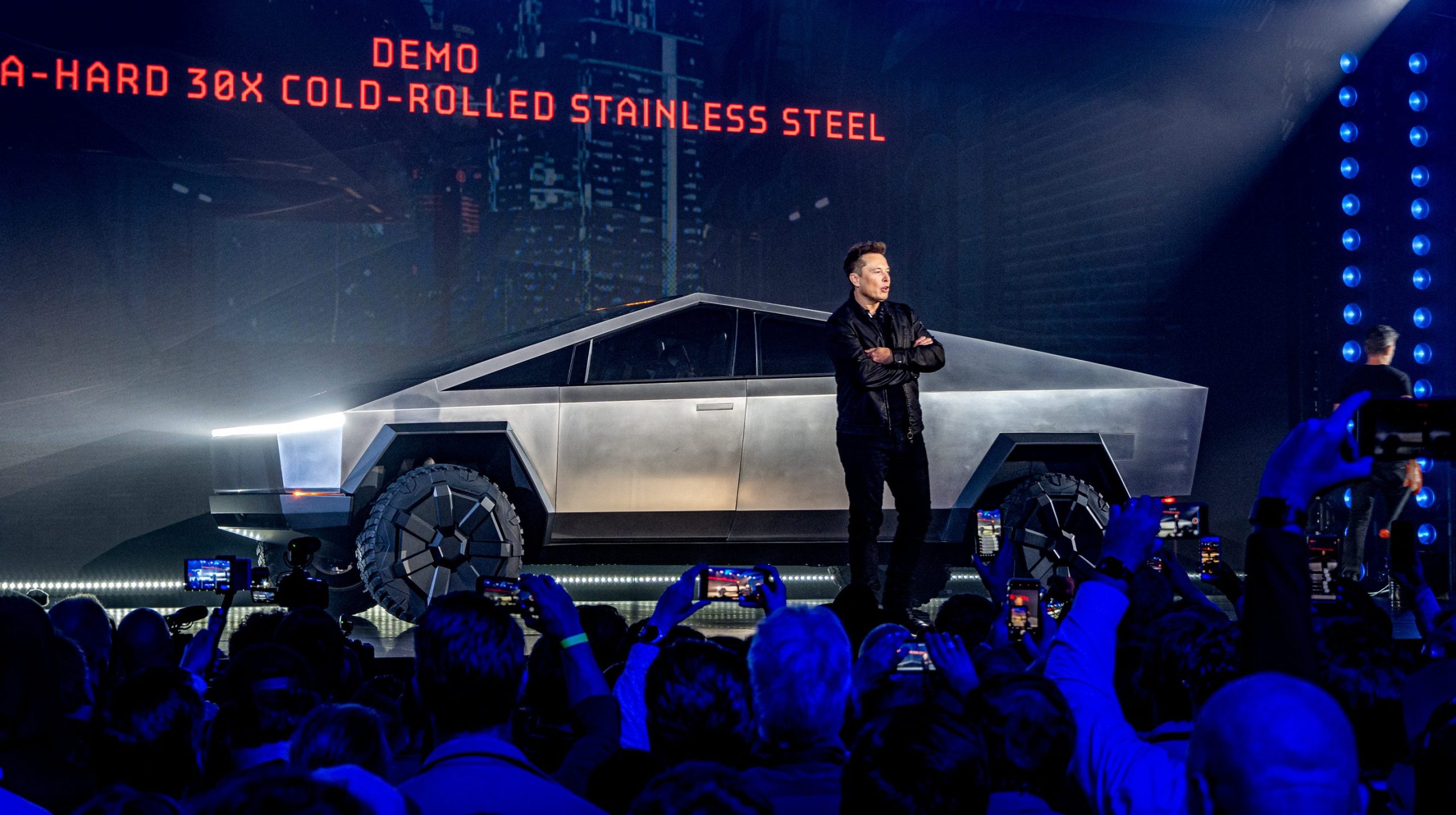
Elon Musk continues to shed more reasons that justify the cancelation of the Tesla Cybertruck, but some of the reasons for the sunset, as well as the process the company is choosing, do not make a lot of sense.
Musk announced last week on X that Tesla would wind down Cybertruck production in mid-2027, a decision that aims to prioritize Cybercab and its importance to the company’s future and passenger transportation as a whole.
But some of what Tesla and Musk are saying does not seem to make much sense. From the process the company is taking with orders to some of the reasoning for the cancelation, the whole situation seems strange.
With that being said: I totally see the merit in prioritizing Cybercab, but I also believe there is room for Cybertruck, a vehicle that has traditionally had low volumes, especially now at its current price point. If it were not for the cancelation, Cybertruck would sell very few units with the recent price adjustments.
Musk Talks Order Rate vs. Production Rate
The first thing that does not make a lot of sense here is the fact that this morning, Musk said that “The Cybertruck order rate far exceeds our production rate. We will try to make as any as possible before shutting down the line in about 8 months, but will have to return deposits for a lot of people.”
The Cybertruck order rate far exceeds our production rate. We will try to make as many as possible before shutting down the line in about 8 months, but will have to return deposits for a lot of people.
This is not a case of Cybertruck being unprofitable, as has been misreported by legacy media, but rather that the opportunity cost of the complexity of Cybertruck is vastly outweighed by the value of incremental Cybercab production.
— Elon Musk (@elonmusk) November 9, 2026
Then why is Tesla STILL accepting orders for the Cybertruck if it already cannot fulfill its order log by mid-2027?
There are so many people ordering Cybertruck that will not receive it. If Tesla already is having trouble seeing how it will build its current orders, why would it allow additional ones?
There are going to be a lot of people who are very upset next June or July, all because they placed an order for a truck that Tesla knew it would not have the time to build. At this point, it seems like a better idea from a customer service standpoint to simply stop accepting orders on a certain date, build those trucks, fulfill those orders, and then close production.
Continuing to accept orders at this point seems wildly strange. If anything, it feels like the $59k Cybertruck orderers will be the ones who get the short end of the stick here, but that’s speculation and just a hunch on my end.
If not Cybertruck, then what?
With only the Model 3 and Model Y available for consumers, meaning the general public, to buy, there is now no utility vehicle in the Tesla lineup, and that is definitely a disappointment.
Ford already washed its hands of the Lightning, which means the Rivian R1T will likely be the best-selling EV pickup on the market, dueling with the GMC Hummer Pickup, Chevy Silverado EV, and the GMC Sierra EV. There are several pickups that are set to hit the market soon, like the Slate EV Truck, and Ford’s new EV pickup, the Fathom.
Tesla could provide some some transparency on what it is planning to do with a future pickup or utility design. Musk said in the past that something much cooler than a minivan will be built. Cries for a full-size SUV have been heard by Tesla, but the company seems to adamant on prioritizing ridesharing vehicles instead of vehicles people want for work, climate, or hobbies.
Some clarity here, past the point of “Tesla is still going to build cars” would be nice. Even a simple, “Yes” response from all the people asking if Tesla will build something larger would be more than enough. We don’t need all the details now, but something would be nice.
Closing Thoughts
More than anything, it is important to note that I do believe Tesla is making a tough decision and one that, from a business standpoint, does make sense. However, I also believe that there is room for the Cybertruck in Tesla’s lineup.
One thing I think it’s worth mentioning is Tesla is not that much different from many companies. They do things that are better for the business that will surely upset consumers. The difference is very few companies have a following like Tesla, so when these things happen, they feel very personal.
Add in the fact that Cybertruck has truly become a symbol of Tesla, and people are even more upset about it.
It will all get figured out, but it’s still very confusing when we step back and take a look at the bigger picture.
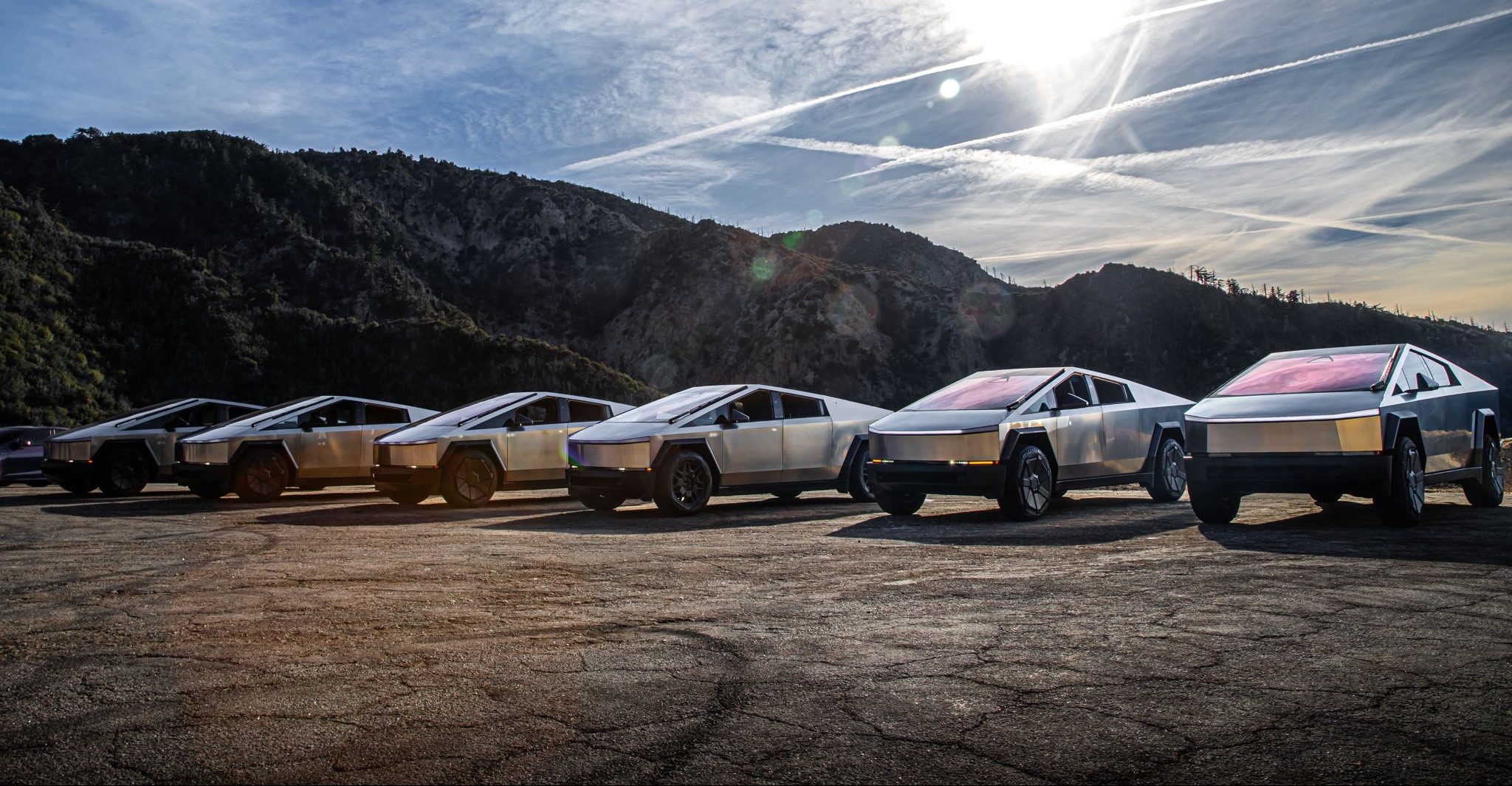
Tesla is ending Cybertruck production sometime in mid-2027, according to CEO Elon Musk.
Musk made the announcement on X last night, which came as a shock to many. He said that the Cybertruck will end production “to make room for increased Cybercab production” at Gigafactory Texas.
It is a huge blow to the fans of Tesla who have come to love the Cybertruck and identify with it as a symbol of their fandom. It has been the best-selling electric pickup, but it has had an underwhelming sales performance in terms of what was expected. This is mostly due to Tesla not meeting the prices it planned to offer the Cybertruck, as its unveiling and actual release were four years apart.
Tesla will be winding down production of the Cybertruck at Gigafactory Texas around the middle of next year to make room for increased Cybercab production
— Elon Musk (@elonmusk) November 6, 2026
Overall, the responses were mixed. Some fans understood the move toward Cybercab production, especially as Tesla is truly pushing the autonomous future through its Robotaxi platform. However, others did not understand it.
“Damn, how many Cybercabs do you guys need?” one response read. Another said it was “Sad but understandable.”Even analyst Gary Black had responded to the news, stating he hoped Tesla planned to replace it with a traditional pickup design.
It doesn’t seem like that will be the case.
Tesla is so hell-bent on delivering autonomy and eventually providing a driverless service that owning a car seems like an arbitrary idea, according to their thesis. Instead, Cybercabs will be available to pick you up and drop you off on demand, safely, without any human help.
As a result, Tesla has thinned its lineup considerably, and one can only ask where the vehicle lineup goes from here. Eventually, it seems like Cybercab could be the only vehicle that Tesla will sell.
Cybertruck
Tesla’s most delayed Cybertruck feature is finally here
Tesla finally links Cybertruck Powershare with Powerwall 3 for extended home backup after years overdue.


Tesla’s Cybertruck can now pair with a Powerwall 3 to keep a house running longer during an outage, a feature the company first promised when the truck launched in November 2023.
The official Cybertruck account posted the update on X Thursday: “Powerwall 3 & I can now power your house together. This extends your home backup by over 3 days, equivalent to 9 additional Powerwalls,” Cybertruck lead engineer Wes Morrill confirmed the rollout separately, calling it the first time a vehicle and a home battery have worked together this way. Powerwall 2 and Powerwall+ compatibility is still coming later this year, per both the Cybertruck account and Morrill.
Powerwall 3 & I can now power your house together⁰ ⁰This extends your home backup by over 3 days, equivalent to 9 additional Powerwalls pic.twitter.com/8G2twIm6AN
— Cybertruck (@cybertruck) September 10, 2026
Powershare itself is not new. Tesla enabled the version that lets Cybertruck power tools, appliances or another EV through its bed outlets when the truck launched in 2023. Home backup through a Powershare Gateway and Universal Wall Connector arrived in 2024, and Tesla extended that support to homes with solar the following year. What has been missing until now is Powershare working alongside an existing Powerwall, instead of functioning as a separate backup source competing for the same job.
The pairing matters because a single Powerwall home battery typically covers a home for about a day, less if usage is heavy or the outage stretches into a heat wave or freeze. A second Powerwall for more backup storage costs several thousand dollars installed. A Cybertruck instead uses a battery the owner already has, one large enough here to add roughly three more days of backup without mounting another unit or booking an installer visit. For households in wildfire, hurricane or winter storm regions where outages run past a day, that keeps the refrigerator and medical equipment running instead of shutting down.
The company told owners in October 2024 that Powerwall integration was coming sometime in 2025. That date passed, and in December 2025 Tesla pushed the target to mid-2026, with Morrill explaining at the time that two grid-forming devices need to negotiate which one manages a home during an outage, and that certifying the process across multiple generations of Powerwall took longer than expected.
For owners who bought Powershare hardware expecting it to work with whatever battery setup they already had, Thursday’s update closes a gap that has shown up repeatedly in owner complaints since Cybertruck deliveries began. Tesla has also rolled out a separate Powershare grid support program in Texas, letting Cybertrucks send power back to the grid during high demand events, so the truck’s role in a home’s energy setup keeps expanding even as individual pieces of it arrive later than promised.

Tesla begins groundworks on $10B ‘Project Crystal Sun’ in Texas

Elon Musk keeps justifying Tesla Cybertruck’s cancelation, but it’s confusing


