News
Looking Ahead to Tesla’s 4th Quarter Earnings Report
Analysts and investors are looking for good news and lots of it Wednesday when Tesla has its Q4 earnings call.

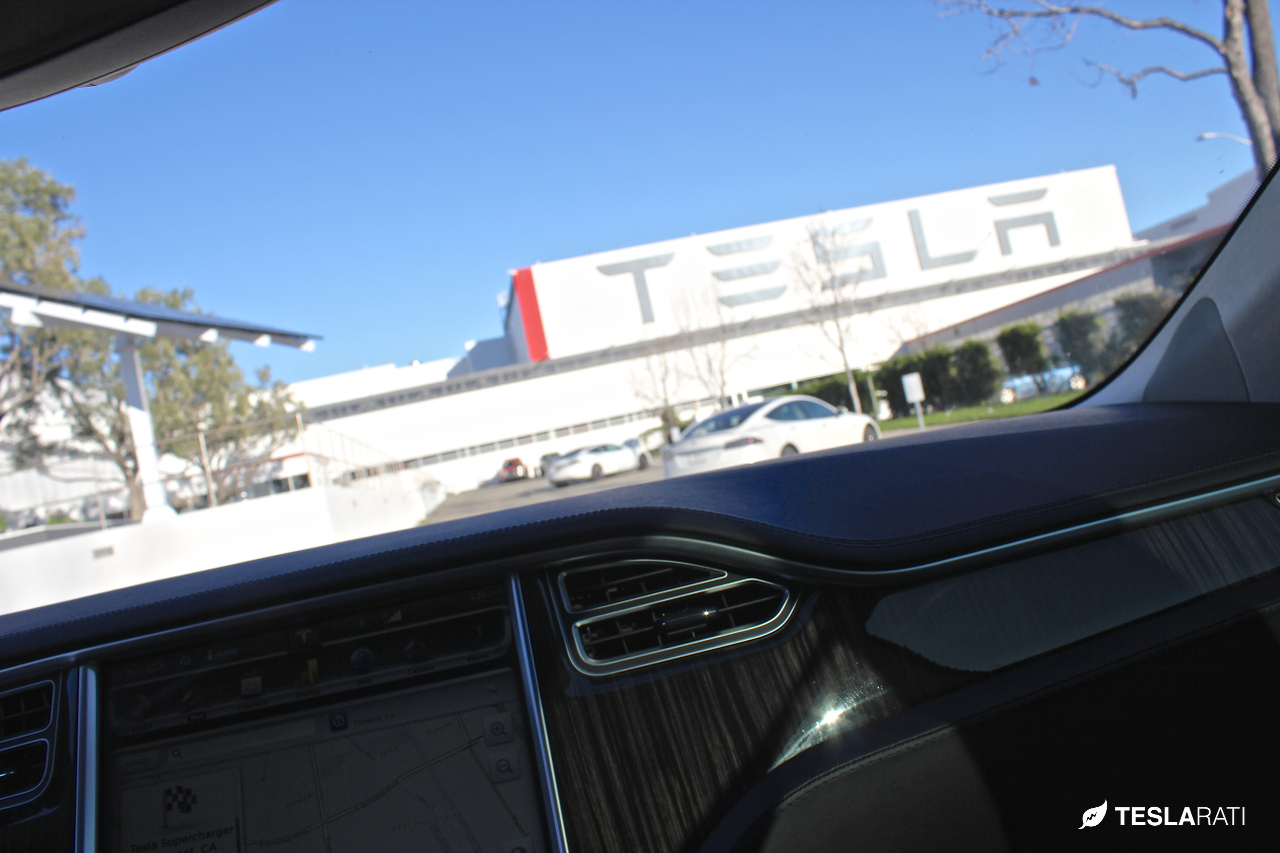

Tesla stock has taken a beating this year having dropped over 33% in the past few months. This comes after the company valuation has seen surging growth over the last two years due to the success of the Model S, and also in large measure because of Elon Musk’s consistently sunny pronouncements. But as oil prices tumble and news of slower than anticipated deliveries of its new Model X crossover SUV continues to swirl, Tesla will need to curb any doubt from the street by issuing a positive outlook in its upcoming Q4 earnings report.
Last week, industry gadfly Bob “Get off my lawn” Lutz told CNBC, “Tesla’s business model is upside down…their costs have always been higher than their revenue. They always have to get more capital, then they burn through it.”
Many people think Lutz is just a troglodyte from a bygone era, but his attitude is beginning to match that of the people on Wall Street. What will it take to turn things around for Tesla’s stock price? According to LearnBonds, the street is looking for four positive signs from the earnings call on Wednesday.
Earnings
Among analysts interviewed by FactSet, the expectation is that Tesla will report earnings per share of $0.17. That is far ahead of the $0.13 adjusted loss from the same quarter a year ago. The company has reported losses for the past four consecutive quarters. Positive earnings would go a long way toward easing investors’ fears.
Revenue
Expectations are that Tesla will report revenue of $1.84 billion for the 4th quarter, a 67% increase over Q4 revenue in 2014. If so, that will calm jittery nerves and give impetus to expectations that Tesla will have $2 billion in revenue in the second quarter of this year.
Gigafactory
Investors want to hear good news about Tesla’s Gigafactory. Its success is crucial to the company’s upcoming affordable mass market Model 3. The street will want assurances that the Gigafactory is on schedule.
Production numbers
Last month it was widely reported that Tesla was suing a German parts maker for allegedly delaying production of the Model X after the vendor could not deliver on a promise to produce a compelling falcon wing door. Tesla claims that this led to delaying of the Model X. If this leads to any significant delays to its upcoming Model 3, that may signal a rocky road ahead for Tesla. Another thing analysts want to hear is that demand for the Model S is still strong and that the Model X is not poaching sales from its sedan sibling.
How will Tesla respond to all these concerns? Check back Wednesday as we report on updates from the Tesla’s Q4 earnings call.


News
Starlink goes mainstream with first-ever SpaceX Super Bowl advertisement
SpaceX used the Super Bowl broadcast to promote Starlink, pitching the service as fast, affordable broadband available across much of the world.

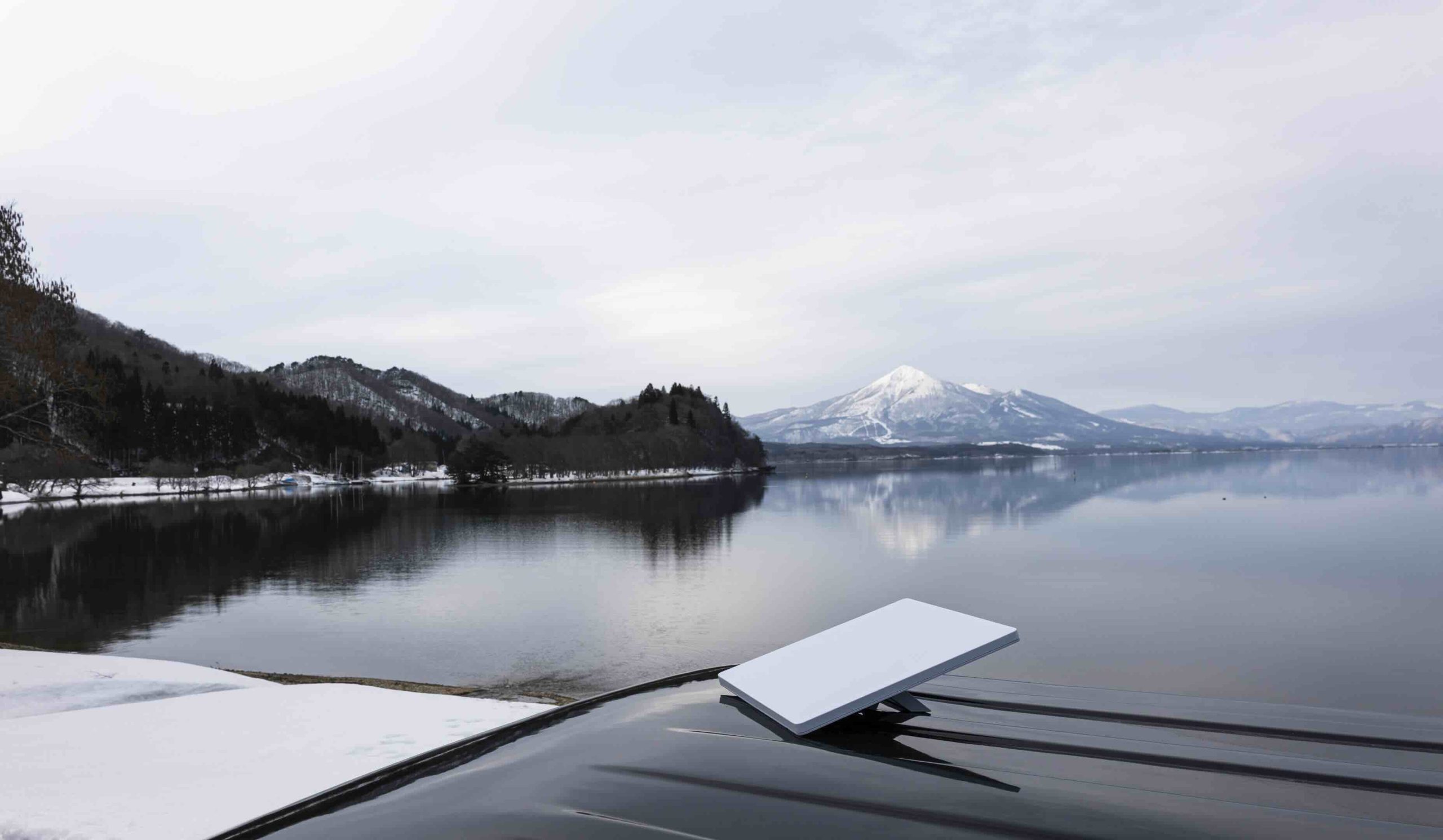
SpaceX aired its first-ever Super Bowl commercial on Sunday, marking a rare move into mass-market advertising as it seeks to broaden adoption of its Starlink satellite internet service.
Starlink Super Bowl advertisement
SpaceX used the Super Bowl broadcast to promote Starlink, pitching the service as fast, affordable broadband available across much of the world.
The advertisement highlighted Starlink’s global coverage and emphasized simplified customer onboarding, stating that users can sign up for service in minutes through the company’s website or by phone in the United States.
The campaign comes as SpaceX accelerates Starlink’s commercial expansion. The satellite internet service grew its global user base in 2025 to over 9 million subscribers and entered several dozen additional markets, as per company statements.
Starlink growth and momentum
Starlink has seen notable success in numerous regions across the globe. Brazil, in particular, has become one of Starlink’s largest growth regions, recently surpassing one million users, as per Ookla data. The company has also expanded beyond residential broadband into aviation connectivity and its emerging direct-to-cellular service.
Starlink has recently offered aggressive promotions in select regions, including discounted or free hardware, waived installation fees, and reduced monthly pricing. Some regions even include free Starlink Mini for select subscribers. In parallel, SpaceX has introduced AI-driven tools to streamline customer sign-ups and service selection.
The Super Bowl appearance hints at a notable shift for Starlink, which previously relied largely on organic growth and enterprise contracts. The ad suggests SpaceX is positioning Starlink as a mainstream alternative to traditional broadband providers.

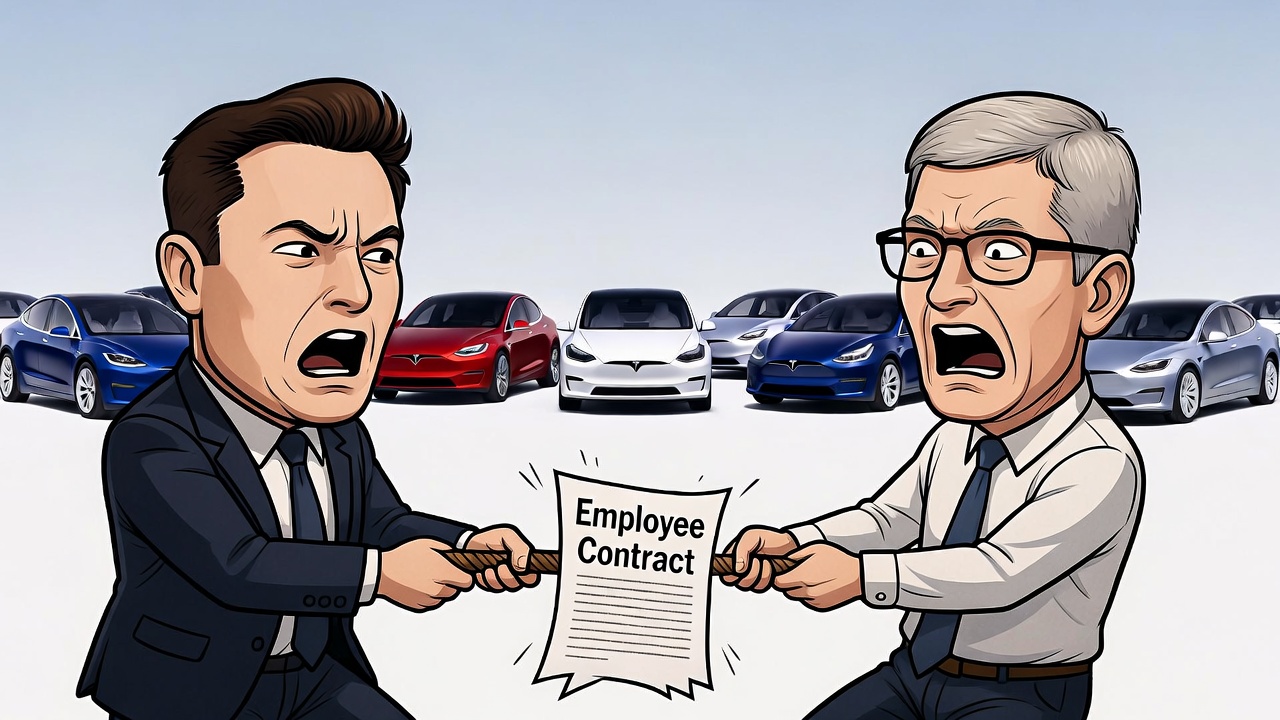
Tesla engineers deflected calls from Apple on a daily basis while the tech giant was developing its now-defunct electric vehicle program, which was known as “Project Titan.”
Back in 2022 and 2023, Apple was developing an EV in a top-secret internal fashion, hoping to launch it by 2028 with a fully autonomous driving suite.
However, Apple bailed on the project in early 2024, as Project Titan abandoned the project in an email to over 2,000 employees. The company had backtracked its expectations for the vehicle on several occasions, initially hoping to launch it with no human driving controls and only with an autonomous driving suite.
Apple canceling its EV has drawn a wide array of reactions across tech
It then planned for a 2028 launch with “limited autonomous driving.” But it seemed to be a bit of a concession at that point; Apple was not prepared to take on industry giants like Tesla.
Wedbush’s Dan Ives noted in a communication to investors that, “The writing was on the wall for Apple with a much different EV landscape forming that would have made this an uphill battle. Most of these Project Titan engineers are now all focused on AI at Apple, which is the right move.”
Apple did all it could to develop a competitive EV that would attract car buyers, including attempting to poach top talent from Tesla.
In a new podcast interview with Tesla CEO Elon Musk, it was revealed that Apple had been calling Tesla engineers nonstop during its development of the now-defunct project. Musk said the engineers “just unplugged their phones.”
Musk said in full:
“They were carpet bombing Tesla with recruiting calls. Engineers just unplugged their phones. Their opening offer without any interview would be double the compensation at Tesla.”
Interestingly, Apple had acquired some ex-Tesla employees for its project, like Senior Director of Engineering Dr. Michael Schwekutsch, who eventually left for Archer Aviation.
Tesla took no legal action against Apple for attempting to poach its employees, as it has with other companies. It came after EV rival Rivian in mid-2020, after stating an “alarming pattern” of poaching employees was noticed.
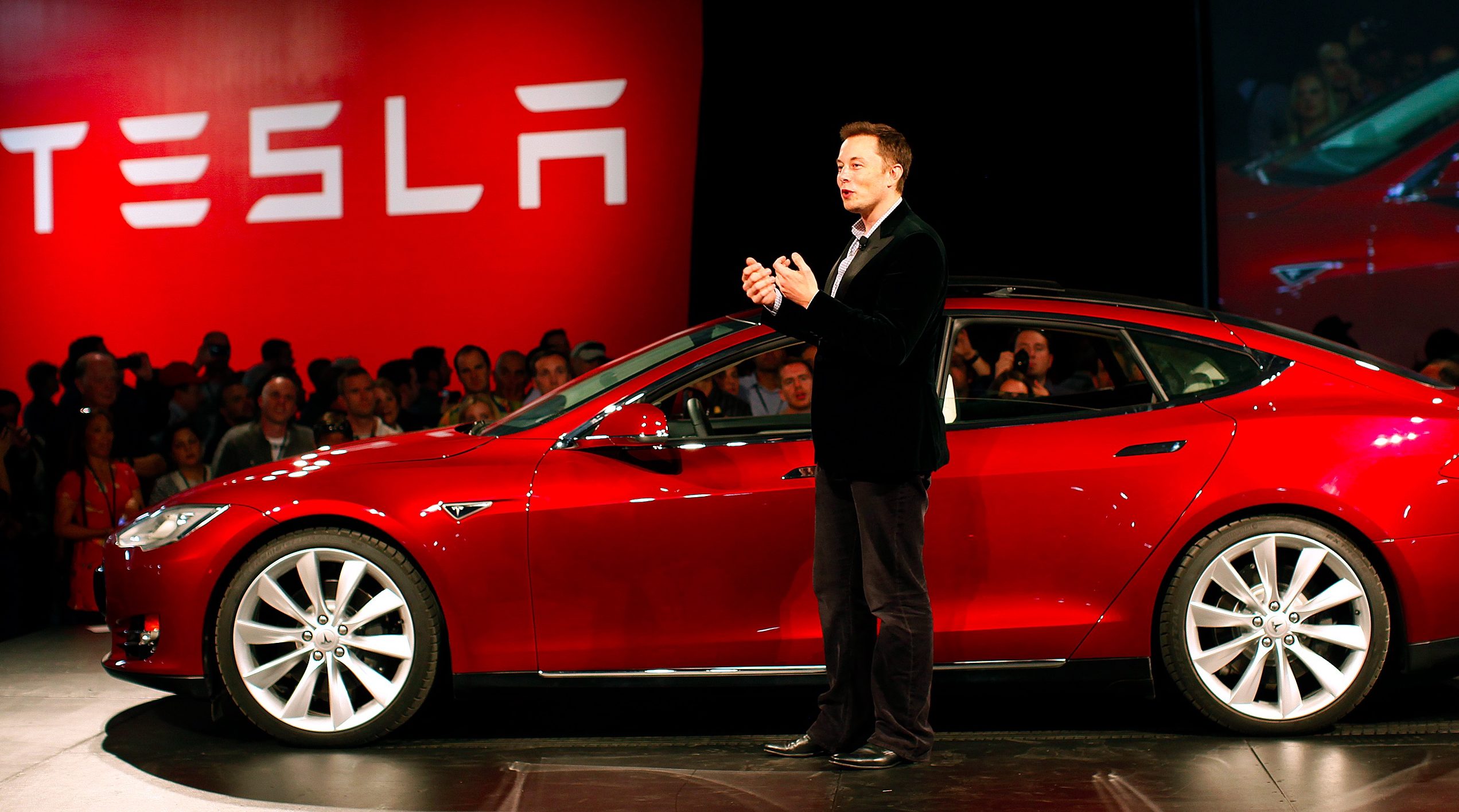
There are a lot of Tesla bulls out there who have astronomical expectations for the company, especially as its arm of reach has gone well past automotive and energy and entered artificial intelligence and robotics.
However, some of the most bullish Tesla investors believe the company could become worth $100 trillion, and CEO Elon Musk does not believe that number is completely out of the question, even if it sounds almost ridiculous.
To put that number into perspective, the top ten most valuable companies in the world — NVIDIA, Apple, Alphabet, Microsoft, Amazon, TSMC, Meta, Saudi Aramco, Broadcom, and Tesla — are worth roughly $26 trillion.
Will Tesla join the fold? Predicting a triple merger with SpaceX and xAI
Cathie Wood of ARK Invest believes the number is reasonable considering Tesla’s long-reaching industry ambitions:
“…in the world of AI, what do you have to have to win? You have to have proprietary data, and think about all the proprietary data he has, different kinds of proprietary data. Tesla, the language of the road; Neuralink, multiomics data; nobody else has that data. X, nobody else has that data either. I could see $100 trillion. I think it’s going to happen because of convergence. I think Tesla is the leading candidate [for $100 trillion] for the reason I just said.”
Musk said late last year that all of his companies seem to be “heading toward convergence,” and it’s started to come to fruition. Tesla invested in xAI, as revealed in its Q4 Earnings Shareholder Deck, and SpaceX recently acquired xAI, marking the first step in the potential for a massive umbrella of companies under Musk’s watch.
SpaceX officially acquires xAI, merging rockets with AI expertise
Now that it is happening, it seems Musk is even more enthusiastic about a massive valuation that would swell to nearly four-times the value of the top ten most valuable companies in the world currently, as he said on X, the idea of a $100 trillion valuation is “not impossible.”
It’s not impossible
— Elon Musk (@elonmusk) February 6, 2026
Tesla is not just a car company. With its many projects, including the launch of Robotaxi, the progress of the Optimus robot, and its AI ambitions, it has the potential to continue gaining value at an accelerating rate.
Musk’s comments show his confidence in Tesla’s numerous projects, especially as some begin to mature and some head toward their initial stages.

Starlink goes mainstream with first-ever SpaceX Super Bowl advertisement

Tesla engineers deflected calls from this tech giant’s now-defunct EV project


