![Tesla-SolarCity plant at Riverbend in South Buffalo. [Source: Derek Gee/Buffalo News]](https://www.teslarati.com/wp-content/uploads/2016/11/Tesla-SolarCity-factory-riverbend-buffalo-new-york-aerial.jpg)
![Tesla-SolarCity plant at Riverbend in South Buffalo. [Source: Derek Gee/Buffalo News]](https://www.teslarati.com/wp-content/uploads/2016/11/Tesla-SolarCity-factory-riverbend-buffalo-new-york-aerial-560x600.jpg)
Energy
Tesla solar plant dubbed “Gigafactory 2”, locations for Gigafactory 3, 4 and possibly 5 this year

Tesla used the fourth quarter earnings call and full year 2016 update to not only share financial performance but also shared insights into where the company is headed with existing businesses, including new plans that center around the Gigafactory model.
The cornerstone announcement that underpins all of Tesla’s strategy is that of the Gigafactory. This monolith is responsible for churning out battery cells for Tesla’s fleet of vehicles and battery storage products, and serves as the showcase for the company’s ability to “build the machine that builds the machines”.
Tesla Gigafactory 2
Tesla shed light on its manufacturing strategy, announcing for the first time the location of Gigafactory 2 as the recently acquired SolarCity plant in Buffalo, New York. The company announced in December an agreement made with Panasonic that would allow both companies to begin manufacturing photovoltaic cells, and modules for Tesla’s Solar Roof and traditional solar panels, at the facility. Tesla is set to launch the Solar Roof product in the second half of 2017.
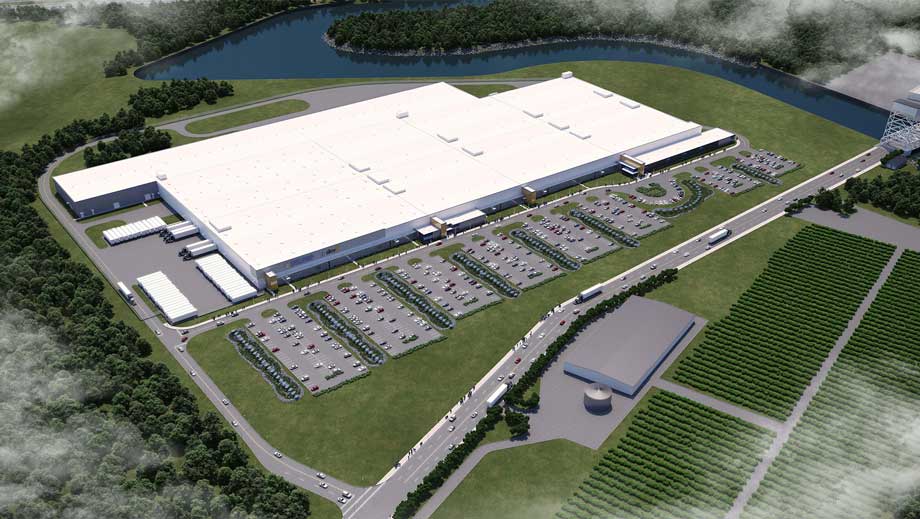
Former SolarCity plant in Buffalo, NY becomes Tesla “Gigafactory 2”
Gigafactory 1 started out as a battery manufacturing facility but quickly grew to include Tesla Energy production and then Tesla Motors battery packs – with Elon finally stating that Tesla vehicles themselves would eventually roll out the doors of future Gigafactories.
The addition of newly minted Tesla Solar production to the Gigafactory model means Tesla will be producing all three of its core product families – Motors, Energy and Solar – in a single factory footprint. Vetting this concept out in Gigafactory 2 will provide a nice blueprint for future Gigafactories as Tesla looks beyond the borders of the U.S. towards international expansion.
Tesla Gigafactory 3, 4, 5
Tesla casually dropped news that the locations of Gigafactory 3, 4 and possibly 5 would be finalized later this year. The obvious location for #3 is Europe with strong Tesla vehicle sales in the region supported by an ever growing fleet of Superchargers in the area.
A quick glance at the world Supercharger map reinforces Tesla’s focus on Europe, with France, Spain, and more recently Lithuania attempting to curry favor with Tesla, as potential homes for a new Gigafactory.
Looking beyond to Gigafactory 4, Asia comes into focus as an obvious choice. Given China’s booming middle class and the country’s shift to becoming one of the largest EV markets in the world, a Tesla factory in China makes a lot of sense. It would allow the company to face-off against local EV manufactures by competing in their own backyard: streamlining logistics and skirting government red tape.
Tesla has big plans to scale. With sights set on an annual production target of 500k vehicles by 2018 and 1 million vehicles per year by 2020, not to mention its ambitious plans to transform the utility pickup and heavy hauler segment through electrification, and it becomes more clear that a need for a third, fourth and possibly fifth Gigafactory is needed.
Building on just the core need for batteries, a modular Gigafactory allows Tesla to move its production into a region in a single step, establishing local supply chains for raw materials while also cutting costs on shipping batteries, vehicles and solar products at the same time. Batteries and cars are not cheap to ship and this move makes sense on many levels.


Elon Musk
Tesla’s $2.9 billion bet: Why Elon Musk is turning to China to build America’s solar future
Tesla looks to bring solar manufacturing to the US, with latest $2.9 billion bet to acquire Chinese solar equipment.

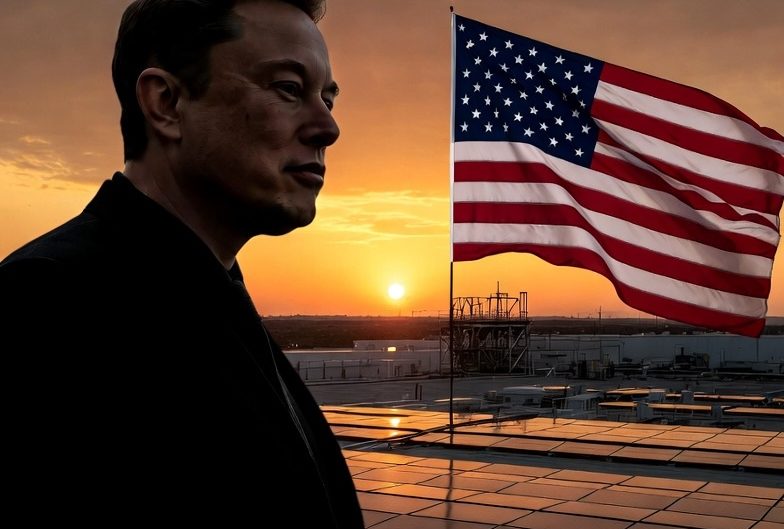
Tesla is reportedly in talks to purchase $2.9 billion worth of solar manufacturing equipment from a group of Chinese suppliers, including Suzhou Maxwell Technologies, which is the world’s largest producer of screen-printing equipment used in solar cell production. According to Reuters sources, the equipment is expected to be delivered before autumn and shipped to Texas, where Tesla plans to anchor its next phase of domestic solar production.
The move is a direct extension of a vision Elon Musk has been building for months. At the World Economic Forum in Davos this past January, Musk announced that both Tesla and SpaceX were independently working to establish 100 gigawatts of annual solar manufacturing capacity inside the United States. Days later, on Tesla’s Q4 2025 earnings call, he made the ambition concrete: “We’re going to work toward getting 100 GW a year of solar cell production, integrating across the entire supply chain from raw materials all the way to finished solar panels.”
Job postings on Tesla’s website reflect that same target, with language explicitly calling for 100 GW of “solar manufacturing from raw materials on American soil before the end of 2028.”
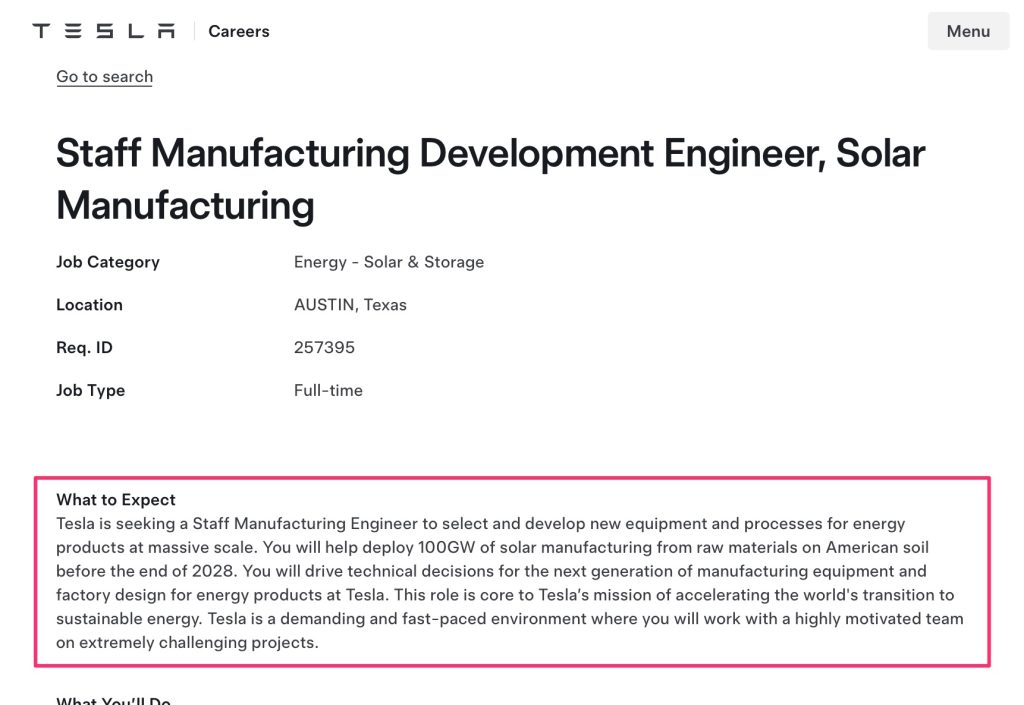
Tesla job listing for Staff Manufacturing Development Engineer, Solar Manufacturing
The urgency behind the latest solar manufacturing target is rooted in a set of rapidly emerging pressures related to AI and Tesla’s own energy business. U.S. power consumption hit its second consecutive record high in 2025 and is projected to climb further through 2026 and 2027, driven largely by the explosion in AI data centers and the broader electrification of transportation. Tesla’s own energy division, which produces the Megapack utility-scale battery storage system, has been growing rapidly, and solar supply is a critical companion component for the business to scale. Musk has argued that solar is not just a clean energy option but the only one that makes economic sense at the scale AI infrastructure demands.
Tesla lands in Texas for latest Megapack production facility
Ironically, the path to domestic solar independence currently runs through China. Sort of.
Despite Tesla’s stated push to localize its supply chain, mirrored recently by the company’s plan for a $4.3 billion LFP battery manufacturing partnership with LG Energy Solution in Michigan, Tesla still relies on China-based suppliers to keep its cost structure intact.
The $2.9 billion equipment deal underscores a tension Musk himself acknowledged at Davos: “Unfortunately, in the U.S. the tariff barriers for solar are extremely high and that makes the economics of deploying solar artificially high, because China makes almost all the solar.” Building the factory in America requires buying the machinery from the country Tesla is trying to reduce its dependence on.
Tesla named by U.S. Gov. in $4.3B battery deal for American-made cells
The regulatory pathway adds another layer of complexity. Suzhou Maxwell has been seeking export approval from China’s commerce ministry, and it remains unclear how quickly that clearance will come. Still, the market has already reacted, with shares in the Chinese firms reportedly involved in the talks surged more than 7% following the Reuters report that broke the story.
Whether Tesla can hit its 2028 target of 100GW of solar manufacturing remains an open question. Though that scale may seem staggering, especially in such a short timeframe, we know that Musk has a documented history of “always pulling it off” in the face of ambitious deadlines that may slip. But, rest assured – it’ll get done.
Elon Musk
Tesla named by U.S. Gov. in $4.3B battery deal for American-made cells
What began as an open secret in the energy industry was confirmed by the U.S. Department of the Interior on Monday: Tesla is the buyer behind LG Energy Solution’s blockbuster $4.3 billion battery supply agreement.
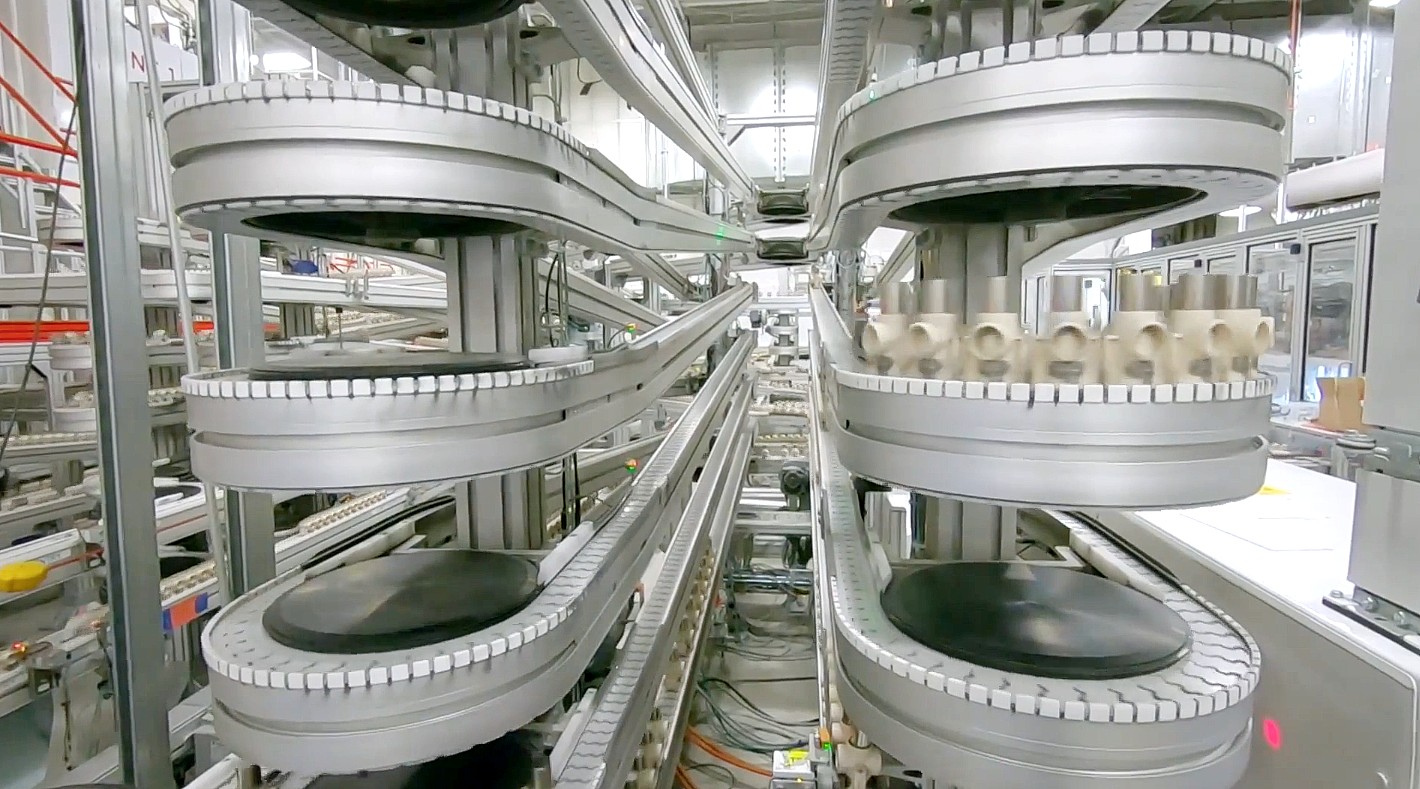
What began as an open secret in the energy industry is becoming more real after the U.S. Department of the Interior named Tesla as the stakeholder in the LG Energy Solution’s blockbuster $4.3 billion battery supply agreement.
Tesla and LG Energy Solution are expanding their partnership to build a LFP prismatic battery cell manufacturing facility in Lansing, Michigan, launching production in 2027. The announcement, made as part of the Indo-Pacific Energy Security Summit results, ends months of speculation.
“American-made cells will power Tesla’s Megapack 3 energy storage systems produced in Houston, creating a robust domestic battery supply chain.”, notes a press release on the U.S. Department of the Interior website.
Tesla has long utilized China’s Contemporary Amperex Technology Co. (CATL), the world’s largest LFP battery maker, as one of its primary suppliers. That relationship made financial sense for years, considering that Chinese LFP cells were cheap, abundant, and reliable. But with escalated tariffs on Chinese imports and an increasingly growing Tesla Energy business that’s particularly reliant on LFP cells for products including its Megapack battery storage units designed for utilities and large-scale commercial projects.
The announcement of a deepened partnership between LG Energy Solution and Tesla has strategic logic for both parties. For Tesla, it secures a tariff-compliant, domestically produced battery supply for its fast-growing energy division. LGES, now producing LFP batteries in Michigan, becomes the only major supplier currently scaling U.S. production, outpacing rivals like Samsung SDI and SK On. LG Energy Solution’s Lansing plant, formerly known as Ultium Cells 3, was previously operated as a joint venture with General Motors. LGES acquired GM’s stake in May 2025 and now fully owns the site, with a production capacity of 50 GWh per year. LG Energy said the contract includes options to extend the supply period by up to seven years and boost volumes based on further consultations.
For the broader industry, the ripple effects are significant. This deal signals that domestic battery manufacturing can be financially viable and not just aspirational. Utilities, energy developers, and rival automakers will take note as American-made LFP supply becomes a competitive reality rather than a distant promise.
For consumers, the benefits will take time but are real. A more resilient, U.S.-based supply chain means fewer price shocks from trade disputes, more stable Megapack availability for the grid storage projects that reduce electricity costs, and long-term downward pressure on energy storage prices as domestic production scales.
Deliveries are set to begin in 2027 and run through mid-2030, and as grid storage demand accelerates, reliable, US-made battery supply is no longer a future ambition. It is becoming a core requirement of the country’s energy strategy.
Energy
Tesla Energy gains UK license to sell electricity to homes and businesses
The license was granted to Tesla Energy Ventures Ltd. by UK energy regulator Ofgem after a seven-month review process.

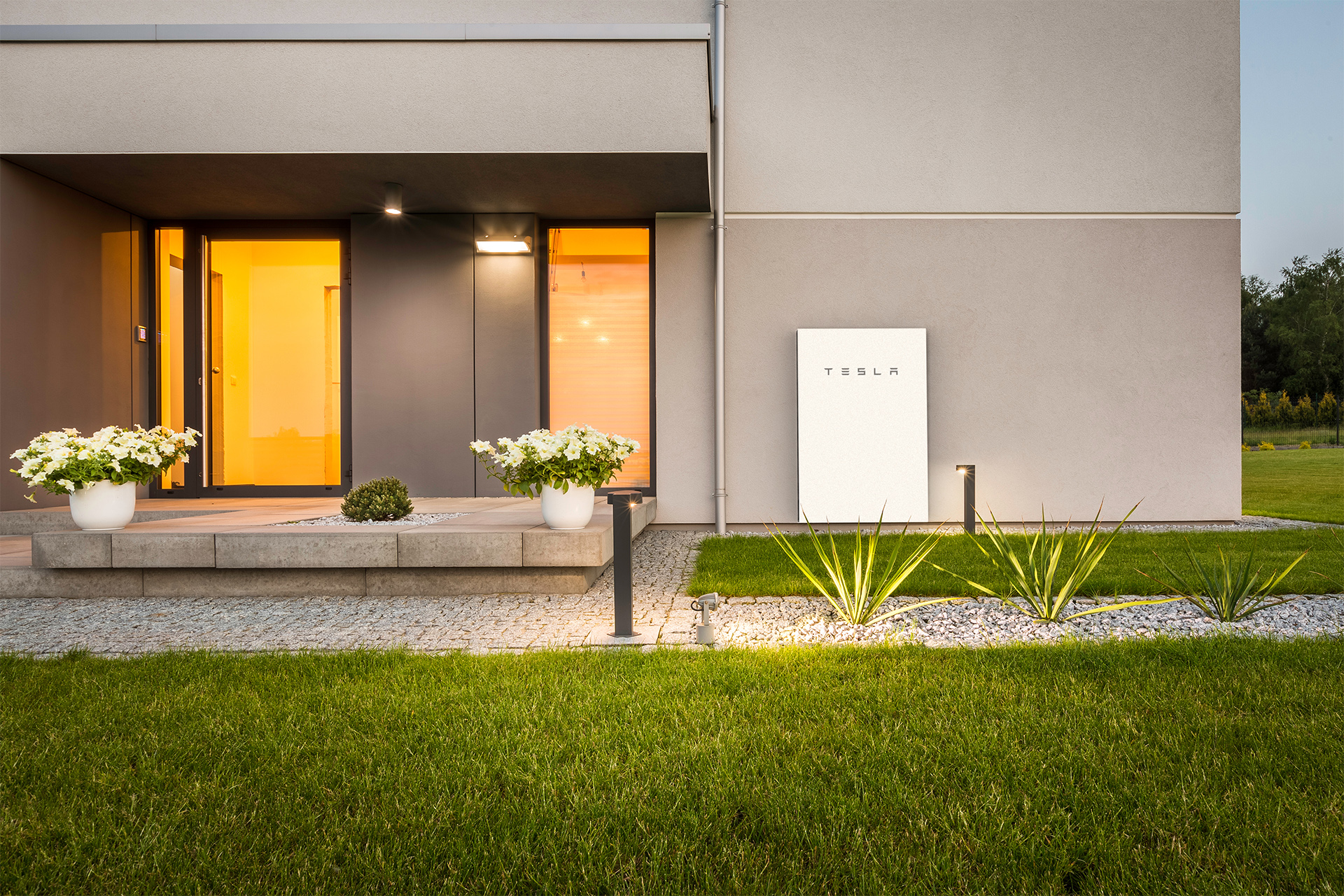
Tesla Energy has received a license to supply electricity in the United Kingdom, opening the door for the company to serve homes and businesses in the country.
The license was granted to Tesla Energy Ventures Ltd. by UK energy regulator Ofgem after a seven-month review process.
According to Ofgem, the license took effect at 6 p.m. local time on Wednesday and applies to Great Britain.
The approval allows Tesla’s energy business to sell electricity directly to customers in the region, as noted in a Bloomberg News report.
Tesla has already expanded similar services in the United States. In Texas, the company offers electricity plans that allow Tesla owners to charge their vehicles at a lower cost while also feeding excess electricity back into the grid.
Tesla already has a sizable presence in the UK market. According to price comparison website U-switch, there are more than 250,000 Tesla electric vehicles in the country and thousands of Tesla home energy storage systems.
Ofgem also noted that Tesla Motors Ltd., a separate entity incorporated in England and Wales, received an electricity generation license in June 2020.
The new UK license arrives as Tesla continues expanding its global energy business.
Last year, Tesla Energy retained the top position in the global battery energy storage system (BESS) integrator market for the second consecutive year. According to Wood Mackenzie’s latest rankings, Tesla held about 15% of global market share in 2024.
The company also maintained a dominant position in North America, where it captured roughly 39% market share in the region.
At the same time, competition in the energy storage sector is increasing. Chinese companies such as Sungrow have been expanding their presence globally, particularly in Europe.

Elon Musk demands Delaware Judge recuse herself after ‘support’ post celebrating $2B court loss

Tesla Cybercab spotted next to Model Y shows size comparison

Elon Musk says Tesla is developing a new vehicle: ‘Way cooler than a minivan’

Elon Musk’s Boring Co. Tunnel Vision Challenge ends with a surprise for Louisiana, Maryland and Dallas

What is Digital Optimus? The new Tesla and xAI project explained


