Investor's Corner
Tesla (TSLA) rallies +4.5% as Wall Street shrugs off Q4 delivery miss

While the initial after market reaction to the miss in Q4 2016 production and deliveries was negative, reaction from Wall Street tell a different story as the company’s stock (Nasdaq: TSLA) quickly rallied to a 4.5% gain.
We’ve provided some market reactions from analysts watching the stock.
Colin Rusch from Oppenheimer reiterated a Hold rating on Tesla and said that “with TSLA announcing shipments of ~22.2k cars in 4Q16, we are expecting a better- than-feared trade over the next couple of days. While the company missed its 4Q16 shipment guidance by over 10% for the quarter, we believe expectations had dropped significantly below guidance due to media reports of slow sell-through. We anticipate investors will now shift focus to the Gigafactory ramp, timing of Model 3 production, and the company’s ability to generate cash from operations. We continue to be cautious about potential margin drag given simultaneous Model 3 and Gigafactory ramp plus purchase commitments for solar modules from its Buffalo facility.”
Lou Whiteman of TheStreet.com in a piece titled “Wall Street Still Loves Tesla and This Chart Proves It” stated that “While the results provided fresh fodder for the bears, they didn’t do enough to crush Wall Street’s long love affair with Elon Musk’s baby. Investors may also be optimistic ahead of a previously-planned analyst tour of the company’s Gigafactory battery facility scheduled for Wednesday.” Additionally he positively stated that “The total deliveries, though a miss, by far surpassed 2015’s total of about 50,000.” “The company has a history of missing internal deadlines, but simply showing progress towards bringing the Model 3 to market should be enough to keep bulls on board and allow Tesla to return to the capital markets to raise more cash if needed.”
TheStreet.com has been bearish on Tesla for a long time, and Lou warned that “even if the Model 3 arrives on time, there are still questions about whether the company can turn a profit on the vehicle. Tesla has targeted a base price of $35,000 for the vehicle, but skeptics including Stanphyl Capital managing member and portfolio manager Mark Spiegel estimate it might cost the company upwards of $48,000 per unit to produce the car.”
Jim Cramer, also of TheStreet.com, said on CNBC’s “Squawk on the Street” that “the market isn’t having a stronger reaction because the company seems to be coated with Teflon, meaning that it can withstand things like a lower-than-expected delivery number.” “It should be called Teflon Motors because I don’t think this will matter. Tesla seems to be “charmed,” and it’s still making a lot of cars, like Jay Leno noted,” Cramer noted. “In particular, Tesla’s sales numbers in China jumped dramatically this past year, which is “important. But regardless, people are not going to react to this news. The analysts aren’t going to change their view on it. I think that’s the important way to look at it. They’re just not going to change. No ‘buy’ to ‘holds.’”, Cramer reiterated.
In a Marketwatch story titled “Here’s why Tesla is Baird’s top stock-market pick for 2017“, analyst Ben Kallo was quoted saying that he”expects the company’s energy business and the launch of the Model 3 electric sedan will exceed expectations.” He went on saying that “Tesla energy storage business and growth opportunity is not currently reflected in share prices”. Ben named Tesla Motors (NASDAQ: TSLA) his “top pick for 2017” and reiterated an Outperform rating and price target of $338. He “does not believe the Q4 delivery number (expected by Jan. 3) will be an overhang and recommends buying shares heading into 2017 as they believe the stock will make new highs.
As I predicted on Tuesday, several unrelated reports covered the positive fact that Tesla finally begun producing batteries at the Gigafactory, lead by information coming from Tesla’s invite-only ‘investor event’. Everyone from Reuters to Bloomberg and the WSJ reported this news in their opening pages.
Cadie Thompson reported on Business Insider that Tesla began production of battery cells at its Gigafactory on Wednesday. “The battery cells currently in production will be used for Tesla’s rechargeable home battery, Powerwall 2, as well as its massive commercial battery, Powerpack 2. The electric-car maker said in a statement that it aims to begin production of battery cells for the Model 3, its first mass-market car, sometime in the second quarter.”
Tom Randall of Bloomberg, in an article titled “Tesla Flips the Switch on the Gigafactory” stated that “Musk meets a deadline: Battery-cell production begins at what will soon be the world’s biggest factory—with thousands of additional jobs.”
He goes on stating that “the Gigafactory has been activated. Hidden in the scrubland east of Reno, Nev., where cowboys gamble and wild horses still roam—a diamond-shaped factory of outlandish proportions is emerging from the sweat and promises of Tesla CEO Elon Musk. It’s known as the Gigafactory, and today its first battery cells are rolling off production lines to power the company’s energy storage products and, before long, the Model 3 electric car.”
Tom added that “by 2018, the Gigafactory, which is less than a third complete today, will be staffed by 6,500 full-time Reno-based employees and singlehandedly double the world’s production capacity for lithium-ion batteries, according to a new hiring forecast from Tesla.”


Elon Musk
Elon Musk debunks latest rumors about SpaceX IPO
Musk has swiftly put to rest circulating reports suggesting that SpaceX would exclude popular retail brokerages Robinhood and SoFi from its highly anticipated initial public offering. In a direct response posted on X on March 31, Musk stated simply, “These reports are false,” addressing widespread speculation fueled by a Reuters article.

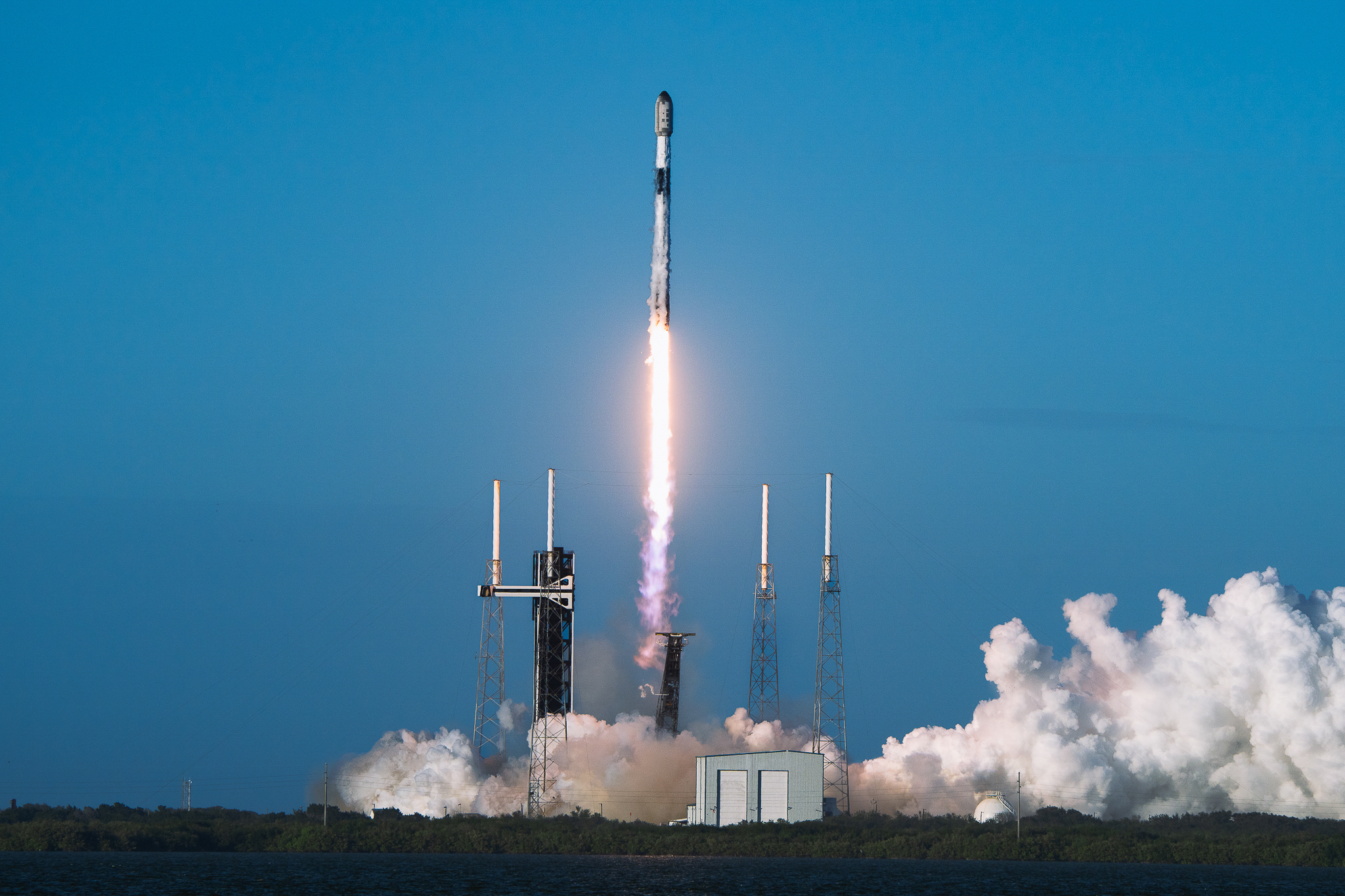
Tesla and SpaceX CEO Elon Musk debunked the latest rumors about the space exploration company’s initial public offering (IPO), which has been the subject of a wide array of speculation over the last few weeks.
With SpaceX likely heading to Wall Street to become a publicly-traded stock in the coming months, there is a lot of speculation surrounding how it will happen, whether the company will potentially combine with Tesla, and more.
Tesla and SpaceX to merge in 2027, Wall Street analyst predicts
But the latest rumors have to do with where SpaceX will list the stock.
Musk has swiftly put to rest circulating reports suggesting that SpaceX would exclude popular retail brokerages Robinhood and SoFi from its highly anticipated initial public offering.
In a direct response posted on X on March 31, Musk stated simply, “These reports are false,” addressing widespread speculation fueled by a Reuters article.
These reports are false
— Elon Musk (@elonmusk) March 31, 2026
The Reuters report, published March 30, claimed that Morgan Stanley’s E*Trade was in talks to lead the sale of SpaceX shares to small U.S. investors.
Sources indicated that Robinhood and SoFi, despite pitching for roles, faced potential exclusion from the retail allocation, with Fidelity also competing for a piece of the action. The story quickly spread across financial media, raising concerns among retail investors eager to participate in what could be one of the largest IPOs in history.
SpaceX has a reported valuation nearing $1.75 trillion, and Musk’s plan to allocate up to 30 percent of shares to individual investors — far above the typical 5-10% — had generated massive excitement.
Musk’s concise denial immediately calmed the narrative. The original X post quoting the rumor garnered significant engagement, with users expressing relief that everyday investors would not be sidelined.
This episode reflects Musk’s hands-on approach to SpaceX’s public debut.
Earlier reporting revealed plans for an unusually large retail slice to leverage Musk’s dedicated fan base and stabilize post-IPO trading. SpaceX aims to file potentially as early as this period, building on momentum from its Starship program and Starlink growth.
The IPO could mark a transformative moment, potentially elevating Musk’s status further while democratizing access to a company long reserved for accredited investors and institutions.
The rumor’s quick debunking also revives debates about retail access in high-profile listings. Robinhood gained popularity during the 2021 meme-stock surge but faced criticism for past trading restrictions.
SoFi has positioned itself as a modern financial platform for younger investors. Excluding them could have limited participation from tech-savvy retail traders who form a core part of Musk’s supporter base across Tesla and SpaceX.
While details remain fluid, Musk’s intervention reinforces commitment to broad accessibility. As preparations advance, investors await official filings. For now, the message is clear: rumors of restricted retail access were overstated, keeping the door open for widespread participation in SpaceX’s public chapter.
This development comes amid broader market enthusiasm for space and technology stocks. Musk’s transparency through X continues to shape public perception, distinguishing SpaceX’s path from traditional Wall Street norms. With retail allocation potentially reaching 30 percent, the IPO promises to be both commercially massive and culturally significant.
Investor's Corner
Tesla and SpaceX to merge in 2027, Wall Street analyst predicts
The move, Ives argues, is no longer a distant possibility but a logical next step, fueled by deepening operational ties, shared AI ambitions, and Elon Musk’s vision for dominating the next era of technology.
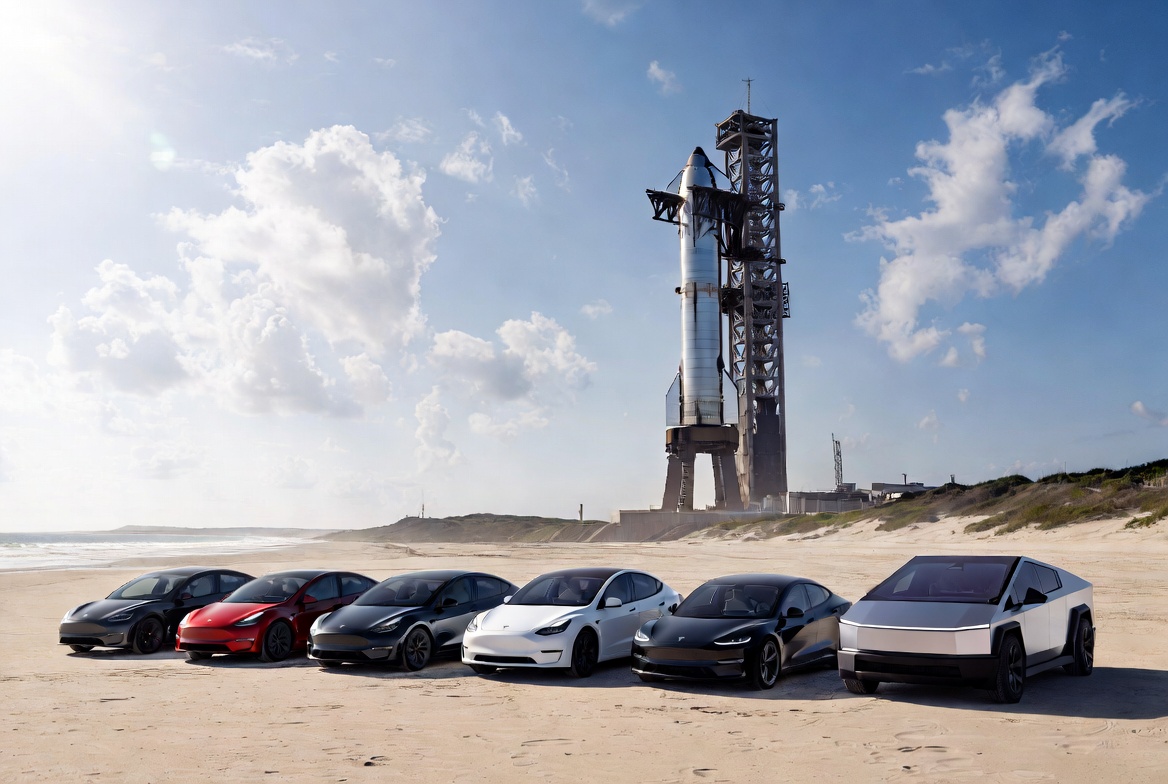
Tesla and SpaceX are two of Elon Musk’s most popular and notable companies, but a new note from one Wall Street analyst claims the two companies will become one sometime next year, as 2027 could see the dawn of a new horizon.
In a bold new research note, Wedbush analyst Dan Ives has reaffirmed his long-standing prediction: Tesla and SpaceX will merge in 2027.
The move, Ives argues, is no longer a distant possibility but a logical next step, fueled by deepening operational ties, shared AI ambitions, and Elon Musk’s vision for dominating the next era of technology.
He writes:
“Still Expect Tesla and SpaceX to Merge in 2027. We continue to believe that SpaceX and Tesla will eventually merge into one company in 2027 with the groundwork already in place for both operations to become one organization. Tesla already owns a stake in SpaceX after the company’s $2 billion investment in xAI got converted to SpaceX shares following SpaceX’s acquisition of xAI earlier this year initially tying both of Musk’s ventures closer together but still represents <1% of SpaceX’s expected valuation. The recent announcement of a joint Terafab facility between SpaceX and Tesla further ties both operations together making it more feasible to merge operations given the now existing overlap being built out across the two with this the first step.”
The groundwork is already being laid. Earlier this year, SpaceX acquired xAI, converting Tesla’s $2 billion investment in the AI startup into a small equity stake, less than 1 percent, in SpaceX.
Regulatory filings cleared the transaction in March 2026, formally linking the two Musk-led companies financially for the first time. Then came the announcement of a joint TERAFAB facility in Austin, Texas: two advanced chip factories, one dedicated to Tesla’s AI needs for vehicles and Optimus robots, the other targeting space-based data centers.
Elon Musk launches TERAFAB: The $25B Tesla-SpaceXAI chip factory that will rewire the AI industry
Ives calls Terafab the “first step” toward full operational integration.
SpaceX’s impending IPO, expected as soon as mid-June 2026, will turbocharge these plans. The company aims to raise approximately $75 billion at a roughly $1.75 trillion valuation, far exceeding earlier estimates.
Proceeds will fund Starship rocket flights, a NASA-contracted lunar base, expanded Starlink services across maritime, aviation, and direct-to-mobile applications, and crucially, orbital AI infrastructure
A major driver is the exploding demand for AI compute. U.S. data centers are projected to consume 470 TWh of electricity by 2030, constrained by power grids and land.
🚨 Wedbush’s Dan Ives says that Tesla and SpaceX will merge in 2027. SpaceX will IPO soon, his new note says:
“According to media reports, SpaceX could file a prospectus for an IPO imminently with the goal of raising ~$75 billion above the prior expectation of ~$50 billion…
— TESLARATI (@Teslarati) March 27, 2026
SpaceX’s strategy, launching millions of solar-powered satellites to host data centers in orbit, bypasses Earth’s energy bottlenecks. Solar energy captured in space avoids atmospheric losses and day-night cycles, offering a scalable solution for AI training and inference.
The xAI acquisition ties directly into this vision, positioning the combined entity as a leader in extraterrestrial computing.
The merger would create a formidable conglomerate spanning electric vehicles, robotics, satellite communications, human spaceflight, and defense.
Ives highlights SpaceX’s role in the Trump administration’s “Golden Dome” missile defense shield, which would leverage Starlink satellites for tracking.
For Tesla, access to SpaceX’s launch cadence and orbital assets could accelerate autonomous driving, Robotaxi fleets, and Optimus deployment.
Musk, who has signaled his desire to own roughly 25 percent of Tesla to steer its AI future, views the combination as essential to overcoming fragmented regulatory scrutiny from the FTC and DOJ.
Challenges remain. Antitrust hurdles could delay or reshape the deal, and shareholder approvals on both sides would be required. Yet Ives remains bullish, maintaining an Outperform rating on Tesla with a $600 price target, implying substantial upside from current levels. The analyst sees the merger as the “holy grail” for consolidating Musk’s disruptive tech empire.
If realized, a 2027 Tesla-SpaceX union would not only reshape corporate boundaries but redefine humanity’s trajectory in AI and space exploration. It would mark the moment two pioneering companies become one unstoppable force, pushing the limits of what’s possible on Earth and beyond.
Elon Musk
TIME honors SpaceX’s Gwynne Shotwell: From employee No. 7 to world’s most valuable company
Time Magazine honors Gwynne Shotwell as SpaceX reaches a $1.25 trillion valuation and eyes its IPO.

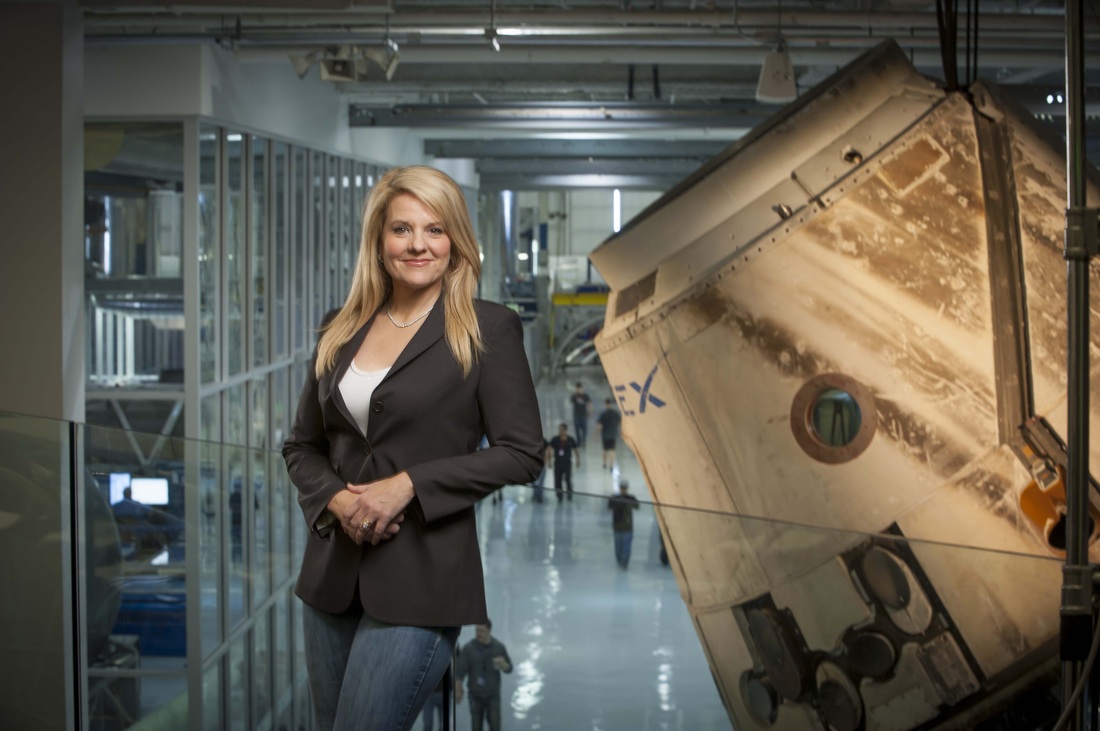
TIME Magazine has put SpaceX President and COO Gwynne Shotwell on its cover, and the timing could not be more fitting. Published today, the profile of Shotwell arrives at a moment when the company she has quietly run for more than two decades stands at the center of the most consequential developments in aerospace, artificial intelligence, and the future of human civilization.
Shotwell joined SpaceX in 2002 as its seventh employee and has never stopped expanding her role. She oversees day-to-day operations across multiple executive teams spanning Falcon, Starlink, Starship, and now xAI following SpaceX’s February 2026 merger with Elon Musk’s artificial intelligence company, a deal that made SpaceX the world’s most valuable private company at a reported valuation of $1.25 trillion. A highly anticipated IPO is expected in the second quarter of 2026.
Will Tesla join the fold? Predicting a triple merger with SpaceX and xAI
Her track record is historic. She oversaw the first landing of an orbital rocket’s first stage, the first reuse and re-landing of an orbital booster, and the first private crewed launch to Earth orbit in May 2020. She built the Falcon launch manifest from nothing to more than 170 contracted missions representing over $20 billion in business. Under her operational leadership, SpaceX completed 96 successful missions in 2023 alone and has now flown more than 20 crewed Falcon 9 missions. Starlink, which she championed as a financial pillar of the company long before it was a mainstream topic, now connects tens of millions of users worldwide and provided a critical communications lifeline to Ukraine following the 2022 invasion.
Elon Musk has never been shy about what Shotwell means to him and to SpaceX. When she shared her vision for worldwide internet connectivity through Starlink, Musk responded on X with a simple statement, “Gwynne is awesome.” It is a sentiment that has been echoed across the industry. NASA Administrator Bill Nelson once said of Musk: “One of the most important decisions he made, as a matter of fact, is he picked a president named Gwynne Shotwell. She runs SpaceX. She is excellent.”
Gwynne is awesome https://t.co/tiXtMWJmPE
— Elon Musk (@elonmusk) September 28, 2024
Now, with Starship targeting its first crewed lunar landing under the Artemis program by 2028, an xAI integration underway, and a pending IPO that could reshape capital markets, Shotwell’s mandate has never been larger. She told Time that 18 Starships are already in various stages of construction at Starbase. “By 2028,” she said, gesturing across the factory floor, “these should be long gone. They better have flown by then.” If Shotwell’s history at SpaceX is any guide, they will.

NASA sends humans to the Moon for the first time since 1972 – Here’s what’s next

Tesla removes Model S and X custom orders as sunset officially begins

SpaceX files confidentially for IPO that will rewrite the record books

Elon Musk says Tesla is developing a new vehicle: ‘Way cooler than a minivan’

Elon Musk launches TERAFAB: The $25B Tesla-SpaceXAI chip factory that will rewire the AI industry


