News
Tesla updates Model S, X: 370-mi range, faster charging, adaptive suspension

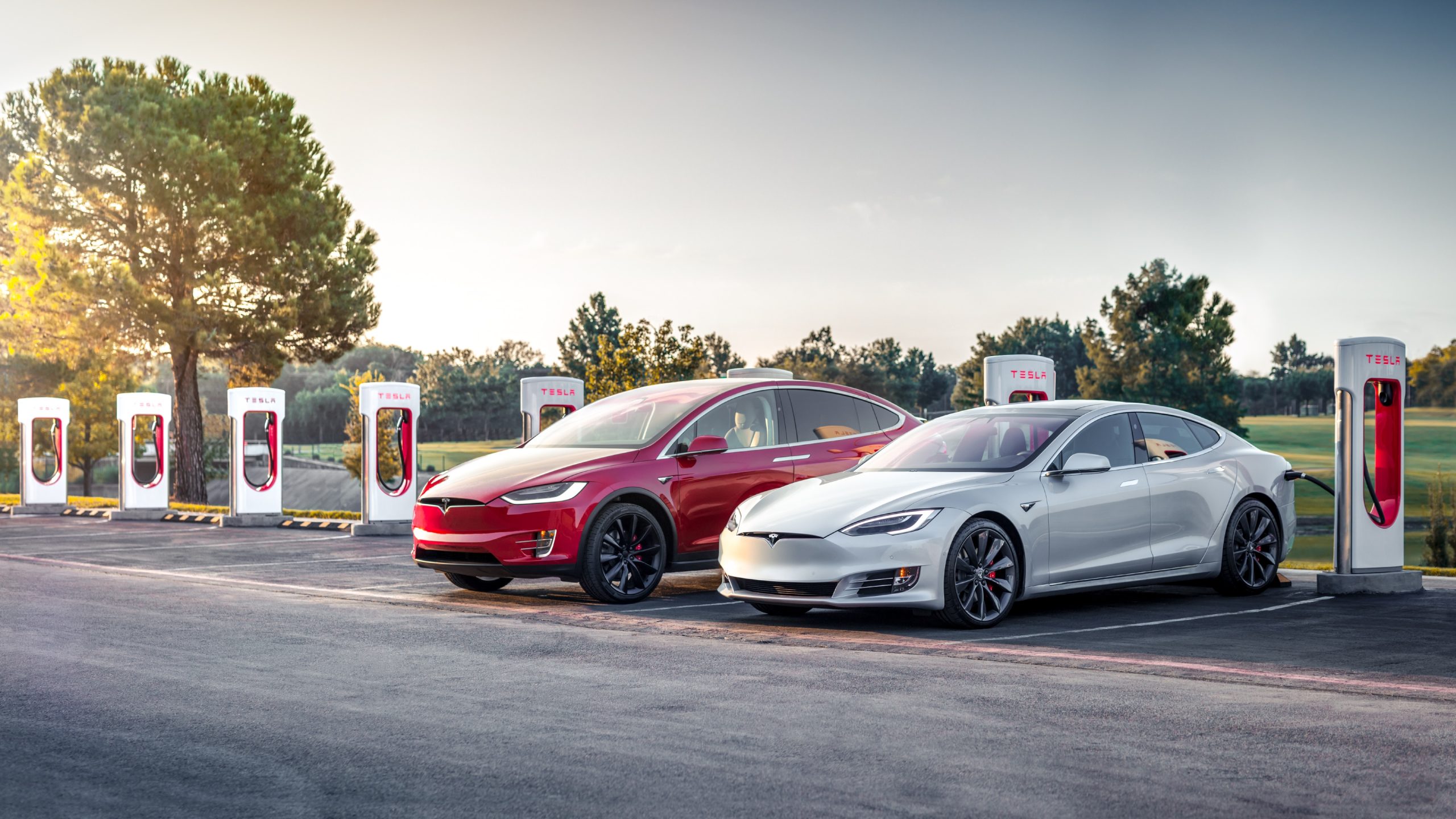
Rumors that a Tesla Model S and Model X refresh was arriving this year have been partially confirmed, with the electric carmaker announcing Tuesday afternoon that its flagship vehicles have been updated to use a completely new and highly-efficient drivetrain design, along with a new adaptive suspension.
Model S Long Range will have an industry leading 370-mile range per single charge, while Model X will boast a 325-mile range per charge. Tesla notes that the range increase is due in large part to a new drive unit design that leverages an optimized permanent magnet motor, improved cooling, bearings, and new gear design to achieve greater than 93% efficiency. The end result is improved range from the same battery cells that are currently being used in the Model S and Model X 100 kWh pack.
By improving drivetrain efficiency, Tesla has been able to effectively increase range by more than 10%. By improving the flow of energy out of the battery and back in through regenerative braking, Tesla was also able to further improve acceleration in the Model S and Model X.
“In addition to adding range, power and torque increases significantly across all Model S and Model X variants, improving 0-60 mph times for our Long Range and Standard Range models,” notes Tesla in its blog post.
In addition, Model S and Model X is now capable of recharging at a 50% faster rate from the help of new updates, including the more efficient drivetrain design. Similar to Tesla Model 3’s ability to charge at 1,000 miles per hour from Supercharger V3 when at a 250 kW max power output, Model S and Model X will be able to achieve 200 kW. It’s important to note that Tesla’s flagship vehicles will be able to charge at a faster rate from the same battery pack, while Model 3 utilizes a newer generation 2170 cylindrical cell with higher energy density than the Model S and Model X.
All Model S and Model X will now come with an upgraded air suspension system that uses software intelligence to adapt to various driving and road conditions.
“Unlike other manufacturers, our suspension software is developed completely in-house, using a predictive model to anticipate how the damping will need to be adjusted based on the road, speed, and other vehicle and driver inputs,” says Tesla, adding “The system constantly adapts by sensing the road and adjusting for driver behavior, automatically softening for more pronounced road inputs and firming for aggressive driving.”
In line with Tesla’s ability to constantly add new features to a vehicle and improve its performance through over the air software updates, Tesla’s new Fully Adaptive Suspension will continuously improve over time as new software is rolled out.
For performance enthusiast who’s an existing Model S or Model X owner, Tesla will be offering the $20k Ludicrous Mode upgrade for free on the purchase of a new Performance Model S or Performance Model X.
Details of the latest Model S and Model X update, including the addition of a Standard Range variant can be found in Tesla’s blog post. We’ve included it in its entirety below.
The Longest-Range Electric Vehicle Now Goes Even Farther
For more than a decade, Tesla engineers have been obsessed with making the world’s most efficient electric vehicles. As a result, Tesla vehicles already travel farther on a single charge than any other production EV on the market. Today, we’re making changes to Model S and Model X that allow them to travel unprecedented distances without needing to recharge, beating our own record for the longest-range production EVs on the road. And we’ve accomplished this without increasing the cars’ battery size, proving that our expertise in system-level design can make our cars dramatically more efficient.
Beginning today, Model S and Model X now come with an all-new drivetrain design that increases each vehicle’s range substantially, achieving a landmark 370 miles and 325 miles on the EPA cycle for Model S and Model X Long Range, respectively. Using the same 100 kWh battery pack, these design and architecture updates will allow drivers to travel farther than ever before, charging less frequently and getting more range out of every dollar spent on charging.
We’re also introducing a brand-new adaptive suspension system for Model S and Model X, along with a few other improvements for the best range, acceleration, and ride comfort ever, plus a Ludicrous Mode upgrade for our most loyal customers. Here’s what’s new:
More Efficient Design
All Model S and X vehicles now benefit from Tesla’s latest generation of drive unit technology, which combines an optimized permanent magnet synchronous reluctance motor, silicon carbide power electronics, and improved lubrication, cooling, bearings, and gear designs to achieve greater than 93% efficiency. Pairing a permanent magnet motor in the front with an induction motor in the rear enables unparalleled range and performance at all times. The net effect is a more than 10% improvement in range, with efficiency improvements in both directions as energy flows out of the battery during acceleration and back into the battery through regenerative braking. In addition to adding range, power and torque increases significantly across all Model S and Model X variants, improving 0-60 mph times for our Long Range and Standard Range models.
Faster Charging
Paired with the new more efficient drivetrain design, Model S and Model X are now capable of achieving 200 kW on V3 Superchargers and 145 kW on V2 Superchargers. Together, these improvements enable our customers to recharge their miles 50% faster.
Fully Adaptive Suspension
We’ve also upgraded our air suspension system for Model S and Model X with fully-adaptive damping, giving it an ultra-cushioned feel when cruising on the highway or using Autopilot, and a responsive, exhilarating confidence during dynamic driving. Unlike other manufacturers, our suspension software is developed completely in-house, using a predictive model to anticipate how the damping will need to be adjusted based on the road, speed, and other vehicle and driver inputs. The system constantly adapts by sensing the road and adjusting for driver behavior, automatically softening for more pronounced road inputs and firming for aggressive driving. We’ve also improved the leveling of the system while cruising, keeping the car low to optimize aerodynamic drag. As with all of Tesla’s in-house software, the adaptive suspension can receive over-the-air updates, allowing us to enable all Model S and Model X customers to have the most advanced suspension technology at all times.
Constant Refinement
To complement these changes, we’ve also re-engineered several other components of Model S and Model X in keeping with our philosophy of continuous improvement. These updates include new wheel bearings and a few new tire designs for certain variants to improve range, ride, and steering. While these changes may seem minor, together they have a meaningful impact when it comes to EV design.
In addition to our Long Range and Performance variants, we’re also re-introducing a lower entry price for Model S and Model X by bringing back our Standard Range option, now available for an even greater value with the new drivetrain and suspension updates. We also want to emphasize the critical impact each of our early Tesla owners has had on advancing our mission, so as a thank you, all existing Model S and Model X owners who wish to purchase a new Model S or Model X Performance car will get the Ludicrous Mode upgrade, a $20,000 value, at no additional charge.
These changes will go into production at our factory in Fremont, California this week, and can be ordered today at Tesla.com.



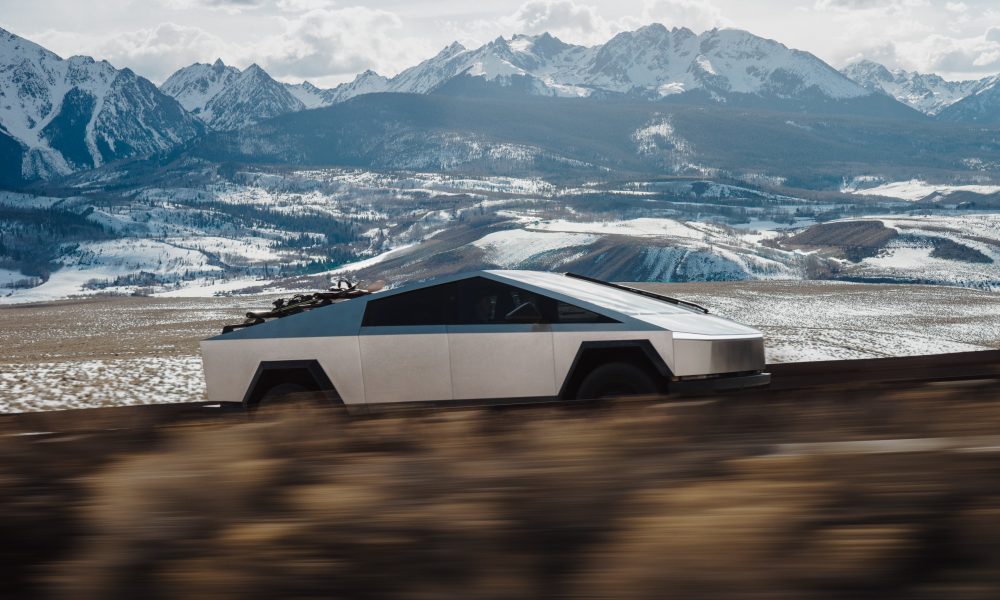
Tesla stock (NASDAQ: TSLA) endured one of its sharpest single-day declines in years on July 23, tumbling approximately 14.5 percent and closing near $320 after opening the session around $374. The drop erased more than $140 billion in market value amid heavy trading volume and left the shares at multi-week lows.
The sell-off followed the company’s second-quarter 2026 results, released the previous evening. Tesla reported record revenue of $28.2 billion, up 26 percent year over year, driven by a Q2-record 480,126 vehicle deliveries. Energy storage deployments also rose strongly.
Tesla (TSLA) Q2 2026 earnings results: miss on EPS, beat on revenue
Yet profitability disappointed sharply. Operating income fell 57 percent to $398 million, compressing the operating margin to just 1.4 percent. Non-GAAP earnings per share came in at $0.33, well below the roughly $0.53 analysts had expected. Free cash flow turned negative by $1.1 billion as capital expenditures surged 142 percent to $5.8 billion, largely tied to accelerated spending on artificial intelligence, robotics, and autonomous systems.
The losses on capex were expected, as Tesla said it would be spending heavily in 2026.
Investors also reacted to lingering uncertainty surrounding key product timelines. During the Earnings Call, management reiterated ambitions for Robotaxi deployment and the Optimus humanoid robot, but offered limited new concrete milestones, renewing questions about execution pace that have long accompanied Tesla’s ambitious roadmap.
The magnitude of the decline places it among Tesla’s more severe one-day percentage losses since its 2010 initial public offering. Historically, the two largest single-day drops (split-adjusted) remain September 8, 2020, when shares fell 21.1 percent amid broader market volatility and valuation concerns, and January 13, 2012, with a 19.3 percent plunge during the company’s early growth struggles.
Other notable declines include an 18.6 percent drop on March 16, 2020, at the onset of pandemic-related market turmoil. Thursday’s move ranks roughly ninth on the all-time list but stands out as the steepest in more than a year.
Despite the short-term pain, Tesla’s long-term trajectory has repeatedly recovered from such volatility. The latest results underscore both the strength of its core automotive and energy businesses and the near-term costs of heavy investment in next-generation technologies.
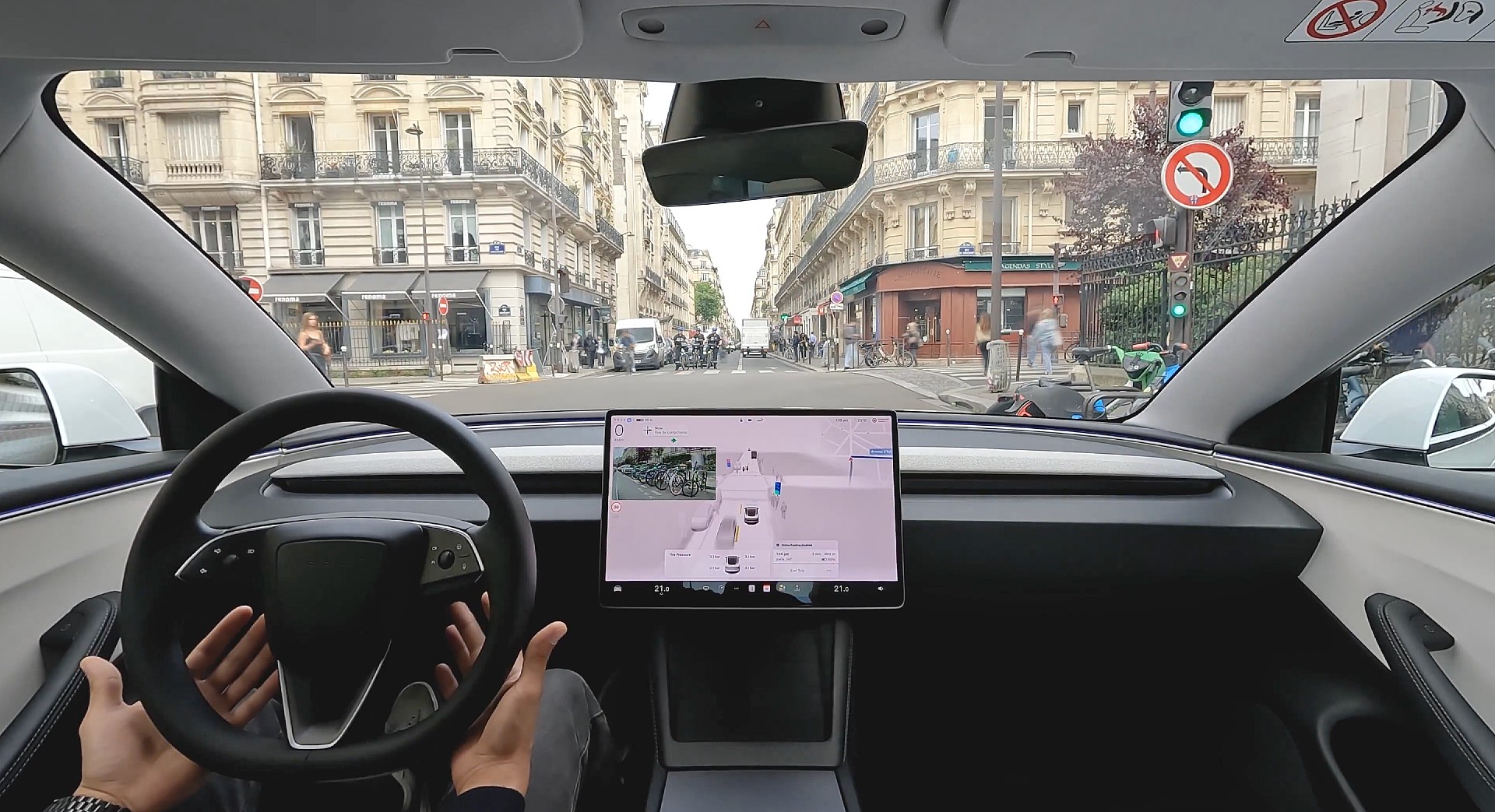
Elon Musk clapped back at France’s decision to withhold the approval for Tesla’s Full Self-Driving (FSD) Supervised system, projecting a clear and blunt message to French Transport Minister Phillippe Tabarot, after he publicly rejected the technology in its current form.
Tabarot outlines several concerns with Tesla Full Self-Driving in a detailed video statement, where he said, “The safety trade-offs are not yet sufficient to authorize it as it currently stands,” he said. He emphasized that FSD is not a true self-driving system and that the driver remains fully responsible.
Key issues Tabarot also brought up included allowing speeding when surrounding traffic exceeds limits and what he believes are insufficient guarantees of driver attention during complex urban maneuvers such as lane changes, intersections, and roundabouts.
Delaying the approval of FSD in France will cost lives
— Elon Musk (@elonmusk) July 22, 2026
While acknowledging technological progress and France’s support for autonomous innovation, Tabarot stressed that deployment must prioritize road safety. He noted ongoing technical discussions with Tesla, the Netherlands, and other European partners, with further ecosystem meetings planned for the fall.
Musk’s rebuke highlights the human cost of regulatory caution. Tesla’s latest safety reports provide compelling data supporting accelerated adoption. In the most recent 12-month period, vehicles using FSD (Supervised) recorded one major collision per approximately 5.1 million miles driven, dramatically better than the U.S. national average of one crash per 698,000 miles.
Even Tesla vehicles driven manually with active safety features outperform the average by a wide margin. These figures come from billions of real-world miles of telemetry, showing FSD vehicles involved in far fewer incidents than both manual Teslas and the broader U.S. fleet.
Critics argue Tesla’s comparisons require careful scrutiny regarding reporting thresholds and fleet demographics, yet the data consistently positions FSD as a potential lifesaver. With road fatalities remaining a leading cause of death worldwide, Musk contends that proven safer technology should not face prolonged bureaucratic hurdles.
France’s measured approach reflects the broader European regulatory caution, which many, especially Musk, have been critical of in the past. However, as autonomous systems from Tesla and competitors like Waymo demonstrate superior safety in independent studies, pressure is mounting for harmonized approvals.
Musk’s warning carries the belief that every month of delay may equate to avoidable tragedies on European roads.
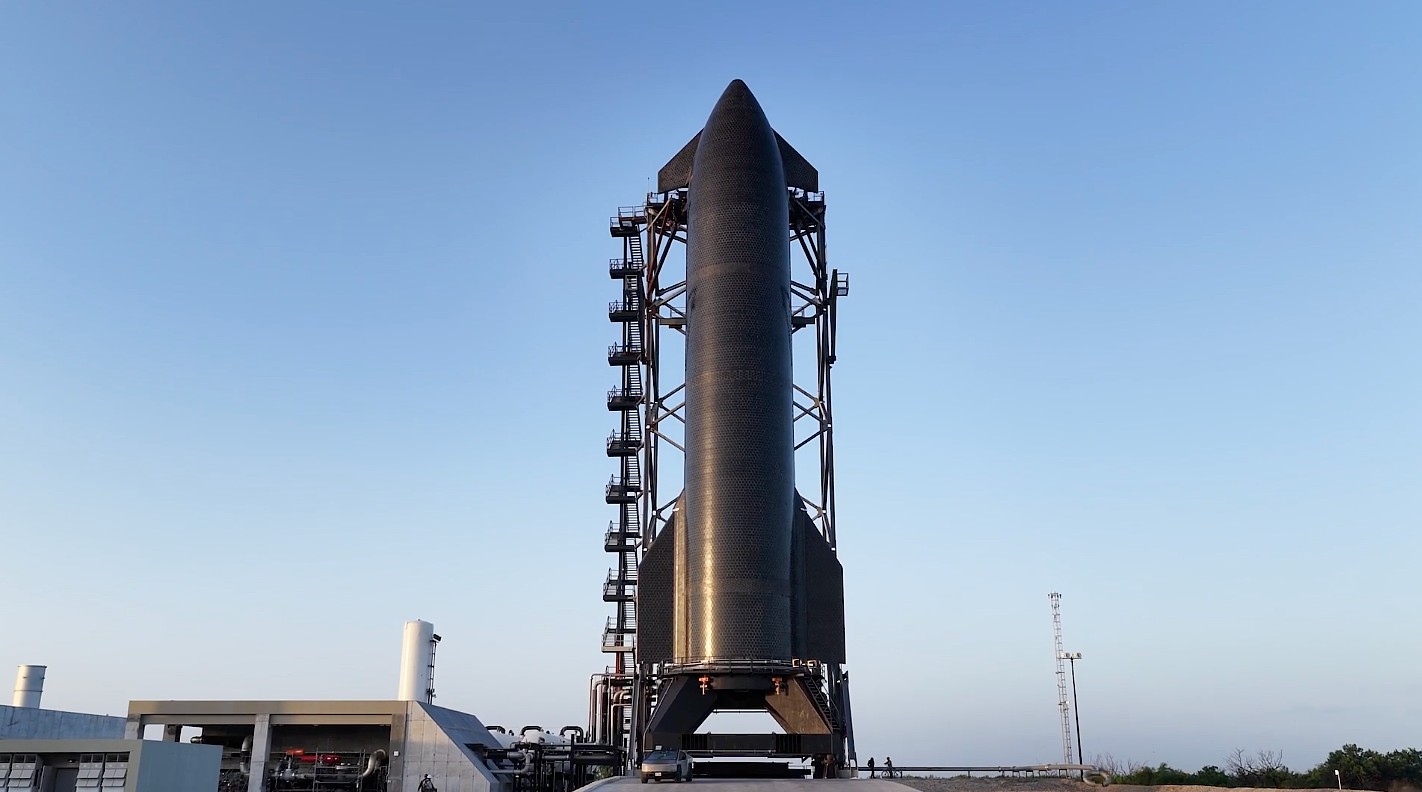
In a striking revelation that underscores the lucrative crossover between Big Tech and space exploration, Alphabet Inc., Google’s parent company, disclosed a massive $94.1 billion equity stake in SpaceX following the rocket company’s blockbuster initial public offering earlier this year.
The disclosure came in Alphabet’s quarterly filing, marking the first time the long-held private investment has been publicly valued at market prices. Google was an early backer, investing alongside Fidelity in 2015 with roughly $500-900 million at a time when SpaceX was valued around $12 billion.
That bet has delivered extraordinary returns, roughly a hundredfold, transforming a strategic play on satellite internet and launch capabilities into one of Alphabet’s largest assets.
Google, $GOOGL, has said they hold $94 billion in SpaceX, $SPCX, shares after IPO.
— unusual_whales (@unusual_whales) July 23, 2026
Of the total holding, approximately $80 billion remains subject to short-term post-IPO lockup restrictions, preventing near-term sales. An additional $14.1 billion faces longer-term restrictions, extending into the third quarter of 2027. This structure limits immediate liquidity but protects against market volatility as SpaceX transitions into public trading.
The SpaceX position contributed significantly to gains in Alphabet’s broader investment portfolio, which also includes a major stake in AI leader Anthropic. Combined, these holdings helped drive nearly $100 billion in investment gains during the second quarter, providing a substantial boost to net income amid ongoing AI spending pressures.
Analysts view the disclosure as validation of Alphabet’s venture strategy beyond its core search and cloud businesses. The investment aligns with deeper ties, including reported multi-billion-dollar deals for AI computing capacity on SpaceX infrastructure. As SpaceX advances Starship flights, Starlink expansion, and ambitious Mars goals under Elon Musk, Google’s stake positions it to benefit from the commercialization of space.
For Alphabet, the windfall highlights how patient, forward-looking bets in transformative sectors can yield outsized rewards. While lockups temper short-term impact, the holding cements SpaceX as a cornerstone of Alphabet’s diversified portfolio in an era where aerospace, AI, and connectivity increasingly intersect. Investors will watch closely as restrictions lift and SpaceX’s public performance unfolds.

Tesla stock tumbles after earnings, one of its sharpest single-day declines

Elon Musk is not happy about this Tesla Full Self-Driving approval delay


