Investor's Corner
BMW CEO reportedly risks replacement amid poor sales, weak EV strategy, and the rise of Tesla’s Model 3

BMW CEO Harald Krüger has always preferred to work in the background. Content to leave the stage for others, Krüger has mostly led BMW in an almost understated manner. Yet, in a recent meeting with German Chancellor Angela Merkel and fellow executives from rivals Volkswagen and Daimler, the CEO proved assertive, announcing that BMW will be looking to sell around 300,000 electric and electrified vehicles annually by 2021.
Krüger’s assertive stance on EVs is likely due to pressures that BMW is feeling in the electric vehicle market, which has, in more ways than one, started affecting the security of the CEO’s post. The 53-year-old BMW executive’s contract expires in May 2020, and theoretically, the company’s Supervisory Board could extend it. Unfortunately, reports are now emerging that Krüger’s contract as BMW’s chief executive might not be extended anymore, according to information gathered by German news agency Handelsblatt.
Amidst BMW’s current challenges, the publication alleges that the automaker no longer considers an extension of Krüger’s CEO contract as the most plausible scenario in the near future. Talks of tensions in BMW’s leadership have emerged, and an insider has even noted that there is “high pressure in the boiler.” If Krüger is not able to keep his CEO post, two board members are reportedly set to take over his seat: the ambitious Head of Development Klaus Fröhlich and the more tempered Oliver Zipse, who took over BMW’s production department from Krüger back in 2015.
BMW is currently facing a number of challenges. The company has initiated a group-wide “hiring freeze,” and the CEO’s critics were quick to point out that despite BMW’s “biggest model offensive in the company’s history,” sales have stagnated. Over the past nine months, the German automaker surprised with two profit warnings, and margins for its vehicles are under pressure. Krüger, for his part, remained cautiously optimistic, stating that “In the second half of the year, we expect a tailwind” amid the upcoming release of large vehicles like the BMW X7 SUV.
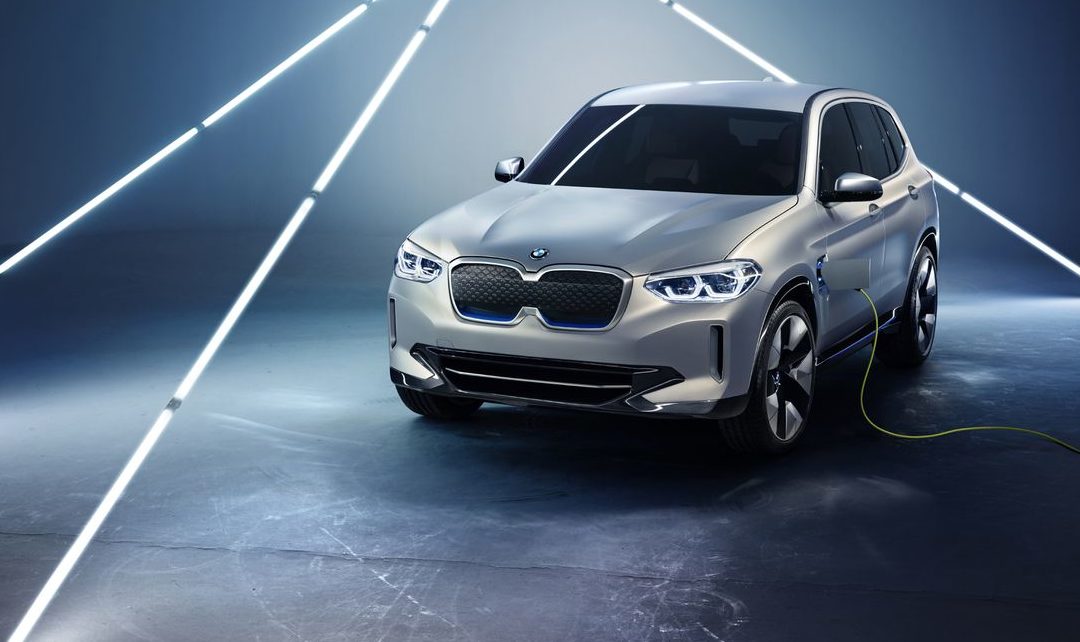
Hiring freezes and poor sales aside, one thing that has notably irked the German automaker’s shareholders is its poor electric vehicle strategy. In 2013, Krüger’s predecessor, Norbert Reithofer, launched the BMW i3, a curiously futuristic electric car that was compared to the Tesla Model S. BMW has not released a pure battery-electric vehicle since then. Jaguar has started its push with the I-PACE, Audi has released the e-tron, and Mercedes-Benz has already unveiled the EQC. BMW’s iX3, on the other hand, won’t be ready for at least another year. Speaking to the publication, a competitor noted that “BMW was ahead, now they are suspended.”
The emergence of Tesla as a player in the premium sedan market has also become a painful pill to swallow for BMW. With its international rollout, the Tesla Model 3 continued to hack away at the sales of BMW’s iconic 3-Series sedan. Tests from publications such as Top Gear, which have been traditionally pro-petrol in the past, have also recognized the Silicon Valley-made Model 3 as superior in more ways than one to a BMW. Tesla’s rise has not escaped the attention of BMW’s investors, who appear to be getting quite impatient with the German automaker’s delayed, if not half-hearted EV strategy.
These sentiments were expressed during BMW’s annual shareholder meeting in May. Addressing the company, shareholder protector Daniela Bergdolt did not mince words. “I now expect an electric offensive that sweeps Tesla off the table,” she said, and the company did not really have a strong response. There’s the i4 and the iNext, but both vehicles don’t currently have a concrete release date. The impressive BMW Vision M Next, which was recently revealed, is also an eye-catching concept vehicle, but it still remains to be seen if or when the car will enter production.


Elon Musk
SpaceX just got the green light Starship has waited years for
The FAA has cleared Starship Flight 14, setting up SpaceX’s first orbital attempt on Monday.

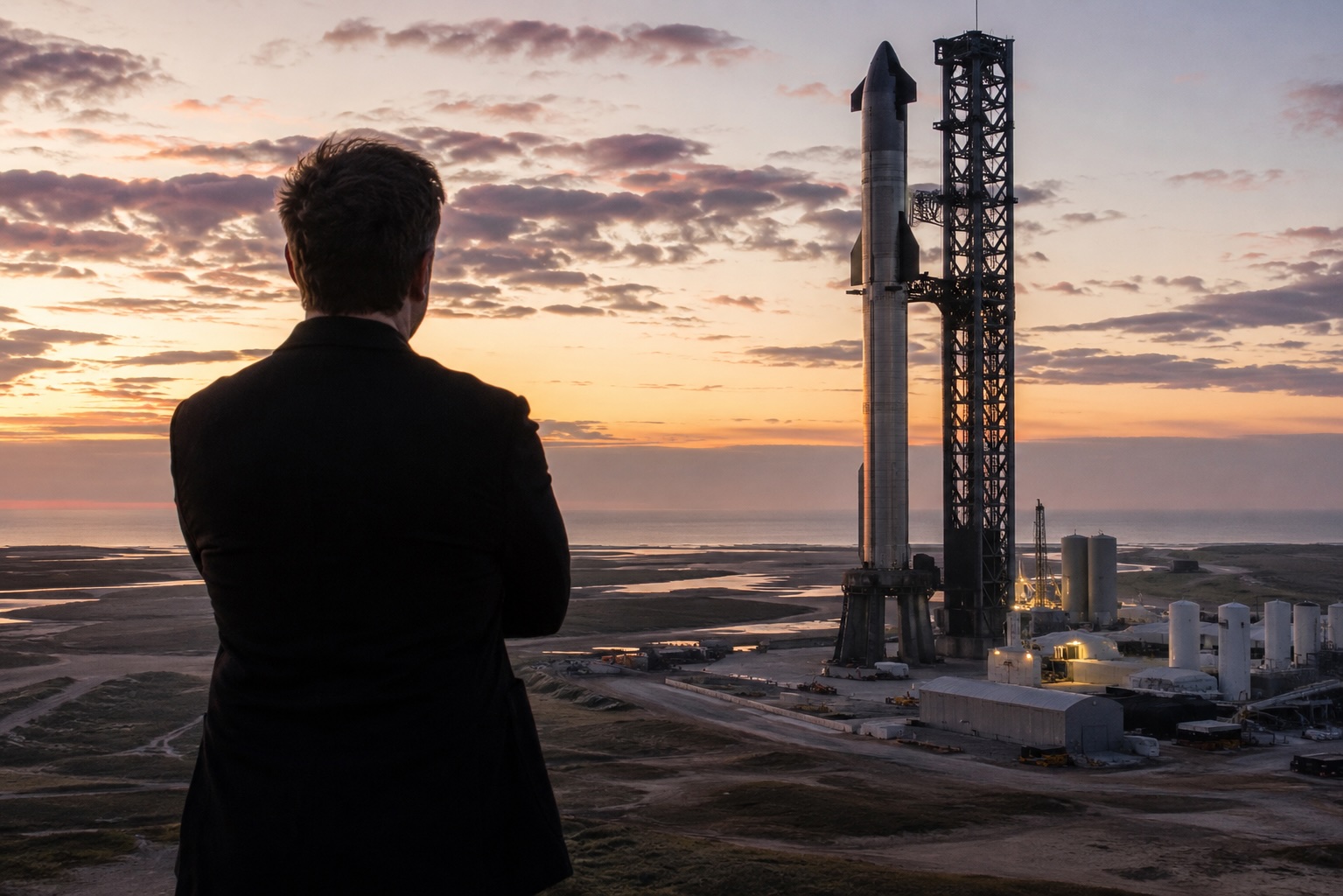
SpaceX has cleared the last regulatory hurdle standing between Starship and its first trip to orbit. The Federal Aviation Administration issued the launch license for Starship Flight 14 late Saturday, keeping the mission on track for liftoff Monday, September 28, from Pad 2 at Starbase, Texas.
The 75 minute launch window opens at 7:15 a.m. Central, and Boca Chica Beach closures are also scheduled for September 29 and 30 as backup dates. This will be Starship’s first revenue generating mission.
The license was the missing piece after SpaceX completed a full wet dress rehearsal with Booster 21 and Ship 41 on September 24. At the time, the company said the flight remained on track pending regulatory approval. Because Flight 14 flies an orbital profile, the FAA had to sign off on a modified license that met its safety, payload and financial responsibility requirements.
Observers combing through the new FAA paperwork also noticed that lightning no longer appears among Starship’s listed launch hazards. If that holds, it matters more for where Starship is headed than for Monday’s attempt. Florida and Louisiana, home to LC-39A and the planned Starbase Louisiana site, see some of the most frequent lightning in the United States.
SpaceX tells the FCC that Starship Flight 14 is going to orbit
Flight 14 is the mission SpaceX has been building toward for months. Ship 41 will carry 26 Starlink V3 satellites, the first operational V3 units to be deployed, and attempt roughly six orbits at about 275 kilometers over a flight lasting just under 10 hours. SpaceX says the ship will only perform its orbital insertion burn after flight controllers confirm enough hardware redundancy remains for the deorbit burn at the end of the mission. Ship 41 is targeting a splashdown in the Pacific west of Chile, while Super Heavy will return to the Gulf of Mexico.
The date carries some symbolism as well. A Monday launch would come 10 years and one day after Elon Musk first presented the Interplanetary Transport System, the design that became Starship, at the International Astronautical Congress in Guadalajara, Mexico.
SpaceX has not announced what comes next, but air traffic planning slides reported this week, list Flight 15 no earlier than October 19 and a first Starship launch from LC-39A in Florida no earlier than October 30. Both dates depend on how Monday goes.
Investor's Corner
Tesla Optimus Gen 3 shows off a cleaner, factory-ready design in new app discovery
Renders hidden inside Tesla’s Android app show Optimus Gen 3’s design before any official reveal.
![Tesla Optimus Gen 3 [Credit: Tesla]](https://www.teslarati.com/wp-content/uploads/2026/03/tesla-optimus-gen3-diner.jpg)
Tesla may have accidentally given a first look at its newest Optimus Gen 3 humanoid robot when photos were found in the Tesla smartphone app.
Design files tucked inside a recent Android version of the Tesla app appear to show the third generation humanoid robot next to the older Gen 2.5 prototype. The assets were extracted from the app package by Tesla community member @wholemars, who posted the renders on X late Tuesday night before deleting them. The Tesla Newswire reshared the side by side comparison on Wednesday, and the images have circulated widely since.
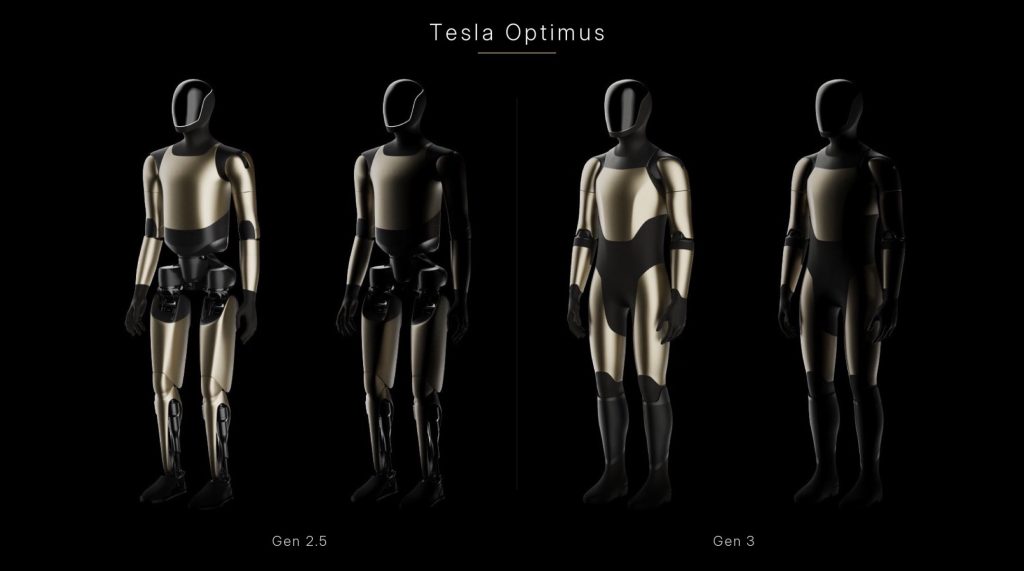
Tesla Optimus Gen 2.5 vs Gen 3 comparison via @WholeMars on X
The files are labeled “gen3” and were built as models for Tesla app’s own interface, as validated directly by Grok to be official.
The comparison shows a robot that looks built for a factory line rather than a lab bench. Gen 2.5’s exposed mechanical linkages and gold plating on the knees and shins are gone. In their place, Gen 3 uses matte black fairings on the lower legs, paired with a more contoured champagne gold body. Flexible covers now seal the joint where the torso meets the upper thighs, keeping bearings and moving parts sealed from debris and unnecessary contact.
The body panels fit more tightly, and the hands, which Tesla has said carry 22 degrees of freedom, look far more refined than those on earlier units.
This most recent leak fills a gap Tesla has left open for most of the year. Elon Musk said on March 31 that Optimus 3 was walking around but needed “some finishing touches” before it could be shown, a delay Teslarati covered when Tesla missed its first quarter reveal target. Musk later said Tesla would hold the design back until closer to production, partly to keep competitors from copying it. No reveal date has been announced.
The app itself has been preparing for Optimus for months. In July, code in the Tesla app pointed to a dedicated robot phone key, a consent screen for collecting video and spatial data while Optimus works inside a home, and an alert system for low battery and mechanical faults. Finished 3D models of Gen 3 suggest the interface owners will eventually use is moving past placeholder code toward something Tesla intends to ship.
Manufacturing is moving in parallel. Tesla tore out the original Model S and Model X lines at Fremont this summer to make room for Optimus production, with a planned capacity of one million robots a year. At Giga Texas, the steel frame of a dedicated Optimus factory is nearing completion ahead of a targeted 2027 start, with Musk pointing to an eventual output of 10 million units annually.
Elon Musk
X changed how everyone gets paid, and this lawsuit shows why
X sued a Bitcoin account network over fake payouts as its creator pay model shifts
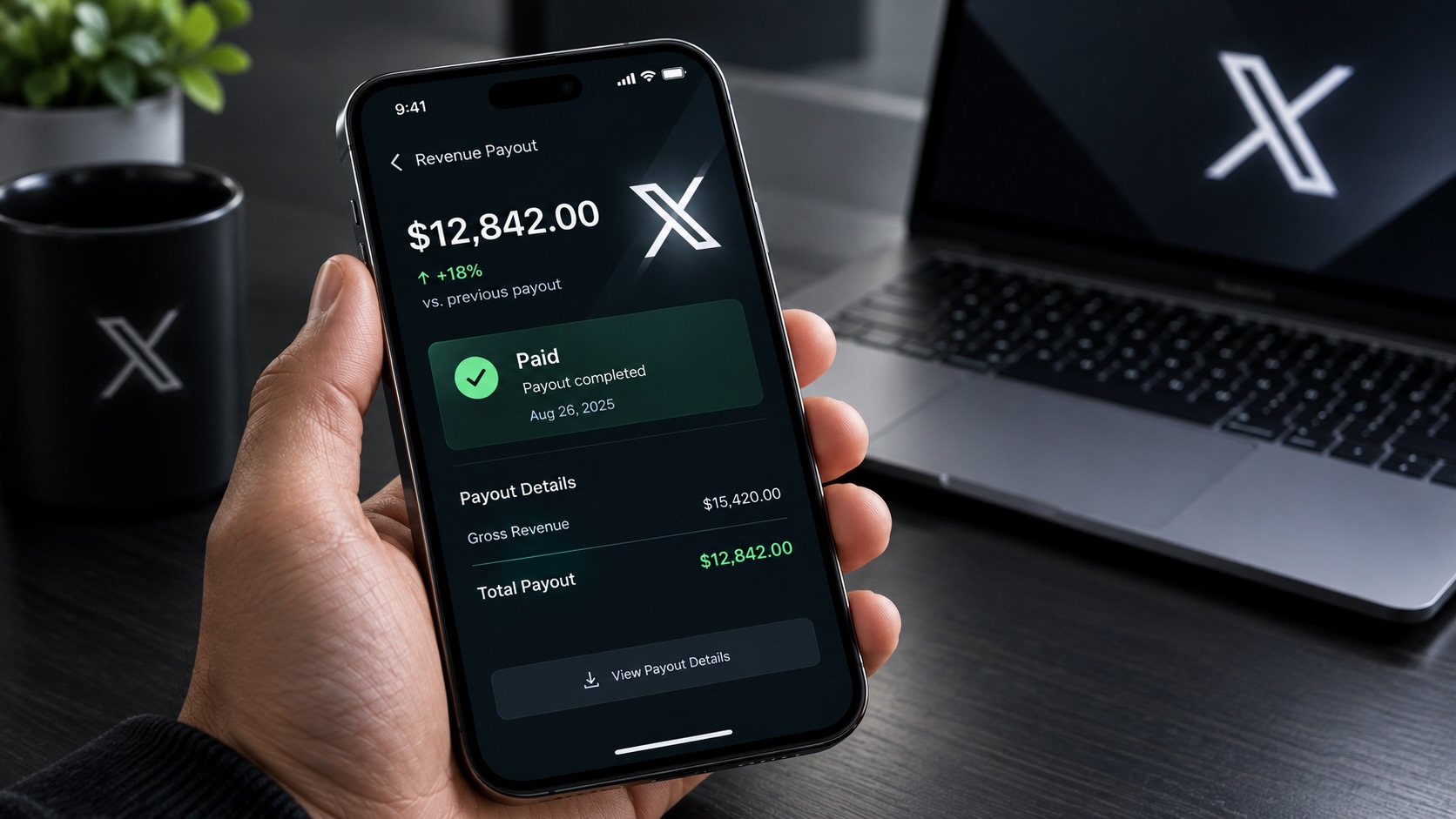
Elon Musk’s X has taken a Bitcoin-focused engagement ring to court, and the case doubles as a receipt for how differently the platform pays creators today. The company filed suit in the High Court of England and Wales against Vivek Kumar Sen and Zamyang Sherpa, alleging the pair ran six accounts, including @Vivek4real_, @Bitcoin_Teddy and @TrendingBitcoin, as one coordinated operation to fake the kind of engagement that used to translate directly into money.
According to the filing, first reported by Gizmodo, the accounts posted near identical “BREAKING” crypto headlines seconds apart, in one case 11 seconds, then had three more handles like, reply to and repost the material to manufacture what X called “a false appearance of genuine, human communication and interaction.” X says the scheme pulled in at least £207,384, about $278,000, and pegs its own investigation and remediation costs at another £75,000. The accounts were suspended August 18. X general counsel James Burnham announced the case on X last weekend, writing that the company “will act forcefully to protect our platform and the earnings of genuine creators.” Musk’s own reaction, posted shortly after, was three words: “Don’t mess with 𝕏.”
Don’t mess with 𝕏 https://t.co/HSmd5hL6aQ
— Elon Musk (@elonmusk) September 21, 2026
The timing lines up with a a recent update to how X pays its creators. The program these accounts allegedly gamed, Creator Revenue Sharing, launched in mid 2023 and paid out based on how much a post got engaged with. Originality was never part of the formula, which is exactly how the platform ended up flooded with recycled clips, copy pasted “BREAKING” posts and replies engineered purely to farm reactions from paying subscribers.
X tried patching the model more than once, including an April cut to aggregator payouts and a March regional weighting change that Musk personally paused hours after it was announced. X retired Creator Revenue Sharing for good on September 7 and opened its replacement, Original Content Rewards, the next day.
Today, we’re launching Original Content Rewards.
The reality is that Revenue Sharing had reached a point where its incentives were misaligned. Creators should be focused on bringing net new content to the platform instead of maximizing payouts. We could have kept adding more… pic.twitter.com/VJIxqlPrjm
— Allegra Jacchia (@allegrajacchia) August 7, 2026
The new math is stricter. Payouts now come only from qualified impressions, meaning unique Home Timeline views from Premium subscribers where at least half the post is visible, and replies no longer count toward eligibility at all. Copied posts, reuploaded media and reposts without meaningful changes are explicitly excluded. Allegra Jacchia, senior product manager for Creators at SpaceXAI, which now runs X’s product and AI work following xAI’s acquisition of the platform, put it bluntly, saying the goal is to reward creators who bring original ideas and perspective, “not those who have become best at gaming the system.”
Read that way, the lawsuit isn’t really about six crypto accounts. It’s X putting a dollar figure on what the old incentive structure cost, then suing to collect it right as the new one goes live. For live updates on how the case and the new rewards program shake out, follow @Teslarati on X.

Tesla has a ‘no human contact’ approach for Semi production

Elon Musk’s AI Grok Bot can now handle banking while your Tesla FSD handles the road


