News
SpaceX CEO Elon Musk says major Starship engine bug is fixed as Raptor testing continues

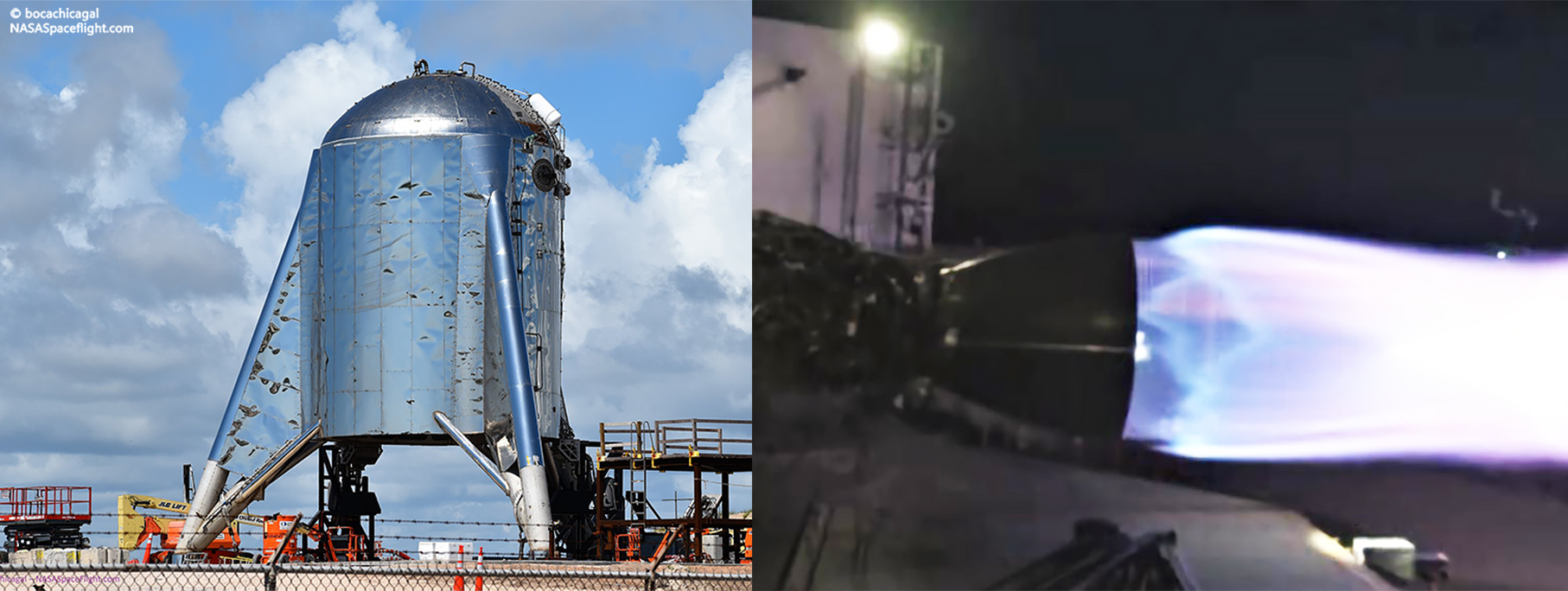
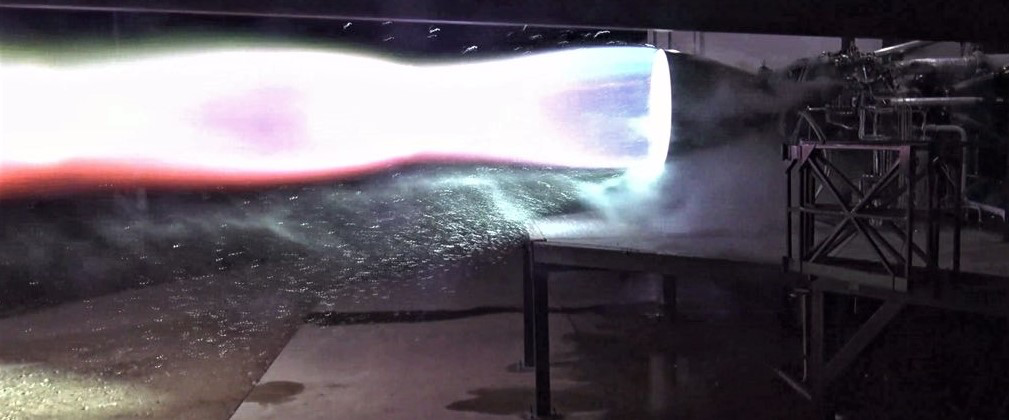
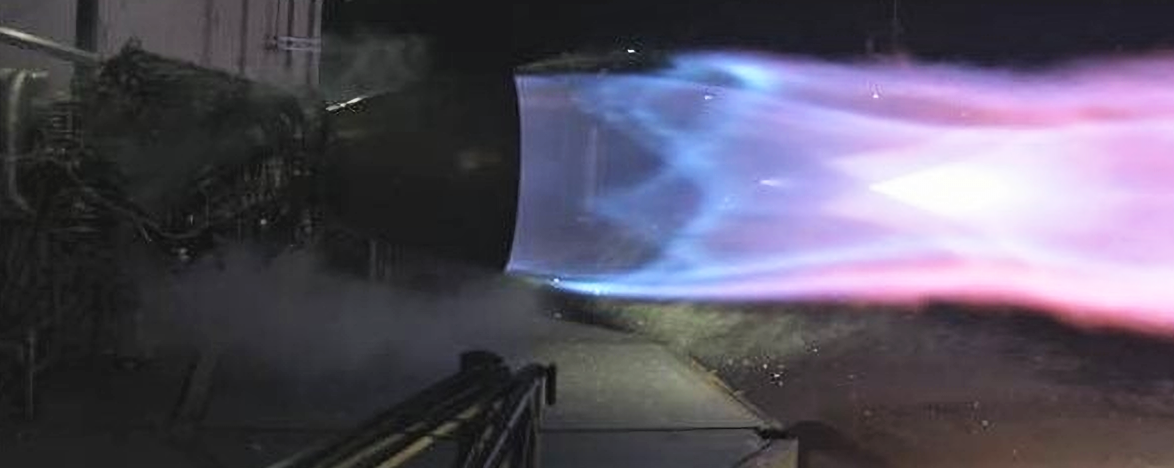
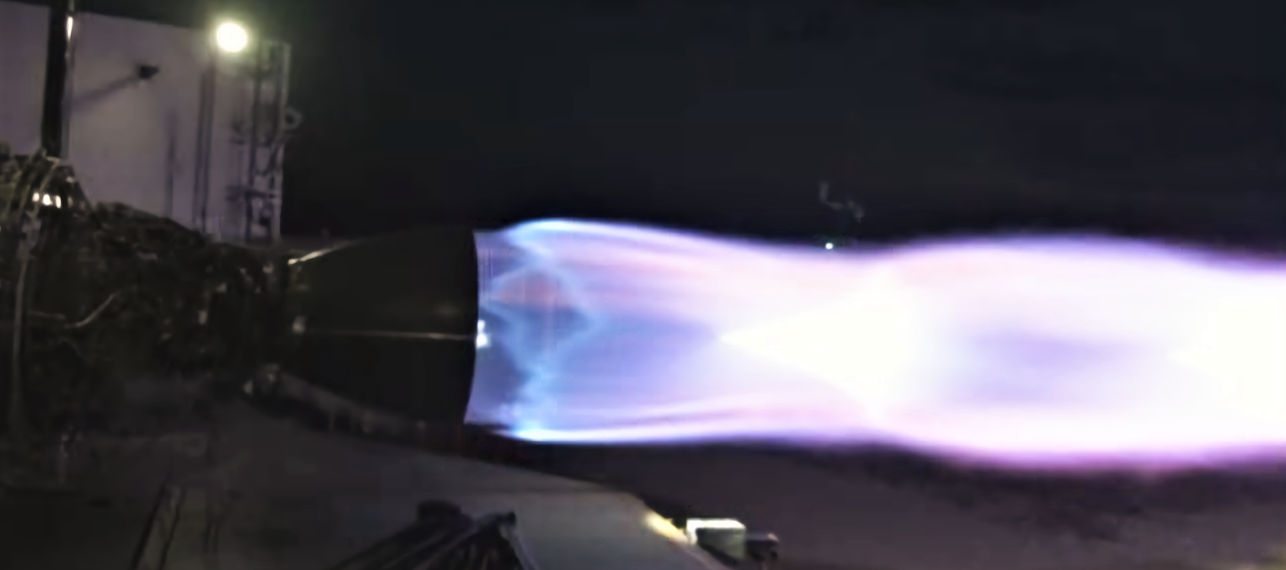
SpaceX CEO Elon Musk has revealed the latest official photo of the company’s Raptor engine in action and indicated that a major technical issue with vibration appears to have been solved, hopefully paving the way for Starhopper’s first untethered flights.
Partly due to Musk’s own involvement in the program, SpaceX’s propulsion development team have struggled to get any single Raptor engine to survive more than 50-100 seconds of cumulative test fires. According to information from sources familiar with the program, Musk has enforced an exceptionally hardware-rich development program for the first full-scale Raptor engines to such an extent that several have been destroyed so completely that they could barely be used to inform design optimization work. Although likely more strenuous and inefficient than it needed to be, the exceptionally hardware-rich test program appears to have begun to show fruit, with the sixth engine built (SN06) passing its first tests without exhibiting signs of a problem that has plagued most of the five Raptors that came before it.
Resonance: not even once
In his tweet, Musk cryptically noted that a “600 Hz Raptor vibration problem” appears to have been fixed as of SN06’s first few static fire tests since arriving in McGregor, Texas. More likely than not, the self-taught SpaceX executive is referring to the hell that is mechanical resonance in complex machines and structures. Shown below, the Tacoma Narrows Bridge’s 1940 collapse – quite possibly the single most famous civil engineering failure of all time – is an iconic example of the unintuitive power of resonance in complex systems.
When it was inaugurated, the first Tacoma Narrows Bridge was one of the longest suspension bridges ever built and implemented new techniques and technologies that had never been tried at such a large scale. As Grady (Practical Engineer) aptly notes, mechanical resonance – in this case, triggered by consistent winds running through the Puget Sound – simply wasn’t something that period engineers knew they had to worry about. When rapidly pushing the envelope of engineering and construction, the chances of discovering entirely novel failure modes also increases – it’s simply one of the costs of extreme innovation.
Luckily for SpaceX, the company doesn’t have to clash with the immense challenge of testing something as large, complex, and expensive as a suspension bridge. Raptor, Starship, and Super Heavy need not necessarily be perfect on SpaceX’s first try, whereas civil bridges must essentially be flawless on the first try, despite being one of a kind. This is why SpaceX has been chewing through an average of one Raptor engine per month since February 2019 – by testing engines to destruction and aggressively comparing engineering expectations with observed behavior and post-test hardware conditions, rapid progress can (theoretically) be made.
Instead of spending another year or more analyzing models and testing subscale engines and components, SpaceX dove into integrated testing of a sort of minimum-viable-product Raptor design, accepting that the path to a flightworthy, finalized design would likely be paved with one or several dozen destroyed engines. According to Musk, the biggest pressing design deficiency involved a mode of mechanical resonance that may or may not have been predicted over the course of the design process. Dealing with unprecedented conditions, it’s not particularly surprising that some sort of new resonance mode was discovered in Raptor.
For the time being, SpaceX continues to work around the clock to build its first two orbital Starship prototypes (one in Texas, one in Florida), while also outfitting Starhopper and completing any possible engine-less tests in anticipation of the first flightworthy Raptor’s arrival. If Musk’s early analysis proves correct and Raptor SN06 makes it through lengthier static fire tests unscathed over the next week or so, the engine could potentially be delivered to Boca Chica as early as mid-July.
Check out Teslarati’s Marketplace! We offer Tesla accessories, including for the Tesla Cybertruck and Tesla Model 3.


Elon Musk
Tesla’s Powercore could change how data centers get power
Tesla unveiled Powercore, a solid-state transformer that could ease one of the grid’s worst bottlenecks.

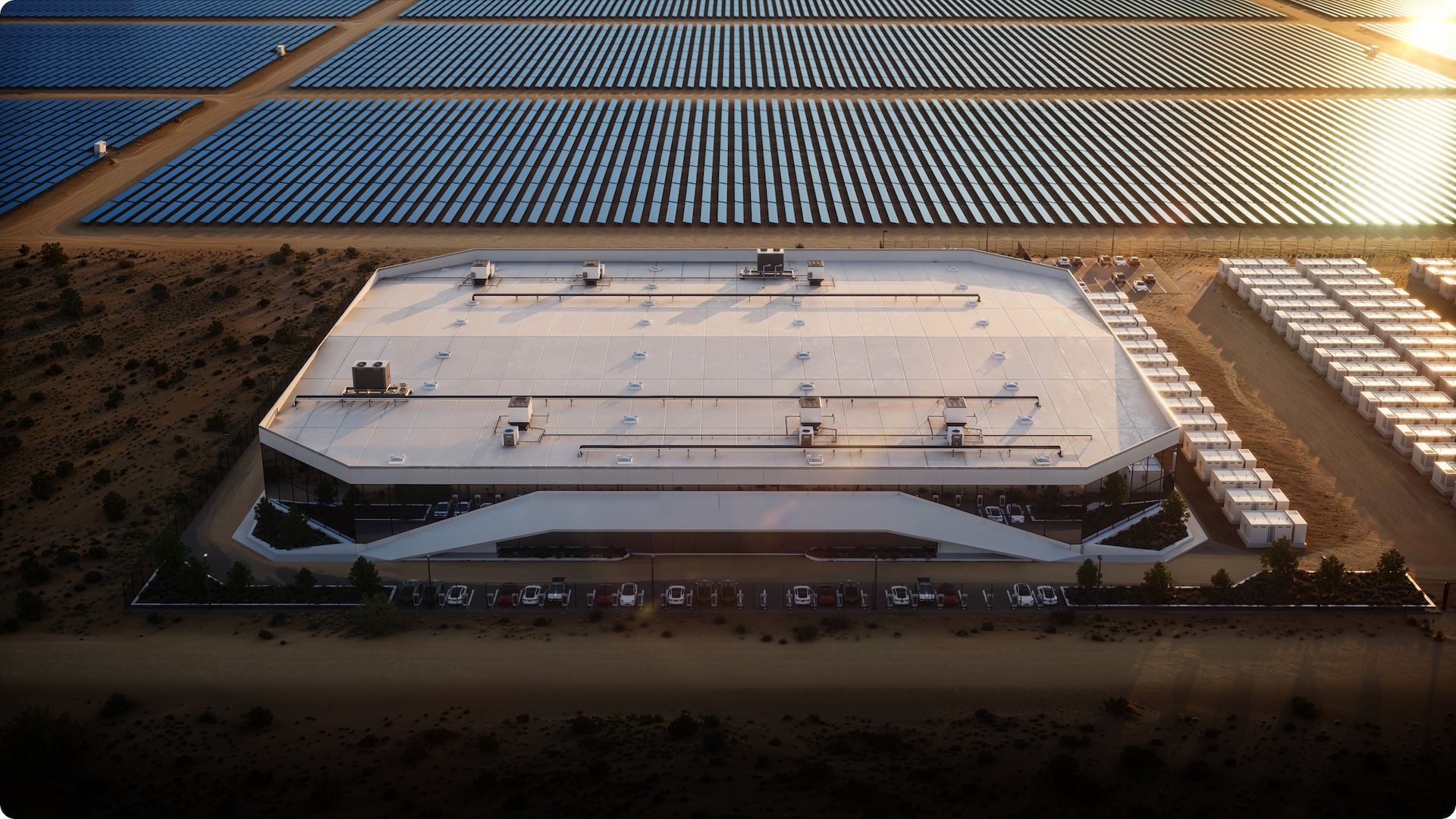
Tesla has unveiled Powercore, a solid-state medium voltage transformer that also handles the jobs of an inverter and a circuit breaker in a single unit. “Solid state medium voltage transformer, inverter and breaker – reliable, safe and secure,” the company’s Tesla Megapack account posted on X Tuesday, adding that the product is “Made in America” and will be “Operating 2027.” Elon Musk followed with his own post: “Advanced solid state transformers at scale from Tesla.”
Tesla rates Powercore at 7.4 MW, or 9 MVA, of continuous output at 34.5 kV AC, with grid-forming support for 10 MVA of peak power. Specs shared by Sawyer Merritt list a peak efficiency of 98.86 percent, a DC range of 800 to 2,000 volts and a built-in solid-state breaker that clears faults in about 100 microseconds. Tesla has not announced pricing, a factory location or a first customer.
The product fills a gap Tesla left open last year. When it introduced Megapack 3 and Megablock in September 2025, Tesla said it would build its own transformers, but shared almost nothing about them. Megablock groups four Megapack 3 units with a transformer and switchgear into a single medium voltage block, as Teslarati reported. Powercore appears to be that missing piece.
A typical battery or solar project today uses low voltage inverters to turn DC into AC, then a large oil-filled transformer to step that power up to grid voltage. A solid-state unit handles both steps with power electronics, which means less equipment, a smaller footprint and no flammable oil. Grid-forming capability lets it actively help hold voltage and frequency steady rather than simply following the grid.
Introducing Powercore Solid state medium voltage transformer, inverter and breaker – reliable, safe and secure 7.4 MW/9 MVA continuously at 34.5 kVac w/ grid-forming support for 10MVA of peak power Made in America. Operating 2027 https://t.co/sHxqnpWJrf — Tesla Megapack (@Tesla_Megapack) November 17, 2026
Timing is a big part of the pitch. Lead times for conventional transformers have stretched into years as AI data centers and renewable projects crowd utility interconnection queues. Tesla energy executive Max de Zegher pointed to the problem in a post Musk shared, noting that “transformers have barely changed since the 1890s: copper coils in a tank of oil,” while batteries, solar and compute all run on DC. Powercore, he wrote, delivers “one conversion and about half the losses.” Tesla has also said its Megapack supply for 2027 is nearly sold out.
Tesla deployed 13.7 GWh of energy storage in the third quarter, its second best quarter on record. On Tuesday, the company also said customer solar systems deployed by Tesla Energy now generate more than twice the electricity its global operations consume each year.

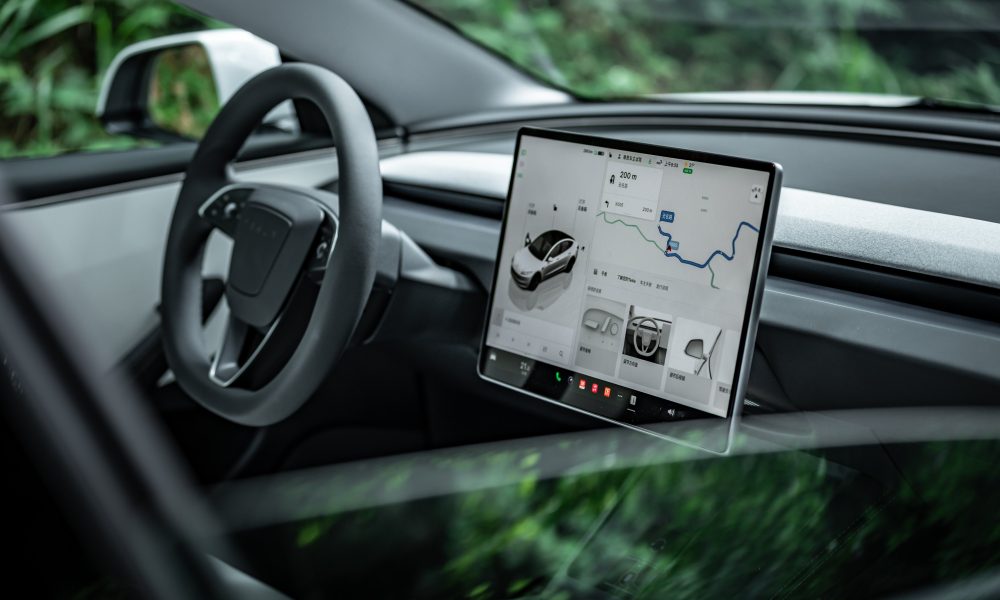
Tesla has officially changed the reference to its vehicles’ internal computers to “Super Intelligence,” or “SI,” reflecting a change that President Donald Trump made when he noted it would no longer be referred to as “Artificial Intelligence,” or “AI.”
Tesla hacker Green posted that a breakdown of Software Version 2026.44.1, noting that the in-car computer is now labeled as “SI Computer,” in system properties:
Took a peek at Tesla 2026.44.1 firmware
The huge change is that Tesla “upgraded” the “AI computer” inside to super intelligence, so it’s now referred to as “SI Computer” in car properties. 🙃
Other than this there are some minor adjustments:— green (@greentheonly) November 17, 2026
In September as he spoke at the UN’s General Assembly, President Trump said (via The Verge):
“The United States also totally rejects any attempt to construct a globalist scheme to control for the artificial intelligence being spoken of so much now. Here and after officially called “super intelligence,” changing the name, and that the use of the word artificial makes intelligence fake. It makes it sound fake, and it is not fake. It’s actually amazing. But we have to be careful. In fact, it is exactly the opposite of what it purports. From this point forward, all of the United States documents, and hopefully the world’s, will be changed to use the much more accurate term, super as opposed to artificial. So it’s super intelligence. In other words, welcome to the new world of super intelligence — SI. That’s, uh, let’s see if that does. It sounds much better. It is much better, and it’s much more accurate.”
Tesla and Musk have evidently chosen to adopt the change, as it now appears as an official reference to the company’s in-car computer.
Tesla has long used iterative software updates to refine Autopilot/FSD behavior, vehicle controls, and user interfaces. Renaming an internal identifier fits that pattern of quiet housekeeping far more closely than a sudden capability jump.
Owners on HW3 and later hardware continue to receive the same incremental FSD improvements seen in prior releases, as the property string does not alter compute allocation or model architecture.
Nevertheless, this won’t have any impact on the vehicles themselves, but it is more of an adoption of terms.
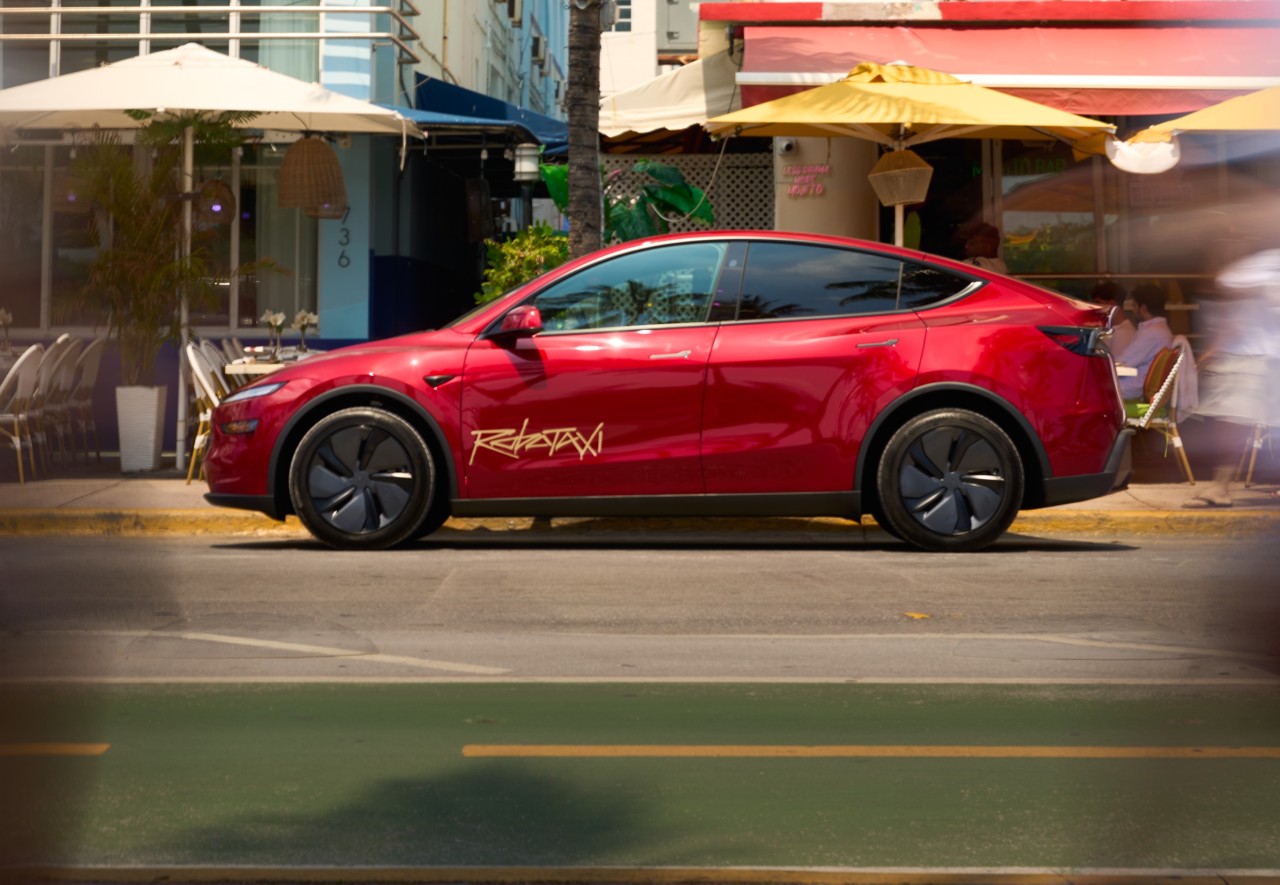
Tesla just doubled the serviceable area that its Robotaxi platform can travel in Miami, Florida.
On November 16, Tesla announced a major expansion of its Miami service area with a message stating that it would now service substantially more of the city. A new map shows the new service area, which is roughly double the initial geofence, including key urban districts into Robotaxi for the first time.
Miami’s geofence for Tesla Robotaxi has expanded considerably https://t.co/GpBqendVRN
— TESLARATI (@Teslarati) November 16, 2026
Tesla first launched unsupervised Robotaxi rides in Miami on July 3, making it the company’s initial market outside of Texas and California. The original geofence covered a very limited portion of the western Miami-Dade area, including West Miami, Doral, Sweetwater, and Miami International Airport. It was roughly 25 square miles, before a small expansion put it at about 31.
Now, Downtown Miami, the popular Brickell neighborhood, and Miami Beach, which were deliberately left outside the boundary initially, now are included in operations. Riders can now hail Model Y vehicles booked through the Tesla Robotaxi app and have run 24 hours a day since mid-November.
The map now looks to be about 59 square miles, a roughly 92 percent increase. The new eastern edge of the geofence now includes Downtown, Bickell, Wynwood, Little Havana, and the Biscayne Bay waterfront, nailing down a lot of typical tourist locations for Miami visitors. Additionally, the new geofence also extends North, reaching Hialeah, and adding coverage closer to the airport corridor.
At its widest, the zone now stretches roughly 11 miles from west to east. Miami Beach remains outside the service area, though Elon Musk previously indicated beach coverage was “coming soon” after Florida Governor Ron DeSantis publicly called for it.
Relative to Tesla’s other markets, Miami’s roughly 59-square-mile zone is now larger than Orlando (about 26 square miles) and Tampa (about 24 square miles) combined.
It remains smaller than Texas hubs such as Austin (around 443 square miles), San Antonio (about 275), Houston (about 254), and Fort Worth (about 143), but the rapid growth brings it closer to competitor Waymo’s approximately 60-square-mile Miami footprint, which already includes beach areas.
For Miami residents and visitors, the expansion makes driverless rides practical for trips into the city’s densest commercial and residential core, offering a new option amid heavy traffic and limited parking.
For Tesla, covering higher-demand downtown corridors should increase ride volume, generate more real-world autonomy data, and strengthen its competitive position as it scales the Robotaxi network toward broader profitability and eventual Cybercab deployment. The overnight growth also signals accelerating operational confidence less than five months after the city’s launch.

Tesla’s Powercore could change how data centers get power

Tesla changes vehicle computers from ‘AI’ to ‘SI,’ reflecting President Trump change


