Investor's Corner
Major Tesla (TSLA) investor urges Elon Musk to temper overly-optimistic targets

One of Tesla’s (NASDAQ:TSLA) largest shareholders recently urged CEO Elon Musk to take a more tempered approach when setting targets for the electric car maker. In an interview with Bloomberg Television at Allen & Co.’s Sun Valley conference, James Anderson, a partner and portfolio manager at Baillie Gifford & Co., stated that there are ways for Musk to be more “fruitful” when he talks about the company’s upcoming projects.
Anderson stated that while there is no need for Musk to be contained or restrained in his online interactions, the CEO would be better off modifying his approach. “One should, on the whole, try not to give too many targets that may not be attainable, with specific dates at establishment. And I don’t think one wants sudden reversals of policy. I hope that’s not too much for a major shareholder to ask,” he said.
Elaborating further, the Baillie Gifford partner stated that he is referring to Musk’s statements about initiatives like the Tesla Network’s Robotaxis, which will be comprised of fully autonomous vehicles that will be used for ride-sharing. Musk has released an incredibly optimistic timeframe on the release of the project, stating that by next year, Tesla will have around 1 million Robotaxi-capable vehicles on the road. In order for this to happen, Tesla would have to meet both its aggressive production targets and the complete rollout of its full self-driving suite, which is still under development.
Baillie Gifford currently holds around 13.2 million TSLA shares, making the firm one of the company’s largest shareholders. The firm has also been one of Tesla and Elon Musk’s most ardent supporters. Last year, Anderson defended Musk and the CEO’s strong opinions against Tesla’s short-sellers, stating that some individuals hoping for the electric car maker’s failure are “vicious” and “malignant.” In the same way, Baillie Gifford also calls out Musk when needed, dubbing his statements against caver Vernon Unsworth “ethically unacceptable” following last year’s Thai cave rescue and its succeeding aftermath.
It is difficult to argue against Anderson’s points. While Elon Musk stands apart from other CEOs due to his open approach when discussing Tesla’s projects on platforms such as Twitter, even Musk himself admits that he tends to be too optimistic. An example of this is the release of features such as Enhanced Summon, which is yet to see a widespread release despite Musk’s multiple optimistic targets on its rollout. In a way, Elon Musk would best adopt a more conservative stance when it comes to target timeframes, which will ultimately help Tesla under-promise and over-deliver.
It should be noted that there is really no harm if Elon Musk adopts a more conservative stance when discussing the release of Tesla’s upcoming projects. The company, after all, is conducting such groundbreaking work that announcing a target that’s a few months later than Musk’s personal expectations will not in any way affect the how impressive the company’s innovations will be. Even if Musk states that Full Self-Driving will be fully-ready by 2021, for example, it will still be incredibly impressive. A 2021 release might be later than Musk’s optimistic expectations, but it will likely beat the full rollout of Waymo or Cruise’s own self-driving solutions by a wide margin nonetheless.
As of writing, Tesla stock is trading -0.44% at $237.88 per share.
Disclosure: I have no ownership in shares of TSLA and have no plans to initiate any positions within 72 hours.



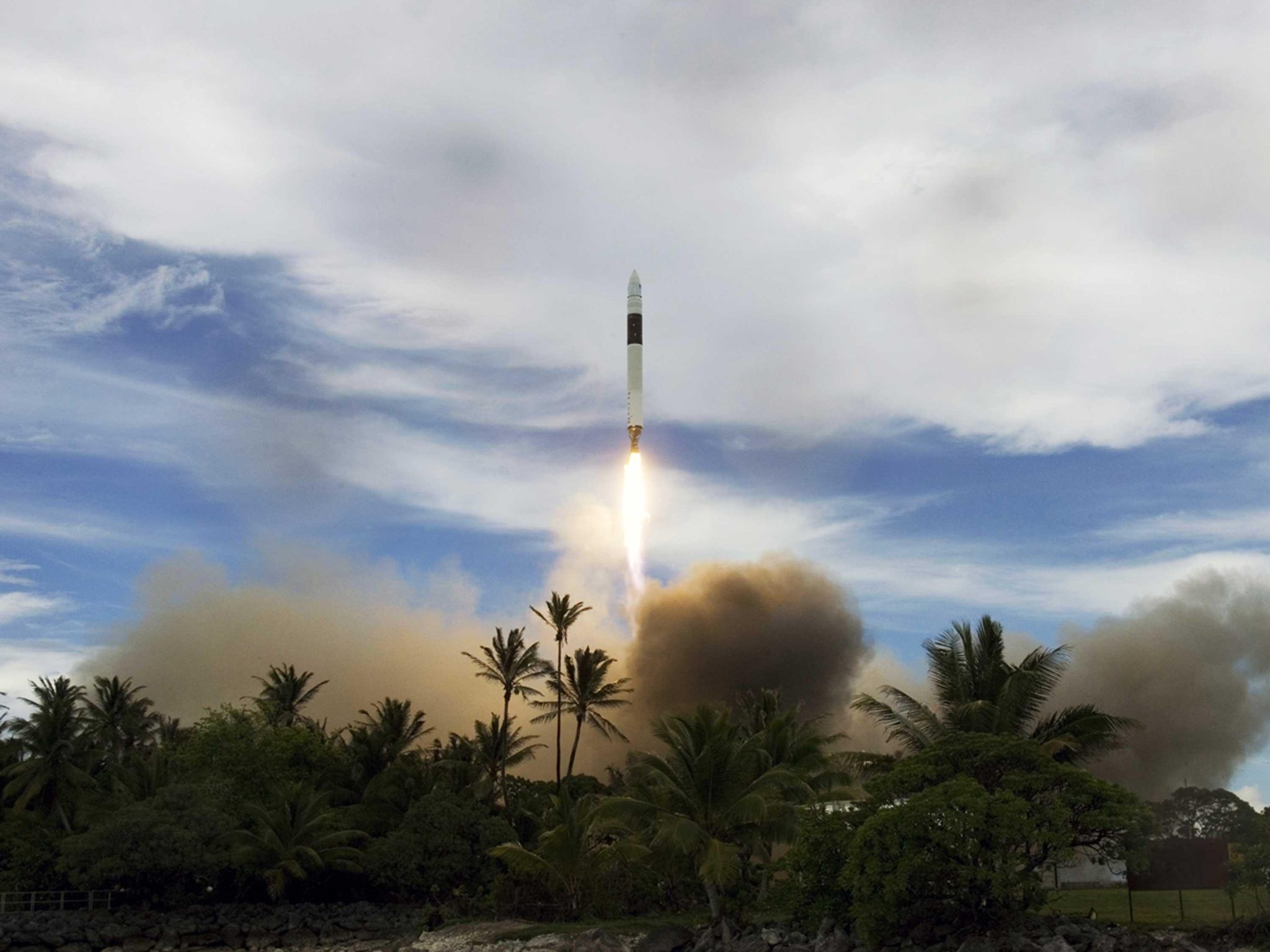
SpaceX (NASDAQ: SPCX) will report its first public earnings call today since its IPO earlier this year, and there are a few things we expect to hear about, as well as Wall Street analysts, who have already outlined their expectations for the call.
Wall Street analysts have a consensus of $12.72 billion in revenue and an earnings per share (EPS) of $0.13. These are broken down into three sectors: Space, Connectivity, and AI/SI, which are perceived in this way:
- Space: $1.41 billion
- Connectivity: $4.84 billion
- AI/SI: $6.47 billion
Other outlets cluster near $12.8 or $12.9 billion in revenue and $0.14 – $0.15 EPS. This implies a roughly 65 percent sequential growth from Q2’s $7.81 billion, driven mostly by AI/SI, with the first post-IPO positive EPS expected.
Here are the three things to watch for on the call:
AI Revenue Ramp and the $100B+ ARR target
AI is truly the swing factor for SpaceX, and analysts expect it to roughly double from Q2’s $2.56 billion and become about half of total revenue. Management previously guided to a $100 billion+ annualized run rate by December, including the Cursor acquisition, which was $60 billion, to close the quarter.
Listen for updates on SpaceX’s compute capacity, especially pertaining to its contracts with Google, Anthropic, and others, revenue per watt, any new deals, and Cursor’s early contribution.
Starlink/Connectivity Metrics and Mobile Expansion
Connectivity remains a main profit engine for SpaceX. Subscriber additions will be something to pay attention to, as Q2 ended at 12 million and previews are looking at 14 million for this quarter. Additionally, ARPU trends, enterprise and government growth, and any commentary on Starlink Mobile will be something to pay attention to, especially following the recent low-band spectrum deal and FCC-related constellation approvals.
Capex Trajectory, Cash Burn/FCF, and Starship/Operational Updates
Q2 capex of roughly $18.4 billion weighed on the stock. Investors will look to scrutinize Q3 spending levels, any guidance on the pace into Q4/2027, free cash flow, backlog, and liquidity. Operational color on Starship (Flight 14 milestones and Flight 15 timing/reusability progress), Falcon cadence, and government/NASA contracts are also in focus.
Of course, there will also be some speculation on the potential Tesla-SpaceX merger, but there was nothing mentioned in the company’s proxy it sent earlier this week.
SpaceX will report earnings after market close today and will stream the call on X.
Watch live as SpaceX discusses our Q3 2026 earnings at 3:30pm CT today → https://t.co/Qrb0qeVG15
— SpaceX (@SpaceX) October 20, 2026
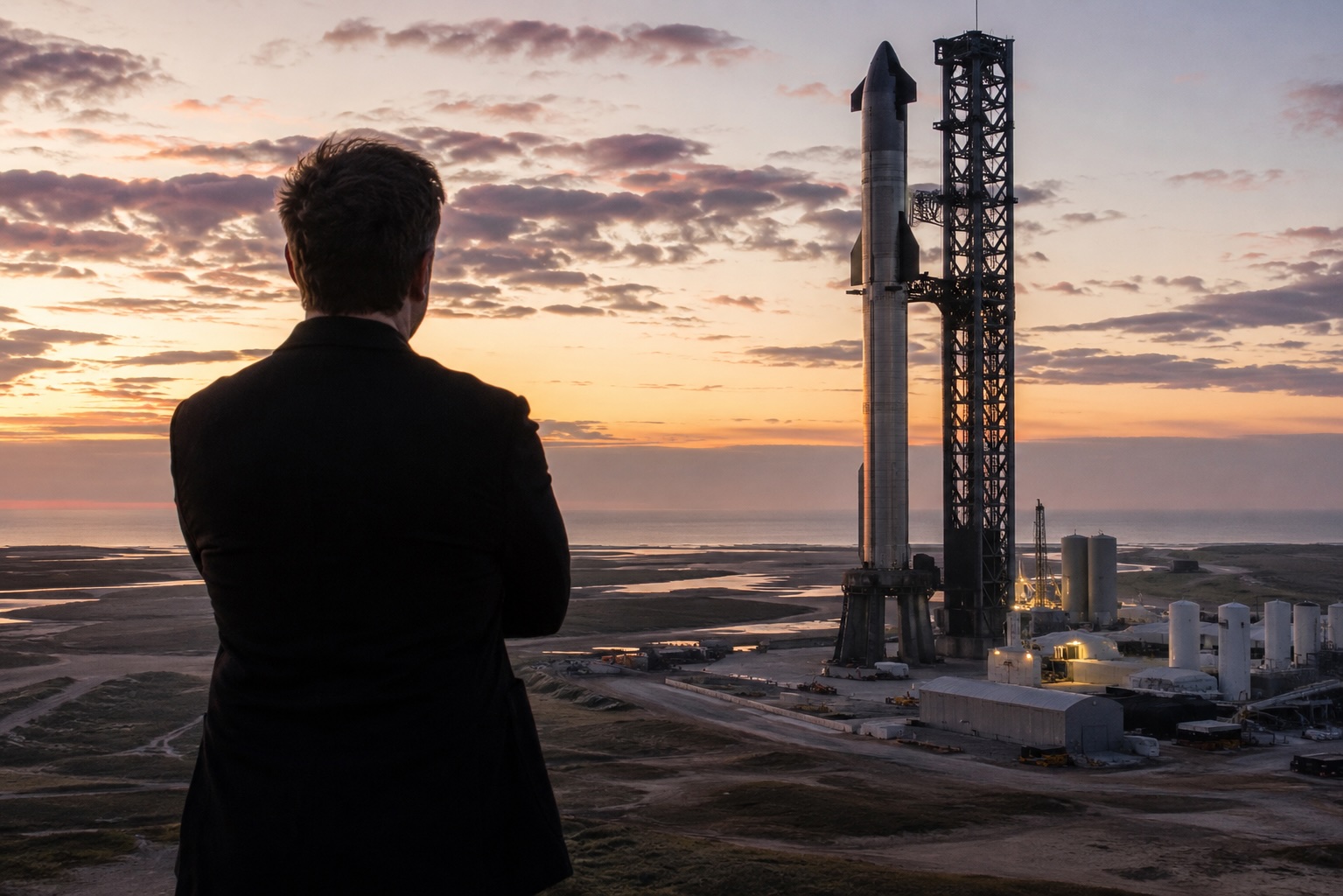
Elon Musk said he is planning to give “every one of his SpaceX shares to every kid in America” in 2027, stating that “this will be the first of many.”
SpaceX went public earlier this year, and its stock price has been relatively stable since leveling off shortly after its IPO. Based on its current price, it’s a gift of just over $10 billion to children across the United States.
It appears to be closely related to President Donald Trump’s bank accounts for children, which were set up earlier this year as Trump Accounts.
Just hours earlier, Anthropic had announced the establishment of its Anthropic Public Benefit Fund, “a new wholly-owned entity dedicated entirely to public benefit.” Musk responded by stating he recommended “giving the shares directly to the public,” and that he would be doing it that way.
Just a little bit later, Musk said children across the U.S. would be getting a share from him:
Next year, I will give one of my SpaceX shares to every kid in America.
This will be the first of many.
— Elon Musk (@elonmusk) October 19, 2026
There are roughly 70 million children, meaning someone under the age of 18, in the United States, according to the Federal Interagency Forum on Child and Family Statistics. Musk’s ownership of SpaceX stock shows he has around 849 million Class A shares of SpaceX stock, according to filings with the SEC.
Investor's Corner
SpaceX’s biggest earnings test yet lands Tuesday, and Tesla shareholders should be watching
SpaceX reports earnings Tuesday as Wall Street watches AI spending, Starlink growth and Tesla merger

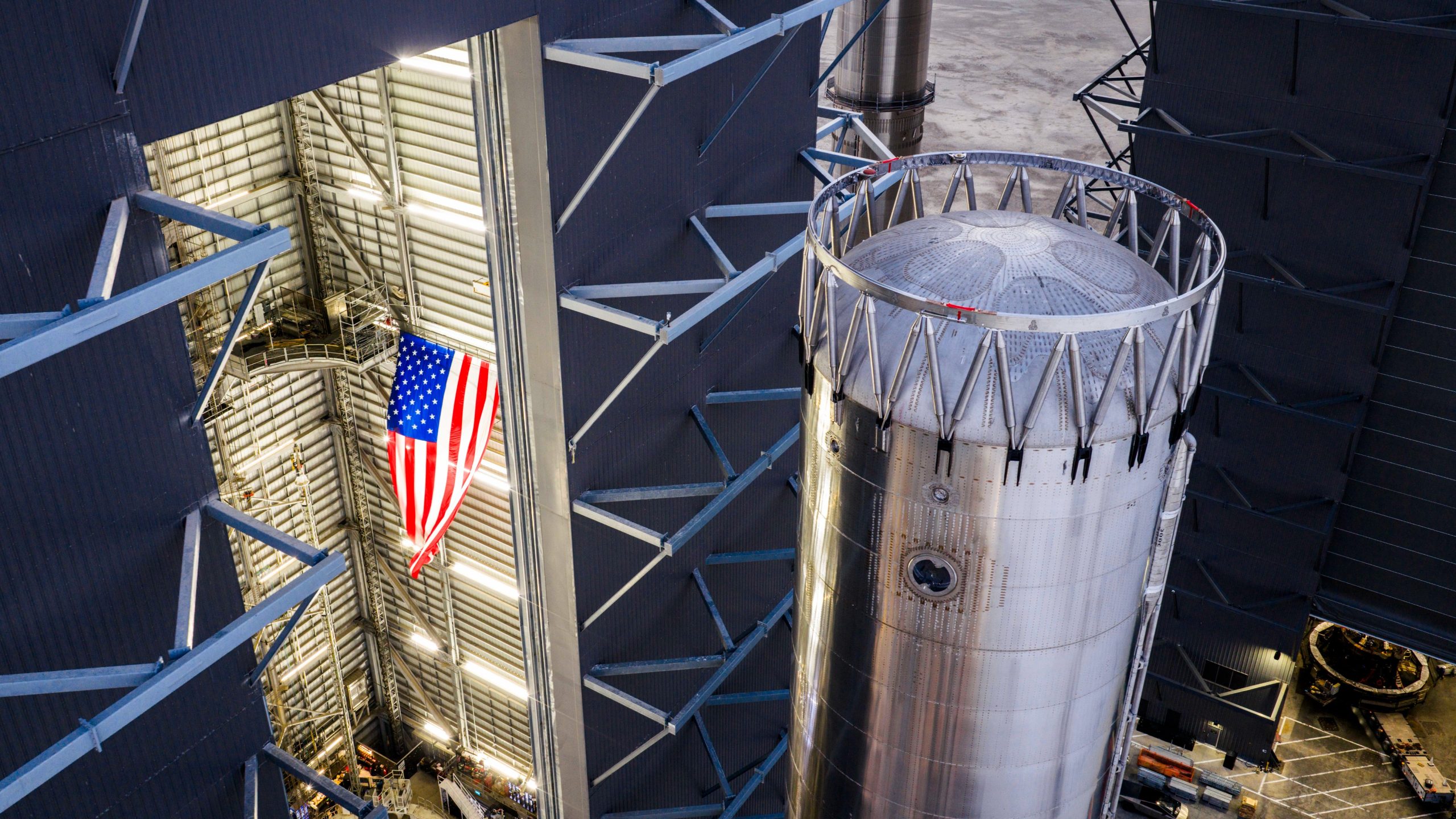
SpaceX reports third quarter results after the market closes Tuesday, with a webcast at 4:30 p.m. ET streamed on X, and Tesla follows a day later. Bloomberg consensus, cited by Pepperstone, calls for revenue of $12.89 billion, adjusted EBITDA of $6.62 billion and adjusted EPS near $0.15. That would be about 65% growth from the second quarter and SpaceX’s first profitable quarter since its IPO. Analysts expect roughly $6.4 billion from AI and $4.9 billion from Starlink, which is projected to reach 14.3 million consumer subscribers. Capital spending is forecast at $19.6 billion, leaving free cash flow near negative $11.6 billion.
The numbers matter because SpaceX has spent months trying to win over a skeptical market. It priced its record IPO at $135, spiked to $225.64, then sank near $105 in early August. Friday’s close of $146.03 sits about 28% below the June high. The Q2 report beat on revenue at $7.8 billion and put Starlink at 12 million subscribers, but $18.4 billion of capex hurt the stock. Since then SpaceX reached orbit on Starship Flight 14 with 26 Starlink V3 satellites, agreed to buy 800 MHz spectrum for about $8 billion as part of its Starlink Mobile push, and signed a fourth compute hosting deal in four months worth roughly $13 billion a year from December. Management is targeting more than 2 gigawatts of compute by year end and a $100 billion annualized revenue run rate. Evercore ISI, which raised its target to $275, said the quarter may be judged more on those targets than the reported figures
All of this sits under the Tesla merger question. Barclays analyst Dan Levy expects an all stock deal in which SpaceX buys Tesla at a premium, using reference values of $2.1 trillion and $1.5 trillion, and said an announcement would need to come by late October or early November to be voted on at Tesla’s December 6 annual meeting. Barclays estimates Musk would hold about 37% of the combined company and 56% of the votes. Musk said in July that combining companies cannot be discussed on an earnings call, but an investor question asking when SpaceX will merge with Tesla is sitting on SpaceX’s Q&A platform, and Teslarati has tracked how the Roadster demo revived the talk.
If a deal happens, Tuesday’s result would effectively set the price Tesla holders would receive. Their shares would convert into SpaceX stock, along with exposure to a company with a heavy investment on AI, while Tesla itself expects 2026 capex above $25 billion. A strong quarter and calmer spending would make that exchange easier to sell. Another round of heavy capex and a falling stock would make it harder.

SpaceX reports its first earnings today: here’s what to expect

SpaceX just launched its secret Starfall saucer again

The Boring Company’s latest Tesla tunnel truck mod “fits like a glove”

SpaceX reveals how its 1 Million AI satellite network will work and prevent space collisions

Tesla Roadster: Three configs, one can fly, 0-60 in 0.8 seconds


