Investor's Corner
Tesla (TSLA) short-sellers’ media publicity called out by high-profile finance veteran

The past few months have been challenging for Tesla and Elon Musk. As the company attempted to make progress in its efforts to ramp the production of the Model 3, a consistent stream of attacks from short-sellers and critics, as well as aftereffects of Musk’s own behavior on Twitter, have weighed heavily on Tesla stock.
Amidst the constant stream of negative reports against the company coming from mainstream media, James Anderson, co-manager of Scottish Mortgage and a senior partner at Baillie Gifford in Edinburgh, noted that while some of Elon Musk’s actions, particularly against British diver Vernon Unsworth, were “ethically unacceptable,” the CEO is not really one of the biggest problems of the company. Rather, it is the prevalent — and at times aggressive — attacks it consistently receives from critics and short-sellers.
Anderson was recently featured in a segment of Citywire Money, where he discussed Tesla’s expenses as it ramped the Model 3, the peculiar amount of publicity given to TSLA short-sellers, and Elon Musk’s actions online. The Baillie Gifford senior partner noted that it wasn’t particularly surprising to his firm that Telsa is spending a lot as it grows, considering that the electric car maker is “building a car company in a completely different way with a completely new technology.”
That being said, the financial industry veteran opted to call out the media coverage of Tesla’s short-sellers and critics, who have been given a surprisingly generous amount of publicity. Anderson noted that the media needs to ask itself a lot of questions, particularly regarding the rhetoric of TSLA short-sellers, as well as their “vicious” hypothesis against the electric car maker.
“I feel the media in general needs to ask itself a lot of questions – which is the extraordinary level of publicity given to the claims and rhetoric of the absolutely vicious short investment hypothesis and individuals behind them. I think that they are not to be viewed as a beneficial force for allowing a convenient avenue to attack over enthusiasm,” Anderson said.
The Scottish Mortgage co-manager further noted that while some of Elon Musk’s actions on Twitter were ethically unacceptable, it should be noted that the actions of some of the company’s short-sellers and critics against Tesla and Elon Musk are just as unethical.
“I think these people try and make their claims come true in ways that to me seem. I said Mr. Musk behaved unethically — I believe many of these people do as well, and I do wish that many of our most prominent media personalities and institutions would examine the claims and records of many of these people. And in some cases there is a lot of evidence through court cases of just how malignant they can be,” he said.
Anderson’s observations about the behavior and prevalence of Tesla’s critics in the media are quite accurate. Rarely does a day go by, after all, when Tesla sees few negative stories about its business, or about Elon Musk himself. Last week, for example, the departure of Tesla’s CAO ended up being augmented by Elon Musk’s single whiff of cannabis during a podcast, causing the company’s stock to drop.
Even small-time Tesla short-sellers are beginning to gain support from mainstream media. Late last month, Reuters published a report celebrating the sleuthing work being conducted by several TSLA shorts, including an anonymous Twitter user known for posting misogynistic, aggressive, and racist comments against Tesla supporters. Michelle Price, one of the writers of the piece, later clarified in a follow-up Twitter post that they did multiple and varied checks on the anonymous TSLA short that they featured before considering the person as a valid source.
As of writing, Tesla shares (NASDAQ:TSLA), in which Baillie Gifford holds a 7.8% stake and which accounts for 5% of Scottish Mortgage assets, is trading up 1.67% at $294.27 per share.
Disclosure: I have no ownership in shares of TSLA and have no plans to initiate any positions within 72 hours.



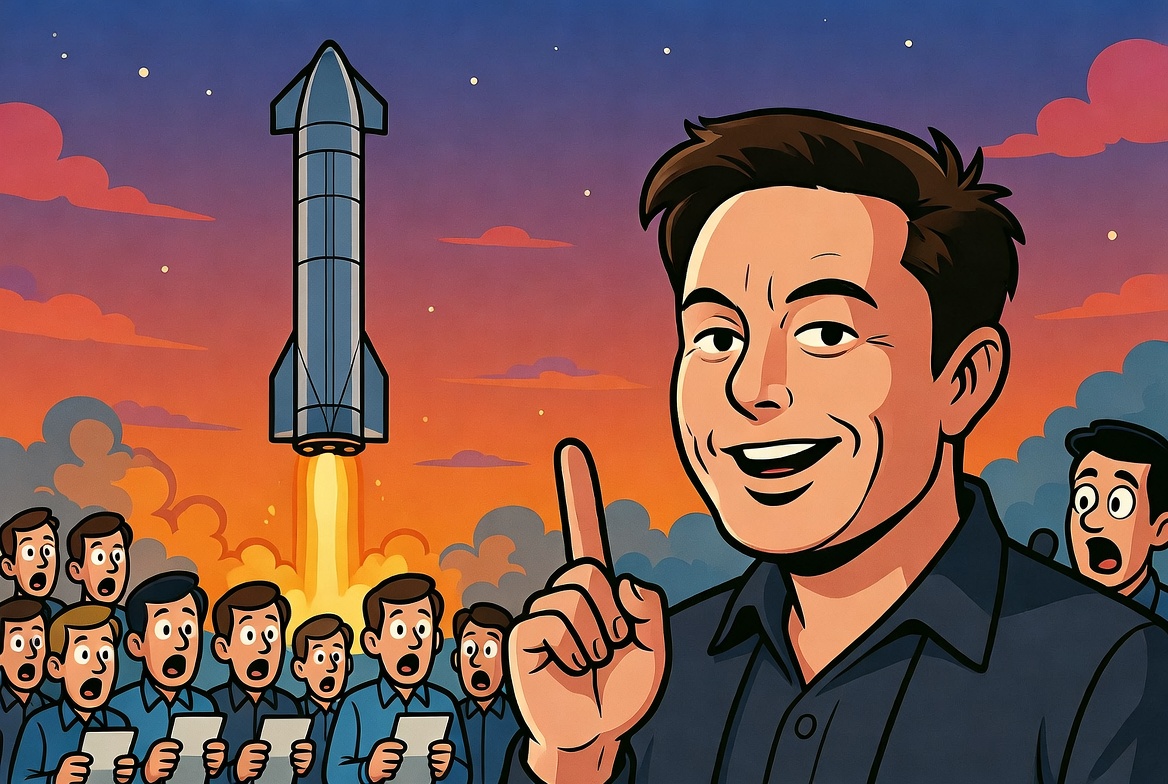
Elon Musk has firmly denied recent media reports suggesting that SpaceX has reduced its target valuation for an upcoming initial public offering.
The denial came directly from the SpaceX and Tesla frontman on his social media platform X, where he responded with a single word, “False,” to a post from ZeroHedge that cited Bloomberg sources.
This swift rebuttal underscores Musk’s ongoing effort to manage speculation surrounding one of the most anticipated market debuts in recent history.
False
— Elon Musk (@elonmusk) May 29, 2026
According to the disputed reports, SpaceX had lowered its IPO valuation goal to at least $1.8 trillion from previous ambitions exceeding $2 trillion.
The claims emerged amid growing anticipation for the company’s confidential S-1 filing, which positions it for a potential public listing as early as June.
Some had pointed to strong revenue growth, particularly from the Starlink satellite internet service, which contributed heavily to the firm’s 2025 figures of $18.7 billion. Yet challenges persist in other areas, including substantial investments and losses tied to ambitious projects like Starship development and artificial intelligence initiatives, which plan to make life multiplanetary eventually.
Musk’s response highlights a pattern in which he actively counters what he views as inaccurate portrayals of his companies’ trajectories.
SpaceX, already valued privately at extraordinary levels, stands as a cornerstone of Musk’s empire alongside Tesla and xAI. The entrepreneur has long emphasized the transformative potential of reusable rockets and global broadband access, factors that fuel investor enthusiasm despite operational hurdles.
By rejecting the valuation downgrade narrative, Musk signals confidence in SpaceX’s fundamentals and its readiness for public markets on terms favorable to its long-term vision. People have been waiting a very long time to invest in SpaceX, and the valuation, as well as the introductory share price, is not going to need adjusting.
They’ll have plenty of suitors.
This episode reflects broader dynamics in the technology sector, where rumors often swirl around high-profile entities. Musk’s direct engagement with media narratives serves to maintain transparency and control the narrative around his ventures.
As SpaceX prepares for greater scrutiny in public markets, the founder’s denial reinforces optimism about its prospects. Supporters argue that the company’s innovative edge positions it for enduring success, far beyond short-term valuation debates. With the denial now public, attention turns to forthcoming regulatory filings that could provide clearer insights into SpaceX’s strategy and financial health.
The coming weeks promise to reveal more about how SpaceX will transition into a publicly traded powerhouse.
Elon Musk
The Tesla and SpaceX merger everyone is talking about is quietly building
Tesla and SpaceX may be closer to merging than Wall Street or either company is admitting.

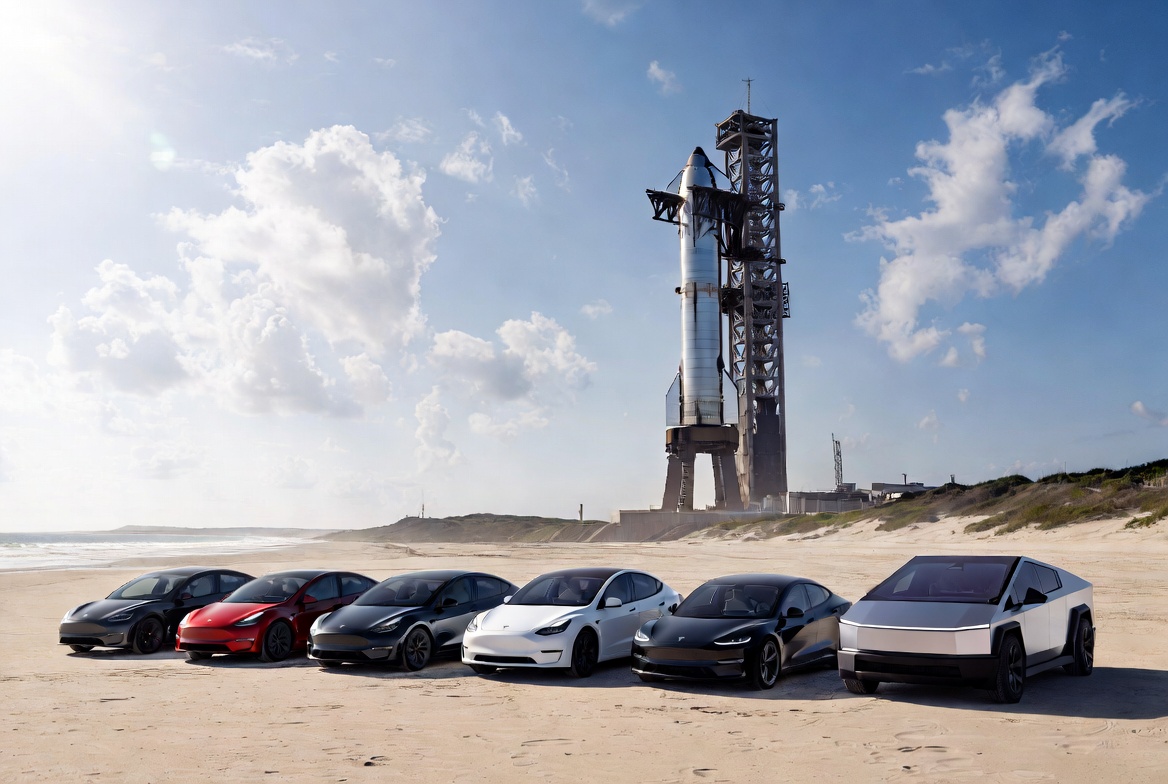
Elon Musk has reportedly discussed merging Tesla and SpaceX with people close to him, according to CNBC, which cited sources familiar with the conversation. Tesla employees have long expected such a transaction and the topic is openly discussed internally, according to internal sources. With SpaceX is days away from kicking off its Wall Street roadshow for what could be the largest IPO in market history, this would be the first time the company will have public market currency to execute a stock-for-stock deal with Tesla.
The financial logic for a merger would make sense. A combined SpaceX and Tesla would create a conglomerate spanning rockets, satellites, electric vehicles, AI infrastructure, and energy storage valued at roughly $3.35 trillion to $3.6 trillion based on SpaceX’s IPO target range and Tesla’s current market capitalization. The two companies are already more intertwined than most people realize. SpaceX bought $697 million worth of Tesla Megapack systems for xAI data centers and $131 million worth of Cybertrucks. Tesla invested $2 billion in xAI, which subsequently merged with SpaceX. Past transactions also include Tesla selling solar equipment and parts to SpaceX, and SpaceX helping with Cybertruck materials.
Will Tesla join the fold? Predicting a triple merger with SpaceX and xAI
Musk himself signaled where this was heading in November 2025 when he posted on X, “My companies are, surprisingly in some ways, trending towards convergence.” Tesla and SpaceX announced a joint semiconductor fabrication facility in Austin called Terafab on the Gigafactory Texas campus, covering two advanced chip factories, with one serving Tesla’s AI needs for vehicles and Optimus robots, the other targeting space-based data centers under SpaceX’s infrastructure vision.
Wedbush analyst Dan Ives places the probability of a merger at 80% to 90% with a target completion in the first half of 2027. The mechanics of a deal became possible the moment SpaceX filed its S-1. Legal experts said a merger likely would not spark antitrust issues but would raise concerns among shareholders in each company, with questions around which company would be the parent, how a stock swap would take place, and who determines the appropriate price. Musk holds about 20% of Tesla’s equity but controls 85.1% of SpaceX’s voting power through a super-voting share class, meaning he would largely be negotiating the terms with himself.
Not everyone is convinced the timing is imminent. Traders on Kalshi place only 33% odds that a merger will happen before May 2027. The more immediate concern for Tesla shareholders is whether the SpaceX IPO pulls capital and Musk’s attention away from Tesla before any merger consolidates the upside for both.
What is clear is that the structural groundwork is already being laid. The Terafab announcement, the xAI merger, the shared supply chain, the cross-company balance sheet transactions, and now the IPO all point in the same direction. Whether the merger follows in 2027 or later, the two companies are already operating more like divisions of a single entity than independent competitors.
Elon Musk
SpaceX just filed for the IPO everyone was waiting for
SpaceX filed its public S-1, revealing $18.7 billion in revenue and billions in losses.
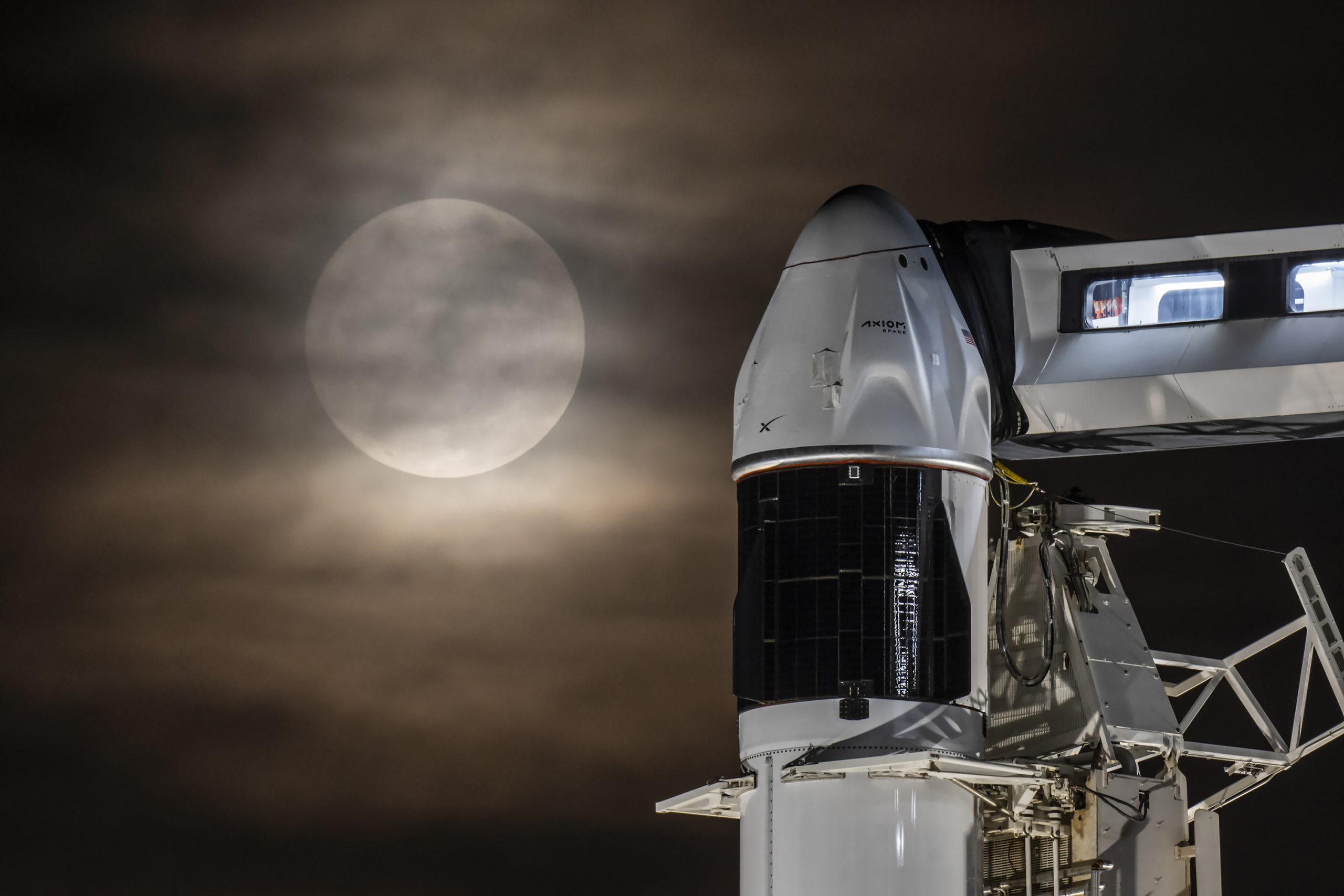
SpaceX publicly filed its S-1 registration statement with the Securities and Exchange Commission on May 20, 2026, making its financial details available to the public for the first time ahead of what could be the largest IPO in history.
An S-1 is the formal document a company must submit to the SEC before going public. It includes audited financials, risk factors, business descriptions, and how the company plans to use the money it raises. Companies are required to file one before selling shares to the public, and it must be published at least 15 days before the investor roadshow begins. SpaceX had already submitted a confidential draft to the SEC in April, which allowed regulators to review the filing privately before it went public.
The S-1 reveals that SpaceX generated $18.7 billion in consolidated revenue in 2025, driven largely by its Starlink satellite internet division, which posted $11.4 billion in revenue, growing nearly 50% year over year. Despite that growth, the company lost about $4.9 billion in 2025 and has burned through more than $37 billion since its founding.
SpaceX just forced Verizon, AT&T and T-Mobile to team up for the first time in history
A significant portion of those losses trace back to xAI, Elon Musk’s artificial intelligence company, which was recently merged into SpaceX. SpaceX directed roughly 60% of its capital spending in 2025 to its AI division, totaling around $20 billion, yet that division lost billions and grew revenue by only about 22%.
SpaceX plans to list its Class A common stock on Nasdaq under the ticker SPCX, with Goldman Sachs, Morgan Stanley, and Bank of America leading the offering. The dual-class share structure means going public will not meaningfully reduce Musk’s control, as Class B shares he holds carry 10 votes per share compared to one vote for public Class A shares.
The company is targeting a raise of around $75 billion at a valuation of roughly $1.75 trillion, which would make it the largest IPO ever. The investor roadshow is reportedly planned for June 5.

Tesla’s European Comeback: Registrations soar in May as recovery gains momentum

Tesla plans ingenious improvement to one of its best features


