News
Tesla's China Gigafactory will be the game-changer of 2020, predicts analyst

Tesla (NASDAQ:TSLA) has managed to rip through its self-imposed goals for 2019, and 2020 could prove to be even bigger. As the electric car maker tackles yet another year, Wall Street analyst Dan Ives of Los Angeles-based Wealth Management company Wedbush Securities believes that Tesla’s Gigafactory 3 will be one of the company’s most important assets in 2020.
“With the first Chinese made Model 3s delivered over the past week and Giga 3 on pace to produce over 1,000 cars per week, the bull/bear debate will center around ramping production and demand to the 100k/150k level annually in China and how quick this dynamic will ramp,” Ives wrote in a note on January 2, just a day before Tesla released its Q4 and Full-Year delivery and production figures.
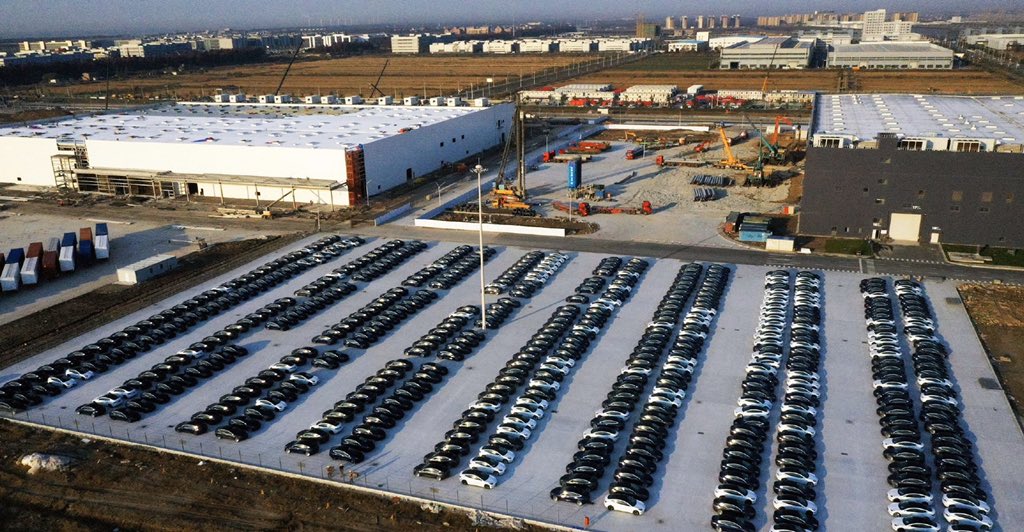
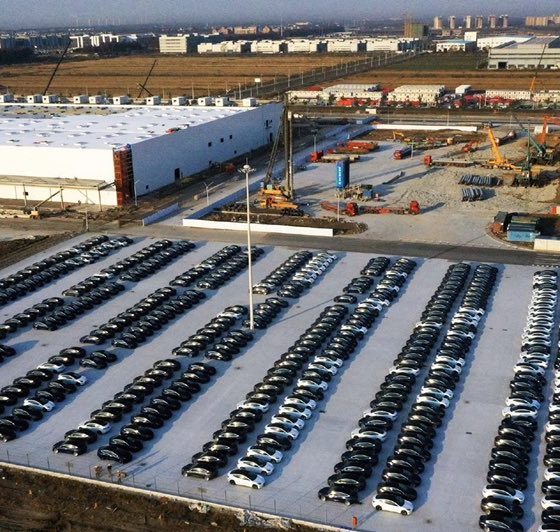
Tesla broke ground on Gigafactory 3 in Shanghai in early 2019. Less than a year later, the company is already producing sales-ready Tesla Model 3s and delivering them to Tesla employees. The company announced that its second round of deliveries is set for January 7. This next segment of deliveries for the Made-in-China Model 3 will give non-Tesla employees deliveries of the company’s most affordable sedan.
Tesla has already reached a production rate of 1,500 Model 3s at Gigafactory 3 during a six-day workweek, though more recent reports from China reveal that the massive Shanghai-based facility has reached a run-rate of 3,000 vehicles a week.
Tesla’s stock recently broke the infamous $420 per share barrier and was trading as high as $453 per share on January 3. Ultimately, Ives believes the company’s stock could go even higher in 2020 due to Gigafactory 3, with the facility’s performance and production being worth an additional $75 to $100 to TSLA shares. This could prove to be Tesla’s opportunity to cement itself as the most valuable car manufacturer in the United States.
Tesla’s Q4 2019 report stated the company produced almost 105,000 vehicles and delivered around 112,000 from October to December 2019. That’s a 50% increase from the previous year. Over 92,000 of the 112,000 delivered vehicles were Tesla Model 3s.
As Gigafactory 3 production continues to ramp up and Tesla begins to prepare for the first construction phases of Gigafactory 4 in Berlin, Germany, the electric car manufacturer has plenty to be excited about. As for Ives, he believes that Tesla’s performance in China and Europe will be key indicators on whether the company can sustain the level of success they realized in the final months of 2019.
Tesla stock ended Friday’s trading up 2.96% at $443.01 per share.
Disclosure: I have no ownership in shares of TSLA and have no plans to initiate any positions within 72 hours.


Elon Musk
SpaceX Starship just nailed something it’s never done before
SpaceX’s Starship flew successfully Friday, landing both stages and deploying its first Starlink V3 satellites.

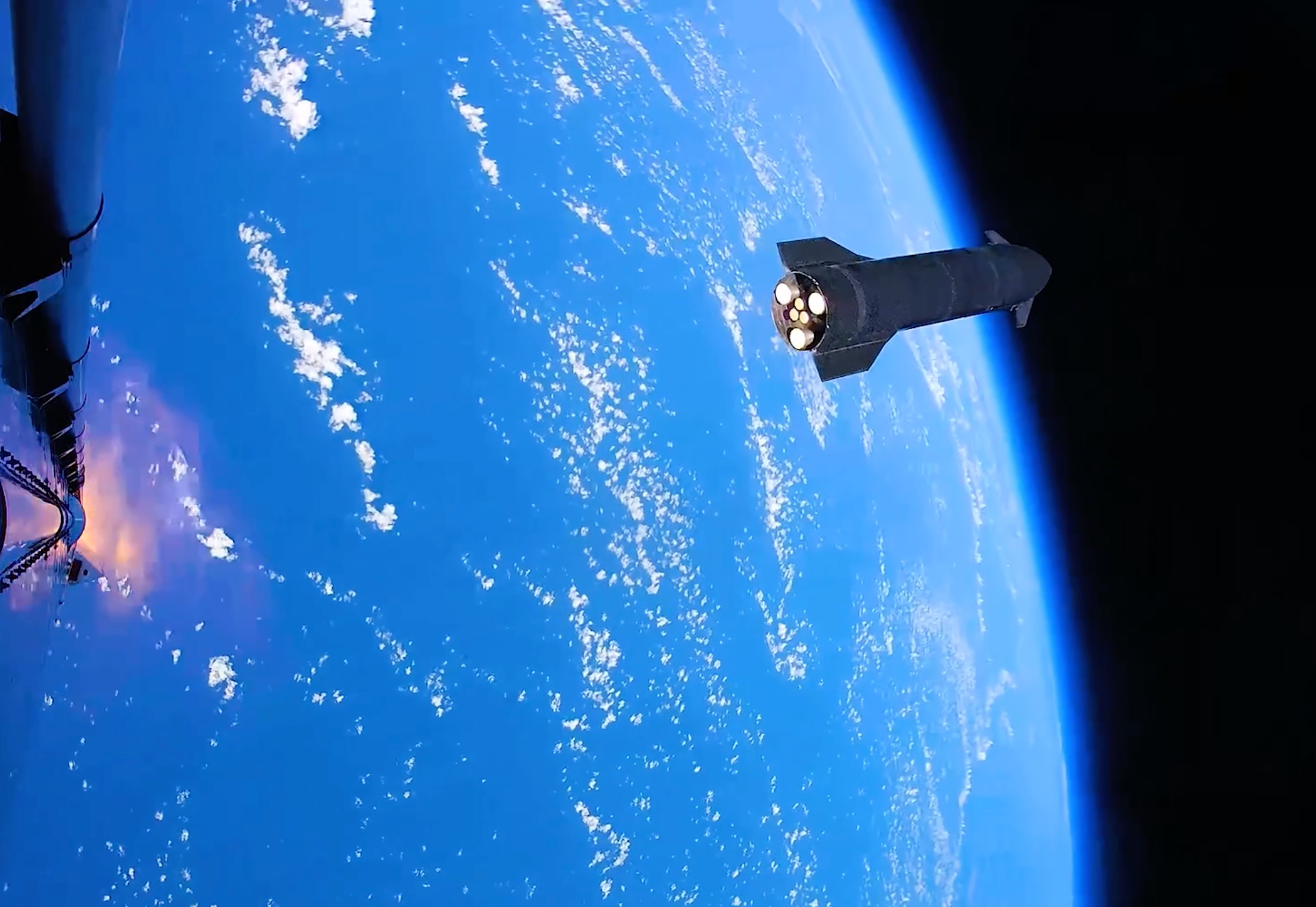
Starship’s thirteenth test flight delivered exactly what SpaceX needed with a clean liftoff, two successful stage recoveries, and the first real payload the vehicle has ever carried to space. Booster 20 and Ship 40 lifted off at 5:51 p.m. CT from Starbase, and by the time the mission wrapped roughly an hour later, both halves of the rocket had done exactly what they were supposed to do.
Booster 20 separated from Ship 40 a few minutes into the flight and stuck a controlled splashdown in the Gulf of Mexico about six minutes after liftoff. That is a meaningful turnaround from Flight 12 in May, when the booster lost several engines during its boostback burn before a hard water landing attempt.
Starship as seen from Starlink satellites pic.twitter.com/e2hvfmnewh
— Elon Musk (@elonmusk) July 25, 2026
Starship 40’s performance was arguably the bigger win. The vehicle deployed the first 20 operational Starlink V3 satellites Starship has ever carried, then flew a suborbital arc to a landing in the Indian Ocean that SpaceX commentator Dan Huot called the company’s softest splashdown yet. “This is a dream scenario for this team that’s trying to get this heat shield data,” Huot said on the live broadcast, according to Space.com’s live coverage. “I’m a little over the moon right now. Wow. Lucky number 13.”
Unlike the mass simulators SpaceX flew on Flight 12, these were production Starlink V3 satellites, meant to extend solar arrays and antennas and attempt to link with the broader constellation before reentering minutes later. Getting real hardware through a full deploy sequence on only the second flight of the V3 generation keeps Starship on schedule for the payload work NASA is counting on for future Artemis lunar landings.
What an awesome launch, really seems like everything went super well and it was all incredibly smooth.
SpaceX is awesome. Very interested to see how the market will respond on Monday pic.twitter.com/KSHmyBfV55
— TESLARATI (@Teslarati) July 25, 2026
— TESLARATI (@Teslarati) July 25, 2026
The flight also arrives at a moment when SpaceX needed a win. SPCX has traded below its $135 IPO price since mid-July, as Teslarati reported when the mission slipped to Friday, and short interest has climbed to roughly a third of the tradable float. A clean flight will not fix a balance sheet, but it does answer the one question SpaceX absolutely needed answered this week: whether the fixes made after the July 16 abort would hold up under real flight conditions. They did, on both stages, on the first try after the redesign.
SpaceX has not set a target date for Flight 14, though the company has said it wants to push toward an orbital attempt on the next mission. After Friday, that goal looks a lot more within reach.
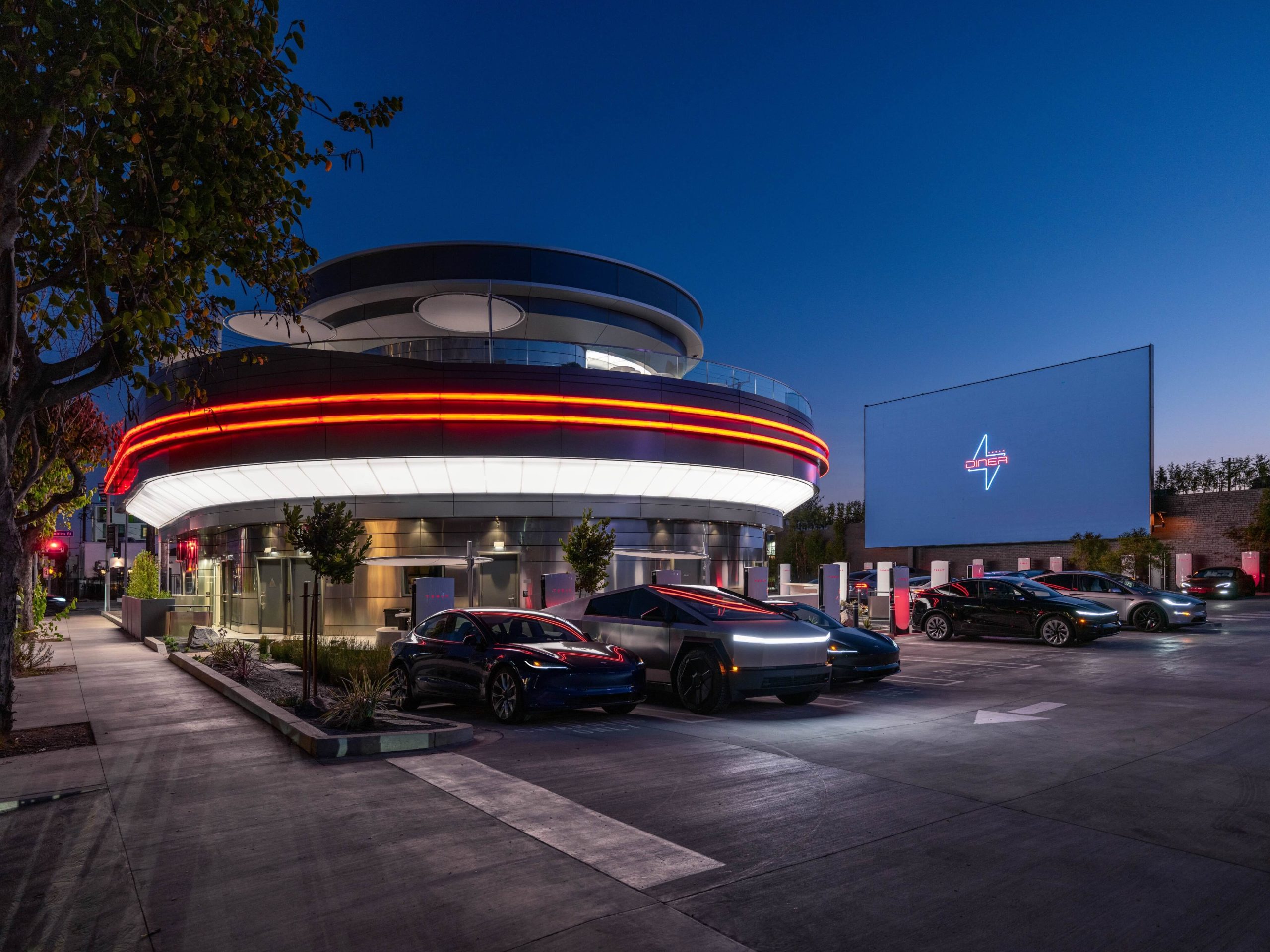
Tesla’s Supercharger Diner in Los Angeles dominated the company’s global usage rankings after just one year, proving the concept is more than just a one-off novelty location that will fade away.
The performance could incite the company to build more locations, something that CEO Elon Musk has hinted at for some time.
Tesla’s Supercharger Diner delivered 21.2 GWh of energy in its first year of operation, the company’s head of Charging, Max de Zegher, revealed on X. Of the top 10 most utilized Supercharger locations in Tesla’s global infrastructure, the Diner in Los Angeles was the most used by drivers, and it wasn’t particularly close:
Tesla Diner opened exactly 1 year ago. Inspiring that futuristic places like this exist.
It’s our highest usage Supercharger in the world: 21.2 GWh delivered in a year, 1.6k sessions/day.
Top 10 Superchargers by energy delivered: https://t.co/9YvJ8lw696 pic.twitter.com/koB3AUJHws
— Max (@MdeZegher) July 21, 2026
On its launch day one year ago, nobody was too sure what the Tesla Diner would be about. It seemed like an interesting concept, and considering it had been in the works for years, it was a highly anticipated launch that many were looking forward to.
Based on its success, we could see additional Diners with Superchargers built throughout the United States, and potentially beyond. Musk has said on several occasions that the company would be willing to bring the Diner idea to more markets.
Tesla makes major change at Supercharger Diner amid epic demand
Of the markets that Musk has mentioned, both Palo Alto and Austin have come to be perceived as ideal selections. However, there are no concrete plans as of now to build new Supercharger Diners anywhere; the location on Santa Monica Boulevard will remain the exclusive spot to pick up Tesla-inspired eats, at least for the time being.
Tesla short sellers won big following the company’s massive fall on Wall Street after it reported subpar Earnings on Wednesday.
Tesla short sellers collected about $4.12 billion in single-day profits on Thursday, according to Bloomberg. Shares fell as much as 15 percent during Thursday’s session. It closed as one of the worst days for Tesla on Wall Street in the past three years.
Investors sold off the stock after Tesla said it would aggressively direct its spending toward AI and its Optimus robot project. The company had record revenues, which were driven by one of the strongest quarters in terms of vehicle deliveries in company history.
However, it missed EPS estimates by reporting just $0.33, a far cry from the $0.53 analysts expected.
S3 Partners reported that about 3 percent of Tesla’s outstanding stock is sold short. Managing Director at S3, Ihor Dusaniwsky, provided the short seller’s potential profit, as well as another figure: shorts have likely had paper gains of $8.92 billion this year, as Tesla shares are down 30 percent in 2026.
Tesla (TSLA) Q2 2026 earnings results: miss on EPS, beat on revenue
Tesla has burned short sellers many times in the past, but the company’s latest Earnings Call was a chance for those skeptics to taste some payback. Although the company gave some very transparent information regarding future projects, the rollout of Robotaxi, Optimus, and Semi, many investors took their profits on Thursday.
Notable short sellers like Michael Burry have been transparent about their skepticism around Tesla shares. Burry just revealed three weeks ago that he had opened up a new short on the stock, stating he shorted Tesla shares at $416.22. “Happy it jumped back to this level,” he said in a blog post.
At the time of publication, Tesla shares were down about 3 percent and the stock was trading at $309.92.

SpaceX Starship just nailed something it’s never done before

Tesla’s Supercharger Diner probably just secured more locations


