News
Tesla Model 3 with mods nearly takes out McLaren F1 lap time at famed Japanese race circuit

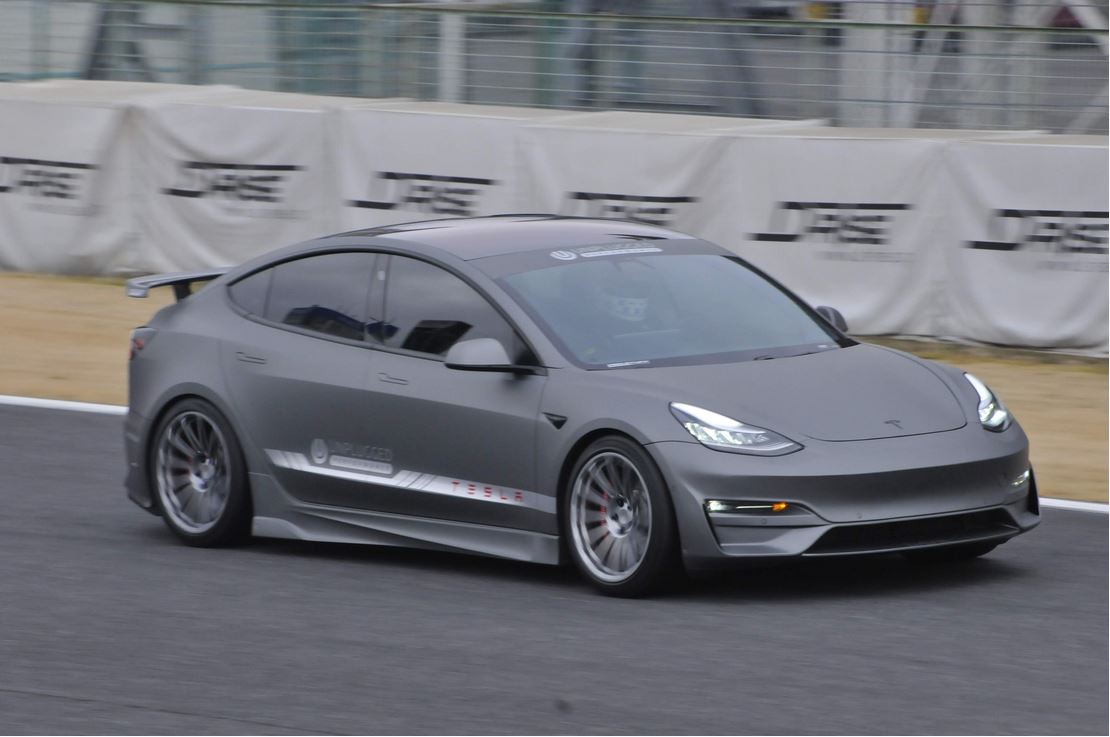
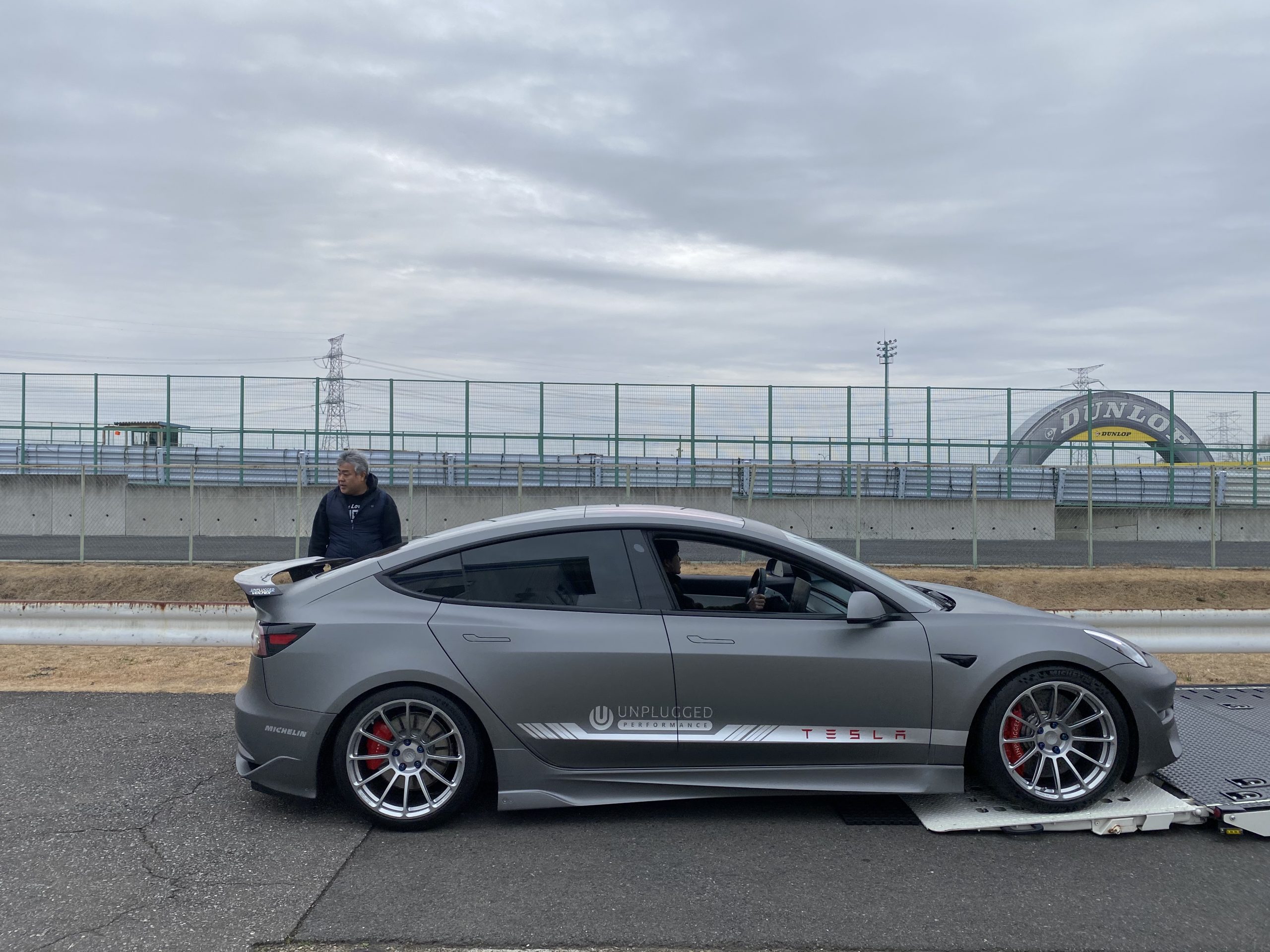
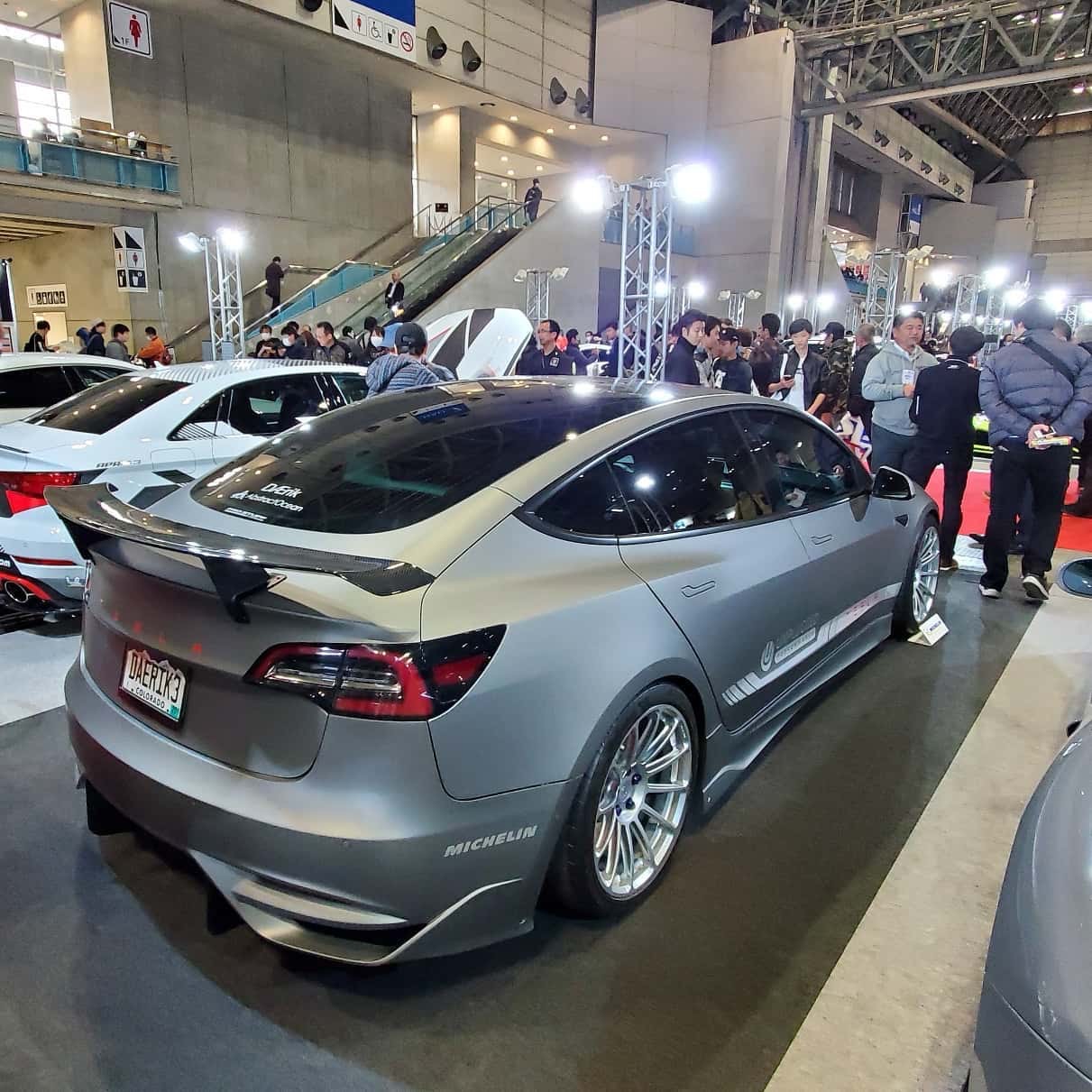
A Tesla Model 3 Performance with street-legal tires and a series of Unplugged Performance bolt-on modifications registered a nearly identical lap time as the McLaren F1 supercar at the famed Tsukuba Circuit in Japan.
The upgraded but street-driven Unplugged Performance Model 3 owned by Erik Strait of the YouTube channel DӔrik did the Tsukuba Circuit time attack on Jan. 22 and registered a lap time of 1:04.7, only one-tenth of a second away from besting the fastest lap time of 1:04.6 by the iconic McLaren F1.
The lap time set by Unplugged Performance’s Model 3 Ascension-R also bested the times set by other notable high-performance cars at the famed time attack circuit in Japan.
- McLaren F1: 1:04.6
- Tesla Model 3 Ascension-R by Unplugged Performance: 1:04.7
- Porsche 911 GT3 997: 1:04.8
- Ferrari F40: 1:04.8
- Audi R8 V10 5.2 FSI: 1:04.9
- Lamborghini Gallardo: 1:05.0
- Porsche 911 Turbo 997: 1:05.2
The fastest recorded lap time at Tsukuba is a 1:00.3 by a Nissan Nismo GT-R.
The US-spec Tesla Model 3 Performance began its overseas journey from Los Angeles to Tokyo where it made its grand International debut at the Tokyo Auto Salon show in early January. After wooing the crowds at the world-famous motoring show in Japan, the car was then displayed at a Tesla Service Center in Shinome in Tokyo, before ultimately making its way to the Tsukuba race circuit.
-
- Tesla Model 3 Ascension-R at Tsukuba Circuit, Japan (Source: Unplugged Performance)
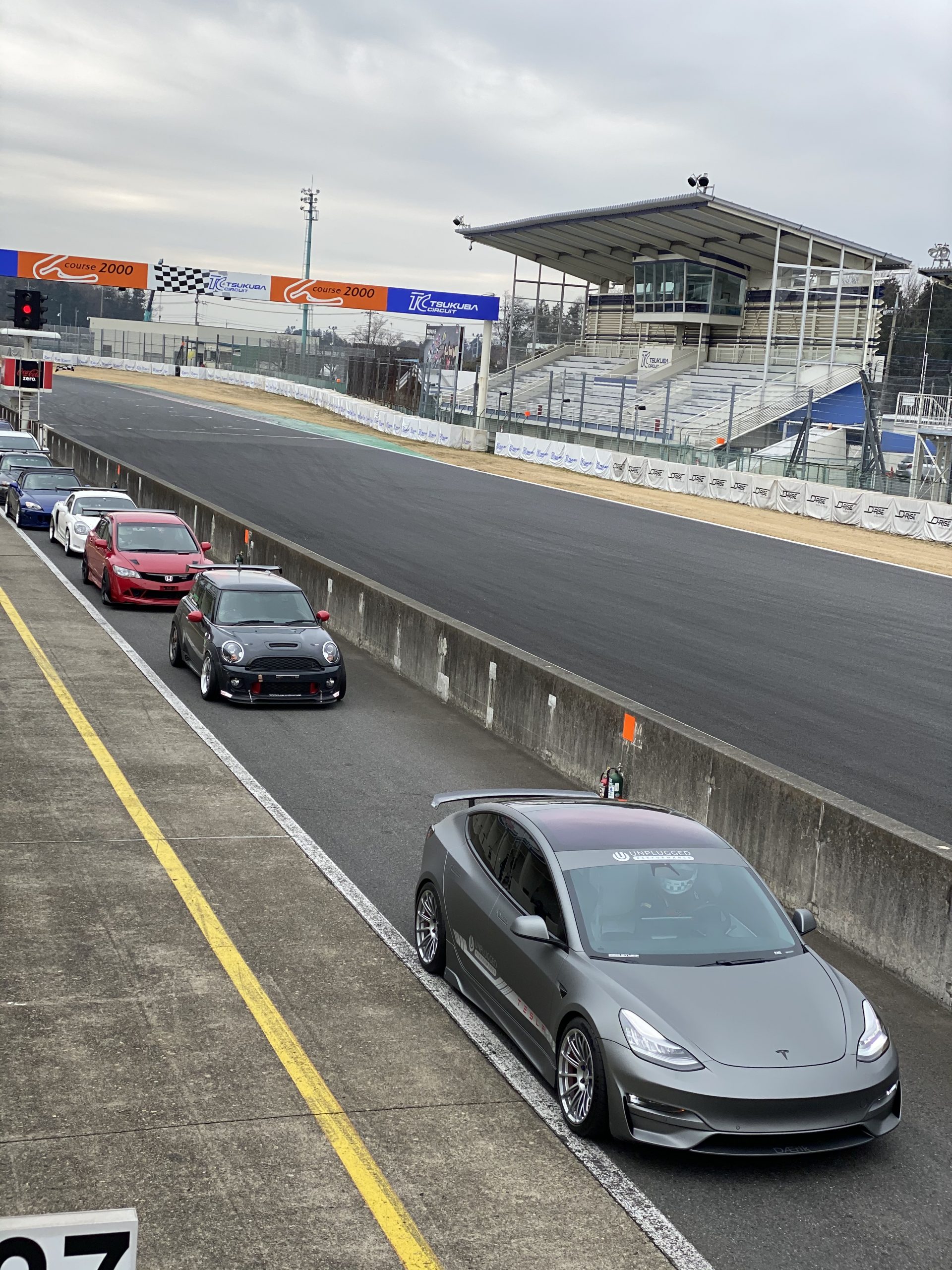
-
- Tesla Model 3 Ascension-R at Tsukuba Circuit, Japan (Source: Unplugged Performance)
-
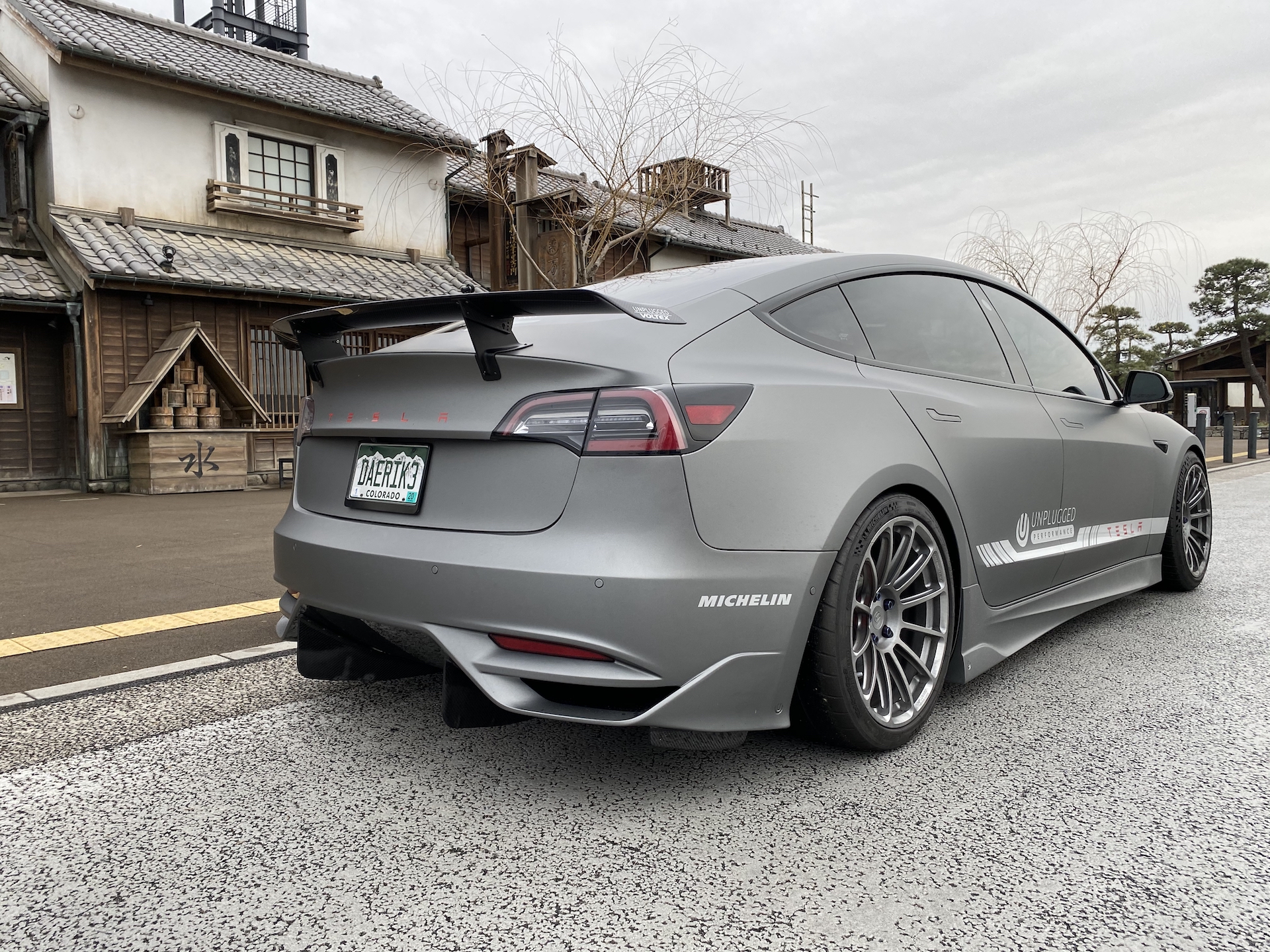
- Tesla Model 3 Ascension-R rear spoiler, Japan (Source: Unplugged Performance)
-
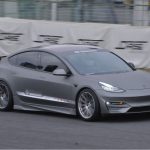
- Tesla Model 3 Ascension-R 2 at Tsukuba Circuit, Japan (Source: Unplugged Performance)
-
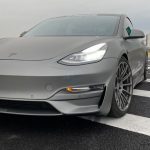
- Tesla Model 3 Ascension-R 2 at Tsukuba Circuit, Japan (Source: Unplugged Performance)
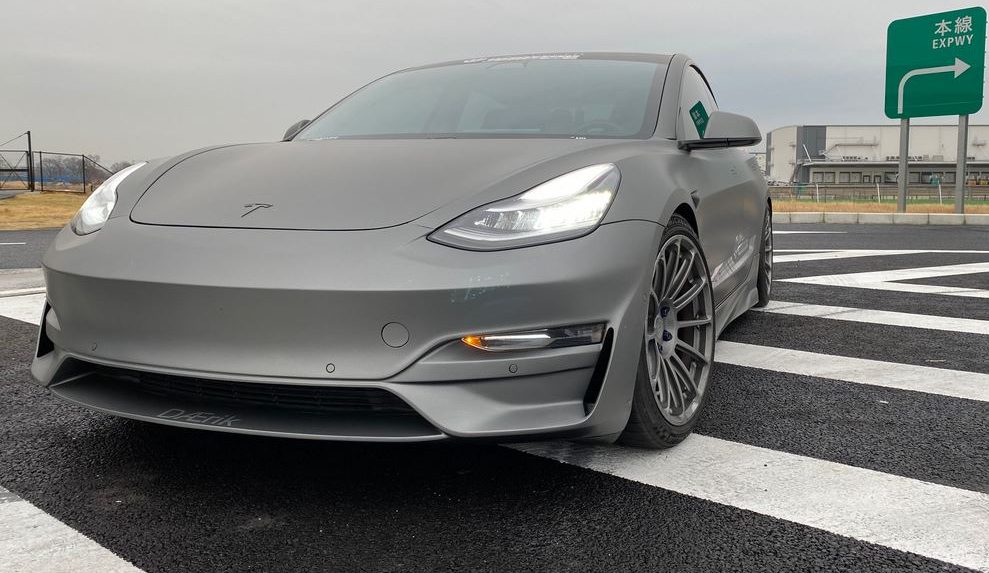
-
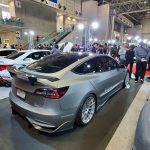
- Tesla Model 3 Ascension-R at Tokyo Auto Salon, Japan (Source: Unplugged Performance)
-
- Unplugged Performance upgraded Tesla Model 3 fastest lap time at Tsukuba Circuit in Japan (Source: Unplugged Performance)
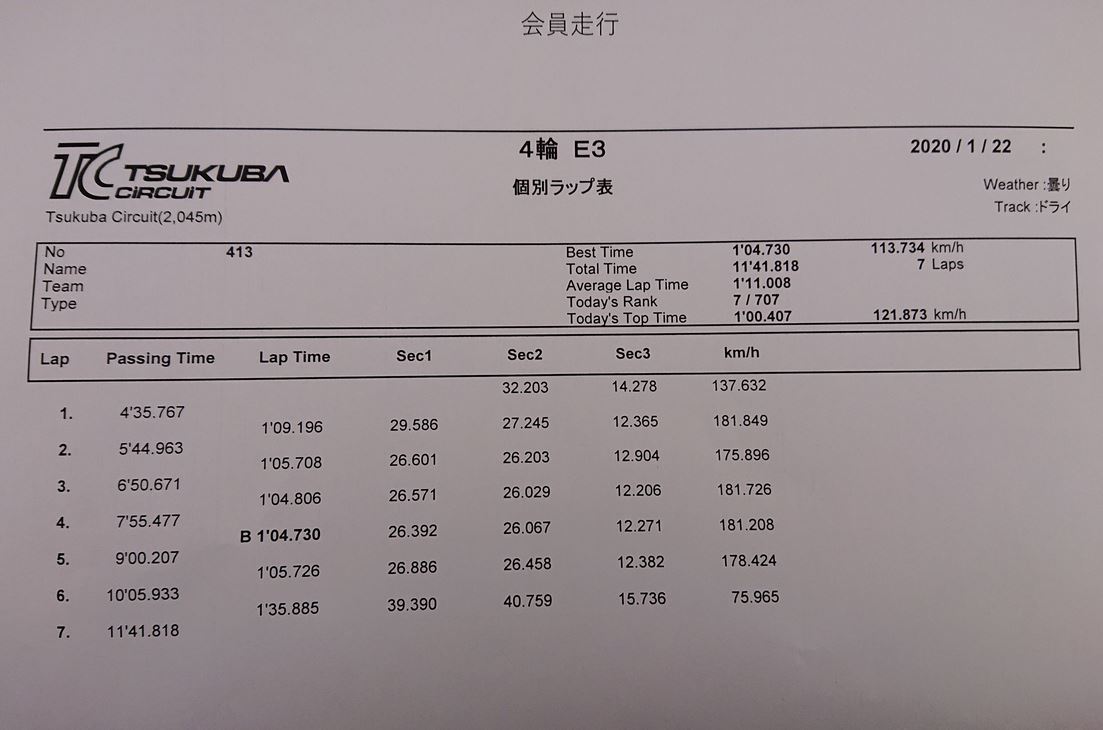
The tuned Tesla Model 3 Ascension-R hit the track at less than ideal conditions on a 38 degree Fahrenheit winter day on January 22. Driven by Unplugged Performance’s trusted Japanese driver Ken Negoro, who is not a full-time racecar driver and has never driven a Tesla before, Negoro familiarized himself with the car by doing 20 laps on the 1.29-mile circuit. During his test runs, Negoro managed to put down a very respectable 1:04 lap time while contending with a field of other cars and learning the characteristics of the California-made all-electric luxury sedan.
Negoro stated that the Unplugged Performance Tesla Model 3 would be capable of running in the mid to low 1:03s without any changes to the car if more laps were possible under better conditions. Negoro also stated that if DOT legal semi-slick tires were used, the car would likely be capable of 1:01 to 1:02 lap time, and come close to the fastest ever factory spec car’s lap time of 1:00.3 set by a Nissan Nismo GT-R.
Considering the driving conditions, the Tesla Model 3’s fastest lap time at the famed Japanese Circuit is a great achievement for Tesla, Elon Musk, Unplugged Performance, and the electric vehicle community in general. With the performance at Tsukuba, Model 3 adds another feather in its cap proving that it can perform side by side, or even better, than world-class supercars.
Check out the video below of the Tesla Model 3 attacking the Tsukuba race circuit in Japan:


News
It’s official: SpaceX takes aim at Verizon, AT&T, and T-Mobile
SpaceX is buying 800 MHz spectrum from Grain to turn Starlink Mobile into a carrier.

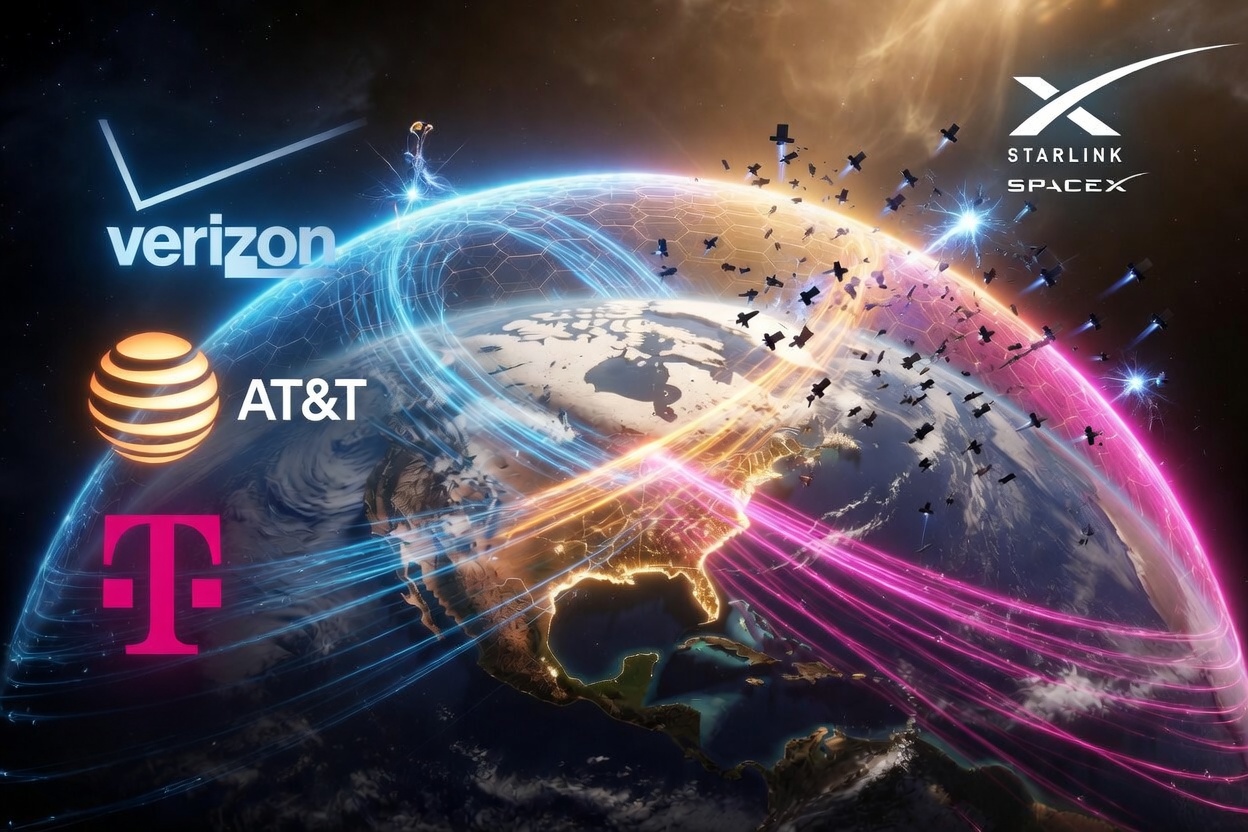
SpaceX has agreed to buy a nationwide block of low band wireless spectrum, a deal the company says will let Starlink Mobile operate as a full US carrier rather than a satellite add-on for someone else’s network.
The company announced the agreement on X on Thursday afternoon, saying it will “pave the way for @Starlink to become a major mobile carrier in the US.” The seller is Grain Management, a private investment firm that confirmed in a statement that SpaceX will acquire 100% of its nationwide 800 MHz portfolio. That covers up to 14 MHz of paired spectrum in the 817 to 824 MHz and 862 to 869 MHz bands. Neither side disclosed a price, and the deal still needs FCC approval.
We announced an agreement to acquire a nationwide low-band spectrum license portfolio that will pave the way for @Starlink to become a major mobile carrier in the US.
With this new spectrum and our Gen2 constellation, Starlink Mobile can ensure Americans have access to high-speed mobile broadband no matter where they are → https://t.co/1Uaf48v5pm
— SpaceX (@SpaceX) October 8, 2026
Grain only recently picked up the licenses itself. It bought the portfolio from T-Mobile in a transaction that closed in August, paying cash plus its own 600 MHz spectrum. Rival AST SpaceMobile had been testing satellites on the same bands before SpaceX stepped in.
SpaceX said its 2 GHz spectrum will handle high bandwidth capacity, while the new 800 MHz layer “ensures Starlink Mobile’s signal penetrates through obstacles, such as walls, and can provide service to customers’ devices even when they are in buildings.” The company added that most existing phones already support the band, so customers would not need new hardware to use it.
That 2 GHz spectrum came from SpaceX’s EchoStar acquisition last year, which gave the company exclusive S band rights in the US and global Mobile Satellite Service licenses. The Grain spectrum is different in an important way: it is tailored for service from ground towers, not satellites. SpaceX said that combination would make Starlink Mobile “the first network operator to deploy both satellite and terrestrial spectrum.”
The announcement also follows a key regulatory win. Earlier this week, the FCC approved SpaceX’s plan to deploy 15,000 second generation Starlink Mobile satellites, which the company has said will carry up to 100 times the data density of the current system, as Teslarati previously reported.
Shares of AT&T, Verizon and T-Mobile fell in extended trading after the announcement. T-Mobile is currently SpaceX’s launch partner for Starlink Mobile in the US, which makes its position the most complicated of the three.
SpaceX has not been subtle about its plans. During the company’s August earnings call, President and COO Gwynne Shotwell said she expected Starlink Mobile to win over customers from the major carriers. “I anticipate us to be able to acquire quite a few of their customers because I think our service will be better,” she said, pointing to dead zone coverage and resilience during disasters. Shotwell also described plans for low cost cellular base stations that could pair with existing Starlink dishes.
SpaceX has targeted 2027 for deployment of its next generation Starlink Mobile satellites, with upgraded service expected by the end of that year. The FCC review of the Grain deal now determines when the terrestrial half of that network can come online.
Elon Musk
Trump presents Elon Musk with National Medal of Science, calls him “modern-day Thomas Edison”
Trump gave Elon Musk the National Medal of Science and compared him to Thomas Edison.
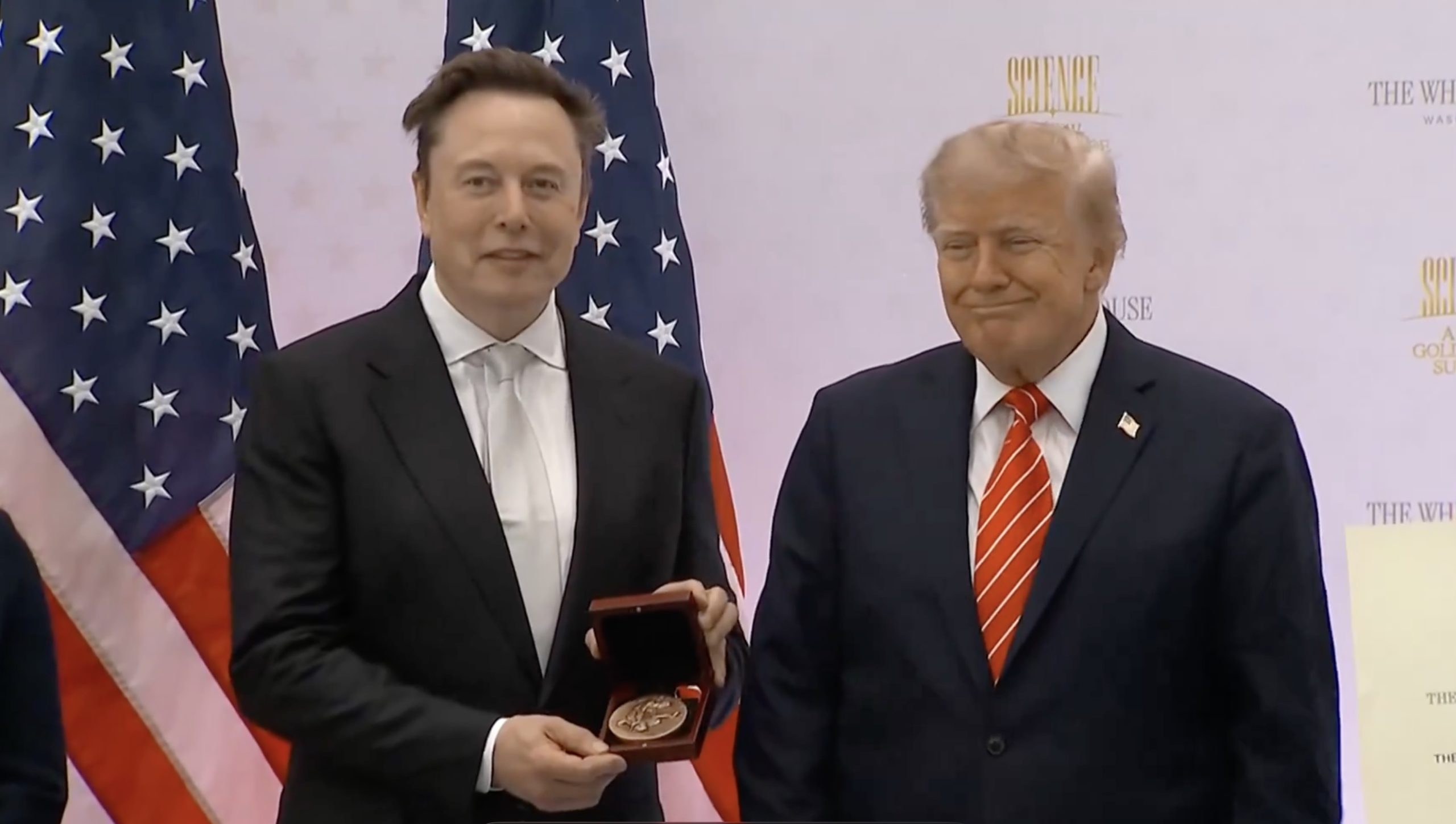
Elon Musk now has the highest honor the U.S. government gives to scientists and engineers. President Donald Trump presented him with the National Medal of Science on Thursday at the White House’s “Science: A New Golden Age” summit, held at the Institute of Peace in Washington, according to the White House.
Trump called Musk a “national treasure” and “our modern-day Thomas Edison.” “Few Americans in history have done more to advance America’s national interest than Elon in one field after another,” the president said. He also described Musk as an “industrial titan, brilliant engineer and one of the greatest technology founders to ever live.”
The official citation credits Musk “for engineering achievements of extraordinary ambition and scale that have pushed the frontiers of space exploration, intelligent systems, communications, and beyond, renewing American technological leadership and opening a new chapter in American manufacturing.” Tesla is not named in it, but “intelligent systems” and “American manufacturing” cover a lot of ground that Tesla and the Terafab chip project occupy.
Google co-founder Sergey Brin, Nvidia CEO Jensen Huang and AMD CEO Lisa Su received the same medal. Microsoft CEO Satya Nadella and Dell Technologies CEO Michael Dell were given the National Medal of Technology and Innovation. It was the first time Trump has handed out either award in his two terms. As Teslarati noted when the list was first reported on Wednesday, the National Science Foundation says 529 people have received the Medal of Science since Congress created it in 1959.
🚨 IT’S OFFICIAL: President Trump just PERSONALLY presented Elon Musk the National Medal of Science for his INCREDIBLE contributions to our nation
I can’t think of ANYONE who deserves this honor more 👏🏻
Congratulations, @elonmusk! https://t.co/GkAaVp9wb9
— Nick Sortor (@nicksortor) October 8, 2026
The ceremony closes a loop that opened in 2025, when Musk left DOGE and criticized the “Big Beautiful Bill,” sparking a public feud. Al Jazeera noted that Musk was the largest contributor to Trump’s 2024 campaign, and CNBC reported that all of the honorees have given financially to Trump or Republican causes in some form. The reconciliation has moved quickly in recent weeks. Musk sat at Trump’s left at the September 29 White House AI lunch, was named to help lead the Pentagon’s Project Meridian study on the future of warfare, and adopted the administration’s “super intelligence” wording when he said SpaceXAI will become SpaceXSI.
For Tesla and SpaceX shareholders, the practical question is what the closer relationship means for federal approvals. Tesla’s Robotaxi and Cybercab expansion depends on national autonomy rules, and SpaceX’s Starship and Starlink plans run through the FAA, FCC and NASA. Thursday’s ceremony did not change any of that directly.
Elon Musk
Elon Musk’s Boring Company lands a new Middle East deal, and Nashville is about to get faster
The Boring Company signs Abu Dhabi tunnel agreement while adding more Prufrock machines in Nashville.
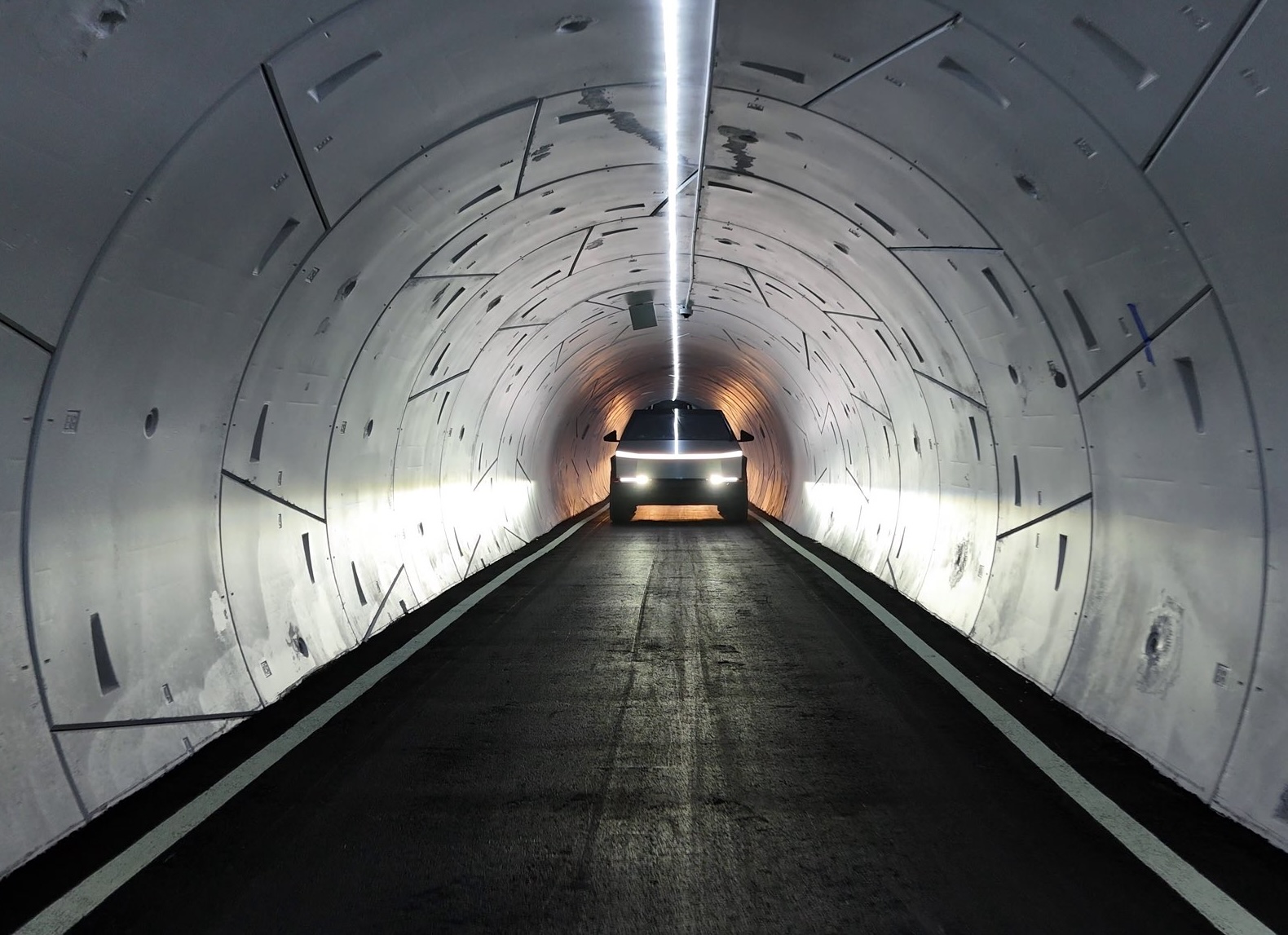
The Boring Company has signed an agreement with Abu Dhabi to study underground transport and utility tunnels across the emirate, adding a second UAE city to its pipeline as it prepares to also scale up tunneling back home in Nashville.
The deal was signed Thursday at the Liveability and Investment Exhibition (LIVEX 2026) by Boring Company President Steve Davis and Maysarah Mahmoud Salim Eid, director general of the Abu Dhabi Projects and Infrastructure Centre (ADPIC), according to the Abu Dhabi Media Office. Mohamed Ali Al Shorafa, chairman of the emirate’s Department of Municipalities and Transport, attended the signing.
Under the agreement, the two sides will assess feasibility, delivery and operating models for tunnels that could carry passengers or utilities. They will also look at Abu Dhabi’s potential as a regional hub for tunneling work. The current phase is exploratory, and no construction commitment or project budget has been announced.
“Abu Dhabi provides an ideal environment to explore the next generation of underground infrastructure solutions, supported by its ambitious growth vision and strong commitment to advanced technologies,”
Davis said. He added that the company wants to assess how tunnels can “expand urban capacity more efficiently, and enable better use of available space.”
The timing lines up with the money, considering last month, The Boring Company closed a $3 billion Series D led by the UAE and affiliated investors, valuing the company at $23 billion, as Teslarati reported. That round came with a commitment to build more than 150 kilometers of tunnel across the UAE, separate from the Dubai Loop pilot already under contract with Dubai’s Roads and Transport Authority. That pilot covers 6.4 kilometers and four stations linking DIFC and Dubai Mall at a cost of about $154 million.
Back home, The Boring Company projects in Nashville are also scaling up, with the company telling local NewsChannel 5 that a third Prufrock machine could start digging the Music City Loop in late October. A fourth is also targeted before the end of the year. Two machines are already mining Nashville limestone at the same time, and work is underway on a new launch site for the third.
The company said it has made more than 300 design and performance upgrades to its original Nashville machine. It is also working with property owners on more than 40 planned stations, with approvals in place for a future Nashville International Airport connection, a downtown station near the Music City Center, and stops at residential towers and the JW Marriott.
Construction on the Music City Loop began the same evening Tennessee and federal regulators approved the project’s lease in February, and the company targeted its first operational segment for late 2026. Back in Las Vegas, The Boring Company has said it plans to double its Vegas Loop station count by year’s end.

It’s official: SpaceX takes aim at Verizon, AT&T, and T-Mobile

Trump presents Elon Musk with National Medal of Science, calls him “modern-day Thomas Edison”

Elon Musk’s Boring Company lands a new Middle East deal, and Nashville is about to get faster

The Pentagon taps Elon Musk to design the battlefield of the future

Tesla Roadster’s new patent preps white-knuckle speeds, keeping it grounded


