

News
Tesla Gigafactory Berlin’s first pillars go vertical as construction accelerates

The construction of Tesla’s Gigafactory Berlin facility appears to be hitting its stride, with the first pillars on the site going vertical today. Such a development bodes well for the Germany-based facility, which is expected to start producing the Tesla Model Y for the European market sometime next year.
The progress of Gigafactory Berlin initially seemed to be quite a bit slower than Gigafactory Shanghai, which was able to start trial vehicle production less than one year since its groundbreaking ceremony. However, since the Berlin-based facility broke ground, its construction has accelerated significantly. With the first pillars being set up today, it appears that Tesla’s first European factory may actually be poised to match Gigafactory Shanghai’s breakneck pace.
Quite interestingly, the first pillar in the Giga Berlin complex seems to be made of concrete. This is quite different from Gigafactory Shanghai, whose pillars were made of metal. As construction accelerates in the Gigafactory Berlin complex, it would be interesting too see what other differences the facility will have with Tesla’s other factories, such as Gigafactory Shanghai and Gigafactory Nevada.
Tesla’s Germany-based facility is poised to be the electric car maker’s largest factory yet, and it is expected to introduce a number of novel innovations to the company’s vehicle production process. Back in April, for example, Elon Musk stated that Gigafactory Berlin will have the world’s “most advanced paint shop, with more layers of stunning colors that subtly change with curvature.” The paint shop improvements will also be rolled out to Fremont and Shanghai, but the upgrades may very well make their debut in the Berlin plant.
Filings submitted by Tesla to local officials also hinted at a number of interesting facilities that are planned for the complex. Among these is a large area close to the main manufacturing sections that was cryptically marked as “Cell.” Tesla has not provided more details about this structure, though developments in the company’s Project Roadrunner site in Fremont may pave the way for a dedicated cell production line in future Gigafactories.
Gigafactory Berlin is expected to produce the Model Y for the European region. This should help Tesla expand its reach in the region without relying on vehicle shipments from the United States. Just like Gigafactory Shanghai, Tesla seems to be intent on starting vehicle manufacturing activities in the site as soon as the complex’s Phase 1 zone is completed. This should allow Tesla start making Model Ys even if parts of the entire site remain under construction.
Watch a recent flyover of the Gigafactory Berlin site in the video below.



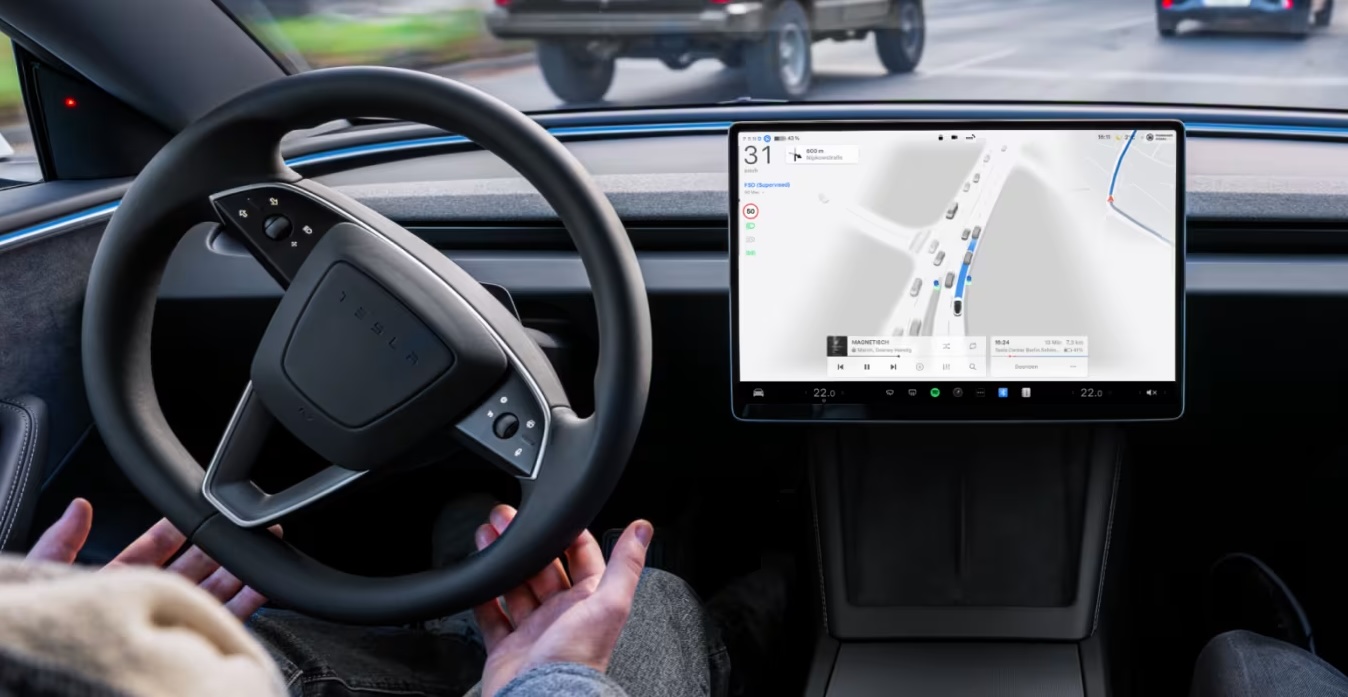
Tesla Full Self-Driving is now the centerpiece of the company’s newly revised Referral Program, which launched on October 29.
Instead of referring people to purchase vehicles and the referrer receiving $250 in Tesla Credit, the new program now incentivizes Full Self-Driving subscriptions.
If a Tesla owner is on an FSD trial and uses a referral code to subscribe to Full Self-Driving, the person whose Referral Link was used will receive one month of FSD (Supervised). Their code can be utilized 12 times per year, with January 1 marking the reset date.
Realistically, this means that if your Referral Code is used by 12 Tesla owners on an FSD trial, you will receive a full year of FSD for free.
🚨 Here is Tesla’s new Referral Program for Full Self-Driving (Supervised):
When someone subscribes to FSD using your link, you’ll get a month free. Up to a year of FSD is available to you for free!
If you’d like to use my link: https://t.co/g00IX9OCE3 https://t.co/GFBzEO2jjS
— TESLARATI (@Teslarati) October 30, 2026
The previous program made it pretty difficult to get referrals; buying a vehicle is obviously a much larger financial strain than subscribing to Full Self-Driving for a month.
Of course, the previous Referral Program also offered a tangible benefit: $250 in credits you could use on Service, Supercharging, or anything in the Tesla Shop. It truly could pay for someone’s travel for a year. It recently bought me a new backpack and a T-shirt.
However, this new program is much more attainable for those who do not have a massive online presence of a slew of friends in the Tesla community who will use the code and max out subscriptions for vehicle purchases.
Woke up to maxed out Referrals! Thank you guys, that’s awesome!
Share your referral link below so others can use it! https://t.co/kesbwTcoTV
— TESLARATI (@Teslarati) October 30, 2026
The Full Self-Driving suite will now be the keystone of the Referral Program, which makes it more inclusive and more fun for everyone with an awesome benefit.
It also gives the impression that Tesla is truly focused on FSD subscriptions, something that saw a tremendous increase in volume in Q3, as 75 percent of deliveries for the quarter came with an FSD subscription attached.
Full Self-Driving data is so instrumental to the suite’s improvement that this kind of program benefits Tesla as much as it does the consumer.
Elon Musk
Tesla made napping in a Robotaxi easier with its latest update
Tesla’s quiet mode reaches Model Y Robotaxis, blacking out the screen for riders wanting rest.

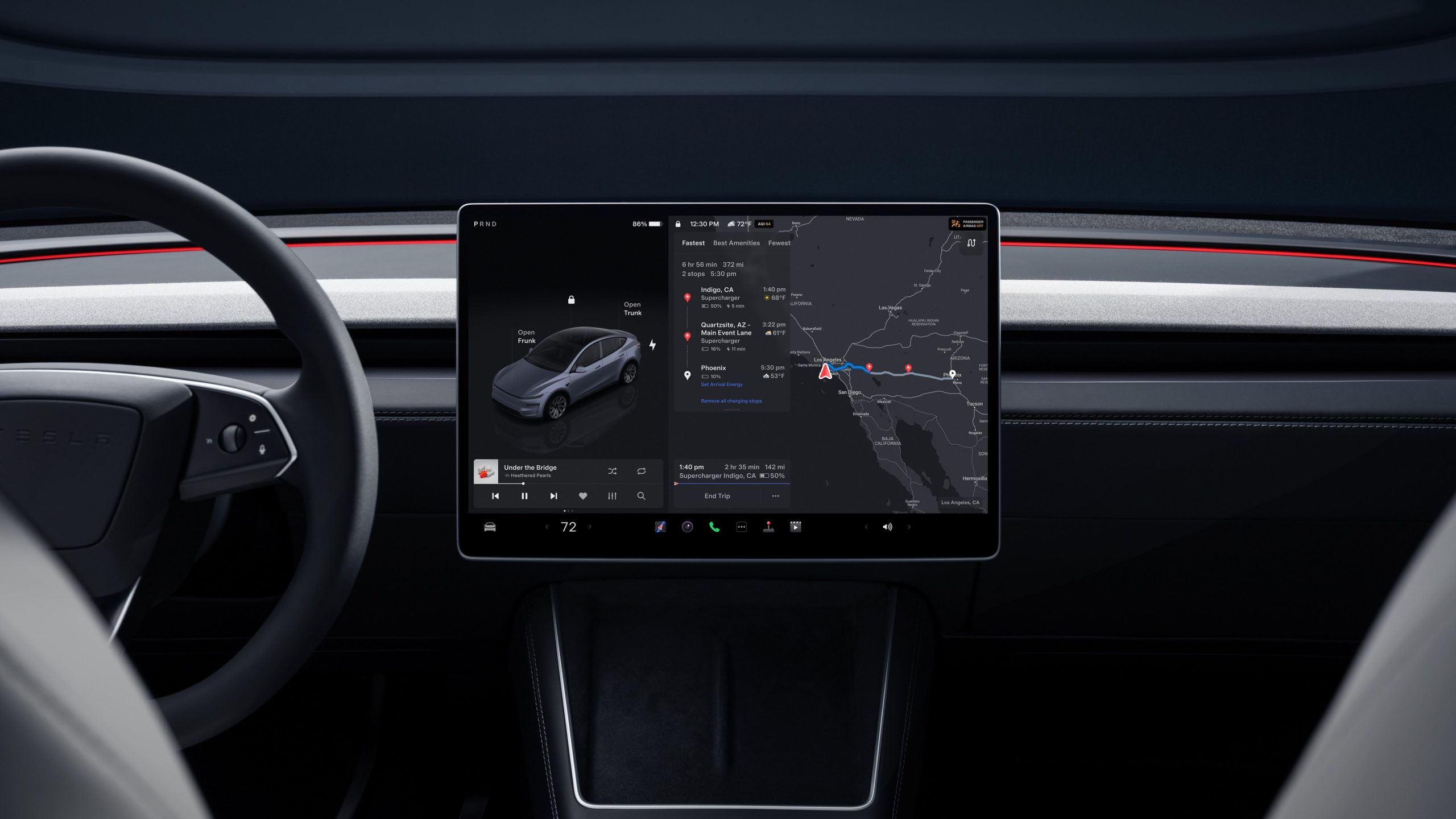
Tesla’s quiet mode, the setting that blacks out the screen for riders who want to rest, has moved beyond the Cybercab. A video posted Thursday by Spencer (@scotsrule08) shows the feature running in a Model Y Robotaxi on a night ride that appears to be in Dallas.
New quiet mode now on @Robotaxi https://t.co/2cM2eM9NeN — Spencer (@scotsrule08) October 29, 2026
The rider taps a small crescent moon icon in the bottom right corner of the map screen. The map, media player, app shortcuts and Grok prompt disappear, leaving a dark display with “Arriving soon,” the destination and a line reading “Tap display to exit quiet mode.” Controls a passenger may still need, including Pull Over, cabin temperature, volume and Support, stay visible. One tap anywhere brings the full map back.
Quiet mode first showed up in the Cybercab last week, which Teslarati reported alongside a new rear camera view. Tesla has been trimming cabin noise in other ways too. On October 25, Spencer reported that Robotaxi turn signals now chime for the first four blinks and then go silent. Tesla has not published release notes for either change.
Elon Musk has been pitching this use for more than a decade. In October 2014, he said that “maybe five or six years from now I think we’ll be able to achieve true autonomous driving where you could literally get in the car, go to sleep and wake up at your destination,”
By 2017 he was setting a higher bar. Speaking at TED, Musk said the hard part was not making self-driving work 99.9 percent of the time, “because, like, if a car crashes one in a thousand times, then you’re probably still not going to be comfortable falling asleep. You shouldn’t be, certainly.”
Owners asked for something similar in their own cars. In December 2019, a Tesla owner requested a Nap Mode that would keep the climate running and wake the occupant with an alarm, and Musk answered “Ok,” as Teslarati covered at the time.
The line returned when the Cybercab was unveiled at the We, Robot event in October 2024. “We’ll move from supervised Full Self-Driving to unsupervised Full Self-Driving, where you can fall asleep and wake up at your destination,” Musk said. On Tesla’s first quarter earnings call in April 2025, he called it the deciding measure: “The acid test is, can you go to sleep in your car and wake up in your destination and I’m confident that will be available in many cities in the US by the end of this year,”
Tesla has run driverless Model Y rides in Dallas and Houston since April, so a passenger dozing off on the way home is now a realistic use of the button. Tesla is also offering new riders a free first trip in both cities, according to an in-app screen shared by tracker Ethan McKanna, and said on its third quarter call that Cybercab rides would launch in Dallas next month.
News
FCC green lights SpaceX’s move to a showdown with Verizon and AT&T
The FCC advanced plans opening 482 MHz to satellite phone service, boosting SpaceX’s Starlink Mobile.
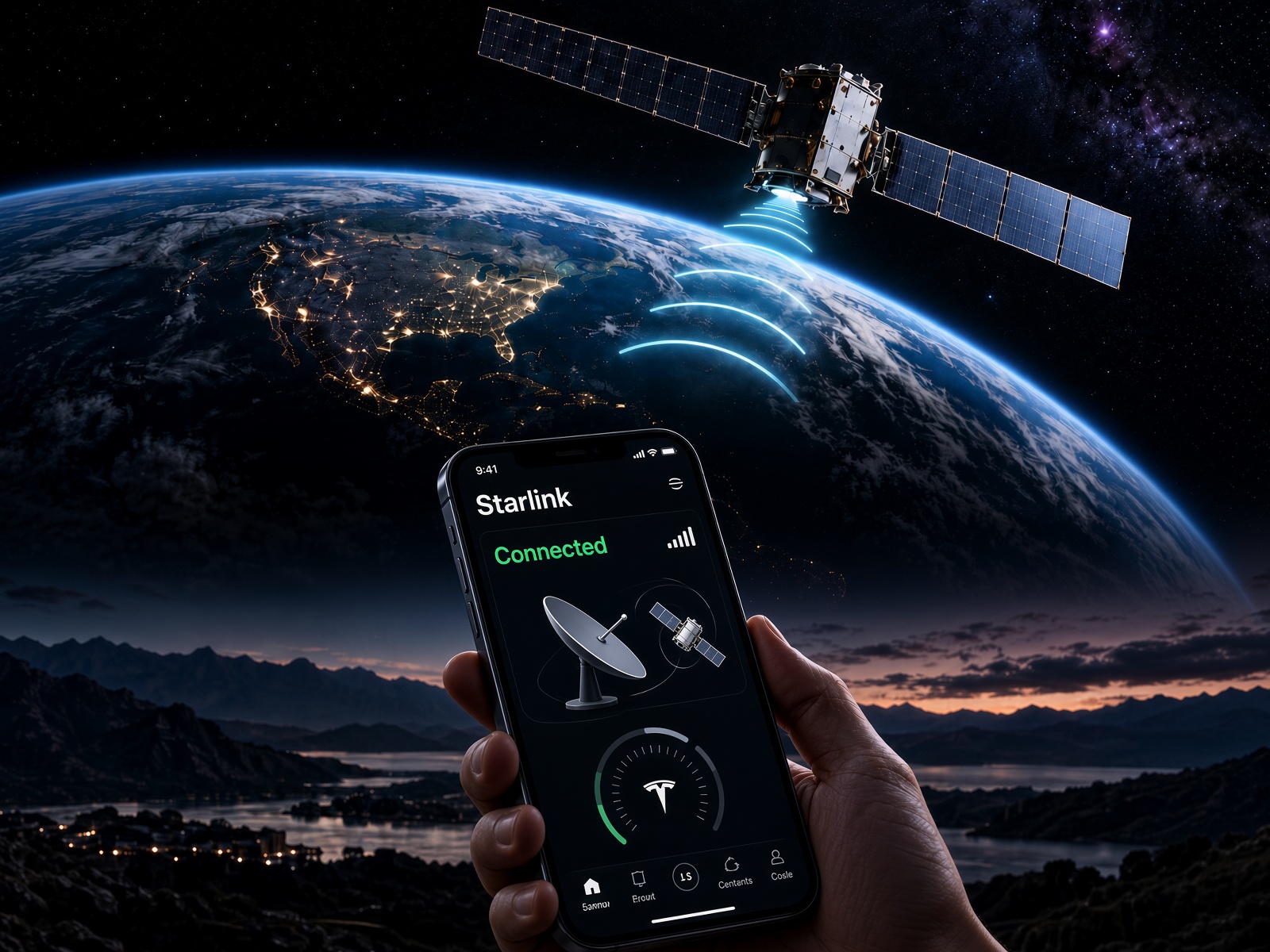
The Federal Communications Commission voted Thursday to move forward with a proposal that would open an additional 482 MHz of spectrum to satellite service beamed directly to ordinary phones, a step that could widen the road for SpaceX’s Starlink Mobile to compete with the country’s largest wireless carriers.
The commission adopted the notice of proposed rulemaking at its October open meeting in Washington, Reuters reported. The proposal would raise the number of bands eligible for Supplemental Coverage from Space from five to 13, according to the FCC fact sheet. Commissioners also advanced a companion item proposing an auction of 25 MHz in the 1675 to 1695 MHz and 2020 to 2025 MHz bands, which could be used for terrestrial service, direct to device service or both.
Thursday’s vote does not hand any spectrum to SpaceX. It opens a public comment period, and final rules will come later. Under the draft, comments would be due 60 days after the notice is published in the Federal Register. The FCC had not released the adopted text at the time of writing, so it is not yet clear whether any bands were changed before the vote.
That question is where the fight now moves. AT&T, Verizon and T-Mobile, through industry group CTIA, asked the FCC to drop the 2.5 GHz and 3.45 GHz bands, which make up 290 MHz of the 482 MHz on the table, as Teslarati reported ahead of the vote. T-Mobile argued satellite interference could wipe out up to 96% of a cell site’s uplink coverage area. SpaceX asked the commission to go the other way and add the 902 to 928 MHz band.
The rule change that matters most to SpaceX may be a structural one. Today, a satellite operator must lease spectrum from every carrier holding co-channel licenses across an entire region such as the contiguous United States. The proposal would replace that with a certification that the operator has coexistence agreements covering only the areas it plans to serve, or that it holds the terrestrial licenses itself.
SpaceX has spent this year building that second path. It bought EchoStar’s AWS-4 and H-block licenses in a deal worth roughly $17 billion, and earlier this month agreed to acquire Grain Management’s nationwide 800 MHz portfolio, which the company said would pave the way for Starlink to become a major US mobile carrier. The FCC approved SpaceX’s purchase of three unused AWS-3 licenses from Tristar on October 21, and cleared its plan for 15,000 next generation direct to cell satellites on October 6.
The regulator has not always sided with SpaceX. In April, the FCC dismissed a SpaceX petition seeking access to Mobile Satellite Service spectrum held by incumbents, and it rejected 2.5 GHz for satellite coverage when it first adopted the framework in 2024.
The carriers are also building their own defenses. In May, the three companies agreed in principle to form a joint venture pooling spectrum for satellite service, and T-Mobile remains SpaceX’s US launch partner for Starlink Mobile even as it leads the push to keep satellites out of 2.5 GHz. SpaceX President Gwynne Shotwell has said service on SpaceX’s own airwaves is targeted for early 2028.

Tesla Full Self-Driving becomes main pillar of new Referral Program

Tesla made napping in a Robotaxi easier with its latest update


