News
SpaceX’s youngest Falcon 9 booster returns to port after second launch

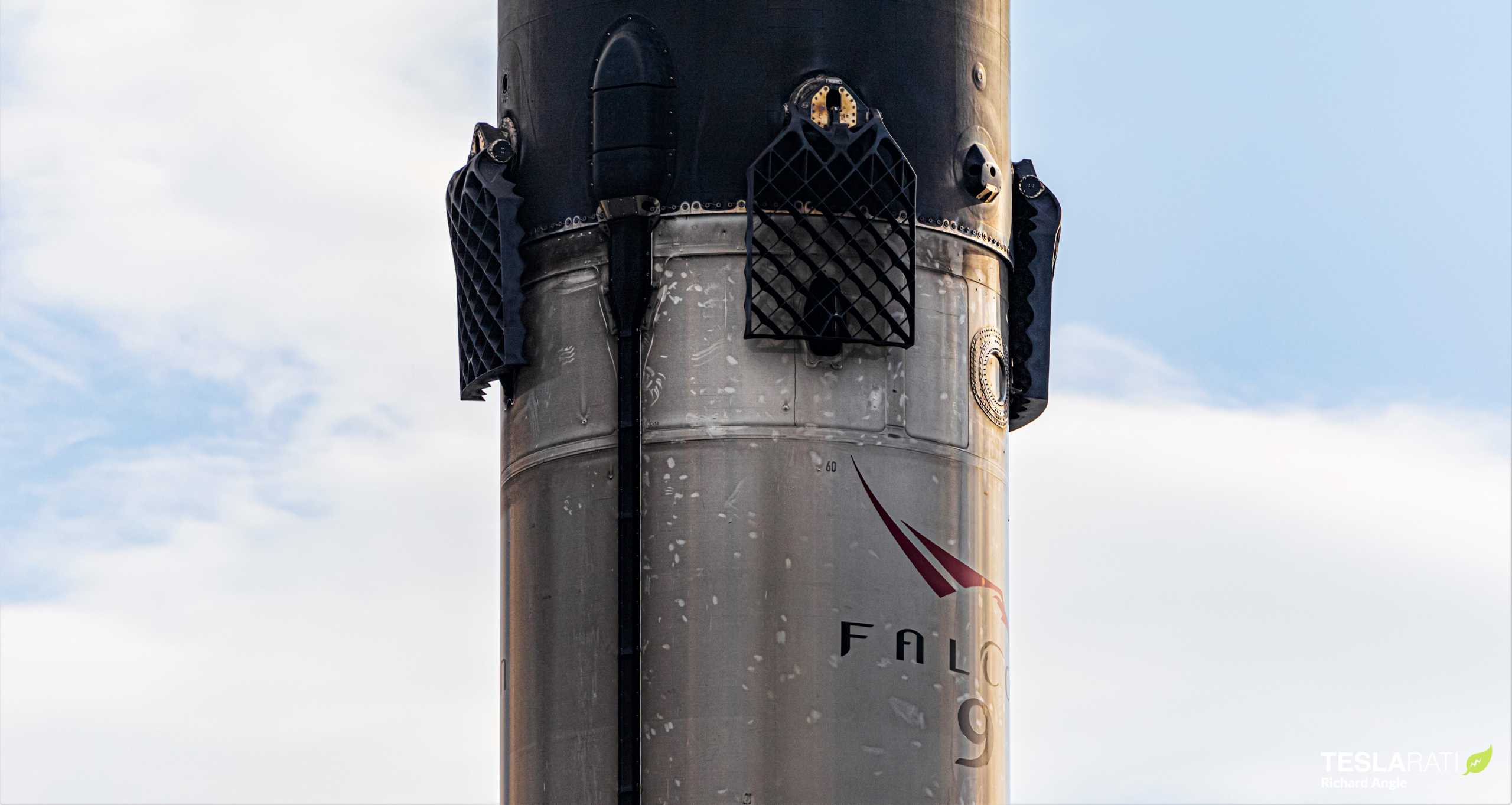
SpaceX’s youngest flight-proven Falcon 9 booster has returned to port after its second successful launch in ten weeks, preceded by the shrapnel of a destroyed payload fairing two days prior.
On June 30th, Falcon 9 B1060 lifted off for the first time, ultimately supporting SpaceX’s first operational US military satellite launch and completing the first successful booster landing after such a mission. Originally scheduled as early as August 29th, the same booster supported Starlink-11 on September 3rd, just 64 days after launching the US military’s GPS III SV03 satellite. In doing so, B1060 became the third Falcon 9 booster ever to launch twice in less than 70 days – all three instances of which occurred this year.
On the fairing recovery front, SpaceX’s Starlink-11 mission was not not nearly as lucky. Recovery ships GO Ms. Tree and GO Ms. Chief returned to Port Canaveral about 48 hours prior the Falcon 9 booster they launched on – but in a pile of jagged shards rather than two intact halves.
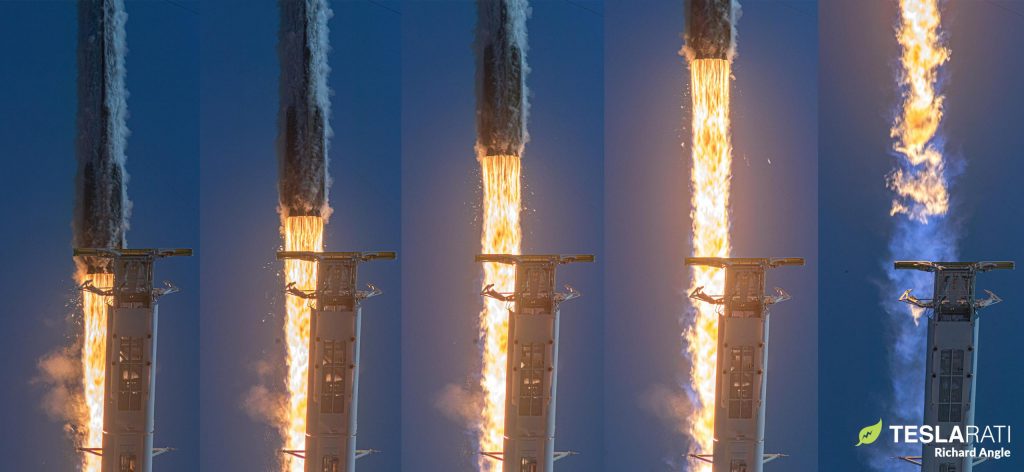
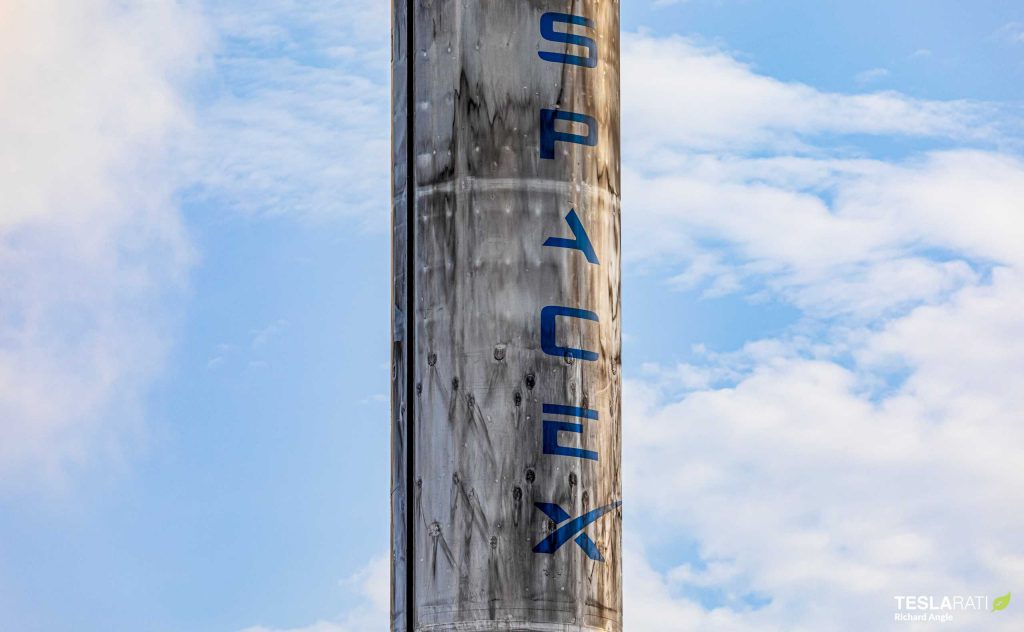
While SpaceX will have to continue chasing the ever-illusive double-fairing-catch it first tasted on July 20th, any recovery – even if just fragments – should still produce valuable data that can inform future recovery attempts and help prevent a similar fate from befalling future fairings. Outcome aside, the recovery also made for a spectacular port return for the (mostly) emptyhanded ships.
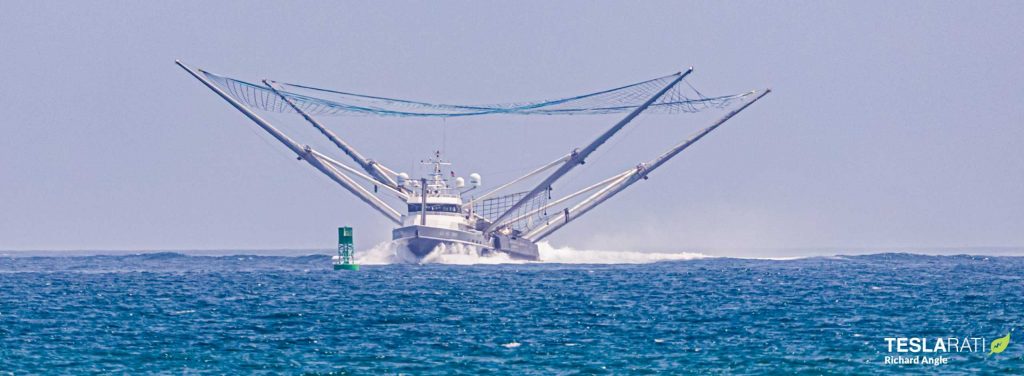
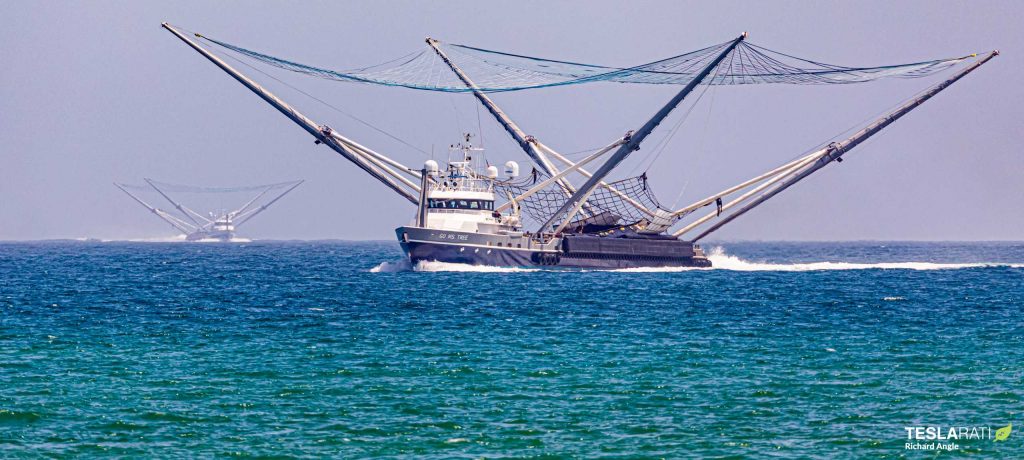
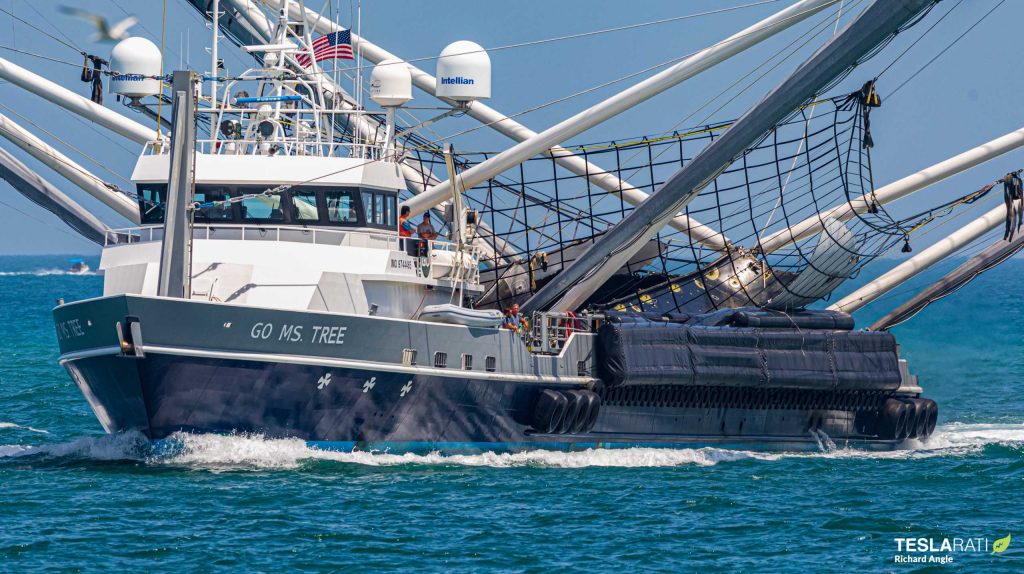
The success of Falcon 9 booster B1060’s second launch and ocean landing in 64 days is unequivocal, however. To support a combined commercial and Starlink launch cadence as ambitious as SpaceX’s in 2020, a heavy reliance on booster reuse – particularly with a focus on speed – was going to be a necessity. As a result of the unplanned loss of four Falcon Block 5 boosters between December 2018 and March 2020, SpaceX’s reuse-oriented decision to slow first stage production saw the company’s fleet of flightworthy boosters rapidly shrink.
Thankfully, Crew Dragon’s Demo-2 astronaut launch debut and the aforementioned GPS III SV03 mission introduced two new boosters – B1058 and B1060 – into circulation, resulting in a booster flight likely just large enough to support the lower bound of SpaceX’s 2020 launch ambitions. In late 2019 and early 2020, SpaceX executives revealed plans for anywhere from 24 to 36 launches this year – roughly two-thirds of which would be internal Starlink missions.
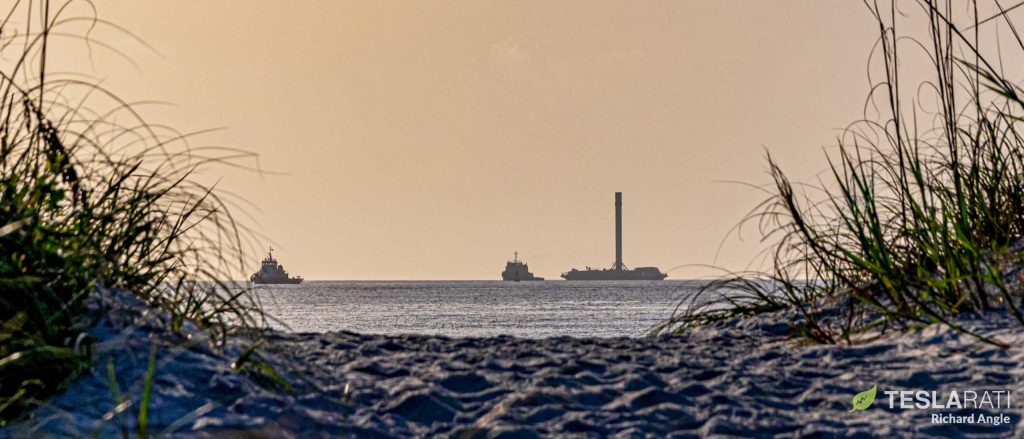
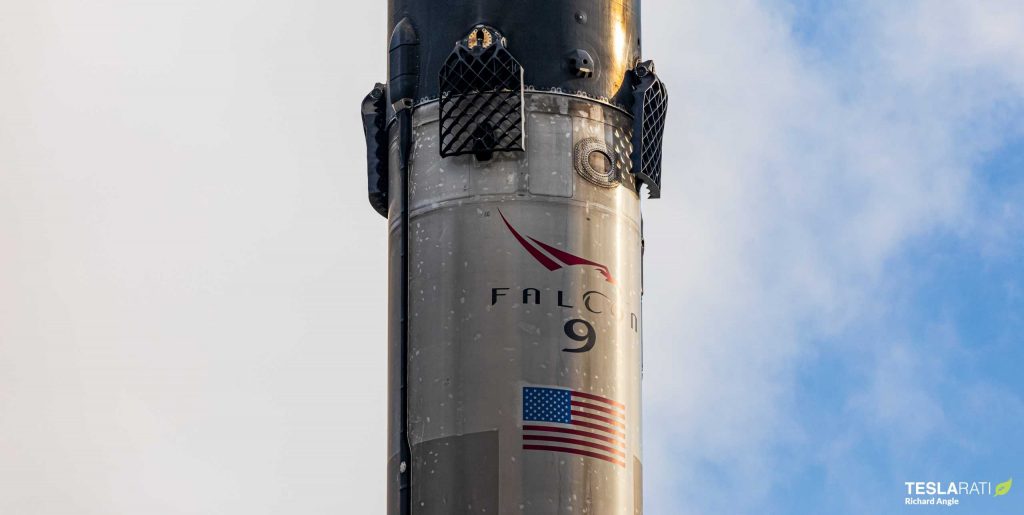
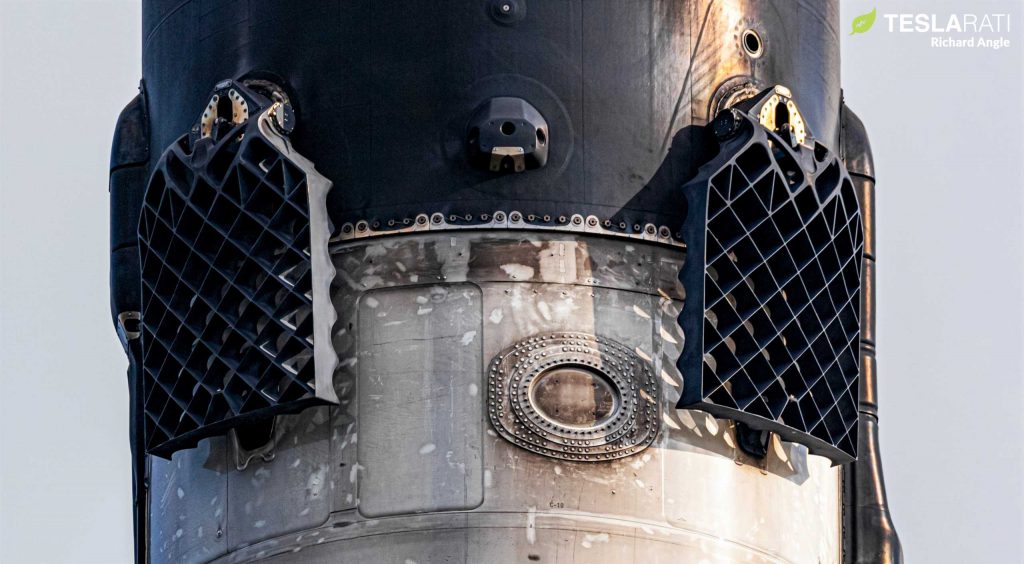
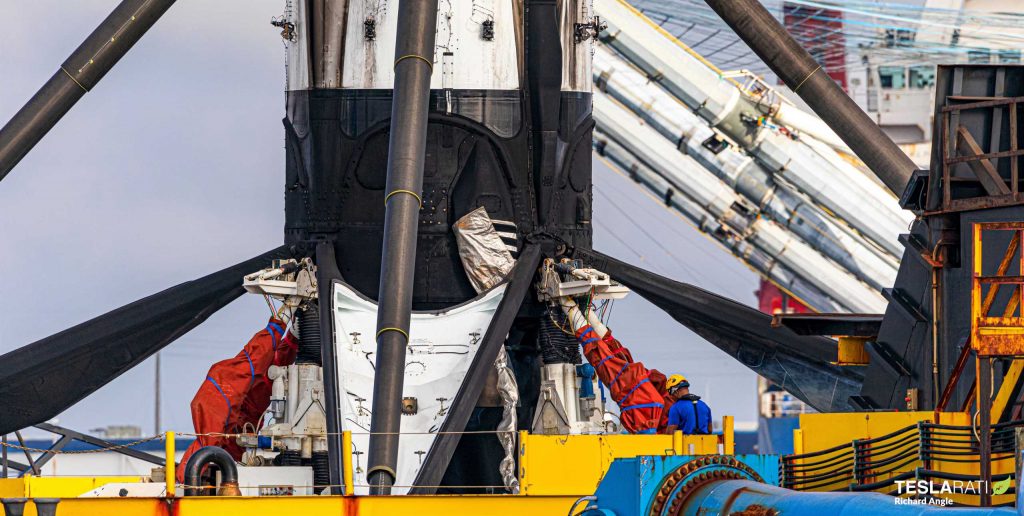
As the first Falcon 9 booster to be permitted to land after an operational National Security Space Launch (NSSL), B1060 would have been the perfect choice to support the first booster reuse during a US Air Force or National Reconnaissance Office launch. Much like NASA’s first launch on a flight-proven Falcon 9, though, that pathfinder qualification process would have likely necessitated 6+ months of inspections, reviews, and repairs. If not the first NSSL-sponsored reuse, B1060 would have also been a prime booster option for a more conservative customer or a high-value mission later this year or early next.
Instead, barely two months after its launch debut, SpaceX assigned B1060 to launch the 12th batch of Starlink satellites, pushing the internet constellation over the 700-satellite mark. In simple terms, the move implies that SpaceX is pushing as hard as ever to launch as many times as possible this year. As of now, SpaceX has launched 16 times in a bit more than eight months, averaging almost exactly two launches per month. If SpaceX continues that pace, it will beat its current annual record of 21 launches with ~24. If the company sustains the pace its kept over the last ~90 days, it could complete as many as 28 launches this year.
SpaceX’s September manifest certainly leans towards the latter option. Aside from two more Starlink missions scheduled in mid and late September, Falcon 9 booster B1062 is scheduled to debut with another GPS III satellite launch for the US military. Another five commercial missions have feasible launch targets in the fourth quarter, while it’s safe to assume that SpaceX will continue to target at least two Starlink launches per month for the indefinite future. Altogether, SpaceX has at least 15 more missions that will likely be ready to launch before the end of the year – plenty to sate Falcon 9’s ever-growing thirst.
Check out Teslarati’s Marketplace! We offer Tesla accessories, including for the Tesla Cybertruck and Tesla Model 3.


Elon Musk
Elon Musk shuts down talk of TSMC taking over Terafab
Musk says Tesla and SpaceX will build and run Terafab, with TSMC limited to renting.

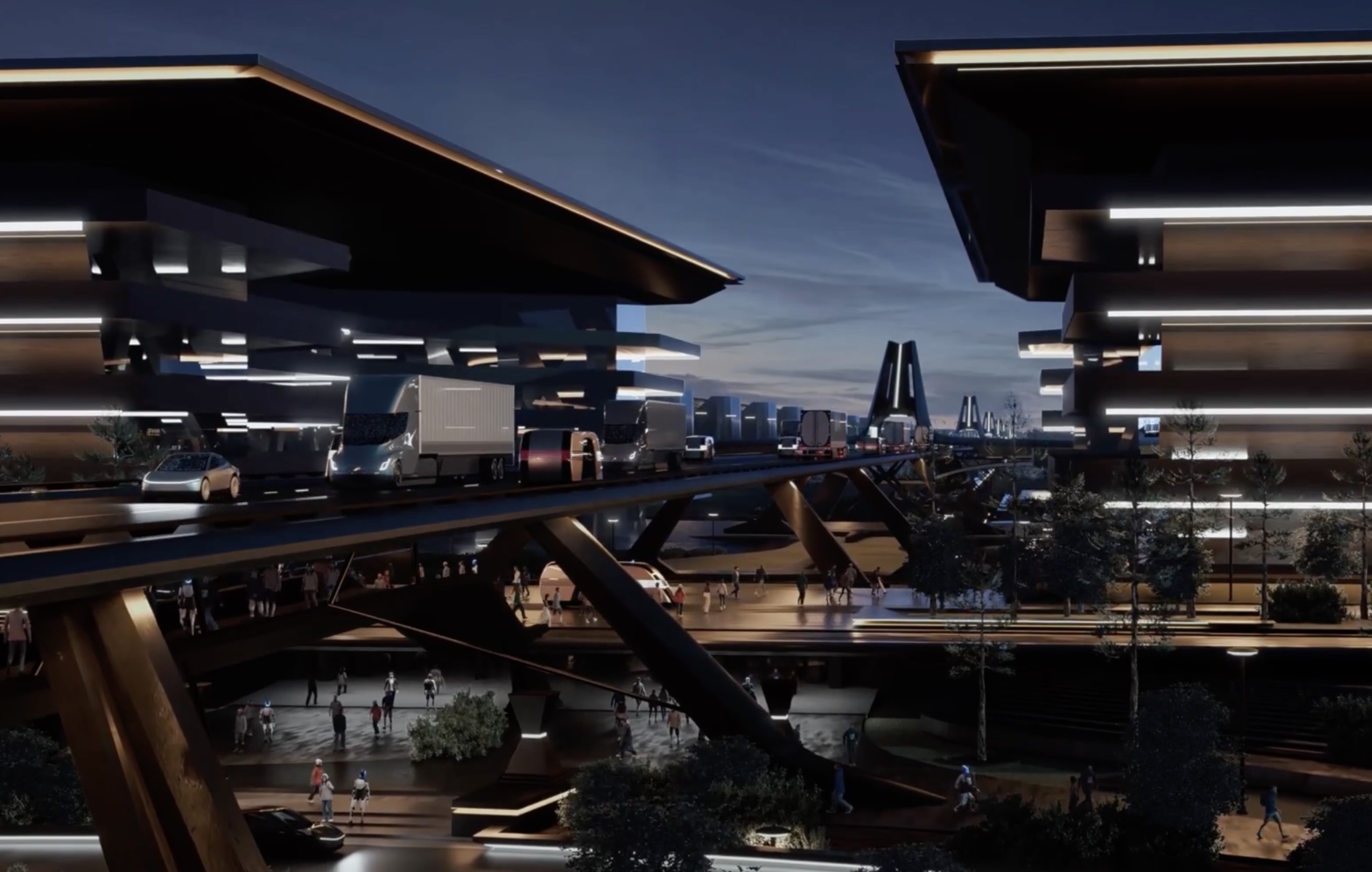
Elon Musk has drawn a firm line around who will be in charge of Terafab, the giant chip factory Tesla and SpaceX are planning in Texas.
Musk replied to a post on X arguing that Taiwan Semiconductor Manufacturing Company (TSMC) would most likely end up owning and operating the plant. “No, we will build and run the fab. Let there be ZERO doubt about that,” Musk wrote. “Maybe TSMC subleases part of the Terafab if they want, but nothing more than that.”
In plain terms, a sublease means TSMC could rent a section of the complex to make chips, similar to a tenant renting one floor of an office tower. The building, the equipment decisions and the daily operation would stay with Tesla and SpaceX.
@herbertong @thejefflutz No, we will build and run the fab. Let there be ZERO doubt about that.
Maybe TSMC subleases part of the Terafab if they want, but nothing more than that.
— Elon Musk (@elonmusk) October 7, 2026
The comment shuts down speculation that started last week. On October 2, tech journalist Tim Culpan reported that TSMC was exploring ways to help run Terafab’s factories. Musk responded the next day that it was “just discussions, but something may come of it,” as Teslarati reported at the time. That left room for a scenario where the world’s largest contract chipmaker took the wheel. Musk’s latest post closes that door.
Some background helps explain why this matters. Tesla designs its own AI chips today but pays outside companies like TSMC and Samsung to manufacture them. Musk unveiled Terafab in March as a joint project between Tesla, SpaceX and xAI, arguing that existing suppliers cannot expand fast enough to meet his companies’ future demand. The goal is to produce enough chips each year to supply one terawatt of computing power, roughly 50 times what the entire global AI chip industry produces now.
Those chips are meant for Tesla’s Optimus humanoid robots, the Cybercab and Full Self-Driving computers, along with chips for SpaceX’s planned data centers in orbit. Owning the factory means Musk’s companies would not have to compete with every other chip customer for time on someone else’s production lines.
Intel is still part of the picture. The company signed on in April to help design, build and package chips for the project, and CEO Lip-Bu Tan told Bloomberg this week that Intel will keep working on Terafab despite the TSMC chatter.
The project moved from concept to construction planning over the summer. In August, SpaceX confirmed the Grimes County site about an hour from Houston, sent the county a $10 million payment under its tax abatement deal and said civil work would begin shortly. The first phase carries a $16.8 billion price tag, and total spending across all phases could reach as much as $119 billion.
TSMC chairman C.C. Wei has said a new fab typically takes two to three years to build and another one to two years to reach full output. Tesla and SpaceX have never run one, which is why TSMC’s expertise drew so much attention. Musk’s answer suggests he would rather learn that process in house than hand control of a project this central to Tesla’s robotics and autonomy plans to an outside company.
Terafab Texas will be the largest and most valuable building on Earth by far.
And it will be stunningly beautiful. https://t.co/4NweOqTL7y
— Elon Musk (@elonmusk) August 6, 2026
Elon Musk
Trump to hand Elon Musk a top honor that traces back to JFK
Trump will award Elon Musk the National Medal of Science at Thursday’s White House summit.
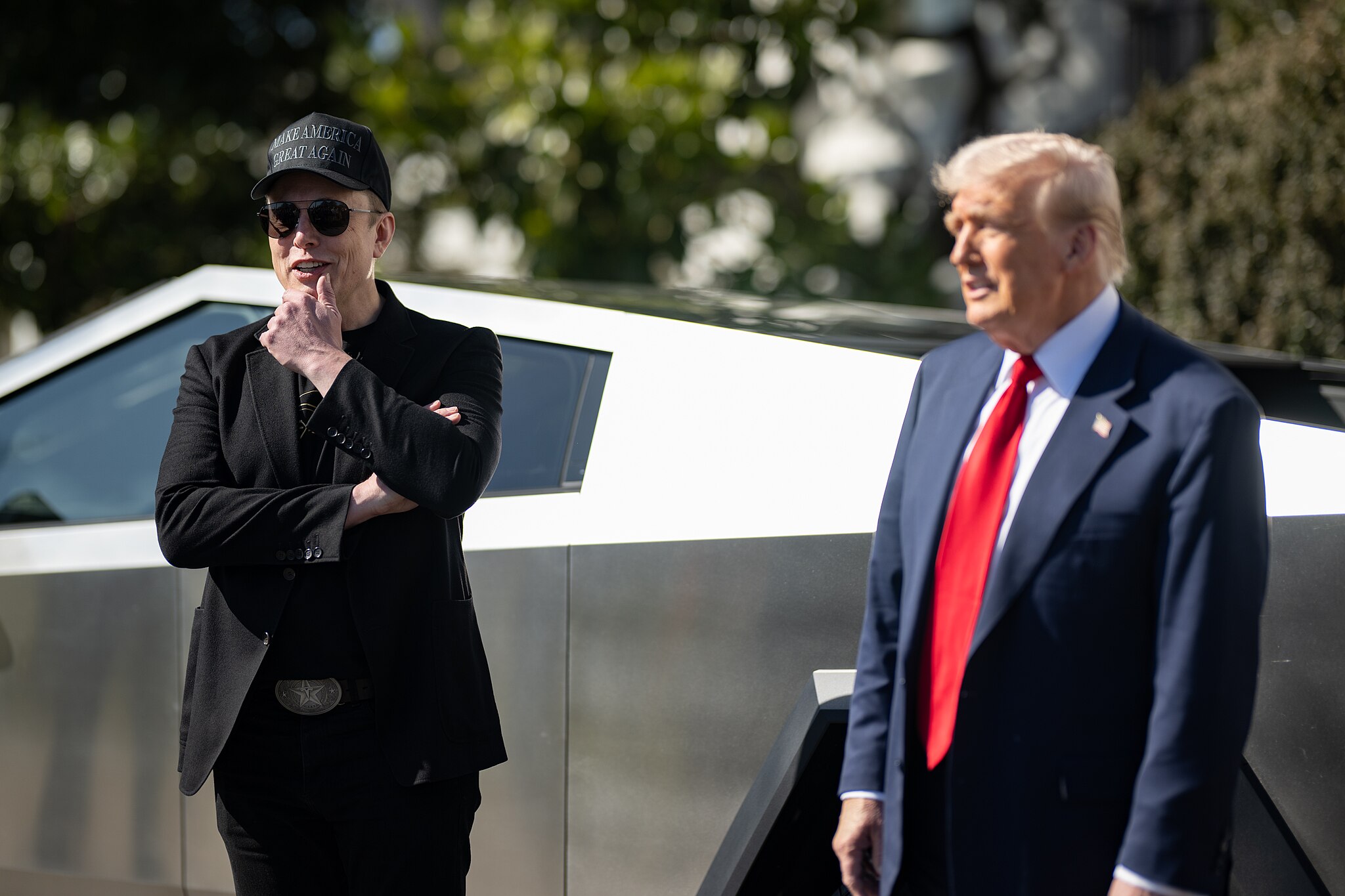
Elon Musk is set to receive the highest honor the U.S. government gives to scientists and engineers.
President Donald Trump will present Musk with the National Medal of Science on Thursday at the White House’s Science: A New Golden Age Summit, Fox News Digital first reported on Wednesday. Google cofounder Sergey Brin, Nvidia CEO Jensen Huang and AMD CEO Lisa Su will receive the same medal, while Dell Technologies CEO Michael Dell and Microsoft CEO Satya Nadella will receive the National Medal of Technology and Innovation. A White House official later confirmed the list to Reuters.
“The Trump administration is grateful for the contributions of these incredible leaders in science and technology. These recipients are helping ensure America keeps leading the world in innovation,” White House spokesperson Liz Huston told Fox News.
FIRST ON FOX: Trump will award Elon Musk the National Medal of Science at the White House Thursday.
Sergey Brin, Jensen Huang and Lisa Su will also receive the science medal, while Michael Dell and Satya Nadella will receive the technology medal.
It marks Trump’s first time presenting the awards across either administration.
Full story here https://t.co/omnrLV0EwS
— Fox News Politics (@foxnewspolitics) October 7, 2026
It will be the first time Trump has presented either medal in his two terms. Congress created the National Medal of Science in 1959, and the National Science Foundation, which administers it, says 529 scientists and engineers have received it since. A presidential committee reviews nominees, but the president makes the final call.
Thursday’s group of medalists run or founded companies, and three of them sit at the center of the Super Intelligence hardware race that Musk competes in. Huang’s Nvidia supplies the GB300 chips filling SpaceX’s Colossus 2 cluster, while Su’s AMD is Nvidia’s biggest rival in data center GPUs.
Worth noting that Trump’s uncle, MIT physicist John G. Trump, received the National Medal of Science from President Ronald Reagan for his work on ionizing radiation and its uses in medicine and industry.
The Pentagon taps Elon Musk to design the battlefield of the future
For Musk, the medal is the latest sign of how far his relationship with Trump has come since their 2025 split over the “Big Beautiful Bill” and his exit from DOGE. Last week, he sat at Trump’s left during a White House lunch where AI executives signed a voluntary safety accord, and Defense Secretary Pete Hegseth named him to help lead the Pentagon’s Project Meridian study on the future of warfare. Musk has also adopted the administration’s new vocabulary, saying on Sunday that SpaceXAI will be renamed SpaceXSI after Trump ordered federal agencies to replace “artificial intelligence” with “super intelligence.”
Musk has collected science honors before, including the Stephen Hawking Medal for Science Communication in 2019.
Lifestyle
Tesla FSD changed its mind mid-intersection, and it may have saved a life
Tesla shares dashcam footage of FSD Supervised stopping mid intersection to avoid a T-bone crash.
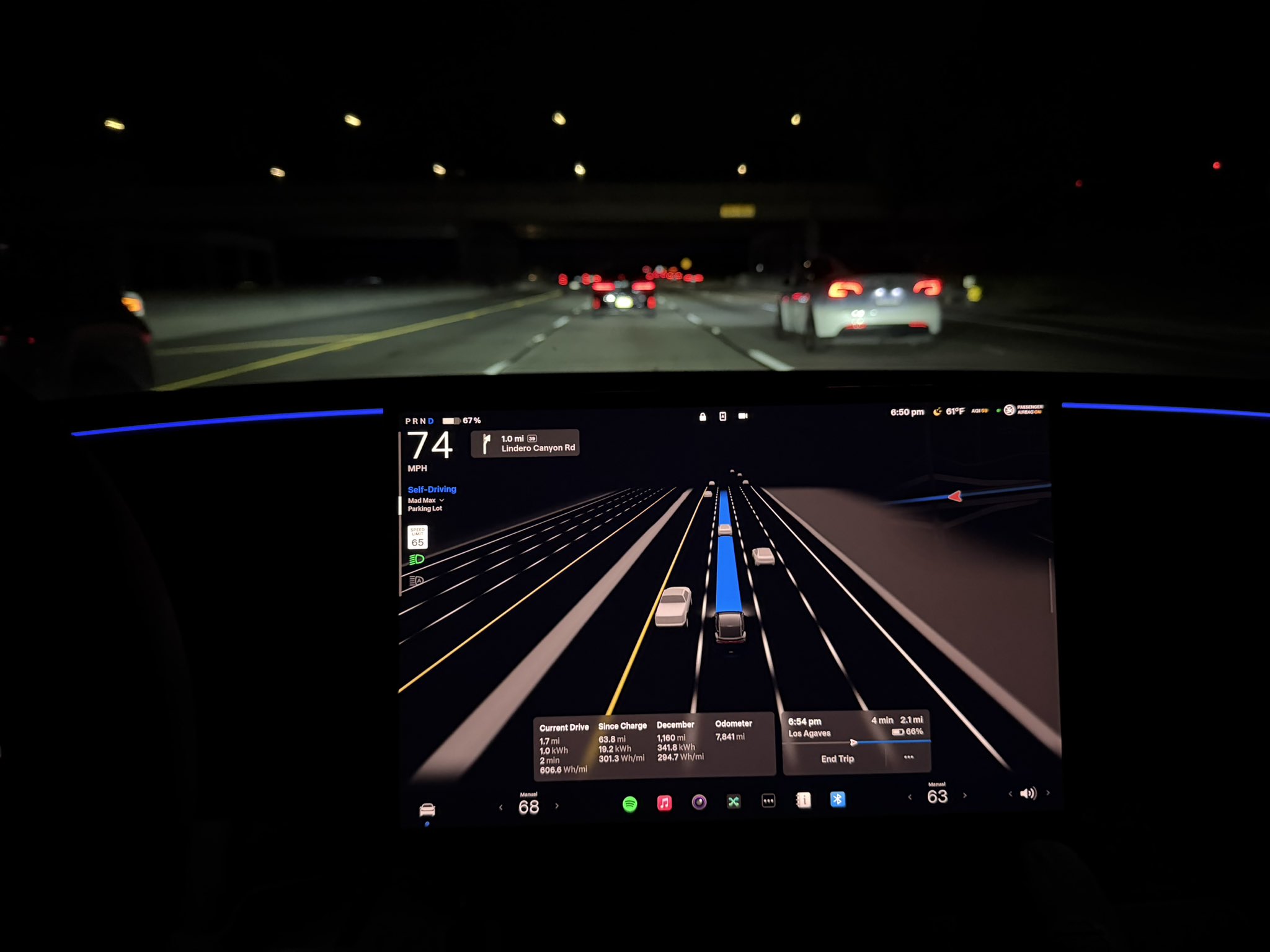
Tesla is putting another Full Self-Driving save in front of its 24.8 million followers on X.
On Tuesday morning, Tesla’s main account shared a dashcam clip with the caption “FSD Supervised preventing T-bone crash.” The footage came from an owner posting as TheNewGrid, who described what happened at a stop sign: “I looked at the car coming to the stop sign figured they would stop, my car went, then came to a stop mid intersection as they flew by. Had I been manually driving this would have resulted in a crash.”
The sequence is the notable part. FSD had already started crossing when the other driver ran the stop sign. Instead of pressing on, the car braked hard in the middle of the intersection and let the crossing vehicle pass in front of it. By the owner’s own account, they had made the same assumption the software initially made, that the other car would stop, and would not have corrected in time.
FSD Supervised preventing T-bone crash
— Tesla (@Tesla) October 6, 2026
The clip is the latest in a run of safety posts Tesla has amplified over the past several days. On Saturday, the company shared a video from Selling Sunset star Jason Oppenheim, who sold his Bentley for a Model Y and said he was buying Teslas with FSD for 10 of his employees. Ashok Elluswamy, who leads Tesla AI, followed up by writing that Tesla self-driving “reacts to other people cutting into your path with super-human response times.” On Monday, a Cybertruck owner posted footage of FSD moving across three lanes from a red light to clear a path for an ambulance approaching from behind.
This recent clip also lands a few weeks after Tesla began shipping Automatic Collision Evasion with FSD v14.3.9, a feature that can activate FSD on the driver’s behalf when a frontal collision is imminent or the driver appears distracted. Elluswamy said in September that “even earlier prediction of hazards, even faster reaction time and overall significantly better safety and collision avoidance” are coming with v15, the release Tesla has tied to round the clock Robotaxi operation.
The safety messaging matters beyond social media. Tesla has said FSD Supervised was 4.1 times less likely to crash than manual driving across 100 million kilometers on European roads, and it has been putting those figures in front of regulators. Eight EU countries have now approved FSD Supervised, with Croatia the most recent, but the EU’s bloc-wide vote originally set for October 6 has been pushed to December at the earliest.
FSD Supervised is still a Level 2 system, and the driver remains responsible at all times. Even heavy users find reasons to step in. Teslarati’s Joey Klender, who uses FSD for about 76 percent of his driving, laid out five recurring issues on Tuesday that still prompt him to intervene. Clips like this one show the other column of that ledger: moments where the software caught a mistake a human was about to make.

Elon Musk shuts down talk of TSMC taking over Terafab

Trump to hand Elon Musk a top honor that traces back to JFK

Tesla FSD changed its mind mid-intersection, and it may have saved a life

The Pentagon taps Elon Musk to design the battlefield of the future

Tesla Roadster’s new patent preps white-knuckle speeds, keeping it grounded


