Space
Mars study reveals subsurface water in Red Planet’s vast lake system

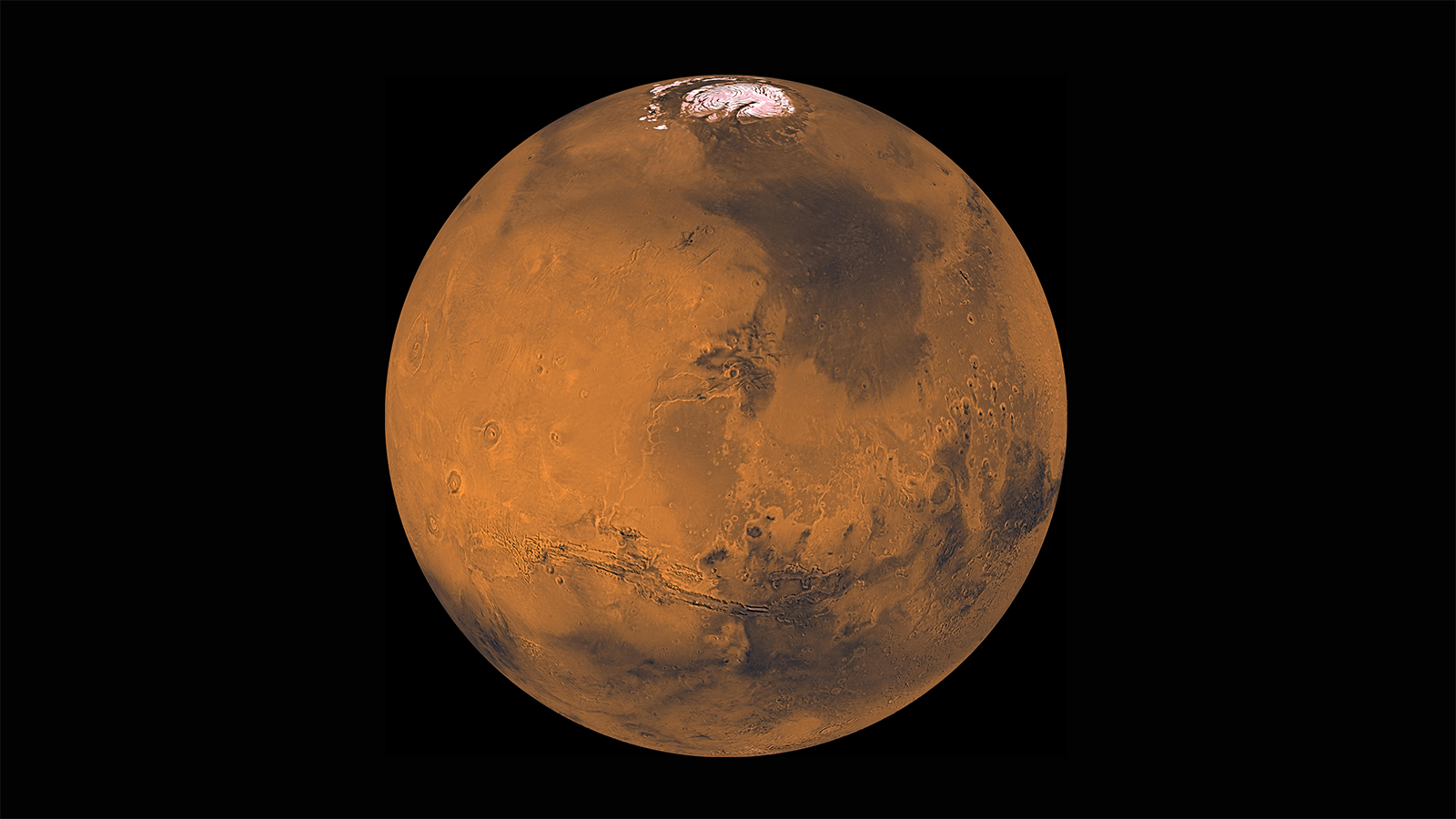
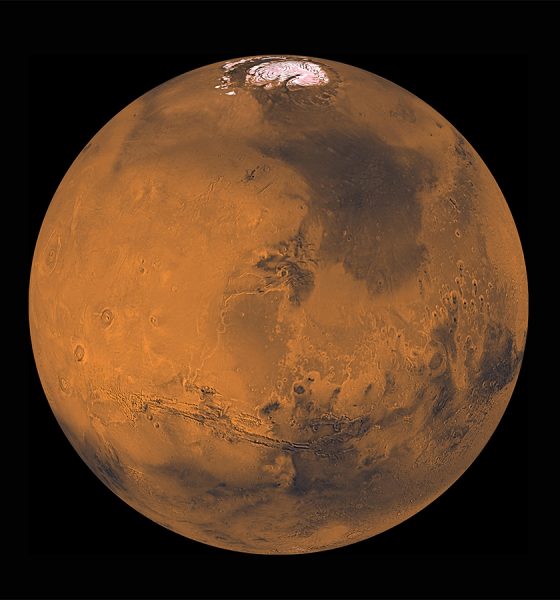
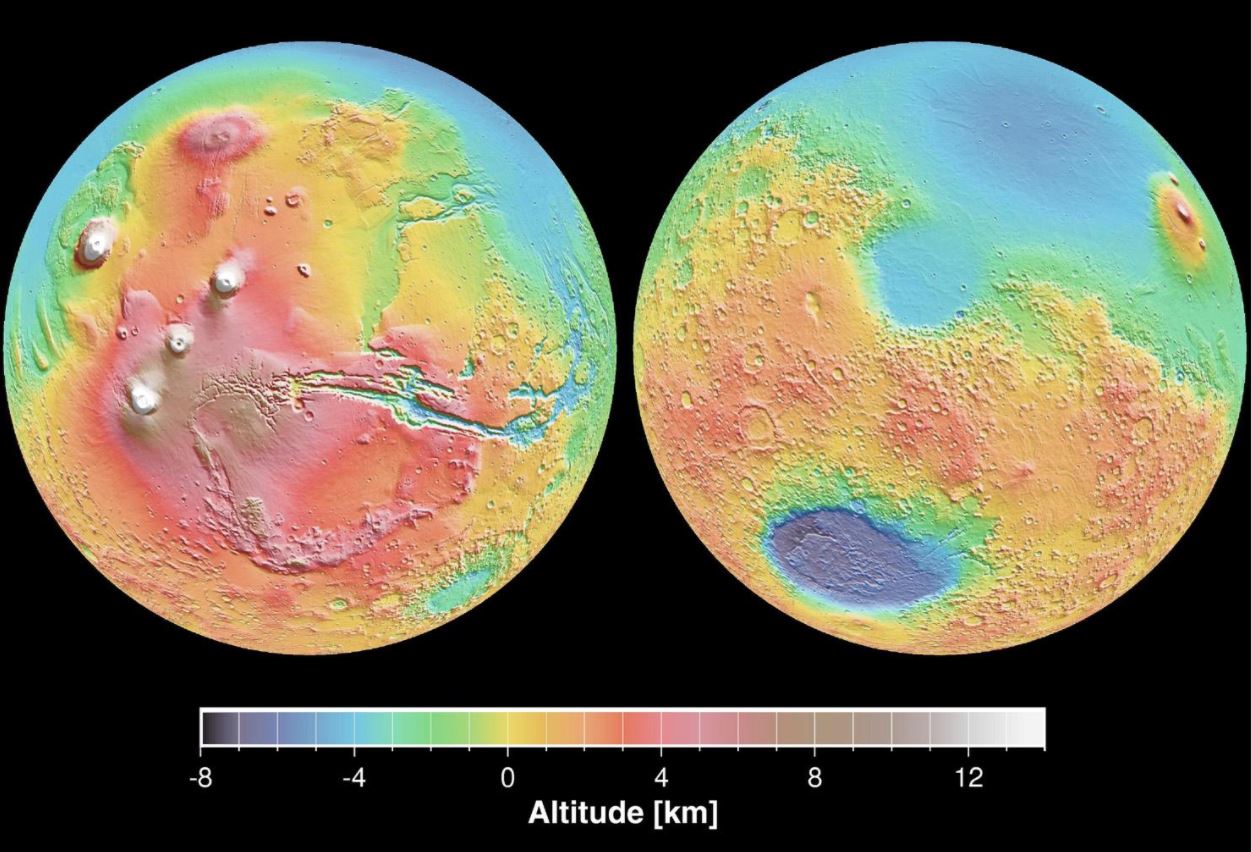
Researchers working with data from the European Space Agency’s Mars Express orbiter have detected four subsurface lakes at the planet’s south pole. In a follow up to the 2018 discovery of a large body of water about 1.5 kilometers beneath the surface, three more water bodies were found in the same region spanning about 75,000 square kilometers.
“We identified the same body of water, but we also found three other bodies of water around the main one,” planetary scientist Elena Pettinelli of the University of Rome, one of the scientists responsible for the discovery, said in comments published by the journal Nature. “It’s a complex system.” The full data findings were detailed in a paper published on September 28th.
The Martian lakes were found using an instrument called the Mars Advanced Radar for Subsurface and Ionosphere Sounding (MARSIS) which measures with radio waves similar to how subsurface glacial lakes on Earth are identified. Given both the depth and the freezing temperatures on the planet, it’s also thought that the subsurface water must have a high salt content similar to some Antarctic regions. “From a thermal point of view, it has to be salty,” Pettinelli said.
Where water is found, the potential for also finding life is increased substantially, and salt levels up to five times that of Earth’s ocean water have been found to be amenable to life on our planet. NASA’s Perseverance rover, currently on its way to the red planet, will be searching for those very indicators with its astrobiologically-focused mission. At the super salt concentrations that might be required for liquid water on Mars, though, the environment is more problematic if not impossible.
“There’s not much active life in these briny pools in Antarctica,” John Priscu, an environmental scientist at Montana State University explained. “They’re just pickled. And that might be the case [on Mars].” Priscu’s group in Bozeman studies microbiology in icy environments, and in water where salt concentrations reach around 20 times ocean water levels, life is absent.
Another issue with the recent Mars Express data may be what the findings indicate overall, namely whether the ‘bright spots’ identified as possible lakes are actually lakes at all. There has been debate among scientists since the original 2018 discovery over whether Mars’s core emits enough heat to support liquid lakes, for instance.
“I do not think there are lakes,” Jack Holt, a planetary scientist at the University of Arizona, countered. “There is not enough heat flow to support a brine here, even under the ice cap.” Holt is on one of the science teams of NASA’s Mars Reconnaissance Orbiter. “If the bright material really is liquid water, I think it’s more likely to represent some sort of slush or sludge,” concurred Mike Sori, a planetary geophysicist at Purdue University.
Still, regardless of the outcome, the findings add to the growing dataset for future Mars-bound travelers to use in their exploration plans. But if these subsurface lake findings are further confirmed in the near future, the search for life on Mars just became a bit more promising.


News
SpaceX just launched its secret Starfall saucer again
SpaceX launched its Starfall capsule again on Bandwagon-5, this time listed openly beside rideshare customers.

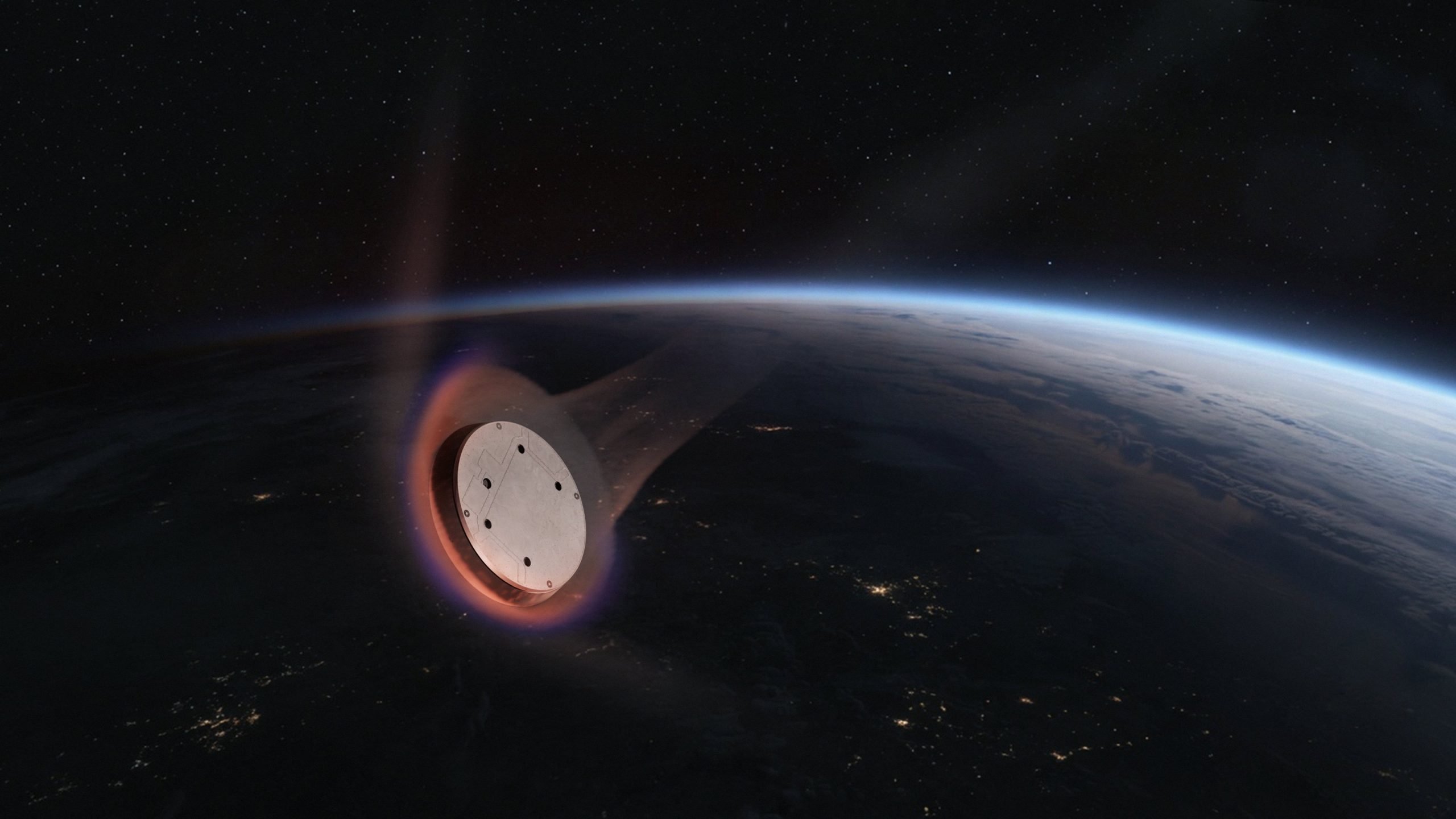
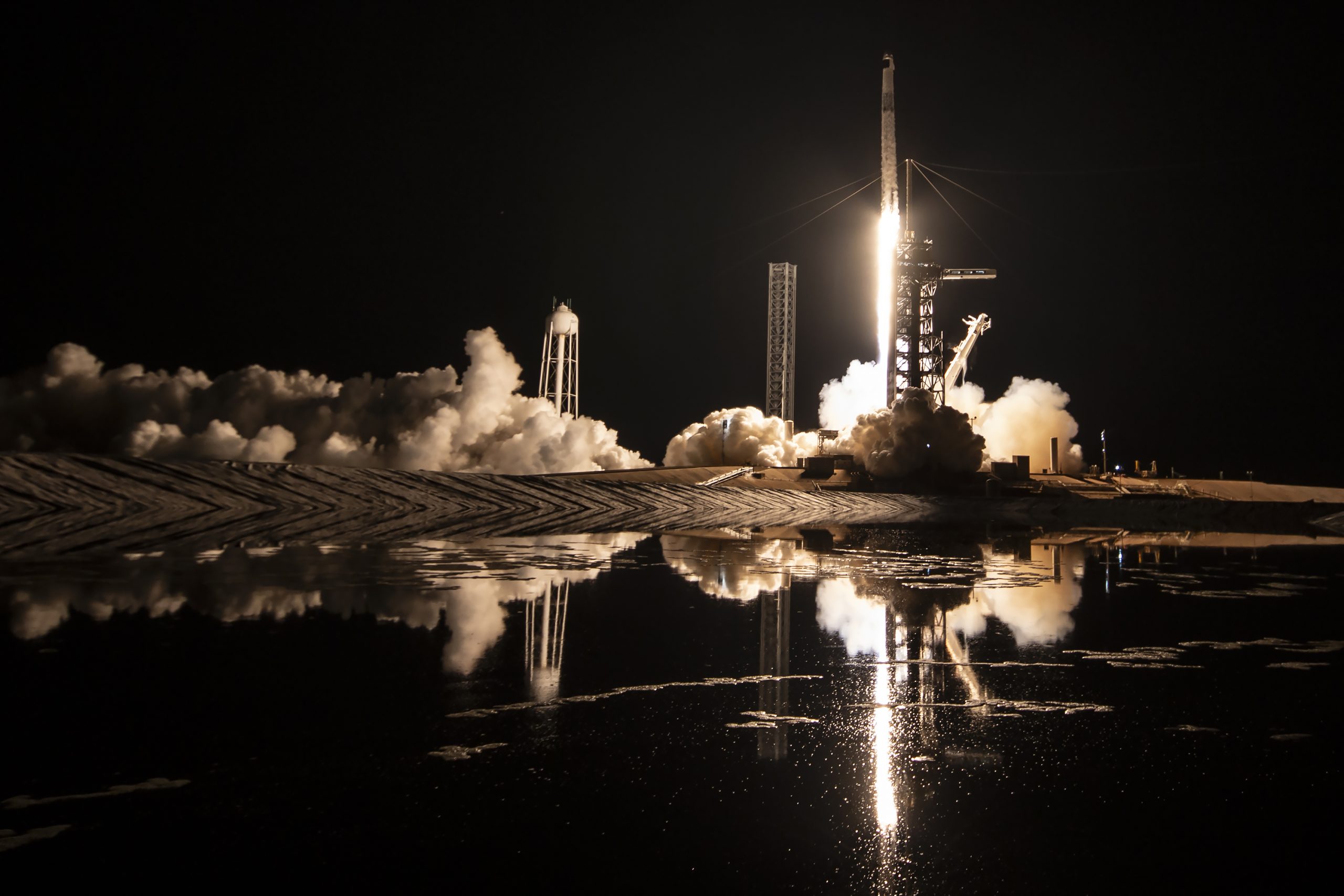
SpaceX launched its Starfall reentry capsule for the second time on Tuesday morning, flying it as the payload of the Bandwagon-5 rideshare mission. Falcon 9 lifted off from Space Launch Complex 40 in Florida at 7:04 a.m. ET with 32 payloads, and the first stage booster, on its 19th flight, landed on the droneship A Shortfall of Gravitas about nine minutes later.
Starfall was scheduled to separate last, 2 hours and 48 minutes after liftoff. The final customer satellite on SpaceX’s mission timeline comes off the upper stage about an hour and nine minutes in, which left a long gap before the capsule was due to be released alone. SpaceX later posted that the payload deployment sequence is complete. At liftoff, the company said Starfall “enables affordable, routine access to a microgravity environment, providing unique opportunities for on-orbit manufacturing, scientific research, and testing.”
Starfall enables affordable, routine access to a microgravity environment, providing unique opportunities for on-orbit manufacturing, scientific research, and testing https://t.co/y8kJg3QDor
— SpaceX (@SpaceX) October 20, 2026
As Teslarati reported before the first Starfall flight, SpaceX made no public announcement about the vehicle then, and nearly everything known came from FAA and FCC filings. This time Starfall is an item name on the official mission page, listed beside paying rideshare customers. SpaceX has still not said what, if anything, is aboard this Starfall, Spaceflight Now noted.
The FAA’s environmental assessment from May describes a disk about 10.2 feet wide and 2.5 feet tall that weighs roughly 4,600 pounds and can bring 2,200 pounds of payload back to Earth.
Interestingly, the same rocket also carries a competitor’s hardware. Varda Space Industries launched its W-Series 7 capsule on Bandwagon-5, a spacecraft about three times smaller than Starfall that will test whether microgravity can improve the solubility of a cancer drug called Protac. It is Varda’s ninth reentry capsule, and W-8 and W-9 launched earlier this month on Transporter-18. SpaceX has been Varda’s launch provider since the company’s first Falcon 9 rideshare contract in 2021.
SpaceX has not published where or how this Starfall will come down. The preview we ran in June described a recovery from the Pacific Ocean, and the company has not said whether this flight follows the same plan. The launch also arrives hours before SpaceX posts its third quarter results after the market closes, a report we previewed earlier this week.
Elon Musk
Elon Musk breaks his silence on the Starlink impact to Ukraine drones
Musk says the US military and president set Starshield limits, not SpaceX, amid Ukraine complaints.
Elon Musk says the speed limit cutting out Ukraine’s military Starlink terminals is not SpaceX’s decision. In a post on X Wednesday, Musk wrote that “Starshield systems are owned and controlled by the US government. Any limits on speed or usage are decided by the US military and ultimately POTUS.” He added that Starlink is a commercial service limited to civilian or defensive activities and “cannot be used for offensive military action, as doing so would be inappropriate for a commercial company.”
He was replying to Mykhailo Fedorov, Ukraine’s former defense minister, who had thanked Musk for restoring connectivity at speeds up to 160 km/h and said removing the Starshield limit entirely is “now critical for Ukraine’s defense.”
Starshield systems are owned and controlled by the US government. Any limits on speed or usage are decided by the US military and ultimately POTUS.
Starlink is a commercial service owned and controlled by SpaceX. Usage of Starlink is limited to civilian or defensive activities and cannot be used for offensive military action, as doing so would be inappropriate for a commercial company.
— Elon Musk (@elonmusk) October 14, 2026
The complaint started Tuesday night, when Ukrainian officials said military terminals began losing service above roughly 100 mph. Presidential adviser Serhiy Beskrestnov said the defense forces got no warning and several missions were disrupted, as Teslarati reported earlier Wednesday. The 7th Rapid Reaction Corps told Reuters connections dropped for 10 to 20 seconds at speeds well below the limit, which made drones harder to control. Poland’s foreign minister, Radoslaw Sikorski, asked Musk on X whether he is “playing politics with your products again.”
That is why the Starlink and Starshield distinction matters. SpaceX introduced Starshield in 2022 as the government version of Starlink, with an initial focus on Earth observation, communications and hosted payloads. It won a Space Force contract in 2023 with a $70 million ceiling. In December 2024, the Pentagon moved Ukraine’s terminals onto Starshield, covering about 3,000 units across two contracts. Ukraine’s military connections therefore run through a service that Musk now says sits under Washington’s control.
While Musk’s post describes who holds authority, it does not infer that anyone ordered the limit, and neither SpaceX nor the US government has confirmed who set it. Ukrainian officials have pointed to the timing, which follows President Trump’s push for an energy ceasefire and Musk’s Saturday post that “Zelensky has gone too far.” The BBC noted Trump denied threatening to restrict intelligence sharing with Kyiv, and no evidence has been presented that Washington requested the cap.
The episode also revives a promise from 2025. After Poland accused him of threatening Ukraine’s access, Musk said Starlink “will never turn off its terminals” and would not be used as a bargaining chip. Poland has since supplied more than 29,000 terminals to Ukraine. Teslarati also covered Kyiv’s search for Starlink alternatives in 2025, and the latest dispute gives that search new urgency.
News
SpaceX brings four astronauts home after 8 months in space, and the return was flawless
SpaceX Crew Dragon Freedom returned four Crew-12 astronauts home after 237 days aboard the station.
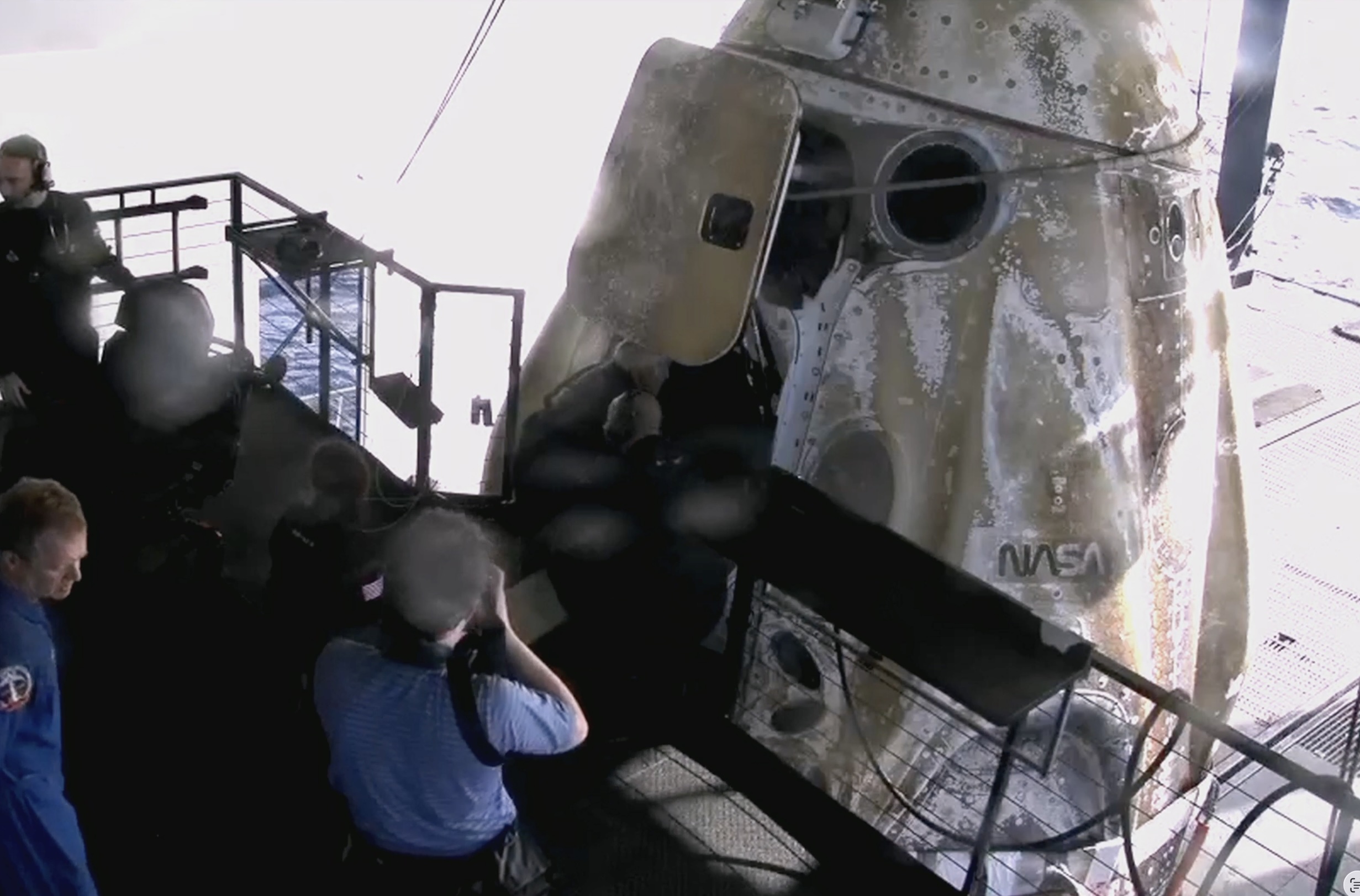
Four Crew-12 members are back on Earth after 237 days at the International Space Station. SpaceX’s Crew Dragon Freedom splashed down in the Pacific Ocean about 50 miles west of Los Angeles at 11:34 a.m. ET on Thursday.
NASA astronauts Jessica Meir and Jack Hathaway, ESA astronaut Sophie Adenot, and Roscosmos cosmonaut Andrey Fedyaev landed one day after undocking from the station’s Harmony module at 8:05 a.m. ET on Wednesday. NASA confirmed the splashdown minutes later. SpaceX had flagged the 27.5 hour trip home on X while Dragon was still firing its departure burns away from the station.
The descent ran on schedule when Freedom started a nine minute deorbit burn at 10:46 a.m. ET, then hit the thicker atmosphere about 36 minutes later at nearly five miles per second. Chutes deployed at around 18,000 feet, and four main parachutes brought the capsule down to roughly 15 mph at splashdown.
SpaceX fast boats secured Dragon before the recovery ship Shannon hoisted it onto the deck with the crew still inside. Flight surgeons on board ran initial medical checks. All four crew members will be flown ashore by helicopter and then head to NASA’s Johnson Space Center in Houston for rehabilitation.
Splashdown of Dragon confirmed! https://t.co/P2o7A3Gytf
— SpaceX (@SpaceX) October 8, 2026
Crew-12 launched on February 13 from Space Launch Complex 40 at Cape Canaveral, a flight that also marked the first Falcon 9 booster landing at SpaceX’s new LZ-40 pad. Over the mission, the crew completed 3,792 orbits, covered nearly 101 million miles, and carried out four spacewalks to maintain and upgrade the station.
Meir now has 440 cumulative days in space, which places her in NASA’s top 10. This was the first spaceflight for Hathaway and for Adenot, a French Air Force colonel and former helicopter pilot. Fedyaev, who spent 186 days in orbit on Crew-6 in 2023, has now flown two long duration Dragon missions.
The return closes out a busy stretch of Dragon traffic. Crew-13 arrived on October 1 aboard Crew Dragon Grace, which docked just 7 hours and 55 minutes after liftoff, the fastest launch to docking of any U.S. spacecraft in ISS history. Commander Jessica Watkins, pilot Luke Delaney, Canadian Space Agency astronaut Joshua Kutryk, and cosmonaut Sergey Teteryatnikov remain aboard alongside the three person Soyuz MS-29 crew.
With Crew-12 gone, the port is clear for CRS-35, a cargo Dragon carrying the final pair of ISS Roll-Out Solar Arrays. NASA is holding a post-splashdown teleconference at 1:15 p.m. ET covering both the crew’s return and the upcoming cargo launch.

Tesla makes good on its Cybercab promise in just two weeks

Tesla shows what Roadster drivers will see on screen before thruster activation


