News
Tesla offers awesome Free Supercharging incentive on an unexpected vehicle
In the past, Tesla has used Free Supercharging to incentivize the purchase of its expensive vehicles, like the Model S and Model X. However, those vehicles are leaving the company lineup, and Tesla saw a benefit from applying the incentive to another car.

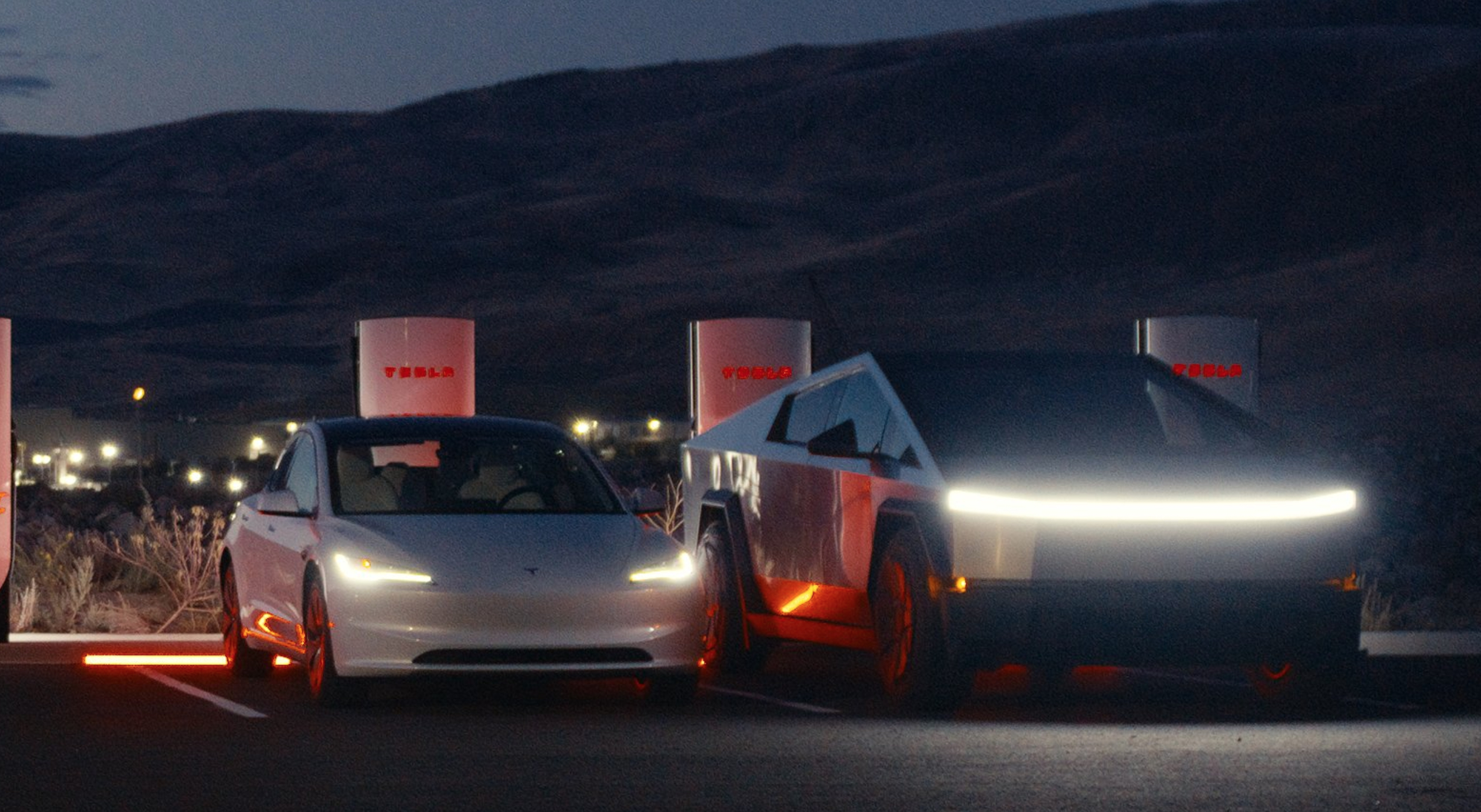
Tesla is offering an awesome new Free Supercharging incentive on a vehicle that is sort of unexpected.
In the past, Tesla has used Free Supercharging to incentivize the purchase of its expensive vehicles, like the Model S and Model X. However, those vehicles are leaving the company lineup, and Tesla saw a benefit from applying the incentive to another car.
Tesla North America has introduced a compelling new incentive aimed at boosting Model 3 sales. Starting with orders placed on or after April 24, buyers of the Model 3 Premium (Long Range) and Performance variants in the United States will receive one full year of complimentary Supercharging.
The offer applies exclusively to new vehicle orders and does not extend to existing owners or other trims like the base Rear-Wheel Drive model.
New orders of Model 3 Premium & Performance now come with 1 year of free Supercharging 🇺🇸
Also, all Teslas pay the lowest Supercharging rates – all others pay a ~40% premium or need a subscription
— Tesla North America (@tesla_na) April 24, 2026
The announcement underscores Tesla’s continued dominance in EV charging infrastructure.
While the incentive provides 12 months of zero-cost access to the Supercharger network, Tesla also reiterated its pricing structure: all Tesla vehicles receive the lowest Supercharging rates.
Non-Tesla EVs, by contrast, pay approximately 40 percent more per kWh or must purchase a subscription to access the network at standard rates. This tiered approach highlights the strategic value of owning a Tesla, where seamless integration with the world’s largest and most reliable fast-charging network remains a key differentiator.
For prospective buyers, the savings can be substantial. Depending on driving habits, a typical Model 3 owner might log 12,000–15,000 miles annually.
With average Supercharging costs around $0.40–$0.50 per kWh, one year of free sessions could translate to $800–$1,200 in avoided expenses.
That effectively lowers the total cost of ownership and makes long-distance travel more affordable from day one. Early delivery customers have already noted similar past incentives, with one Cybertruck owner reporting over $2,400 saved in just six months under similar offers that Tesla has deployed in the past.
The timing of the offer appears strategic. Tesla faces growing competition from other automakers expanding their own charging networks and offering aggressive EV incentives.
By bundling free Supercharging rather than discounting the vehicle’s MSRP, Tesla preserves perceived value while directly addressing one of the biggest barriers for new EV adopters: charging costs and convenience.
The move also encourages higher-mileage use of the network, generating valuable real-world data for Tesla’s autonomous driving development.
Why Tesla would apply this incentive to the Model 3 is pretty interesting. It usually is a pretty good incentive to move units out the door, so there’s some speculation whether Tesla is planning to launch new upgrades to the mass-market sedan in the coming months, and the company wants to move what will be outdated units from its inventory.
However, there is also just the idea that Tesla could be attempting to stimulate some early quarter demand for the Model 3, especially as the Model Y continues to sell very well. Tesla’s loss of the $7,500 EV tax credit last year had an impact on sales, and Tesla might be testing some formidable options to see if it can add some demand once again.



Elon Musk has acknowledged that early discussions with Taiwan Semiconductor Manufacturing Company (TSMC) could bring the company into his ambitious Terafab semiconductor project, signaling a possible partnership with the world’s leading contract chipmaker.
Musk confirmed that early talks are underway, but as of right now, they are “just discussions.” There is no confirmation of a deal nor dismissal of the possibility of one, leaving open the prospect of one of the largest advanced-chip collaborations under discussion in the U.S.
@wholemars Just discussions, but something may come of it
— Elon Musk (@elonmusk) October 3, 2026
The report that speculated on potential discussions between Terafab and TSMC comes from Tim Culpan, who outlined a few ways the collaboration could operate. One is TSMC using the project as an “anchor customer” for future facilities in Texas, potentially contributing process expertise, operational know-how, or capacity while Terafab provides capital, long-term purchase commitments, or both.
Tesla and SpaceX jointly developed the Terafab project, with Intel already participating on the tech side. Elon Musk announced the project in March, and it intends to produce more than one terawatt of AI compute capacity annually once fully built.
Company statements place the first phase at approximately $16.8 billion in cost, with later filings pointing to a total that could reach well into the tens of billions across multiple stages.
Intel joined the effort in April 2026 and is expected to supply its 14A manufacturing process for the full-scale plant.
Musk has said existing suppliers, including Samsung and TSMC, remain important for near-term needs; Tesla already has production arrangements with Samsung for AI5 and AI6 chips, but that future demand from Optimus robots, Cybercab vehicles, and planned space-based data centers will eventually exceed what the global industry can currently deliver.
Terafab is positioned as the long-term answer to that projected shortfall, and Tesla did something similar during COVID to avoid a chip shortage. This is just a much larger-scale solution.
If the partnership were to materialize, it would add TSMC’s industry-leading strategies to a project that already combines Tesla’s and SpaceX’s capital and offtake with Intel’s process technology. For now, the only public confirmation is Musk’s brief acknowledgement that conversations are occurring.
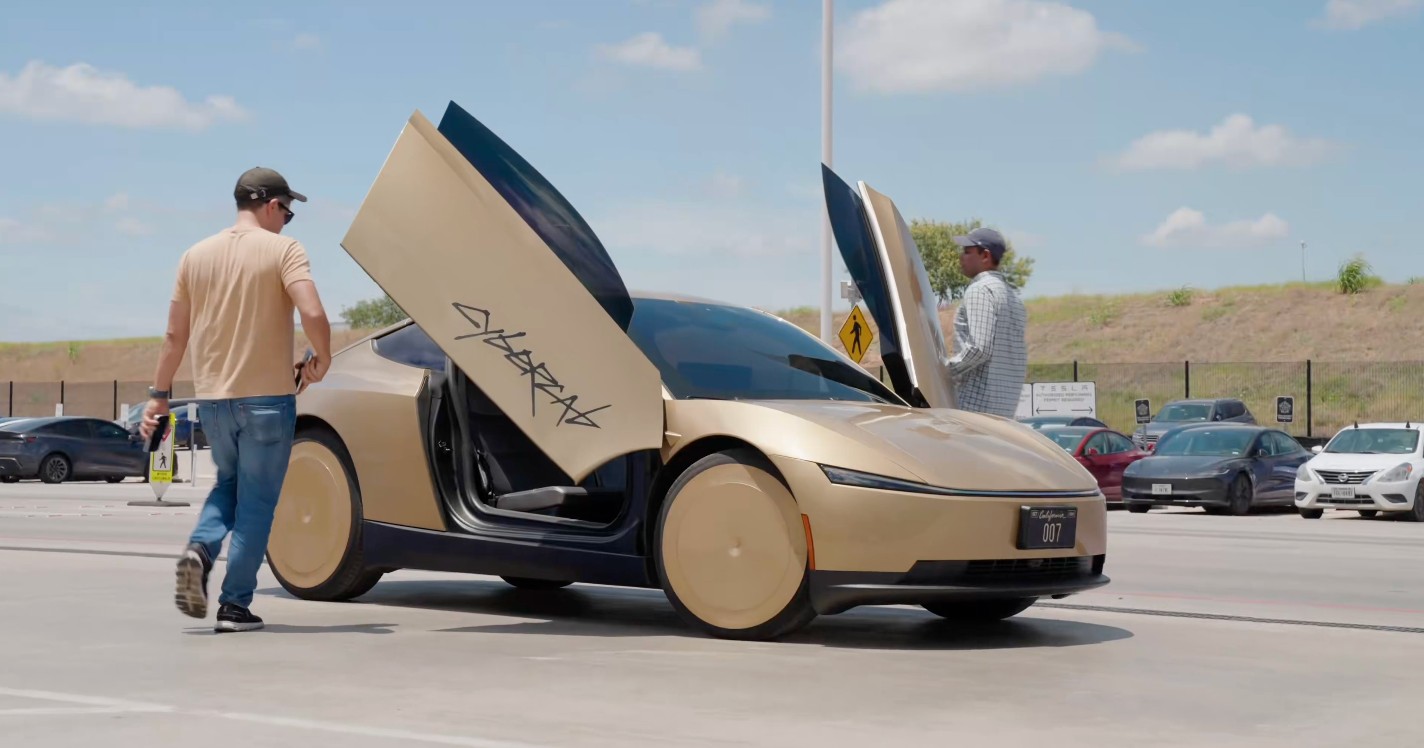
Tesla’s early strategy for charging units operating within its Robotaxi fleet reveals that the company surely has not lost any of that scrappy DNA that took it from an unlikely success story to the most valuable carmaker in the world.
An observer at a Tesla Supercharger in Austin spotted ten total Robotaxi vehicles arrive: one Cybercab and nine Model Y units. A Tesla employee was waiting at the lot and allowed each unit to park itself; every car that arrived had nobody in it.
Tesla wins FCC approval for wireless Cybercab charging system
The Tesla employee would walk around and plug each car in, adjusting the parking if needed:
So look at what I found. This is how Tesla charges unsupervised robotaxis at a public supercharger. Here is a driverless Cybercab showing up with no one in it. There are 9 other Model Ys that showed up too. A Tesla employee is walking around and plugging each of them in. She also moves the cars if they are not positioned well enough to charge. I love this process. One person charges multiple robotaxis at once
— Abhimanyu Yadav (@WorldlyReviewer) October 3, 2026
It’s a very interesting strategy, but extremely understandable at this early point in the Robotaxi program. It’s only been out for about 15 months, and Cybercab just entered the fleet in early September.
On top of that, Tesla is still working tirelessly on its wireless charging apparatus, and a new patent was just published regarding that product last week.
However, this is just another example of how Tesla still has plenty of that scrappy DNA leftover from the “production hell” days, when CEO Elon Musk slept on the floor of the factory, employees were working crazy hours, Tesla was building Sprung Structures to build cars in, and the company was tiptoeing on the brink of bankruptcy.
@Teslarati Sheer magnitude of the entire production system is hard to appreciate. Almost every element of production is >75% automated. Only wire harnesses & general assembly, which are <10% of production costs, are primarily manual.
— Elon Musk (@elonmusk) October 12, 2020
For now, Tesla is utilizing a simple system for recharging its ride-hailing vehicles, and that is a Tesla employee doing it manually until another solution presents itself. Sure, it’s not the most high-tech thing, and it certainly is not what people might have expected at this point in time, but it works, and it’s keeping the entire suite running.
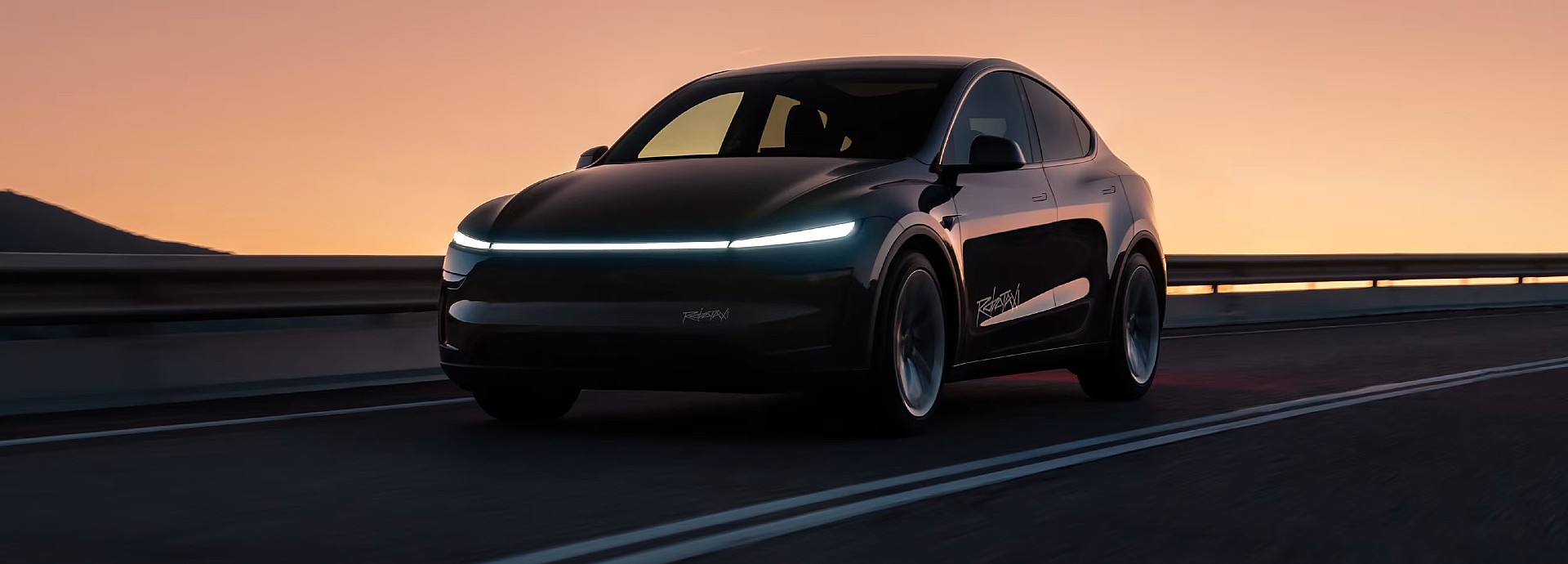
Tesla is expanding its Robotaxi service hours by pushing the time back by one hour, keeping the ride-hailing service operational until 11 p.m., one hour later than previously.
CEO Elon Musk confirmed the change and offered a specific reason the expansion has been gradual: the system still needs to reliably avoid small pets that are difficult to see after dark, as they commonly blend into the color of the road, especially when they’re grey.
The latest adjustment restores only a fraction of the operating window the service once held. When paid Robotaxi rides began in Austin on June 22, 2025, vehicles ran from 6 a.m. to midnight.
In September 2025, Tesla lengthened the day to a 2 a.m. close, producing a 20-hour window that stayed in place for most of the following year. By early August of this year, the cutoff had already been pulled back; an August 26 update formalized hours of 6 a.m. to 10 p.m. across Austin and several other markets.
The October move to 11 p.m. therefore leaves the Austin day one hour shorter than the original launch schedule and three hours shorter than the 2025 peak.
Musk addressed the constraint directly after the announcement. “The main thing we’re trying to solve is making sure that we don’t run over pets when they’re hard to see at night,” he wrote. “Literally trying to avoid grey kittens on grey tarmac in the dark.”
Robotaxi operating hours moved from 10pm to 11pm.
The main thing we’re trying to solve is making sure that we don’t run over pets when they’re hard to see at night. Literally trying to avoid grey kittens on grey tarmac in the dark.
— Elon Musk (@elonmusk) October 3, 2026
The example points to a low-contrast perception problem in which a small animal can blend into the road surface under limited lighting.
Tesla’s vehicles rely on cameras and neural-network processing rather than lidar; Musk has previously argued that advanced vision software can extract useful information even in low light by analyzing photon counts, but the pet-detection case remains the stated limiter in later hours.
The modest schedule change arrives alongside faster growth in the purpose-built Cybercab fleet. Texas registration data tracked by observers showed the Austin Cybercab count rising sharply in recent weeks, reaching 169 vehicles after more than 100 were added in a short span.
Tesla has indicated that a broader shift toward 24-hour operation is tied to the upcoming FSD v15 software release expected this month on Robotaxi vehicles. Until that capability is validated for the edge cases Musk described, the company continues to add service time incrementally rather than jumping straight to overnight coverage.
The one-hour extension gives Austin riders a later option for evening trips while the underlying detection work continues.

Elon Musk teases TSMC as potential Terafab partner

Tesla reveals early Robotaxi charging strategy, showing scrappy DNA


