News
Tesla and SpaceX are now worth over half a trillion dollars combined

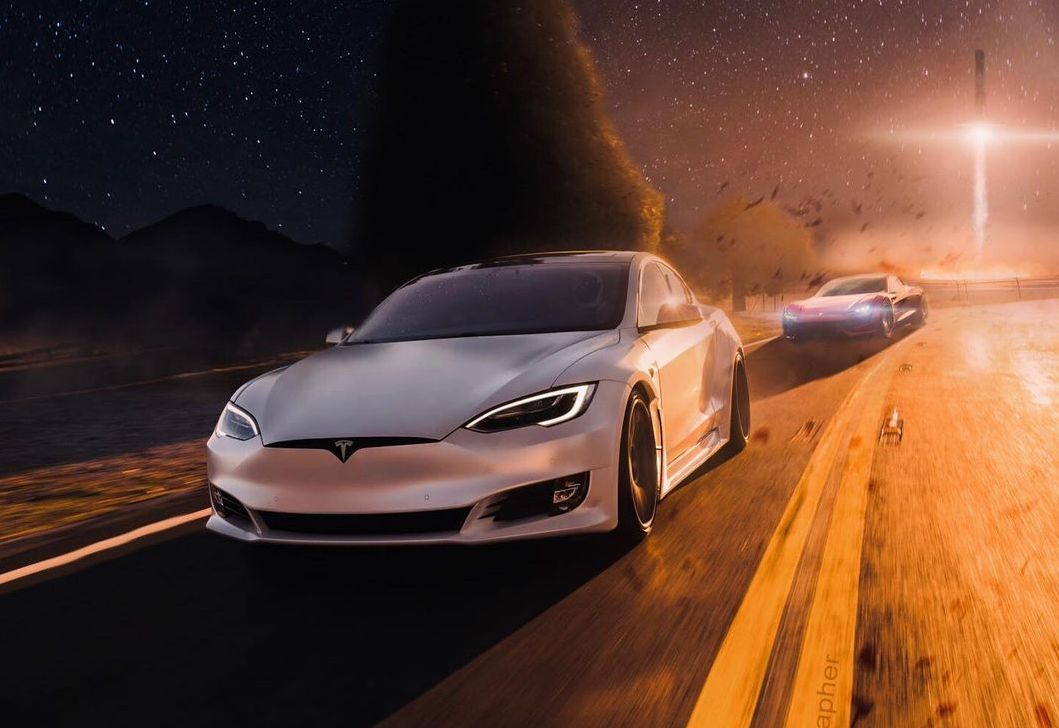
With Tesla’s (NASDAQ:TSLA) rise on Thursday that saw the electric car maker end the day with a market cap of $473.259 billion, and amidst recent estimates from Wall Street suggesting that SpaceX is worth about $100 billion today, Elon Musk now stands as the CEO of two companies whose combined market cap stands at over half a trillion dollars. While impressive, it is pertinent to note that both companies are only getting started.
The milestone was acknowledged by Elon Musk himself on Twitter, who responded to a post shared by Box CEO Aaron Levie. In his tweet, Levie noted that Tesla and SpaceX’s half-a-trillion valuation today is proof that it’s possible to “transform earth and space travel at the same time.” Musk seemed quite excited in his response as well, responding with a short “Wild times!”
Tesla’s recent rally seems to be motivated in no small part by the EV maker’s upcoming addition to the S&P 500, one of the most notable benchmark indexes in the market. The company’s official addition to the S&P 500 came after Tesla posted five consecutive profitable quarters. This was despite the arrival of competing electric cars from established automakers, as well as the fact that the company still receives an immense amount of criticism from skeptics.
Nevertheless, Tesla has executed well on its plans this year, with the company still aiming to pursue its original goal of delivering 500,000 electric vehicles in 2020. Tesla seems to be on track to coming close, or perhaps even meeting, this ambitious goal, despite the fact that the world is still reeling from the ongoing pandemic. Tesla needs to deliver over 180,000 cars this Q4 to hit the 500,000-vehicle mark, and it appears that Elon Musk and his team intend to go full throttle with vehicle production and deliveries all the way to the end of the year.
Interestingly enough, even Elon Musk’s privately-owned space venture, SpaceX, has also caught the eye of Wall Street. Last month alone, estimates published by Morgan Stanley pointed to SpaceX having an estimated valuation of over $100 billion. Morgan Stanley listed several factors for its estimate, such as the company’s potential as an internet provider with its Starlink satellites, as well as its presence in the US launch market. “The pieces are coming together for SpaceX to create an economic and technology flywheel,” Morgan Stanley wrote.
What is remarkable is that both Tesla and SpaceX are nowhere near their respective endgames yet. Tesla’s mission is to accelerate the advent of sustainability. SpaceX, on the other hand, aims to turn humans into an interplanetary species. Both Tesla and SpaceX have taken significant steps towards their respective missions, but it’s evident that both companies are only getting started at this point. Needless to say, it appears that Tesla and SpaceX together could reach heights in the future that may very well be difficult to imagine today.
Disclaimer: I am long TSLA.



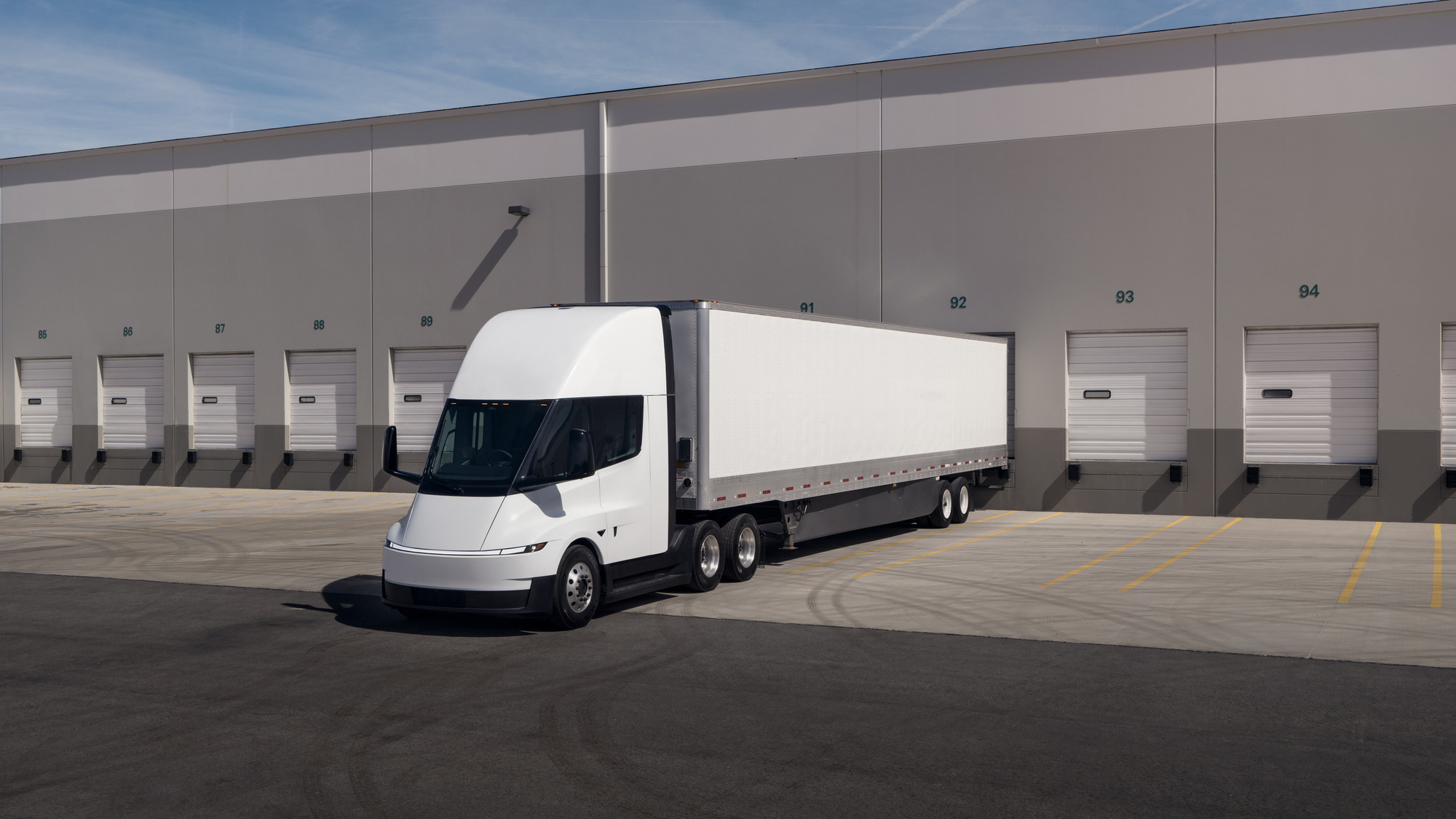
Tesla is set to inaugurate its dedicated Semi factory in Sparks, Nevada, this evening, but drone footage has already started to show who is expected on the handover stage.
Zanegler, a drone operator who regularly documents Tesla Semi operations in Nevada, filmed a row of new-generation Semi units parked outside of the plant with customer branding applied. The liveries visible in the video include companies like PepsiCo, U.S. Foods, Einride, DHL, WattEV, and others that have committed to utilizing Tesla’s Class 8 electric truck in their fleets.
Tesla Semi Pre-Reveal Revealed!
Excited to share this segment of the drone flight one day prior to the Tesla Semi Reveal event.
They have added branding to several Tesla new generation semis.
Including:
Pepsico
US Foods
Einride
LTS
Nevoya
OK Produce
ABF Freight
DHL
WattEV… pic.twitter.com/KoFOg2FouR— Zanegler (@HinrichsZane) September 24, 2026
Several of those company names already sit within Tesla’s public ordering book, including PepsiCo, which has been the program’s primary anchor customer since the first Semi deliveries in December 2022. PepsiCo now runs dozens of Tesla Semi units in daily service, with drivers completing regional routes.
Einride placed a 500-unit order in August, which was, at the time, the largest single Semi commitment. First deployments of their Semi units are planned for this month and will eventually span across California, Texas, New Jersey, Illinois, and Georgia. Meanwhile, IMC Logistics announced a 50-truck California order this week.
Tesla Semi lands the biggest electric truck deal in U.S. history
Other names, like LTS, OK Produce, and HMD, have not been widely confirmed as firm buyers, but their presence on the lot is perhaps the clearest signal that Tesla intends to expand on that list this evening at the event.
Tesla first unveiled the Semi back in 2017 with a 2019 production target.
Limited pilot builds reached PepsiCo in late 2022, and high-volume production began at the new 1.7-million-square-foot plant that sits logically positioned next to Tesla’s Gigafactory Nevada. Tesla Semi program director Dan Priestley has said that Tesla expects to build “many thousands” of Semi units this year, but as with every Tesla release, there have been set expectations of an S-curve ramp.
Outside estimates still put 2026 deliveries in the 5,000-to-15,000 range, but it will ultimately depend on Tesla’s readiness to put those units out, as well as how smoothly production is moving internally.
Tesla’s Semi Rollout event is set to start tonight at the Sparks factory, and it will be livestreamed on X starting at 6 p.m. PDT / 9 p.m. ET.
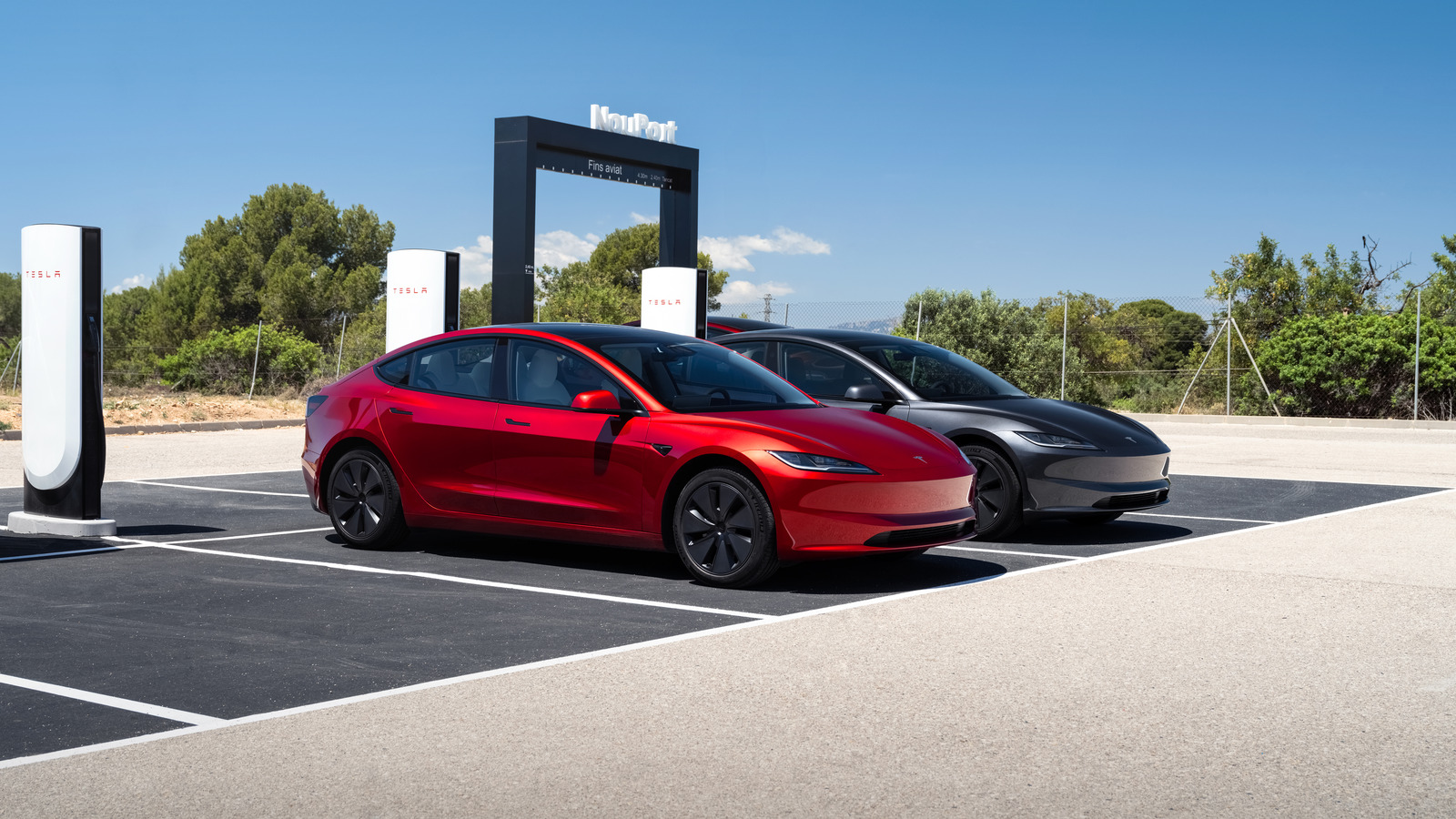
The Tesla App is now giving owners a better indication of what to expect when visiting a Supercharger site, as it is now sharing Site Maps in the app itself, making the feature no longer exclusively available in the car.
Tesla owners can now preview a Supercharger’s layout and live stall status from their phone thanks to the App’s new software version, v4.61.0. Zooming into a supported Supercharger on the charging map now switches the familiar street view into a site-specific map that shows stall positions, occupied bays, out-of-service posts, and a live count of open Superchargers.
It will even show you which specific Tesla model is charging at each occupied stall.
You can now see Live Site Maps in the latest Tesla app (4.61.0.) pic.twitter.com/JIL8QzR8hu
— Zack (@BLKMDL3) September 18, 2026
This is the same view drivers first saw inside the car with the 2025 Holiday Update, which started as a pilot for Tesla in California and Texas. Those early maps showed layout, nearby amenities, and the status of each operational stall. The feature has spread to most Superchargers in the U.S., but now Tesla wants the feature available through the Smartphone App, which is now rolling out to owners.
The in-vehicle screen maps remain a richer 3D canvas and originally required AMD Ryzen infotainment hardware, which left many Intel-based Model 3 and Model Y owners without the view. The app version removes that hardware barrier, so any owner can now get a preview of their upcoming Supercharger stop on their phone.
Anyone with the updated version of the app can open a Site Map on their phone. The feature has provided some additional peace of mind to anxious travelers and those who might be looking for a place that is less congested for faster charging speeds. It is a meaningful addition to many owners, especially for trips to unfamiliar locations.
You can now pick a Supercharger location that might be more aligned with what you are looking for or need: you can pick a site based on what stalls are open, where ADA stalls sit, how you will pull in, and more, instead of circling a crowded lot after arriving. Owners of older cars now have access to the feature without having to purchase a new vehicle altogether.
Site Mpas will not reserve a stall, nor will it change how Fast Charging works. Tesla does something simpler and more useful by giving owners a dedicated preview of the Supercharger they’re about to charge, turning an unknown parking lot into a place that may seem more familiar thanks to the preview.
Interested in ordering a Tesla? Use my referral code for three free months of Full Self-Driving (Supervised) here.
Investor's Corner
Tesla Optimus Gen 3 shows off a cleaner, factory-ready design in new app discovery
Renders hidden inside Tesla’s Android app show Optimus Gen 3’s design before any official reveal.

![Tesla Optimus Gen 3 [Credit: Tesla]](https://www.teslarati.com/wp-content/uploads/2026/03/tesla-optimus-gen3-diner.jpg)
Tesla may have accidentally given a first look at its newest Optimus Gen 3 humanoid robot when photos were found in the Tesla smartphone app.
Design files tucked inside a recent Android version of the Tesla app appear to show the third generation humanoid robot next to the older Gen 2.5 prototype. The assets were extracted from the app package by Tesla community member @wholemars, who posted the renders on X late Tuesday night before deleting them. The Tesla Newswire reshared the side by side comparison on Wednesday, and the images have circulated widely since.
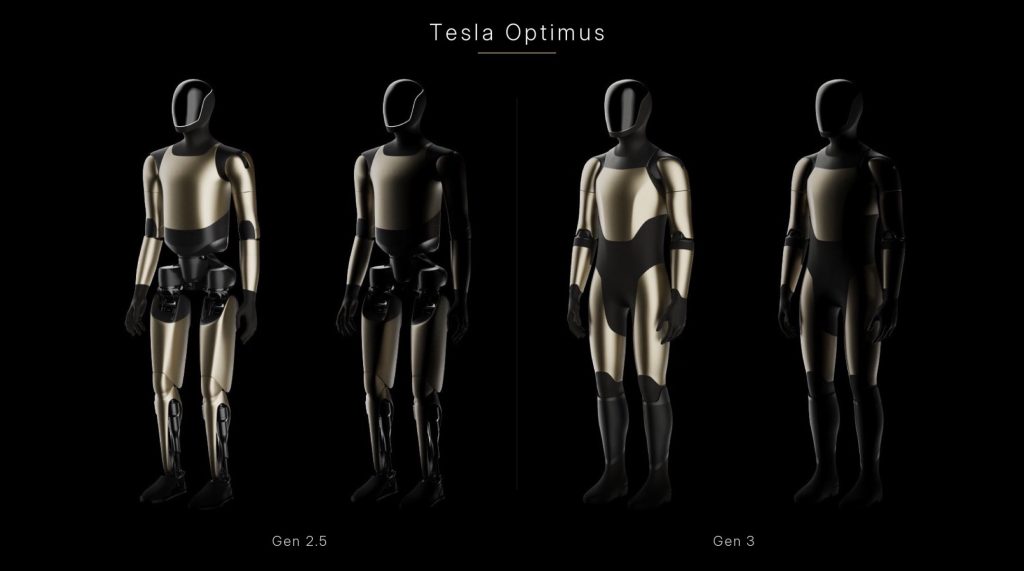
Tesla Optimus Gen 2.5 vs Gen 3 comparison via @WholeMars on X
The files are labeled “gen3” and were built as models for Tesla app’s own interface, as validated directly by Grok to be official.
The comparison shows a robot that looks built for a factory line rather than a lab bench. Gen 2.5’s exposed mechanical linkages and gold plating on the knees and shins are gone. In their place, Gen 3 uses matte black fairings on the lower legs, paired with a more contoured champagne gold body. Flexible covers now seal the joint where the torso meets the upper thighs, keeping bearings and moving parts sealed from debris and unnecessary contact.
The body panels fit more tightly, and the hands, which Tesla has said carry 22 degrees of freedom, look far more refined than those on earlier units.
This most recent leak fills a gap Tesla has left open for most of the year. Elon Musk said on March 31 that Optimus 3 was walking around but needed “some finishing touches” before it could be shown, a delay Teslarati covered when Tesla missed its first quarter reveal target. Musk later said Tesla would hold the design back until closer to production, partly to keep competitors from copying it. No reveal date has been announced.
The app itself has been preparing for Optimus for months. In July, code in the Tesla app pointed to a dedicated robot phone key, a consent screen for collecting video and spatial data while Optimus works inside a home, and an alert system for low battery and mechanical faults. Finished 3D models of Gen 3 suggest the interface owners will eventually use is moving past placeholder code toward something Tesla intends to ship.
Manufacturing is moving in parallel. Tesla tore out the original Model S and Model X lines at Fremont this summer to make room for Optimus production, with a planned capacity of one million robots a year. At Giga Texas, the steel frame of a dedicated Optimus factory is nearing completion ahead of a targeted 2027 start, with Musk pointing to an eventual output of 10 million units annually.

Tesla drops big hints ahead of Semi handover event

Tesla App now shows you what your Supercharger will look like upon arrival
![Tesla Optimus Gen 3 [Credit: Tesla]](https://www.teslarati.com/wp-content/uploads/2026/03/tesla-optimus-gen3-diner-80x80.jpg)


