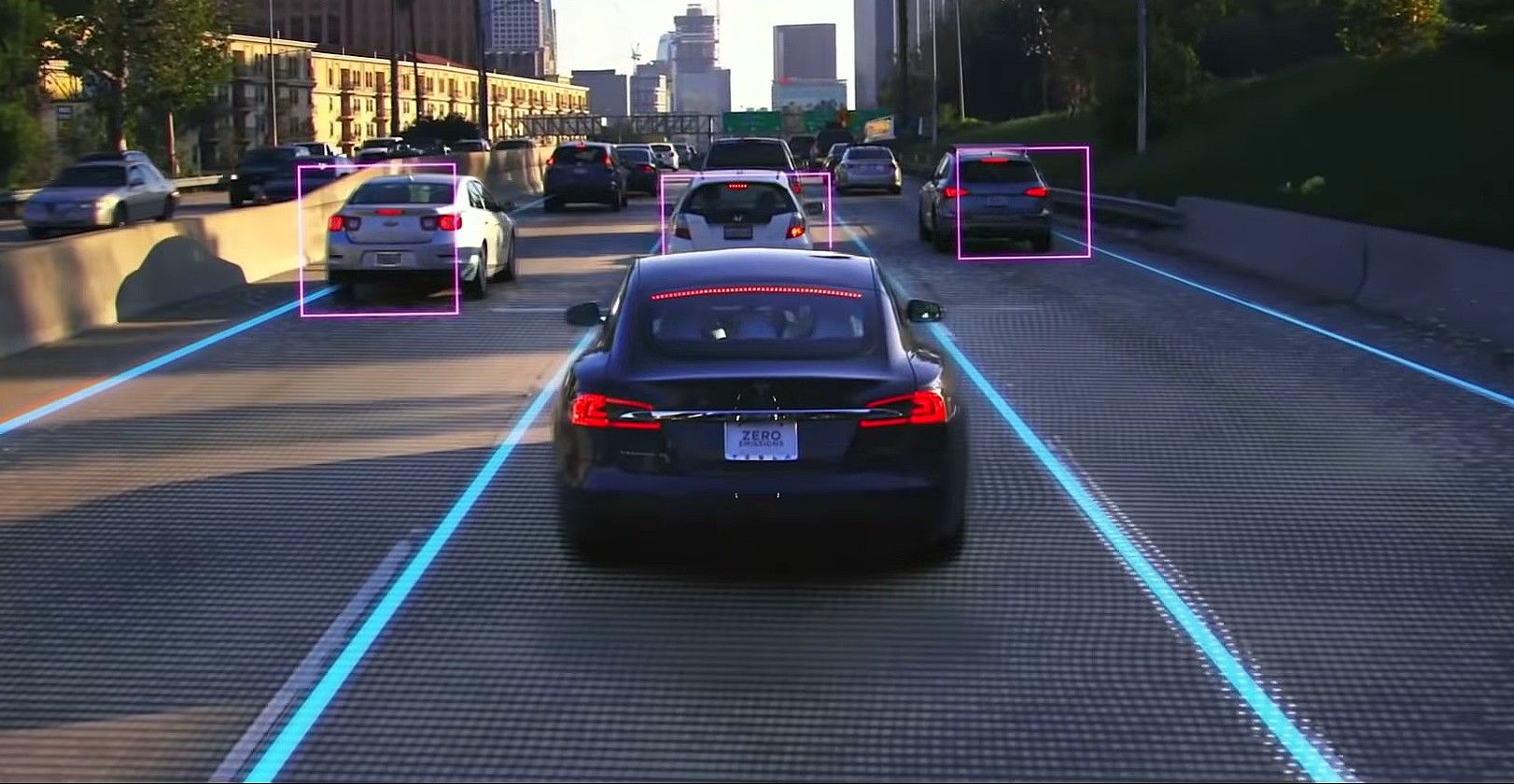
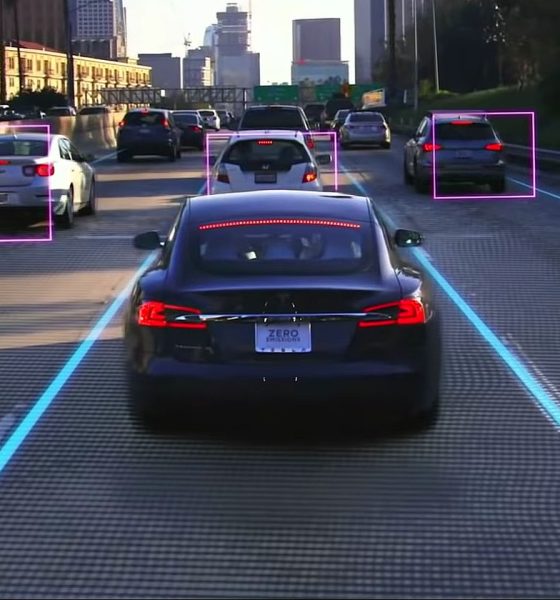

It is tough being Tesla. In a world where cars are becoming electric, just as the company initially intended when its mission began 18 years ago, Tesla is the top dog at the moment. Every car company in the world is nipping at its heels in an attempt to catch up to Elon Musk’s car company. However, recent developments have inspired me to look at a different kind of competition that Tesla is facing, something that feels somewhat unjust in the grand scheme of things. Unfortunately, it’s not from another car company, it’s from federal investigators and Tesla skeptics who continue to magnify the company’s accidents, all because there is the possibility that a car involved in an accident may have been operating on Autopilot.
Earlier this week, a Model Y was involved in a crash in Michigan. What turned out to be a case of reckless driving was initially blamed on the possibility of Autopilot by mainstream media sources. Unfortunately for them, their credibility regarding Tesla vehicles continues to be chipped away as they sacrifice long-term trustworthiness in the field of electric vehicles for short-term viewership. A Tesla was in fact in an accident in Detroit, and yes, the NHTSA was investigating it. There’s no reason to go any more broad than that.
Unfortunately, Tesla’s rollout of Autopilot and Full Self-Driving has put the company at risk for these types of stories. Anytime a Tesla crashes, the first thing that is planted in people’s minds is the possibility that the car may have been using the semi-autonomous driving functionalities. Why? Human beings are still responsible for operating the car even when the vehicle is utilizing the state-of-the-art technology. It is in no way the car’s fault when the driver is still responsible for the ultimate operation of the vehicle. It’s like blaming a fork for obesity, in my eyes.
While it is unfortunate that there have been deaths due to Autopilot, there are instances where gross negligence from the driver is truly the cause of an accident. For example, in a case where speed and reckless driving is truly the factor, there needs to be an immediate clarification by investigating officers. Perhaps Tesla could provide some clarification to authorities in some kind of system where officers could give the VIN of a vehicle involved, and Tesla could determine immediately whether the car was operating using its driver assistance features. Obviously, there may be a better way. But in the short-term, especially in the early days of the FSD Beta, the credibility of the vehicle’s systems is extremely important for future rollouts.
This is a preview from our weekly newsletter. Each week I go ‘Beyond the News’ and handcraft a special edition that includes my thoughts on the biggest stories, why it matters, and how it could impact the future.
Statistically, Tesla vehicles are much safer than human drivers, to begin with. Recent Q4 2020 Safety Report statistics from Tesla show that one accident occurred with Autopilot every 3.45 million miles. The national average is 484,000 miles. Isn’t that enough to prove Autopilot is a better option than human driving? By the way, it only gets more accurate and precise with every mile driven thanks to its Neural Networks that attain new data.
The exposure Tesla receives after one of these tragic accidents is likely what is the most frustrating. Immediately, people jump to conclusions and assume the car was responsible for the issues. It’s interesting though because I can’t ever recall a single instance of media jumping all over an issue with SuperCruise or any of the other numerous driver assistance systems that are out on the market today. I am sure there has been coverage, I just can’t recall any instance where it has been a national headline like Tesla seems to be included in on a regular basis.
In all honesty, it is just extremely frustrating to know that there is so much focus on Tesla’s shortcomings instead of its broad successes. I am a TSLA investor, but I am also extremely critical of the company at times, and I believe it is because of my holdings. There are times I would do things differently. I was vocal about my distaste for not telling any Model Y LR RWD reservation holders that their cars weren’t going to be made. I am upset that there is relatively no communication with Model S Plaid reservation holders regarding their steering wheels. I am not a fan that we’ve been told Semi/Roadster production is imminent on numerous occasions but we are still sitting here with neither of those vehicles. I get the bottlenecks, but I think those things have just frustrated me personally.
I’m glad Tesla spends $0 on advertising. The news outlets & media don’t deserve Teslas money. It’s better used growing the company & for things like building next-gen factories. Ford and GM alone will spend over $5B this year on US advertising. The bias is clear and money talks.
— Sawyer Merritt ?? (@SawyerMerritt) March 17, 2021
However, I am also going to admit when things are just plain unfair, and Tesla is a victim of that on so many occasions. I don’t know if that has to do with oil money lining the pockets of MSM, or it is just an attempt to derail a company that has really disrupted the automotive industry. I won’t speculate. There is, of course, a reason for the investigations that could be beneficial. It could just be an attempt to learn from the mistakes of Tesla and pass them along for future instances. Unfortunately, there will be more accidents with self-driving software, and it will go far beyond Tesla. However, Tesla is the only company with a robust self-driving program, so the microscope almost needs to be on them at times, but that’s where this whole situation really gets sticky.
A big thanks to our long-time supporters and new subscribers! Thank you.
I use this newsletter to share my thoughts on what is going on in the Tesla world. If you want to talk to me directly, you can email me or reach me on Twitter. I don’t bite, be sure to reach out!


Elon Musk
Tesla gives the Roadster an official “Go for launch” demonstration date
Tesla teased an October 1 Roadster reveal, reviving years of delayed SpaceX thruster hover promises.

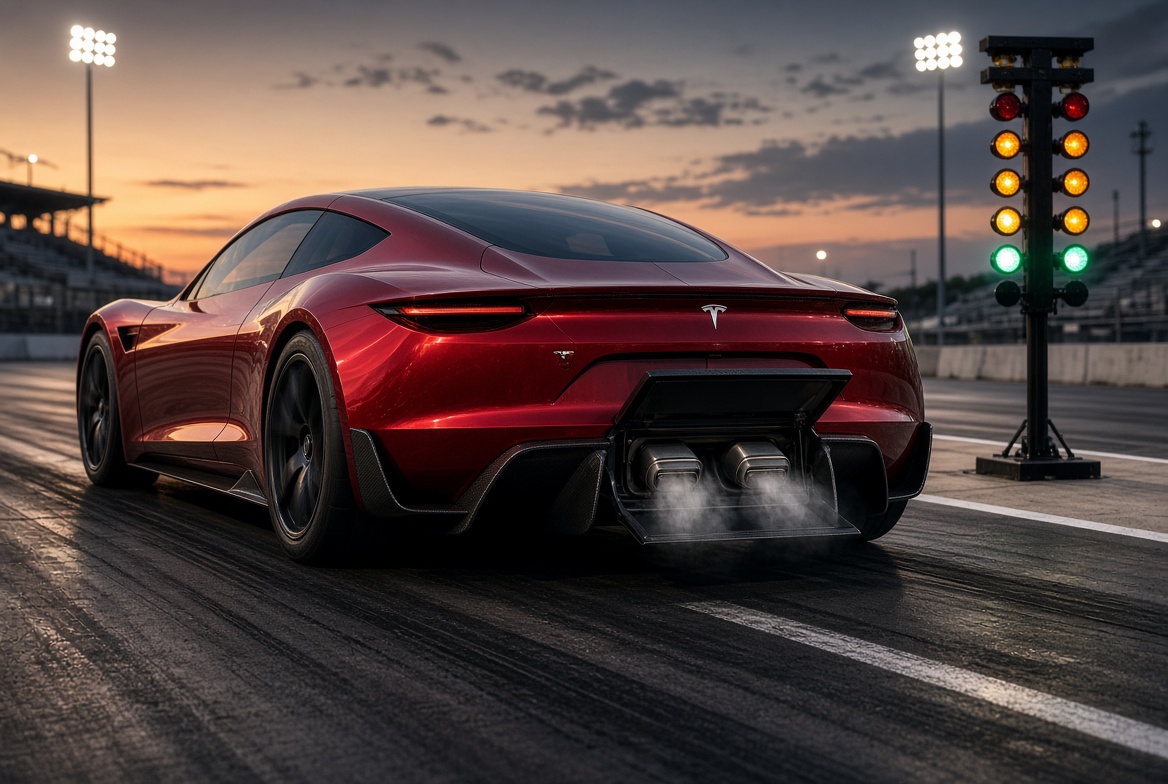
Tesla teased an October 1 event date for its next generation Roadster, posting an image on X Saturday that shows the car lit up like it is sitting on a launch pad, with the date “10.01” stamped across the bottom and the caption “Go for launch.” A countdown clock on Tesla’s Roadster order page now points to the same date, which falls on a Thursday. The company has not said where the event will happen or whether it will be streamed at the moment. Stay with us @Teslarati for live updates.
Go for launch pic.twitter.com/Khu03eiZ04
— Tesla (@Tesla) September 12, 2026
Tesla has since sent formal invitations to reservation holders confirming the event will take place in Waco, Texas, about 90 minutes north of its Austin headquarters, based on a digital ticket shared on X by Sawyer Merritt. Tesla did not name the exact venue, though Waco sits close to SpaceX’s McGregor, Texas, rocket test site, previously reported as the planned location for a Roadster thruster demonstration. The invite sets the reveal for 8:30 p.m. Eastern on October 1, requires RSVPs by midnight on September 16, and limits entry to guests 21 and older. Invitations are non-transferable.
The tease follows nine years of a project defined by unimaginable specs along with slipped dates. Musk first showed the second generation Roadster in November 2017 as a surprise reveal at the end of the Tesla Semi event, promising a 0 to 60 mph time under two seconds, a top speed above 250 mph, 620 miles of range from a 200 kWh battery, and production starting in 2020. At last November’s shareholder meeting, Musk set an April 1 demo date and joked the choice gave him “deniability” if it slipped again, which it did, moving first to late April, then to “a month or so,” then to August.
Tesla Roadster SpaceX Package’s 1.1-second 0-60 mph launch visualized in concept video
Whatever Tesla shows on October 1 is expected to center on the SpaceX developed thruster package Musk has described since 2018. Internally code named A71, a nod to the Lockheed SR-71 Blackbird, the system reportedly uses cold gas thrusters fed by a composite overwrapped pressure vessel, the same tank design SpaceX uses on Falcon 9. Musk has said a thruster equipped Roadster could hit 60 mph in about 1.1 seconds under roughly 2.75 g of launch force, well past the 1.9 second figure quoted for the standard car. That version reportedly will not be street legal and has reportedly been discussed as a limited run sold through a track only program.
The standard Roadster is still expected to carry the original $200,000 base price and $250,000 Founders Series tier, both set when Tesla opened $50,000 and $250,000 reservations in 2017. Tesla VP of Vehicle Engineering Lars Moravy has confirmed production will happen at Gigafactory Texas, with Musk targeting 2027 or 2028, 12 to 18 months after whatever the company demonstrates next month.
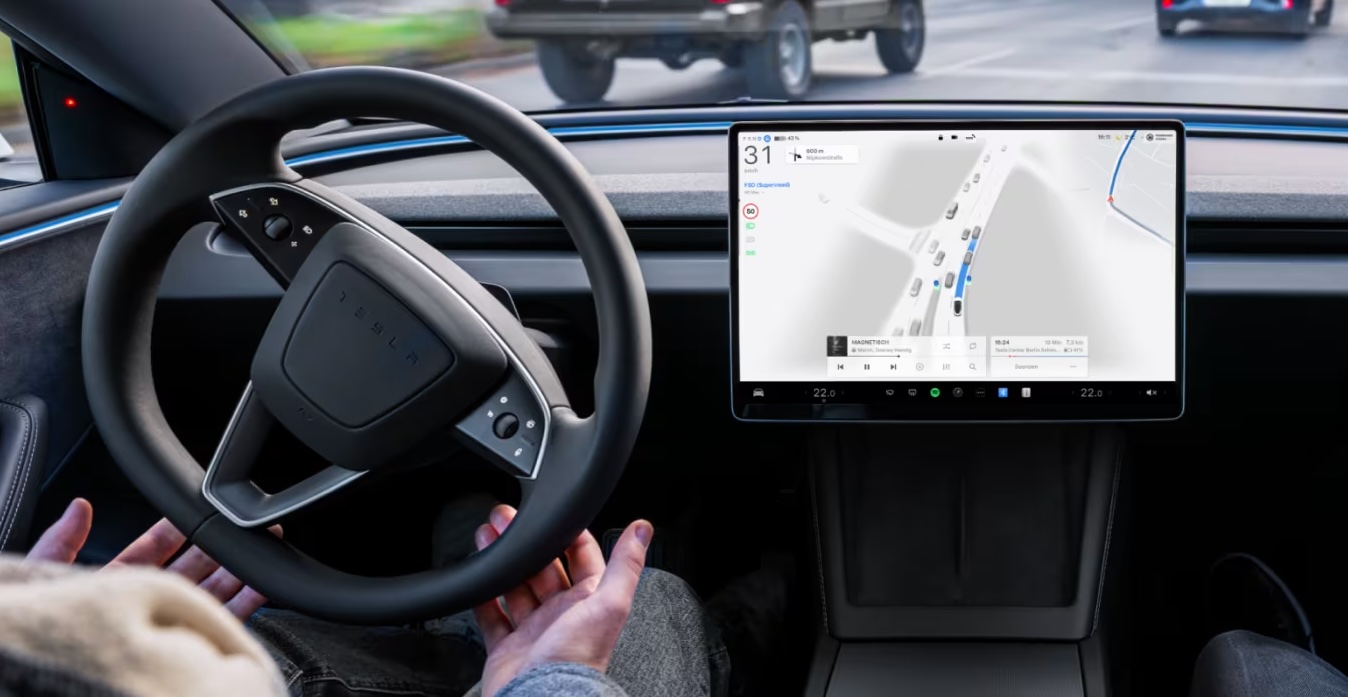
Tesla is planning to roll out some pretty significant safety and accident avoidance features with Full Self-Driving version 15, which will be the next major FSD deployment from the company.
Tesla AI lead Ashok Elluswamy used a near-miss this week to preview what the company says is the next leap in Full Self-Driving.
In response to a driver whose car had swerved away from another vehicle pulling out of a parking lot, Elluswamy wrote that he was glad the owner was safe and that “even earlier prediction of hazards, even faster reaction time and overall significantly better safety and collision avoidance” would arrive with FSD v15.
Glad you are safe. Even earlier prediction of hazards, even faster reaction time and overall significantly better safety and collision avoidance coming as part of the next big upgrade (v15).
— Ashok Elluswamy (@aelluswamy) September 11, 2026
The comment landed as Tesla continues to treat software as the primary safety upgrade path. v15 is described internally as a larger architectural step, with a much bigger neural network and tighter coupling between prediction and control.
The company has already begun using early v15 software in some robotaxi operations while rolling out safety features such as Automatic Collision Evasion into current customer cars, allowing the driving stack to intervene even when the driver is in manual control.
Tesla is rolling out a new FSD version with a massive safety addition
Tesla’s published telemetry is the backbone of its safety argument. In recent North American Vehicle Safety Report data, vehicles with FSD (Supervised) engaged traveled roughly 5.1 million to 5.7 million miles between major collisions, defined as airbag-deployment events.
Tesla’s estimate of the U.S. average over the same period is about 699,000 miles per comparable crash. That is the comparison Tesla often frames as roughly seven times fewer major collisions.
A tighter comparison uses the same Tesla fleet. Cars driven manually with active safety features such as automatic emergency braking still recorded a major collision about every 2.1 million miles. Against that baseline, FSD’s advantage shrinks to roughly 2.4 to 2.7 times fewer severe crashes, which independent researchers argue is the more apples-to-apples figure.
European data released in 2026 pointed in the same direction: Tesla reported FSD as 3.5 times safer than manual driving in the Netherlands and 4.1 times fewer collisions than manually driven Teslas with active safety across more than 100 million kilometers in five approved countries.
Those numbers do not settle every debate. NHTSA’s Standing General Order still shows Tesla accounting for the large majority of U.S. Level 2 driver-assist crash reports, in part because the fleet logs far more assisted miles than rivals. Critics also note that Tesla’s “U.S. average” mixes crash definitions and driving mix.
Even so, Tesla’s own same-car comparisons, plus lower rates of automatic emergency braking and harsh maneuvers when FSD is engaged, are the evidence Elluswamy is pointing to when he says v15 will push prediction and collision avoidance further. The claim is not that software already eliminates risk. It is that each major version is meant to widen the gap between the system and an unaided human driver.
Cybertruck
Tesla’s most delayed Cybertruck feature is finally here
Tesla finally links Cybertruck Powershare with Powerwall 3 for extended home backup after years overdue.

Tesla’s Cybertruck can now pair with a Powerwall 3 to keep a house running longer during an outage, a feature the company first promised when the truck launched in November 2023.
The official Cybertruck account posted the update on X Thursday: “Powerwall 3 & I can now power your house together. This extends your home backup by over 3 days, equivalent to 9 additional Powerwalls,” Cybertruck lead engineer Wes Morrill confirmed the rollout separately, calling it the first time a vehicle and a home battery have worked together this way. Powerwall 2 and Powerwall+ compatibility is still coming later this year, per both the Cybertruck account and Morrill.
Powerwall 3 & I can now power your house together⁰ ⁰This extends your home backup by over 3 days, equivalent to 9 additional Powerwalls pic.twitter.com/8G2twIm6AN
— Cybertruck (@cybertruck) September 10, 2026
Powershare itself is not new. Tesla enabled the version that lets Cybertruck power tools, appliances or another EV through its bed outlets when the truck launched in 2023. Home backup through a Powershare Gateway and Universal Wall Connector arrived in 2024, and Tesla extended that support to homes with solar the following year. What has been missing until now is Powershare working alongside an existing Powerwall, instead of functioning as a separate backup source competing for the same job.
The pairing matters because a single Powerwall home battery typically covers a home for about a day, less if usage is heavy or the outage stretches into a heat wave or freeze. A second Powerwall for more backup storage costs several thousand dollars installed. A Cybertruck instead uses a battery the owner already has, one large enough here to add roughly three more days of backup without mounting another unit or booking an installer visit. For households in wildfire, hurricane or winter storm regions where outages run past a day, that keeps the refrigerator and medical equipment running instead of shutting down.
The company told owners in October 2024 that Powerwall integration was coming sometime in 2025. That date passed, and in December 2025 Tesla pushed the target to mid-2026, with Morrill explaining at the time that two grid-forming devices need to negotiate which one manages a home during an outage, and that certifying the process across multiple generations of Powerwall took longer than expected.
For owners who bought Powershare hardware expecting it to work with whatever battery setup they already had, Thursday’s update closes a gap that has shown up repeatedly in owner complaints since Cybertruck deliveries began. Tesla has also rolled out a separate Powershare grid support program in Texas, letting Cybertrucks send power back to the grid during high demand events, so the truck’s role in a home’s energy setup keeps expanding even as individual pieces of it arrive later than promised.

Tesla gives the Roadster an official “Go for launch” demonstration date

Tesla plans big safety improvements for Full Self-Driving v15


