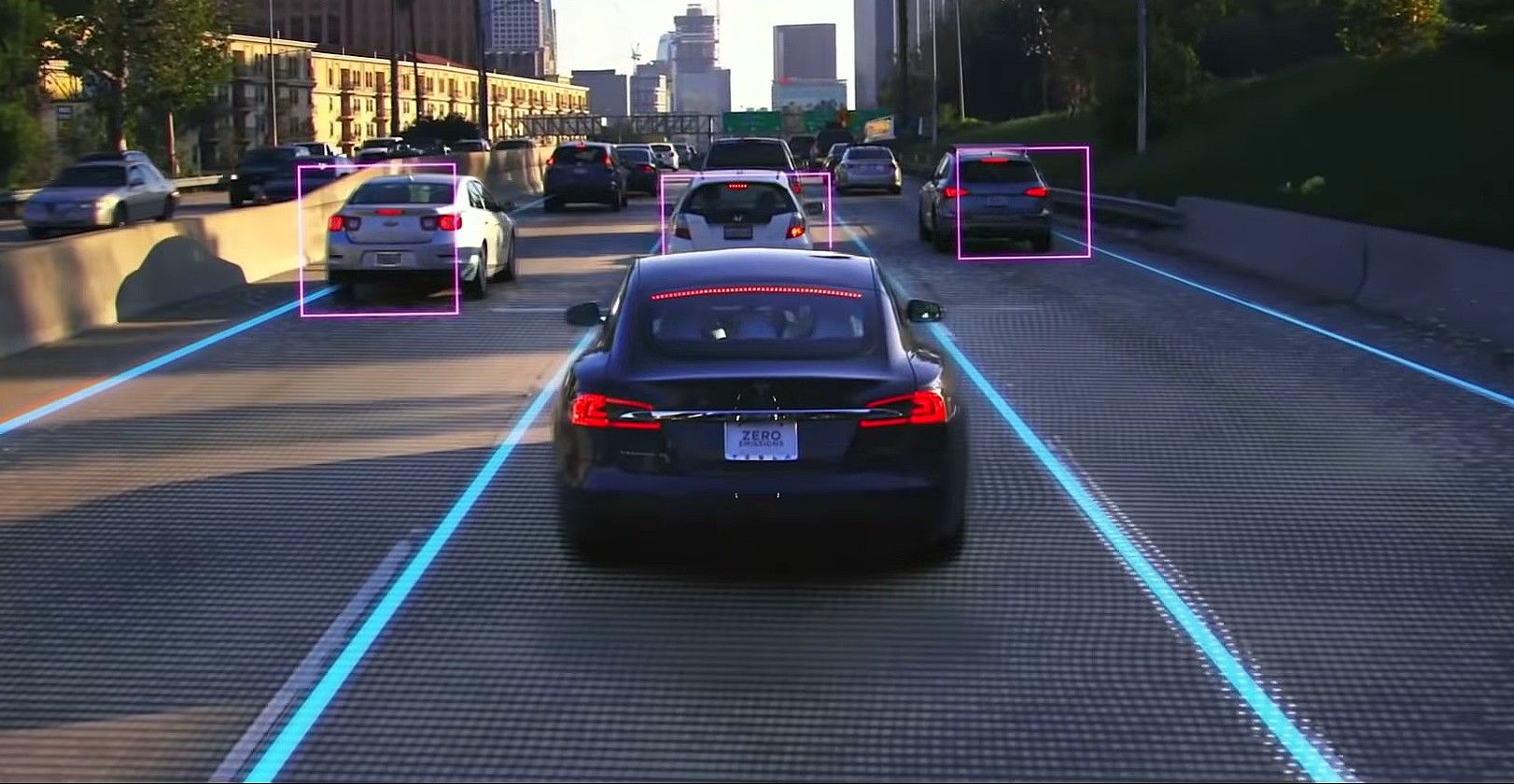
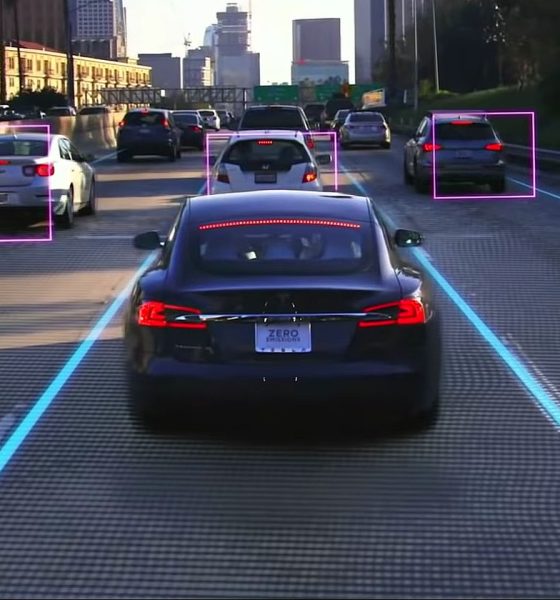

Tesla’s Senior Director of Artificial Intelligence, Andrej Karpathy, detailed the automaker’s self-driving Supercomputer that will era in Dojo. Dojo is Tesla’s 4-dimensional Autopilot training program and was first discussed in 2020 by CEO Elon Musk. Karpathy gave a 40-minute presentation regarding Autonomous Vehicles at the 2021 Conference on Computer Vision and Pattern Recognition (CVPR 2021).
Tesla has been working on its self-driving program for several years, and through that time, it has trained its Autopilot and Full Self-Driving suite by using a Neural Network to make it more accurate and robust in its movement. As a result, Tesla has established itself as one of the companies with the most robust semi-autonomous driving programs globally.
Despite this, Tesla continues to make strides to improve it even further. This started back in August 2020, when CEO Elon Musk detailed Dojo, a 4-dimensional training program that will process monumental volumes of video data. This aligns with Tesla’s recent decision to adopt a Vision-only approach in its vehicles, ditching radar in the Model 3 and Model Y.
Musk said:
“Tesla is developing a NN training computer called Dojo to process truly vast amounts of video data. It’s a beast! Please consider joining our AI or computer/chip teams if this sounds interesting.”
For a long time, Tesla has worked with what Musk called “just been like 2D.” He said that the 4D system would work tremendously better since it’s basically video.
During the Q2 2020 Earnings Call, Musk said:
“So what we’ve been doing, thus far, has really just been like 2D — mostly 2D, and like I said, well correlated in time. So just hard to convey just how much better a fully 4D system would work — does work. It’s capable of things that if you just look — looking at things as individual pictures as opposed to video — basically, like you could go from like individual pictures to surround video, so it’s fundamental. So the car will seem to have just like a giant improvement.”
Now that Tesla is moving closer to the completion of Dojo, Karpathy talked about the Neural Network, Supercomputers, and the excellent work of Tesla’s Supercomputing team.
In Karpathy’s presentation, the AI head stated that there are three main factors to get a Neural Network signal to work: Large amounts of video, clean data, and diverse scenarios to make the suite as well-rounded as possible. It is evident that through Tesla’s decision to make its two mass-market vehicles vision-based, that large amounts of data is one of the biggest factors. The Model 3 and Model Y have dominated Tesla’s sales numbers globally for some time, meaning they contribute more data to the Neural Network than the other two vehicles in Tesla’s fleet.
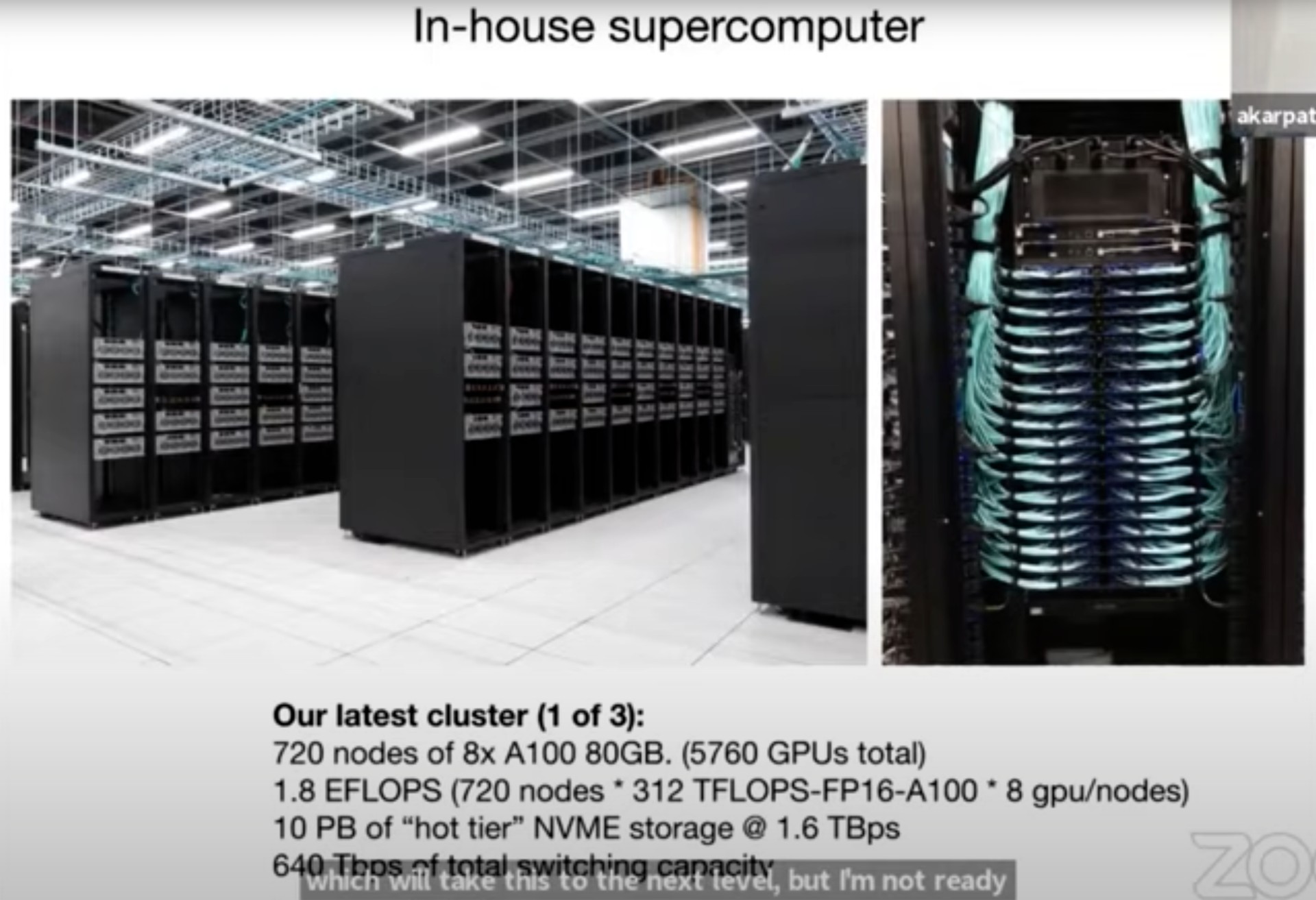
Now that Dojo has been in development for some time, Karpathy unveiled some details about the Supercomputer that Tesla uses for data consumption and storage. A slide in the presentation details the specifications:
- 720 nodes of 8x A100 80 GB (5760 GPUs total)
- 1.8 EFLOPS (720 nodes * 312 TFLOPS-FP16-A100 * 8 GPU/nodes)
- 10 PB of “hot tier” NVME storage @ 1.6 TBps
- 640 Tbps of total switching capacity
Credit: Yarrow B. | YouTube
Karpathy said that these specs make it “roughly the number five Supercomputer in the world” during his presentation.
Now, Dojo is still not released, and Karpathy was unwilling to comment further on the progress or any of the finer points of what will likely bring Tesla close to Level 5 autonomy. Still, there should be more details in the coming months. Tesla has stuck by the 2021 time frame for Dojo since first talking about it, so hopefully, the company will shed more detail on it during the Q2 or Q3 2021 Earnings Call.
Karpathy’s full presentation is available below.


Tesla has taken another concrete step toward owning its battery supply chain, and it’s doing so with what is perhaps the most important vehicle in its short-but-storied history.
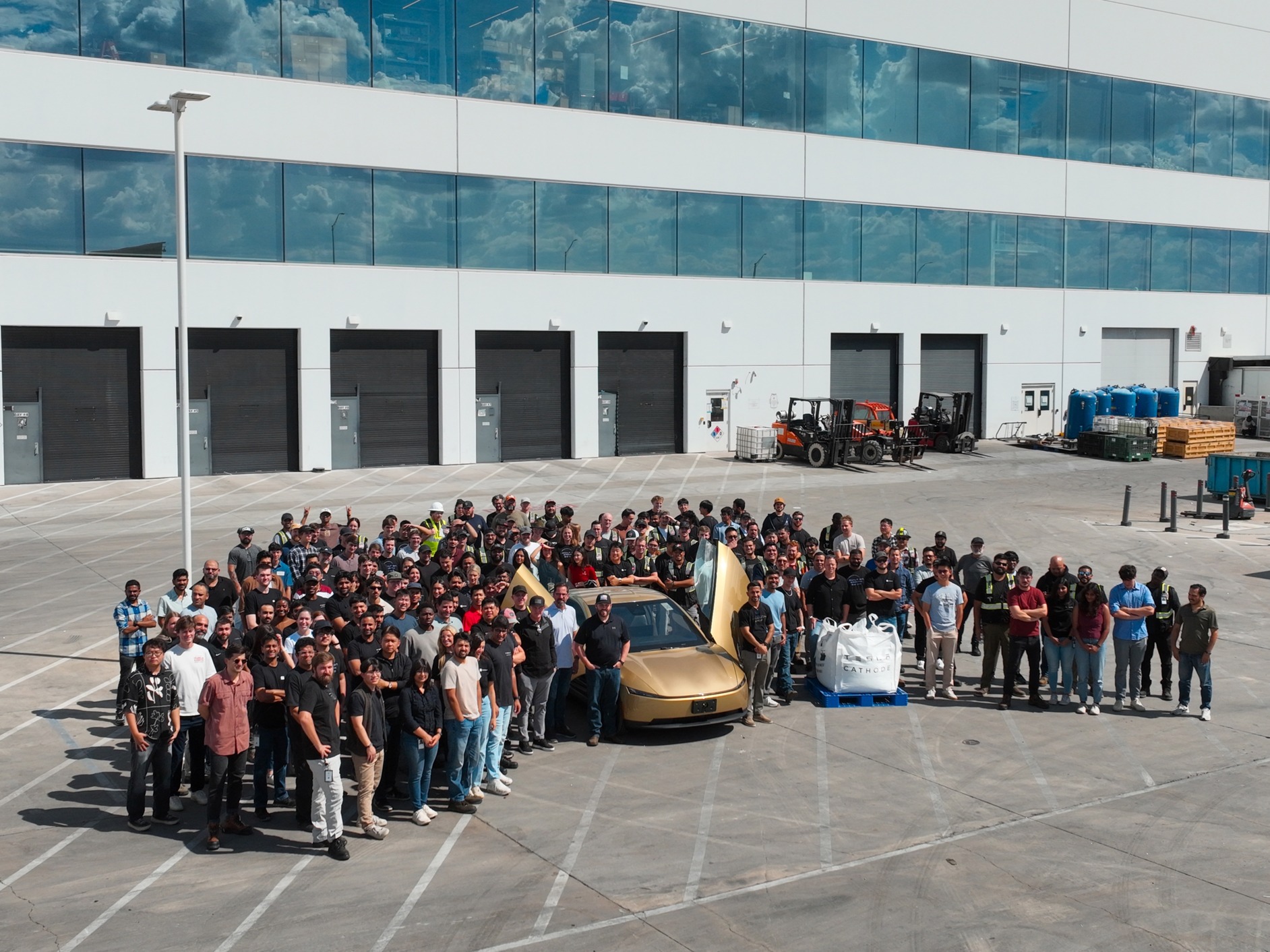
On September 23, Tesla announced that it has officially built the first Cybercab with cathode material produced in-house at the company’s first cathode plant in the U.S., and the first in the U.S. overall.
First Cybercab made using our in-house cathode material – from the first cathode plant in the Americas pic.twitter.com/X95aVXsT9H
— Robotaxi (@robotaxi) September 23, 2026
Active cathode material is the most expensive piece of a lithium-ion battery cell, and it often accounts for more than a third of cell cost. For years, the industry sourced a majority of it from Asia, but Tesla’s decision to make it in the United States bodes well for the Cybercab project. This is the latest chapter in Tesla’s vertical integration strategy, which began in public at Battery Day in 2020.
At the Battery Day Event, Elon Musk said the company would build a North American cathode plant and overhaul the process to cut costs and waste, while also making some of the most powerful and long-lasting cells in the industry.
The Austin facility took years to appear. Tesla filed permits for “Project Cathode” in 2022 on land near Giga Texas. By mid-2022, the building frame was up and Tesla later invested hundreds of millions of dollars as part of a larger expansion of the Giga Texas plant. The company stated it was operating the first large-scale cathode production facility in North America to supplement 4680 cell production.
One month later, that material reached a finished Cybercab.
Made with nickel cathode manufactured locally at Gigafactory Texas! https://t.co/DqMm5fZV3n
— Elon Musk (@elonmusk) September 24, 2026
The timing of this breakthrough is monumental for the Cybercab program. As Tesla officially launched the first Cybercab rides to the public earlier this month, production of the ride-hailing-geared vehicle is moving forward on the planned S-curve that CEO Elon Musk told everyone to expect.
Nevertheless, packs of Cybercab units have been spotted throughout the United States, in an effort to potentially activate the fleet as soon as the company gains regulatory approval in various geographic areas.
On top of that, Tesla owning the cathode step and pairing it with its own in-house lithium from the Gulf Coast refinery shortens the supply chain that once stretched thousands of miles and subjects every pack to fewer external price shocks and geopolitical risks.
Tesla is not yet independent of all of its foreign suppliers, as some precursor metals come from mines and chemical plants. But the first in-house cathode Cybercab shows the company is closing the most expensive and most concentrated gap in its battery production efforts. For a vehicle like Cybercab to operate at a high utilization within the Robotaxi network, that control over cost is so crucial.
It is arguably as important as the software that drives it.
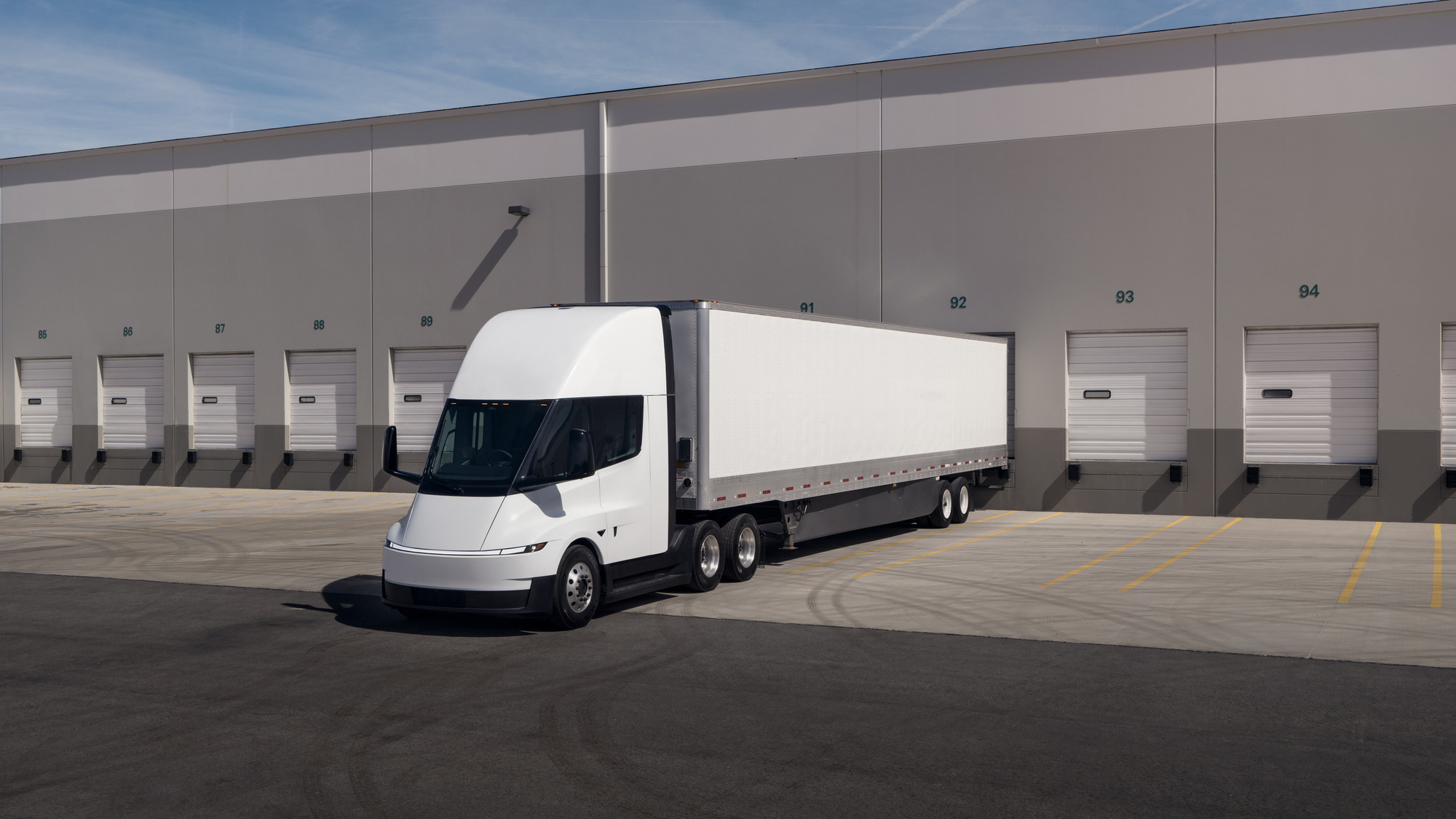
Tesla is set to inaugurate its dedicated Semi factory in Sparks, Nevada, this evening, but drone footage has already started to show who is expected on the handover stage.
Zanegler, a drone operator who regularly documents Tesla Semi operations in Nevada, filmed a row of new-generation Semi units parked outside of the plant with customer branding applied. The liveries visible in the video include companies like PepsiCo, U.S. Foods, Einride, DHL, WattEV, and others that have committed to utilizing Tesla’s Class 8 electric truck in their fleets.
Tesla Semi Pre-Reveal Revealed!
Excited to share this segment of the drone flight one day prior to the Tesla Semi Reveal event.
They have added branding to several Tesla new generation semis.
Including:
Pepsico
US Foods
Einride
LTS
Nevoya
OK Produce
ABF Freight
DHL
WattEV… pic.twitter.com/KoFOg2FouR— Zanegler (@HinrichsZane) September 24, 2026
Several of those company names already sit within Tesla’s public ordering book, including PepsiCo, which has been the program’s primary anchor customer since the first Semi deliveries in December 2022. PepsiCo now runs dozens of Tesla Semi units in daily service, with drivers completing regional routes.
Einride placed a 500-unit order in August, which was, at the time, the largest single Semi commitment. First deployments of their Semi units are planned for this month and will eventually span across California, Texas, New Jersey, Illinois, and Georgia. Meanwhile, IMC Logistics announced a 50-truck California order this week.
Tesla Semi lands the biggest electric truck deal in U.S. history
Other names, like LTS, OK Produce, and HMD, have not been widely confirmed as firm buyers, but their presence on the lot is perhaps the clearest signal that Tesla intends to expand on that list this evening at the event.
Tesla first unveiled the Semi back in 2017 with a 2019 production target.
Limited pilot builds reached PepsiCo in late 2022, and high-volume production began at the new 1.7-million-square-foot plant that sits logically positioned next to Tesla’s Gigafactory Nevada. Tesla Semi program director Dan Priestley has said that Tesla expects to build “many thousands” of Semi units this year, but as with every Tesla release, there have been set expectations of an S-curve ramp.
Outside estimates still put 2026 deliveries in the 5,000-to-15,000 range, but it will ultimately depend on Tesla’s readiness to put those units out, as well as how smoothly production is moving internally.
Tesla’s Semi Rollout event is set to start tonight at the Sparks factory, and it will be livestreamed on X starting at 6 p.m. PDT / 9 p.m. ET.
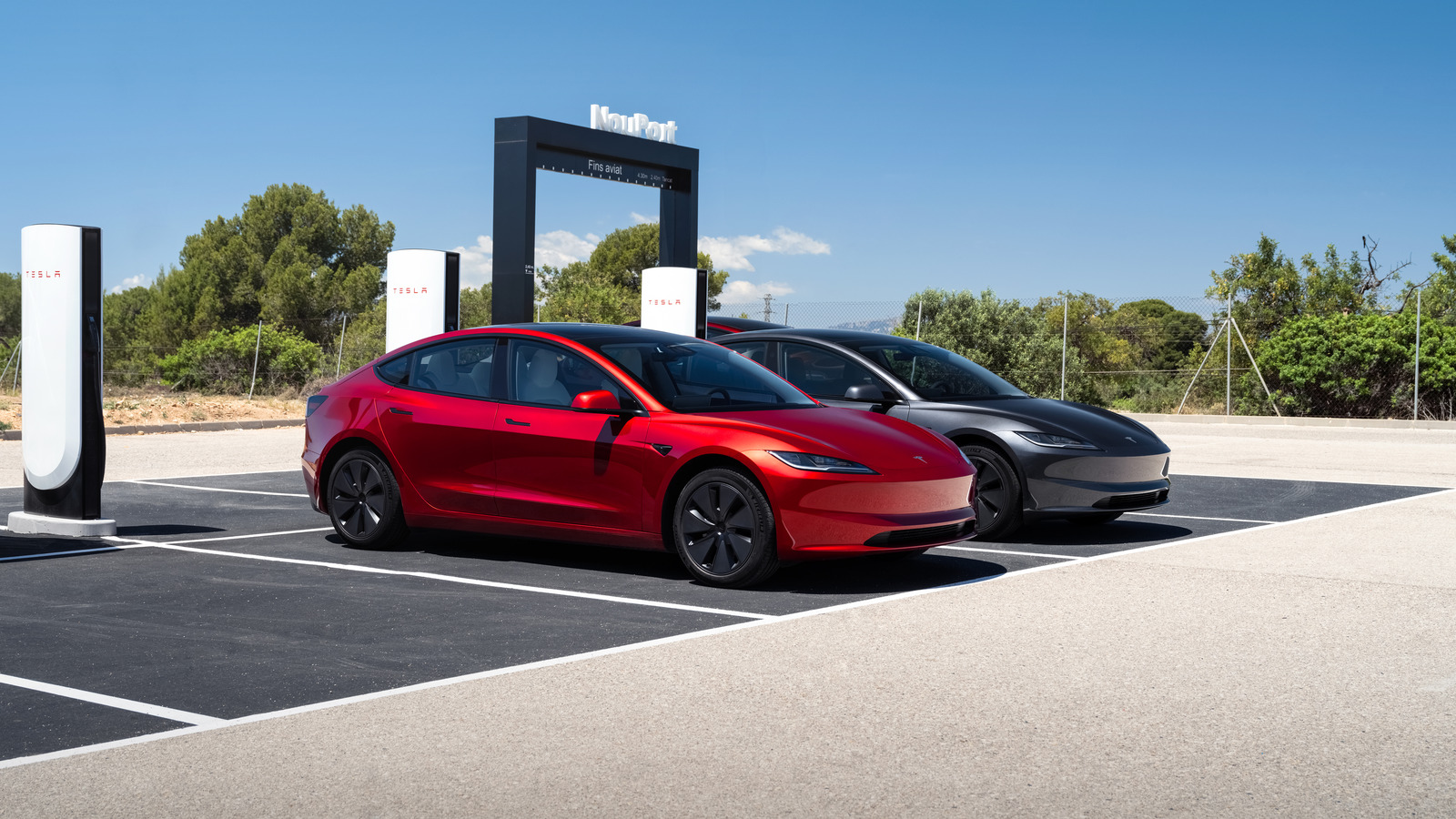
The Tesla App is now giving owners a better indication of what to expect when visiting a Supercharger site, as it is now sharing Site Maps in the app itself, making the feature no longer exclusively available in the car.
Tesla owners can now preview a Supercharger’s layout and live stall status from their phone thanks to the App’s new software version, v4.61.0. Zooming into a supported Supercharger on the charging map now switches the familiar street view into a site-specific map that shows stall positions, occupied bays, out-of-service posts, and a live count of open Superchargers.
It will even show you which specific Tesla model is charging at each occupied stall.
You can now see Live Site Maps in the latest Tesla app (4.61.0.) pic.twitter.com/JIL8QzR8hu
— Zack (@BLKMDL3) September 18, 2026
This is the same view drivers first saw inside the car with the 2025 Holiday Update, which started as a pilot for Tesla in California and Texas. Those early maps showed layout, nearby amenities, and the status of each operational stall. The feature has spread to most Superchargers in the U.S., but now Tesla wants the feature available through the Smartphone App, which is now rolling out to owners.
The in-vehicle screen maps remain a richer 3D canvas and originally required AMD Ryzen infotainment hardware, which left many Intel-based Model 3 and Model Y owners without the view. The app version removes that hardware barrier, so any owner can now get a preview of their upcoming Supercharger stop on their phone.
Anyone with the updated version of the app can open a Site Map on their phone. The feature has provided some additional peace of mind to anxious travelers and those who might be looking for a place that is less congested for faster charging speeds. It is a meaningful addition to many owners, especially for trips to unfamiliar locations.
You can now pick a Supercharger location that might be more aligned with what you are looking for or need: you can pick a site based on what stalls are open, where ADA stalls sit, how you will pull in, and more, instead of circling a crowded lot after arriving. Owners of older cars now have access to the feature without having to purchase a new vehicle altogether.
Site Mpas will not reserve a stall, nor will it change how Fast Charging works. Tesla does something simpler and more useful by giving owners a dedicated preview of the Supercharger they’re about to charge, turning an unknown parking lot into a place that may seem more familiar thanks to the preview.
Interested in ordering a Tesla? Use my referral code for three free months of Full Self-Driving (Supervised) here.

Tesla Cybercab gets initial tie-in to localized, in-house cathode plant

Tesla leaks Semi customers ahead of handover event


