News
Tesla’s ‘preferential treatment’ justified by Brandenburg Environmental Minister

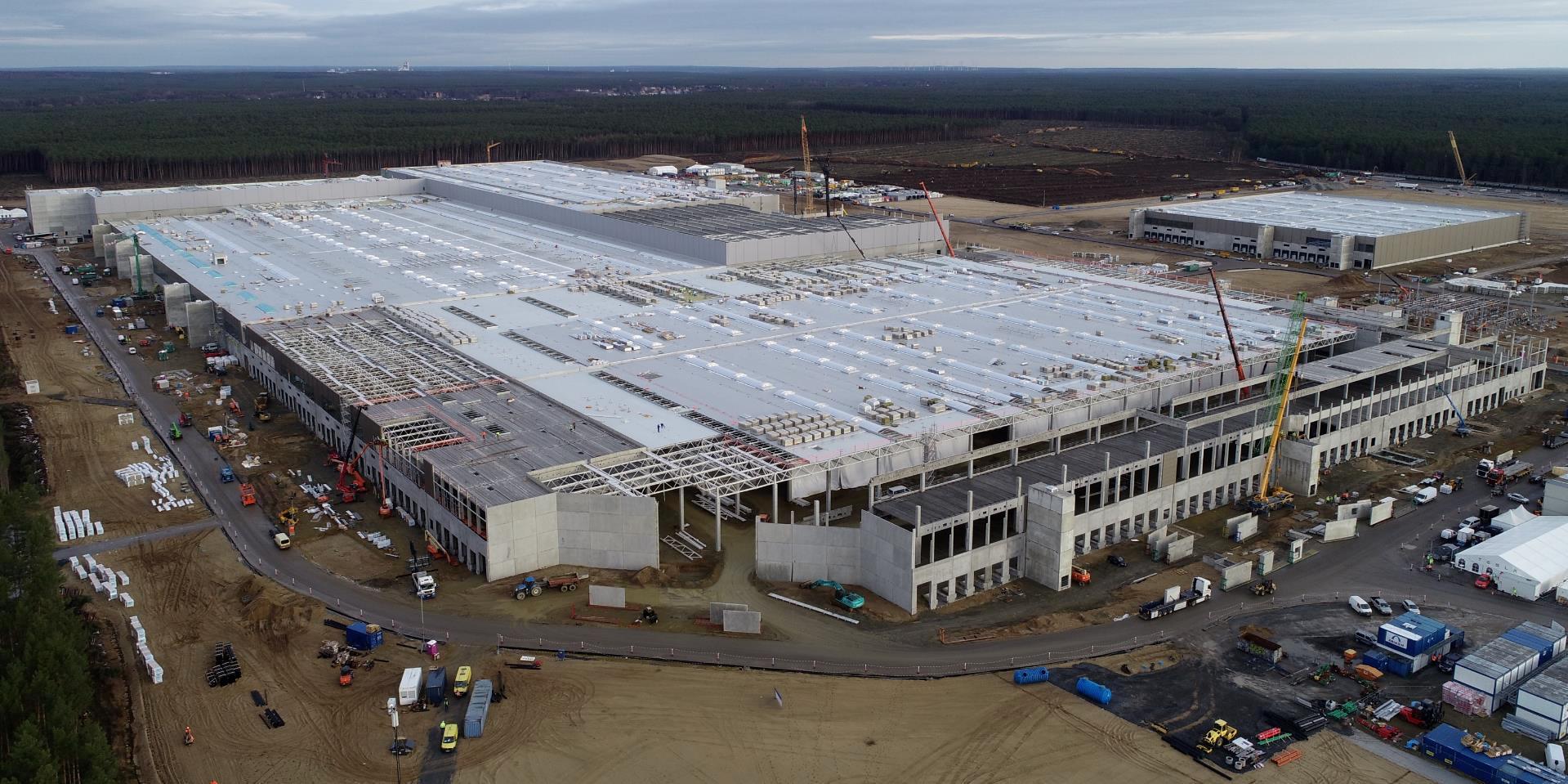
Tesla’s “preferential treatment” in Berlin has been attacked by numerous environmental groups who disagree with the automaker’s current construction project that is going on in the town of Brandenburg. Since the site’s initial groundbreaking and land preparation efforts in early 2020, citizens and “green” groups have come to pledge their distaste for Tesla’s introductory European production plant. However, local government officials are more than willing to come to justify Tesla’s presence in the area, especially as it provides a substantial economic boost to an area that thirsts for steady, well-paying manufacturing jobs. Brandenburg Environmental Minister Axel Vogel is just one of those politicians coming to Tesla’s rescue, justifying the company’s treatment in the area.
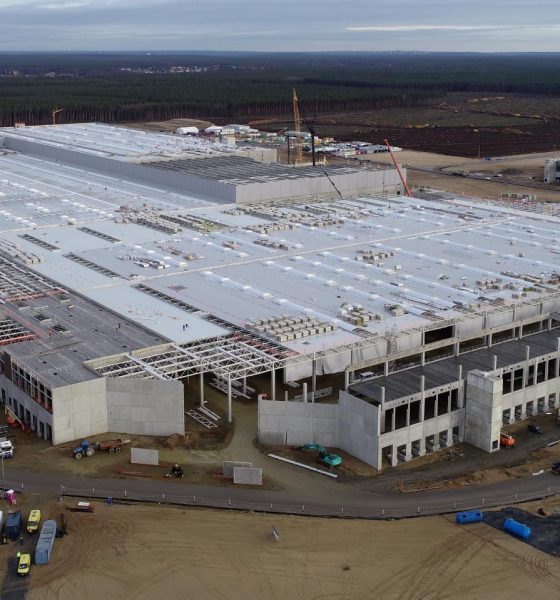
Since the announcement by CEO Elon Musk in late 2019 that provided some context of what would eventually become known as “Giga Berlin,” numerous voices have pushed back against Tesla’s efforts in Germany. Despite this, the company has made reasonable progress in the past 21 months. Tesla has managed to take what was once a regular plot of land covered in low-grade trees used for commercial cardboard production and transform it into one of Earth’s most impressive vehicle production facilities. At least that’s what will be there when the factory becomes operational in several months.
Until then, Tesla will continue building the factory, erecting several portions of the plant that will eventually house the production of the Model Y crossover and Tesla’s recently unveiled 4680 battery cells. The cells, a groundbreaking step in developing Tesla’s EV tech, will provide more range and power to Tesla’s eco-friendly vehicles.
Although Tesla vehicles have saved over 17.9 million tons of CO2 from entering the atmosphere alone, environmental groups are not convinced the company’s factory will provide stable and eco-friendly scenarios based on by-products of vehicle production. In fact, groups who have been identified as NABU and Gruene Liga recently stated that they are not interested in Tesla producing batteries at the plant because of potentially hazardous waste.
Tesla ironically faces pushback at Giga Berlin from environmental groups
The groups told Reuters earlier this month:
“The objection is based on the claim that Tesla has not sufficiently clarified what precautions it will take to prevent highly poisonous gas from escaping from the factory, the objection document showed.”
Now, Brandenburg Environmental Minister Axel Vogel is coming to Tesla’s defense, giving them a justification for their preferential treatment regarding approved documents for certain elements of their factory.
Vogel said (via Maz Online):
“We are convinced that it is right to give Tesla preferential treatment, because the Tesla site has an incredibly positive, Europe-wide impact.”
#GigaBerlin
Brandenburg’s environment minister defends preferential treatment for Tesla.
“We are convinced that it is right to give Tesla preferential treatment, because the Tesla site has an incredibly positive, Europe-wide impact,” says the minister.https://t.co/pecuiVjd7x pic.twitter.com/owZEKH1qQV— @GF4Tesla ?? ?? ?️?️.build #GigaBerlin. (@Gf4Tesla) June 23, 2021
Vogel recognizes the concrete impact that Tesla could have on the region when Giga Berlin begins operation. Not only is the plant going to supply local citizens with jobs that are secure, comfortable, and well paying, but the environmental impacts also align with the strict and ambitious climate goals that Europe and Germany have both set. The European Union has been plotting a ban for ICE vehicles in 2025, according to Euractiv, and Germany has a set target of 2030 for the date it will stop allowing pollution-emitting vehicles to roam the streets.
Environmental groups are concerned with the production of the vehicles, which will result in some pollutants. However, these groups could be protesting any automaker, or basically, any large company in the world as manufacturing does, unfortunately, result in emissions. However, after Tesla cars roll off of production lines, no emissions will leave the vehicle, as the company’s battery-driven powertrains make for the most environmentally friendly form of passenger transportation on Earth.


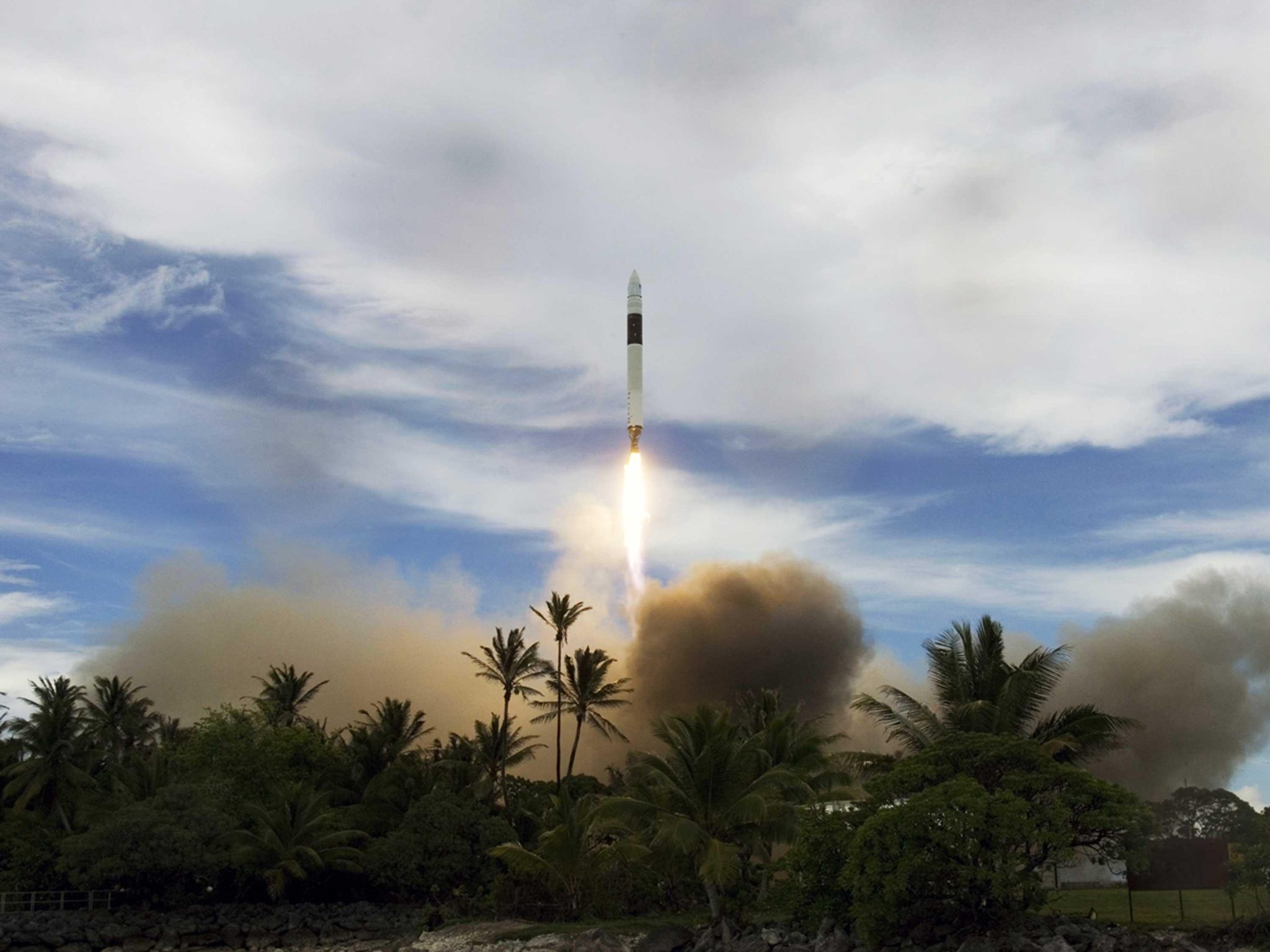
SpaceX (NASDAQ: SPCX) will report its second public earnings call today since its IPO earlier this year, and there are a few things we expect to hear about, as well as Wall Street analysts, who have already outlined their expectations for the call.
Wall Street analysts have a consensus of $12.72 billion in revenue and an earnings per share (EPS) of $0.13. These are broken down into three sectors: Space, Connectivity, and AI/SI, which are perceived in this way:
- Space: $1.41 billion
- Connectivity: $4.84 billion
- AI/SI: $6.47 billion
Other outlets cluster near $12.8 or $12.9 billion in revenue and $0.14 – $0.15 EPS. This implies a roughly 65 percent sequential growth from Q2’s $7.81 billion, driven mostly by AI/SI, with the first post-IPO positive EPS expected.
Here are the three things to watch for on the call:
AI Revenue Ramp and the $100B+ ARR target
AI is truly the swing factor for SpaceX, and analysts expect it to roughly double from Q2’s $2.56 billion and become about half of total revenue. Management previously guided to a $100 billion+ annualized run rate by December, including the Cursor acquisition, which was $60 billion, to close the quarter.
Listen for updates on SpaceX’s compute capacity, especially pertaining to its contracts with Google, Anthropic, and others, revenue per watt, any new deals, and Cursor’s early contribution.
Starlink/Connectivity Metrics and Mobile Expansion
Connectivity remains a main profit engine for SpaceX. Subscriber additions will be something to pay attention to, as Q2 ended at 12 million and previews are looking at 14 million for this quarter. Additionally, ARPU trends, enterprise and government growth, and any commentary on Starlink Mobile will be something to pay attention to, especially following the recent low-band spectrum deal and FCC-related constellation approvals.
Capex Trajectory, Cash Burn/FCF, and Starship/Operational Updates
Q2 capex of roughly $18.4 billion weighed on the stock. Investors will look to scrutinize Q3 spending levels, any guidance on the pace into Q4/2027, free cash flow, backlog, and liquidity. Operational color on Starship (Flight 14 milestones and Flight 15 timing/reusability progress), Falcon cadence, and government/NASA contracts are also in focus.
Of course, there will also be some speculation on the potential Tesla-SpaceX merger, but there was nothing mentioned in the company’s proxy it sent earlier this week.
SpaceX will report earnings after market close today and will stream the call on X.
Watch live as SpaceX discusses our Q3 2026 earnings at 3:30pm CT today → https://t.co/Qrb0qeVG15
— SpaceX (@SpaceX) October 20, 2026
Interested in ordering a Tesla? Use my referral code for three free months of Full Self-Driving (Supervised) here
News
SpaceX just launched its secret Starfall saucer again
SpaceX launched its Starfall capsule again on Bandwagon-5, this time listed openly beside rideshare customers.

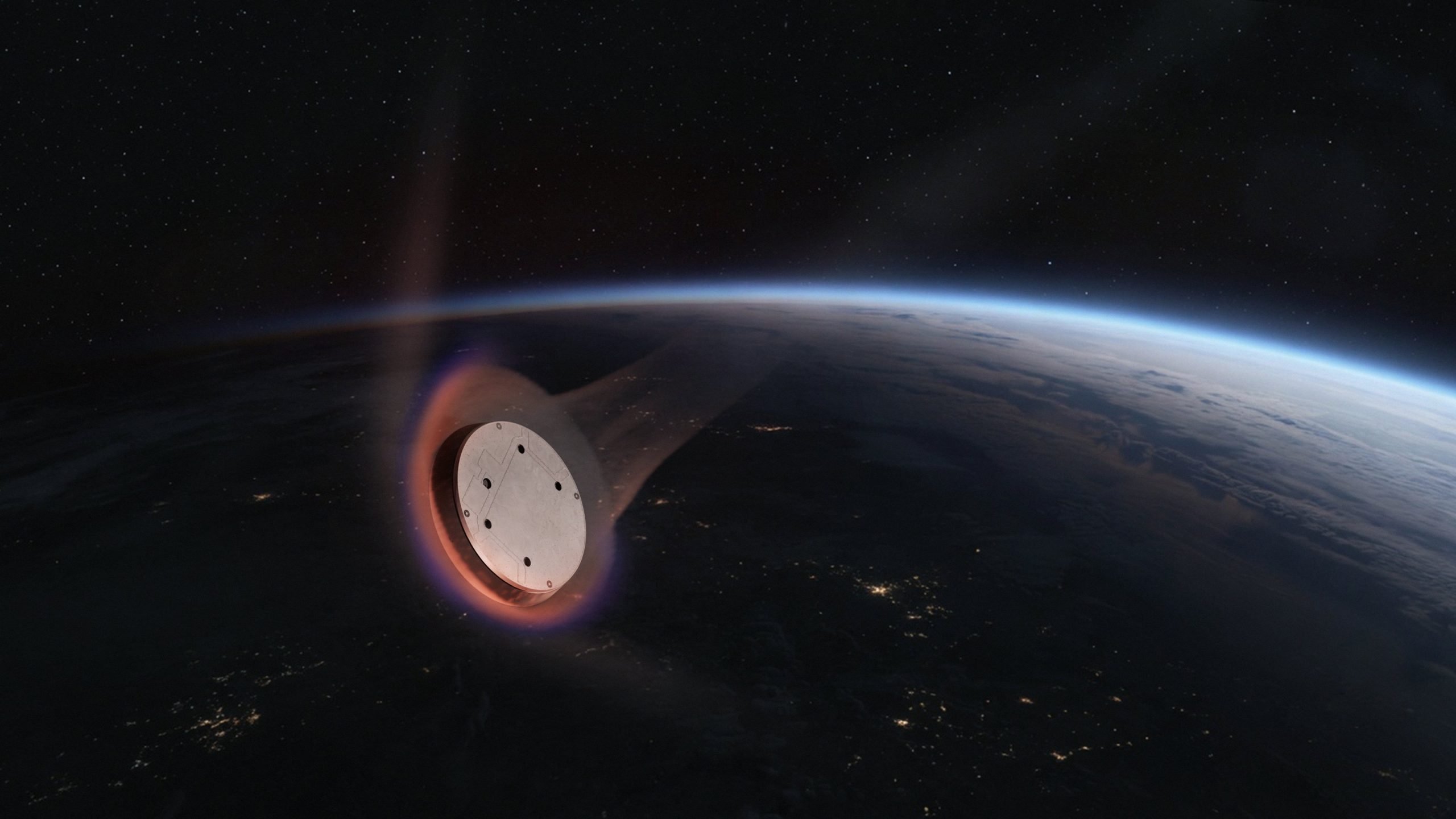
SpaceX launched its Starfall reentry capsule for the second time on Tuesday morning, flying it as the payload of the Bandwagon-5 rideshare mission. Falcon 9 lifted off from Space Launch Complex 40 in Florida at 7:04 a.m. ET with 32 payloads, and the first stage booster, on its 19th flight, landed on the droneship A Shortfall of Gravitas about nine minutes later.
Starfall was scheduled to separate last, 2 hours and 48 minutes after liftoff. The final customer satellite on SpaceX’s mission timeline comes off the upper stage about an hour and nine minutes in, which left a long gap before the capsule was due to be released alone. SpaceX later posted that the payload deployment sequence is complete. At liftoff, the company said Starfall “enables affordable, routine access to a microgravity environment, providing unique opportunities for on-orbit manufacturing, scientific research, and testing.”
Starfall enables affordable, routine access to a microgravity environment, providing unique opportunities for on-orbit manufacturing, scientific research, and testing https://t.co/y8kJg3QDor
— SpaceX (@SpaceX) October 20, 2026
As Teslarati reported before the first Starfall flight, SpaceX made no public announcement about the vehicle then, and nearly everything known came from FAA and FCC filings. This time Starfall is an item name on the official mission page, listed beside paying rideshare customers. SpaceX has still not said what, if anything, is aboard this Starfall, Spaceflight Now noted.
The FAA’s environmental assessment from May describes a disk about 10.2 feet wide and 2.5 feet tall that weighs roughly 4,600 pounds and can bring 2,200 pounds of payload back to Earth.
Interestingly, the same rocket also carries a competitor’s hardware. Varda Space Industries launched its W-Series 7 capsule on Bandwagon-5, a spacecraft about three times smaller than Starfall that will test whether microgravity can improve the solubility of a cancer drug called Protac. It is Varda’s ninth reentry capsule, and W-8 and W-9 launched earlier this month on Transporter-18. SpaceX has been Varda’s launch provider since the company’s first Falcon 9 rideshare contract in 2021.
SpaceX has not published where or how this Starfall will come down. The preview we ran in June described a recovery from the Pacific Ocean, and the company has not said whether this flight follows the same plan. The launch also arrives hours before SpaceX posts its third quarter results after the market closes, a report we previewed earlier this week.
Elon Musk
The Boring Company’s latest Tesla tunnel truck mod “fits like a glove”
The Boring Company has modified a Tesla powered tunnel truck to carry freight containers underground.
The Boring Company has found a second job for the Tesla hardware it already runs underground. In a post on X, Elon Musk’s tunneling company showed its latest Prufrock Liner Truck modified to carry a standard 20 foot shipping container. “Using TBC tunnels to transport freight,” the company wrote. “The latest Prufrock Liner Truck (using Tesla Model 3 batteries and drive units) has been modified to carry a standard 20′ shipping container. Fits like a glove!”
The photo shows a red container sitting on a long, low white chassis parked outside, with drive hardware visible at one end. The Boring Company did not say where or when freight hauling would start, which customers it has in mind, or how many trucks it is converting.
Using TBC tunnels to transport freight.
The latest Prufrock Liner Truck (using Tesla Model 3 batteries and drive units) has been modified to carry a standard 20’ shipping container.
Fits like a glove! https://t.co/VV0phWK4fc
— The Boring Company (@boringcompany) October 19, 2026
Until now, the liner trucks have hauled concrete. Teslarati reported in August on Liner Truck 3, which uses Model 3 battery packs and drive units to move more than 22,000 pounds of precast tunnel segments to the boring machine. It has 28 miles of range, tops out at 12 mph, and is piloted remotely from the company’s operations center in Texas. The freight version appears to be the same platform with a different bed, and The Boring Company has not said whether it will also be remotely piloted.
Freight has been on the company’s menu for years. When TBC updated its product lineup in 2021, its freight tunnel was described as sized to fit a standard shipping container, “barely.” The company later used the idea at Tesla’s own factory, where Prufrock 3 dug a tunnel to Giga Texas that now moves finished Cybertrucks away from the production line.
The Boring Company closed a $3 billion Series D in September at a $23 billion valuation, and Teslarati has covered how that money is tied to a UAE tunneling push and a faster Nashville build. In Nashville, Prufrock MB1 and MB2 are mining at the same time, and a third machine is expected to launch in late October. Each machine needs a steady supply of liner trucks, so any design that works for segments and containers alike gives the company more use out of the same Tesla parts.
The Vegas Loop remains the only Boring Company system open to the public, and it moves passengers in Tesla vehicles. A freight service would be a separate product, and the post gave no indication that one is close to launch. For now, it is a truck, a container and a short caption saying they fit together.

SpaceX reports its second earnings today: here’s what to expect

SpaceX just launched its secret Starfall saucer again

The Boring Company’s latest Tesla tunnel truck mod “fits like a glove”

SpaceX reveals how its 1 Million AI satellite network will work and prevent space collisions

Tesla Roadster: Three configs, one can fly, 0-60 in 0.8 seconds


