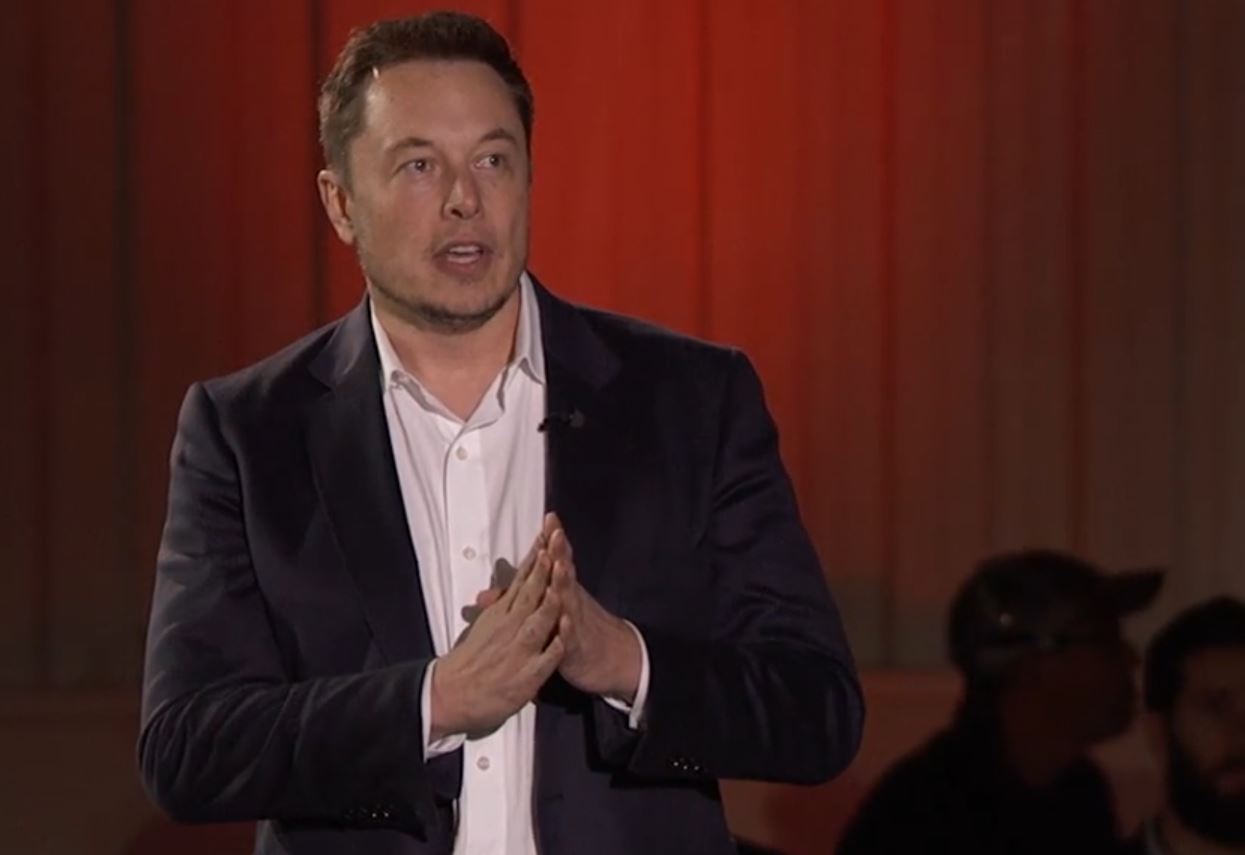

Elon Musk is taking a stand in favor of making child care more accessible. Earlier today he tweeted that he’s planning to increase childcare benefits in his companies. He also said that the Musk Foundation will help families directly. In another tweet, he replied to Sara Mauskopf, the CEO and co-founder of Winnie.
Winnie focuses on helping parents to find local daycares and preschools while also providing details on these schools such as photos, detailed descriptions of the programs, and tuition information.
Agreed, this needs to be addressed
— Elon Musk (@elonmusk) July 8, 2022
Sara Mauskopf’s thread started with an article by CNN that covered the surging child care costs that are forcing providers to raise their prices. As she continued her thread, Sara Mauskopf pointed out that there is record low labor force participation among women with young children who don’t have a college degree. She continued.
“So this is further exacerbating the problem because many of these women who would be taking jobs in the care economy are not participating in the labor market – hence why hiring is such a challenge right now for child care providers.”
She added a quote from a New York Times article, that highlighted the issue of a shortage of childcare and elder services that are preventing workers, especially women, from being able to work.
“For women, that’s the double whammy — most of those workers are women, and most of the people who need those supports to enter the workforce themselves are women.”
4/ And in 10 months we’re going to start seeing the impact of abortion bans on our strained child care system. Remember that we have no federal paid leave so as soon as these babies are born, we’ll have 📈 parents who need child care they can’t afford https://t.co/xSiQmUAhge
— Sara Mauskopf (@sm) July 8, 2022
She added that within the next ten months, we will start seeing the impact of abortion bans on the strained child care system.
“Remember that we have no federal paid leave so as soon as these babies are born, we’ll have  parents who need child care they can’t afford.”
She then added that Elon Musk spoke about population collapse.
“I believe that if we want to encourage big families, we have to make child care more accessible. Elon, I’d love to talk more about how we make this a reality.”
To this, Elon Musk replied, “Agreed, this needs to be addressed.”
Addressing The Elephant Head On
This is what I've been saying for a while now: raising children for average people is very expensive. Our youngest (child #4 btw) is entering High School now. From oldest to youngest we've been paying for raising them from 1994 to at least 2026. 3+ decades is a lot of expenses
— DrKnowItAll (@DrKnowItAll16) July 8, 2022
One common criticism of Elon Musk’s stance on population is that people can’t afford to have kids. I’ve seen it, heard it, and I also agree with that–somewhat. I have spoken about my own thoughts and experience on this matter already. Several of my friends who do have children have highlighted this problem. Single parents have it more intensely than those who have a partner. This is why childcare services are so important.
Vox shared an interesting article as to why many in America don’t want to have kids in 2022. The infant formula shortage, the high cost of providing nutritious food, and taking care of the child are challenging problems. Especially for single parents with little or no support system. The US doesn’t have paid parental leave and the article noted that child care costs more than college in many states–if the parent can find a provider.
If we want women to work, we have to have a support system in place for their children. The article listed other problems such as school shootings, and the U.S. being ranked worst for maternal mortality in a group of 10 similarly wealthy countries. You can read the full article in Vox here.
Elon Musk Using His Influence To Address Some Of These Problems
Seeing Elon Musk use his influence on Twitter to address some of these problems today was refreshing. He is definitely worried about the population decline. And he advocates for having more children. It’s good to see him want to take on the problems that many Americans, especially single parents, have.
This is important and I think some good will come from this.



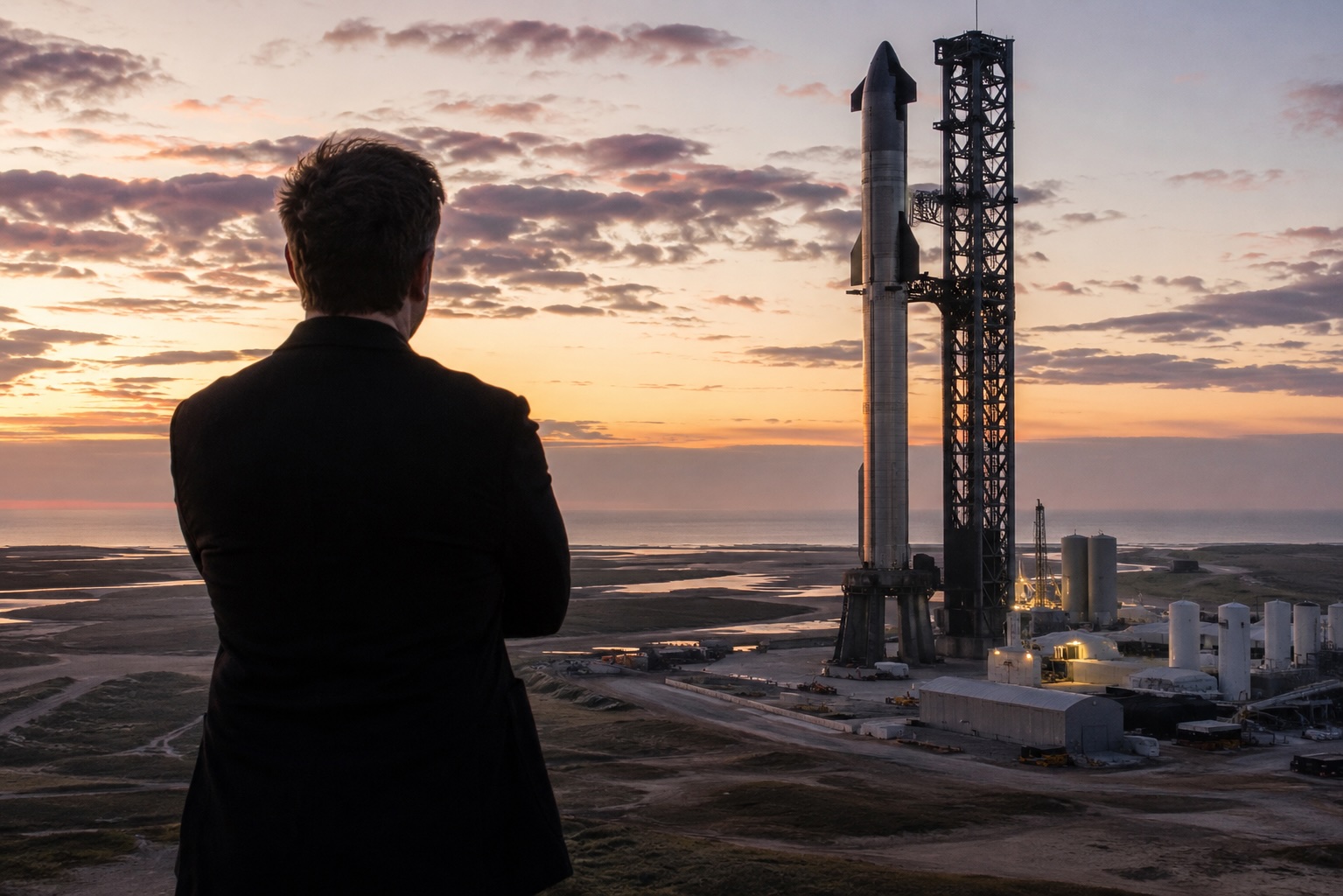
Elon Musk said he is planning to give “every one of his SpaceX shares to every kid in America” in 2027, stating that “this will be the first of many.”
SpaceX went public earlier this year, and its stock price has been relatively stable since leveling off shortly after its IPO. Based on its current price, it’s a gift of just over $10 billion to children across the United States.
It appears to be closely related to President Donald Trump’s bank accounts for children, which were set up earlier this year as Trump Accounts.
Just hours earlier, Anthropic had announced the establishment of its Anthropic Public Benefit Fund, “a new wholly-owned entity dedicated entirely to public benefit.” Musk responded by stating he recommended “giving the shares directly to the public,” and that he would be doing it that way.
Just a little bit later, Musk said children across the U.S. would be getting a share from him:
Next year, I will give one of my SpaceX shares to every kid in America.
This will be the first of many.
— Elon Musk (@elonmusk) October 19, 2026
There are roughly 70 million children, meaning someone under the age of 18, in the United States, according to the Federal Interagency Forum on Child and Family Statistics. Musk’s ownership of SpaceX stock shows he has around 849 million Class A shares of SpaceX stock, according to filings with the SEC.
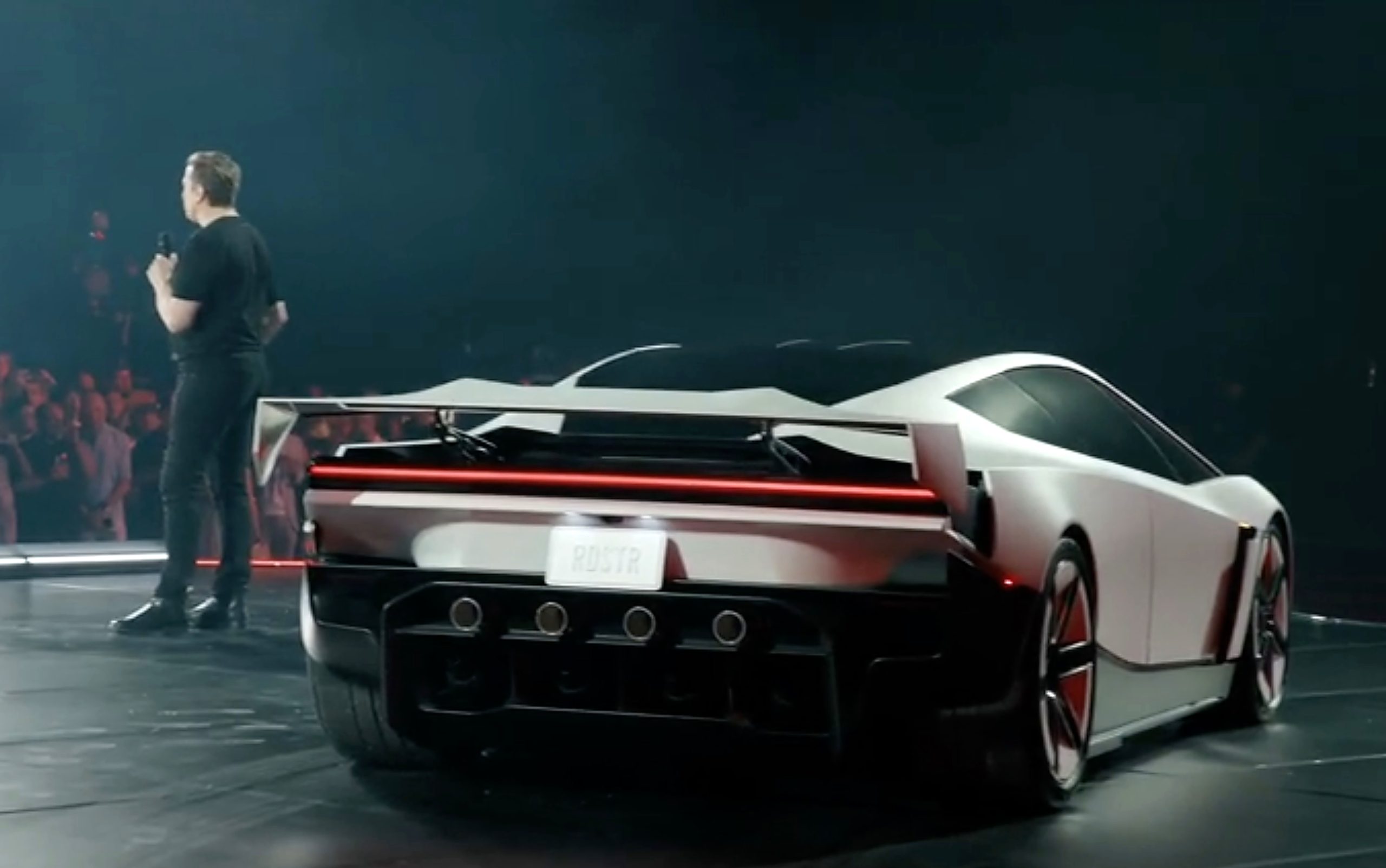
Tesla CEO Elon Musk took to his social media platform X on Sunday to remind everyone that the Roadster’s true meaning is not about company growth or adding dollars to shareholders’ pockets. Sometimes, you just do things because you can.
Following the Roadster’s epic unveiling event last Thursday, skeptics and critics of the company or the project itself came out to say that the vehicle is a pointless project because it is not geared toward growing the company, delivering supreme margins for profitability, nor does it contribute to the big picture of Artificial/Super Intelligence.
But that’s just the thing: Roadster is not meant to be some shareholder dream; it’s meant to be a vehicle that people buy just because it is something awesome, unique, and the first of its kind.
Tesla Roadster: Three configs, one can fly, 0-60 in 0.8 seconds
Musk had to remind those who are skeptical about the Roadster’s importance to the company mission that while it is not a major contributor to Tesla’s long-term goals, it is something that is being built just because it can be:
“Optimus and Cybercab will be the vast majority of Tesla’s value. The only things that will scale to incredible size (K2 and beyond) economically are super intelligence, robots, solar power, and mass to space. And, of course, if you have the first two, the rest will follow. But Roadster is super cool, so we’re doing it anyway.”
Musk has said on many occasions that Optimus would be the project that would make up the vast majority of Tesla’s value in the coming years.
Robotics will be a major focus of Tesla over the coming years, especially as Musk believes Optimus will enable work to be optional for humans and will enable what he calls “High Universal Income.”
Optimus and Cybercab will be the vast majority of Tesla’s value.
The only things that will scale to incredible size (K2 and beyond) economically are super intelligence, robots, solar power and mass to space.
And, of course, if you have the first two, the rest will follow.
But Roadster is super cool, so we’re doing it anyway.
— Elon Musk (@elonmusk) October 18, 2026
Cybercab will be a passive income opportunity for owners, Musk and Tesla have said for a very long time, as a fleet of self-driving vehicles will operate within a ride-hailing Robotaxi service that won’t require a human driver to be present.
Tesla investors are more than enthusiastic about the company’s future projects, at least from a general consensus perspective. However, it is important to note that the Roadster is a fun and cool project that pushes the boundaries of what people thought was possible for an automobile.
What we saw last week was the first true example of a flying car, and despite the backlash about how it might not contribute to Tesla’s grand ambitions, it’s okay to have fun sometimes, too.
Investor's Corner
SpaceX’s biggest earnings test yet lands Tuesday, and Tesla shareholders should be watching
SpaceX reports earnings Tuesday as Wall Street watches AI spending, Starlink growth and Tesla merger

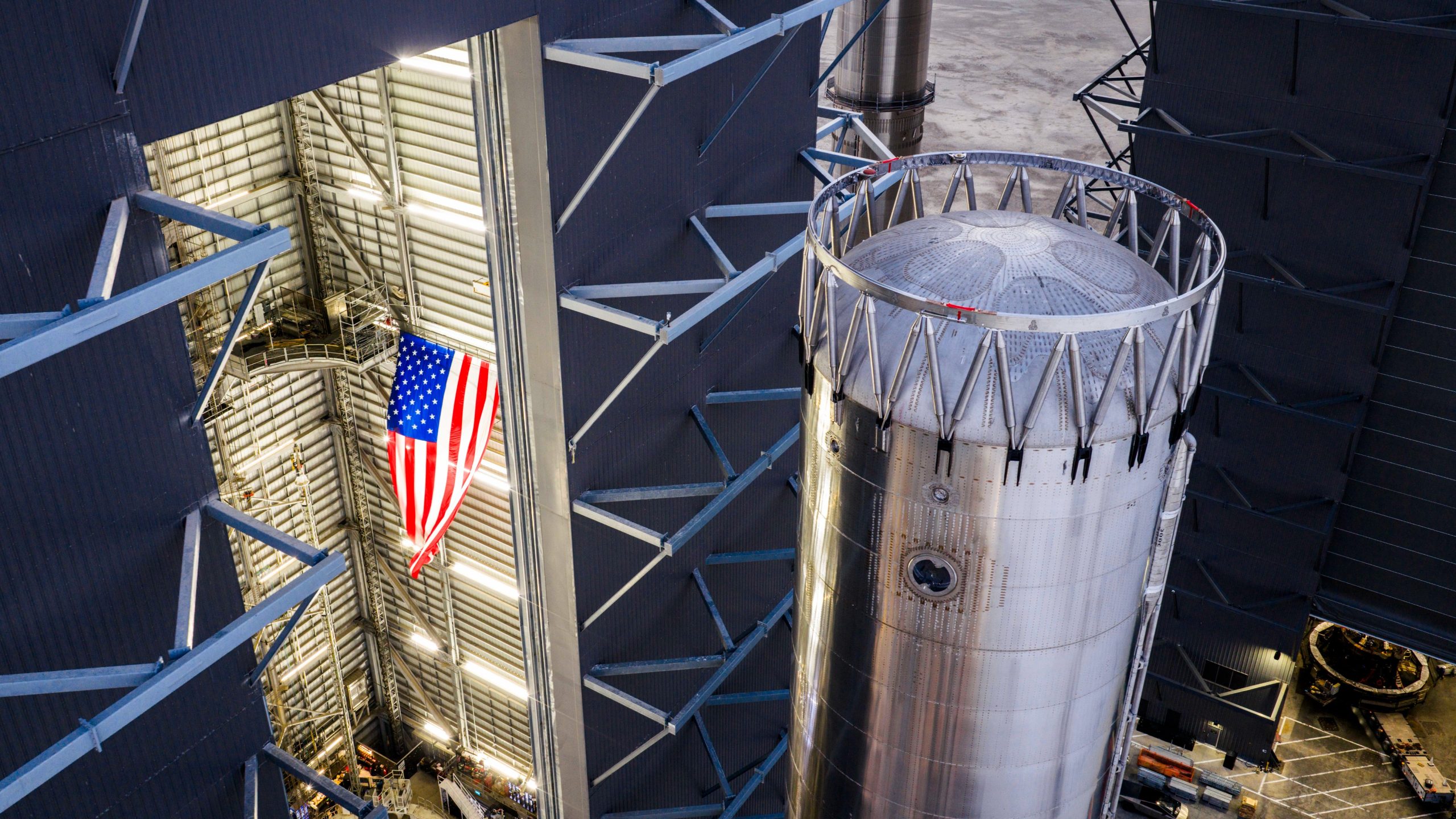
SpaceX reports third quarter results after the market closes Tuesday, with a webcast at 4:30 p.m. ET streamed on X, and Tesla follows a day later. Bloomberg consensus, cited by Pepperstone, calls for revenue of $12.89 billion, adjusted EBITDA of $6.62 billion and adjusted EPS near $0.15. That would be about 65% growth from the second quarter and SpaceX’s first profitable quarter since its IPO. Analysts expect roughly $6.4 billion from AI and $4.9 billion from Starlink, which is projected to reach 14.3 million consumer subscribers. Capital spending is forecast at $19.6 billion, leaving free cash flow near negative $11.6 billion.
The numbers matter because SpaceX has spent months trying to win over a skeptical market. It priced its record IPO at $135, spiked to $225.64, then sank near $105 in early August. Friday’s close of $146.03 sits about 28% below the June high. The Q2 report beat on revenue at $7.8 billion and put Starlink at 12 million subscribers, but $18.4 billion of capex hurt the stock. Since then SpaceX reached orbit on Starship Flight 14 with 26 Starlink V3 satellites, agreed to buy 800 MHz spectrum for about $8 billion as part of its Starlink Mobile push, and signed a fourth compute hosting deal in four months worth roughly $13 billion a year from December. Management is targeting more than 2 gigawatts of compute by year end and a $100 billion annualized revenue run rate. Evercore ISI, which raised its target to $275, said the quarter may be judged more on those targets than the reported figures
All of this sits under the Tesla merger question. Barclays analyst Dan Levy expects an all stock deal in which SpaceX buys Tesla at a premium, using reference values of $2.1 trillion and $1.5 trillion, and said an announcement would need to come by late October or early November to be voted on at Tesla’s December 6 annual meeting. Barclays estimates Musk would hold about 37% of the combined company and 56% of the votes. Musk said in July that combining companies cannot be discussed on an earnings call, but an investor question asking when SpaceX will merge with Tesla is sitting on SpaceX’s Q&A platform, and Teslarati has tracked how the Roadster demo revived the talk.
If a deal happens, Tuesday’s result would effectively set the price Tesla holders would receive. Their shares would convert into SpaceX stock, along with exposure to a company with a heavy investment on AI, while Tesla itself expects 2026 capex above $25 billion. A strong quarter and calmer spending would make that exchange easier to sell. Another round of heavy capex and a falling stock would make it harder.

Elon Musk will give ‘every kid in America’ a SpaceX share in 2027

Tesla CEO Elon Musk reminds everyone about Roadster’s true meaning

SpaceX’s biggest earnings test yet lands Tuesday, and Tesla shareholders should be watching

SpaceX reveals how its 1 Million AI satellite network will work and prevent space collisions
Tesla Roadster: Three configs, one can fly, 0-60 in 0.8 seconds


