News
Rivian’s Amazon EV delivery van will drop packages in 100 cities by end of 2022

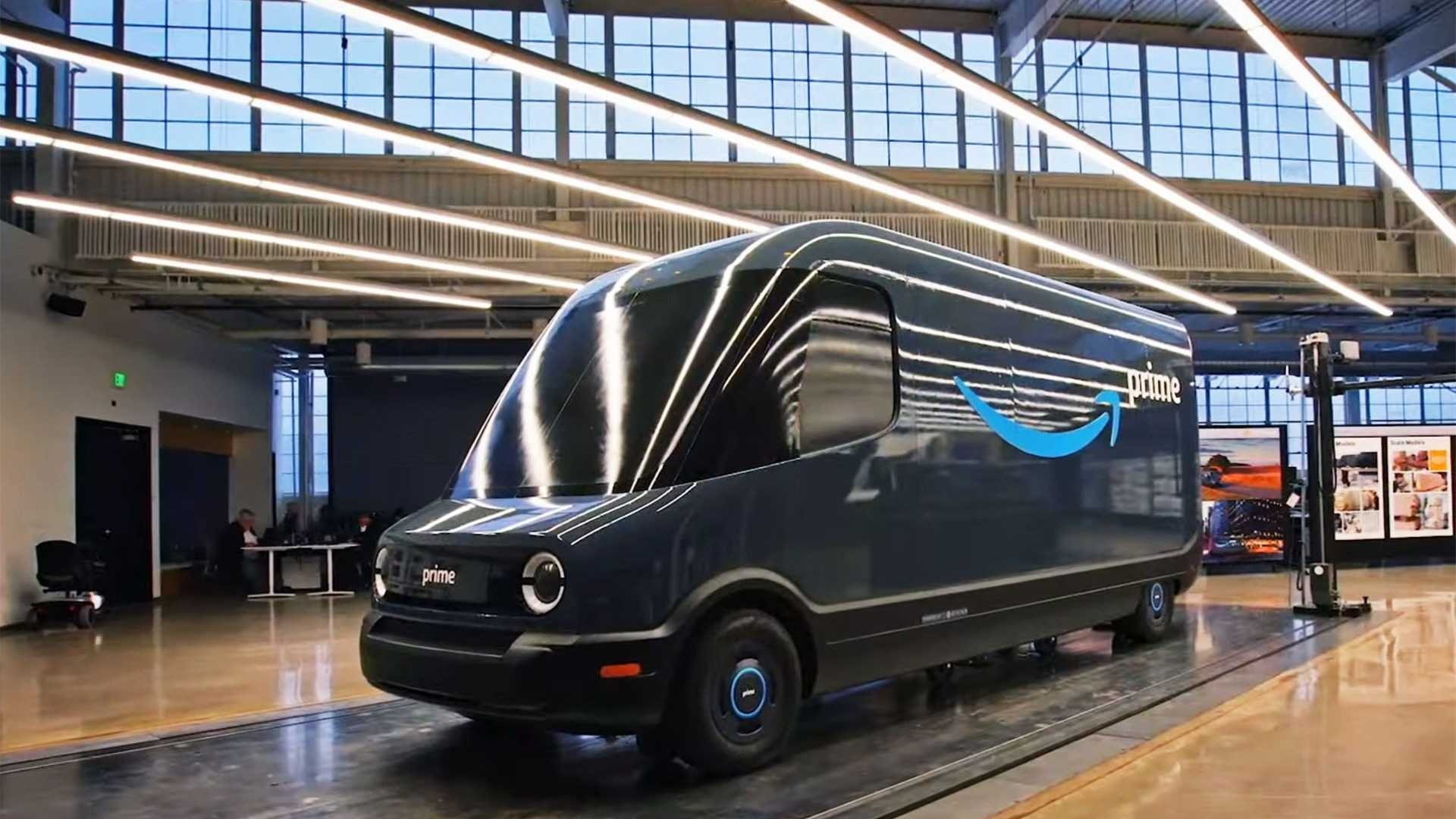
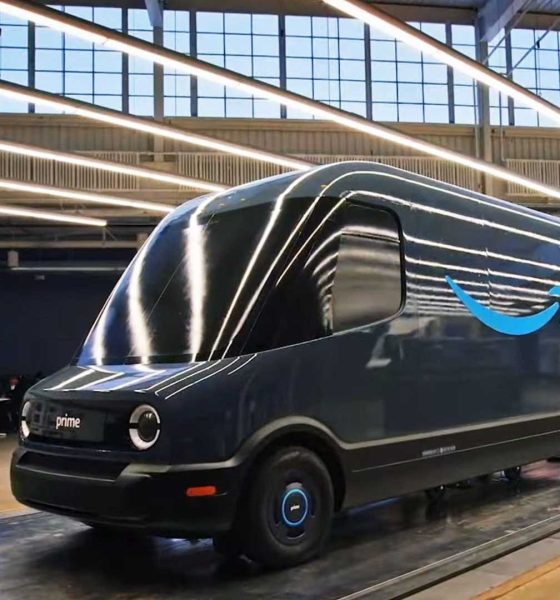
Amazon announced this morning that its Rivian Electric Delivery Vans (EDVs) will make deliveries in over 100 cities across the United States by the end of the year. Rivian plans to have EDVs operational in 100,000 U.S. cities by 2030.
Amazon and Rivian have collaborated on sustainable electric delivery vehicles since 2019, with pilot deliveries occurring over the past year. The pilot program accumulated over 90,000 miles of real-world testing and resulted in 430,000 package deliveries.
Rivian’s electric Amazon Delivery Van starts deliveries in San Francisco as testing continues
Finally, deliveries in production models of the Rivian EDV are set to expand to over 100 cities in the U.S. by the end of the year, including Baltimore, Chicago, Dallas, Kansas City, Nashville, Phoenix, San Diego, Seattle, and St. Louis, among other cities,” the e-commerce giant said. “This rollout is just the beginning of what is expected to be thousands of Amazon’s custom electric delivery vehicles in more than 100 cities by the end of this year—and 100,000 across the U.S. by 2030.”
Amazon ordered 100,000 Rivian EDVs in its initial order and has stood behind the EV startup in alignment with its Climate Pledge – a commitment to reach net-zero carbon across our operations by 2040. The Rivian vans, along with more sustainable packaging, helps Amazon decarbonize its last-mile logistics.
“Fighting the effects of climate change requires constant innovation and action, and Amazon is partnering with companies who share our passion for inventing new ways to minimize our impact on the environment. Rivian has been an excellent partner in that mission, and we’re excited to see our first custom electric delivery vehicles on the road,” Andy Jassy, CEO of Amazon, said. “Today marks a significant milestone in our Climate Pledge commitment. Rivian was one of the first companies Amazon invested in through the Climate Pledge Fund, and we’re just getting started on our journey to have 100,000 of Rivian’s vehicles on the road by 2030. And, in addition to being sustainable, these new vehicles are also great for drivers—they were designed with driver input and feedback along the way, and they’re among the safest and most comfortable delivery vehicles on the road today.”
Rivian builds its vehicles in Normal, Illinois. Along with the EDV, it builds the R1T, an all-electric truck, and R1S, an all-electric SUV.
“Today represents an important step, not just for Amazon and Rivian as partners, but also for transportation and the environment,” RJ Scaringe said, CEO of Rivian. “In 2019, Rivian and Amazon committed to fast-tracking a new type of delivery vehicle that would result in a significant reduction of carbon emissions. Thanks to our teams’ dedication, hard work and collaboration, and a shared commitment to make the world a better place for our kids’ kids, that vision is now being realized. To say this is an exciting moment is an understatement—we’re thrilled to see this partnership has kickstarted decarbonization projects across the logistics delivery industry.”
The Rivian EDV is also set to transition to an LFP battery pack as it fits commercial applications well and can be built at a cheaper cost. Along with that, our standard battery pack is leveraging LFP and LFP chemistry, and that chemistry not only allows us to offer that pack at a lower cost, but it really fits commercial applications well. And it’s first going to be launched in the commercial vehicle platform later this year, and then will make its way into our consumer vehicles by late 2023,” Scaringe said during the Q4 2021 Earnings Call.
Rivian hits EV Startup road bumps
Rivian has been a subject of normal EV startup road bumps in recent memory, becoming one of many companies to cut its employee headcount. Additionally, the company has struggled with margins and profitability early, which is expected. However, the automaker adjusted its 2022 production guidance earlier this year from 40,000 units to just 25,000. Rivian reaffirmed its commitment to this goal earlier in July.
The company’s financial situation is currently similar to what Tesla faced early in its production phases. CEO Elon Musk recently advised the company to cut costs in any way possible or it could face potential closure.
“That affordability threshold is very important,” Musk said in June. “It must both be a good value for money and be affordable in order to achieve good unit volumes. And where car companies can get, kind of, painted into a corner of doom is: If the cost of a car is so high that they have to raise the price of the car to the point where the price of the car is…and Rivian, I think, has this problem, you know, they’re going to need to fix it, or they’re in deep trouble…they raise the price to the point where only a very small number of people can afford the car, no matter how desirable it is. Then, at that point, if you cannot achieve a unit volume that covers your fixed costs, you’re screwed.”
I’d love to hear from you! If you have any comments, concerns, or questions, please email me at joey@teslarati.com. You can also reach me on Twitter @KlenderJoey, or if you have news tips, you can email us at tips@teslarati.com.


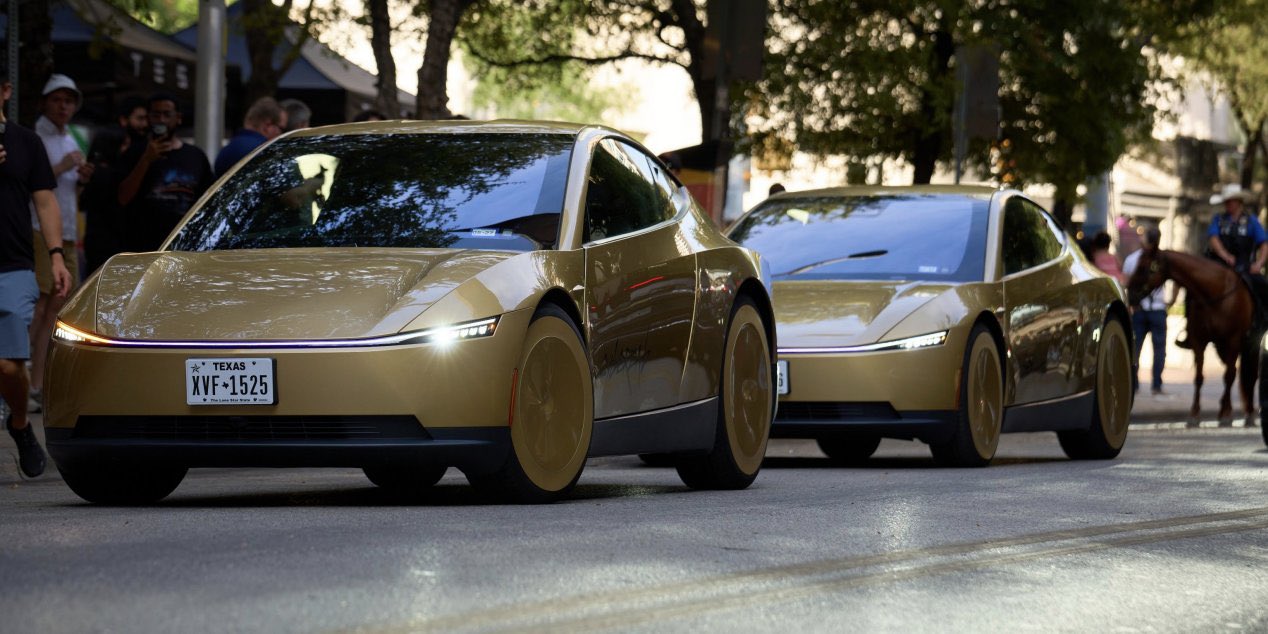
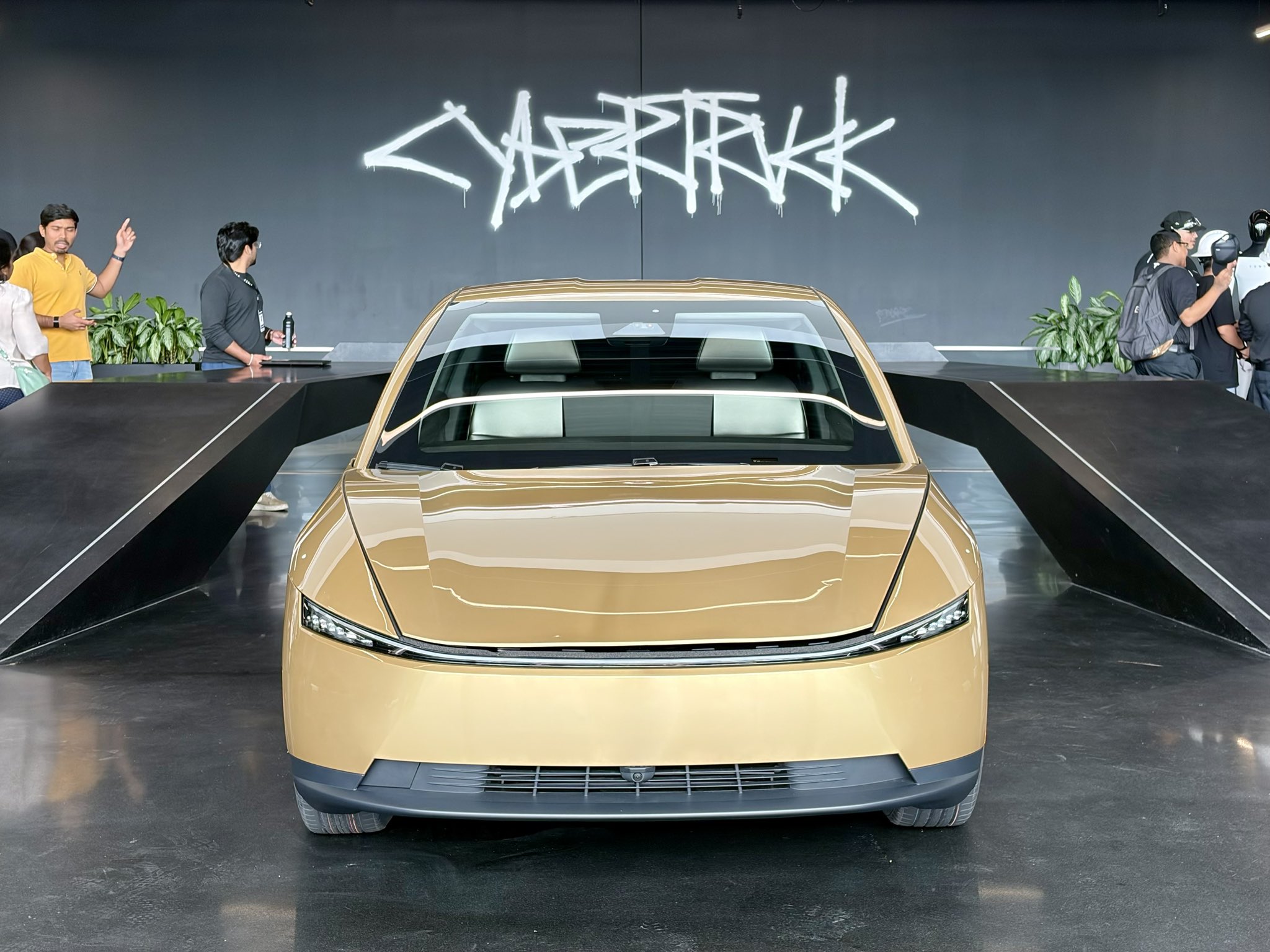
Tesla Cybercab units finally got a definitive date for when they will be able to be purchased by consumers, ending speculation regarding whether the fully autonomous vehicle would be available in the near term.
During Tesla’s third-quarter 2026 earnings call on October 21, Vice President of Engineering Lars Moravy said the company is aiming to begin delivering its purpose-built Cybercab robotaxi to customers before year-end.
🚨 In short, Cybercabs are slated to go to customers by end of the year. All units are going into Robotaxi fleet currently, per @larsmoravy
Cybercab will be “transport-as-a-service,” but vast majority of Cybercab will be “Tesla-owned,” @elonmusk says https://t.co/R8Qu8QWdmp
— TESLARATI (@Teslarati) October 21, 2026
“We’re trying to get Cybercabs to customers by the end of this year, 2026,” Moravy said. He added that production is underway on the line at Gigafactory Texas, but “all of those are currently going to our own internal Robotaxi fleet.”
Moravy explained that as operations scale, Tesla will “mainly deliver fully designed autonomous vehicles to our customers,” with the Cybercab as the first such vehicle. Initial customer deliveries will start small while the company gains experience with delivery logistics, ownership models, fleet management, and operating autonomous vehicles outside its direct control.
CEO Elon Musk reinforced the limited nature of private sales, describing the Cybercab primarily as a “transport-as-a-service” offering rather than a personal ownership vehicle like the Model 3, Model Y, or upcoming Roadster. “The vast majority of the Cybercab stuff will be Tesla-owned and transport-as-a-service,” Musk said.
The Cybercab is a two-seater vehicle developed by Tesla without a steering wheel or pedals. It relies completely on Tesla’s Full Self-Driving suite and has been in production since February. Early units have been put in Tesla’s Robotaxi service as of early September, when the company launched rides to the public. Tesla previously indicated it would aim to sell Cybercabs for about $30,000.
Unsupervised Full Self-Driving is expected to ship to consumer cars during Q2 2027, Ashok Elluswamy, Tesla’s Head of AI, indicated during the call. Early buyers or fleet operators may receive vehicles whose autonomous operation remains geographically restricted due to lagging regulatory agencies. There are some hurdles that remain ahead of Cybercab deliveries.
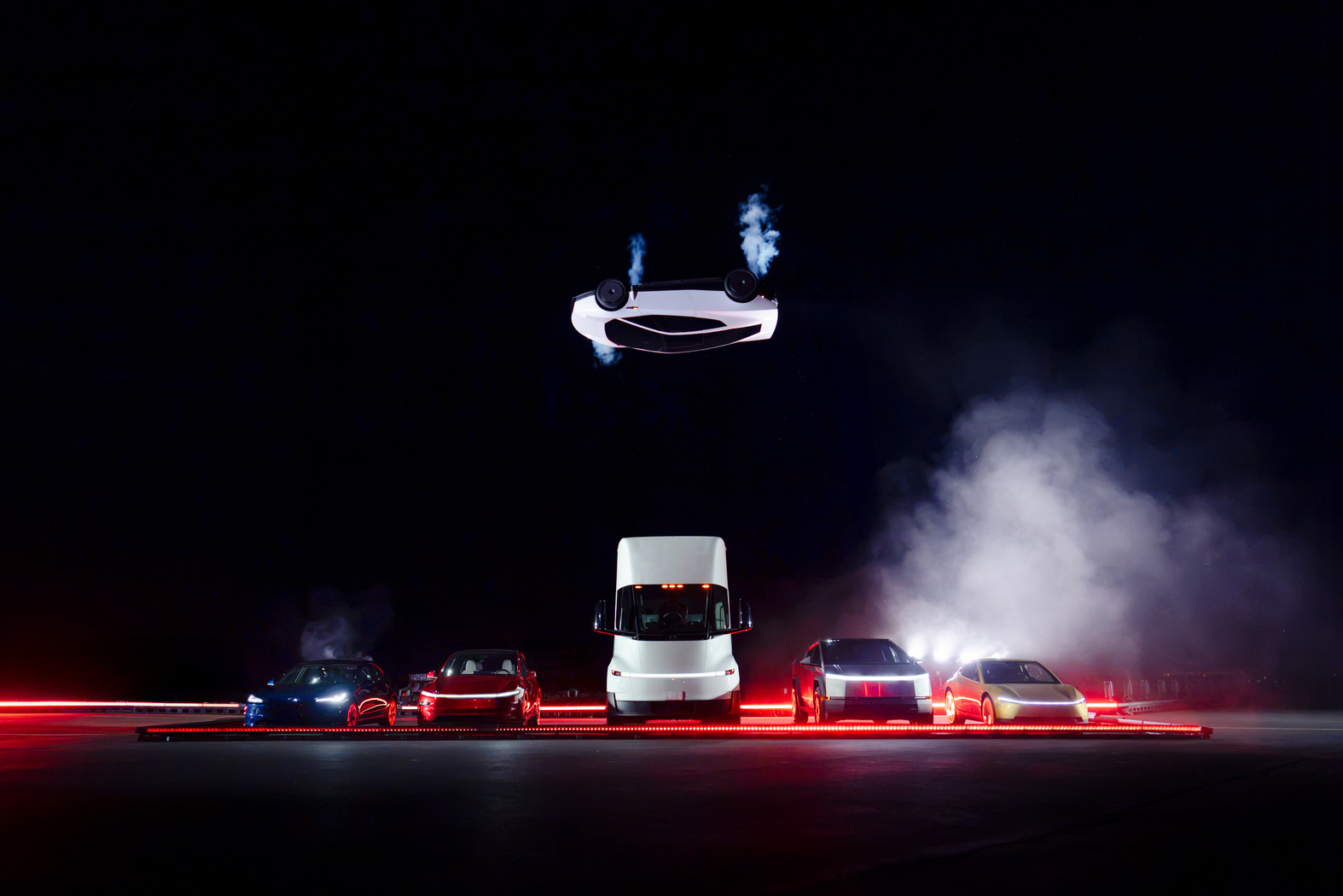
Tesla (NASDAQ: TSLA) reported its earnings for the third quarter of 2026, marking a reasonable performance on the various financial metrics. Tesla still plans to hold a call that will field investor questions at 5:30 p.m. ET, 4:30 p.m. CT.
Here’s where Earnings came in:
- Total Revenues: $28.046 reported vs. $28.34B expected
- Non-GAAP EPS: $0.48 reported vs. $0.45 expected
- Operating Margin: 2.6 % reported vs. 2.5% expected
- Operating Income: $718M reported vs. $721M expected
- Free Cash Flow: $1.531B reported vs. ~-$4.51B expected
Tesla $TSLA Earnings Results:
Revenues: $28.046B
Non-GAAP EPS: $0.48
Operating Margin: 2.6%
Operating Income: $718M
FCF: $1.531B— TESLARATI (@Teslarati) October 21, 2026
Major Takeaways
Full Self-Driving (Supervised)
“FSD (Supervised)⁴ attach rate continued to grow, reaching over 75% of new vehicle deliveries in North America – our most mature market – a nearly twenty percentage point sequential increase. We believe that FSD is driving demand in markets where it is available, and we continue to work with regulators to get it approved in other markets.”
Tesla Semi
“We began volume production of Tesla Semi, our Class 8 heavy-duty truck. The top variant can go 500 miles at full 82,000 lbs gross combination weight while achieving an efficiency of 1.7 kWh/mile. That efficiency allows the Tesla Semi to use a third of the energy used by a comparable diesel truck to haul the same payload. In a transportation market where energy is one of the largest components of total cost per mile, this will provide a meaningful advantage to Tesla Semi operators.”
SI Compute
“We plan to reach 400 MW of SI training compute by the end of the year, supporting the development of both vehicle and humanoid robot autonomy software. Additionally, we continued construction for the Austin Fab, where we plan to start commissioning equipment in 2027.”
Robotaxi
“We began deployment of Cybercab into our Robotaxi fleet in Austin. We reached nearly two million cumulative unsupervised miles for our Robotaxi service as of the end of the quarter. Operating hours in Austin are now 6am to midnight, and we expect to reduce wait times via increased fleet supply and improvement of Robotaxi orchestration algorithms. Grok is available in Cybercab with access to Grok Bot and Connectors, which allows users to manage their inbox, calendars, files, chats and tasks – all hands free via voice command – making Cybercab a mode of transport, a productivity space and, with our entertainment options, a second living room.”
Interested in ordering a Tesla? Use my referral code for three free months of Full Self-Driving (Supervised) here.
Tesla (NASDAQ: TSLA) reports its earnings for Q3 today. Here’s what to expect, as the company will reveal its balance sheet after the market closes on Wednesday.
Tesla already reported deliveries just after Q3 ended, and it demolished Wall Street consensus estimates of roughly 462,000 vehicles. Tesla delivered 486,532 cars in the third quarter, which was a big beat, but was down 2.1 percent from the same quarter last year. Energy storage deployments were 13.7 GWh, up year-over-year.
Tesla showrooms picked clean ahead of Q3 end as demand looks strong
For the quarter, analysts have already compiled their predictions for what Tesla will report this afternoon:
- Total Revenues: $28.34B
- Non-GAAP EPS: $0.43
- Operating Margin: 2.5%
- Operating Income: $721M
- Free Cash Flow: ~-$4.51B
Here are a few things we are looking forward to hearing about on the call:
Automotive Gross Margin and Overall Profitability
This was 16.3 percent in Q2, down from 19.2 percent in Q1, and was impacted by warranty charges and some fading regulatory credits. Consensus implies overall gross margin near 18 percent, but a miss here would potentially reinforce concerns about pricing pressure on its vehicles.
Pay attention to energy storage margins as well, especially since Tesla missed GWh expectations, although it was still a strong quarter.
Robotaxi/Cybercab, Unsupervised FSD, and Optimus Progress
The Say questions from retail investors usually focus on these types of projects, and this quarter is no different. Scaling the Cybercab fleet beyond Austin amid the open NHTSA safety review, timeline for Unsupervised FSD in customer cars, Robotaxi unit economics, and Optimus cost per unit plus when it could start generating revenue, are all things to be looking for.
Any concrete timelines or regulatory path details will likely move the stock more than the near-term numbers. SpaceX merger speculation, which was detailed during SpaceX’s earnings call last night, may also surface, although the key details were shared last night.
Elon Musk just confirmed the Tesla and SpaceX merger step everyone was waiting for
Say Investor Questions
- How does the Cybercab fleet scale past Austin, and what’s the regulatory path outside Texas given NHTSA’s open safety review?
- When can we anticipate FSD unsupervised in customer cars?
- When will the CyberCab be available for customer purchase/ownership?
- What’s the unit economics per paid robotaxi mile, and how does it compare to the thirty-cent target?
- Tesla has acknowledged that HW3 vehicles cannot support unsupervised FSD. When will owners know whether they can upgrade their hardware for free, and when will Tesla provide a clear plan?
The full Earnings Call will be streamed this evening after market close around 5 p.m. this evening.

Tesla Cybercab gets a for sale date at last

Tesla Q3 2026 Earnings results: in-line revenues, slight beat on EPS


