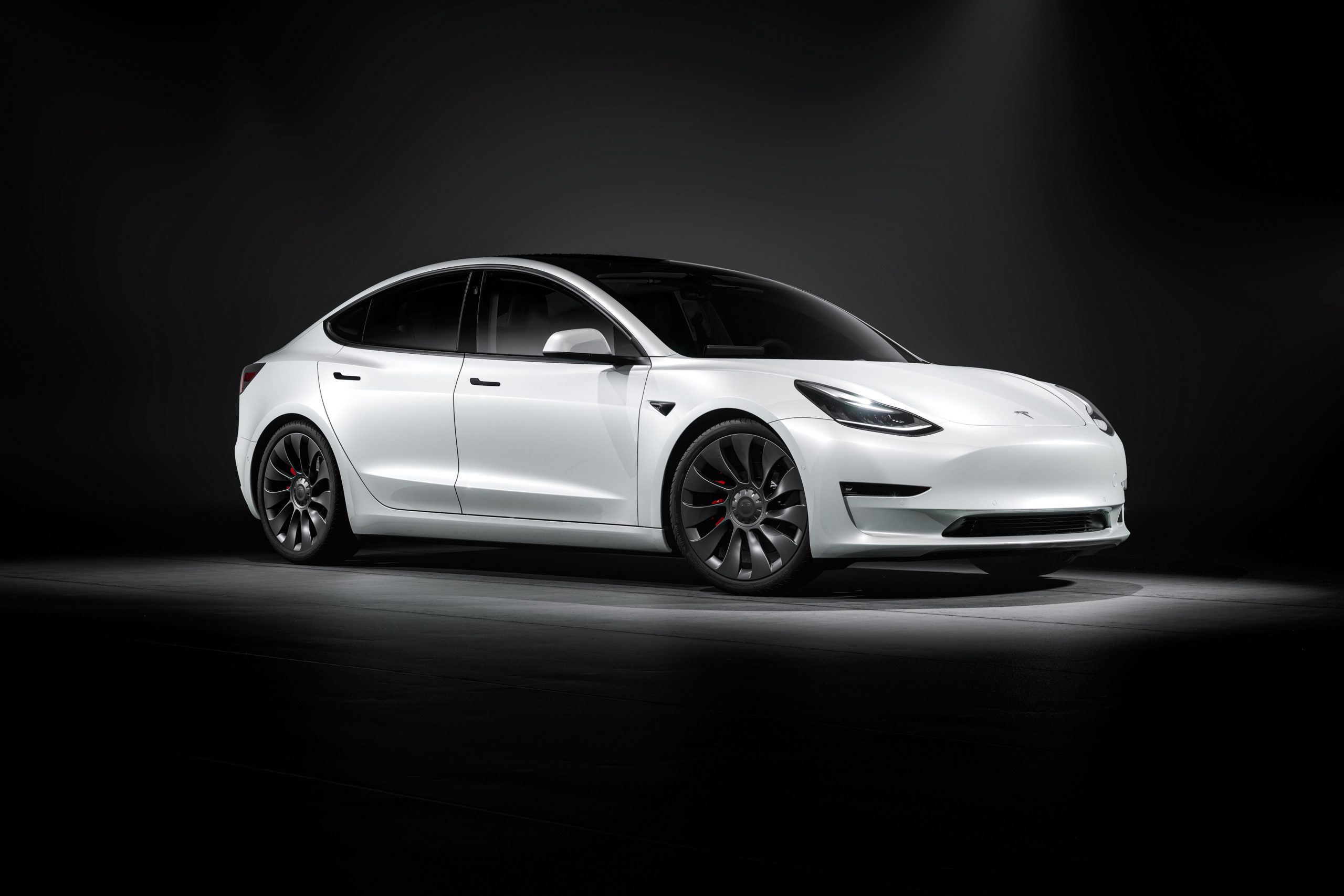

Tesla is reportedly revamping the Model 3 in a new project code-named “Highland.” In all honesty, it’s about time.
The Model 3 is arguably the most crucial vehicle in Tesla’s history. Before the Model 3, Tesla was confined to expensive, luxury vehicles with the Model S and Model X. While every day, and “average” people wanted to embark on the journey of owning and driving an electric car, very few in this category could ideally and logically afford Tesla’s first two commercial releases.
In mid-2017, the Model 3 rolled off Fremont production lines for the first time, and by 2019, the Model 3 was a regularly spotted EV in areas where EVs were few and far between. I am in York County, PA, and here, before the Model 3, the BMW i3 was all I really saw. Sometimes an e-Golf or Bolt EV would appear, but EVs didn’t become a regular sighting in South Central Pennsylvania until 2019 or 2020.
Small-town America is what truly encapsulates this country. I may be biased, but after spending time in big cities and small towns, there is no doubt, to me at least, that low-population towns are where true humankind is observed. Here is where tech tends to arrive much later than the hubs of American ingenuity. iPhones were rare in my high school of 1,000 people until 2011. Everyone drove a car from the 90s, for the most part. When I started writing about electric cars in 2019, many people I told didn’t realize EVs were truly in existence. Many believed they still needed gas to operate.
The Model 3 truly changed that narrative in my area. Since then, I’ve seen more EVs in general in my area, and it is not uncommon to see 5-6 different EV manufacturers in a 20-minute drive to the store.
Tesla truly catapulted EVs to what they are today, hate them or love them, they cannot be discredited. The Model 3 made EVs such a mainstream idea, that it may be somewhat of a sentimental design to some. However, feelings aside, it is time the car gets an upgrade.
According to a report from Reuters earlier today, Tesla is planning to revamp the Model 3’s most crucial features, including its interior and infotainment system. In my opinion, these things deserve upgrades because, simply put, they’re old.
Interior Update
Internally, Tesla’s infotainment is always up-to-date. However, an improved center screen with more intuitive designs, a high-quality and crystal-clear 5K monitor that could support gaming is the first idea. The center screen is oriented differently than the Model S and Model 3. It is a good size, but it is definitely time for Tesla to increase the quality of this monitor.
Interiors are a completely subjective topic, but I have personally felt minimalistic interiors are not a better option. Personally, I have found that touchscreens are not a less distracting option than knobs or buttons. Yes, knobs and buttons are clanky and can become invasive when they are placed too prominently on a dashboard. However, scrolling through a series of different screens to turn the air conditioning up or down a few degrees is more of a task than it should be.
Credit: Tesla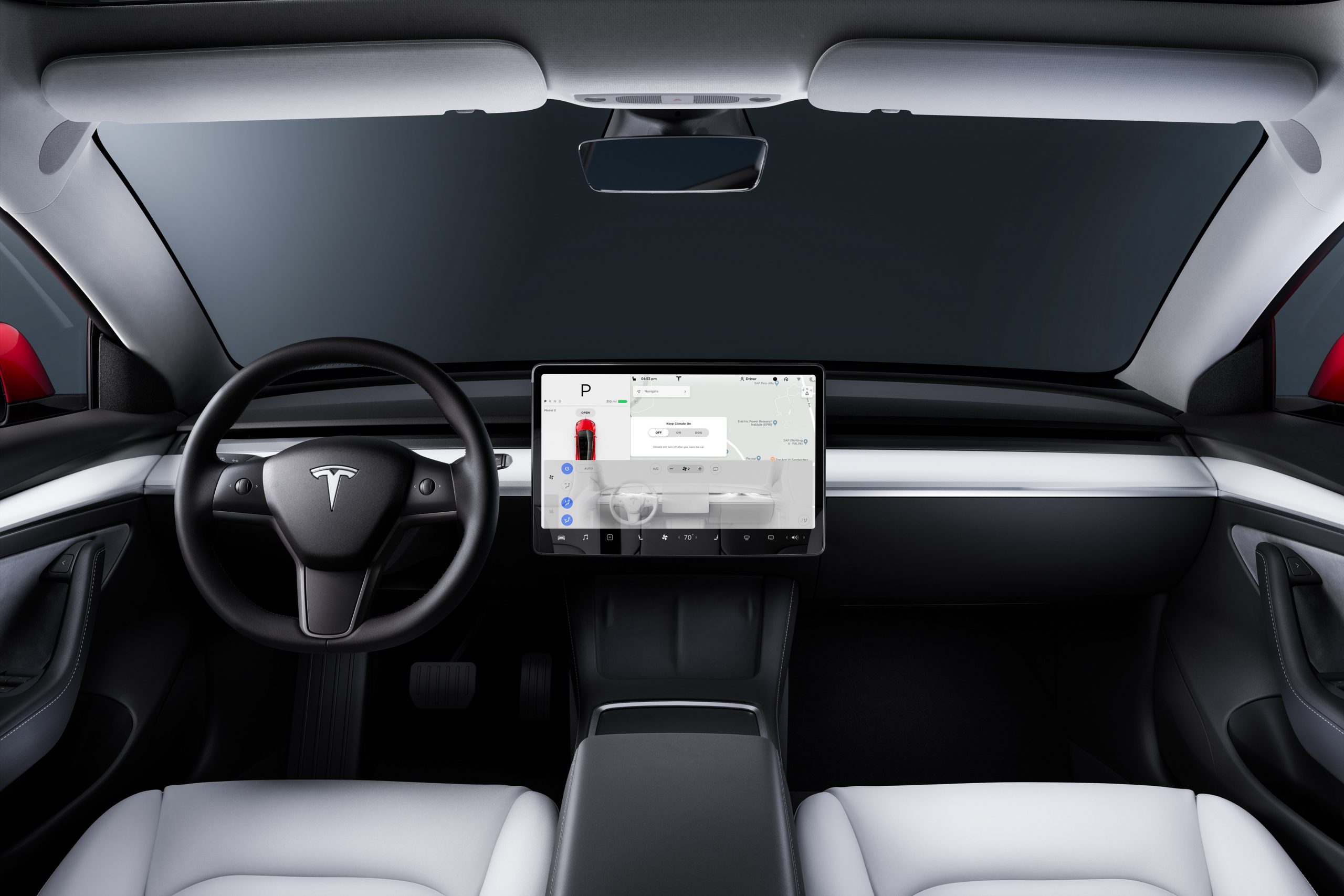
What about the exterior?
Tesla hasn’t done much to change the look of the Model 3 from the outside for several years. Some might call chrome delete a major change, but it truly wasn’t monumental. To me, it only helped me recognize which Model 3s were newer than others in my area.
How much can you truly change the design of a vehicle before it becomes something else entirely? Honda has made the Civic for decades, and the 2022 versions are vastly different from even the models of ten years ago. I’m not sure how the Tesla community would take significant changes in the Model 3 design; it might be too mainstream of an idea. Tesla hasn’t done much to the Model S other than modernizing its front bumper and moving away from the old nose cone. For the most part, that car has stayed the same too.
(Photo: Ma. Claribelle Deveza)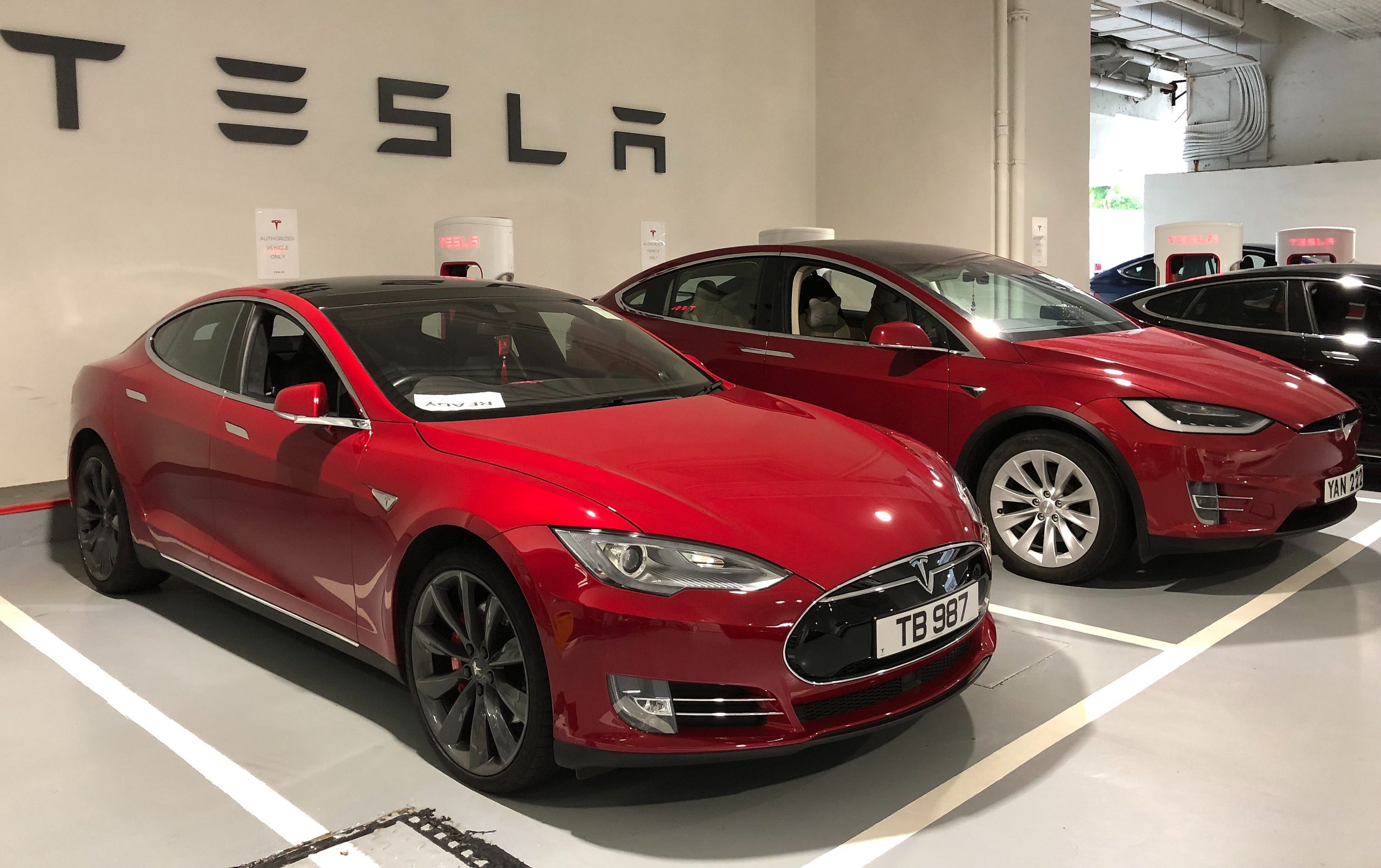
Why the Model 3 deserves an update
The Model 3 was more than a catalyst for Tesla’s domination in the EV sector. It deserves to be updated and kept fresh for new owners, and it will only increase the possibility that people will return to Tesla for their next vehicle. I don’t know if I would ever drive a vehicle for a few years and then want to buy something that looks exactly the same on the inside and out.
Although the Model Y has overtaken the Model 3 as Tesla’s best-seller, some consumers may enjoy driving a sedan but will want an entirely new look in their next car. An update to the Model 3 is just what Tesla can do to keep things moving and fresh within the company’s most important product.


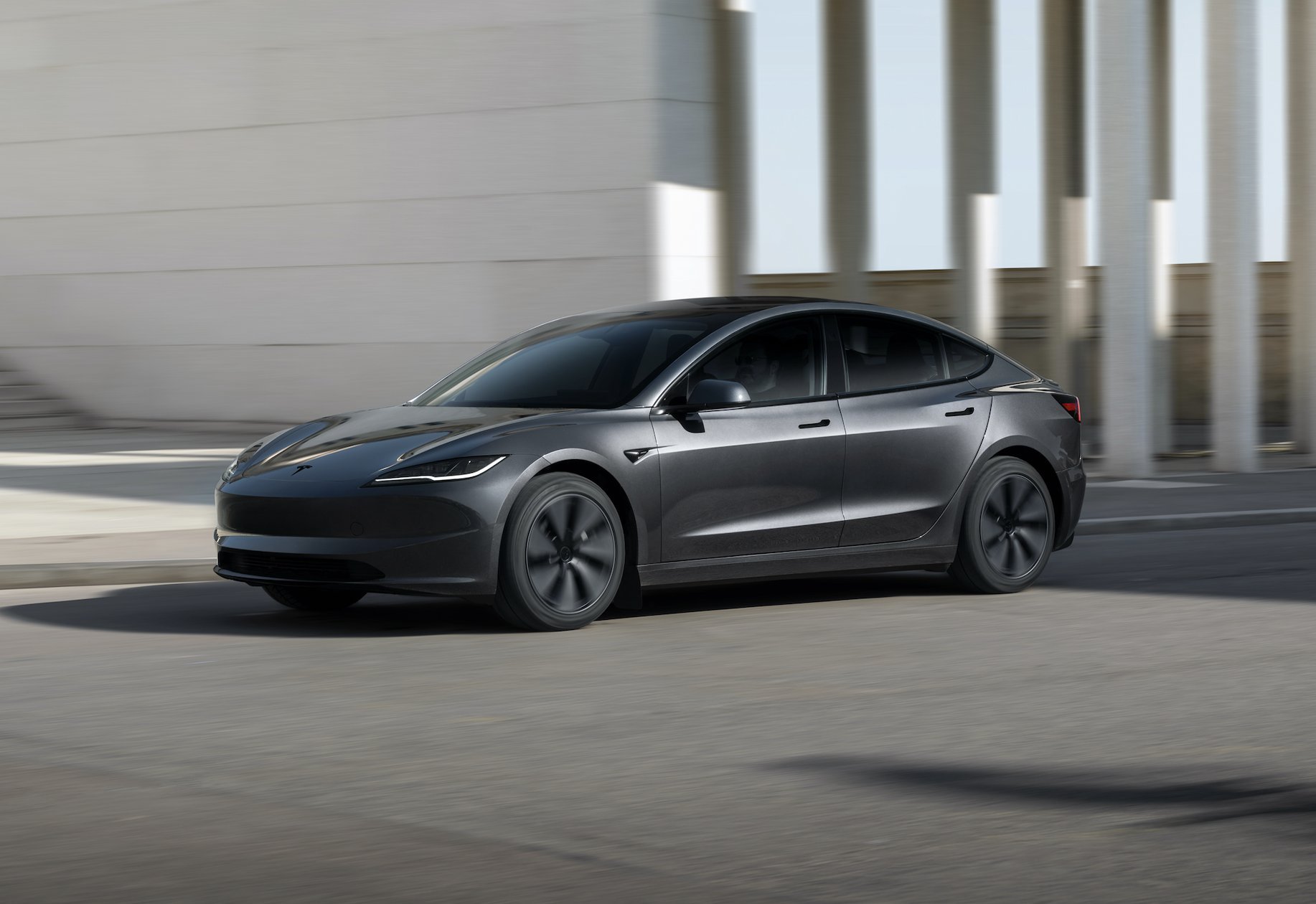
Tesla has launched its newest iteration of the Model 3 in China with a slew of new features, including the highly requested V2L (vehicle-to-load) feature and a new interior option.
The Model 3 now has a 16″ front touchscreen with improved resolution, a black headliner, V2L capabilities, Zen Grey interior in the Premium and Performance trims, as the White option has officially been discontinued, and 19″ Dark Nova Wheels, which are standard on the Model 3 Premium only.
🚨 Tesla has launched the Model 3 in China with a variety of new features and specs:
✅ 16” front touchscreen
✅ Black Headliner
✅ V2L Capability
✅ Zen Grey interior (Premium & Performance only)
✅ 19” Dark Nova wheels (Model 3 Premium only)
✅ Zen Grey Interior option… pic.twitter.com/ltTAEIYi2Z— TESLARATI (@Teslarati) October 1, 2026
The touchscreen in the U.S. version of the Model 3 is just 15.4″, so the newly upgraded screen is .6″ larger. Additionally, the Black Headliner, now standard on Model Y vehicles in the U.S., is coming to China.
Additionally, Tesla’s decision to end the white interior option has also made its way to the Asian market, as Zen Grey is the lighter color consumers can now go with. It is slightly different from the previously offered White option:
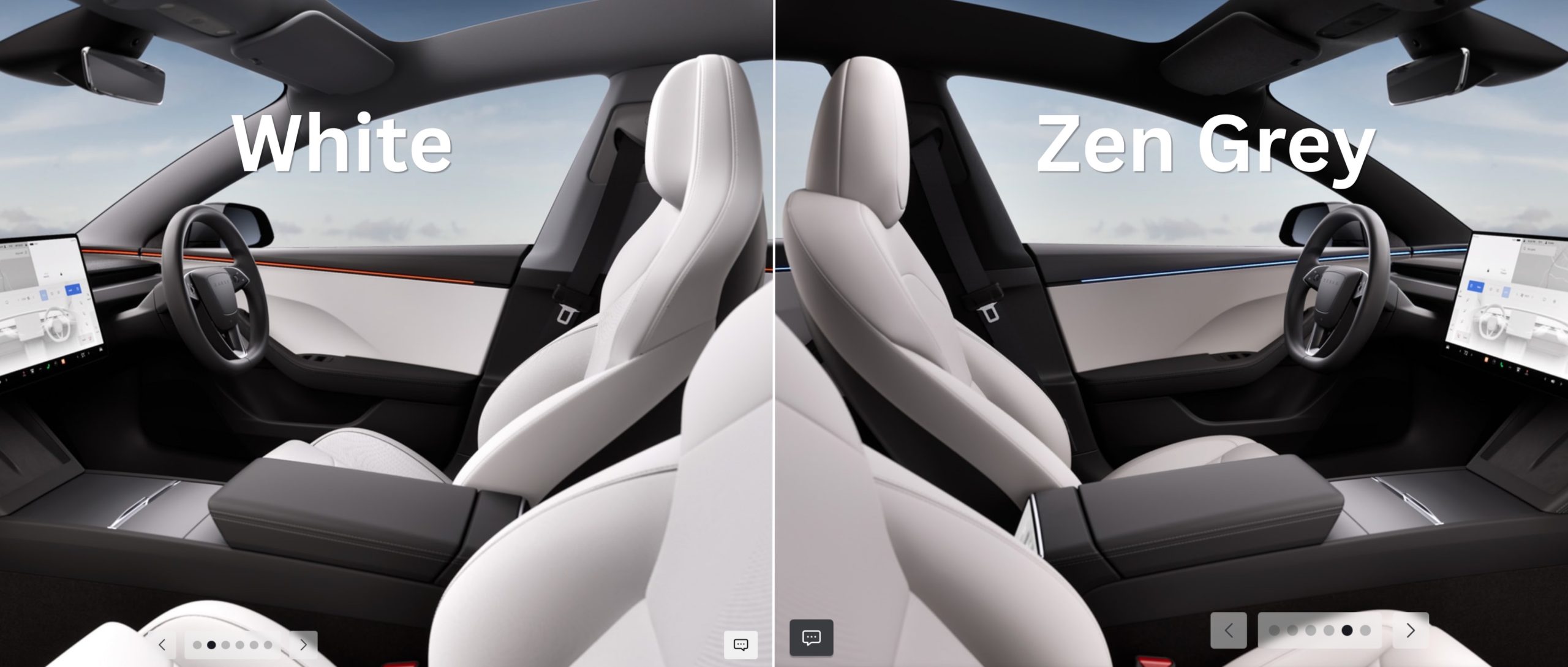
These options are available in China, Australia, and New Zealand as well, as Giga Shanghai serves those markets, bringing its mass-market vehicles to those countries in the South Pacific.
The Model 3 trims are now priced at:
- Rear-Wheel-Drive – 235,500 yuan (~$35,000)
- Long Range Rear-Wheel-Drive – 259,500 yuan ($38,700)
- Long Range All-Wheel-Drive – 285,500 yuan (~$42,600)
- Performance – 339,500 yuan (~$50,600)
These features have yet to make their way to the U.S., which might upset some buyers, but it is probably a good sign that Tesla will bring these changes to U.S. trims sometime next year. Potentially, these could come even sooner, as they could be used to stimulate demand for the year-end sales push.
Nevertheless, when things start at Giga Shanghai, they usually end up in the U.S. market. Tesla has also already started to install things like the Black Headliner and larger touchscreen in certain U.S.-built vehicles, so these things will be easy to implement across other vehicles in the lineup.
Elon Musk
The Pentagon taps Elon Musk to design the battlefield of the future
Hegseth named Elon Musk to help lead Project Meridian, a Pentagon study of future warfare.

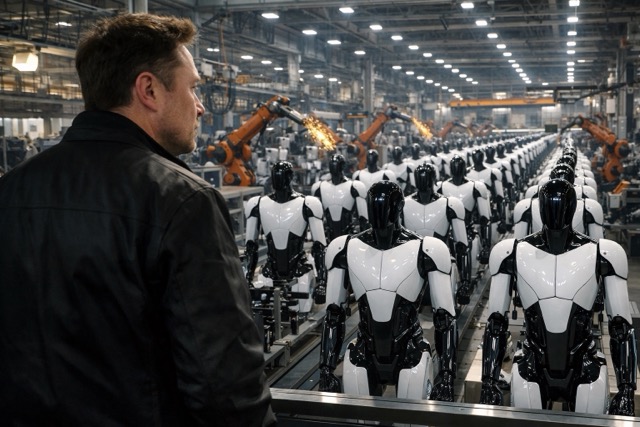
Elon Musk has a new role in the Trump administration. Defense Secretary Pete Hegseth announced on war.gov Wednesday that Musk will help lead Project Meridian, a new Pentagon study meant to identify the weapons and technologies the U.S. military will need to fight wars decades from now.
Hegseth unveiled the project during his State of the Force address at Marine Corps Base Quantico in Virginia. Musk will direct the effort alongside Anduril founder Palmer Luckey and former House Speaker Newt Gingrich, working under Pentagon Chief Technology Officer Emil Michael. All three men were in attendance, and Hegseth said their first meeting would take place directly after the speech inside a secure compartmented facility, according to The Hill.
Hegseth said the group “will be focused on discovering, developing, and fielding the weapons and systems that our children and our grandchildren will need in their lifetimes, without any creative limitations or restrictions, on any future battlefield, from under the Earth to beyond the Moon.” He added that Meridian is not meant to produce new strategy or policy documents.
SpaceX to become America’s Military data backbone for missiles, drones, and warfighters
A memo released after the announcement gives Michael until January 28, 2027, to deliver findings, a window of 120 days. It names artificial intelligence, autonomy, directed energy, robotics and biotechnology as the fields expected to change how wars are fought. The results will come as a public report with a classified annex. The memo says the study will run through a partner organization it does not name, and it does not mention Musk directly. His role comes from Hegseth’s speech and a Pentagon press release.’
Musk had not commented publicly on the appointment as of Wednesday evening. This will be Musk’s first official advisory role in the administration since he left DOGE last year.
The mandate overlaps heavily with Musk’s companies. SpaceX is one of the Pentagon’s largest contractors, with 2026 defense awards topping $8 billion, much of it tied to launches and a suspected Starshield buildout out of Vandenberg. The Pentagon’s release says Meridian will examine domains “from subterranean depths to the cislunar frontier,” which maps onto The Boring Company’s tunneling and Starship’s lunar plans. Tesla’s work on autonomy and Optimus falls within the fields the memo lists.
Meridian was one of six initiatives Hegseth announced Wednesday. Another is a new Autonomous Warfare Command, which the department wants operating as a four-star combatant command by October 1, 2027.
The news lands a day before SpaceX is scheduled to fly a classified National Reconnaissance Office payload on Falcon Heavy, one of three launches the company has planned for Thursday.
News
SpaceX set to launch astronauts and a classified Falcon Heavy mission on the same day
SpaceX plans three launches Thursday, including Crew-13 astronauts and Falcon Heavy’s first classified NRO mission.
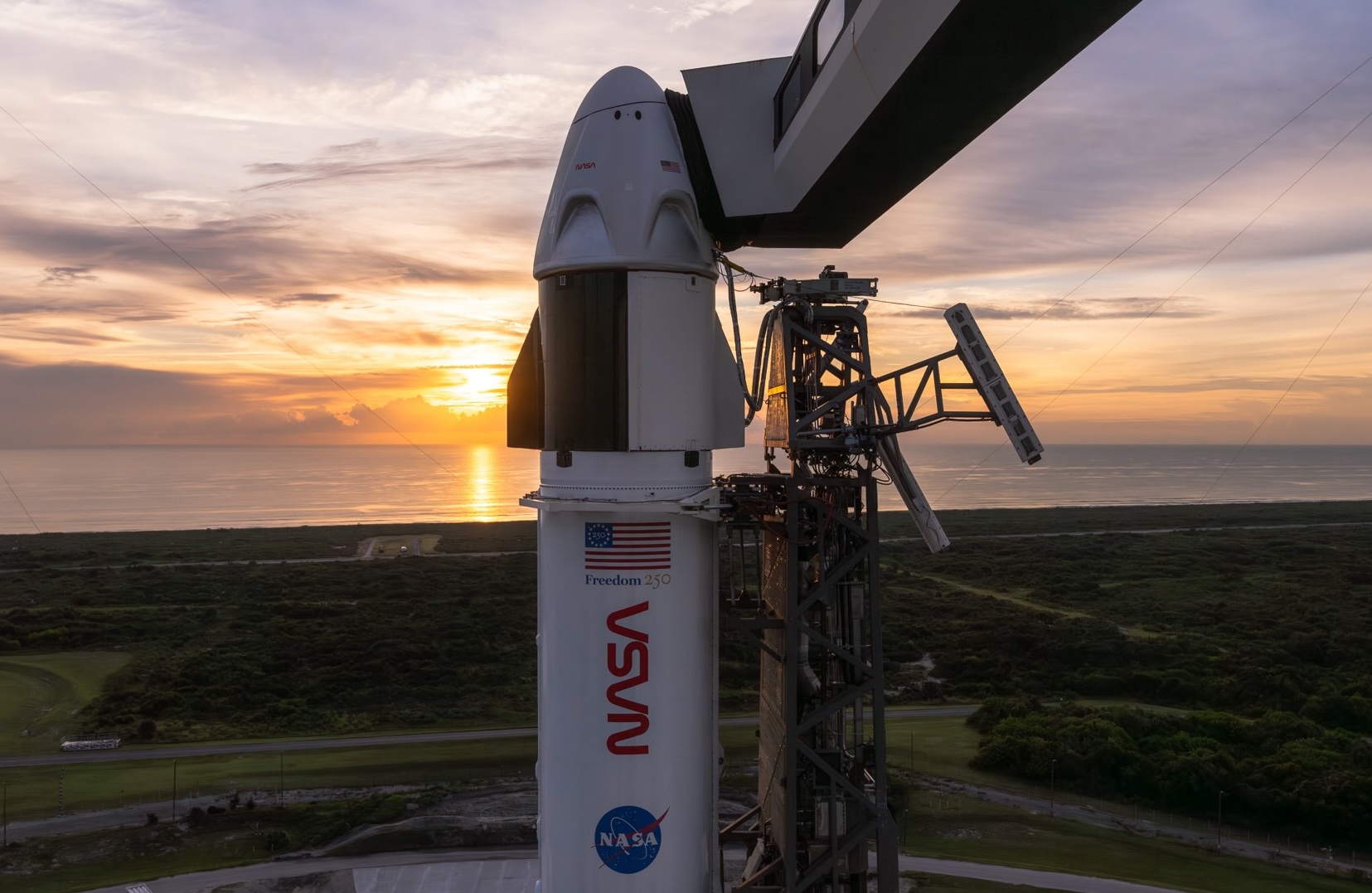
SpaceX is lining up one of the busiest single days in its history, and the company offered a preview on Wednesday morning with a simple post on X: “Sunrise at pad 40.” The video and photos show Falcon 9 standing at Space Launch Complex 40 at Cape Canaveral, roughly a day before it is scheduled to carry four astronauts to the International Space Station.
That launch is only the first of three SpaceX missions planned for Thursday, October 1, across both coasts.
Sunrise at pad 40 pic.twitter.com/J7Qme4VvIX
— SpaceX (@SpaceX) September 30, 2026
Crew-13 is targeting liftoff at 11:10 a.m. ET, with a backup opportunity Friday at 10:47 a.m. ET. NASA astronaut Jessica Watkins will command the mission, with NASA’s Luke Delaney as pilot and Canadian Space Agency astronaut Joshua Kutryk and Roscosmos cosmonaut Sergey Teteryatnikov serving as mission specialists. According to NASA, Dragon is set to dock with the forward port of the station’s Harmony module around 8 p.m. ET, less than nine hours after launch. Watkins is the only member of the crew who has flown before, and Kutryk will become the first Canadian to reach orbit through NASA’s Commercial Crew Program.
The Falcon 9 booster is flying for the third time after supporting Crew-12 and a Starlink mission, and it will attempt a landing at Landing Zone 40 beside the pad. That site made its debut in February when the Crew-12 booster touched down there, as Teslarati reported at the time. Crew-13 will relieve the Crew-12 astronauts, who have been aboard the station since the middle of February.
On the West Coast, another Falcon 9 is scheduled to lift off from Vandenberg Space Force Base in a window running from 2:18 to 3:16 p.m. ET, a flight NASASpaceflight lists as a Transporter rideshare mission.
The day is set to close at 11:53 p.m. ET, when Falcon Heavy launches from Launch Complex 39A with NROL-97, the first National Reconnaissance Office payload ever to fly on the rocket. SpaceX rolled the vehicle out to the pad Tuesday night. Its two side boosters, which previously flew GOES-U, ViaSat-3 F3 and NASA’s Roman Space Telescope, will return to Landing Zones 1 and 2, while a new center core will be expended in the Atlantic. The Roman launch took place on August 30, so NROL-97 will come barely a month later as Falcon Heavy’s third flight of 2026 and 14th overall.
NASA taps SpaceX to launch the telescope that could unlock new worlds
If all three Florida boosters land as planned, it would be the first time the Space Coast has seen landings at LZ-40, LZ-1 and LZ-2 on the same day, according to the Orlando Sentinel, which has warned residents in Brevard, Orange and Volusia counties that more than one sonic boom is possible.
The schedule arrives just three days after Starship reached orbit for the first time on Flight 14 from Starbase, Texas, deploying 26 Starlink V3 satellites. If Thursday’s missions stay on time, SpaceX will have flown Starship, Falcon 9 and Falcon Heavy from four different pads in about four days.
Crew-13 is also the start of a longer run for Dragon. NASA recently added Crew-15, Crew-16 and Crew-17 to SpaceX’s contract in a $946 million modification, keeping Dragon as the agency’s only operational ride to the station while Boeing’s Starliner remains grounded.

Tesla launches improved Model 3 in China with V2L, new interior option

The Pentagon taps Elon Musk to design the battlefield of the future


