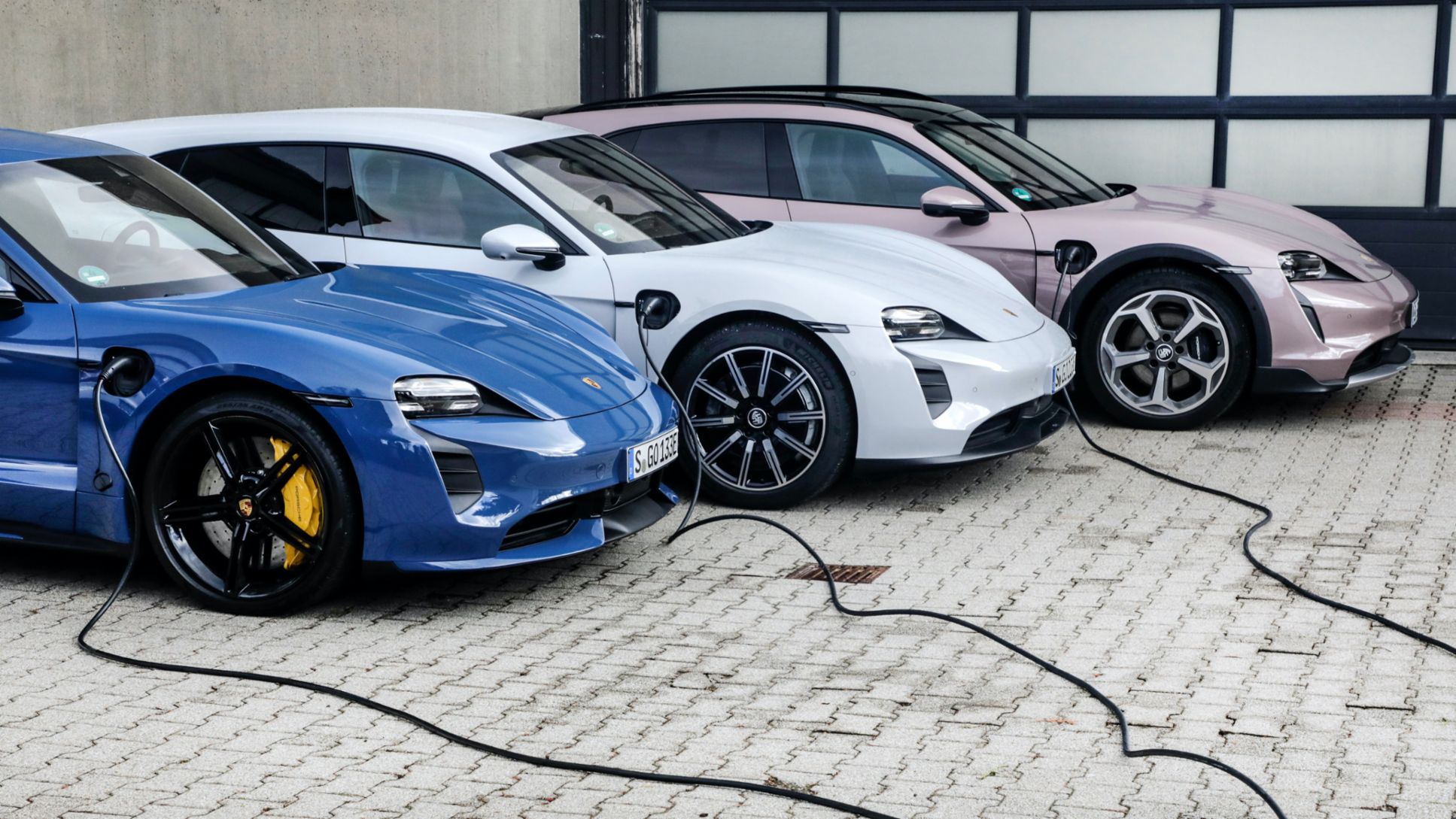
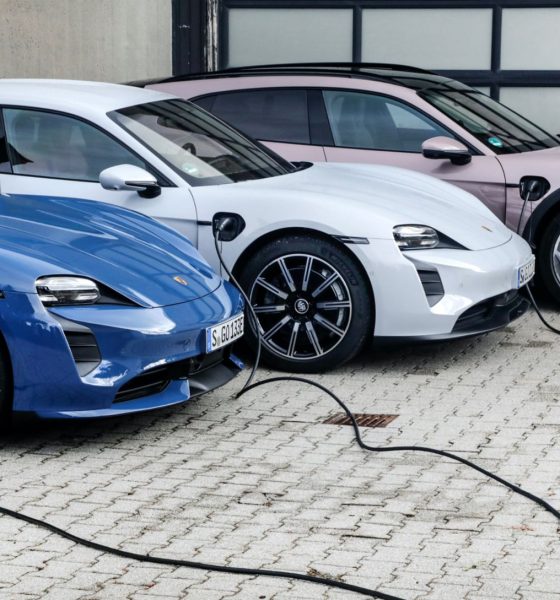

A Porsche Boxster EV test vehicle has been spotted charging, highlighting the brand’s future offerings.
It’s no secret that Porsche is working on its next-generation EV platform. With a 900-volt architecture underpinning the drivetrain, and numerous performance upgrades, many expect the premium German brand’s next generation of EVs to be an incredible leap in innovation. Along with these upgrades, a Porsche Boxster EV test vehicle shows that more of the company’s different body styles will join the Taycan sedan.
The Porsche test vehicle, which has been spotted numerous times throughout Europe, has most recently been seen charging up at an Ionity station, Photos of the convertible were then posted by @electricfelix on Twitter, showing a refreshed and more aggressive “Boxster of the future.”
THANK YOU @nextmove_de for showing us the Porsche 718 Boxster EV fast charging at IONITY!!!
⚡️⚡️⚡️
One can only dream to see this charging curve in real life!#alwaysbecharging#porsche
#718 #nextmove#spotted#nextnews #boxster180 kW avg charging speed at 53% SoC! pic.twitter.com/zYdbIiScFH
— Felix Hamer • electricfelix (@electricfelix) February 3, 2023
For Porsche enthusiasts with the itch for an electric vehicle, your options have been incredibly limited for the longest time. While the Porsche Taycan sedan and “shooting brake” offer numerous trims and options, many have lamented the lack of an electric coupe or convertible offering; clearly, that is about to change.
Despite the incredibly revealing photos of the vehicle taken today, very little is known about the upcoming electric Boxster, but we can make some solid inferences. First and foremost, the new car will undoubtedly be based on Porsche’s forthcoming PPE platform, bringing 900-volt architecture, a new motor design, suspension upgrades, and much more to the convertible offering. Second, with the Boxster traditionally being the “budget” offering of the premium automaker, it is likely to come with a single-motor RWD offering standard, with the potential of a dual-motor AWD system available as an upgrade.
While pricing information has obviously not been released, the “entry-level” Porsche is set to start at roughly $80,000, according to numerous predictions. Further, while it remains unclear if the Boxster will proceed the Macan EV, both vehicles are expected to hit dealer lots by 2025.
But the return of Porsche’s famous convertible model line isn’t the only reason to be excited. The other Porsche test vehicle which has been making the rounds is the 718 GT4 ePerformance, a track vehicle that has been showing up at racing events around the world—potentially indicating that a true electric 911 could follow the Boxster’s introduction with even better performance.
Porsche was not immediately available for comment to Teslarati regarding its upcoming offerings.
With this innovation and numerous others coming to Porsche’s next-generation platform, the German automaker is set to introduce a showstopping lineup that could finally rival the technical prowess of current market leader, Tesla. Hopefully, this continued investment in EV technology can eventually result in a better electric vehicle ownership experience for not only sportscar drivers but also everyone else.
What do you think of the article? Do you have any comments, questions, or concerns? Shoot me an email at william@teslarati.com. You can also reach me on Twitter @WilliamWritin. If you have news tips, email us at tips@teslarati.com!



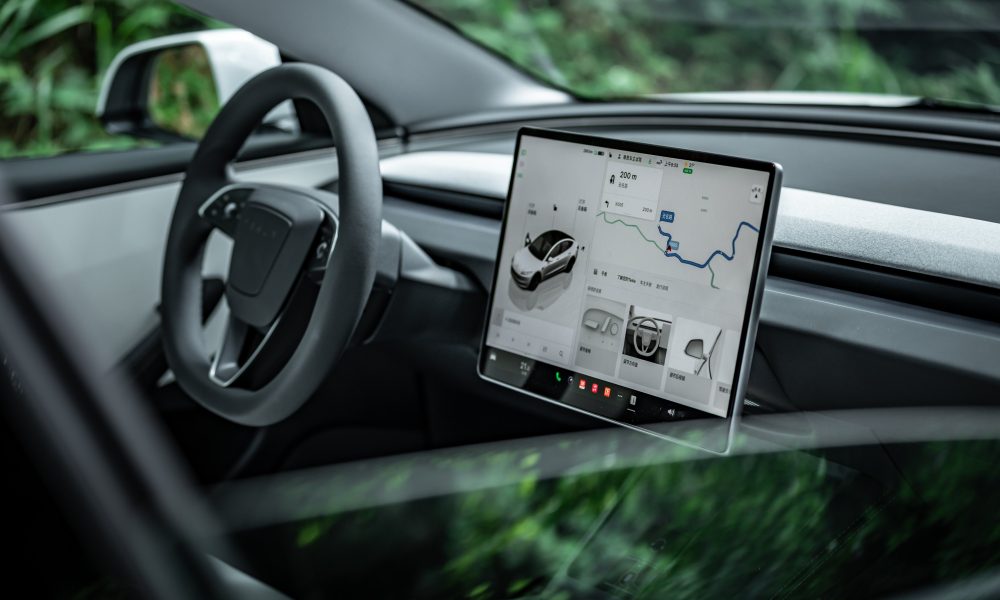
Tesla has expanded its Tesla Assisted Driving (TAD) suite to its tenth European country, as Latvia joined a growing list of European Union member states authorizing the company’s advanced driver assistance technology.
Tesla Europe announced this morning that the system is now approved in Latvia, with a software rollout to begin soon.
The approval and rollout follow recognition of a provisional European type approval originally granted by the Netherlands’ RDW authority on April 10.
🚨 Latvia has just received approval for Tesla Full Self-Driving (Supervised)
This is the 10th country in the EU to gain approval:
1. Netherlands — 10 April 2026 (original RDW approval)
2. Lithuania — 20 May 2026
3. Estonia — 29 May 2026
4. Denmark — 9 June 2026
5. Belgium — 10 June 2026
6. Slovenia — 7 September 2026
7. Czechia — 21 September 2026
8. Croatia — 29 September 2026
9. Slovakia — 16 October 2026— TESLARATI (@Teslarati) October 26, 2026
Latvia’s Road Traffic Safety Directorate (CSDD) evaluated the Dutch documentation, coordinated with the other national authorities, and reviewed updates from Tesla. These included tightened limits on speed offsets, automatic resets of any manual speed adjustments after each trip, and stronger driver monitoring.
In Europe, the feature is marketed as Tesla Assisted Driving after a recent rule change that labeled the name “Full Self-Driving” as misleading.
The system remains an SAE Level 2 driver assistance tool, not unsupervised autonomy. It can control speed, steering, braking, lane changes, and intersections while following a navigation route. Drivers need not keep their hands on the wheel at all times, yet they must continuously monitor the road and be prepared to intervene immediately.
The sequence of EU recognitions began with the Netherlands in April and continued through Lithuania, Estonia, Denmark, Belgium, Slovenia, Czechia, Croatia, and Slovakia. Most have relied on mutual recognition of the single Dutch provisional approval rather than independent national testing.
These national clearances do not yet constitute bloc-wide authorization. An EU-wide decision requires a qualified majority in the Technical Committee on Motor Vehicles: at least 15 of 27 member states representing 65 percent of the EU population. Larger markets, like Germany, France, and Italy, remain under review, and a vote is expected this December.
However, for Latvian Tesla owners with compatible vehicles and software, the imminent rollout expands access to the supervised system while underscoring that attentive human oversight remains essential.
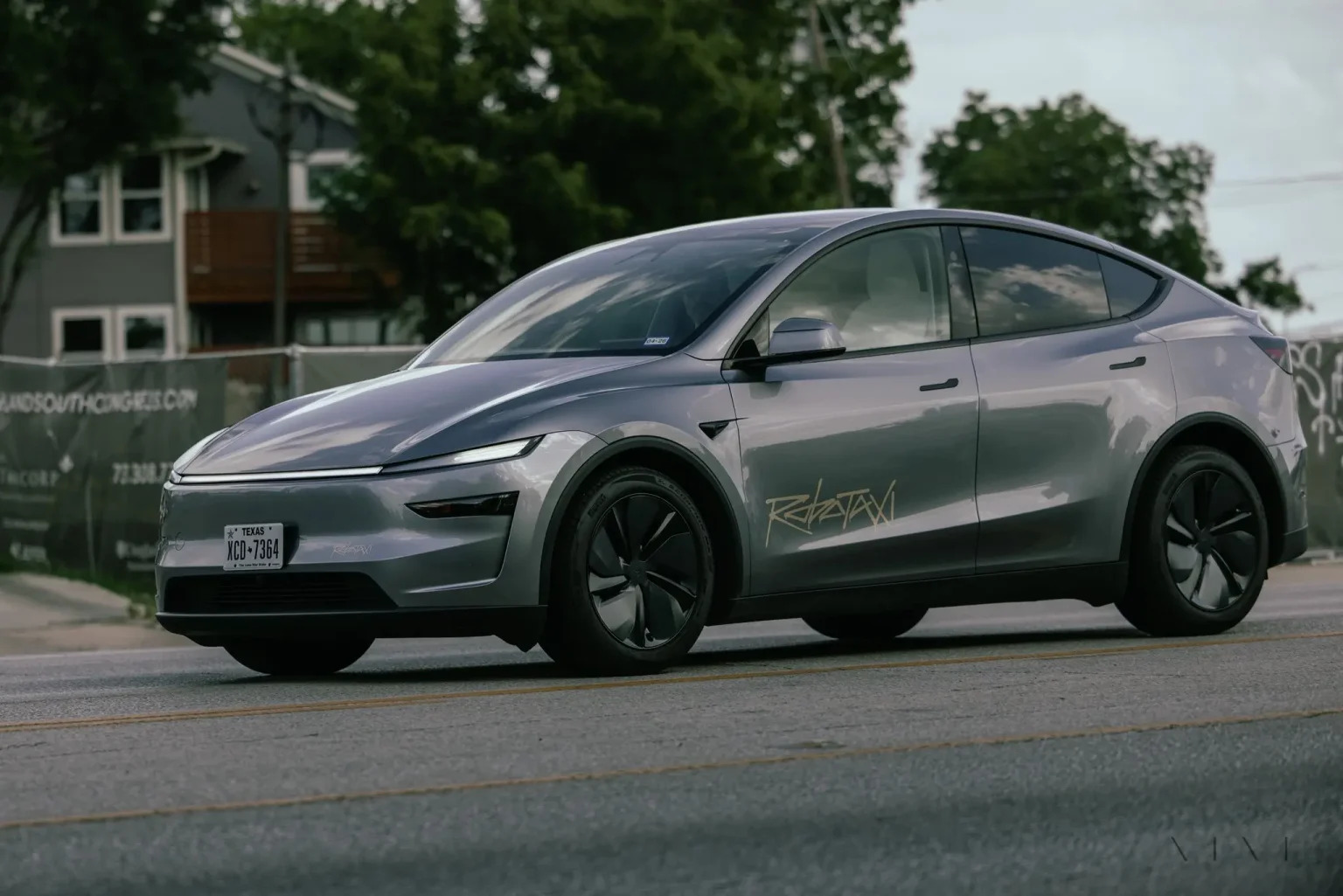
Tesla expanded its Robotaxi geofence in Houston, Texas, today, enlarging the service area and drawing a new rocket-shaped boundary across the city’s northwestern and central parts.
Although CEO Elon Musk said it was just a coincidence, the expansion seems to be an ode to SpaceX and its potential merger with Tesla.
🚨 Tesla has just expanded its Robotaxi geofence in Houston
It looks a lot like a rocket — we all remember the shape in Austin 🤣 https://t.co/cFOPEuiJ4u
— TESLARATI (@Teslarati) October 26, 2026
The official Tesla Robotaxi account announced the change with the lines “Houston, we have liftoff” and “Bigger service area now live,” pairing them with a map overlay.
The prior white geofence, roughly 25 square miles covering Jersey Village, Harvest Bend, and the Willowbrook corridor along U.S. 290 and State Highway 249, now sits inside a larger blue zone that stretches southeast toward Bellair and closer to central Houston.
Houston’s Robotaxi service launched on April 18, 2026, the same day as Dallas, as Tesla’s first unsupervised public expansion beyond Austin. From the start, the vehicles were Model Ys running without anyone in the front seats, booked through the dedicated Tesla Robotaxi app and open to the public inside the geofence.
Trackers measured the initial zone at about 25 square miles; by late September it had not grown substantially. Community and registry data indicated a modest local fleet of unsupervised Model Ys, while dozens to nearly 200 Cybercabs, the purpose-built, steering-wheel-free two-seaters, have been spotted staging and testing in Houston lots, though public Cybercab rides remain limited to Austin for now.
Across the broader Robotaxi program, Tesla began public Robotaxi rides in Austin in June 2025, as a small geofence and vehicles with safety monitors became available for a ride-hailing service. Later on, Tesla removed the monitors and steadily expanded the service area until it covered most of the Austin metro area.
Unsupervised Robotaxi services now run in six cities: Austin, Dallas, Houston, Miami, Orlando, and Tampa. Cumulative driverless miles reported by the company have reached several million. The Cybercab entered public service in Austin in early September 2026 and has scaled rapidly there. The company has also said that Dallas is next for Cybercab rides in November, with further cities and 24/7 hours targeted by year-end, plus fleet-operator sales of the vehicle.
Waymo also operates a fully driverless service in Houston, which has been open to the public since August of this year.
The Houston expansion continues Tesla’s pattern of starting with tightly controlled validation zones before widening coverage as real-world data accumulates, while the rocket motif on the map underscores the company’s habit of injecting visual flair into its autonomy rollout.
Riders inside the new boundary can request unsupervised Model Y trips in the Robotaxi app; exact operating hours and further Cybercab availability remain subject to app updates and company statements.
News
Tesla Cybercabs take over Austin’s F1 weekend
Tesla Cybercabs swarmed Austin’s F1 Grand Prix as sightings hit a record during race weekend.

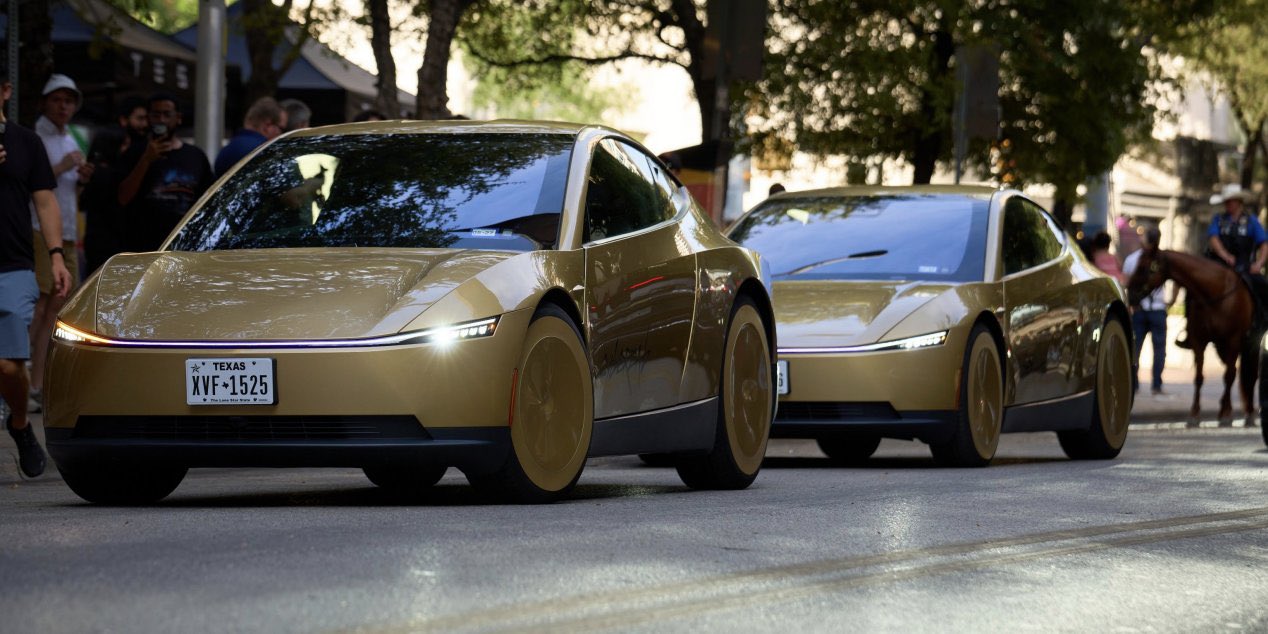
Tesla’s driverless Cybercabs used the Formula 1 United States Grand Prix in Austin as their biggest public stress test yet. On Sunday afternoon, Tesla head of AI software Ashok Elluswamy quoted a photo from X user Ben Steindl showing a long line of gold Cybercabs and Model Y Robotaxis stacked up on a road near Circuit of the Americas. “Robotaxis as far as the eye can see!” Elluswamy wrote. Steindl’s original post was more matter of fact: “@Tesla @robotaxi is busy for the Austin F1.”
The fleet also handled the trip home. The race started at 3 p.m. Central, and once it ended, Cybercab Spotter, an account that logs Cybercab sightings around Austin, posted that “People are requesting Cybercabs to get home.”
Robotaxis as far as the eye can see! 🤩
— Ashok Elluswamy (@aelluswamy) October 25, 2026
Tesla set this up days in advance without announcing it. Late on October 22, rider David Moss posted Robotaxi app screenshots showing the Austin service area wrapping around the track toward Elroy and FM 812, with ride requests open until 1 a.m. A banner in the app read “Last call is 1am · Limited to nearby dropoffs.” Austin rides ended at 11 p.m. as recently as early October, as Teslarati reported, before moving to midnight on October 17.
Not every rider got dropped at the gate. Early app searches showed spots like COTA Karting as “Service blocked,” and one rider who took a Cybercab to the track Friday said the rideshare area was less than a 20 minute walk from the front gate.
The weekend also produced a new activity record. Cybercab Spotter counted 1,250 Cybercab sightings in Austin on Saturday, qualifying day. The previous high was 1,072 on October 16. Sightings count the same car more than once, so they measure how busy the fleet is rather than how big it is. For size, the Texas automated vehicle registry listed 463 Cybercabs at midday Sunday, up from the 300+ Tesla claimed on October 10, when Elluswamy also said Dallas is next for Cybercab.
The track was out of reach for Tesla’s main rival. Waymo runs in Austin only through Uber, and its service area stops well short of COTA. Waymo did not announce any race day service.
Tesla has not said how many rides it gave to and from the circuit, or whether the expanded zone and 1 a.m. cutoff will stay after race weekend. On the third quarter earnings call, Elluswamy said 2 a.m. service is coming “pretty soon” and that Tesla plans to run Robotaxi around the clock before the end of the year. The company is also aiming to hand the first Cybercabs to customers before 2026 ends, which would put cars like these outside Tesla’s own fleet for the first time.

Tesla Assisted Driving expands to tenth EU country

Tesla expands Robotaxi geofence in Houston with an ode to SpaceX merger


