News
Tesla starts showing how FSD will change lives in Europe
Local officials tested the system on narrow country roads and were impressed by FSD’s smooth, human-like driving, with some calling the service a game-changer for everyday life in areas that are far from urban centers.

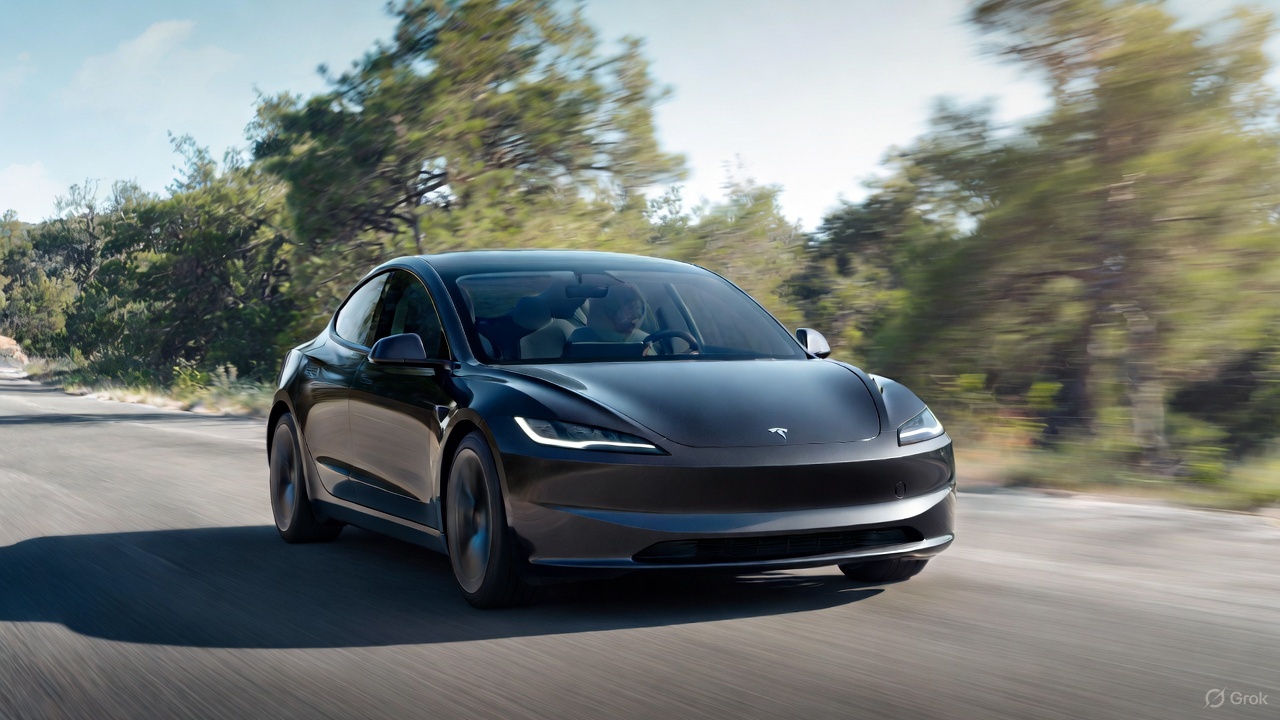
Tesla has launched Europe’s first public shuttle service using Full Self-Driving (Supervised) in the rural Eifelkreis Bitburg-Prüm region of Germany, demonstrating how the technology can restore independence and mobility for people who struggle with limited transport options.
Local officials tested the system on narrow country roads and were impressed by FSD’s smooth, human-like driving, with some calling the service a game-changer for everyday life in areas that are far from urban centers.
Officials see real impact on rural residents
Arzfeld Mayor Johannes Kuhl and District Administrator Andreas Kruppert personally tested the Tesla shuttle service. This allowed them to see just how well FSD navigated winding lanes and rural roads confidently. Kruppert said, “Autonomous driving sounds like science fiction to many, but we simply see here that it works totally well in rural regions too.” Kuhl, for his part, also noted that FSD “feels like a very experienced driver.”
The pilot complements the area’s “Citizen Bus” program, which provides on-demand rides for elderly residents who can no longer drive themselves. Tesla Europe shared a video of a demonstration of the service, highlighting how FSD gives people their freedom back, even in places where public transport is not as prevalent.
What the Ministry for Economic Affairs and Transport says
Rhineland-Palatinate’s Minister Daniela Schmitt supported the project, praising the collaboration that made this “first of its kind in Europe” possible. As per the ministry, the rural rollout for the service shows FSD’s potential beyond major cities, and it delivers tangible benefits like grocery runs, doctor visits, and social connections for isolated residents.
“Reliable and flexible mobility is especially vital in rural areas. With the launch of a shuttle service using self-driving vehicles (FSD supervised) by Tesla in the Eifelkreis Bitburg-Prüm, an innovative pilot project is now getting underway that complements local community bus services. It is the first project of its kind in Europe.
“The result is a real gain for rural mobility: greater accessibility, more flexibility and tangible benefits for everyday life. A strong signal for innovation, cooperation and future-oriented mobility beyond urban centers,” the ministry wrote in a LinkedIn post.



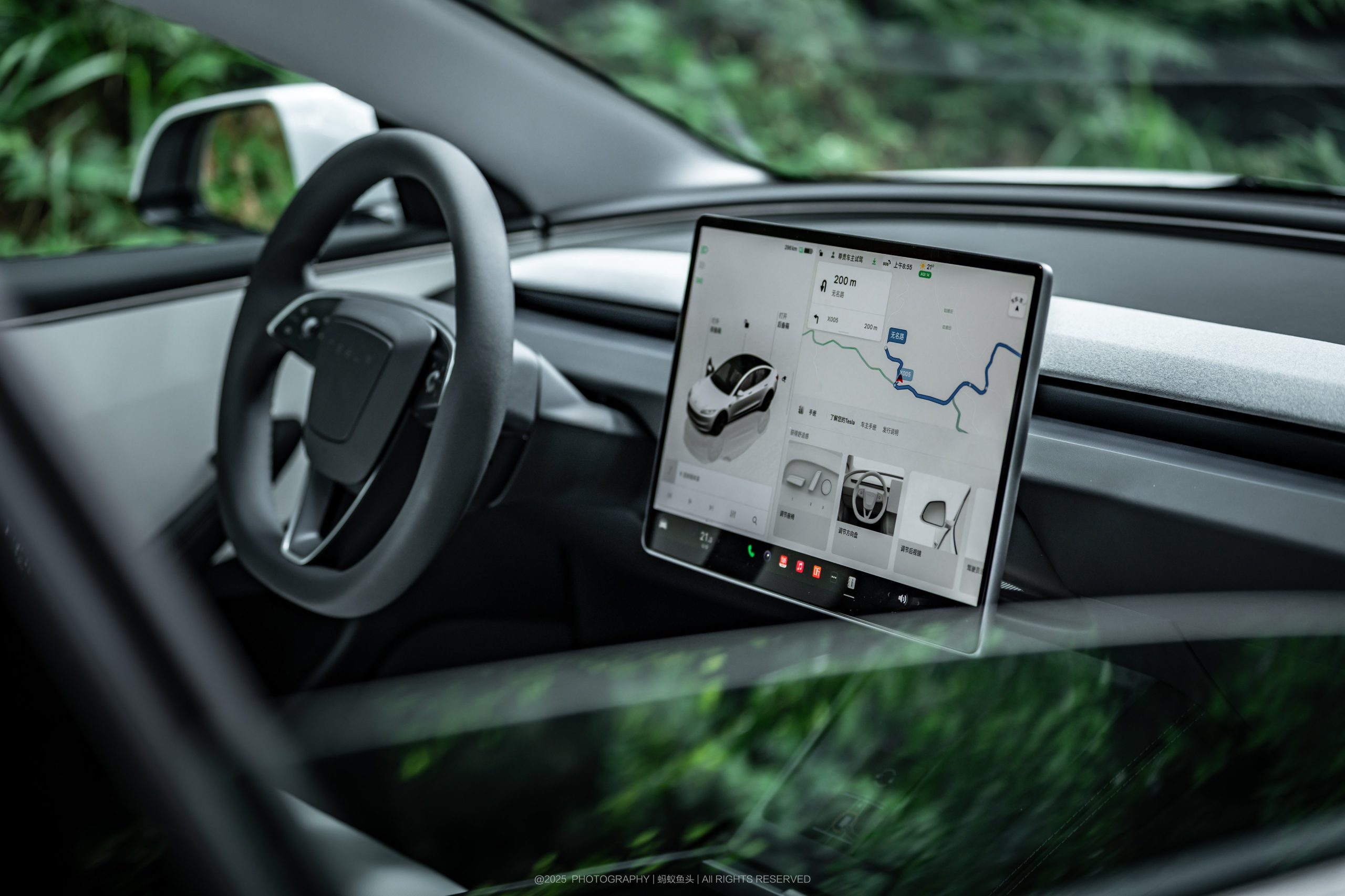
Tesla revealed plans to develop its own maps internally to fix Navigation issues and give owners more control over their routing.
On the company’s Q3 2026 Earnings Call, a question was asked about FSD Navigation issues, particularly speed limit recognition, parking, and routing. These are issues that surface from version to version and seem to be seriously challenging for Tesla’s AI team to resolve.
Tesla’s Head of AI, Ashok Elluswamy, said in response to the question:
“You’re totally right that we shouldn’t be depending on external people’s maps. So we are building our own maps, but not like the same way as OneMoreMap. We are building an entirely new architecture with essentially AI-based mapping and navigation.”
He continued:
“It’s going to be super awesome. It’s going to be integrated with voice. You can talk to it, ask for different routes. It’s going to learn your personalized preferences, plus the fleet preferences. The collective intelligence of all the cars is going to flow into making the maps and navigation super cool.”
Elluswamy said this issue should be confronted, and the mapping should be available for people by the time the v15 release starts deploying to customers.
“And over the next several months,” he added, “it’s just going to take over all of the navigation functions, parking, destination handling. And it will know you better than you know yourself in some regard for the driving task, and then handle it fully.”
Tesla Summon got insanely good in FSD v14.3.2 — Navigation? Not so much
Navigation is perhaps the most notable complaint with FSD, and although it has gotten better, it is still flawed. Much of the time, FSD will take people on routes that are not preferred by the driver, but Tesla tried to combat this with a routing feature in the Summer 2026 Update.
Tesla currently relies on Google for map data, but it is sort of counterintuitive to believe the company would rely on a third party for this. These improvements will be welcome, as routing and navigation have been such a pain point for so many owners for so long.
Quotes via Motley Fool
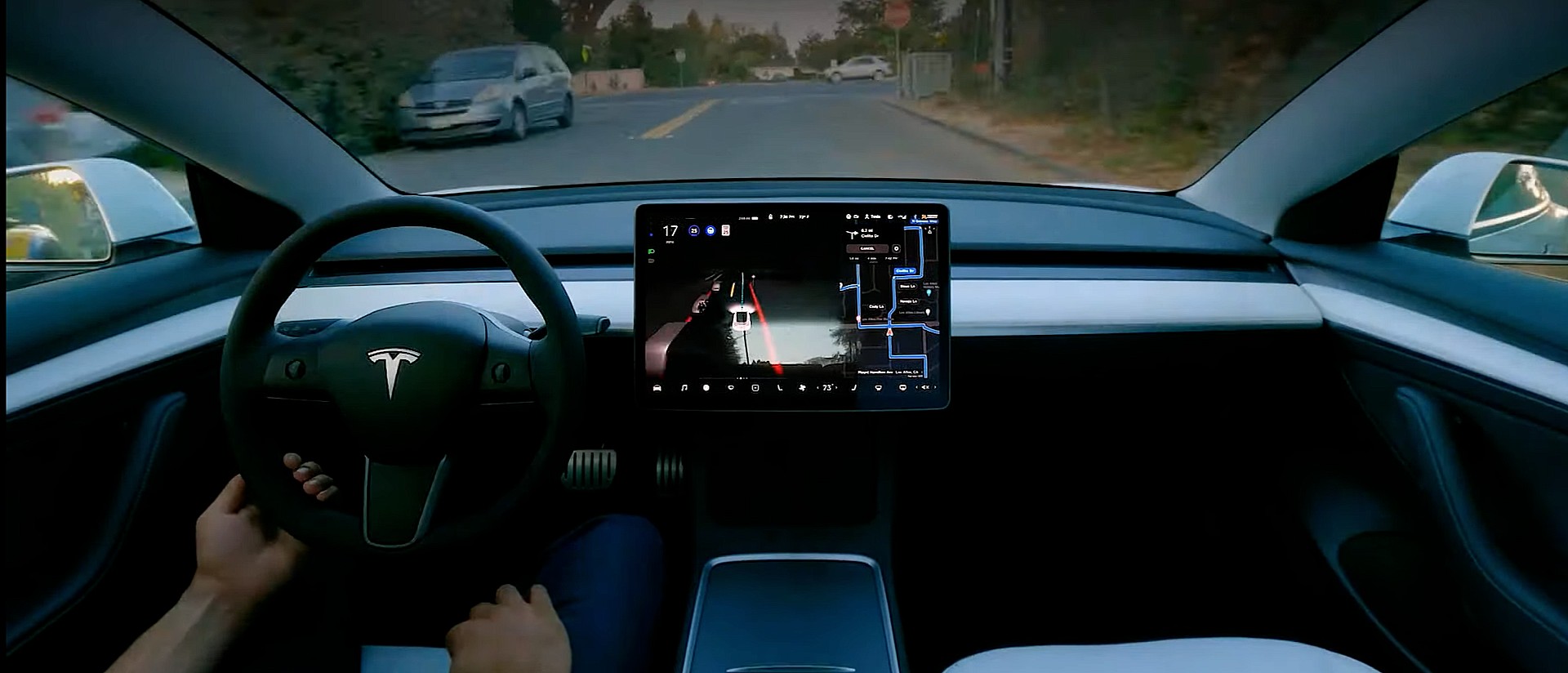
Tesla Full Self-Driving (Supervised) showed a record attach rate at delivery for new vehicles in the third quarter of 2026.
75 percent of new vehicle deliveries in North America included a subscription to FSD software, up from 55 percent in the prior quarter, a 20-percentage-point sequential gain in the company’s most mature market.
Tesla Q3 2026 Earnings results: in-line revenues, slight beat on EPS
Tesla shed light on the Q3 Shareholder Deck that 75 percent of new deliveries came with an FSD subscription:
“FSD (Supervised)⁴ attach rate continued to grow, reaching over 75% of new vehicle deliveries in North America – our most mature market – a nearly twenty percentage point sequential increase. We believe that FSD is driving demand in markets where it is available, and we continue to work with regulators to get it approved in other markets. “
The higher attach rate accompanied strong growth in the overall FSD consumer base, as active subscriptions rose to 1.75 million, a 67 percent year-over-year increase. For the first time, more than half of paid customers are on the monthly subscription, which is priced at $99 per month in the U.S.
People are buying FSD with a car attached, not the other way around
— Elon Musk (@elonmusk) October 21, 2026
The transition to subscriptions has accelerated since Tesla discontinued the one-time purchase option in most markets earlier this year. The recurring model improves revenue visibility and margins compared with large upfront payments. With three-quarters of North American deliveries now including FSD, the software is now an evidently large contributor to Tesla’s economics and ancillary revenue.
Geographic expansion remains important for further gains. FSD is now available in nine countries in the EU, and more than 100,000 customers have driven over 160 million kilometers. Tesla is pursuing broader EU-wide approval, with a related vote expected in December. Similar progress in additional markets could support higher attach rates beyond North America.
These results came as Tesla had a strong quarterly delivery performance of 486,532 vehicles in the quarter, which came with its largest passenger-vehicle backlog in four years. Battery supply continued to limit volume, but the company has pointed to FSD as a clear difference-maker that is helping sustain demand. As supervised capabilities improve, the attach rate will likely continue to improve.
At face value, it is a key measure of how Tesla is converting sales into autonomy progress.
Update: 10/22 10:51a – Para 1 consumers changed to “customers” for accuracy.
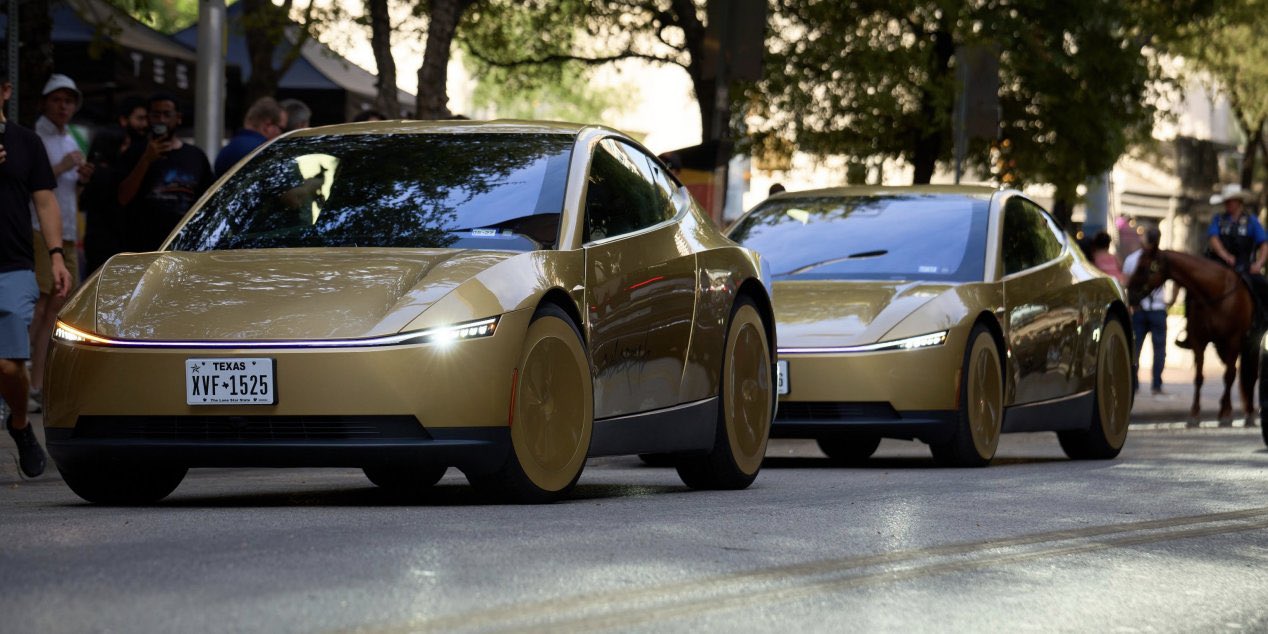
Tesla Cybercab units finally got a definitive date for when they will be able to be purchased by customers, ending speculation regarding whether the fully autonomous vehicle would be available in the near term.
During Tesla’s third-quarter 2026 earnings call on October 21, Vice President of Engineering Lars Moravy said the company is aiming to begin delivering its purpose-built Cybercab robotaxi to customers before year-end.
🚨 In short, Cybercabs are slated to go to customers by end of the year. All units are going into Robotaxi fleet currently, per @larsmoravy
Cybercab will be “transport-as-a-service,” but vast majority of Cybercab will be “Tesla-owned,” @elonmusk says https://t.co/R8Qu8QWdmp
— TESLARATI (@Teslarati) October 21, 2026
“We’re trying to get Cybercabs to customers by the end of this year, 2026,” Moravy said. He added that production is underway on the line at Gigafactory Texas, but “all of those are currently going to our own internal Robotaxi fleet.”
Moravy explained that as operations scale, Tesla will “mainly deliver fully designed autonomous vehicles to our customers,” with the Cybercab as the first such vehicle. Initial customer deliveries will start small while the company gains experience with delivery logistics, ownership models, fleet management, and operating autonomous vehicles outside its direct control.
CEO Elon Musk reinforced the limited nature of private sales, describing the Cybercab primarily as a “transport-as-a-service” offering rather than a personal ownership vehicle like the Model 3, Model Y, or upcoming Roadster. “The vast majority of the Cybercab stuff will be Tesla-owned and transport-as-a-service,” Musk said.
The Cybercab is a two-seater vehicle developed by Tesla without a steering wheel or pedals. It relies completely on Tesla’s Full Self-Driving suite and has been in production since February. Early units have been put in Tesla’s Robotaxi service as of early September, when the company launched rides to the public. Tesla previously indicated it would aim to sell Cybercabs for about $30,000.
Unsupervised Full Self-Driving is expected to ship to consumer cars during Q2 2027, Ashok Elluswamy, Tesla’s Head of AI, indicated during the call. Early buyers or fleet operators may receive vehicles whose autonomous operation remains geographically restricted due to lagging regulatory agencies. There are some hurdles that remain ahead of Cybercab deliveries.

Tesla is building its own maps to fix Navigation issues

Tesla buyers are buying for Full Self-Driving and not for the car, data shows


