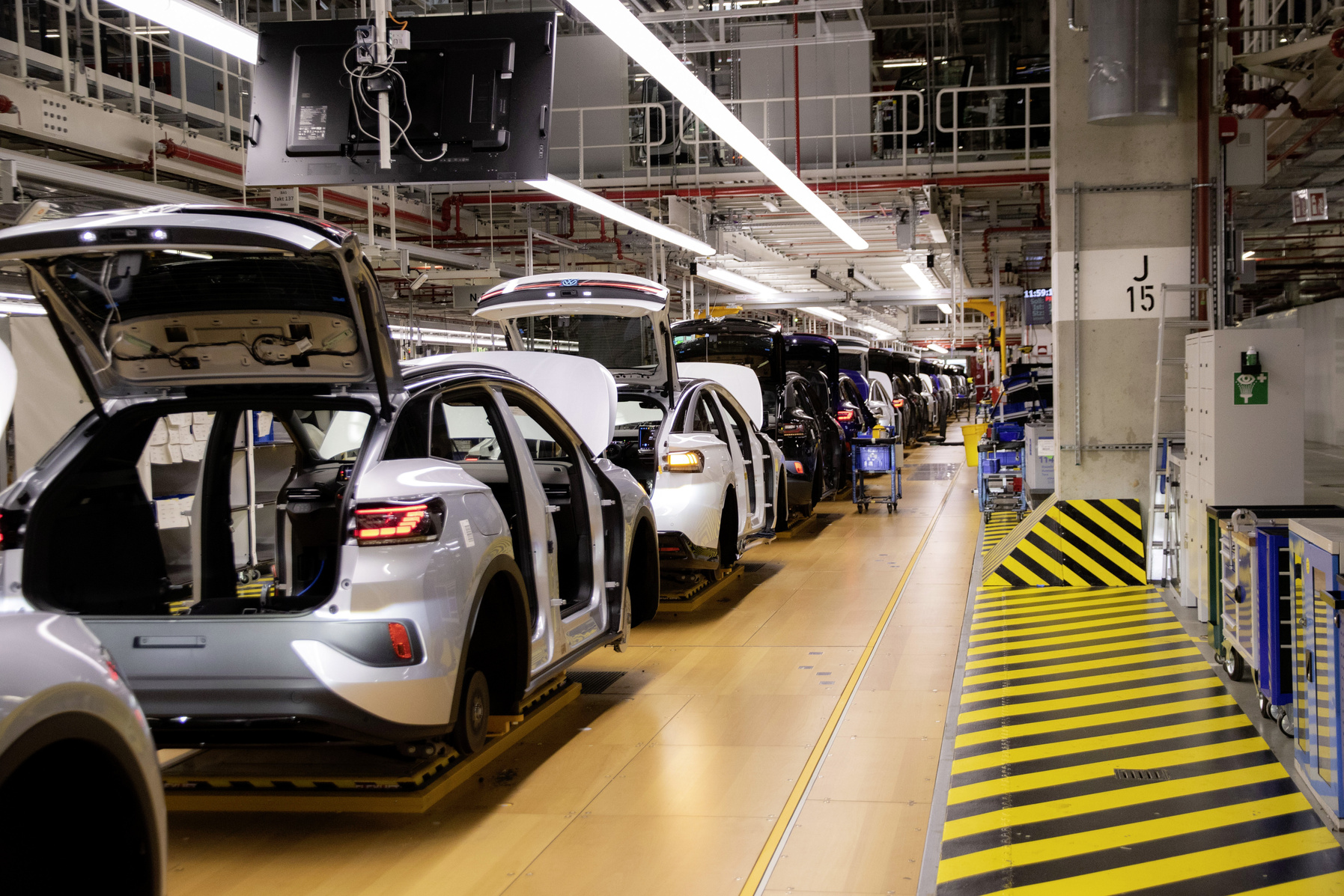

Volkswagen is cutting staff to reduce personnel and labor costs. VW rolled out a new global performance program to improve vehicle releases and reduce costs.
Management and employee representatives at Volkswagen recently discussed the company’s future and reached an agreement to improve performance. Both parties have agreed to reduce staff starting January 2024.
Volkswagen plans to decrease administrative staff costs by 20%. The legacy OEM will extend its partial retirement scheme to employees born in 1967 and severely handicapped employees born in 1968.
VW will offer selective termination agreements at all levels if necessary. The company states that it will not implement a general termination agreement program. Volkswagen has no intention of filling open positions with workers outside the Group. It plans to fill open positions through Volkswagen’s internal job market.
The German automaker will maintain its hiring freeze and access freeze to the Tarif Plus salary group until further notice.
“With the agreement on the key measures, we are taking a decisive step to move Volkswagen back to a leadership position. This requires not only structural but also personnel reduction measures. As a leading employer, it goes without saying that our actions will be socially responsible.
“In addition to the company’s hiring freeze and stabilization of higher pay grades in the Tarif Plus bracket, which will continue, we agreed with the employee representatives to extend our partial retirement option to all employees born in 1967, thereby reducing the workforce as much as possible along the demographic curve, especially in the administrative units of Volkswagen AG. We will also selectively offer termination agreements at all levels, if necessary. The agreement reached will give us flexibility from 2024 to safeguard profitability and long-term job security,” said Gunnar Kilian, VW Group’s Chief Human Resources Officer.
Volkswagen’s staff cuts are part of the “Accelerate Forward/Road to 6.5” program, designed to improve the company in all areas and [at] all levels.
The program includes measures to improve new vehicle releases. Volkswagen aims to release new vehicles to the market faster, cutting the time from 50 to 36 months. The new program is also designed to make vehicle production more cost-efficient and help the company make a positive earnings contribution of up to €10 billion by 2026.
Volkswagen expects to offset negative effects from inflation and higher raw material costs through its “Accelerate Forward/Road to 6.5 program. VW estimates positive earnings contributions of €4 billion as soon as 2024.
The Teslarati team would appreciate hearing from you. If you have any tips, contact me at maria@teslarati.com or via X @Writer_01001101.


Elon Musk
Elon Musk calls Earth’s data centers “peanuts” next to what SpaceX is planning in orbit
Elon Musk says SpaceX capex efficiency is underestimated as orbital data centers loom by 2028.

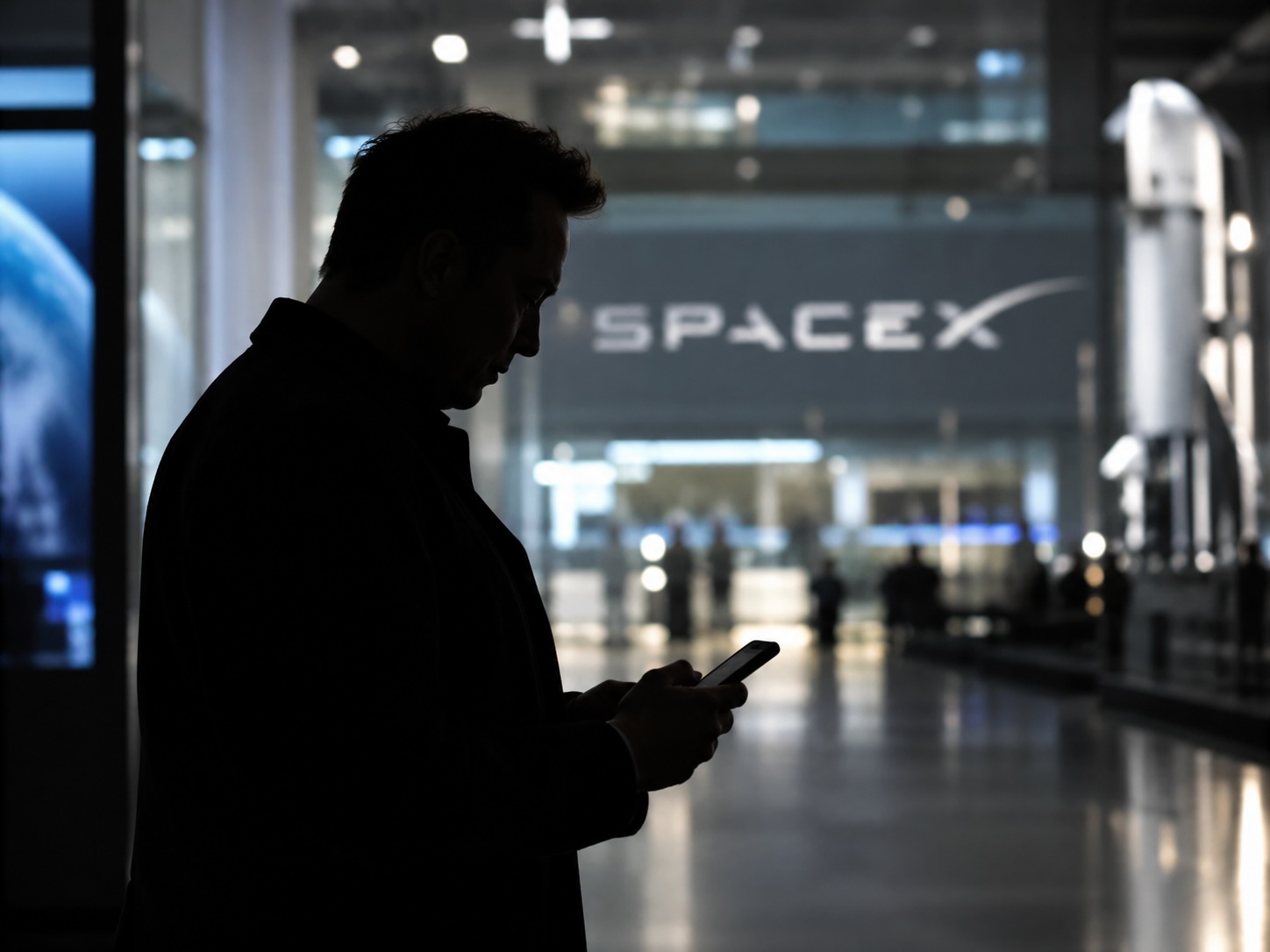
Elon Musk is pushing back on one of the biggest worries hanging over SpaceX stock. In a reply on X on Sunday, Musk said the company’s capital expenditure efficiency is severely underestimated. He was responding to a Milk Road Stocks post citing analyst Kyle Reidhead, who estimates SpaceX will need to spend roughly $470 billion over the next five quarters.
Reidhead built that figure around the target SpaceX set on its third quarter earnings call: 13 gigawatts or more of compute by the end of 2027. In his breakdown, Nvidia captures 83 to 89 percent of the spending. SpaceX ended the quarter with 1.7 GW of nameplate compute and guided to $35 billion to $40 billion in fourth quarter capex, as Teslarati reported.
Musk did not attach a number to his claim, but the earnings call shows the argument. CFO Bret Johnsen said new compute currently pays for itself in under a year at today’s pricing, and Musk said that window could shrink to six months next year. Using that pace, Reidhead argues about $230 billion of the $470 billion could come from operating cash flow and about $60 billion from SpaceX’s roughly $90 billion cash pile, leaving around $180 billion to borrow. Musk confirmed last week that SpaceX had already closed a new $40 billion debt raise to buy GPUs.
The ground buildout is not the end goal. It is what is meant to pay for the move to orbit. Replying on Friday to charts built from Sequoia partner Shaun Maguire’s SpaceX model, Musk wrote that “Terrestrial compute will be peanuts compared to orbital compute,” adding that orbital compute deployed per month “probably exceeds terrestrial around the end of 2028 and then far exceeds it in 2029.”
Maguire’s model shows how steep that path is. It has capex climbing from $88 billion this year to $290 billion in 2027 and $369 billion in 2028, with SpaceX burning $77.8 billion in cash this year and $122.6 billion next year before turning $114.9 billion cash positive in 2028. Musk’s response to the model was, “I think we can do better.”
The orbital half runs through Starmind. SpaceX plans to operate up to 1 million AI satellites flying in clusters of about 10, linked by roughly 10 terabits of bandwidth, with deployment of thousands of units starting as soon as late 2027 out of its Gigasat factory in Bastrop, Texas, according to SpaceX’s space safety page. Musk has said each Starmind spacecraft will carry more than 250 kW of solar power.
Getting there depends on launch volume. Maguire’s model assumes 250 Starship flights in 2028, up from two this year and 38 next year. The nearer test is financial: SpaceX guided to $33 billion to $37 billion in first quarter 2027 revenue, more than double the $14.58 billion it booked in Q3, and Musk reposted that guidance again on Sunday morning.
Elon Musk
SpaceX President to gift Trump Accounts her SpaceX stock
Gwynne Shotwell’s 2 million SpaceX shares are headed to children’s Trump Accounts starting this December.
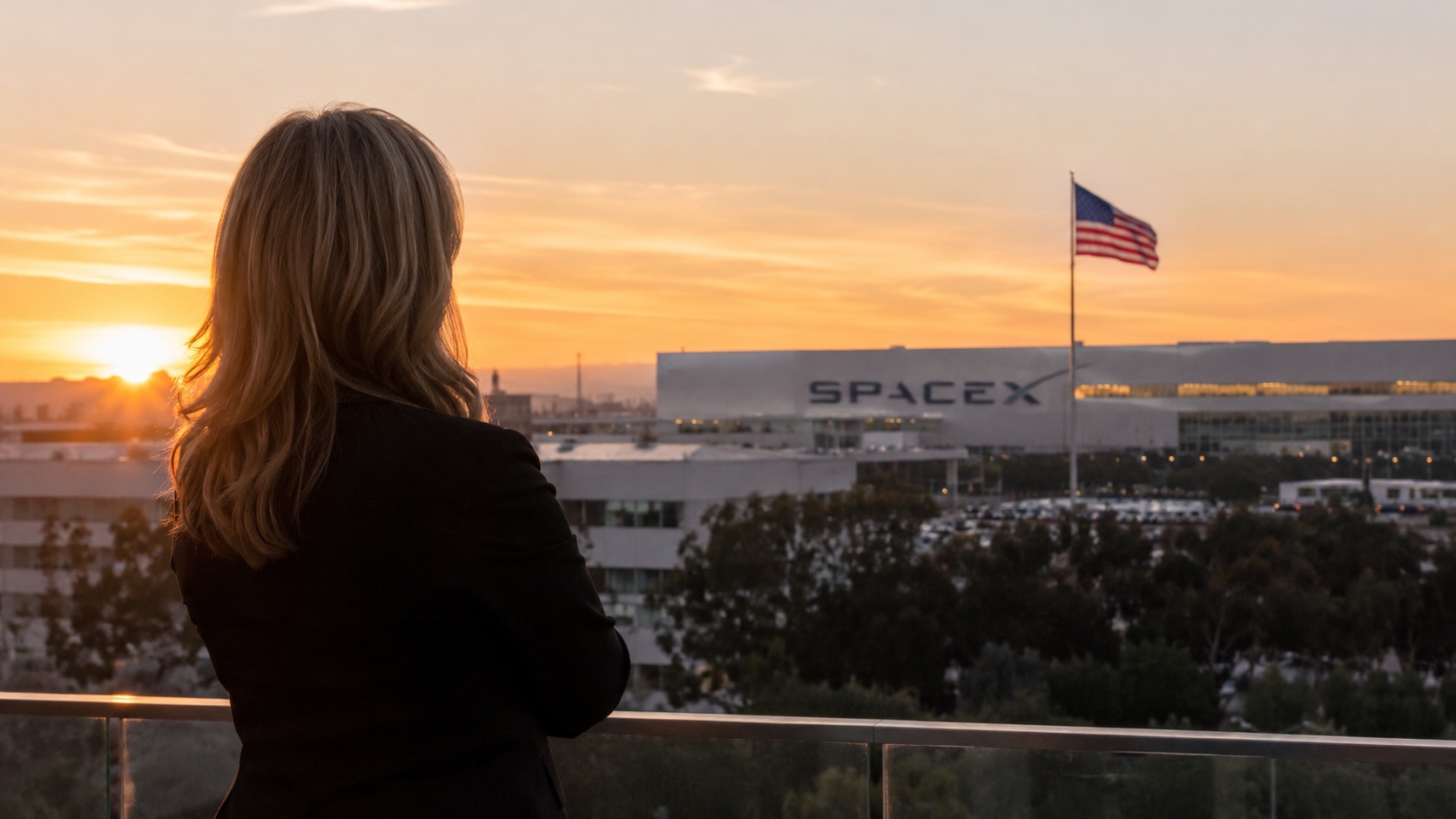
SpaceX President Gwynne Shotwell said Friday that more than 2 million SpaceX shares belonging to her and her husband, Robert, will be distributed to children’s Trump Accounts in December, turning a pledge she made over the summer into an actual transfer. “Robert and I are thrilled that our gift of over 2 million shares of SpaceX stock will be distributed to children’s Trump accounts in December!” Shotwell wrote on X, adding that the shares are “transferring to escrow as we speak.”
The first round goes to children aged 11 to 17 who live in ZIP codes where the median family income is $57,000 or less, along with kids in ZIP codes with too few residents for the Census to report that figure. Shotwell said those families should receive a notice by Monday, Reuters reported.
A second gift is expected to be finalized in the next few weeks. That round will cover eligible children in military families serving overseas, children in foster care, and more kids in Texas counties near the Shotwells’ home where median family income is $90,000 or less. Elon Musk replied to the announcement with “Cool” and a heart emoji.
Shotwell first announced the donation on July 6, less than a month after SpaceX priced its record IPO at $135 per share on the Nasdaq. IPO filings showed Shotwell owned about 12.6 million SpaceX shares, Quartz reported at the time, which makes the gift roughly one sixth of her stake. At the roughly $146 per share used to value Musk’s own pledge earlier this month, 2 million shares are worth about $290 million.
How the stock would actually reach the accounts had been an open question since July. Treasury guidance acknowledged that stock donations could flow into Trump Accounts, but it did not explain the mechanics for a program whose contributions default into an S&P 500 index fund. Shotwell thanked the Treasury, the IRS, the Dell Foundation, Greater Horizons, Invest America and the law firms Morgan Lewis and Gibson Dunn for “working over the past few months to make this happen.”
The transfer also works as a dry run for a far larger gift. On October 19, Musk said he would give one of his SpaceX shares to every kid in America next year and called it “the first of many.” With roughly 72 million children in the country, that pledge is worth about $10.5 billion. President Donald Trump thanked Musk the same day and said the shares would go through Trump Accounts, though neither SpaceX nor the Treasury has published how or when that distribution will happen.
Shotwell’s recipients also fill a gap in the program itself. Trump Accounts launched on July 4, and the $1,000 Treasury deposit only goes to babies born between 2025 and 2028. Teenagers aged 11 to 17 receive no government seed money, so for many of the families getting a notice on Monday, SpaceX stock will be the first asset in the account. The accounts convert into retirement accounts when the child turns 18.

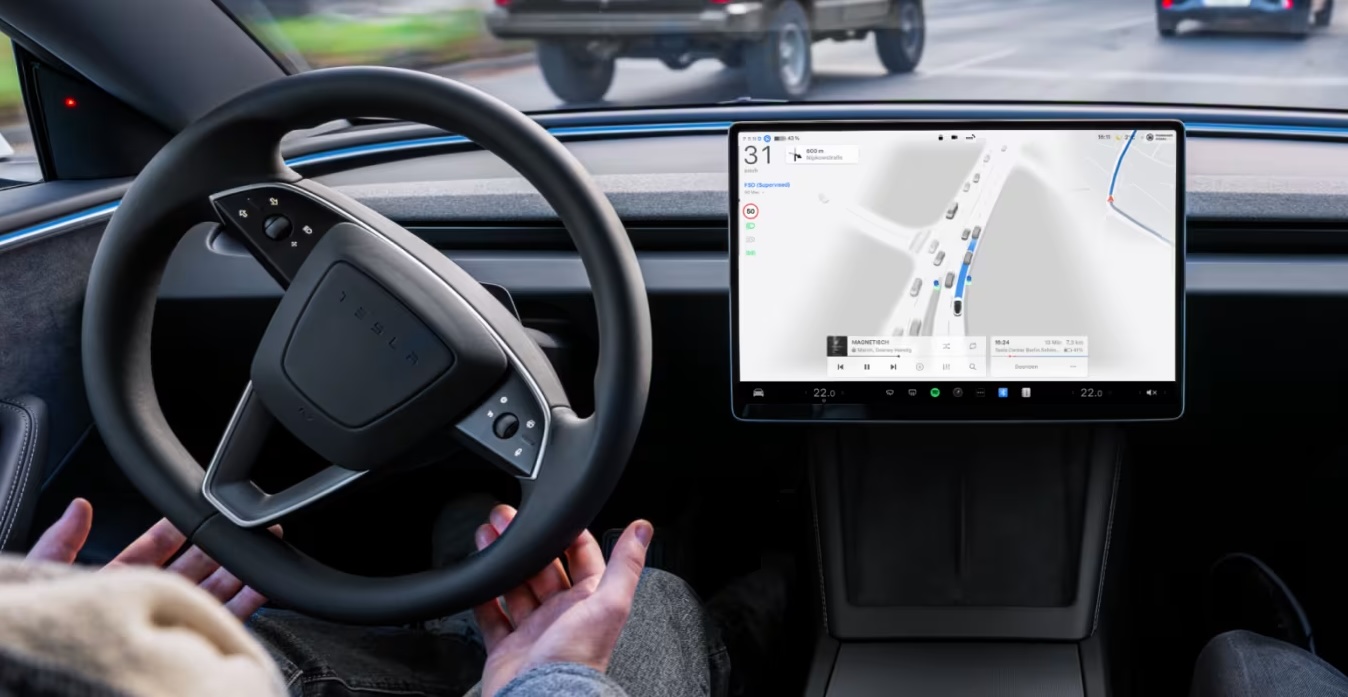
Tesla Full Self-Driving is now the centerpiece of the company’s newly revised Referral Program, which launched on October 29.
Instead of referring people to purchase vehicles and the referrer receiving $250 in Tesla Credit, the new program now incentivizes Full Self-Driving subscriptions.
If a Tesla owner is on an FSD trial and uses a referral code to subscribe to Full Self-Driving, the person whose Referral Link was used will receive one month of FSD (Supervised). Their code can be utilized 12 times per year, with January 1 marking the reset date.
Realistically, this means that if your Referral Code is used by 12 Tesla owners on an FSD trial, you will receive a full year of FSD for free.
🚨 Here is Tesla’s new Referral Program for Full Self-Driving (Supervised):
When someone subscribes to FSD using your link, you’ll get a month free. Up to a year of FSD is available to you for free!
If you’d like to use my link: https://t.co/g00IX9OCE3 https://t.co/GFBzEO2jjS
— TESLARATI (@Teslarati) October 30, 2026
The previous program made it pretty difficult to get referrals; buying a vehicle is obviously a much larger financial strain than subscribing to Full Self-Driving for a month.
Of course, the previous Referral Program also offered a tangible benefit: $250 in credits you could use on Service, Supercharging, or anything in the Tesla Shop. It truly could pay for someone’s travel for a year. It recently bought me a new backpack and a T-shirt.
However, this new program is much more attainable for those who do not have a massive online presence of a slew of friends in the Tesla community who will use the code and max out subscriptions for vehicle purchases.
Woke up to maxed out Referrals! Thank you guys, that’s awesome!
Share your referral link below so others can use it! https://t.co/kesbwTcoTV
— TESLARATI (@Teslarati) October 30, 2026
The Full Self-Driving suite will now be the keystone of the Referral Program, which makes it more inclusive and more fun for everyone with an awesome benefit.
It also gives the impression that Tesla is truly focused on FSD subscriptions, something that saw a tremendous increase in volume in Q3, as 75 percent of deliveries for the quarter came with an FSD subscription attached.
Full Self-Driving data is so instrumental to the suite’s improvement that this kind of program benefits Tesla as much as it does the consumer.

Elon Musk calls Earth’s data centers “peanuts” next to what SpaceX is planning in orbit

SpaceX President to gift Trump Accounts her SpaceX stock


